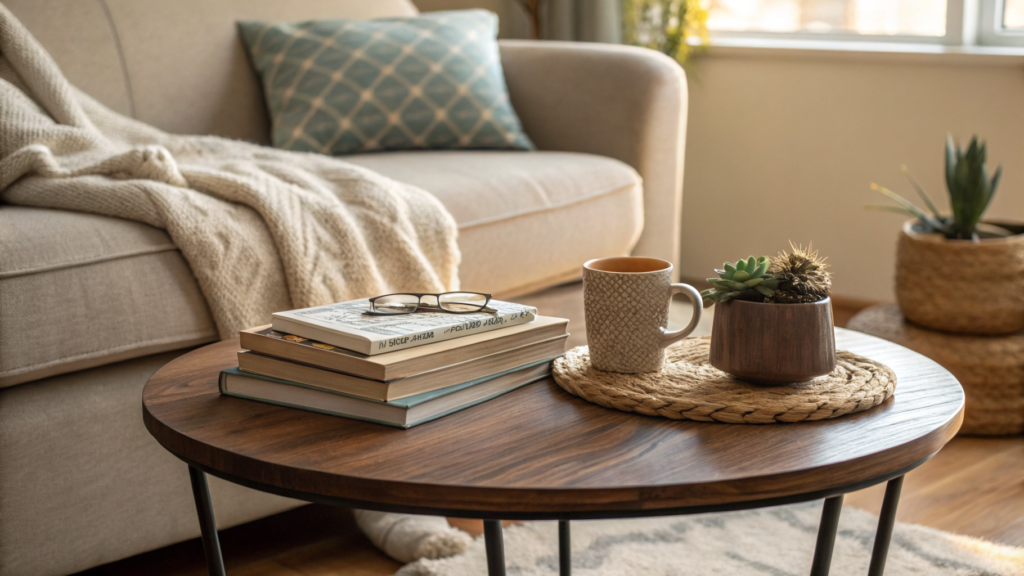
What if your living room could tell a story of serene beauty and timeless elegance, not through pristine perfection, but in the gentle embrace of imperfection? In a world captivated by polished surfaces and flawless finishes, there exists a philosophy that challenges conventional notions of design—a philosophy known as wabi-sabi. Rooted in Japanese aesthetics, wabi-sabi celebrates the beauty found in the imperfect, the impermanent, and the incomplete. So, as you envision your ideal living space, dare to ask yourself: Can imperfection be the ultimate expression of beauty? Join us on a journey through these wabi-sabi living room ideas, where each suggestion embodies the essence of wabi-sabi—a celebration of authenticity, simplicity, and the inherent charm of the imperfect.
1. Aged Wood Accents

Embrace the rich textures and deep grains of aged wood accents in your living room to bring a sense of history and warmth. These pieces show the beauty of time, aligning with the Wabi Sabi appreciation for natural aging.
🌟 Steal This Look
- Paint Color: Sherwin-Williams Accessible Beige SW 7036
- Furniture: Live-edge coffee table with visible knots and cracks, reclaimed wood console with uneven finish
- Lighting: Woven rattan pendant with organic irregular shape
- Materials: Unfinished oak, hand-hewn teak, raw linen, rough-hewn stone
There’s something grounding about running your hand over wood that’s lived longer than you—those grooves and faded patches aren’t flaws, they’re memory.
2. Imperfect Pottery Display

Showcase a collection of imperfect pottery, each piece boasting unique shapes and flaws that celebrate the artisan’s hand. This display serves as a testament to the Wabi Sabi principle of finding beauty in imperfections.
🏠 Steal This Look
- Paint Color: Benjamin Moore White Dove OC-17
- Furniture: low-profile walnut credenza with open shelving
- Lighting: hand-formed ceramic pendant with visible glaze drips
- Materials: unglazed stoneware, raw linen, reclaimed wood, brass with patina
There’s something quietly brave about placing a cracked bowl front and center. It reminds us that our own rough edges deserve display, not disguise.
3. Textured Earth Tones

Utilize textured earth tones throughout your living room to create a grounding atmosphere that connects you to the natural world. These colors reflect the Wabi Sabi love for organic simplicity and understated beauty.
★ Steal This Look
- Paint Color: Farrow & Ball Jitney No. 293
- Furniture: low-slung linen sofa in warm oatmeal, reclaimed wood coffee table with visible grain and knots, hand-thrown ceramic side tables
- Lighting: paper lantern pendant with visible fiber texture, sculptural wabi sabi floor lamp in unglazed ceramic
- Materials: raw linen, unbleached cotton, rough-hewn oak, handmade terracotta, visible plaster texture
This palette feels like the first sip of tea on a rainy morning—imperfect, grounding, and quietly luxurious in its restraint.
4. Rustic Stone Fireplaces

A rustic stone fireplace can serve as the centerpiece of a living room, its rough and natural texture epitomizing the Wabi Sabi ethos. The imperfect masonry and enduring materials speak to both functionality and aesthetics.
✎ Steal This Look
- Paint Color: Behr Weathered Moss N350-3
- Furniture: Low-profile linen slipcovered sofa in oatmeal, reclaimed wood coffee table with visible joinery, vintage leather sling chair
- Lighting: Woven rattan pendant with warm Edison bulb, ceramic table lamps with irregular glazes
- Materials: Rough-hewn fieldstone, raw edge walnut, hand-thrown ceramics, unbleached linen, aged brass
There’s something grounding about gathering around stone that has witnessed decades of fires—it’s imperfection you can actually feel under your fingertips.
5. Weathered Leather Lounges
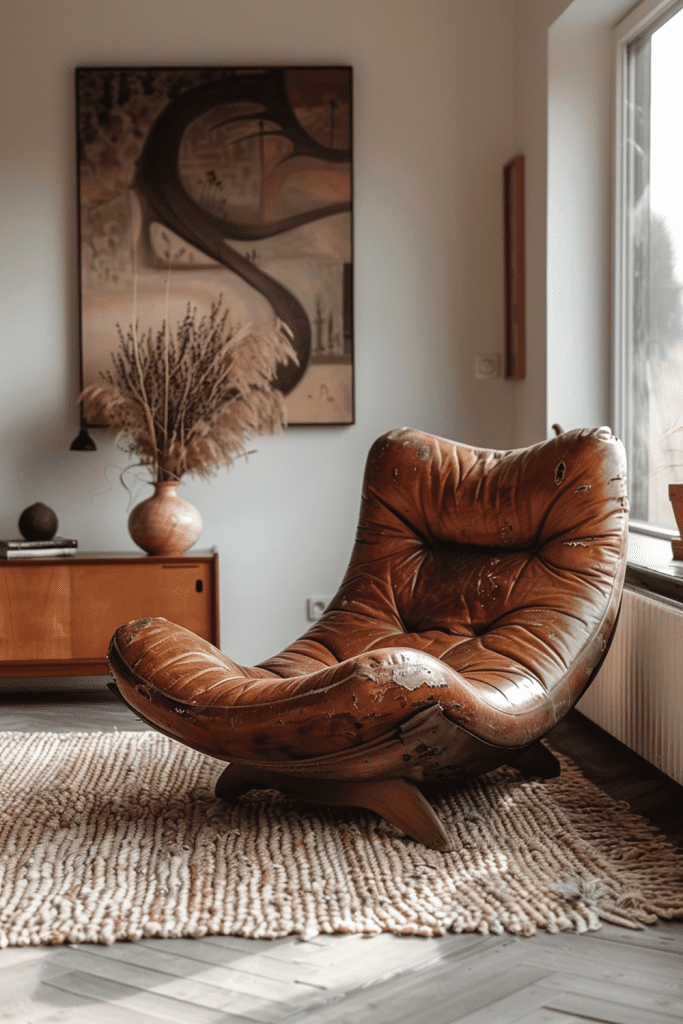
Integrate weathered leather lounges into your living area to add a touch of lived-in luxury. The patina that develops over time highlights the Wabi Sabi belief in embracing wear as a part of life.
✎ Steal This Look
- Paint Color: Valspar Weathered Moss 6003-3C
- Furniture: Distressed cognac leather Chesterfield sofa with visible patina and relaxed silhouette
- Lighting: Woven rattan pendant with warm amber glow
- Materials: Aged full-grain leather, raw linen, unbleached cotton, reclaimed wood, hand-thrown ceramics
There’s something quietly luxurious about sinking into leather that bears the marks of real living—coffee spills, sun fading, and the gentle creases of daily rest. This is furniture that asks you to stop trying so hard.
6. Handcrafted Textile Throws

Decorate with handcrafted textile throws to add a layer of warmth and texture. These pieces, often featuring slight irregularities, embody the Wabi Sabi spirit of handmade charm.
✎ Steal This Look
- Paint Color: PPG Stonehenge Greige PPG1001-2
- Furniture: low-slung linen sofa in natural oatmeal, reclaimed wood coffee table with visible joinery, woven rattan accent chair
- Lighting: paper lantern pendant with visible handmade fibers, warm Edison bulb floor lamp with brass patina
- Materials: raw linen, handspun wool, unbleached cotton, visible weave irregularities, natural dye variations, slubbed textures
There’s something grounding about wrapping yourself in a throw where you can spot the weaver’s hand in every uneven row—it turns your living room into a quiet sanctuary of intentional imperfection.
7. Patina Metal Fixtures

Include patina metal fixtures in your decor to bring an element of graceful aging into your living room. The natural corrosion and tarnishing process enhances the beauty of metal pieces, perfectly capturing the Wabi Sabi aesthetic.
🖼 Steal This Look
- Paint Color: Dunn-Edwards Weathered Bronze DET624
- Furniture: low-profile linen sofa with visible wood frame, reclaimed teak coffee table with natural fissures
- Lighting: oxidized brass pendant with uneven hand-hammered shade
- Materials: unlacquered brass, corten steel, raw blackened iron, hand-thrown ceramics with crackle glaze
There’s something deeply grounding about watching your living room evolve—those water stains on the copper tray, the green bloom on the bronze lamp base—each mark a quiet reminder that beauty lives in impermanence.
Save this article
No spam. Unsubscribe anytime.
8. Organic Linen Sofas
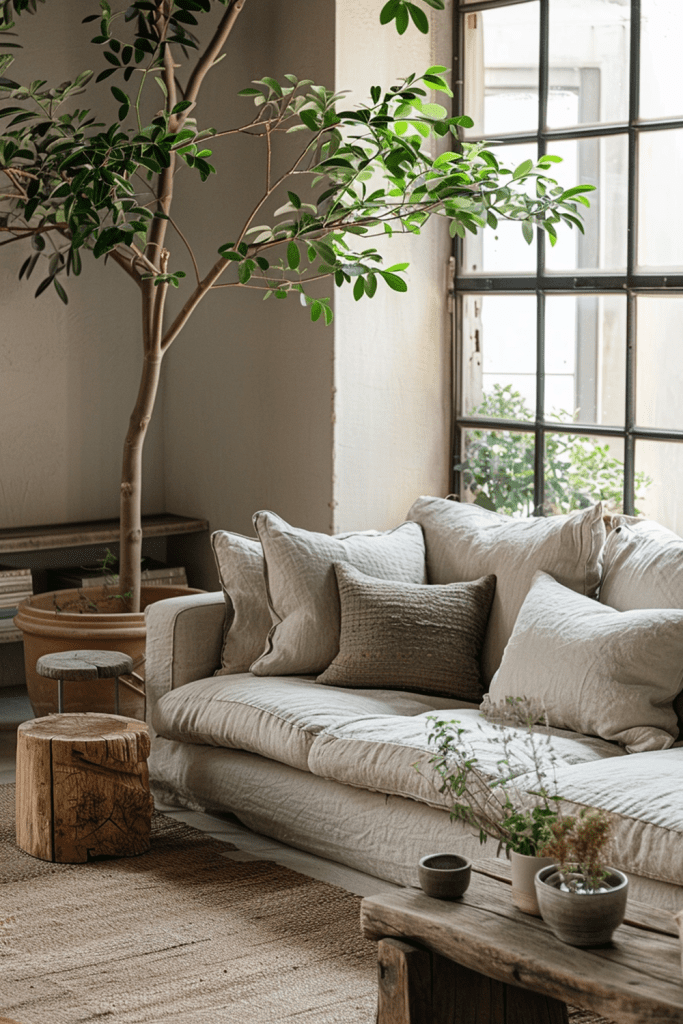
Choose organic linen sofas for a soft, natural look in your living room. Linen, with its tendency to crease and soften over time, complements the Wabi Sabi philosophy of beauty in natural imperfection.
🏠 Steal This Look
- Paint Color: Clare Paint Chalkboard 05
- Furniture: Low-profile organic linen sofa in warm oatmeal or natural flax, with visible relaxed tailoring and soft, lived-in drape
- Lighting: Hand-formed ceramic pendant with warm amber glow or raw linen drum shade floor lamp
- Materials: Unbleached Belgian linen, raw edge cotton throws, unfinished oak or walnut, hand-thrown ceramics, visible mending details
There’s something quietly grounding about sinking into linen that already looks loved—it invites you to stop performing perfection and simply live.
9. Natural Fiber Rugs
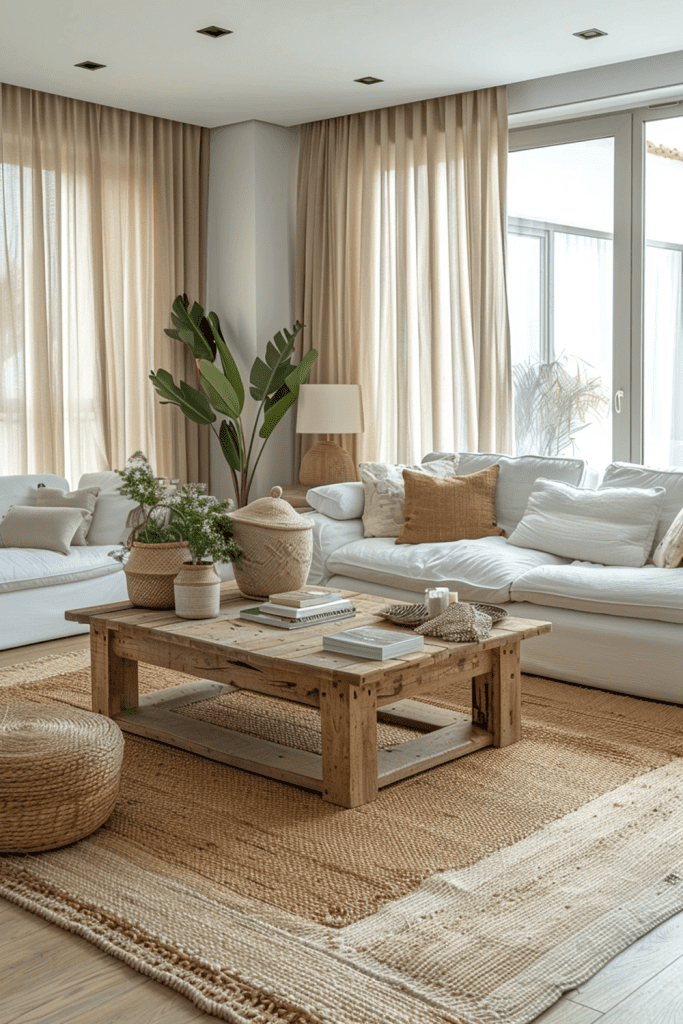
Lay down natural fiber rugs to add texture and warmth to your living space. Materials like jute, sisal, and hemp are not only durable but also display subtle imperfections that are prized in Wabi Sabi decor.
✎ Steal This Look
- Paint Color: Fine Paints of Europe Hollandlac Brilliant White W1002
- Furniture: Low-slung linen sofa with visible wood frame, reclaimed teak coffee table with live edge, woven rattan accent chair
- Lighting: Hand-formed ceramic pendant with irregular glaze, warm Edison bulb
- Materials: Raw jute rug with uneven weave, unbleached hemp textiles, unfinished oak, hand-thrown pottery, slubby linen
There’s something quietly grounding about kicking off your shoes onto rough jute—it’s a daily reminder that beauty lives in the unrefined, the hand-touched, the perfectly imperfect.
10. Reclaimed Wood Coffee Tables

Use reclaimed wood coffee tables to bring a sense of time and story into your living room. The marks, stains, and scratches on reclaimed wood enhance its character and aesthetic appeal.
💡 Steal This Look
- Paint Color: Backdrop Wabi Sabi 04-12
- Furniture: Low-profile reclaimed wood coffee table with visible joinery, live edge or hand-planed surface, paired with a linen slipcovered sofa in oatmeal or undyed natural
- Lighting: Paper orb pendant or rice paper floor lamp with warm dimmable glow
- Materials: Raw reclaimed timber with oxidized patina, handwoven jute or hemp rug, unbleached linen, unglazed ceramics, cast iron accents
I once found a century-old barn door turned coffee table—the deep axe marks and smoke stains became the room’s quiet storyteller.
11. Cracked Ceramic Vases
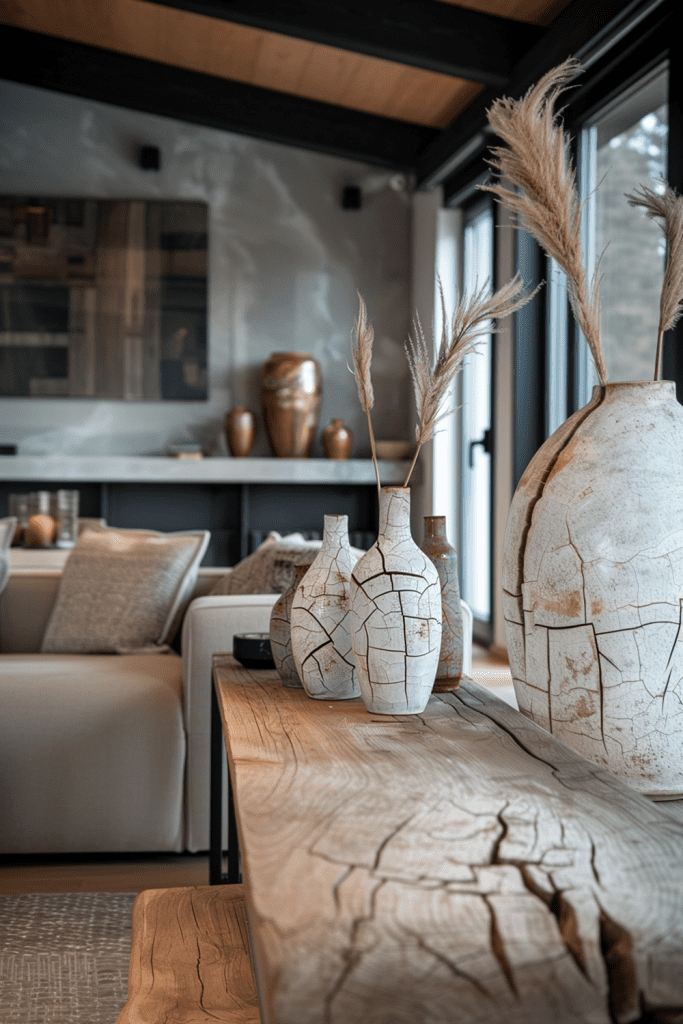
Feature cracked ceramic vases as decorative pieces, where their flaws are celebrated rather than hidden. This aligns with the Wabi Sabi philosophy that there is beauty in breakage and repair.
💡 Steal This Look
- Paint Color: Sherwin-Williams Accessible Beige SW 7036
- Furniture: Low-profile walnut coffee table with visible grain knots, linen slipcovered sofa in natural oatmeal
- Lighting: Hand-formed ceramic pendant with uneven glaze drips and warm Edison bulb glow
- Materials: Raw stoneware, unbleached linen, weathered oak, handmade paper, visible crackle glazes
I once displayed a Kintsugi-repaired bowl front-and-center on my mantel—guests always ask about the gold seams, and it beats any ‘perfect’ vase I own.
12. Distressed Paint Wall Art
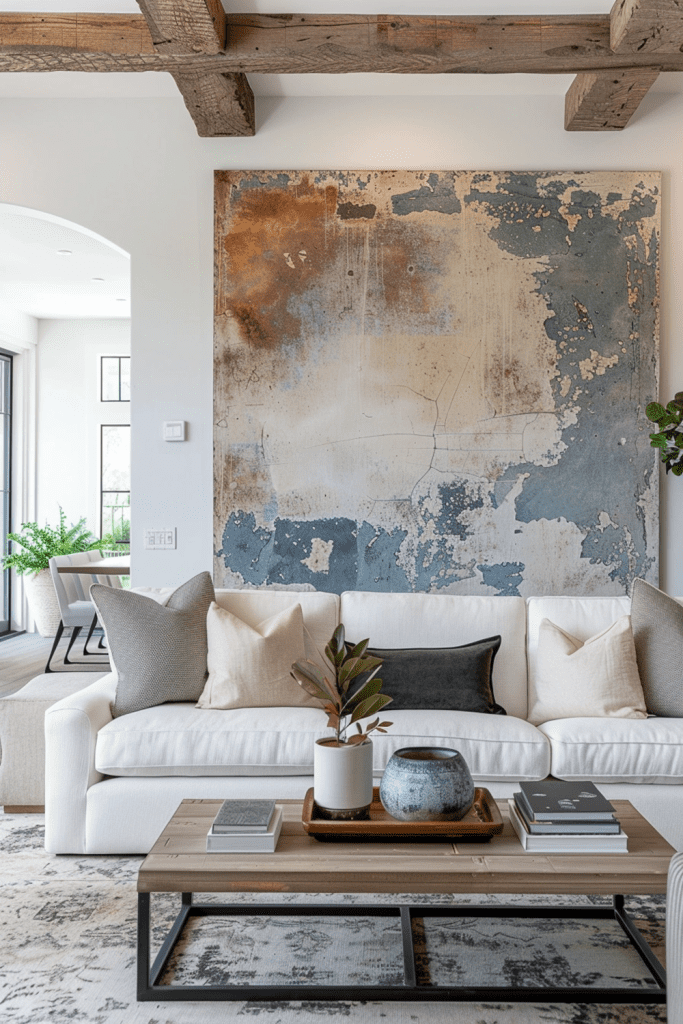
Hang distressed paint wall art to add a touch of artistic decay to your decor. These pieces, often with peeling paint and faded colors, underscore the Wabi Sabi appreciation for the beauty of degradation.
★ Steal This Look
- Paint Color: Benjamin Moore Kendall Charcoal HC-166
- Furniture: low-slung linen sofa in natural oatmeal, reclaimed wood coffee table with visible grain knots
- Lighting: oversized paper lantern pendant with uneven hand-formed texture
- Materials: raw plaster walls, oxidized metal frames, unbleached canvas, weathered barn wood
There’s something quietly radical about hanging art that’s literally falling apart on purpose—it reminds you that your home, like you, is allowed to show its history.
13. Rough-hewn Shelving Units

Incorporate rough-hewn shelving units made from natural wood into your living room. Their rugged surfaces and imperfect edges highlight the raw beauty of materials essential to Wabi Sabi interiors.
💡 Steal This Look
- Paint Color: Farrow & Ball Mouse’s Back 40
- Furniture: live-edge floating shelves in reclaimed oak with visible knots and waney edges
- Lighting: exposed bulb pendant with blackened steel canopy
- Materials: unfinished cedar, hand-forged iron brackets, raw linen, unglazed ceramic
There’s something grounding about running your hand across timber that still remembers the tree it came from—rough-hewn shelving invites that tactile connection daily.
14. Vintage Fabric Pillows

Scatter vintage fabric pillows across your sofa to introduce patterns and textures that have a history. The fading colors and fraying edges of these fabrics emphasize the Wabi Sabi concept of transient beauty.
★ Steal This Look
- Paint Color: Behr Weathered Moss N350-3
- Furniture: Low-slung linen sofa with visible wood frame, distressed coffee table with live edge
- Lighting: Woven rattan pendant with warm Edison bulb
- Materials: Aged linen, hand-thrown ceramics, raw wood, indigo-dyed cotton, rusted metal accents
I once found a 1940s indigo workwear jacket at a flea market, turned it into two pillows—the uneven fading and hand-stitched repairs tell a story no factory pillow ever could.
15. Stone and Wood Harmony

Create a harmonious blend of stone and wood in your living room to evoke a sense of balance and tranquility. This combination reflects the Wabi Sabi principle of natural materials aging gracefully together.
🖼 Steal This Look
- Paint Color: Valspar Natural Linen 6002-1A
- Furniture: low-profile walnut coffee table with live edge, linen slipcovered sofa in oatmeal, reclaimed wood floating shelves
- Lighting: paper lantern pendant with warm Edison bulb, sculptural ceramic table lamp
- Materials: rough-hewn stone accent wall or fireplace surround, unfinished oak flooring with visible grain, hand-thrown pottery, raw linen textiles, aged brass hardware
This is the room that forgives coffee rings and dusty shelves—the stone doesn’t judge, and the wood only gets richer. Let it be imperfect; that’s where the peace lives.
16. Bare Plaster Walls
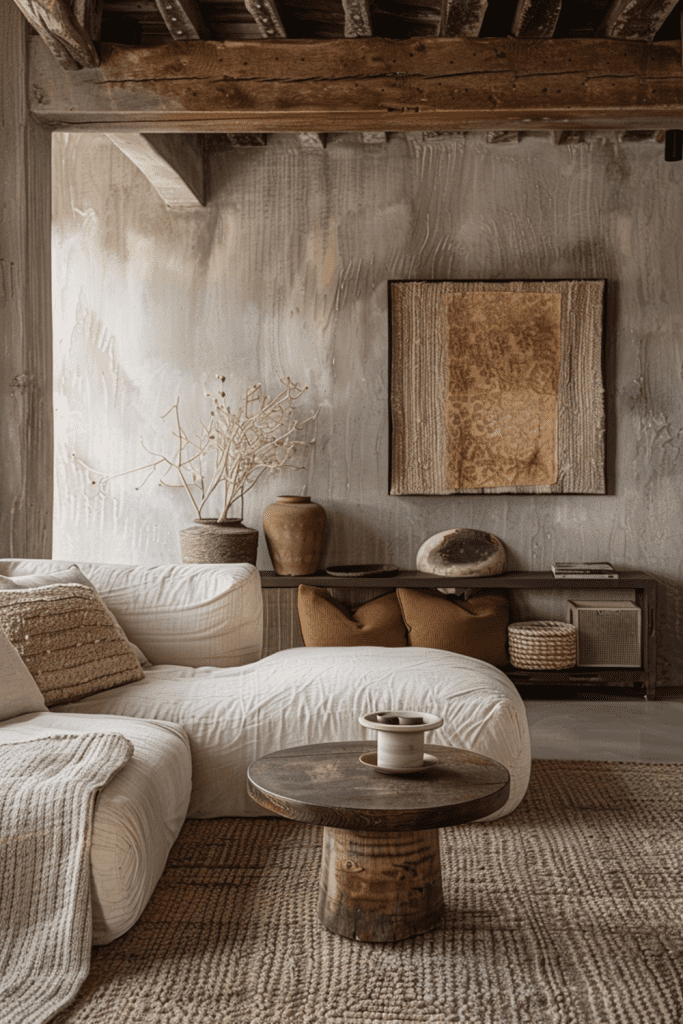
Embrace the minimalist beauty of bare plaster walls, their subtle imperfections and textures, making them a perfect backdrop for a Wabi Sabi living room. This unrefined finish speaks to a connection with the earth.
💡 Steal This Look
- Paint Color: PPG Bare Plaster PPG1001-1
- Furniture: Low-slung linen sofa in oatmeal, reclaimed wood coffee table with live edge, floor cushion seating in natural cotton
- Lighting: Paper lantern pendant or hand-formed ceramic table lamp with visible glaze variations
- Materials: Raw plaster finish, unbleached linen, aged oak, hand-thrown ceramics, indigo-dyed textiles
There’s something quietly grounding about sitting in a room where the walls themselves show the hand of the maker—it’s like the space is breathing with you.
17. Subtle Zen Decor

Incorporate subtle Zen decor elements, like simple pottery, smooth pebbles, and bamboo stalks, to create a peaceful, meditative space. These elements align with the Wabi Sabi appreciation for purity and simplicity.
✎ Steal This Look
- Paint Color: Dunn-Edwards Whisper DEW 340
- Furniture: low-profile linen slipcovered sofa in natural oatmeal, unfinished wood coffee table with visible grain and knots, floor cushion seating in muted indigo or grey
- Lighting: paper rice lantern pendant or simple wooden tripod floor lamp with linen shade
- Materials: raw linen, unglazed ceramic, river stone, unfinished oak or ash, hand-thrown pottery with intentional imperfections
There’s something deeply calming about running your fingers over a rough ceramic bowl that’s slightly off-center—it reminds you that beauty lives in the imperfect, and your living room becomes a quiet exhale at the end of the day.
18. Earthy Palette Layouts

Design your living room with an earthy palette featuring muted greens, browns, and grays. These colors foster a calm environment and highlight the Wabi Sabi love for colors that fade naturally over time.
🌟 Steal This Look
- Paint Color: Clare Paint Dirty Chai CL-017
- Furniture: low-profile linen slipcovered sofa in oatmeal, reclaimed wood coffee table with visible joinery, sculptural ceramic side table
- Lighting: oversized hand-formed paper pendant with warm dimmable bulb
- Materials: raw linen, unglazed terracotta, aged oak, hand-thrown ceramics, natural jute
There’s something deeply grounding about a room that looks like it evolved over decades—this palette lets you build that story from day one without forcing it.
19. Antique Wooden Stools

Place antique wooden stools around your living room, each piece showcasing the wear and craftsmanship of past times. These stools not only serve as functional seating but also as a connection to history.
🖼 Steal This Look
- Paint Color: Fine Paints of Europe Hollandlac Brilliant Off-White W1001
- Furniture: Low-profile linen sofa with visible wood frame, reclaimed elm coffee table with live edge, antique wooden stools in varying heights and worn patinas
- Lighting: Hand-formed ceramic pendant with warm amber glow, paper lantern floor lamp
- Materials: Raw linen, unbleached cotton, aged oak and elm, handmade washi paper, unglazed terracotta, hand-thrown ceramics
There’s something grounding about seating that has supported generations before you—each scratch tells a story you’ll never fully know, and that’s precisely the point.
20. Worn Metal Accents
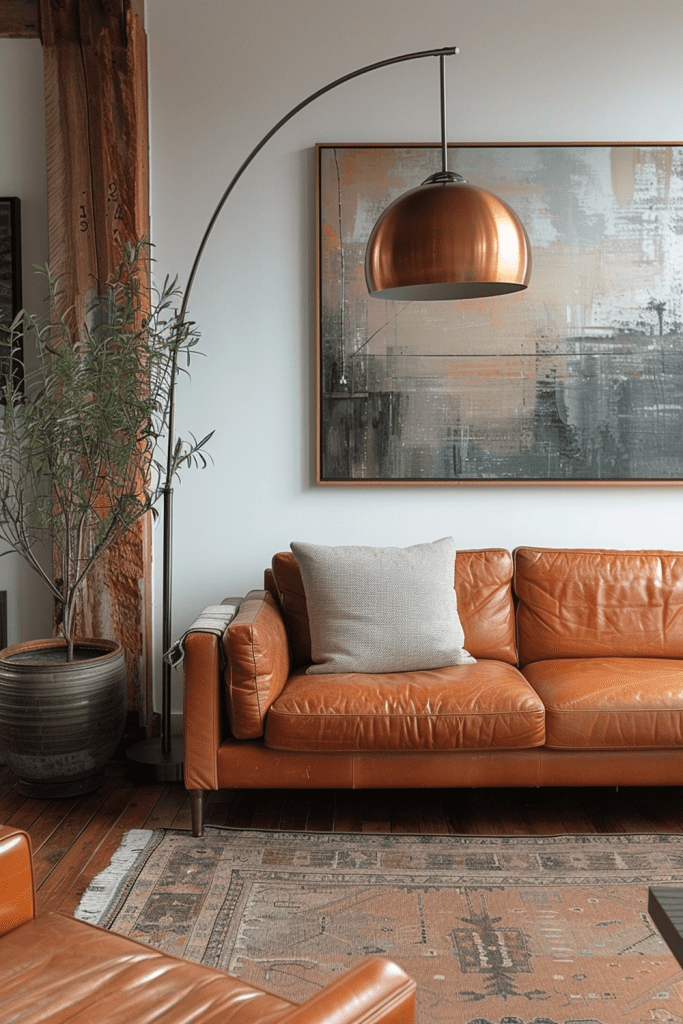
Decorated with worn metal accents, their oxidized surfaces add a layer of depth and texture to the living room. This wear is not seen as a flaw but as an aspect of their charm and character.
✎ Steal This Look
- Paint Color: Backdrop Kintsugi 01-01-04
- Furniture: Low-slung linen sofa with visible wood grain frame, reclaimed teak coffee table with live edge, hand-forged iron side table with rust patina
- Lighting: Pendant with hammered brass shade showing tarnish, exposed filament bulb on raw cloth cord
- Materials: Oxidized copper, weathered brass, raw blackened steel, unlacquered bronze, coarse linen, rough-hewn wood
I keep a small oxidized brass bowl on my coffee table that started gleaming and new—watching it develop its own unpredictable patina over years has become a quiet meditation on letting things be.
21. Soft Silk Curtains

Hang soft silk curtains that billow gently with the breeze. Silk, with its delicate texture and slight imperfections in the weave, enhances the light and airy feel while embodying Wabi Sabi elegance.
🎨 Steal This Look
- Paint Color: Sherwin-Williams Natural Linen SW 9109
- Furniture: low-profile linen slipcovered sofa with visible wood grain legs, weathered oak coffee table with live edge, hand-thrown ceramic side tables
- Lighting: paper lantern pendant with uneven handmade texture, brass floor lamp with patina finish
- Materials: raw silk curtains with slubbed texture, unbleached linen, aged brass, rough-hewn oak, handmade ceramic, handwoven jute rug with irregular weave
There’s something quietly luxurious about watching raw silk catch afternoon light—the way it glows from within while refusing to behave perfectly. It’s permission to stop chasing crispness.
22. Minimalist Clay Sculptures
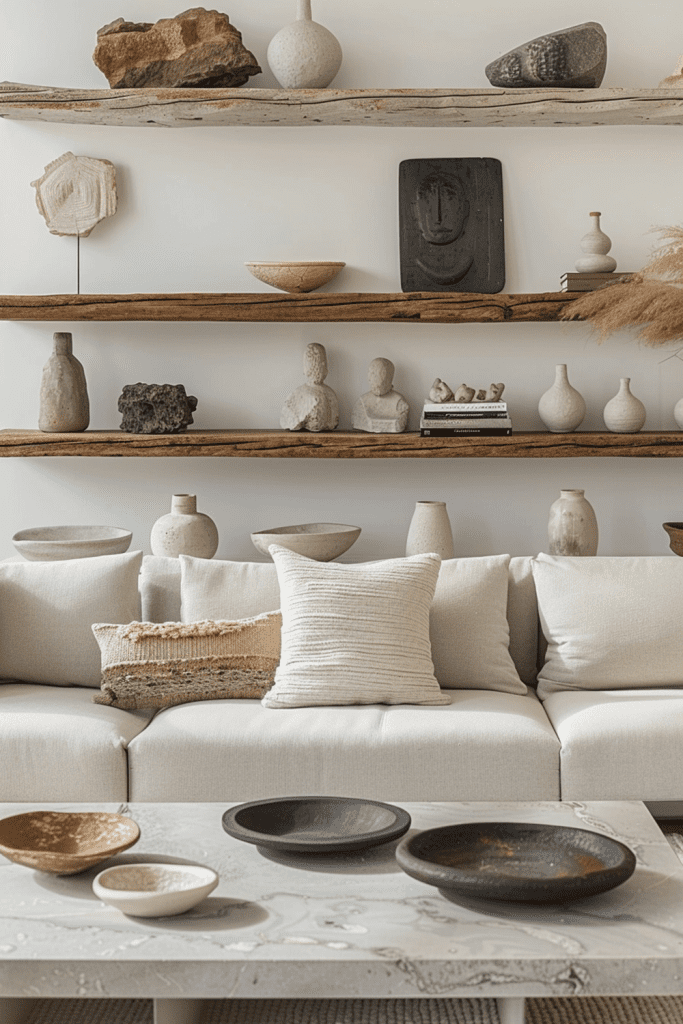
Display minimalist clay sculptures, their simple forms and natural finishes adding a sculptural element to your living space. These pieces, often asymmetric and understated, celebrate the hand of the artist.
✎ Steal This Look
- Paint Color: Benjamin Moore Edgecomb Gray HC-173
- Furniture: Low-profile linen sofa in warm oatmeal, raw wood slab coffee table with live edge, ceramic stool side tables
- Lighting: Hand-formed ceramic pendant with irregular silhouette, warm dimmable Edison bulb
- Materials: Unglazed terracotta, hand-thrown stoneware, raw linen, bleached oak, imperfect plaster
There’s something grounding about running your fingers over a clay surface that hasn’t been machine-smoothed—it reminds you a human made this, slowly.
23. Faded Canvas Art

Choose faded canvas art that shows the passing of time through sun-bleached colors and worn edges. These artworks bring a historical and artistic dimension to your living room, embracing the Wabi Sabi ethos.
🎨 Steal This Look
- Paint Color: Farrow & Ball Stiffkey Blue 281
- Furniture: low-slung linen sofa with visible wood frame, reclaimed teak coffee table with natural cracks
- Lighting: paper pendant with irregular hand-formed shape, warm dimmable bulb
- Materials: raw linen, unbleached cotton canvas, weathered wood, handmade paper, oxidized metal
There’s something quietly powerful about art that looks like it survived decades in a coastal studio—every sun-bleached edge tells a story you didn’t have to live to inherit.
24. Tarnished Copper Lamps
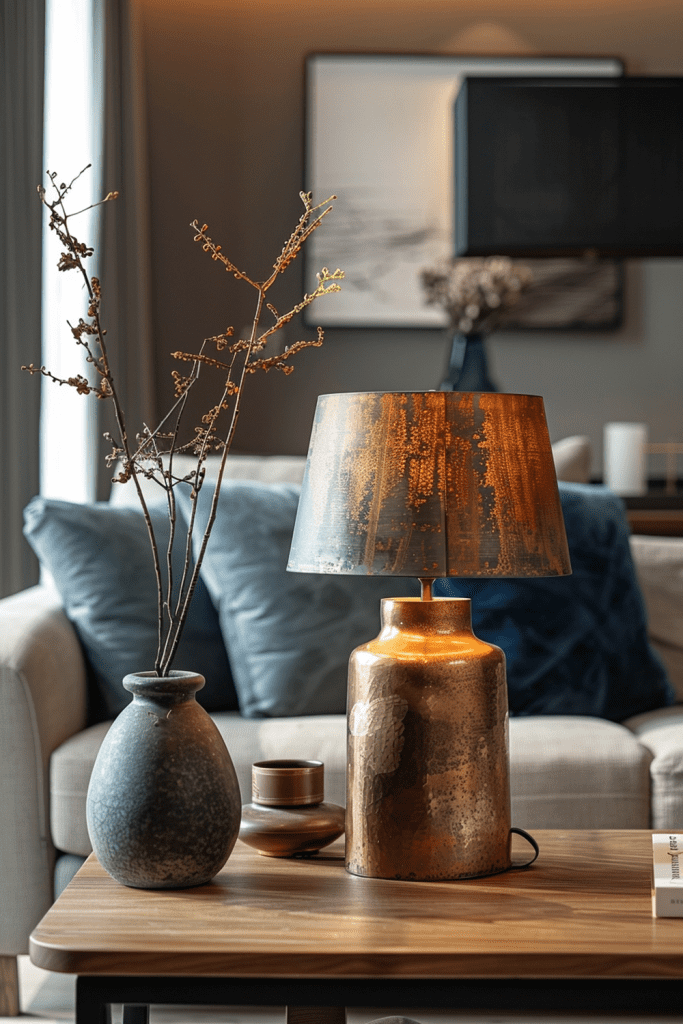
Use tarnished copper lamps to illuminate your living space, their patina adding warmth and history to the room. The natural aging of copper offers a soft, warm glow that is quintessentially Wabi Sabi.
✎ Steal This Look
- Paint Color: Behr Burnished Clay PPU3-15
- Furniture: low-slung linen sofa with visible wood frame, reclaimed teak coffee table with live edge
- Lighting: tarnished copper pendant lamp with hand-hammered texture and aged patina finish
- Materials: oxidized copper, raw linen, unfinished teak, handmade paper, crackled ceramic
There’s something quietly grounding about light that has literally weathered time—copper lamps feel like they’ve witnessed decades of conversations and still have more to give.
25. Mismatched Furniture
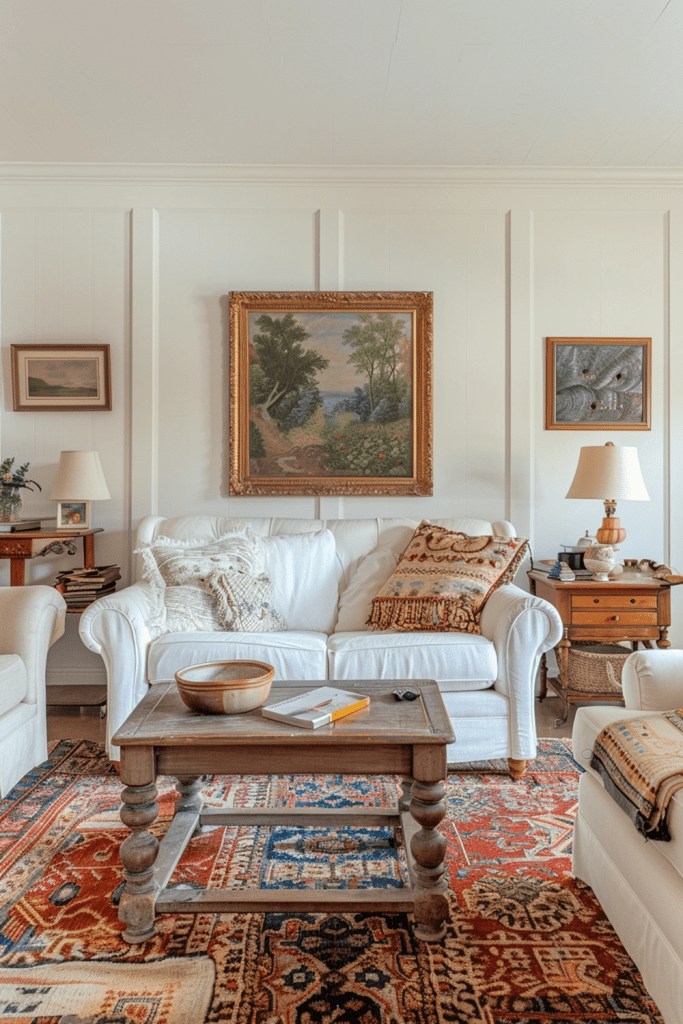
Create an eclectic look with mismatched furniture, each piece chosen for its character and story. This approach celebrates the Wabi Sabi belief in embracing the imperfect and the unconventional.
🌟 Steal This Look
- Paint Color: Valspar Wabi-Sabi 6002-1A
- Furniture: Vintage wooden side table with visible grain knots, weathered linen slipcovered armchair, reclaimed elm coffee table with uneven edges, distressed leather ottoman with patina wear
- Lighting: Hand-formed ceramic pendant with irregular glaze drips, brass floor lamp with tarnished finish
- Materials: Raw linen, unbleached cotton, reclaimed wood with nail holes and saw marks, hand-thrown ceramics, oxidized metals, natural jute
I once paired my grandmother’s sagging velvet settee with a roadside-find pine stool—both wobbled slightly, and together they told the room’s whole story.
26. Handwoven Basket Collections

Utilize handwoven baskets for storage or decor, their irregular weaves and natural materials adding texture and interest. These baskets underscore the beauty found in handcrafted imperfections.
🖼 Steal This Look
- Paint Color: PPG Warm Stone PPG1072-4
- Furniture: low-slung linen sofa with visible wood frame, reclaimed teak coffee table with live edge, floor cushions in undyed cotton
- Lighting: paper lantern pendant with visible bamboo ribbing, warm Edison bulb glow
- Materials: raw jute, unbleached cotton, weathered oak, terracotta, hand-thrown ceramics with glaze drips
There’s something grounding about reaching for a blanket from a basket that still holds the shape of its maker’s fingers.
27. Kintsugi Art Pieces
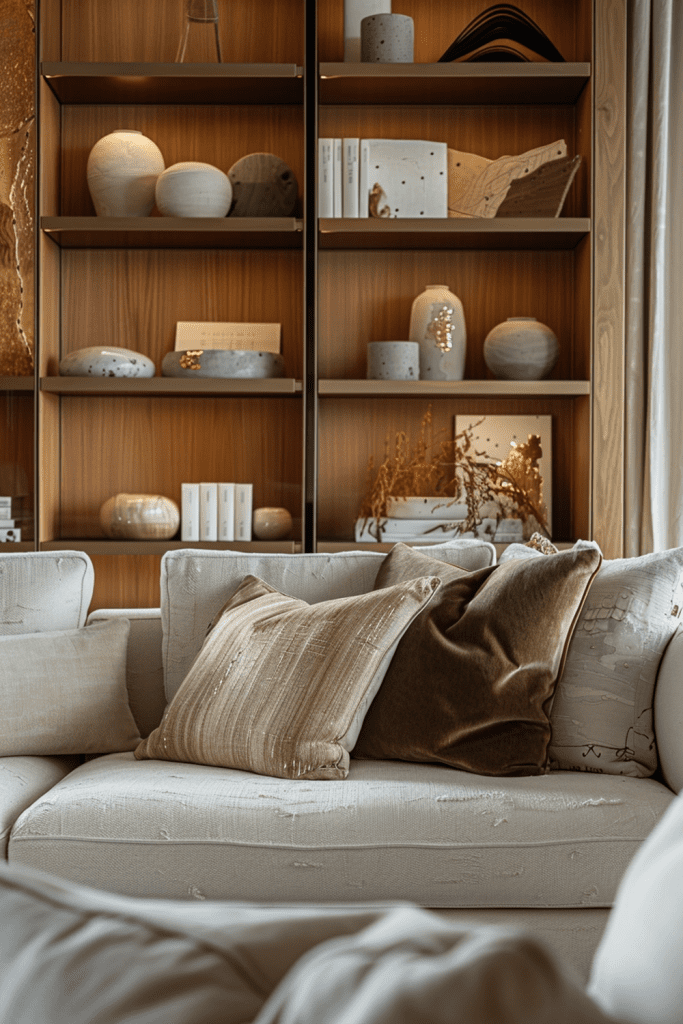
Decorate with Kintsugi art pieces, where broken ceramics are mended with gold, turning flaws into striking features. This practice exemplifies the Wabi Sabi philosophy of embracing and honoring imperfections.
🖼 Steal This Look
- Paint Color: Dunn-Edwards Weathered Stone DE6219
- Furniture: low-profile wooden coffee table with visible grain and live edge, floor cushions in natural linen, hand-thrown ceramic side tables
- Lighting: paper lantern pendant with uneven handmade texture, warm dimmable bulb
- Materials: raw clay, unbleached linen, aged brass, cracked ceramic with gold repair, unfinished wood
There’s something quietly radical about spotlighting where something broke and chose to heal—this corner becomes a daily reminder that your own rough edges have their own kind of radiance.
28. Natural Element Centerpieces

Center your living room design around natural elements like a large driftwood piece or a stone sculpture. These centerpieces highlight the raw, unprocessed beauty of nature, central to Wabi Sabi aesthetics.
🖼 Steal This Look
- Paint Color: Clare Paint Chalky White CW-01
- Furniture: low-profile linen slipcovered sofa with visible wood frame, live-edge coffee table, woven jute rug
- Lighting: oversized hand-formed ceramic pendant with warm amber glow
- Materials: unfinished oak, raw linen, unglazed terracotta, weathered driftwood, hand-thrown ceramics
I once found a water-worn burl on a northern California beach and simply propped it on a low oak plinth—no vase, no arrangement needed. That single piece still anchors my entire living room.
29. Time-Worn Textures
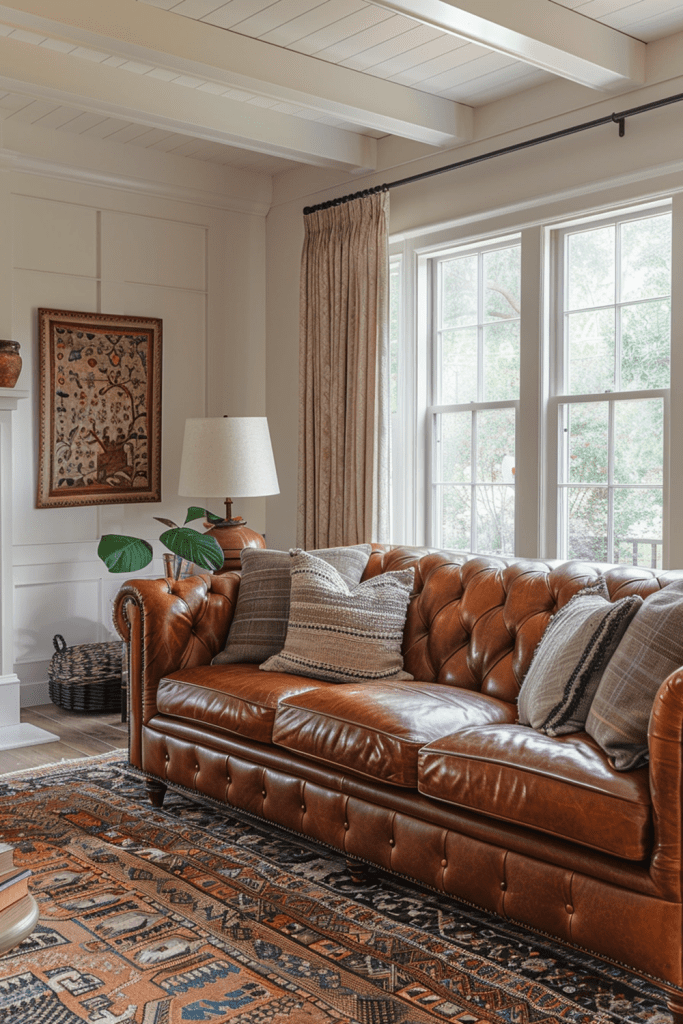
Incorporate time-worn textures throughout your living room, from distressed leather to softened wood. These textures tell a story of use and age, celebrating the lived-in look that Wabi Sabi cherishes.
🖼 Steal This Look
- Paint Color: Fine Paints of Europe Kalkverf Limewash Warm White K-01
- Furniture: distressed leather Chesterfield sofa with visible patina, reclaimed elm coffee table with natural edge wear
- Lighting: oxidized brass pendant with hand-hammered texture and aged finish
- Materials: raw Belgian linen, unbleached cotton, weathered oak, hand-thrown ceramics with crackle glaze, raw jute
The beauty of time-worn textures is that they forgive daily life—spills, scratches, and fading become part of the story rather than flaws to hide.
Conclusion
The 29 wabi-sabi living room ideas presented here invite us to reimagine our spaces as serene sanctuaries, where the beauty of imperfection reigns supreme. From weathered wooden furniture to handmade ceramics and natural textiles, each element exudes a sense of authenticity and tranquility. By embracing the wabi-sabi aesthetic, we transcend the confines of conventional design and embrace a philosophy that celebrates the imperfect, the impermanent, and the incomplete. Let these ideas serve as inspiration to cultivate a living room that not only reflects our personal style but also nurtures our souls, reminding us to find beauty in the simplest of things and to cherish the fleeting moments that make life truly extraordinary.
Save this article
No spam. Unsubscribe anytime.