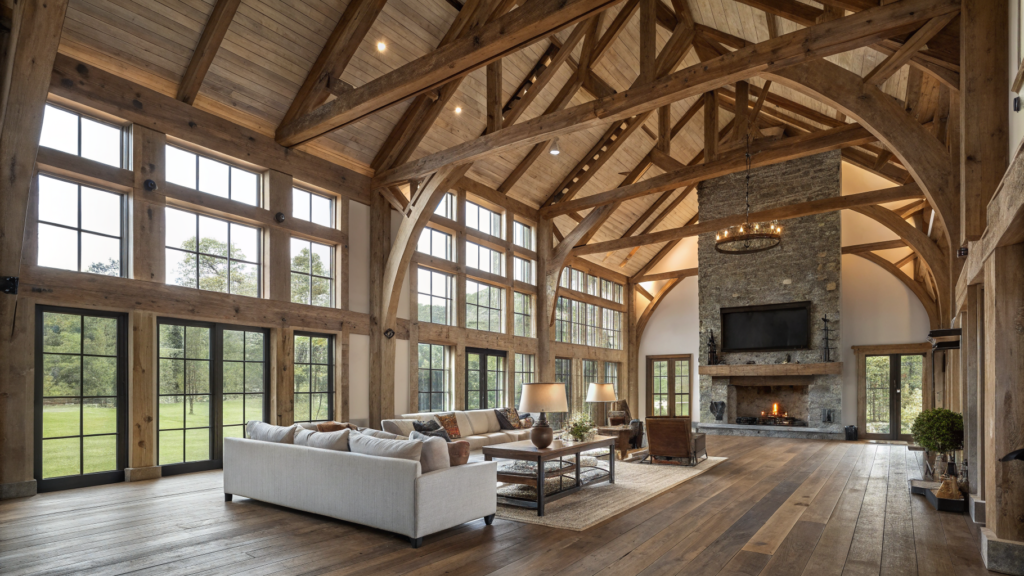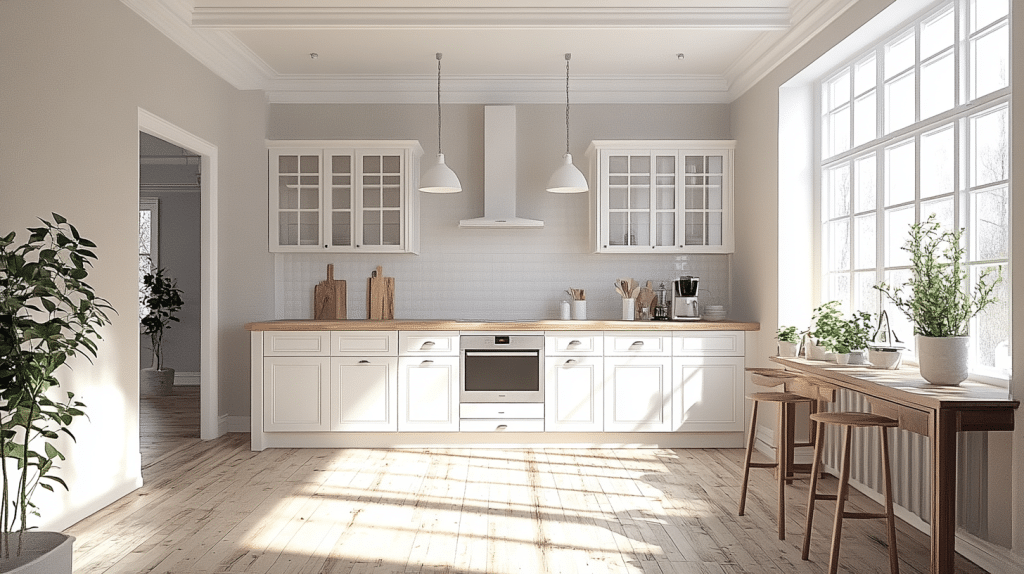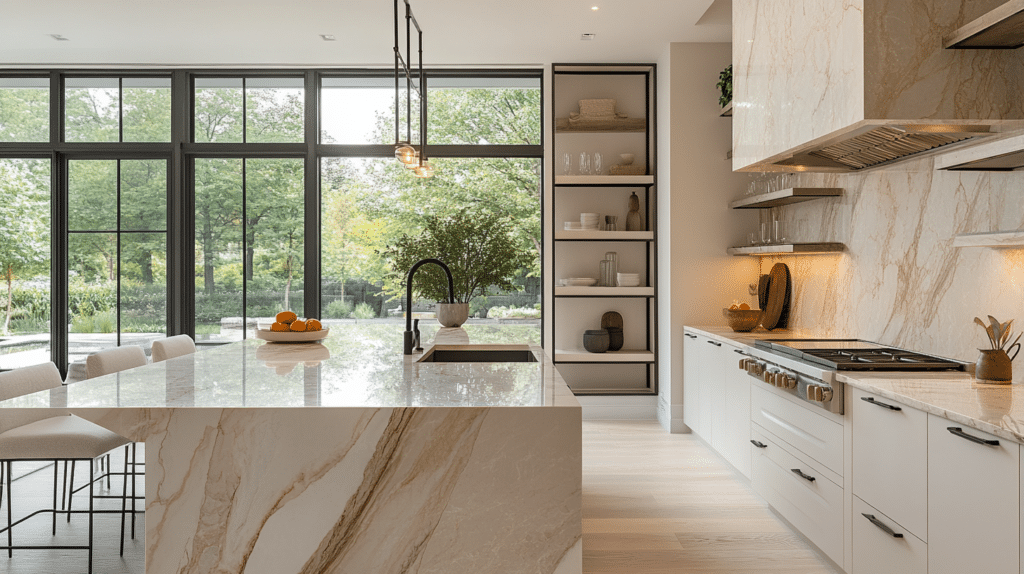
Can a dining room really be beautiful and calming without all the bells and whistles of traditional design? How do you create a space that feels serene while embracing natural imperfection? These Wabi Sabi Dining Room ideas show you how to strike the perfect balance between simplicity and elegance. From rustic textures to organic shapes, we’ve gathered 29 ways to transform your dining room into a peaceful and welcoming haven. Ready to turn your space into a calming retreat that embraces the beauty of simplicity? Let’s dive in!
1. Minimalist Feast
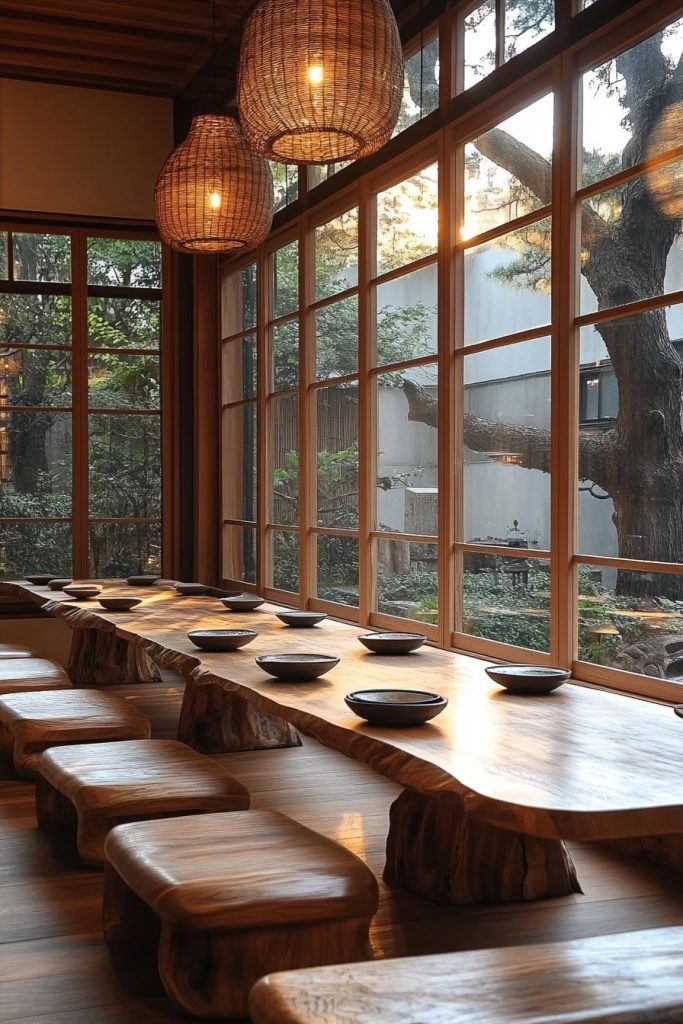
A Minimalist Feast Wabi Sabi dining room embraces the principle of simplicity with its clean lines and uncluttered space. The dining table and chairs are designed with functionality and beauty in mind, using natural materials that age gracefully. Soft, natural lighting complements the minimal decor, highlighting the quality and craftsmanship of the furniture. This dining room is perfect for those who appreciate the beauty in simplicity and seek a space that facilitates calm, focused dining experiences.
💡 Steal This Look
- Paint Color: Sherwin-Williams Accessible Beige SW 7036
- Furniture: low-profile live-edge wooden dining table with tree-stump pedestals, matching wooden floor cushions or zabuton-style seating
- Lighting: oversized woven rattan pendant lights with warm Edison bulbs
- Materials: unfinished or lightly oiled wood with visible grain, handwoven natural fibers, raw linen, unglazed ceramic dishware
This room feels like a slow exhale. The raw wood and handwoven pendants aren’t trying to impress—they’re inviting you to stay longer, talk softer, and actually taste your food.
2. Earthen Banquet
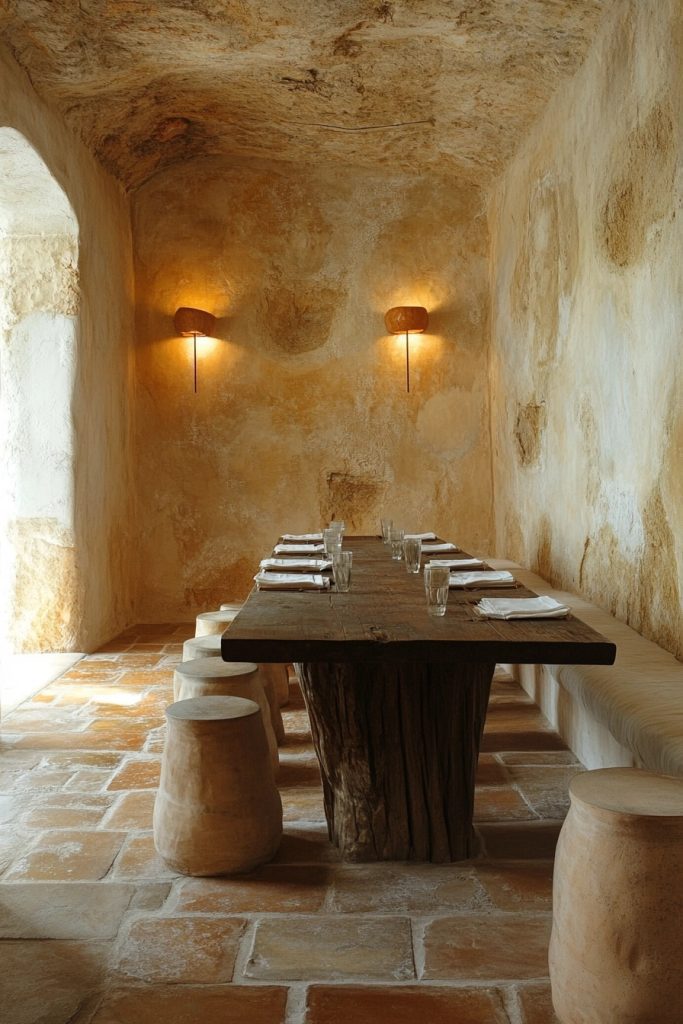
The Earthen Banquet Wabi Sabi dining room features natural earth tones and textures that bring a grounding energy to the dining experience. Materials like clay, stone, and unfinished wood are used to construct a space that feels both organic and sophisticated. The robust, tactile surfaces invite diners to engage fully with their environment, enhancing the communal and nourishing aspects of mealtime. Subdued lighting casts gentle shadows, enriching the atmosphere with a warm, inviting glow.
🎨 Steal This Look
- Paint Color: Benjamin Moore Adobe Beige 1128
- Furniture: Live-edge oak dining table with sculptural root base; hand-formed ceramic drum stools; built-in plaster banquette
- Lighting: Wrought iron sconces with terracotta shades, uplight glow
- Materials: Lime-washed plaster walls, reclaimed terracotta floor tiles, raw timber, unglazed clay
There’s something almost sacred about dining in a room that feels carved from the earth itself—it slows time and deepens conversation.
3. Rustic Simplicity
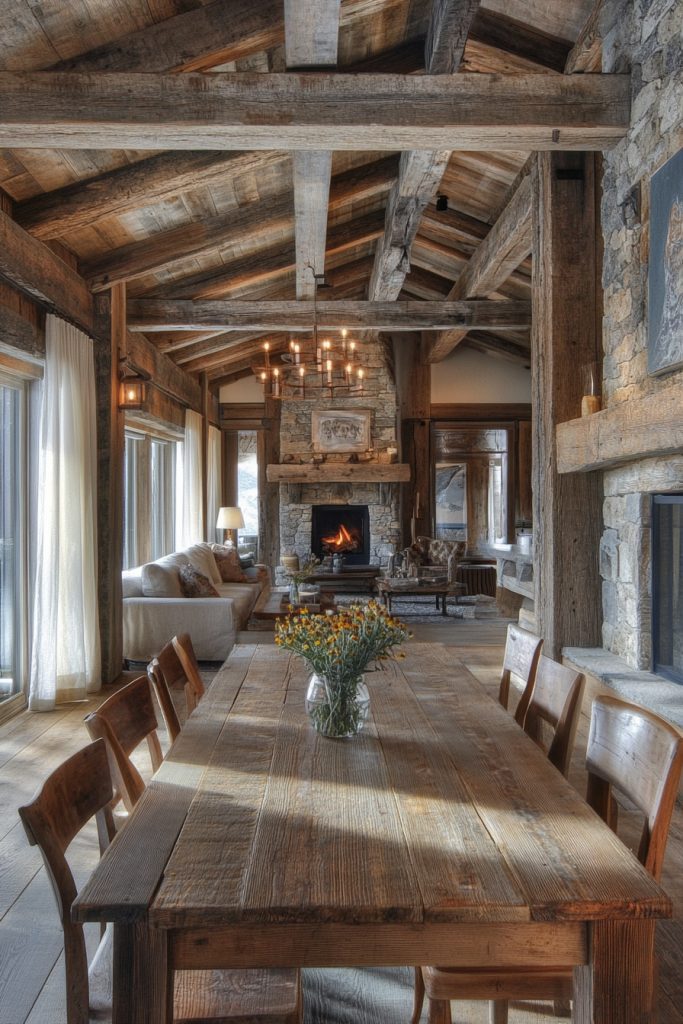
Rustic Simplicity in a Wabi Sabi dining room combines rugged natural materials with a straightforward design to create an inviting and warm dining space. The use of reclaimed wood for the dining table and benches emphasizes imperfection as an aesthetic value, adding character and warmth. The room’s palette is neutral, encouraging a focus on the textures and craftsmanship of the dining furniture. Minimal decor allows the materials to stand out, celebrating their inherent beauty.
✎ Steal This Look
- Paint Color: Farrow & Ball Drop Cloth No. 283
- Furniture: reclaimed wood farmhouse dining table with visible grain and knots, simple wooden dining chairs with curved backrests
- Lighting: iron candelabra chandelier with exposed candle-style bulbs
- Materials: rough-hewn timber beams, stacked stone fireplace, weathered reclaimed wood, natural linen curtains, hand-thrown ceramic vessels
This is the dining room that slows you down—rough beams overhead, stone underfoot, and a table that carries the scars of decades. You don’t decorate it; you let it breathe.
4. Subdued Elegance
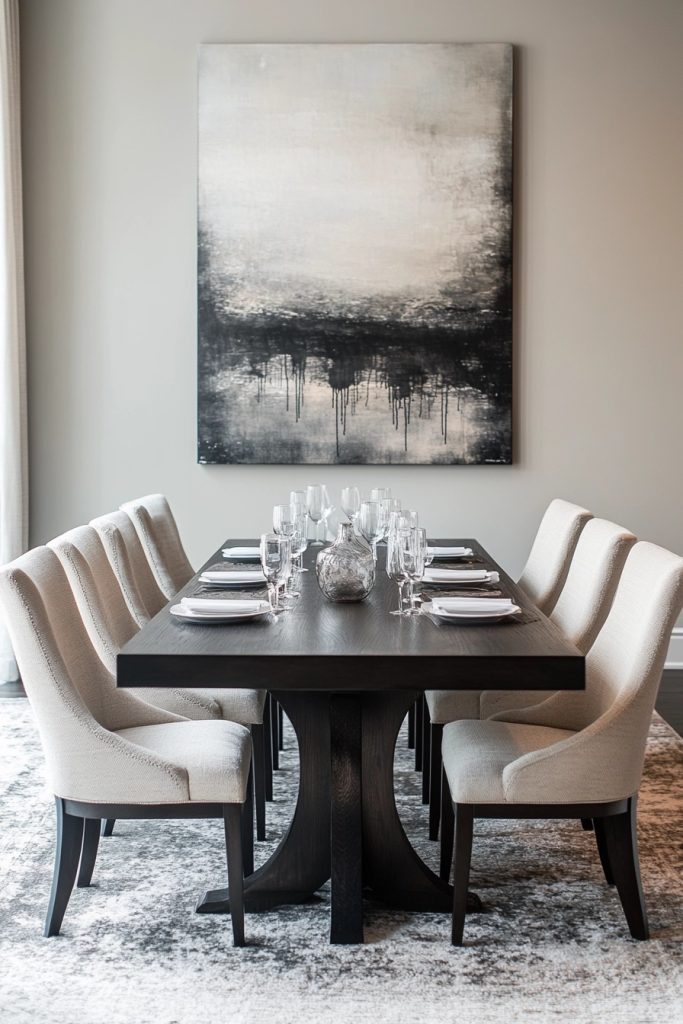
A Subdued Elegance Wabi Sabi dining room highlights understated luxury with a palette of soft, muted colors and smooth finishes that radiate calmness and sophistication. The furniture is elegantly simple, crafted from high-quality materials with subtle details that reward close inspection. The lighting is soft and diffused, creating an ambiance that enhances evening meals with a gentle, glowing atmosphere. This setting is ideal for those who seek a serene backdrop to their dining experiences, focusing on the purity of design.
💡 Steal This Look
- Paint Color: Behr Wheat Bread 720C-3
- Furniture: dark espresso pedestal dining table, cream linen upholstered dining chairs with curved backs
- Lighting: recessed or flush ceiling lighting with dimmer for soft, diffused glow
- Materials: weathered wood, linen upholstery, aged silver glass, abstract canvas art with tonal grays and blacks
This room feels like a deep exhale—there’s permission here to linger over dinner without the pressure of perfection. The slightly worn edges of that silvered glass vessel tell me someone actually lives here.
5. Textured Harmony
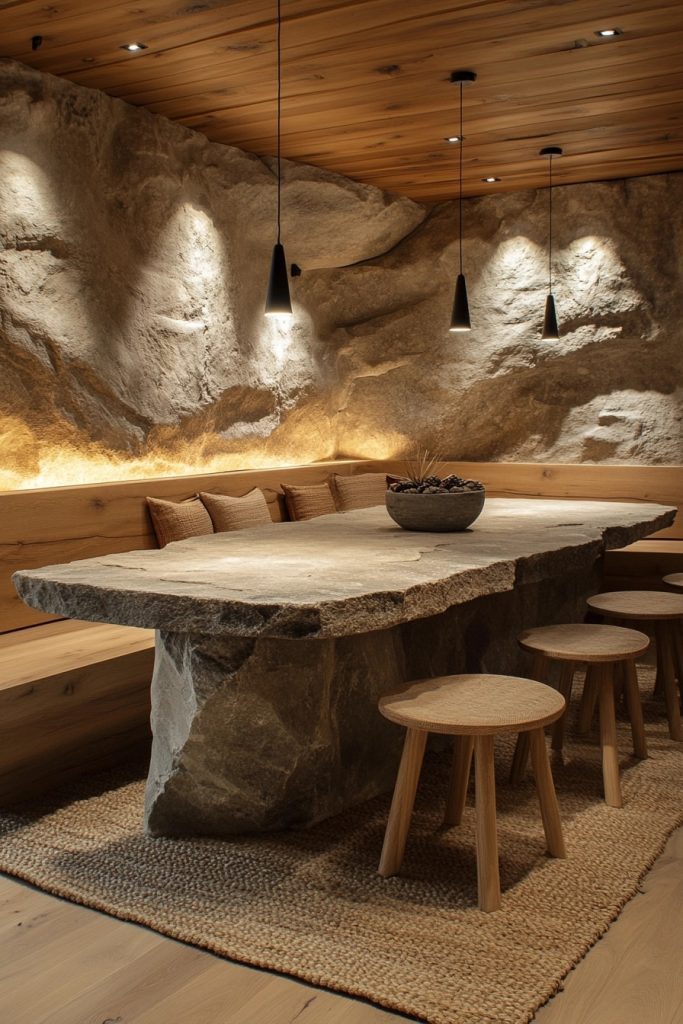
The Textured Harmony Wabi Sabi dining room utilizes a variety of tactile materials to create a rich sensory environment. Surfaces such as a rough-hewn wooden table, soft linen chair covers, and hand-thrown ceramic dishes combine to provide a depth of texture that is visually appealing and inviting. The cohesive use of organic materials fosters a sense of harmony and ease, suitable for leisurely meals. Natural lighting is used to accentuate the textures, making the dining space feel lively and dynamic.
🌟 Steal This Look
- Paint Color: Valspar Stone Masonry 6004-1C
- Furniture: Live-edge stone slab dining table with raw pedestal base, built-in wooden banquette seating with low backrest, round oak stools with three tapered legs
- Lighting: Three matte black cone pendant lights suspended in linear formation, recessed ceiling spotlights, hidden LED strip lighting at banquette base
- Materials: Rough-faced stone wall cladding, knotty cedar plank ceiling, chunky jute area rug, unglazed ceramic vessel, natural linen cushions in warm sand tones
This room feels excavated rather than built—like dining inside a protected grotto. The weight of that stone table demands you slow down, which is exactly what wabi sabi meals are meant for.
6. Soft Contours Dining
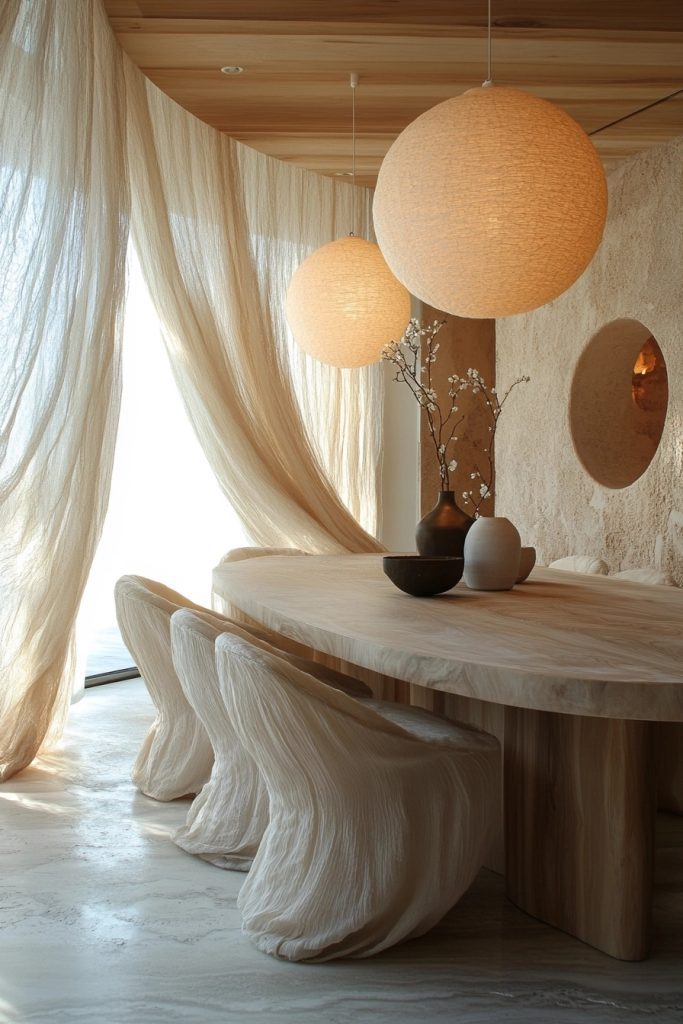
Soft Contours Dining in a Wabi Sabi dining room features furniture and decor with gentle, flowing lines that create a relaxed and welcoming atmosphere. The absence of sharp edges mirrors the Wabi Sabi principle of embracing natural forms and movements. Soft, curved chairs and an oval table promote comfort and facilitate easy conversation among diners. The use of muted colors and smooth materials enhances the softness of the space, making it ideal for unwinding and enjoying peaceful meals.
🏠 Steal This Look
- Paint Color: PPG Swiss Coffee PPG1075-1
- Furniture: Oval travertine dining table with fluted pedestal base; sculptural slipcovered dining chairs with curved, organic silhouettes
- Lighting: Oversized rice paper globe pendant lights in graduated sizes
- Materials: Raw travertine stone, textured plaster walls, handwoven linen drapery, unglazed ceramic vessels, natural rice paper
There’s something deeply calming about eating at a table that feels carved rather than manufactured—like you’re dining inside a sun-warmed cave, but with better wine.
7. Monochrome Meals
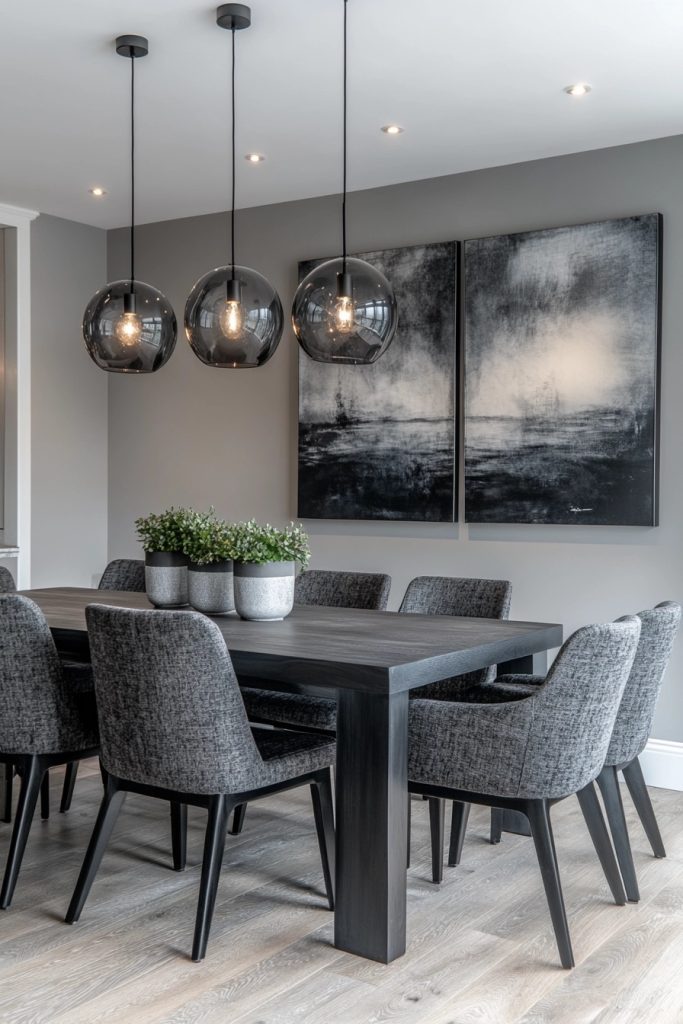
A Monochrome Meals Wabi Sabi dining room uses a single color palette to create a cohesive and tranquil dining environment. This approach simplifies the space, allowing diners to focus on the food and company without visual distractions. The subtle variations in shades and textures within the monochrome range add interest and depth, while keeping the overall look unified and calm. Minimalist art and simple, elegant table settings complement the monochrome theme, reinforcing the room’s sophisticated simplicity.
🖼 Steal This Look
- Paint Color: Dunn-Edwards Gray Whale DE6384
- Furniture: rectangular dark wood dining table with clean lines, charcoal textured upholstered dining chairs with black tapered legs
- Lighting: cluster of three oversized smoked glass globe pendants with exposed Edison bulbs
- Materials: smoked glass, dark stained oak, woven charcoal upholstery, concrete planters, weathered wood flooring
There’s something deeply calming about eating in a space that doesn’t compete for your attention—this grey-on-grey approach lets the meal itself become the moment of beauty.
Save this article
No spam. Unsubscribe anytime.
8. Quiet Repast
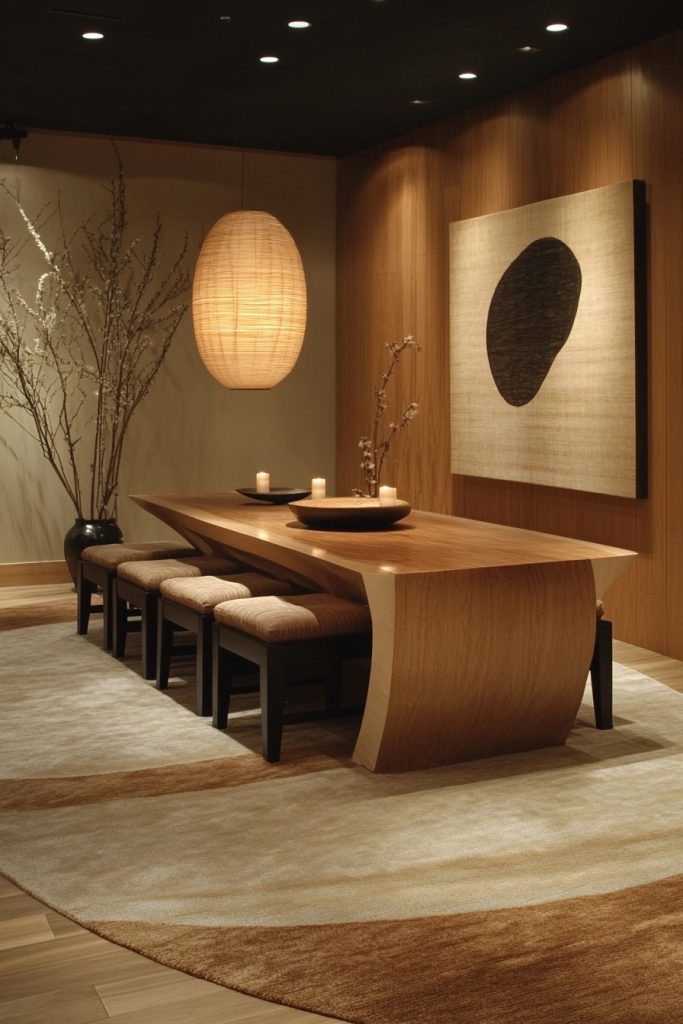
The Quiet Repast Wabi Sabi dining room is designed as a sanctuary where the noise of the outside world is left behind. Sound-absorbing materials like thick carpets or soft wall hangings minimize echo and create a hushed atmosphere. The furniture is substantial yet understated, crafted to support a quiet, contemplative dining experience. Soft, indirect lighting and a palette of deep, soothing colors enhance the sense of privacy and introspection.
🖼 Steal This Look
- Paint Color: Clare Paint Goodnight Moon 0014
- Furniture: sculptural solid wood dining table with curved base, low-profile backless benches with woven rush seats
- Lighting: oversized rice paper cocoon pendant, recessed ceiling spots for ambient glow
- Materials: warm oak wood paneling, handwoven jute and wool area rug, unglazed ceramic vessels, dried flowering branches
This space feels like exhaling after a long day—the cocoon pendant practically forces you to slow down, and that curved table edge invites lingering conversations that stretch past dessert.
9. Raw Beauty Buffet
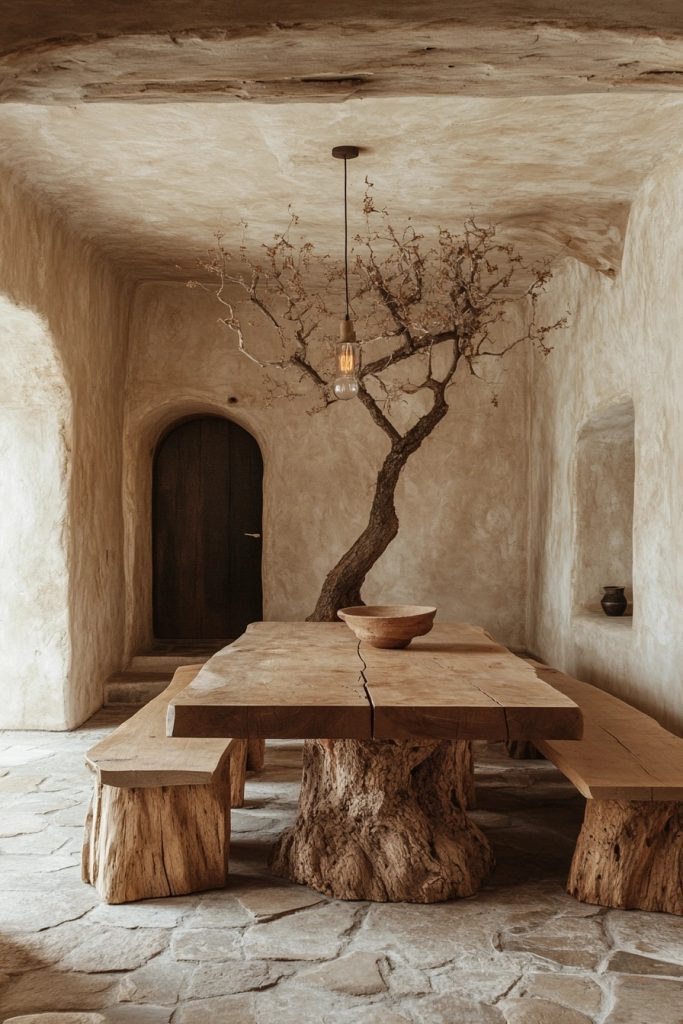
A Raw Beauty Buffet Wabi Sabi dining room celebrates the unrefined and unfinished aspects of materials. Exposed brick, a live-edge wood dining table, and unpolished metal fixtures are prominently featured, showcasing their inherent imperfections and textures. This design aesthetic appreciates the beauty of raw materials and their natural aging process. Ambient lighting highlights the unique details of each surface, enhancing the dining room’s rustic charm.
🏠 Steal This Look
- Paint Color: Fine Paints of Europe Kalkverf Warm Sand KV-14
- Furniture: Live-edge oak dining table with natural tree trunk base, matching slab benches with bark-intact legs
- Lighting: Single Edison bulb pendant with aged brass socket and black cloth cord
- Materials: Tadelakt plaster walls and ceiling, rough-hewn oak, irregular flagstone flooring, dried branch installation, unglazed terracotta vessel
This space feels excavated rather than built—like dining inside a sun-warmed cave where every crack in the wood and uneven stone tells its own quiet story.
10. Understated Chic
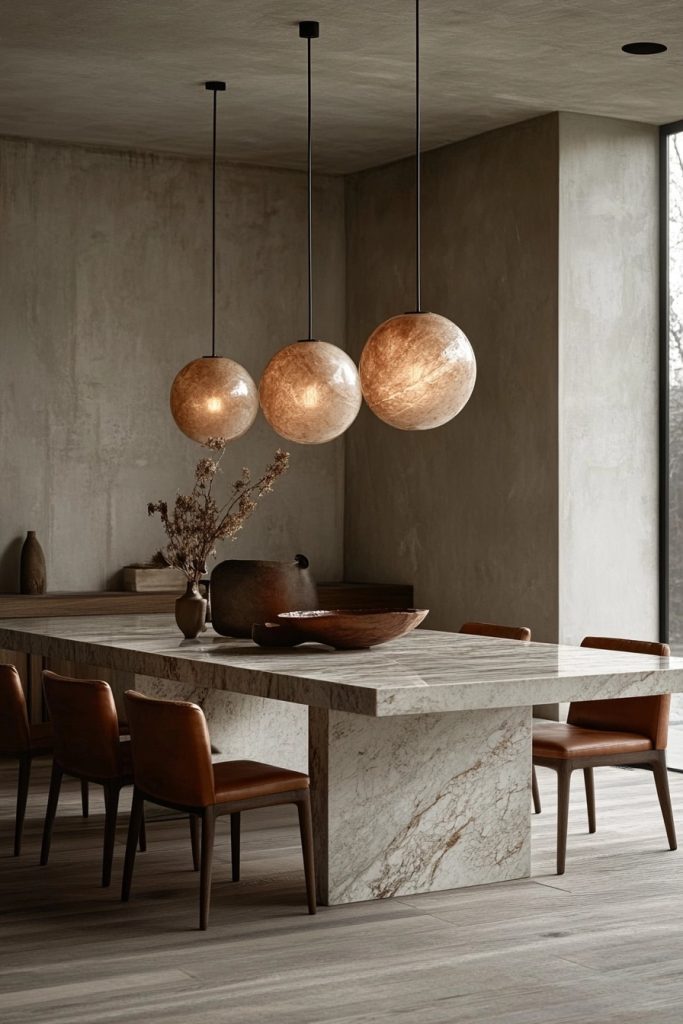
Understated Chic in a Wabi Sabi dining room focuses on minimalism and elegance. The furniture is sleek and modern, with a focus on quality over quantity. A neutral color palette and lack of clutter allow the beauty of each piece to shine through. The room is designed to be functional yet beautiful, with a few key pieces of art or decor that add a touch of sophistication without overwhelming the space.
🎨 Steal This Look
- Paint Color: Backdrop Stonehenge 36-01 — a warm, earthy greige that mimics the limewash texture on these walls
- Furniture: A solid marble block dining table with substantial waterfall legs, paired with cognac leather dining chairs with dark wood frames
- Lighting: Three graduated alabaster globe pendants with thin black suspension cords hung at staggered heights
- Materials: Raw plaster walls, veined marble, aged leather, hand-carved wood vessels, dried botanicals, wide-plank bleached oak flooring
This is the dining room equivalent of a deep exhale—every surface invites you to touch, linger, and actually use the space rather than preserve it.
11. Serenity Supper
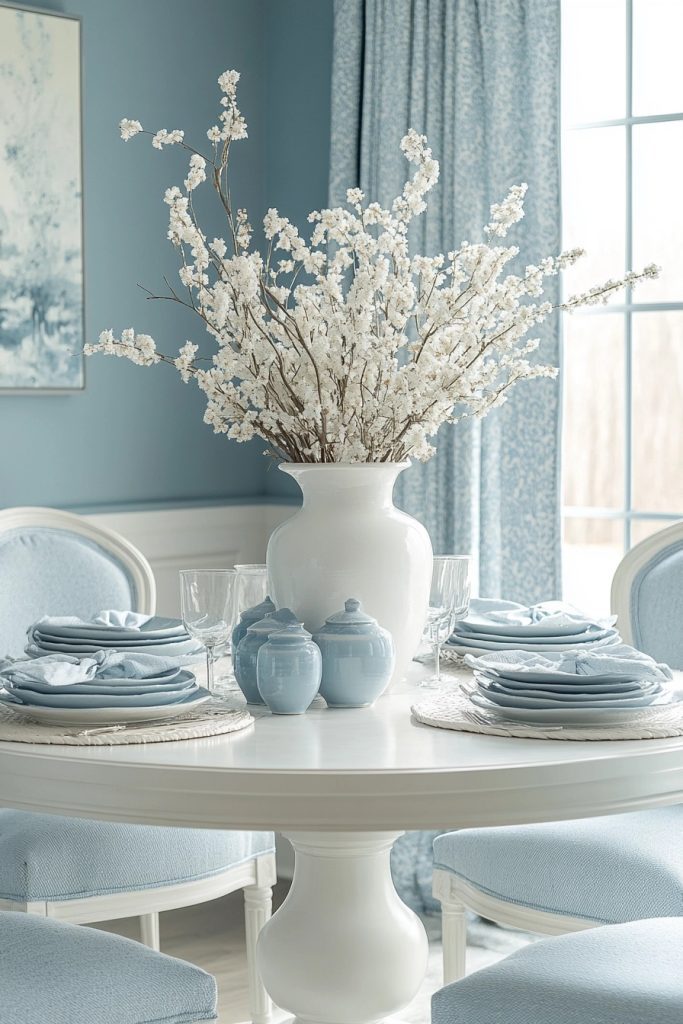
Serenity Supper in a Wabi Sabi dining room creates an atmosphere of calm and peace, ideal for unwinding at the end of the day. Soft, warm lighting, comfortable seating, and soothing colors promote relaxation and encourage diners to linger at the table. The design minimizes visual clutter, allowing the focus to remain on the meal and the company. Natural elements like a simple wooden table or stone floor add to the tranquil vibe, making the dining room a comforting escape.
💡 Steal This Look
- Paint Color: Sherwin-Williams Rainwashed SW 6211
- Furniture: Round white pedestal dining table with curved Louis XVI-style chairs in pale blue upholstery
- Lighting: Soft natural window light with sheer textured curtains
- Materials: Matte ceramic, linen napkins, woven placemats, delicate flowering branches
There’s something deeply restorative about a table set in whisper-quiet blues—this is the kind of space that makes you want to slow down and actually taste your food.
12. Gentle Grace Dining
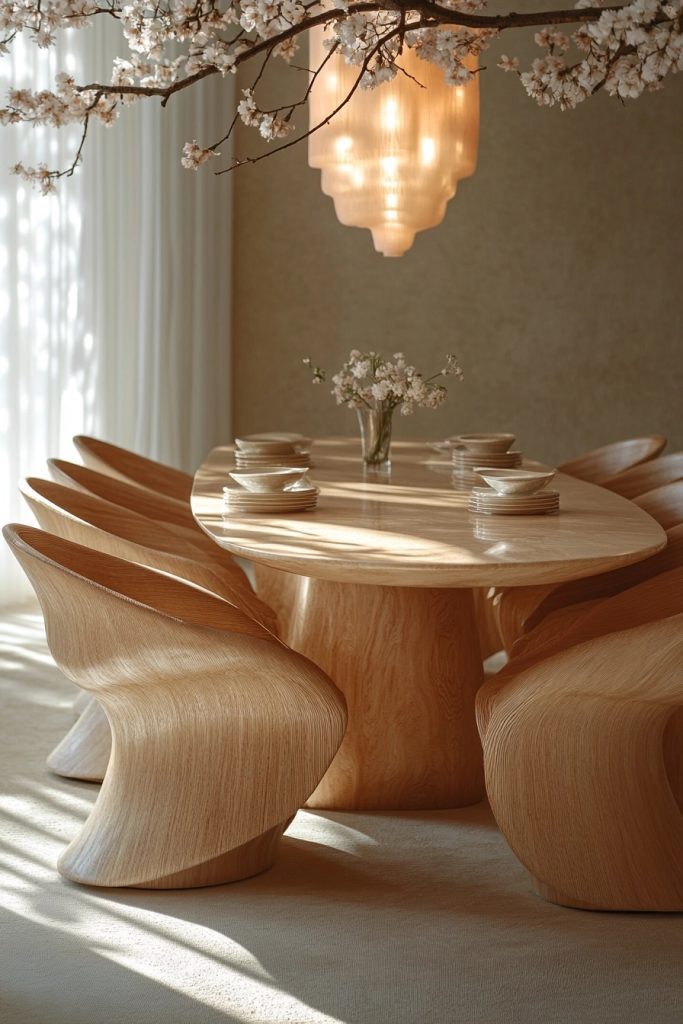
Gentle Grace Dining in a Wabi Sabi dining room emphasizes softness and grace with its decor and furniture choices. Plush, upholstered chairs, delicate table linens, and a light, airy color scheme contribute to a gentle and inviting dining environment. The room is arranged to foster a sense of openness and lightness, with plenty of space around the table to move comfortably. Subtle decorative elements, such as a graceful vase or a soft-hued painting, enhance the room’s elegant simplicity.
🏠 Steal This Look
- Paint Color: Benjamin Moore Pashmina AF-100
- Furniture: Sculptural solid wood dining chairs with curved, organic silhouettes and a live-edge or rounded oval wood dining table
- Lighting: Tiered alabaster or frosted glass pendant with warm glow
- Materials: Raw light oak or ash wood, natural stone or marble tabletop, sheer linen curtains, blooming branches
There’s something deeply calming about dining surrounded by wood grain you can actually feel and light that filters soft as morning—this is slow living made spatial.
13. Timeless Table
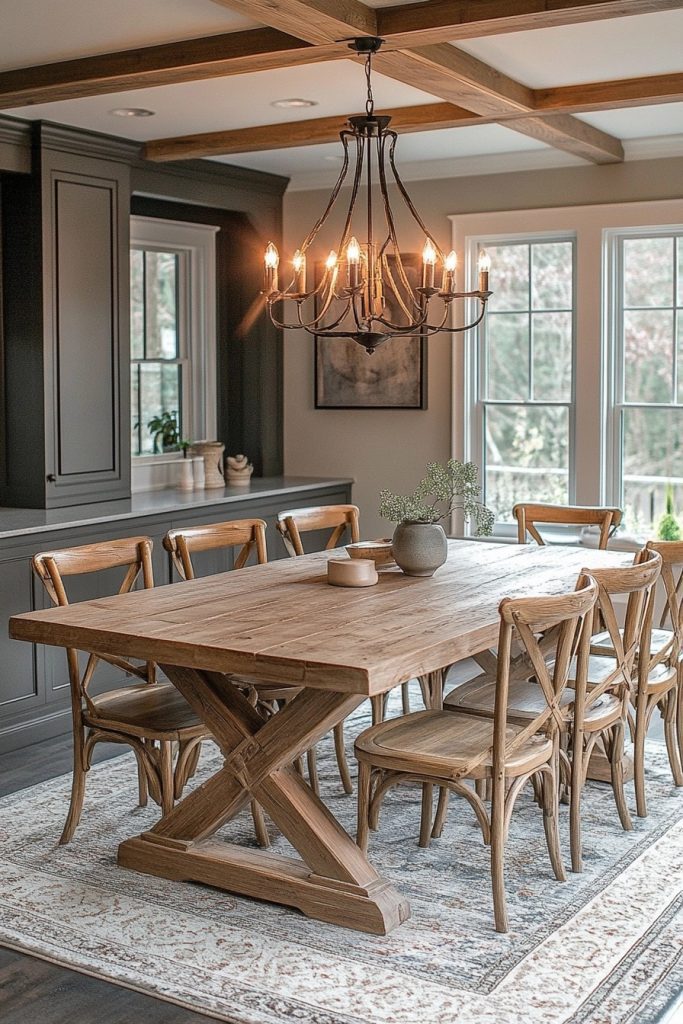
Timeless Table in a Wabi Sabi dining room features classic design elements that transcend trends, emphasizing longevity and enduring appeal. A sturdy, well-crafted wooden table, timeless china, and simple, elegant glassware set the stage for a dining experience that honors the past while remaining relevant today. The decor is minimal and focused on quality, with materials chosen for their durability and classic beauty. Soft, natural lighting and a neutral color palette complement the timeless design, inviting diners to appreciate the lasting value of good craftsmanship.
🎨 Steal This Look
- Paint Color: Farrow & Ball Charleston Gray 243
- Furniture: reclaimed oak trestle dining table with X-base, cross-back wooden dining chairs with woven rush seats
- Lighting: wrought iron cage chandelier with exposed candle-style bulbs
- Materials: weathered white oak, hand-forged iron, natural linen, aged ceramic, distressed vintage rug
This room feels like Sunday dinners that stretch into evenings—substantial enough for holiday crowds, humble enough for Tuesday takeout. The dark cabinetry grounds the space while the bleached wood keeps it breathing.
14. Refined Rusticity
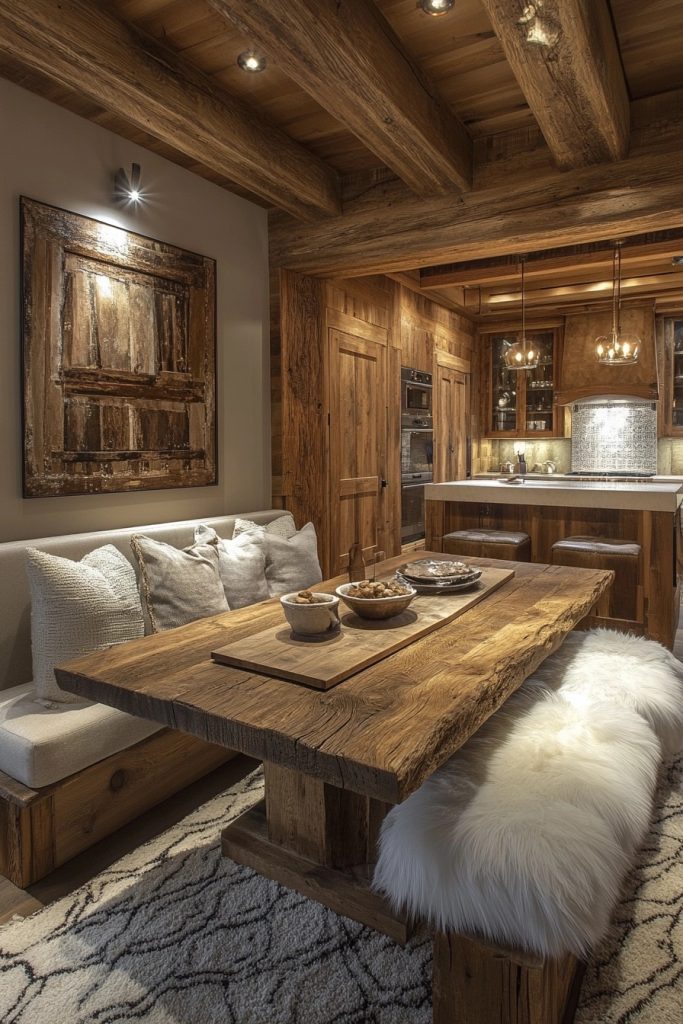
Refined Rusticity in a Wabi Sabi dining room blends rustic elements with refined details to create a sophisticated yet welcoming space. A rough-hewn wooden table might be paired with more polished, elegant seating, striking a balance between rugged charm and chic style. The use of natural materials, such as stone, wood, and metal, is key to achieving this look, while careful attention to texture and detail adds a layer of sophistication. Subtle lighting and a harmonious color scheme enhance the refined rustic aesthetic, making the dining room an inviting place to gather.
🏠 Steal This Look
- Paint Color: Behr Wheat Bread N320-2
- Furniture: live-edge wooden dining table with trestle base, built-in banquette with natural linen upholstery, wooden bench with sheepskin throw
- Lighting: recessed ceiling spotlights, vintage brass pendant lights with exposed bulbs
- Materials: reclaimed barn wood ceiling beams and paneling, rough-sawn oak, hammered metal backsplash, natural stone, Moroccan wool rug with geometric pattern
This space feels like it evolved over decades rather than being designed in a weekend—the patinated wood, the art that looks salvaged, the sheepskin that’s seen actual use. That’s the Wabi Sabi spirit: beauty in the lived-in and imperfect.
15. Flowing Lines Feast
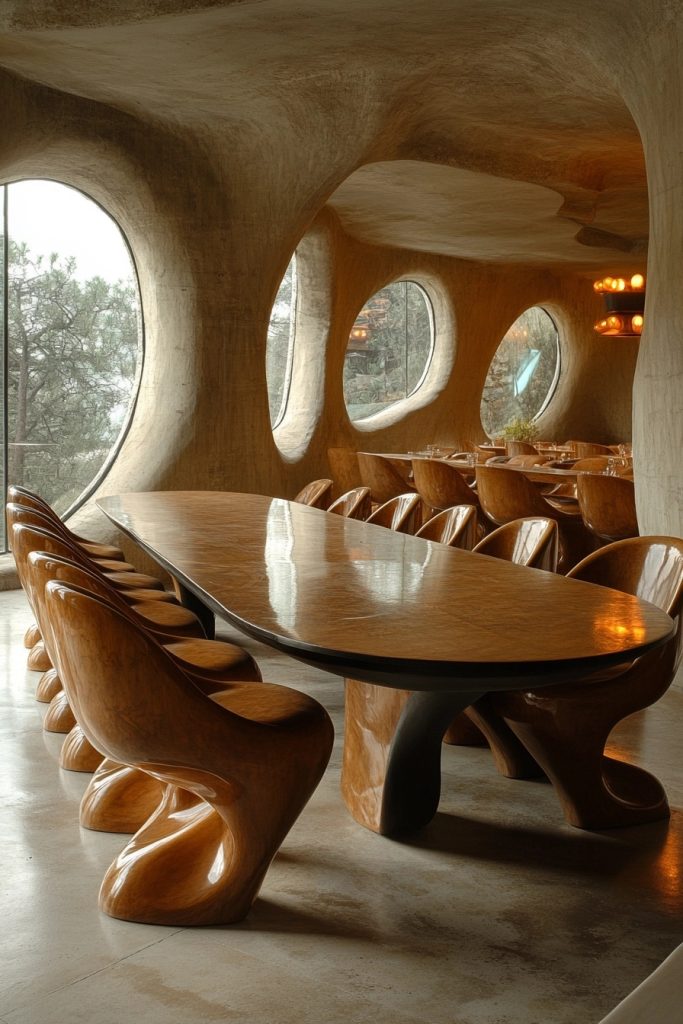
Flowing Lines Feast in a Wabi Sabi dining room features furniture and decor with smooth, flowing lines that evoke a sense of movement and ease. Curved chairs, an oval table, and soft, undulating patterns in the rug or curtains contribute to a fluid and dynamic dining space. The design avoids sharp corners and harsh lines, emphasizing instead the beauty of curves and contours. Light, both natural and artificial, is used to enhance the flowing lines, casting gentle shadows and highlights that animate the space.
✎ Steal This Look
- Paint Color: Valspar Adobe Sand 3002-10A
- Furniture: sculptural carved wood dining chairs with curved bucket seats, live-edge oval dining table with organic pedestal base
- Lighting: clustered amber glass wall sconces with warm glow
- Materials: hand-troweled plaster walls with undulating texture, polished concrete floors, carved solid wood, amber glass
This room feels like dining inside a hollowed tree—there’s something ancient and sheltering about those cocooning walls that makes every meal feel ceremonial.
16. Muted Marvel
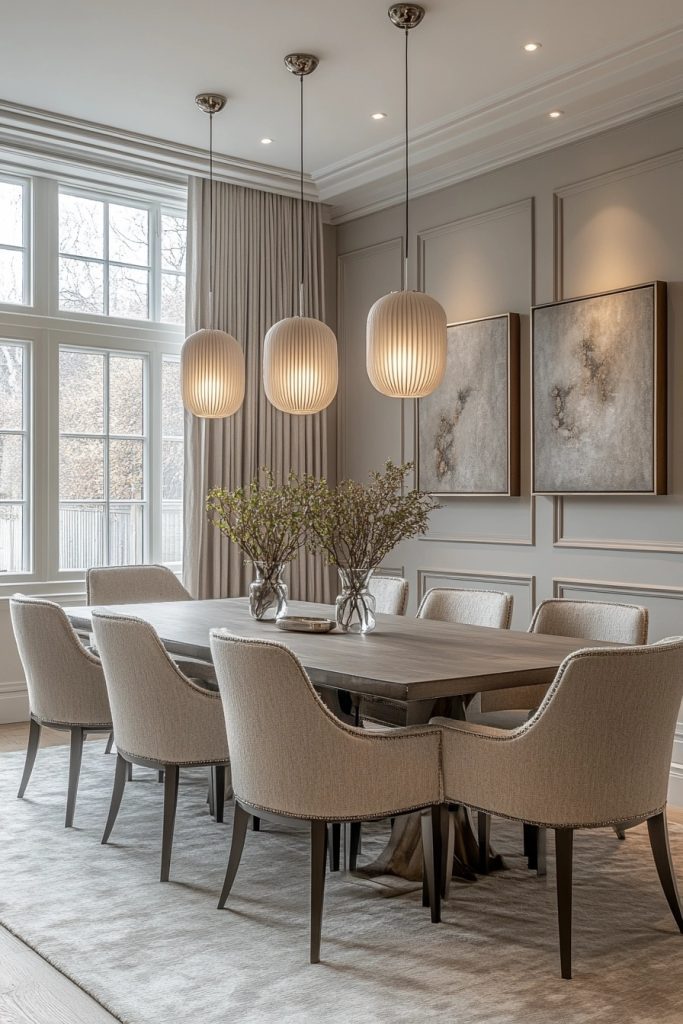
Muted Marvel in a Wabi Sabi dining room uses a subdued color palette to create a soft, understated backdrop for dining. Pale grays, soft beiges, and washed-out blues combine to form a tranquil setting that encourages relaxation and conversation. The furniture is simple and functional, with a focus on comfort and craftsmanship. Subtle textural differences in the fabrics and materials add interest without overwhelming the senses.
🏠 Steal This Look
- Paint Color: PPG Gray Whisper PPG1002-2
- Furniture: upholstered dining chairs with nailhead trim in oatmeal linen, dark wood trestle dining table
- Lighting: three oversized ribbed glass pendant lights with warm glow
- Materials: linen upholstery, ribbed glass, dark walnut wood, subtle geometric wall molding, tonal abstract art
This room whispers rather than shouts, and that’s exactly the point. The restrained palette lets the texture of the linen chairs and the glow through those ribbed pendants do the emotional heavy lifting.
17. Soothing Suppers
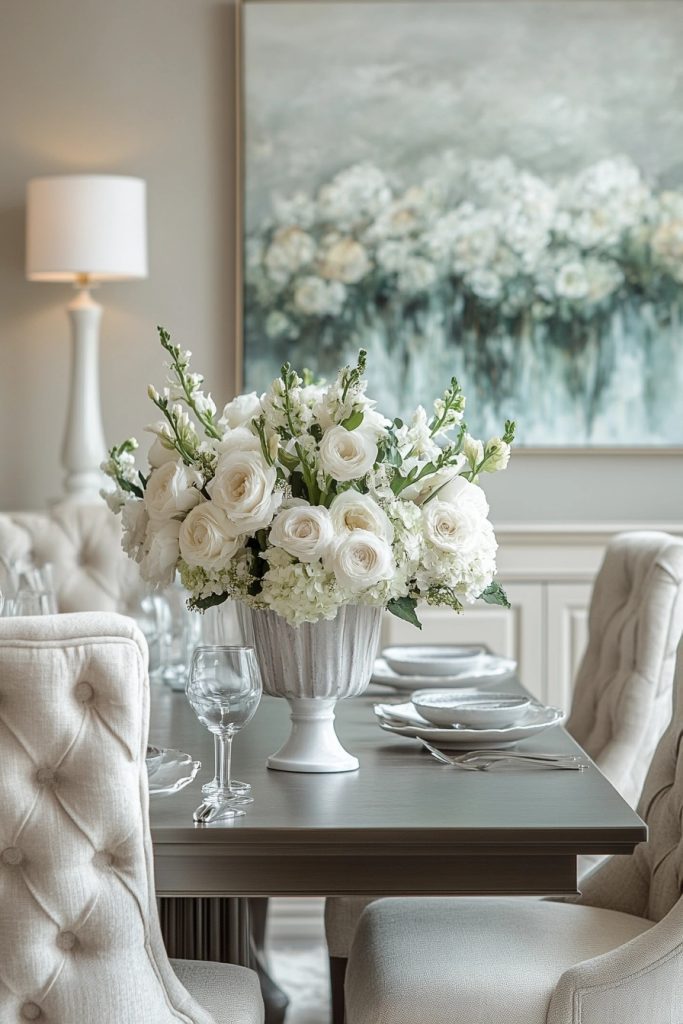
Soothing Suppers in a Wabi Sabi dining room is designed to be a calming space where the stresses of the day can be left behind. Soft, plush seating, gentle lighting, and calming colors create an environment that is conducive to relaxation and enjoyment. The decor is minimal, focusing on quality rather than quantity, with a few carefully chosen pieces that contribute to the overall calm of the space. Natural materials and soft textures are key to achieving the soothing effect, making the dining room a sanctuary for peaceful meals.
★ Steal This Look
- Paint Color: Dunn-Edwards Whisper DEW340
- Furniture: tufted linen dining chairs with button detailing, painted wood pedestal dining table in soft gray
- Lighting: white ceramic table lamp with drum shade on buffet or sideboard
- Materials: textured linen upholstery, matte ceramic, soft brushed metals, painted wood with subtle distressing
This is the dining room equivalent of a deep exhale—every element whispers rather than announces, inviting you to linger longer over simple meals.
18. Pared-back Panache
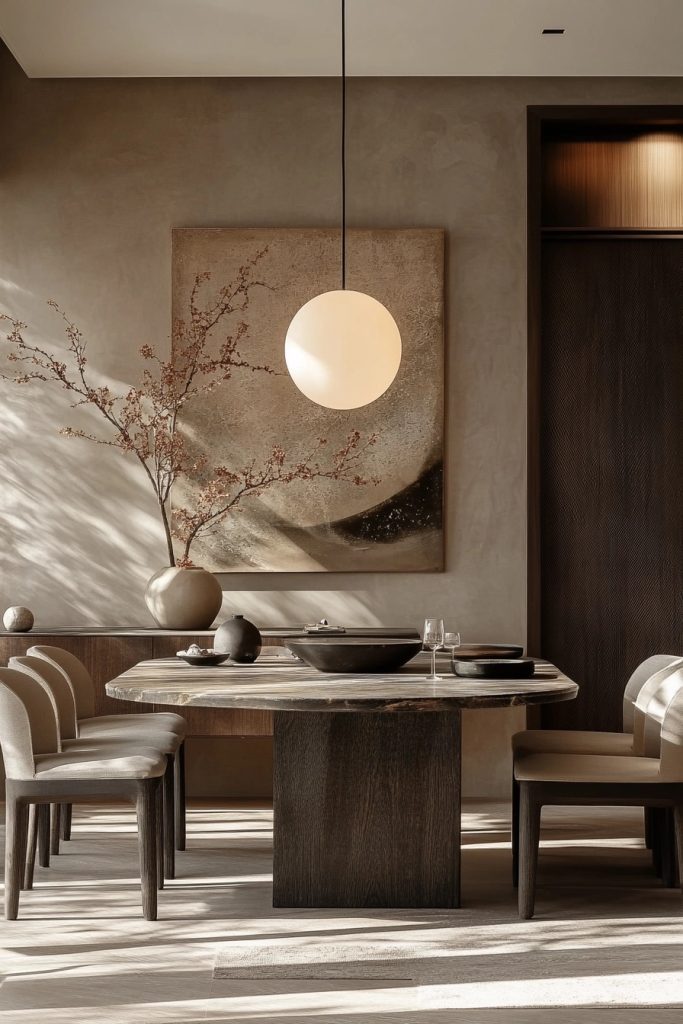
Pared-back Panache in a Wabi Sabi dining room focuses on achieving a stylish look with minimal elements. The design uses sleek, simple furniture and a few standout pieces, such as a striking light fixture or a bold piece of art, to create a chic and sophisticated dining space. The color palette is limited and carefully curated, ensuring that each element is both functional and stylish. The overall effect is elegant and modern, with a focus on form and function.
💡 Steal This Look
- Paint Color: Clare Paint Pampas Grass CC-02
- Furniture: round live-edge stone dining table with chunky dark wood pedestal base, low-profile upholstered dining chairs in warm greige linen
- Lighting: oversized matte white globe pendant on thin black cord
- Materials: raw travertine, dark stained oak, slubby linen, hand-thrown ceramic, dried botanical branches
There’s something grounding about eating at a table that looks carved from the earth itself—the weight of that stone base makes every meal feel like an occasion.
19. Natural Nuance
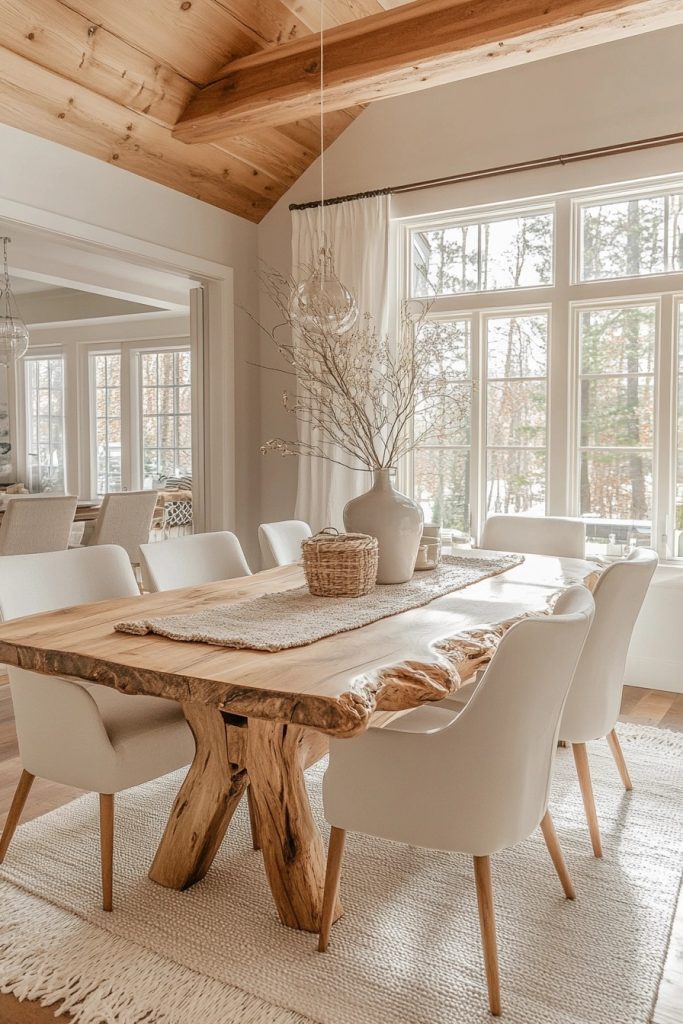
Natural Nuance in a Wabi Sabi dining room incorporates subtle touches of nature to create a fresh and inviting dining space. The use of natural materials, such as wood and stone, is complemented by neutral, earthy colors that enhance the connection to the outdoors. The decor is simple and unobtrusive, allowing the natural beauty of the materials to shine through. Soft, natural lighting and minimal, rustic decor elements contribute to a sense of tranquility and groundedness.
🏠 Steal This Look
- Paint Color: Fine Paints of Europe ECO Whisper White W100
- Furniture: live-edge oak dining table with sculptural root base, ivory linen-upholstered dining chairs with tapered oak legs
- Lighting: clear glass globe pendant with visible filament bulb on black cord
- Materials: unfinished oak ceiling beams, handwoven jute table runner, woven seagrass basket, dried branching arrangement in matte ceramic vessel, natural wool flatweave rug with fringe
There’s something quietly radical about a dining room that refuses to be ‘finished’—the cracks in the wood, the frayed edges of the runner, the branches that will shed. It gives you permission to exhale.
20. Warm Whispers
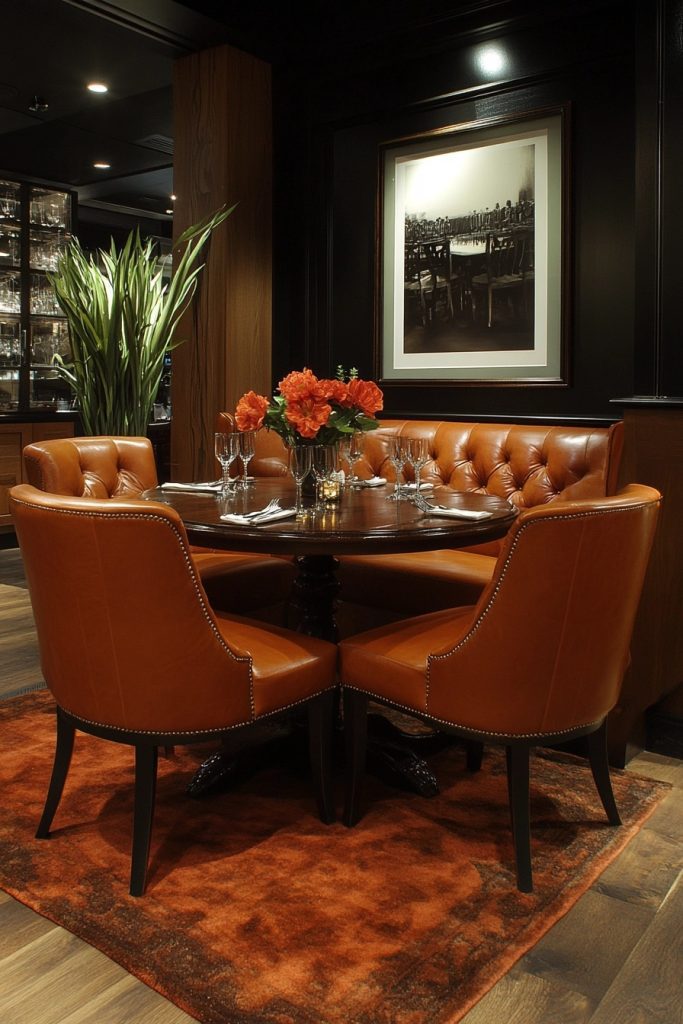
Warm Whispers in a Wabi Sabi dining room focuses on creating a warm and inviting atmosphere through the use of soft, warm tones and cozy materials. Plush seating, rich wooden tables, and soft lighting all contribute to a welcoming dining environment. The decor is intimate and comforting, with soft fabrics and gentle colors that invite diners to relax and enjoy their meal. The use of warm colors and textures makes the dining space feel intimate and nurturing.
💡 Steal This Look
- Paint Color: Backdrop Black 03 001
- Furniture: cognac leather tufted banquette with matching leather dining chairs featuring nailhead trim
- Lighting: recessed ceiling spotlights with warm 2700K output
- Materials: polished dark wood table, aged cognac leather, rust-toned wool rug, dark stained wood paneling
This is the dining equivalent of a aged bourbon—deliberately dark, unapologetically rich, and better for the wear.
21. Unfinished Elegance
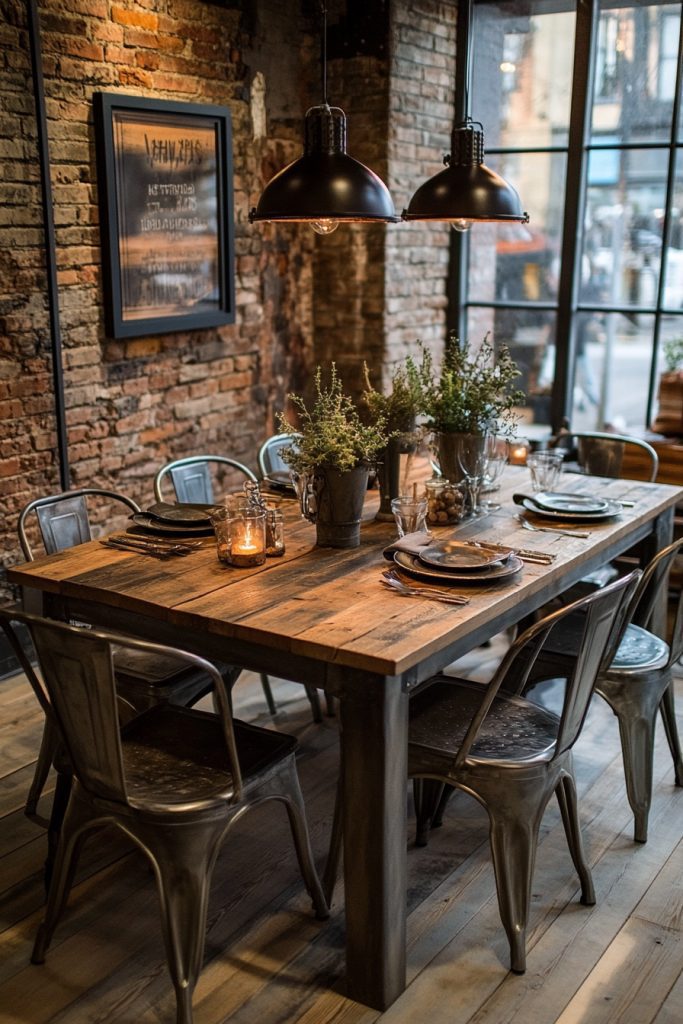
Unfinished Elegance in a Wabi Sabi dining room celebrates the beauty of materials in their natural, unfinished state. This could include a dining table with a raw wood finish, chairs with a natural patina, and simple, handmade tableware. The beauty of these elements lies in their imperfections, which are highlighted rather than concealed. Subtle lighting and a minimalist approach to decor allow the raw materials to take center stage, creating a space that is both elegant and earthy.
✎ Steal This Look
- Paint Color: Sherwin-Williams Urbane Bronze SW 7048
- Furniture: reclaimed wood farm table with visible knots and grain, gunmetal Tolix-style metal dining chairs with worn patina
- Lighting: oversized black dome pendant lights with exposed Edison bulbs
- Materials: exposed aged brick, raw reclaimed wood, oxidized metal, galvanized steel, hand-thrown ceramic dishware, foraged greenery in weathered metal vessels
There’s something quietly rebellious about a dining room that refuses to apologize for its scars—the water rings, the chair dings, the brick that’s seen a century. This is where you actually want to linger.
22. Whispered Welcomes
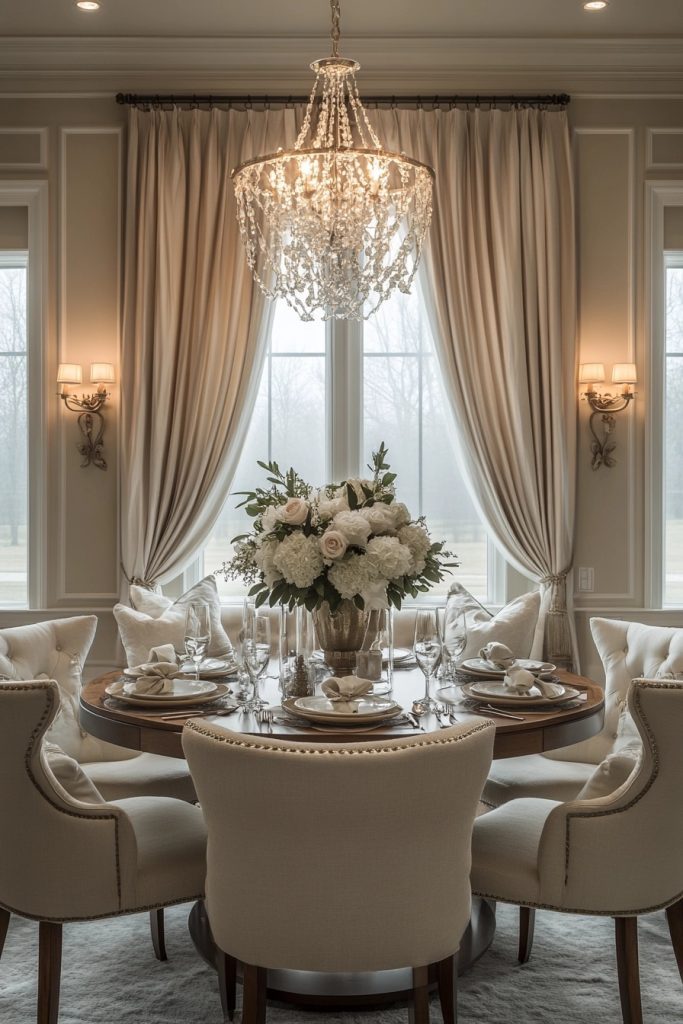
Whispered Welcomes in a Wabi Sabi dining room creates an inviting atmosphere with soft tones and welcoming textures. The space should be arranged to encourage conversation and interaction, with comfortable seating and a layout that facilitates easy communication. Decorative elements should be kept to a minimum, focusing on enhancing the welcoming feel of the room with soft textiles and warm lighting. The overall ambiance is one of quiet hospitality, making guests feel immediately at ease.
★ Steal This Look
- Paint Color: Benjamin Moore White Dove OC-17
- Furniture: Round pedestal dining table in warm walnut finish with cream upholstered host chairs featuring nailhead trim
- Lighting: Large-scale crystal drum chandelier with aged brass frame and wall-mounted sconces with fabric shades
- Materials: Silk drapery panels, crystal accents, polished walnut, brushed brass, cream linen upholstery, marbleized porcelain
This is the dining room that forgives spilled wine and lingering conversations; the soft palette and rounded forms practically insist that nobody rushes through a meal.
23. Soft Shadow Suppers
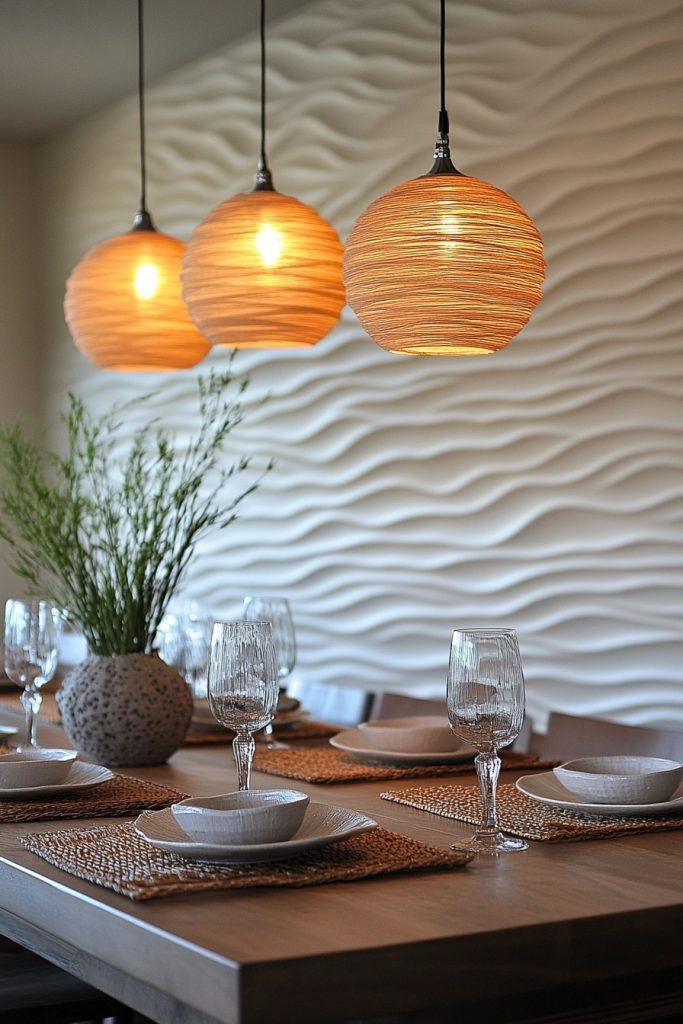
Soft Shadow Suppers in a Wabi Sabi dining room uses lighting to create a play of shadows that adds depth and intimacy to the dining experience. The space should feature lighting that casts soft shadows across textured walls, rustic furniture, and the dining surface, enhancing the mood and aesthetic of the meal. The use of shadow and light not only adds visual interest but also enhances the intimate atmosphere of the dining room, making it ideal for quiet, reflective dinners.
💡 Steal This Look
- Paint Color: Farrow & Ball Shadow White 282
- Furniture: thick-plank walnut dining table with live edge detail, low-profile upholstered dining chairs in natural linen
- Lighting: three globe pendant lights in woven natural rattan or bamboo with visible filament bulbs
- Materials: 3D sculpted wave-textured wall panels, hand-thrown ceramic vessels, woven seagrass placemats, hammered glass stemware
There’s something quietly meditative about dining beneath these glowing orbs—the way light pools on the table while shadows ripple across the wall feels like eating inside a lantern. It’s imperfect, alive, and deeply calming.
24. Neutral Nook
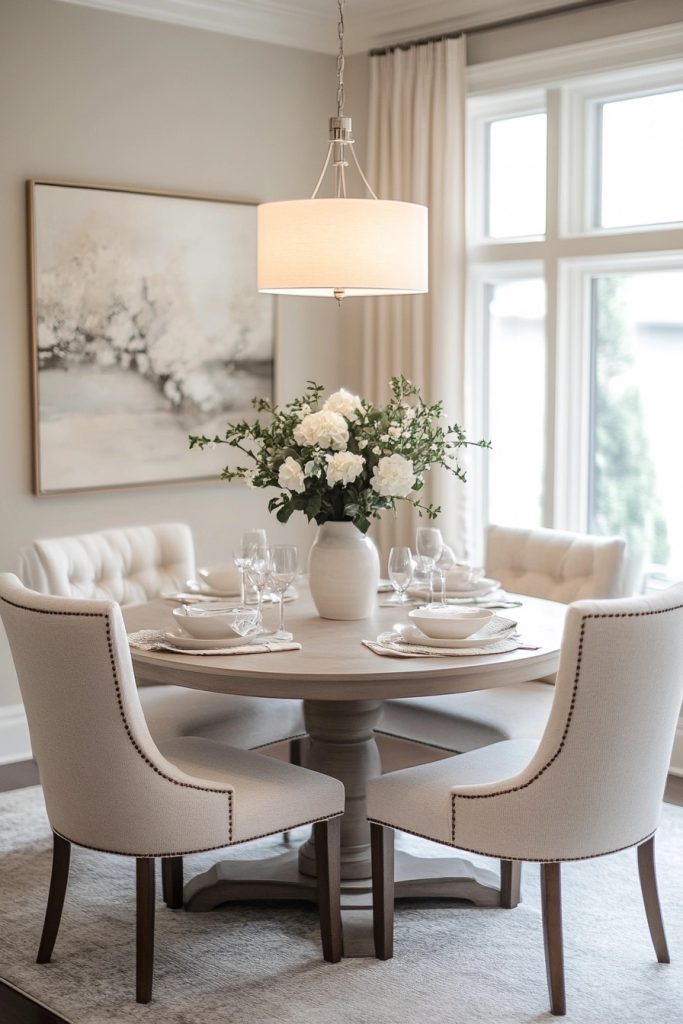
Neutral Nook in a Wabi Sabi dining room utilizes a palette of neutral colors to create a calm and balanced dining space. The colors, ranging from soft beiges to warm grays, are chosen for their soothing qualities and their ability to create a harmonious environment. Furniture and decor are simple and understated, emphasizing the clean lines and quality materials that define the Wabi Sabi aesthetic. The overall design is minimalist, focusing on functionality and the beauty of the materials used.
🎨 Steal This Look
- Paint Color: Behr Swiss Coffee 12
- Furniture: round pedestal dining table in weathered gray wood, tufted linen dining chairs with nailhead trim in cream
- Lighting: drum pendant with brushed nickel hardware and white linen shade
- Materials: matte ceramic, washed linen, weathered wood, brushed metal, textured wool rug
There’s something quietly grounding about eating in a space this restrained—every scratch on the table and rumple in the linen just adds to the story.
25. Calm Culinary Corner
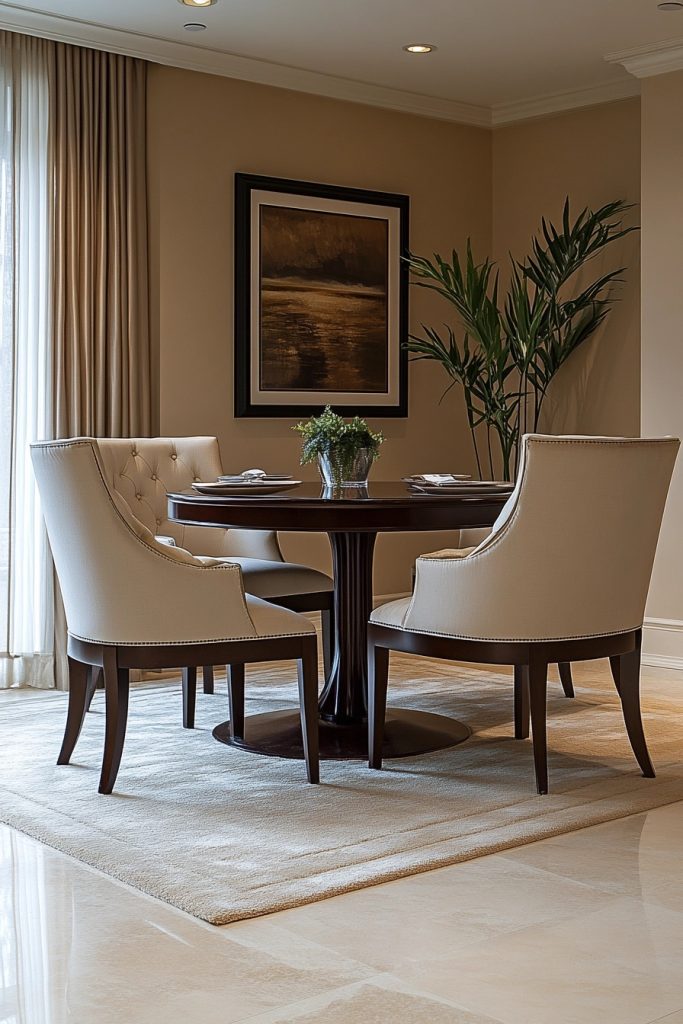
Calm Culinary Corner in a Wabi Sabi dining room is designed as a tranquil space for enjoying meals without the distraction of loud colors or busy patterns. The decor includes smooth wooden surfaces, soft fabric chairs, and minimal adornments, creating a peaceful setting that focuses on the dining experience. Lighting is gentle and diffused, softening the space and enhancing the calm atmosphere. This dining room is perfect for those who value a quiet, relaxing mealtime, with a focus on simplicity and comfort.
🖼 Steal This Look
- Paint Color: Valspar Oatbran 3003-10A
- Furniture: Round pedestal dining table in dark espresso wood with cream leather tufted dining chairs with nailhead trim
- Lighting: Recessed can lights with warm dimmable bulbs
- Materials: Polished marble-look tile flooring, plush neutral area rug, silk and linen layered window treatments, dark wood frame artwork
There’s something deeply grounding about eating in a room that doesn’t compete for your attention—this palette lets the food and company take center stage.
26. Simple Splendor
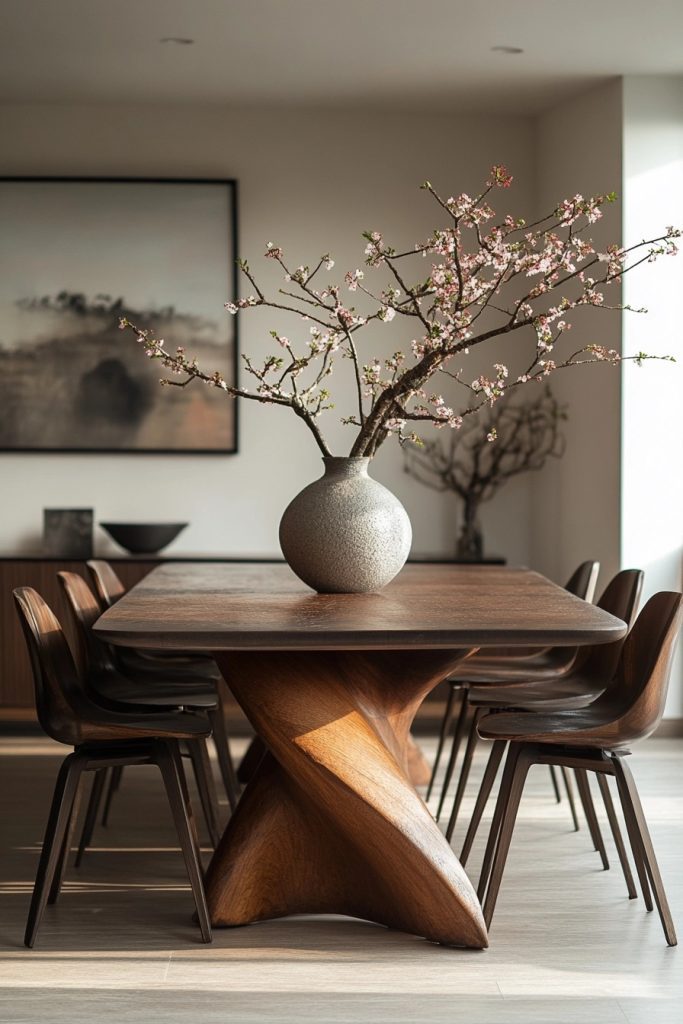
Simple Splendor in a Wabi Sabi dining room emphasizes the beauty of simplicity with elegant, straightforward furniture and minimal decor. The design relies on the high quality of materials and craftsmanship, allowing the dining table and chairs to stand out as works of art in their own right. The color scheme is subdued, with gentle hues that complement the natural materials used throughout the space. The overall atmosphere is one of refined simplicity, where less is truly more.
🖼 Steal This Look
- Paint Color: PPG Stonehenge Greige PPG1020-2
- Furniture: sculptural live-edge walnut dining table with twisted pedestal base; molded walnut dining chairs with curved backs
- Lighting: recessed ceiling can lights for soft ambient wash
- Materials: textured ceramic, raw walnut, blooming branches, matte stone, linen-hued plaster walls
There’s something quietly radical about a dining room that asks nothing of you except presence. The twisted walnut base catches morning light like a living thing—this is furniture that ages with you, not against you.
27. Authentic Ambience
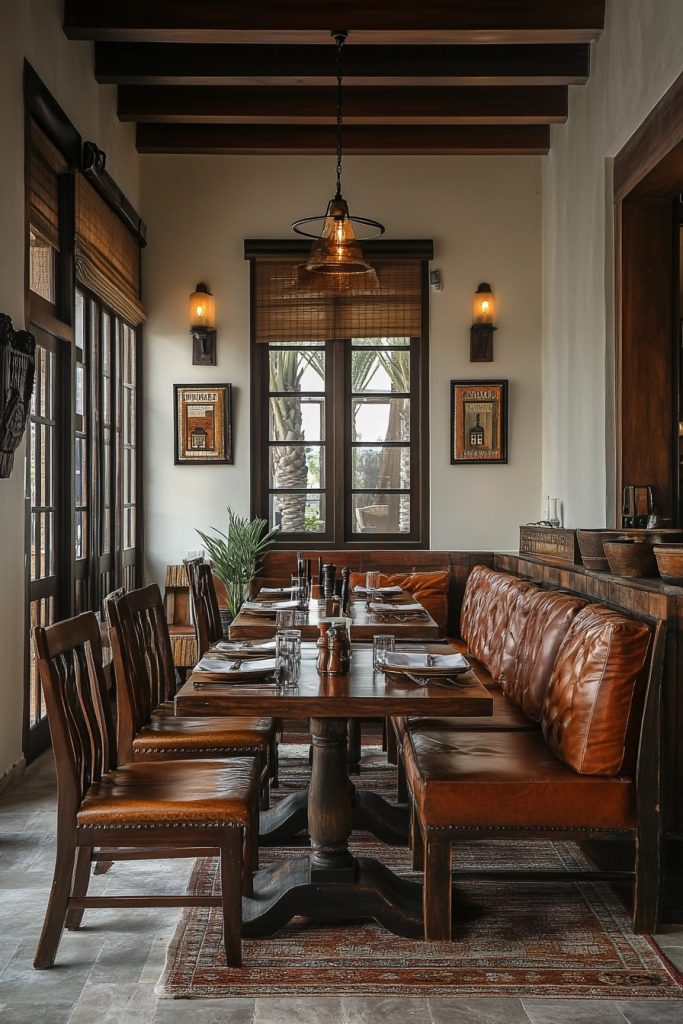
Authentic Ambience in a Wabi Sabi dining room focuses on creating an atmosphere that feels genuine and unpretentious. The space is designed with honesty in materials and form, featuring handcrafted furniture and simple, natural fabrics. The decor is modest and rooted in traditional craftsmanship, reflecting a respect for authentic dining experiences. Lighting is warm and welcoming, casting a soft glow that invites diners to relax and enjoy the meal.
🏠 Steal This Look
- Paint Color: Dunn-Edwards Swiss Coffee DEW341
- Furniture: distressed leather banquette with tufted back, solid wood trestle dining table with turned pedestal base, ladder-back wooden dining chairs with leather seats
- Lighting: industrial cage pendant with Edison bulb, cast iron wall sconces with warm amber glow
- Materials: dark stained ceiling beams, woven bamboo shades, reclaimed wood, aged leather, hand-knotted vintage rug, terracotta, unpolished stone flooring
This room feels like it evolved over decades, not months—let your space collect stories through found objects and hand-me-down pieces rather than rushing to complete it.
28. Harmonious Haven
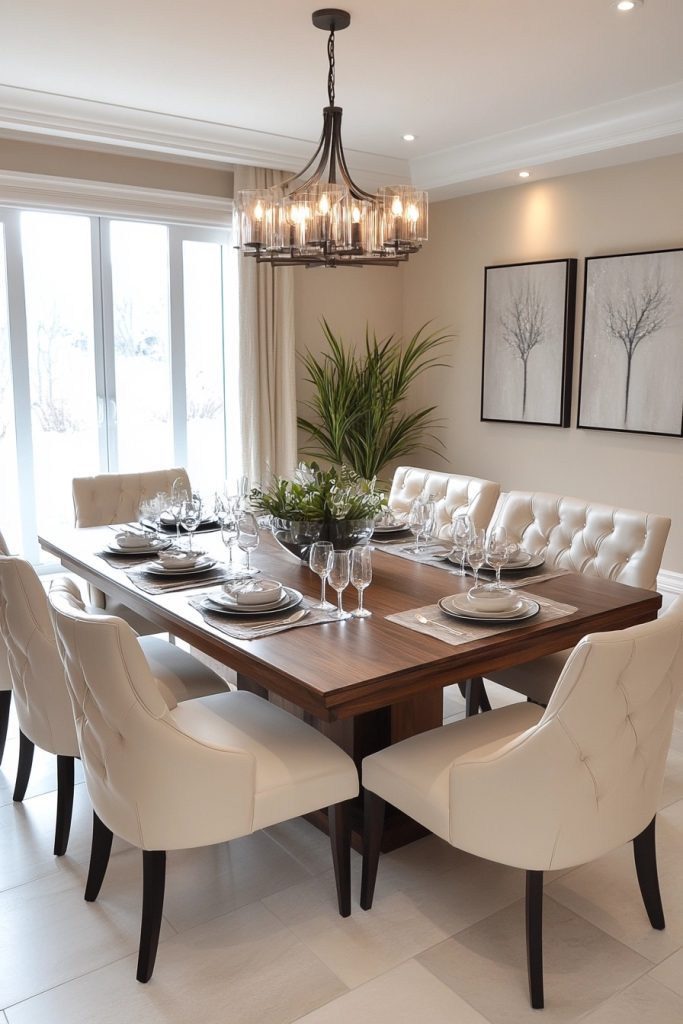
Harmonious Haven in a Wabi Sabi dining room is all about creating a space where balance and harmony prevail. The design incorporates elements that promote a sense of well-being and contentment, such as balanced proportions, symmetrical layouts, and a cohesive color palette. Furniture is arranged to foster easy conversation and a comfortable dining experience, with a focus on fostering relationships and communal dining. The use of natural materials and colors enhances the harmonious feel, making the dining room a haven for those who dine there.
🖼 Steal This Look
- Paint Color: Clare Paint Timeless CC-01
- Furniture: tufted cream linen dining chairs with dark wood legs, matching banquette bench, substantial walnut dining table with thick pedestal base
- Lighting: bronze drum chandelier with seeded glass candle sleeves and crystal accents
- Materials: walnut wood, cream linen upholstery, seeded glass, polished porcelain tile flooring, matte bronze metal
This room proves wabi sabi doesn’t mean rustic or unfinished—there’s something deeply calming about the creamy neutrals and perfect symmetry that makes every dinner feel like a special occasion.
29. Clear Calm Culinary
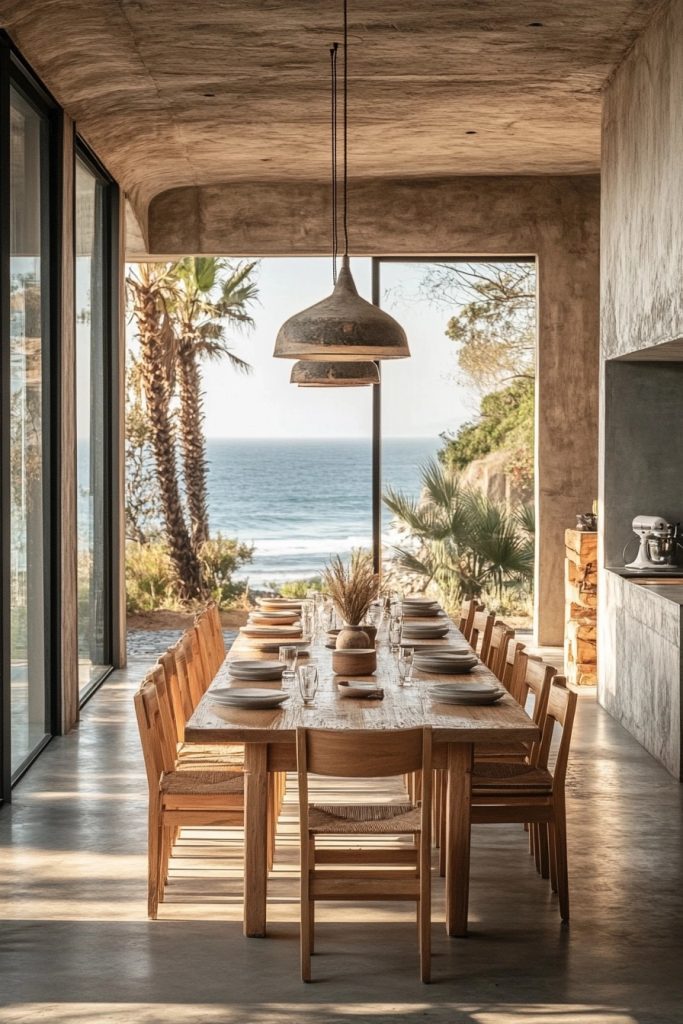
Clear Calm Culinary in a Wabi Sabi dining room showcases an uncluttered space that emphasizes clarity and calmness. The minimalist design focuses on the essentials—quality dining furniture, sufficient lighting, and little else—to maintain a clear and tranquil dining area. The use of transparent materials like glass or sheer fabrics can enhance the feeling of openness and light. This dining room is perfect for those who appreciate the calming effect of an unobstructed space.
🎨 Steal This Look
- Paint Color: Fine Paints of Europe Saddle Tan S5040-Y30R
- Furniture: Long reclaimed teak dining table with live edge, paired with matching wooden side chairs featuring woven rush seats
- Lighting: Oversized weathered metal dome pendants in aged bronze with visible patina, hung in staggered formation
- Materials: Raw concrete walls and ceiling, polished concrete floors, unfinished teak, hand-thrown ceramic tableware, dried natural grasses
There’s something almost meditative about dining in a space that refuses to hide its age—these walls have stories, and that imperfection invites you to slow down and actually taste your food.
Conclusion
And there you have it—29 Wabi Sabi Dining Room ideas to help you create a balanced and calming ambience in your home. By embracing natural materials, simple designs, and the beauty of imperfection, you can turn your dining room into a peaceful retreat that encourages relaxation and togetherness. Ready to bring serenity and style to your dining space? These wabi sabi ideas will guide you every step of the way!
Save this article
No spam. Unsubscribe anytime.