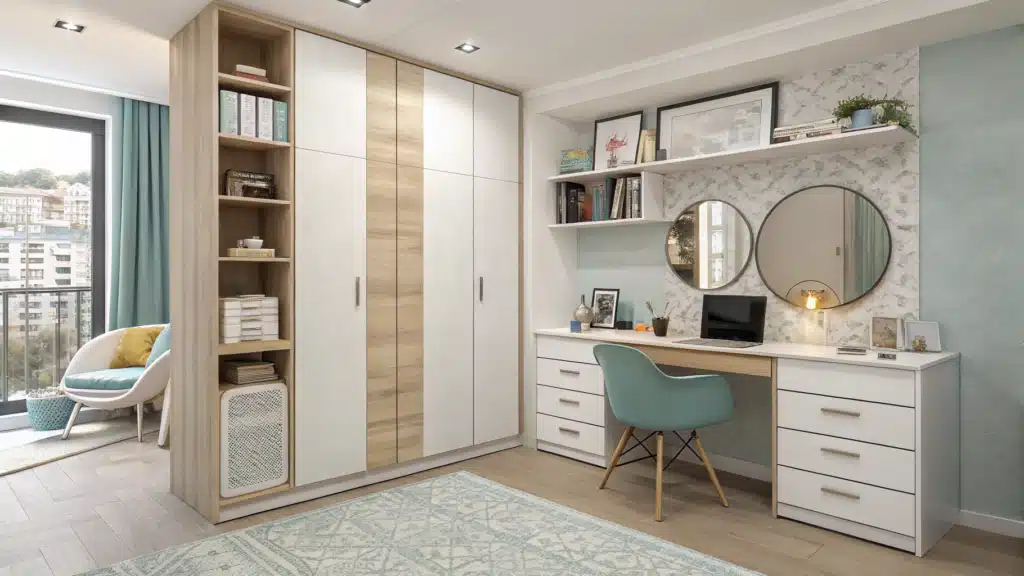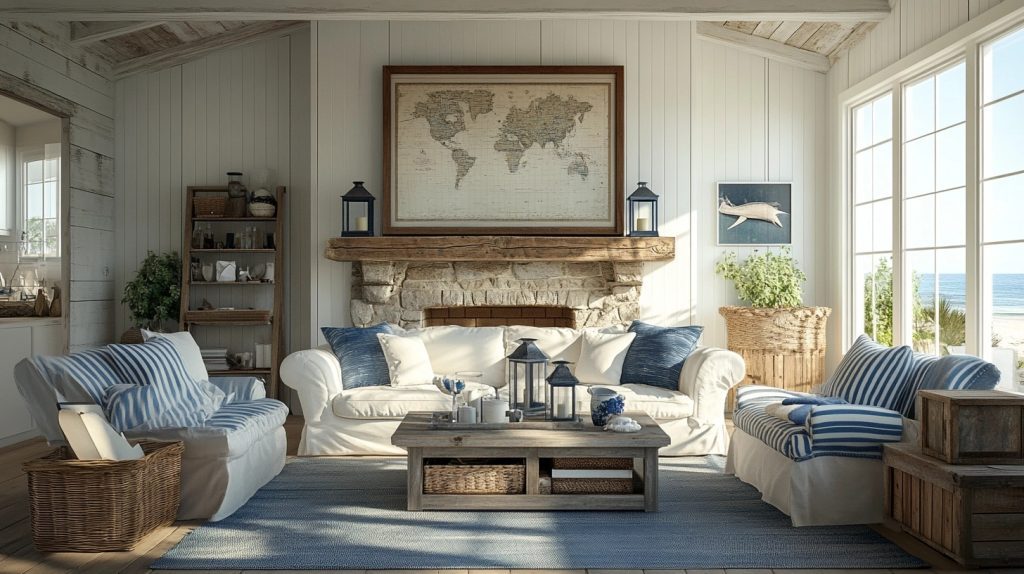
The first time I lowered a shelf so my two-year-old could reach her own puzzles, she stopped bringing them to me and started carrying them to the rug herself. That small shift is really what a Montessori playroom is about — furniture kids can actually use and a handful of activities they can choose without asking. Here are 29 setups worth borrowing from.
1. Cozy Montessori Discovery Room
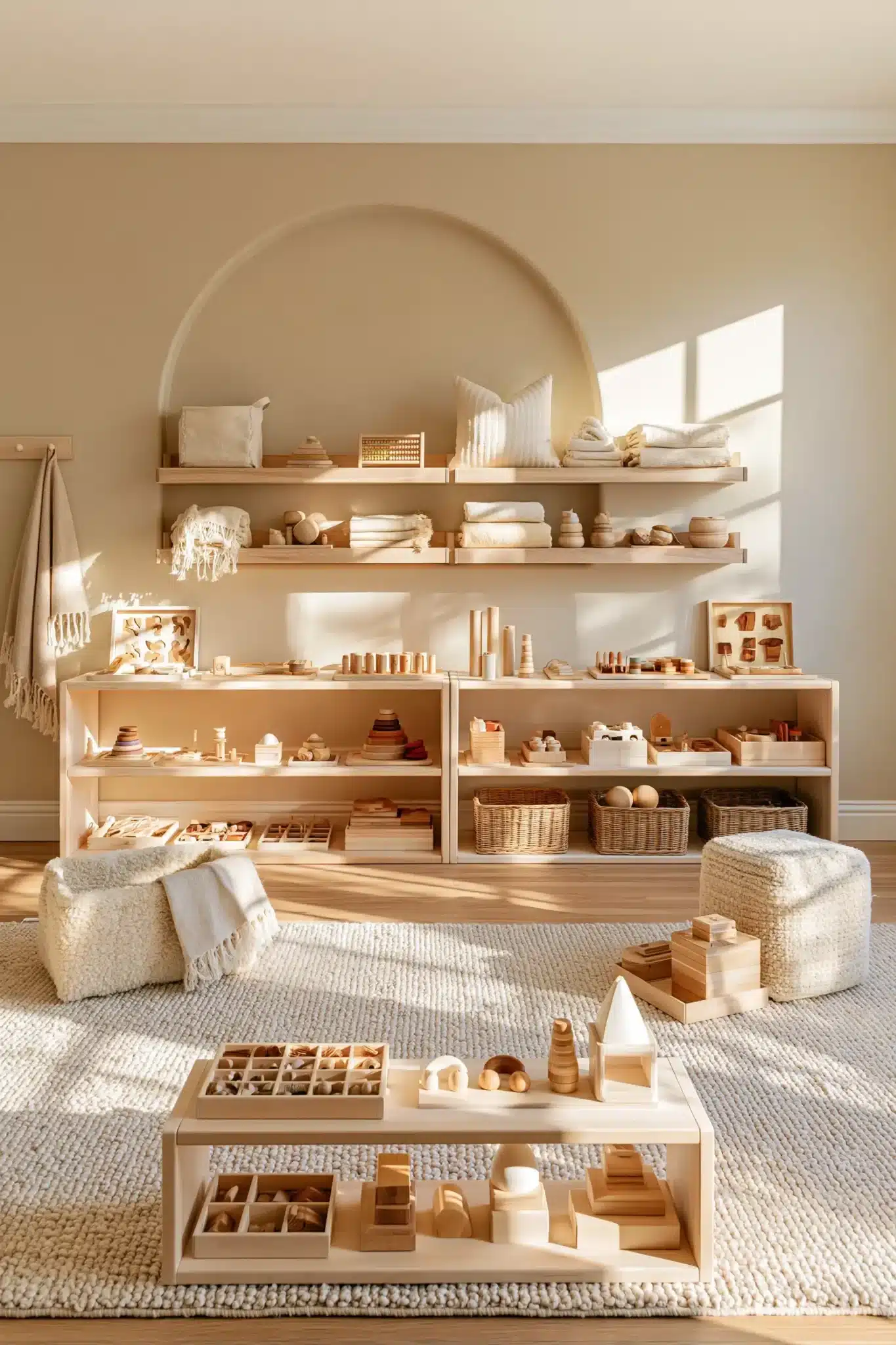
Imagine a cheerful space where little ones can explore, learn, and play at their own pace. This Montessori playroom combines low shelving, accessible toys, soft textures, and thoughtfully arranged activities to encourage independence. Warm materials help the room feel comfortable without making it visually overwhelming. Every area can have a clear purpose, making it easier for children to choose an activity and put things away afterward. A few carefully selected learning materials keep the environment engaging while maintaining a calm, organized appearance. Click through to discover more ways to create this inviting space at home.
2. Modern Montessori Learning Haven
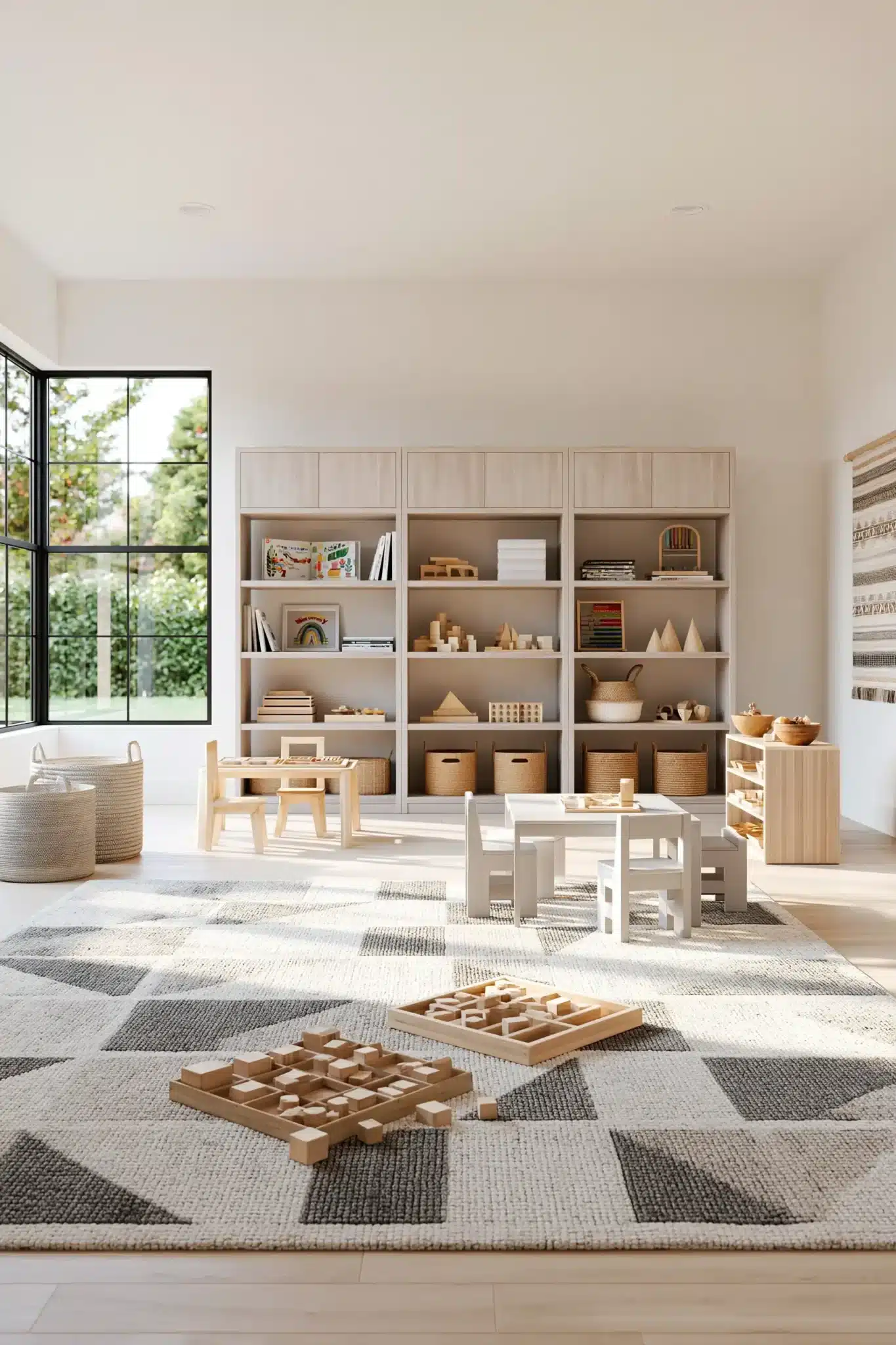
Clean lines and thoughtful organization can turn an ordinary room into a beautiful place for learning. Designed around independence, a Montessori playroom works especially well with child-height furniture, open shelves, and activities children can reach without help. Keeping the layout simple gives kids plenty of room to move naturally from one activity to another. Modern storage pieces can also make toys easier to see while keeping clutter under control. Add comfortable seating and natural materials to soften the space and make it feel welcoming. Tap to explore more modern ideas for creating a playful learning environment.
3. Neutral Montessori Play Space
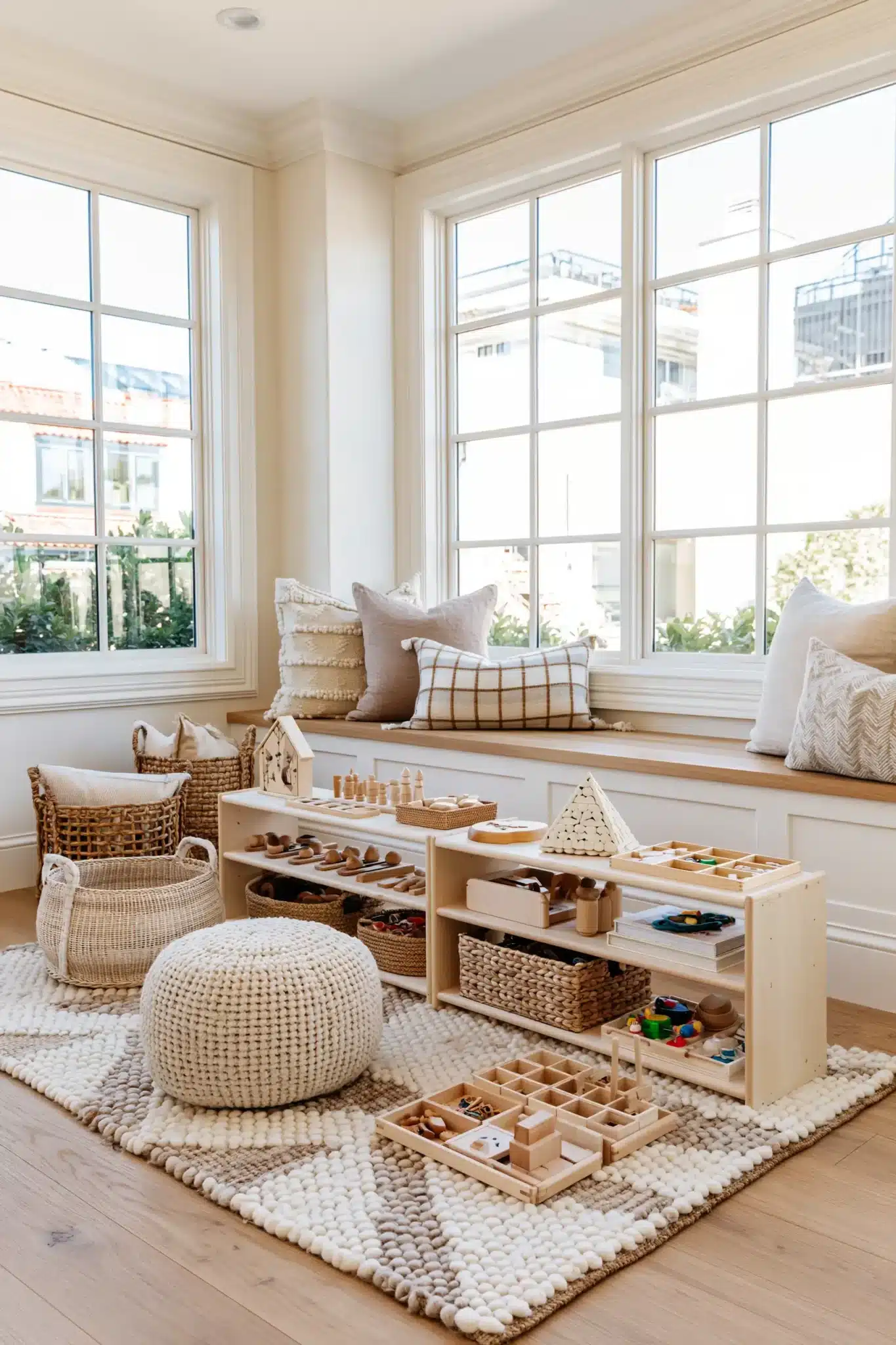
Soft neutrals create a wonderfully peaceful backdrop for everyday play and discovery. Instead of filling every corner, focus on a smaller collection of meaningful toys and activities that children can easily access. A Montessori playroom in cream, beige, warm white, and natural wood tones can feel calming while still offering plenty of opportunities for exploration. Simple baskets and low shelving provide attractive storage without making the room look busy. Cozy floor space gives little learners somewhere comfortable to build, read, sort, and create. Explore the full collection for more beautifully balanced playroom inspiration.
4. Colorful Montessori Activity Zone
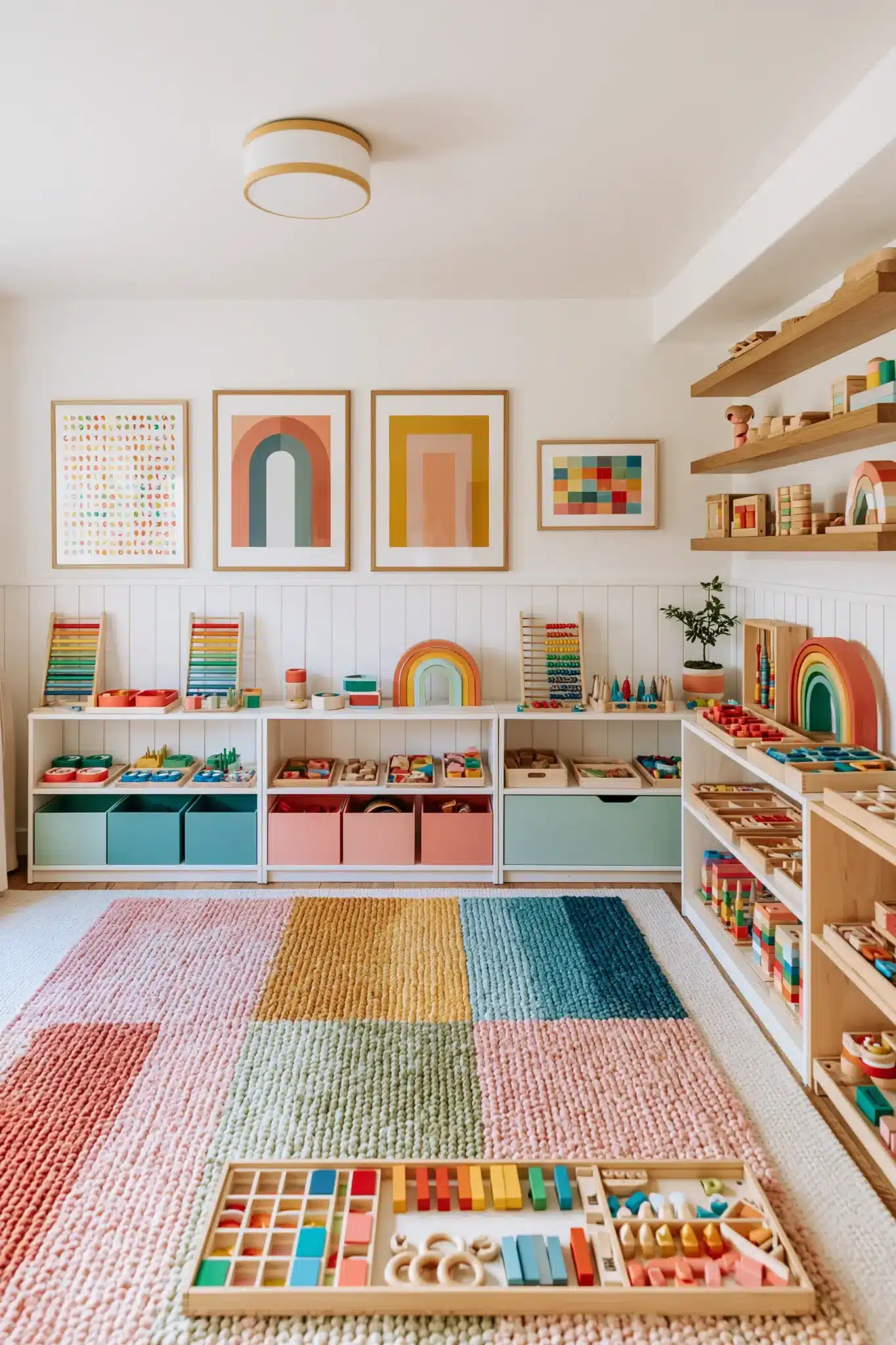
Bright colors can bring plenty of personality to a learning space without turning it into visual chaos. Try introducing color through wooden toys, artwork, rugs, storage bins, and hands-on activities rather than covering every surface. In a colorful Montessori playroom, clearly defined activity areas help maintain an organized and purposeful atmosphere. Open shelves allow favorite materials to become part of the room’s decoration while remaining easy for children to reach. Leaving some open floor space also gives kids freedom to spread out and play. See more ideas and uncover colorful ways to make learning feel exciting.
5. Scandinavian Montessori Playroom Style
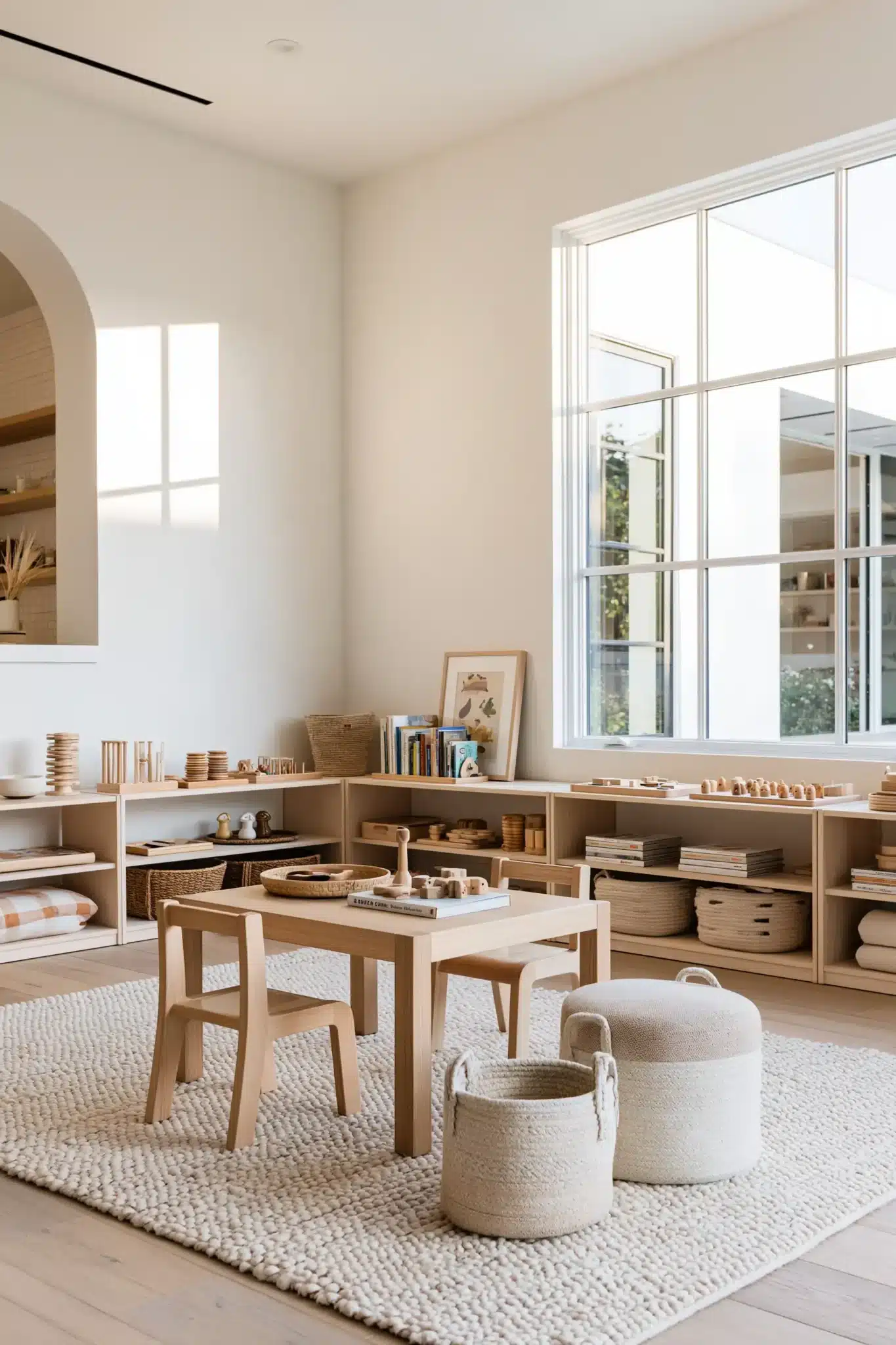
Scandinavian simplicity pairs naturally with a child-centered approach to play. Pale wood furniture, soft neutral colors, practical storage, and plenty of breathing room create an environment that feels fresh and inviting. The Montessori playroom concept fits beautifully into this aesthetic because both approaches value function, simplicity, and intentional design. Choose streamlined shelves and tables that are appropriately sized for young children. A few cozy textiles can prevent the minimalist look from feeling too stark or formal. Take a closer look at more Scandinavian-inspired ideas worth trying.
6. Nature Inspired Learning Retreat
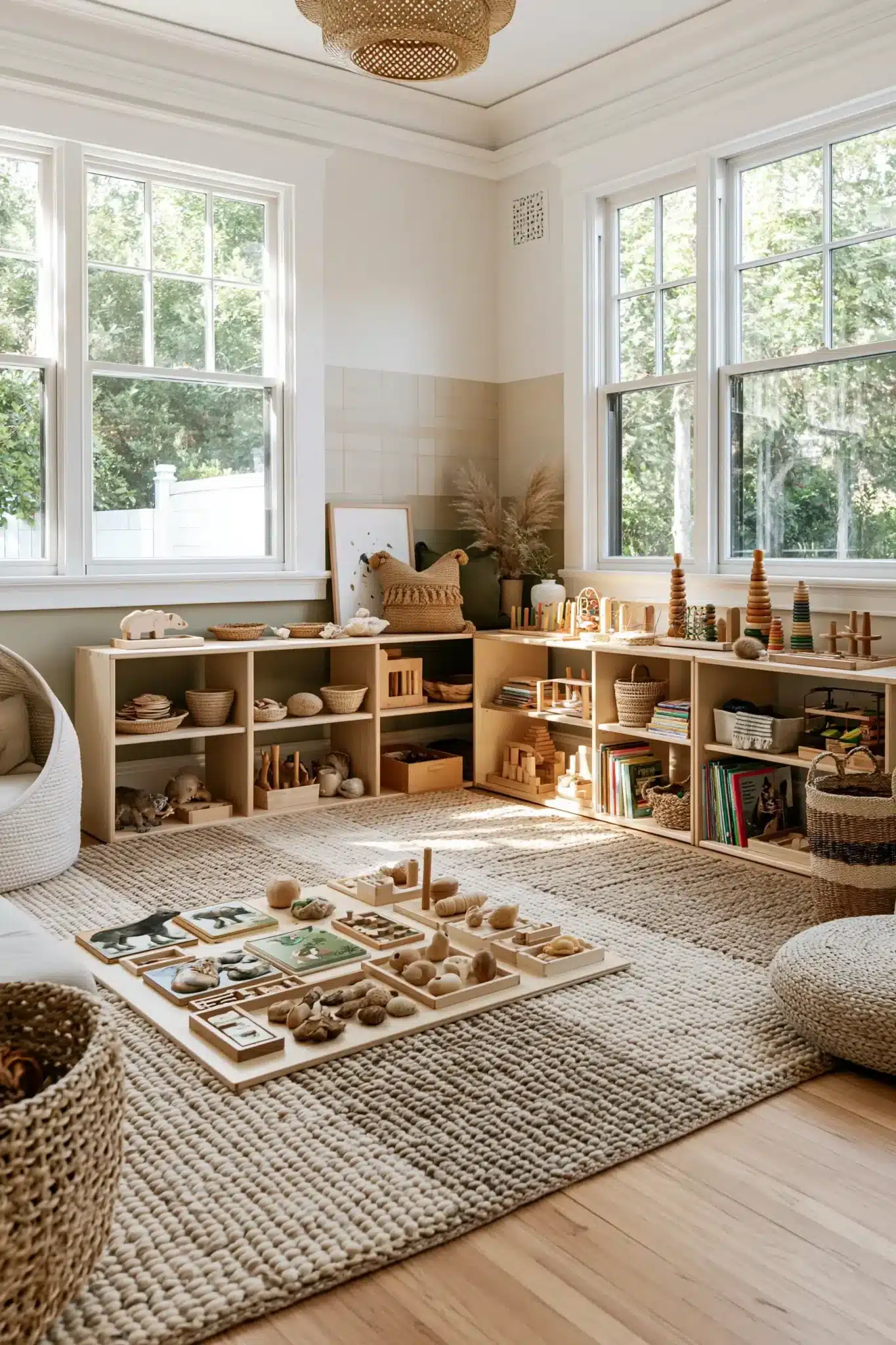
Bringing elements of nature indoors can make children’s spaces feel especially warm and grounded. Natural wood, woven textures, earthy colors, and nature-themed activities provide an inviting foundation for imaginative exploration. These details work beautifully in a Montessori playroom where materials are intentionally selected and displayed within easy reach. Consider incorporating puzzles, sorting activities, books, and tactile materials inspired by animals and the outdoors. Keeping the arrangement uncluttered allows each activity to stand out and capture a child’s attention. Dive into more nature-inspired ideas and find your favorite look.
7. Minimalist Montessori Creative Corner
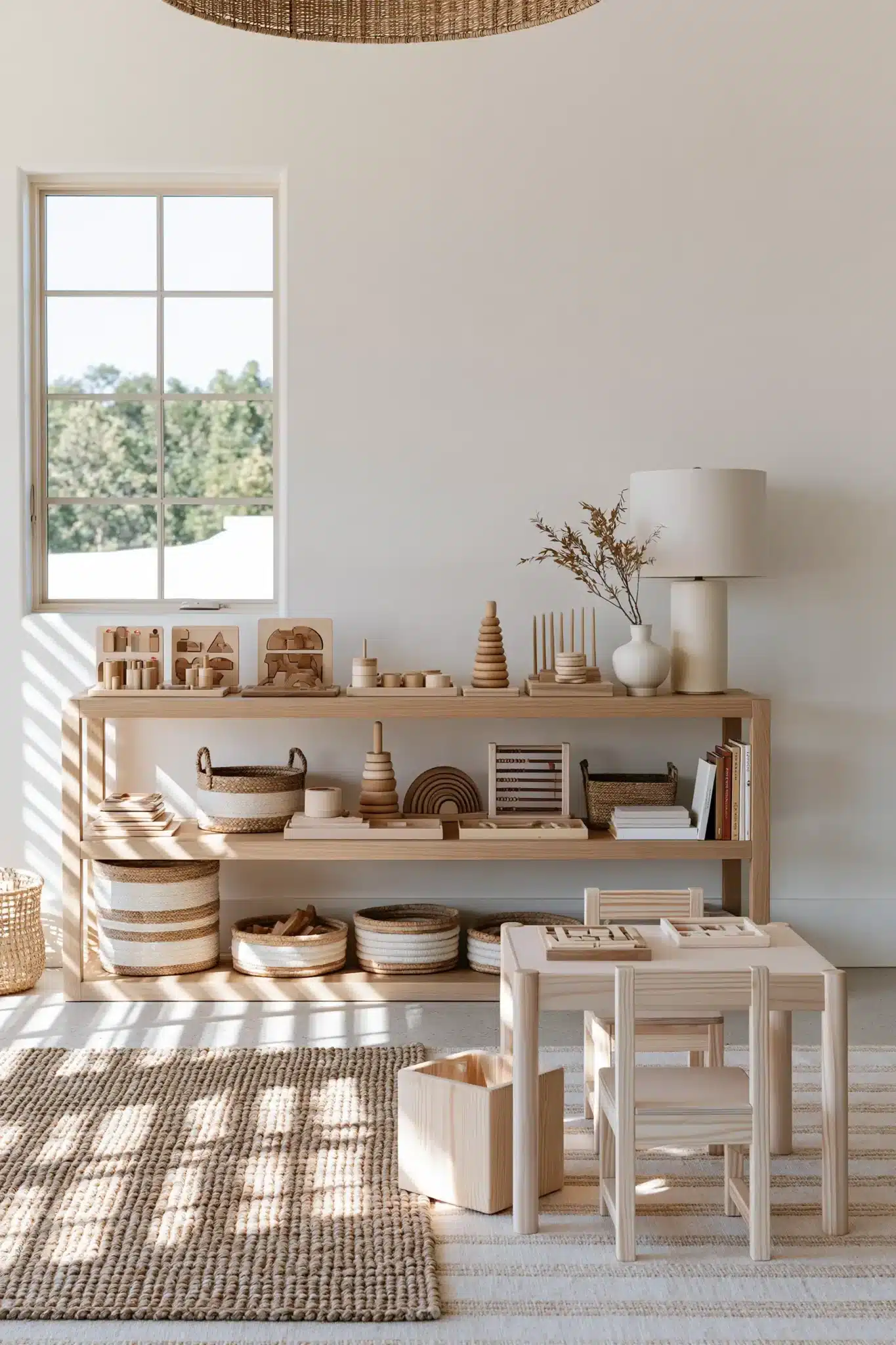
Sometimes a simpler environment gives children even more room to imagine. A minimalist Montessori playroom focuses on quality over quantity, with carefully chosen materials arranged neatly on accessible shelves. Rather than displaying every toy at once, rotate activities periodically to keep the environment interesting and manageable. Open floor space encourages building, movement, pretend play, and independent exploration. Warm finishes and comfortable textures keep the streamlined design from feeling empty. Browse more minimalist inspiration and discover how beautiful simplicity can be.
Save this article
No spam. Unsubscribe anytime.
8. Warm Wooden Wonder Space
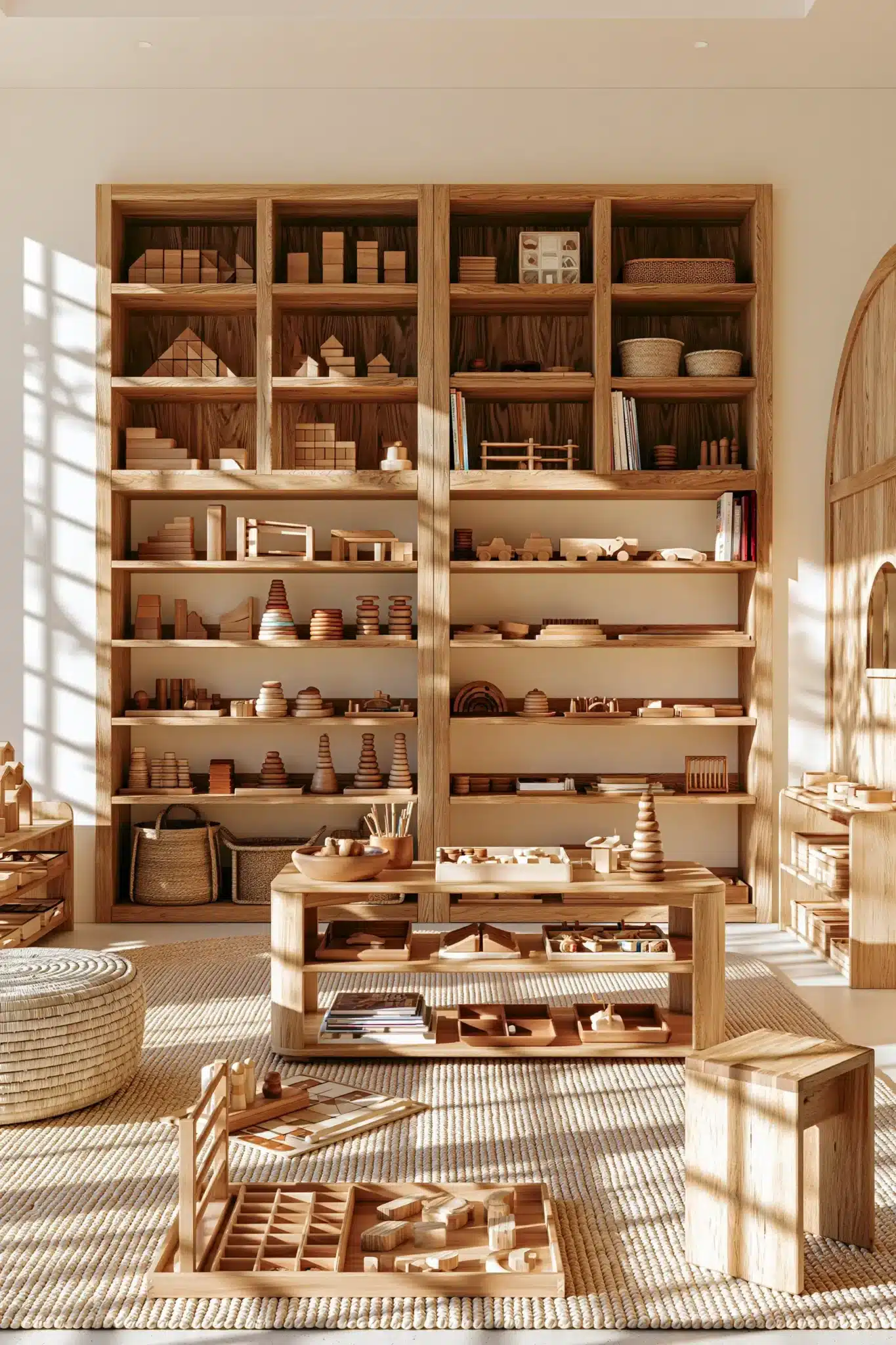
There’s something timeless and comforting about a play space filled with warm wood tones. Low wooden shelving, small tables, stools, puzzles, blocks, and practical-life materials can create a cohesive environment without feeling overly coordinated. Within a Montessori playroom, these natural finishes provide a calm backdrop that lets individual activities shine. Thoughtful organization also makes it easier for children to understand where materials belong when playtime ends. Pairing wood with soft neutral textiles adds warmth while maintaining a clean aesthetic. Step inside more inspiring spaces and gather ideas for your own setup.
9. Toddler Friendly Exploration Room
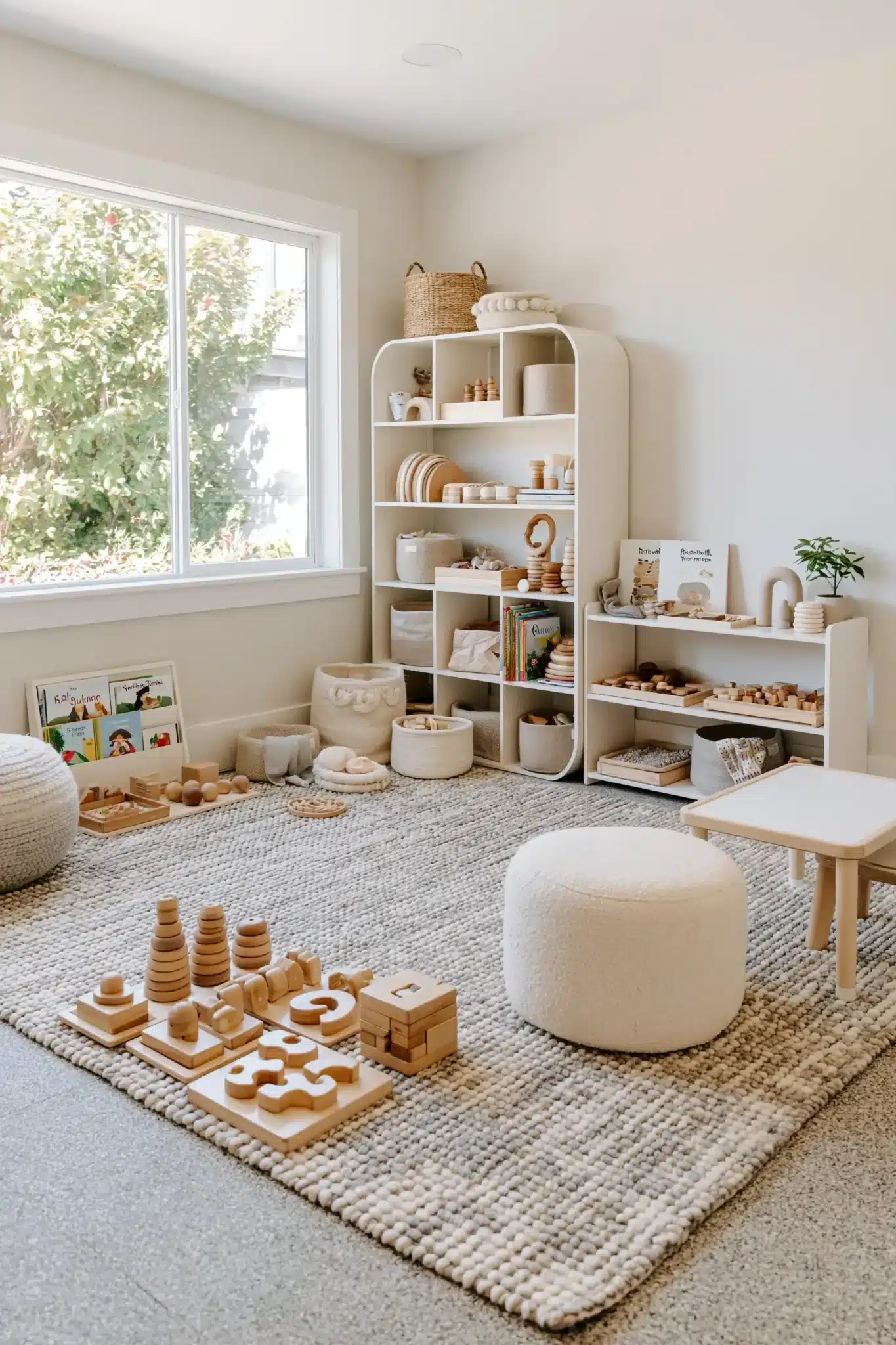
Toddlers love having a space that feels like it was created especially for them. Keep furniture low, pathways open, and everyday activities positioned where small hands can comfortably reach them. A toddler-friendly Montessori playroom encourages children to make simple choices and interact with their environment more independently. Age-appropriate puzzles, stacking toys, books, sensory materials, and practical activities can be rotated as interests change. Secure furniture appropriately and keep the arrangement uncomplicated so adults can supervise easily. Discover more toddler-friendly ideas and start planning a space they can truly enjoy.
10. Calm Montessori Imagination Studio
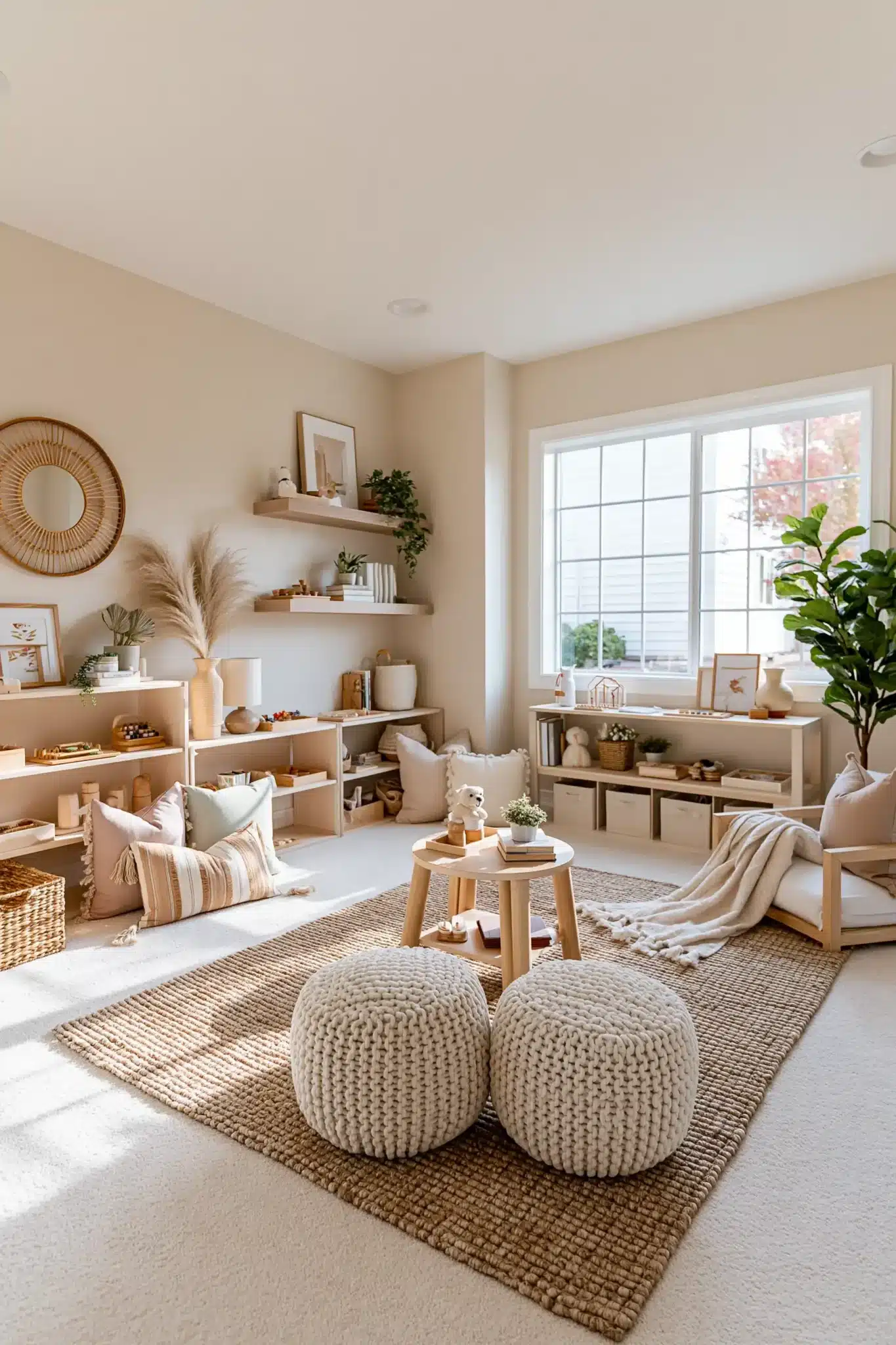
A peaceful environment can make playtime feel more focused and enjoyable. Gentle colors, organized shelves, comfortable floor areas, and carefully selected activities create a welcoming setting without excessive stimulation. When designing a Montessori playroom, giving every material a designated place helps children navigate the room more independently. You can also create separate areas for reading, creative work, puzzles, and imaginative activities. Keeping decorations intentional allows the children’s materials to remain the real focus of the room. Keep exploring to find more calming ideas for an inspiring play space.
11. Rainbow Learning Adventure Space
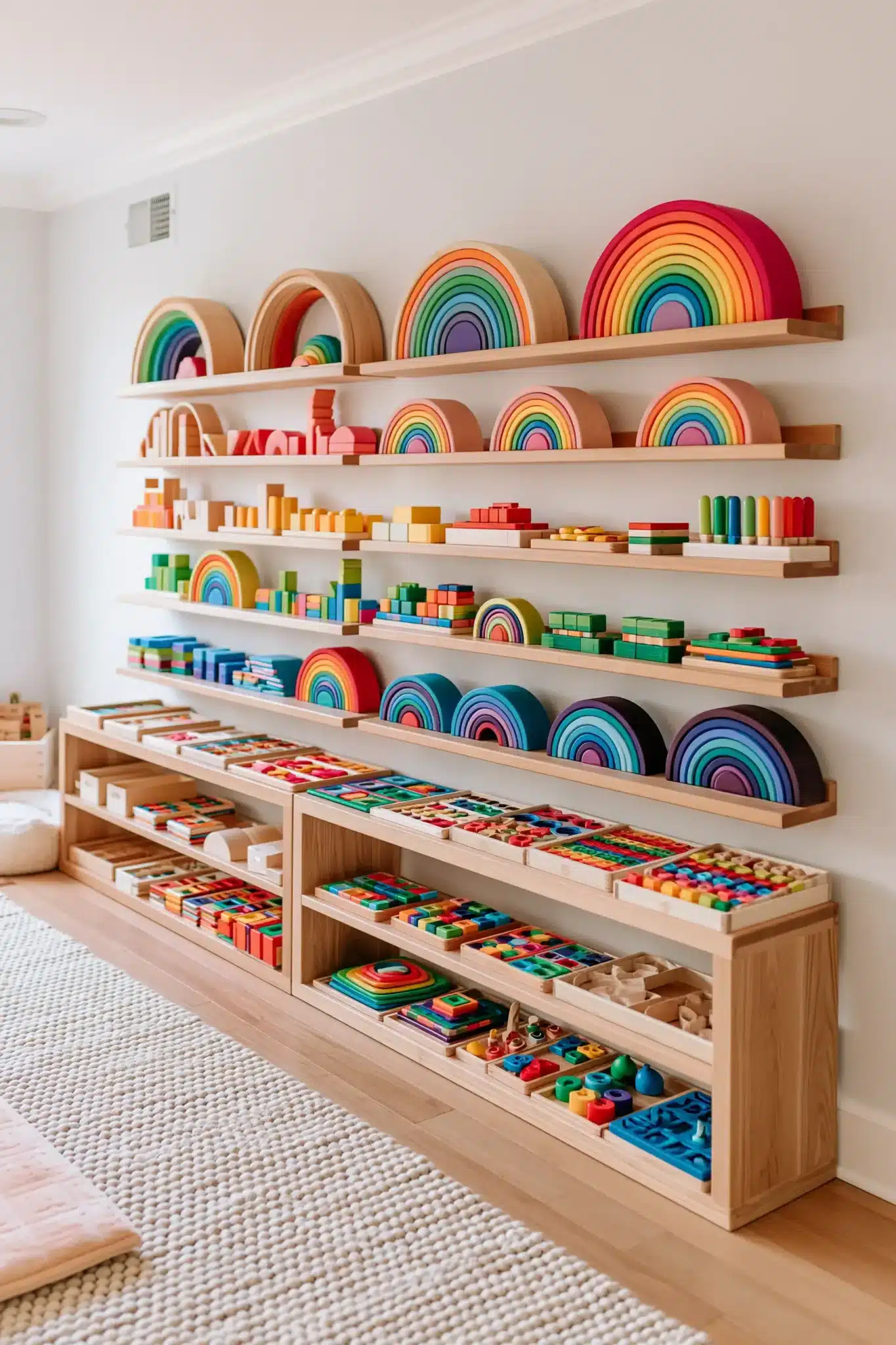
Learning can feel like an adventure when the environment is filled with inviting colors and hands-on discoveries. Rainbow-inspired materials can introduce color while still keeping the overall room organized and intentional. Use the Montessori playroom approach by arranging activities individually on low shelves rather than piling toys into oversized containers. Color sorting, stacking, matching, counting, and building activities can naturally complement the theme. A neutral background helps brighter materials stand out without overwhelming the space. Uncover more playful ideas and bring a little extra color into learning time.
12. Earthy Montessori Play Retreat
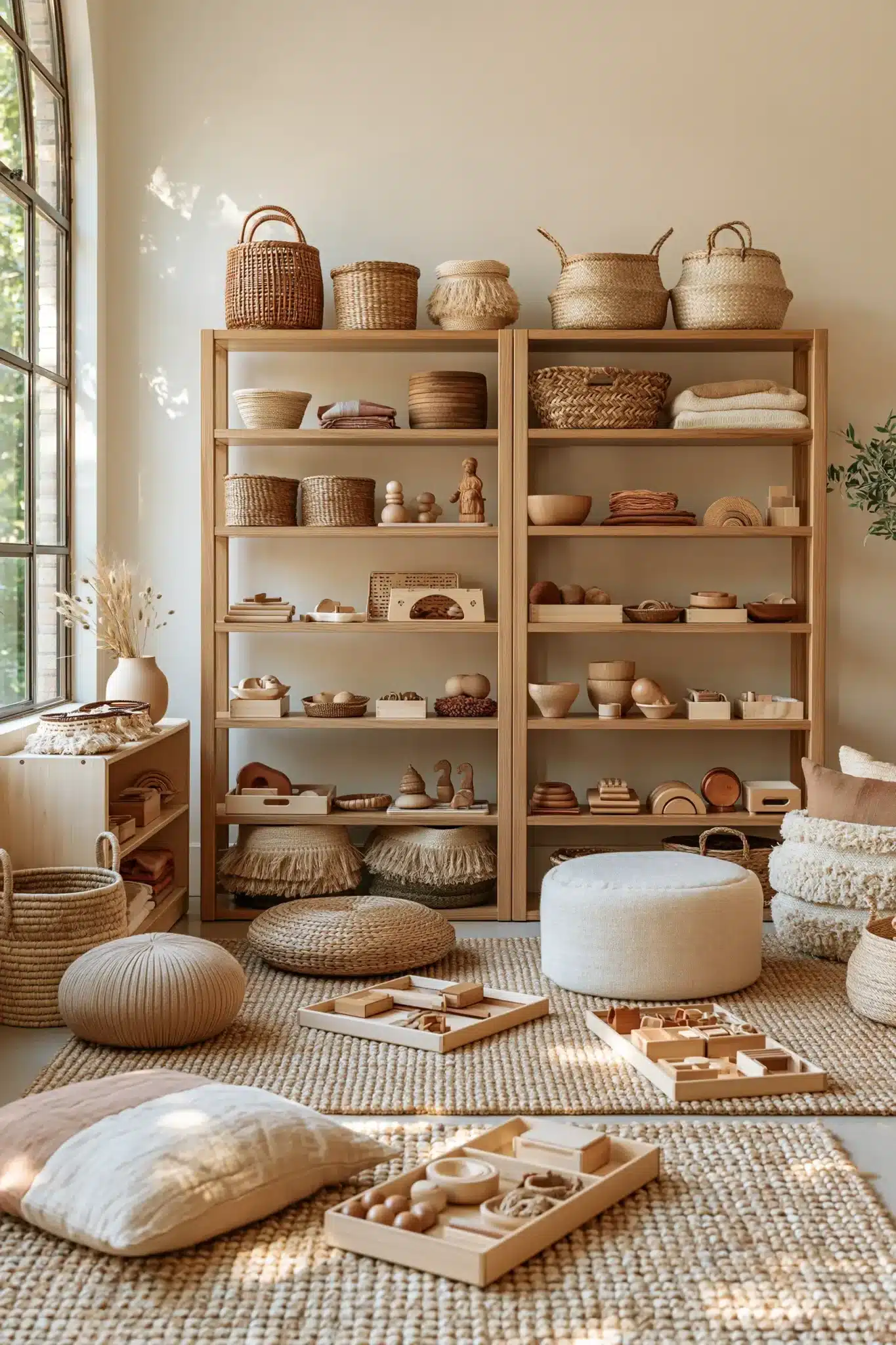
Rich earth tones can transform a children’s room into a cozy and beautifully grounded retreat. Shades of terracotta, sand, olive, caramel, and warm brown pair naturally with wood furniture and tactile materials. This palette is especially appealing in a Montessori playroom because it creates visual warmth without competing with the activities themselves. Use simple baskets and open shelving to maintain an orderly arrangement that children can understand. Soft rugs and floor cushions can provide comfortable areas for quiet play and reading. Take a peek at more earthy inspiration and find a combination you love.
13. Small Space Montessori Magic
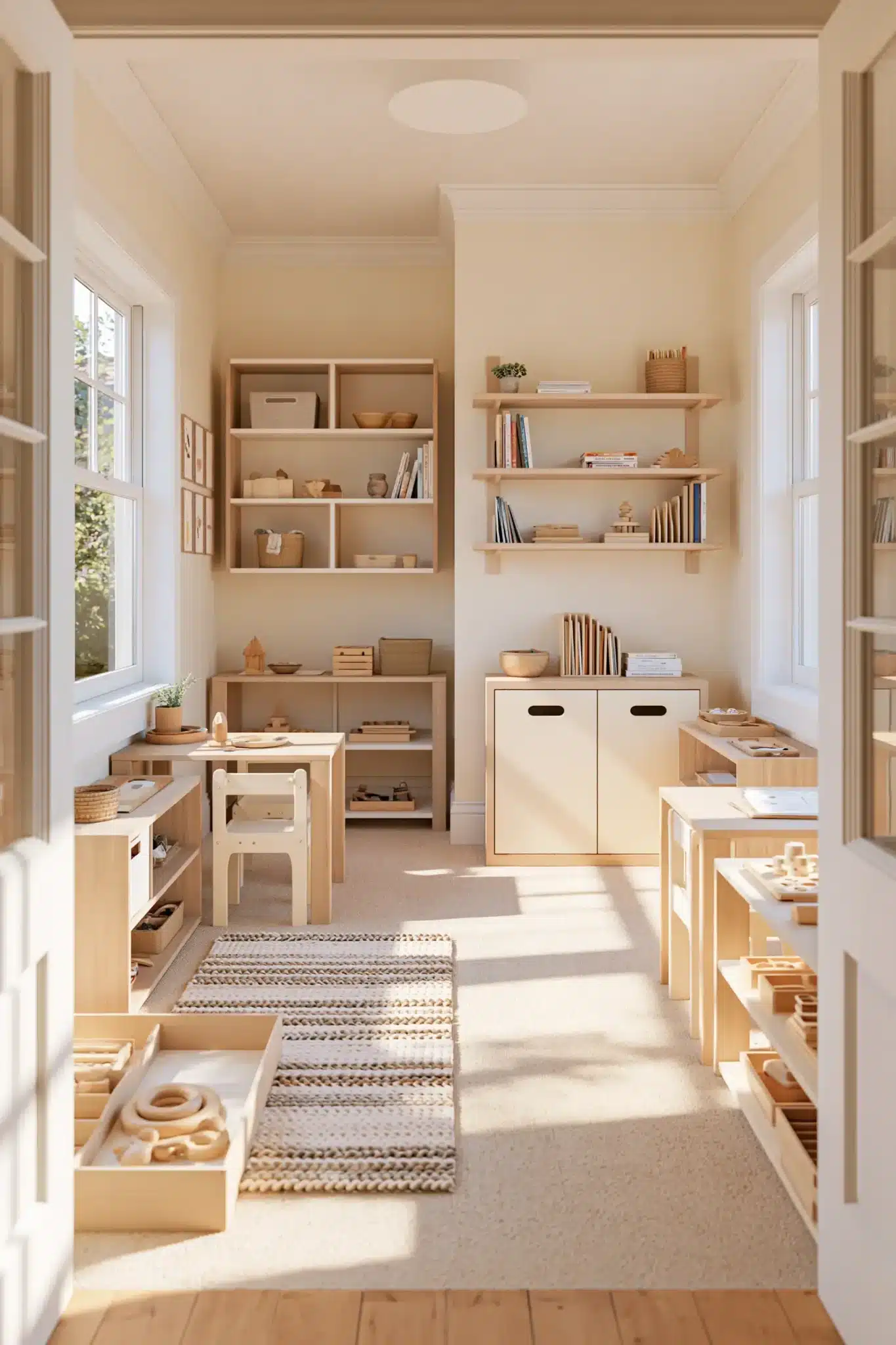
Limited square footage doesn’t have to limit opportunities for creative learning. Even a small corner of a bedroom or living area can become a functional Montessori playroom with thoughtful furniture placement and carefully selected activities. Vertical storage, compact low shelves, and multipurpose furniture can help make every inch work harder. Keep only a manageable number of toys available so the area remains easy for children to navigate. Rotating materials is an effective way to provide variety without requiring additional storage space. Click in to discover clever ideas designed specifically for smaller homes.
14. Bright Montessori Discovery Hub
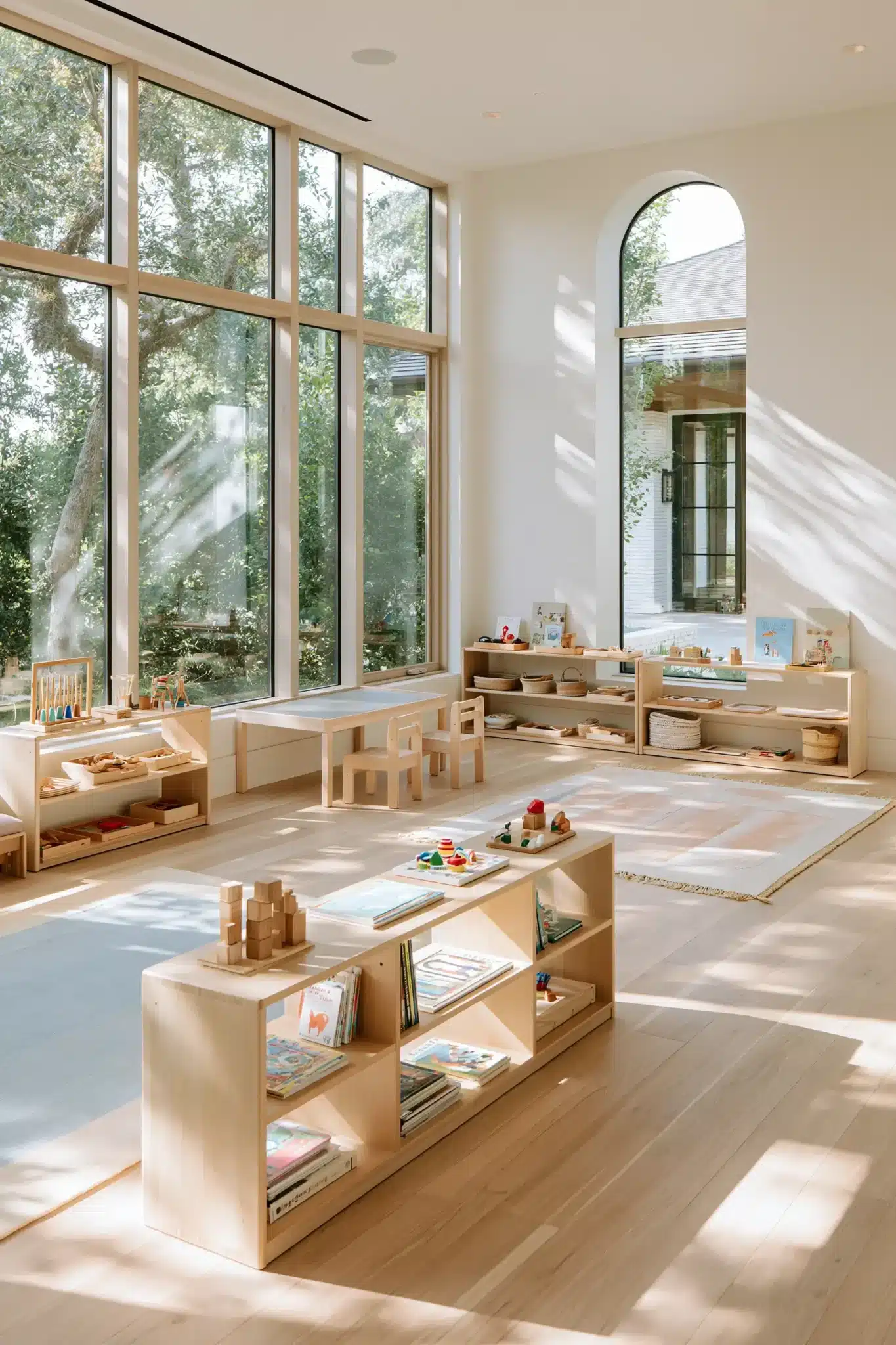
Natural light can completely change the atmosphere of a child’s learning environment. Positioning activity areas near windows can make a Montessori playroom feel bright, open, and welcoming throughout the day. Light wood furniture and pale finishes can help reflect daylight while maintaining a soft, relaxed appearance. Arrange shelves so children can clearly see their available choices without needing to search through crowded bins. A comfortable rug can define the main play area while leaving plenty of room for movement. Explore further and find bright ideas that can refresh your child’s space.
15. Boho Montessori Learning Lounge
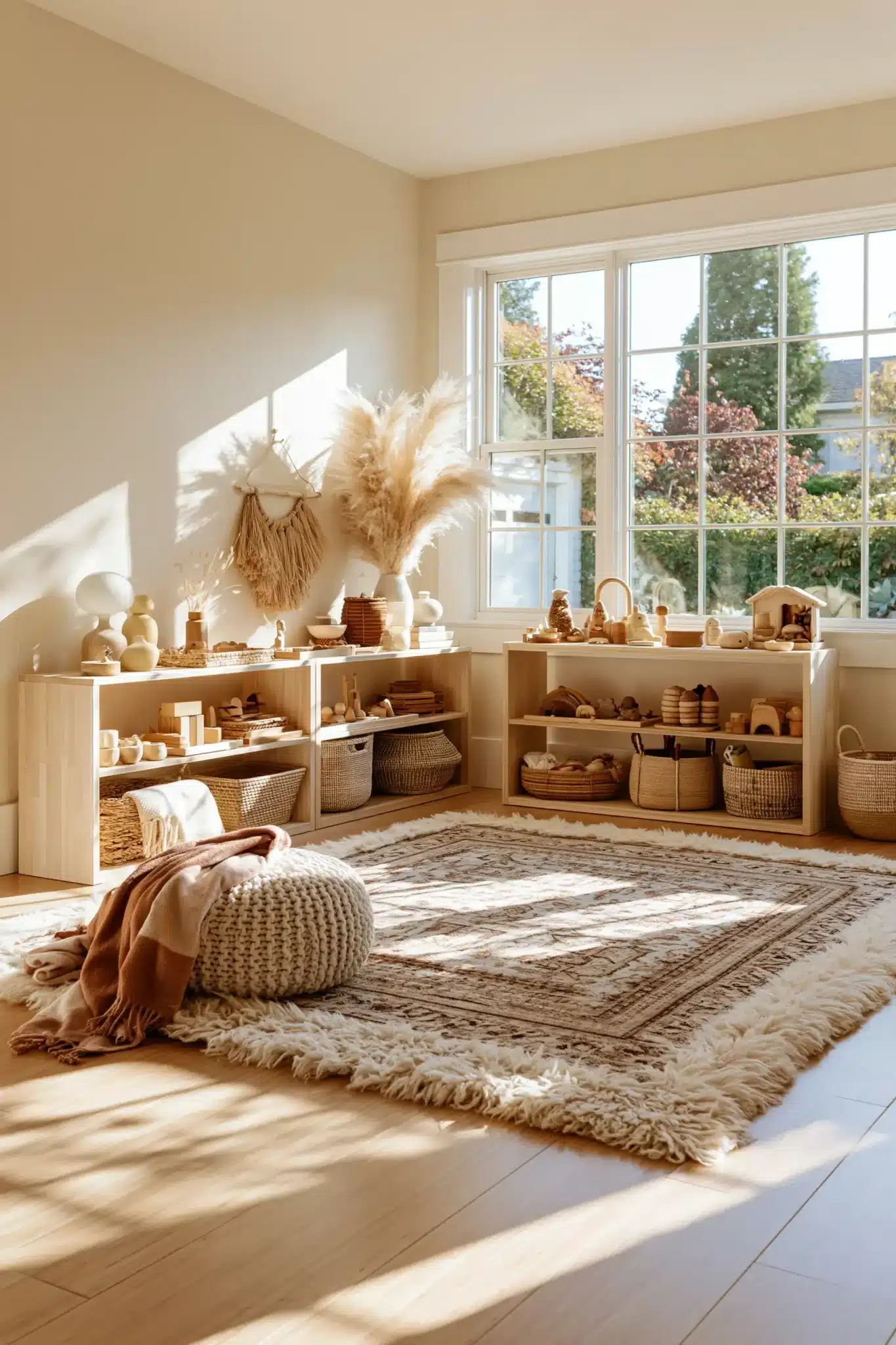
Relaxed bohemian style can add warmth and personality without taking away from a functional layout. Layer natural textures, soft textiles, playful patterns, and warm colors around simple child-sized furniture. In a boho Montessori playroom, keeping toys and activities organized on accessible shelves helps balance the more decorative elements. Woven baskets are especially useful for storing larger materials while complementing the casual aesthetic. Choose a few expressive accents rather than filling every wall and surface. Browse the complete inspiration and discover more ways to blend boho charm with purposeful play.
16. Sensory Rich Play Haven
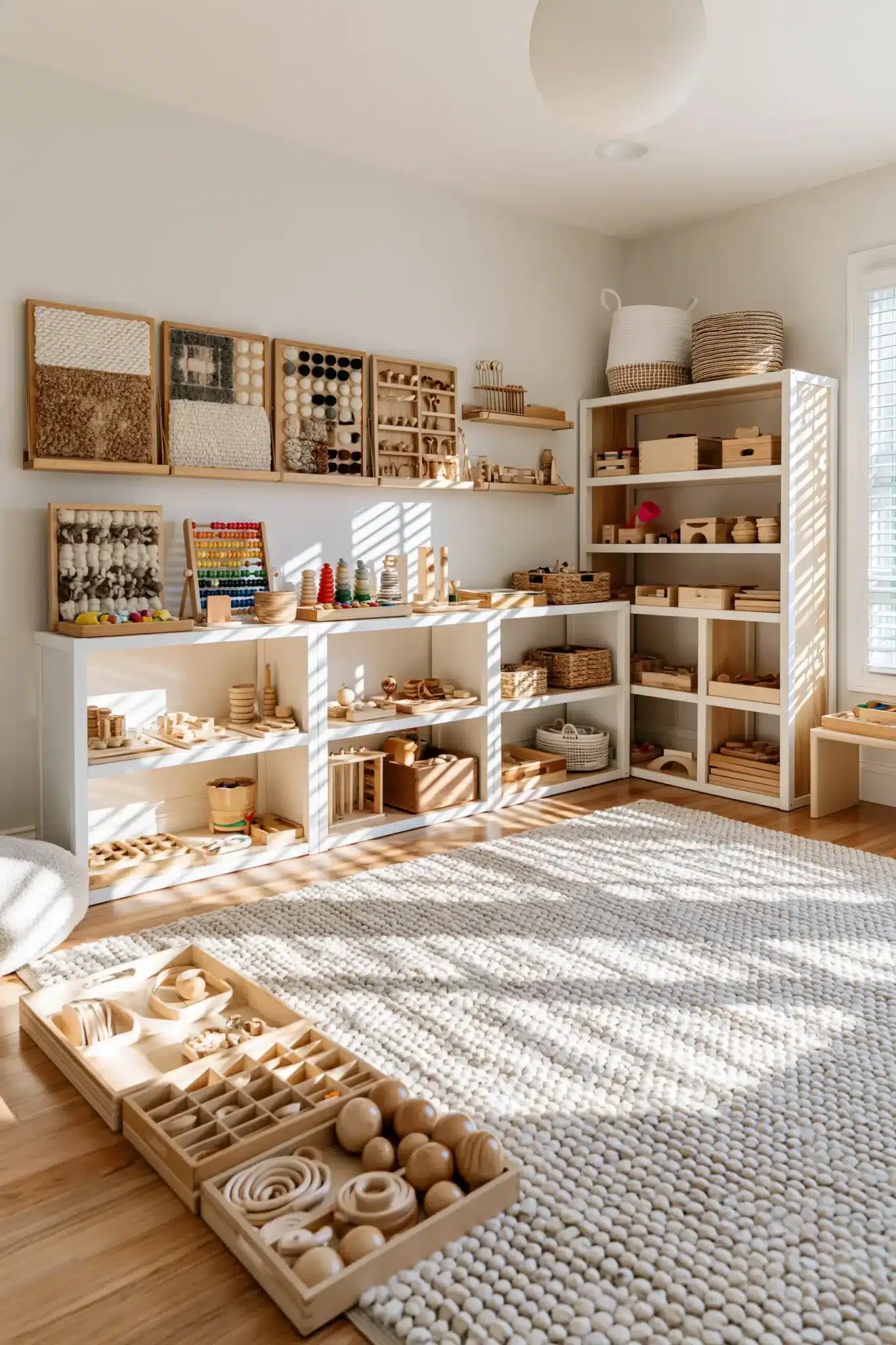
Touch, movement, sound, and visual exploration can all become part of an engaging learning environment. A sensory-focused Montessori playroom might include tactile activities, sorting materials, stacking toys, simple instruments, and objects with different shapes or textures. Presenting each activity separately can make choices feel approachable rather than overwhelming. Comfortable floor space gives children room to investigate materials at their own pace. Rotating sensory experiences can also keep the environment fresh as interests and developmental needs evolve. Jump into more sensory-friendly ideas and discover activities worth adding to your space.
17. Montessori Reading Adventure Room
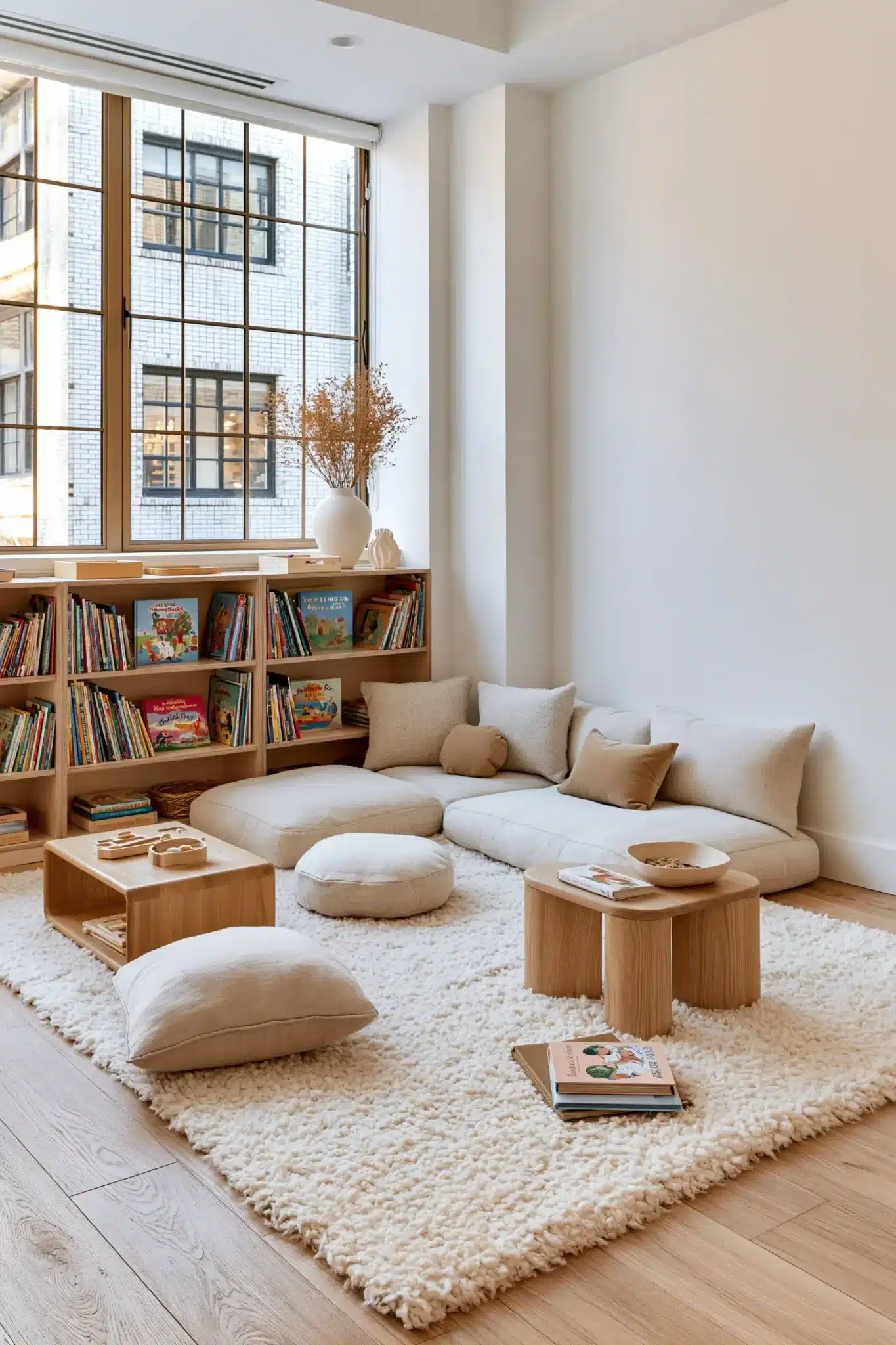
Books deserve a special place where children can discover them independently. Create a comfortable reading area with front-facing book storage, soft floor seating, and a small selection of stories displayed at child height. Within the Montessori playroom, this quiet zone can provide a natural contrast to more active building and movement areas. Rotating books by season, theme, or current interests keeps the selection feeling fresh. Keep the arrangement welcoming and uncomplicated so children can easily choose and return their books. Turn the page and explore more charming ideas for young readers.
18. Creative Hands Learning Studio
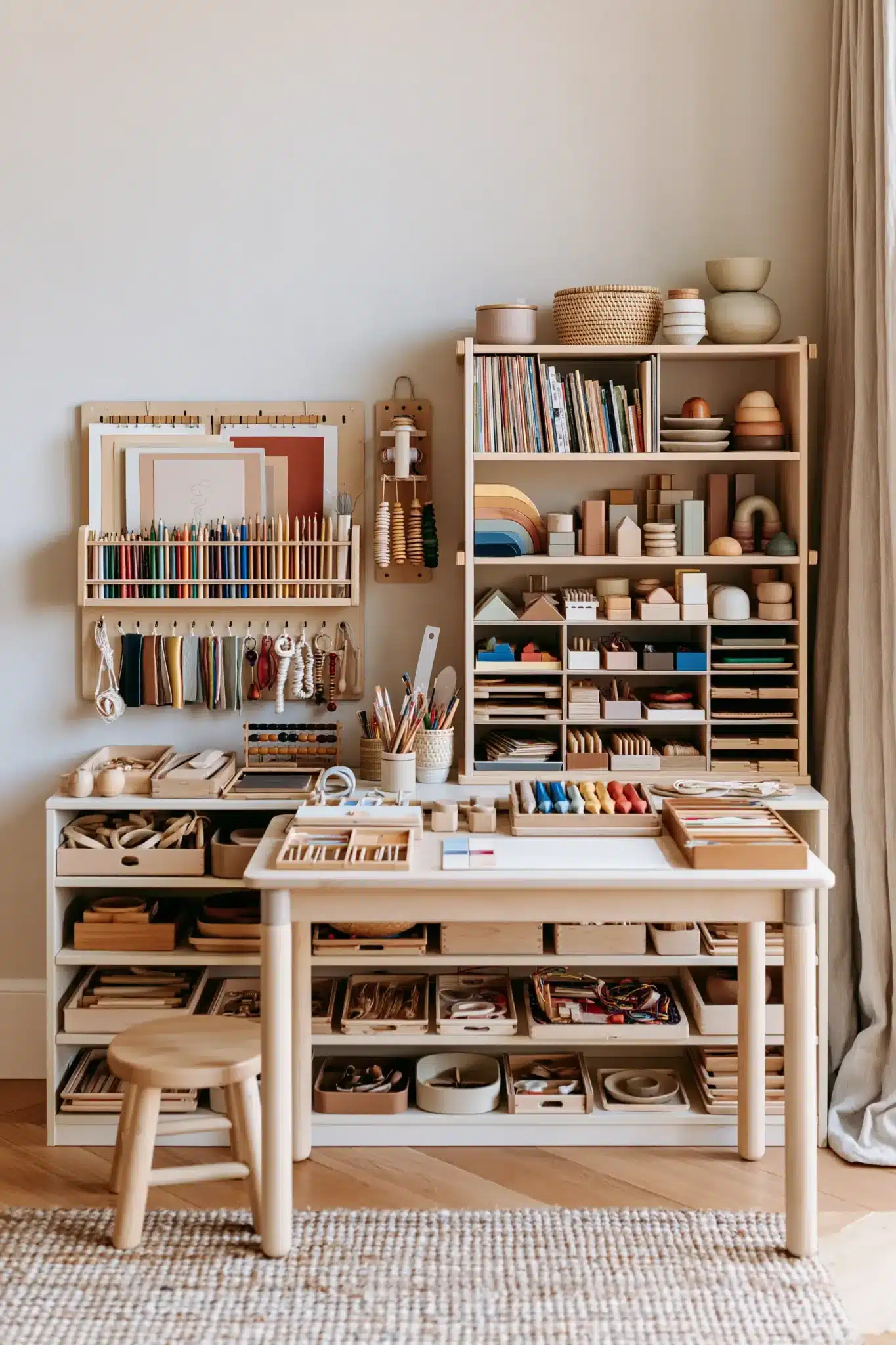
Little hands are naturally curious, making hands-on activities an important part of an engaging play environment. Provide opportunities for drawing, sorting, transferring, building, threading, and other age-appropriate activities that encourage concentration and coordination. A Montessori playroom can include a small creative station where supplies are visible and accessible instead of hidden away. Use trays or shallow containers to keep individual activities organized and easy to carry. Child-sized tables and chairs can make creative work feel more comfortable and independent. Discover the next set of ideas and spark even more hands-on creativity.
19. Soft Pastel Play Sanctuary
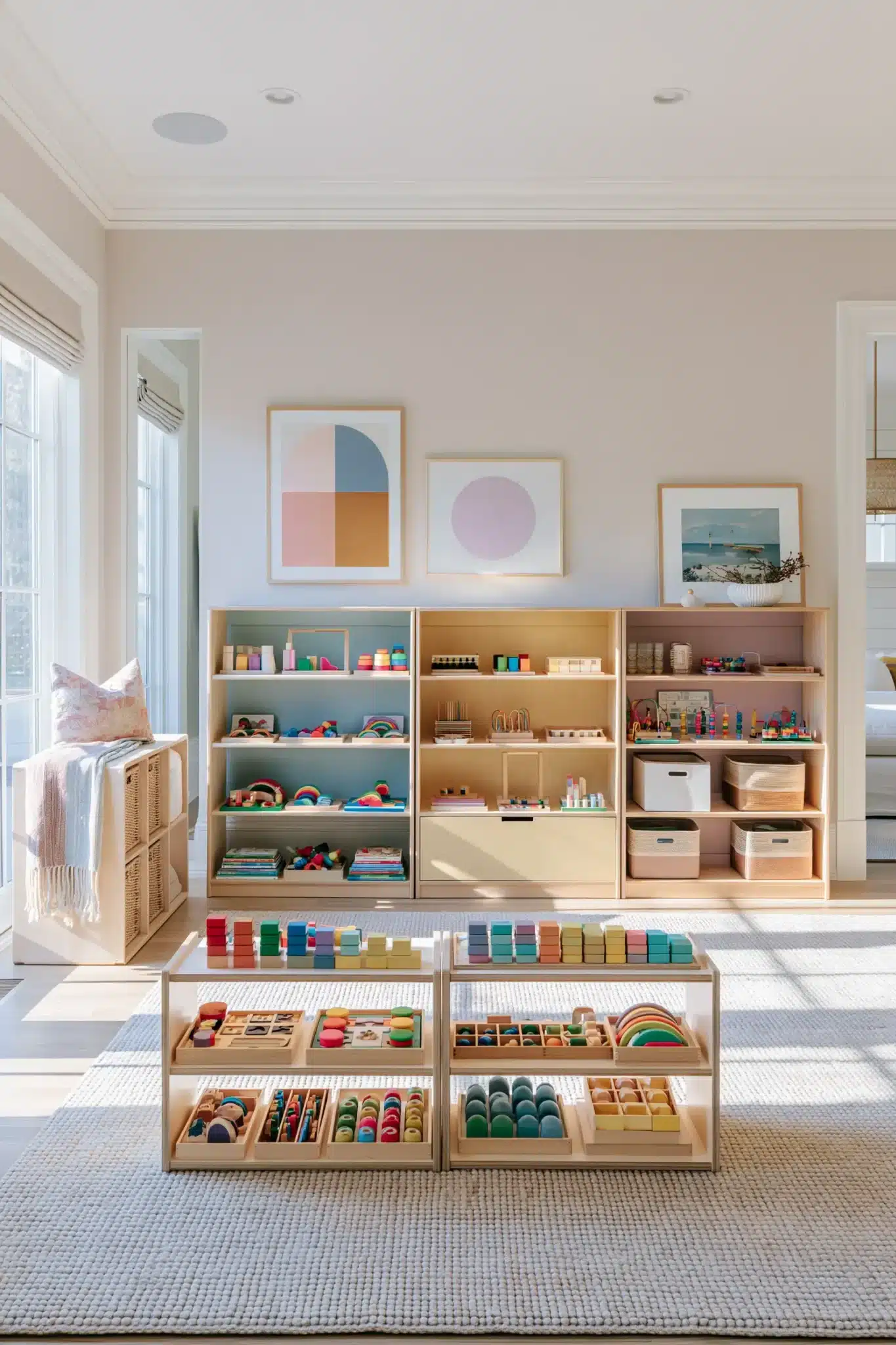
Pastel colors offer a playful alternative to completely neutral children’s spaces. Dusty pink, muted blue, soft yellow, lavender, and gentle green can introduce personality while preserving a relaxed atmosphere. In a Montessori playroom, these softer shades work particularly well when paired with simple furniture and natural materials. Keep colorful accents purposeful by using them on rugs, storage pieces, artwork, or selected toys. Open shelving and clearly arranged activities maintain the sense of calm underneath the playful palette. Tap through for more pastel inspiration that feels fresh, cheerful, and beautifully balanced.
20. Organized Montessori Activity Room
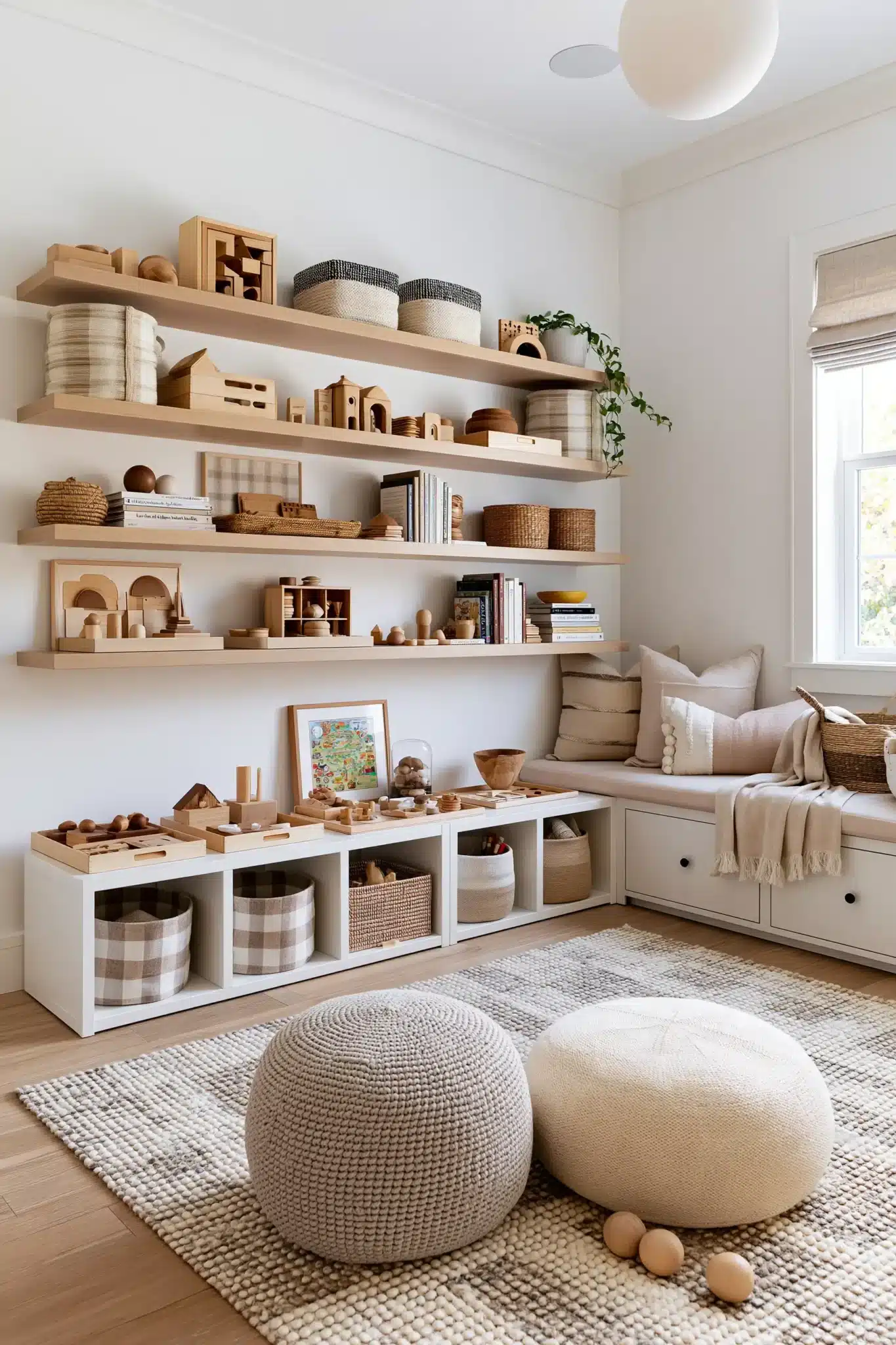
Good organization isn’t only about making a children’s room look tidy. Thoughtful storage can help children understand their environment and find activities without constantly relying on an adult. The Montessori playroom approach often uses low open shelving, trays, baskets, and designated spaces for different materials. Avoid overcrowding shelves, since a smaller number of clearly displayed options can be easier to navigate. Creating a predictable place for everything can also make cleanup feel like a natural part of the routine. Check out more organizing ideas and find practical solutions you can use right away.
21. Whimsical Little Learners Haven
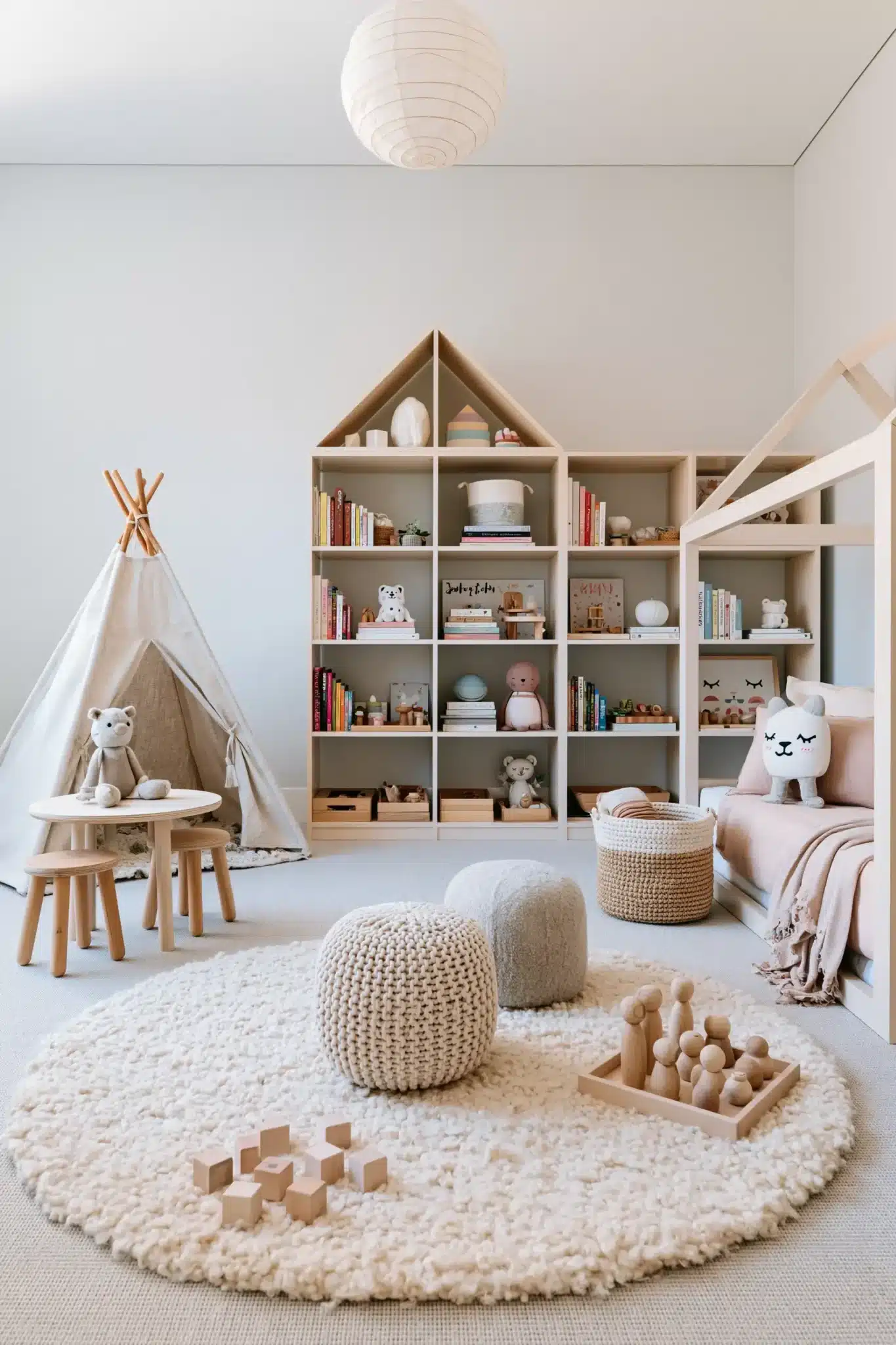
Childhood spaces can feel magical without being packed with decorations. Add gentle color, playful shapes, imaginative details, and cozy textures while keeping the overall layout functional. A whimsical Montessori playroom balances visual personality with accessible furniture and thoughtfully displayed activities. Storybooks, open-ended toys, creative materials, and pretend-play pieces can encourage children to invent their own adventures. Leaving open areas within the room gives those ideas plenty of room to unfold. Wander through more whimsical inspiration and find details that make playtime feel special.
22. Practical Life Skills Station
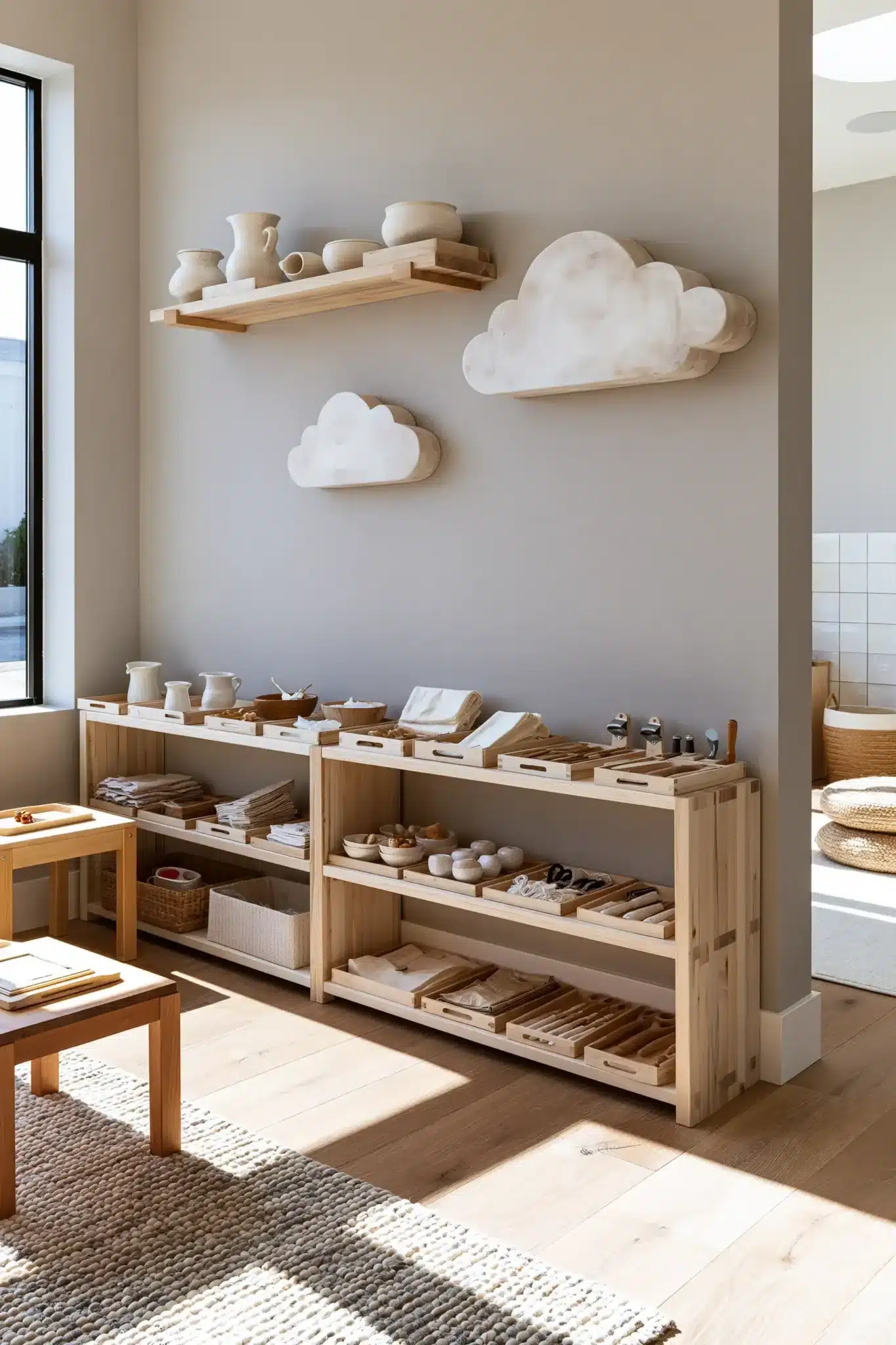
Everyday tasks can become meaningful learning opportunities for young children. A Montessori playroom may include a practical-life area featuring simple activities such as pouring, transferring, sorting, folding, fastening, or caring for familiar objects. Present supplies neatly on trays or in small baskets so children can understand each activity at a glance. Child-sized tools can make participation more manageable while encouraging growing independence. Keep activities appropriate for the child’s age and provide supervision whenever materials require it. Explore more practical-life ideas and discover simple activities to introduce at home.
23. Open Ended Play Retreat
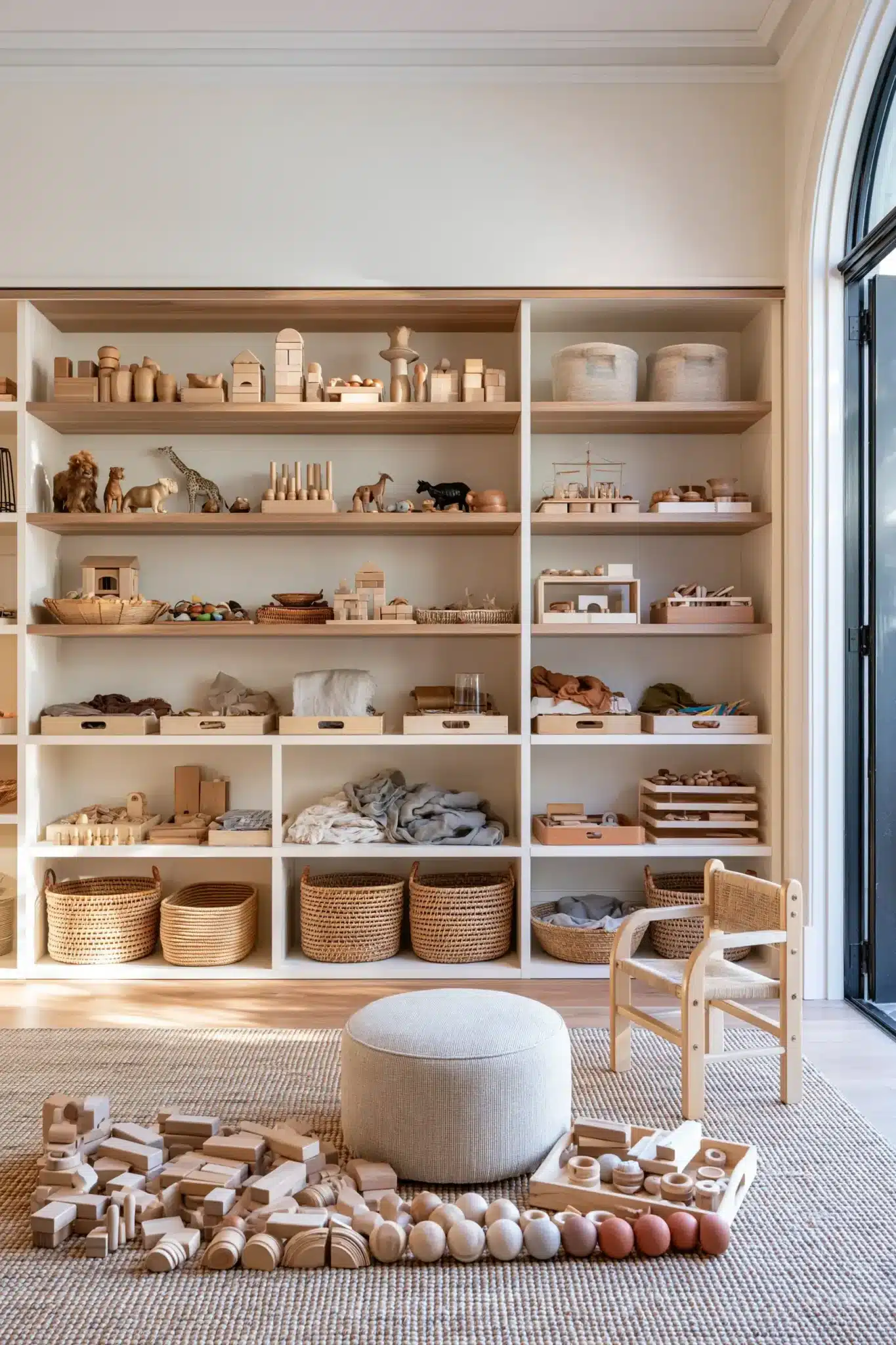
Open-ended toys invite children to decide what happens next rather than following one predetermined outcome. Blocks, loose parts, building materials, figurines, and simple creative supplies can support countless possibilities for imaginative play. Incorporating these materials into a Montessori playroom gives children opportunities to experiment while maintaining an organized environment. Displaying fewer items at once can help each option feel more inviting and purposeful. Generous floor space makes it easier for creations and imaginative worlds to grow. Unlock more open-ended play ideas and see what could inspire your little learner.
24. Montessori Art Exploration Studio
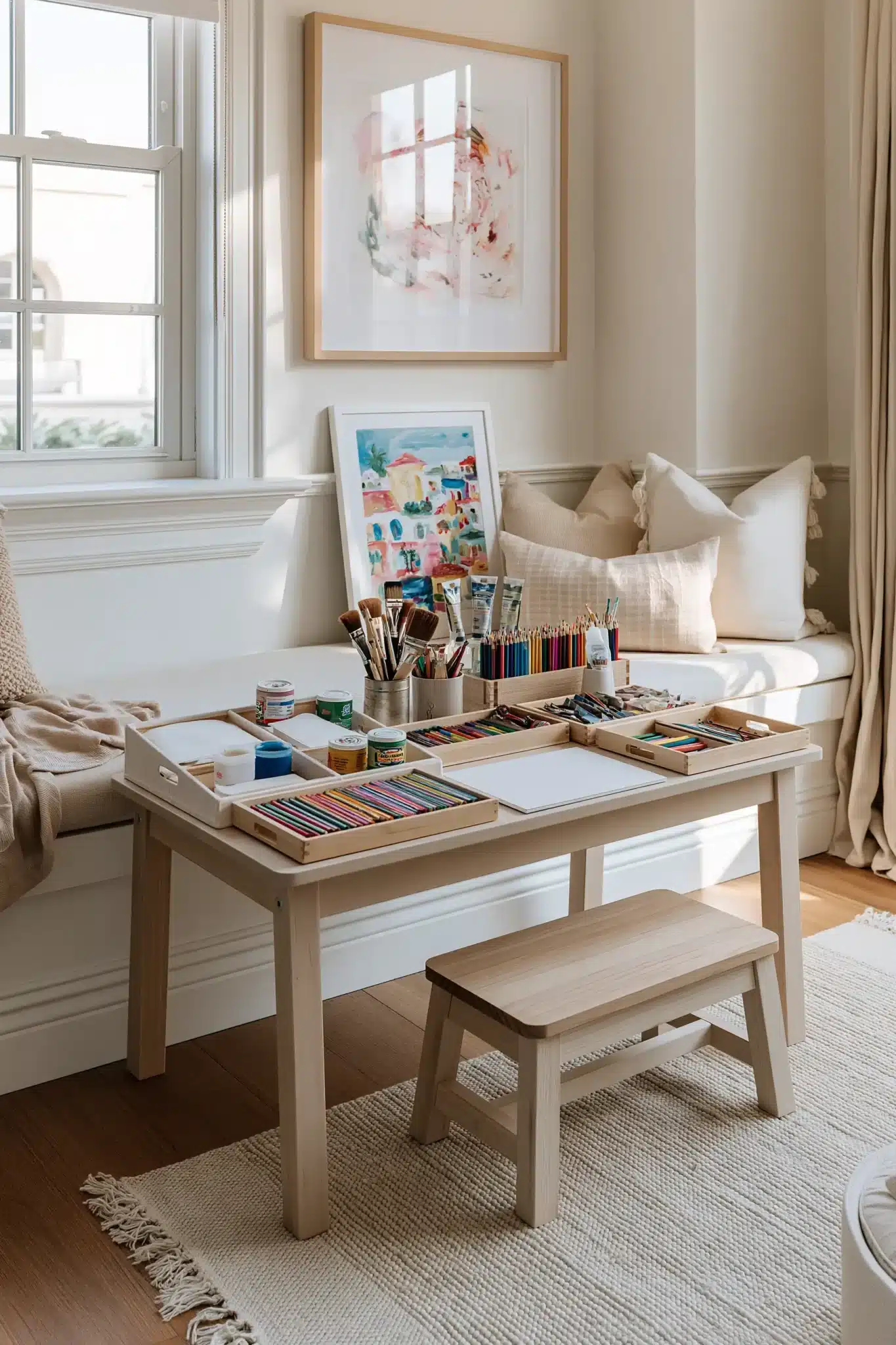
Creativity becomes easier when children can independently reach the materials they need. Set up a simple art area with washable supplies, accessible paper, drawing tools, and age-appropriate creative materials stored in an orderly way. An art station can fit naturally into a Montessori playroom when everything has a clear location and children can participate in setup and cleanup. A small table provides a comfortable workspace without taking over the entire room. Rotating supplies can introduce new creative possibilities while preventing the station from becoming cluttered. Get inspired by more art-space ideas and create a corner made for imagination.
25. Natural Wood Play Haven
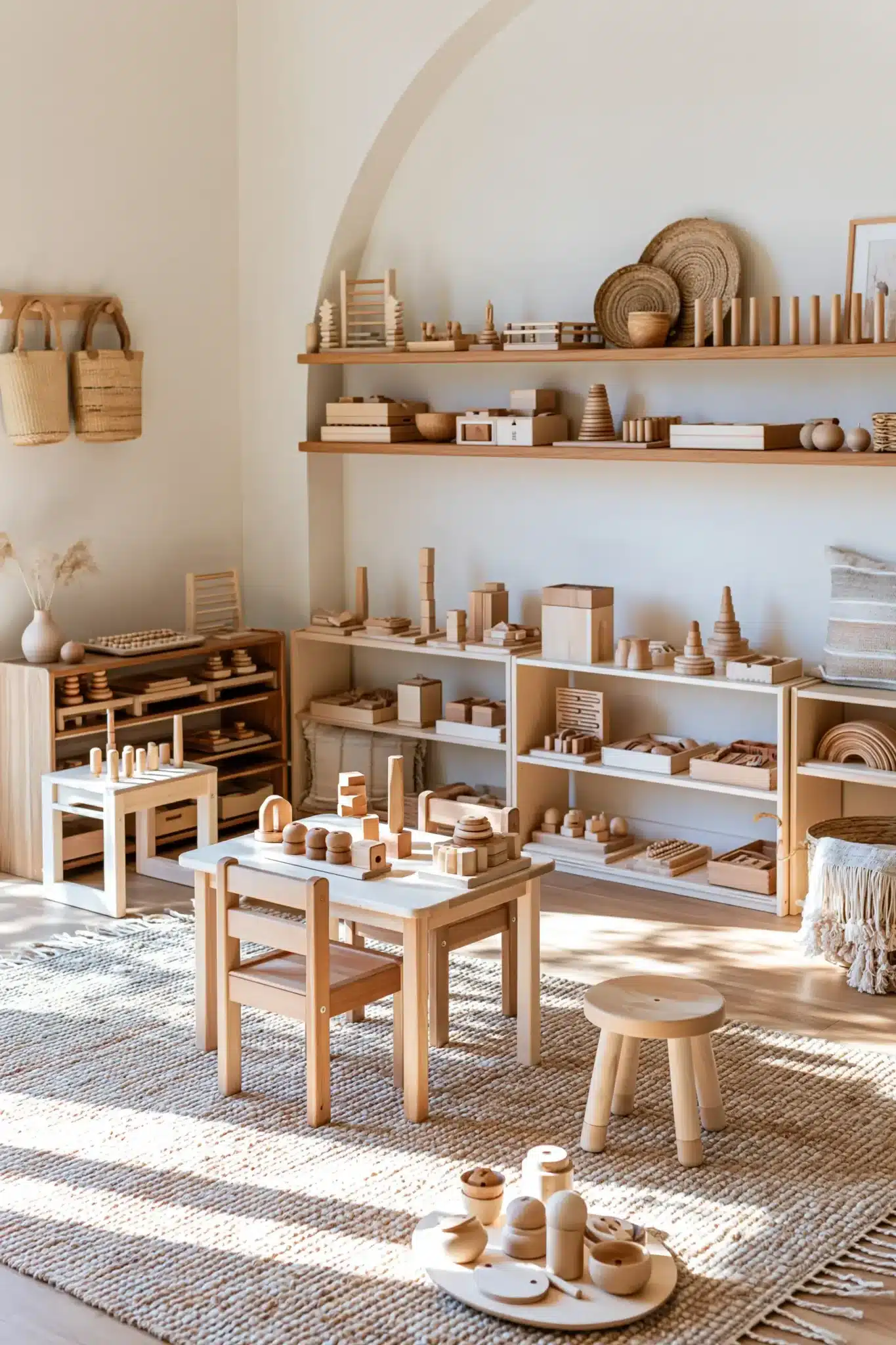
Natural wood brings warmth and timeless character to spaces designed for children. Wooden shelves, tables, chairs, blocks, puzzles, and pretend-play pieces can create a cohesive look while remaining practical for everyday use. These elements are particularly well suited to a Montessori playroom where simplicity and accessibility guide the overall arrangement. Mix different wood tones if you prefer a relaxed, collected appearance instead of a perfectly matched room. Soft textiles can add comfort and help balance the harder furniture surfaces. See the full inspiration and discover beautiful ways to work natural wood into your playroom.
26. Independent Learner Activity Space
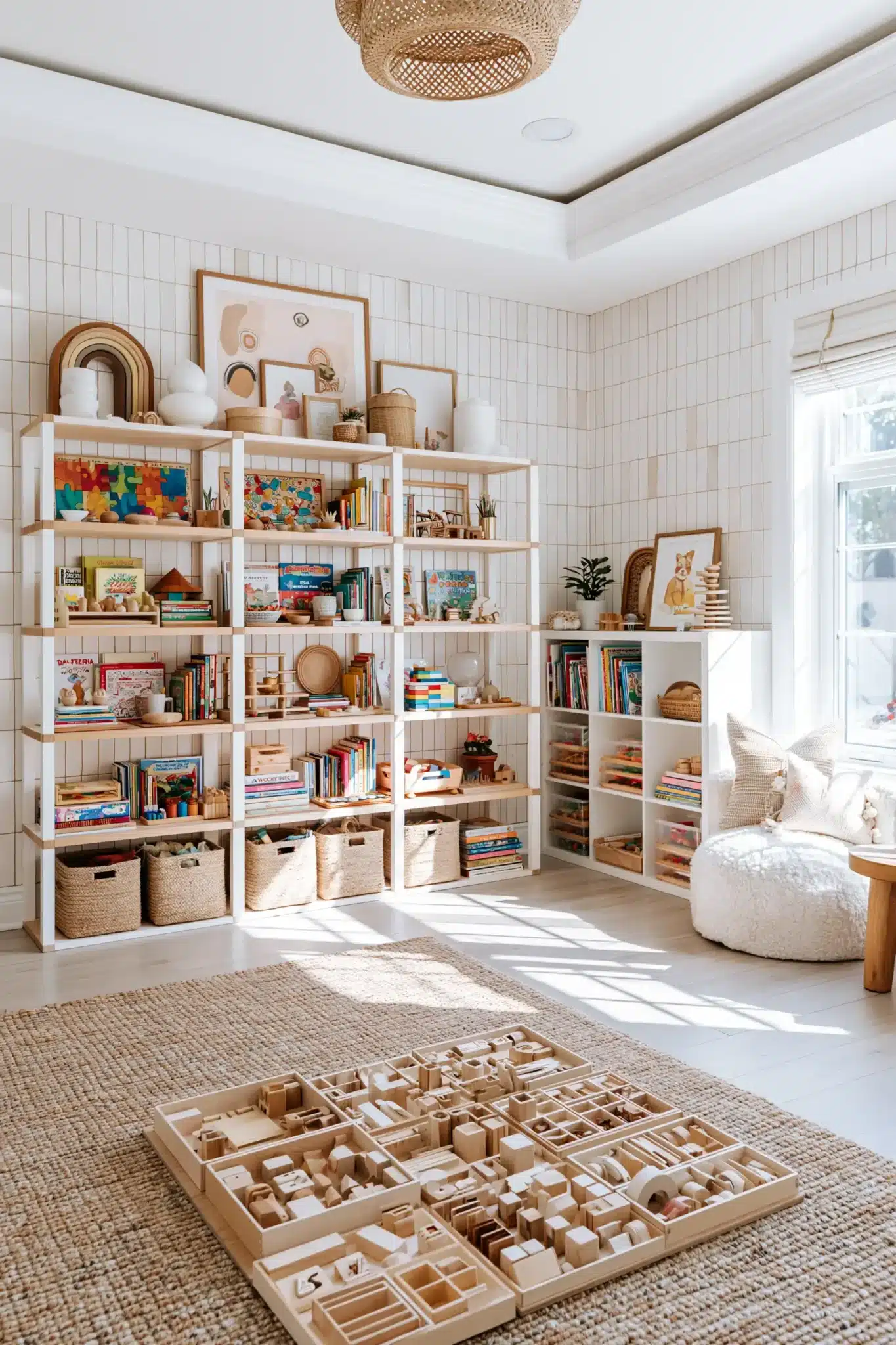
Giving children appropriate opportunities to make choices can shape the way a play space is arranged. Keep favorite activities visible, reachable, and simple enough for little learners to select without searching through complicated storage. In a Montessori playroom, child-height furniture helps make the environment feel genuinely designed around the people using it. Clearly defined areas can guide children toward reading, creative activities, puzzles, building, or practical tasks. An uncluttered arrangement also makes returning materials to their proper places easier to understand. Look deeper into these ideas and discover thoughtful ways to encourage independent exploration.
27. Montessori Movement Adventure Zone
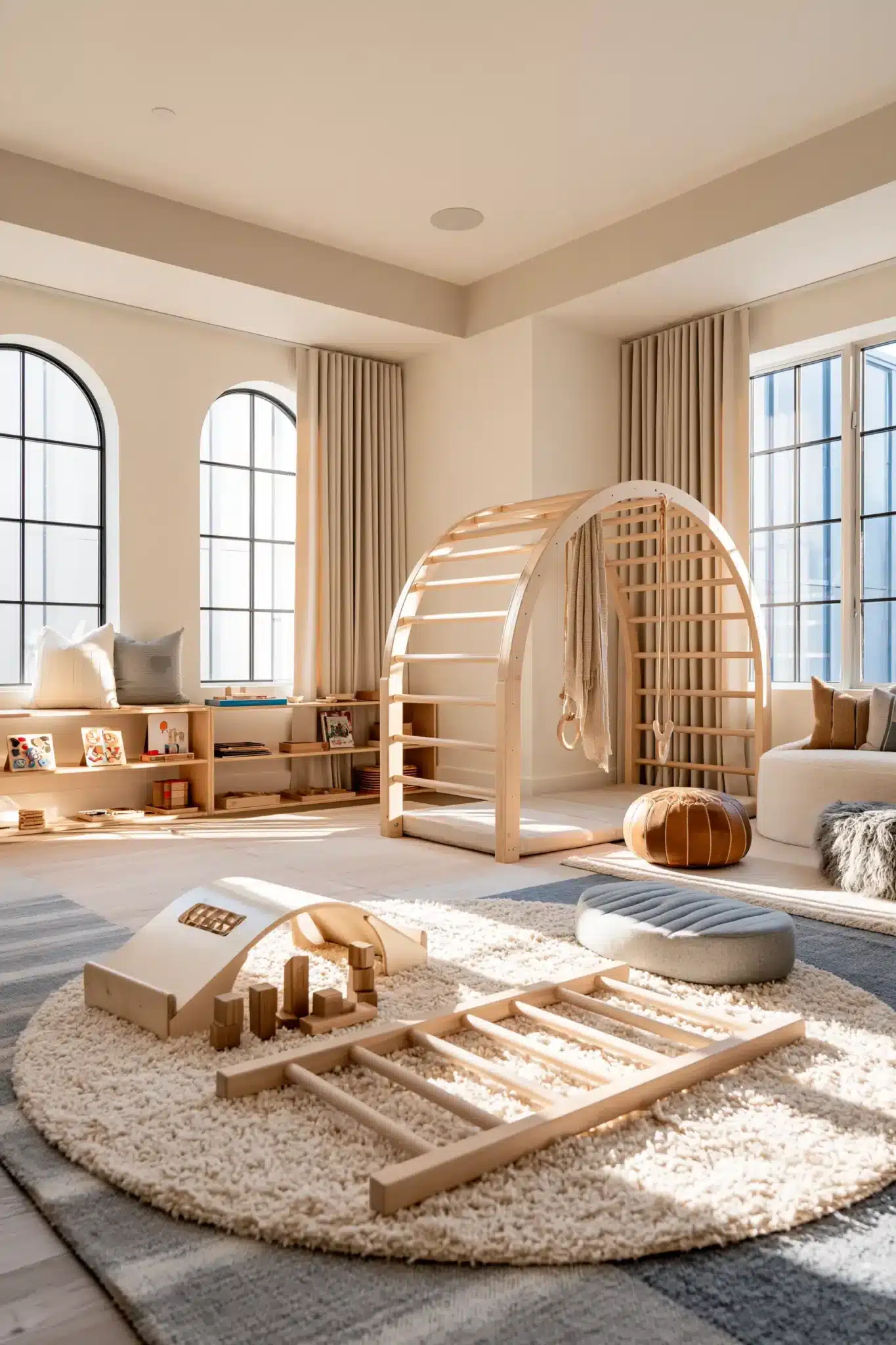
Children often need space to move just as much as they need space for quiet activities. Depending on the child’s age and available room, a Montessori playroom can incorporate an open movement area alongside traditional shelves and table activities. Keep pathways clear and avoid placing unnecessary furniture in areas intended for active play. Simple, age-appropriate movement equipment can provide additional opportunities for physical exploration when used according to its safety guidance. Balance the active zone with calmer areas for books, puzzles, and focused work. Move on to more inspiring ideas and find creative ways to make room for active play.
28. Imaginative Play Discovery Room
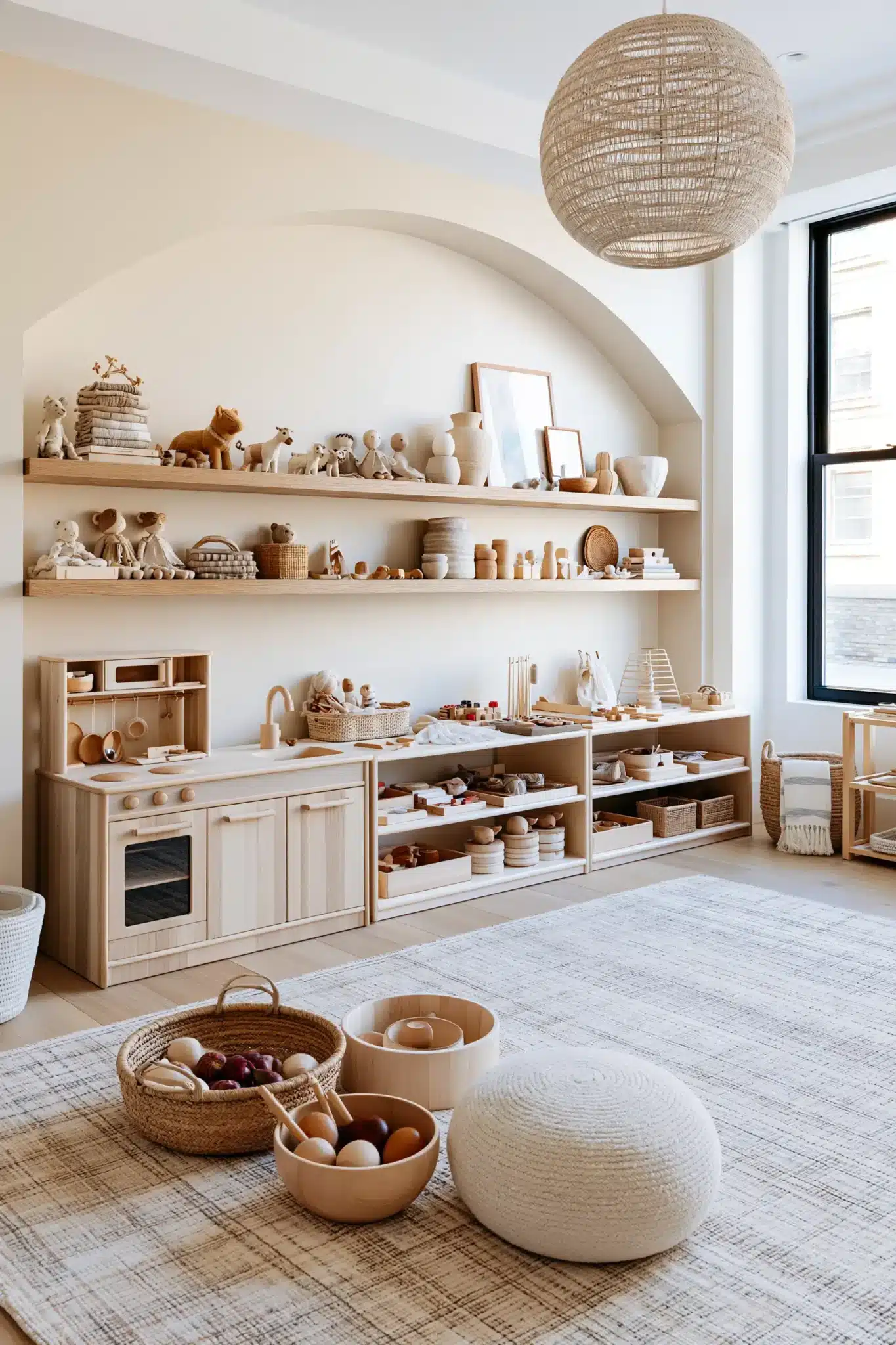
Pretend play gives children an opportunity to transform ordinary objects into entirely new worlds. Rather than creating an overly elaborate themed area, offer versatile materials that can become different things depending on the day’s adventure. This open approach fits naturally within a Montessori playroom that emphasizes accessible materials and child-led exploration. Simple play kitchens, dolls, animal figures, dress-up pieces, and building materials can support many kinds of storytelling. Keeping the selection organized helps children focus on creating rather than searching through clutter. Follow the inspiration and discover more ways to encourage big imaginations through simple play.
29. Montessori Toy Rotation Station
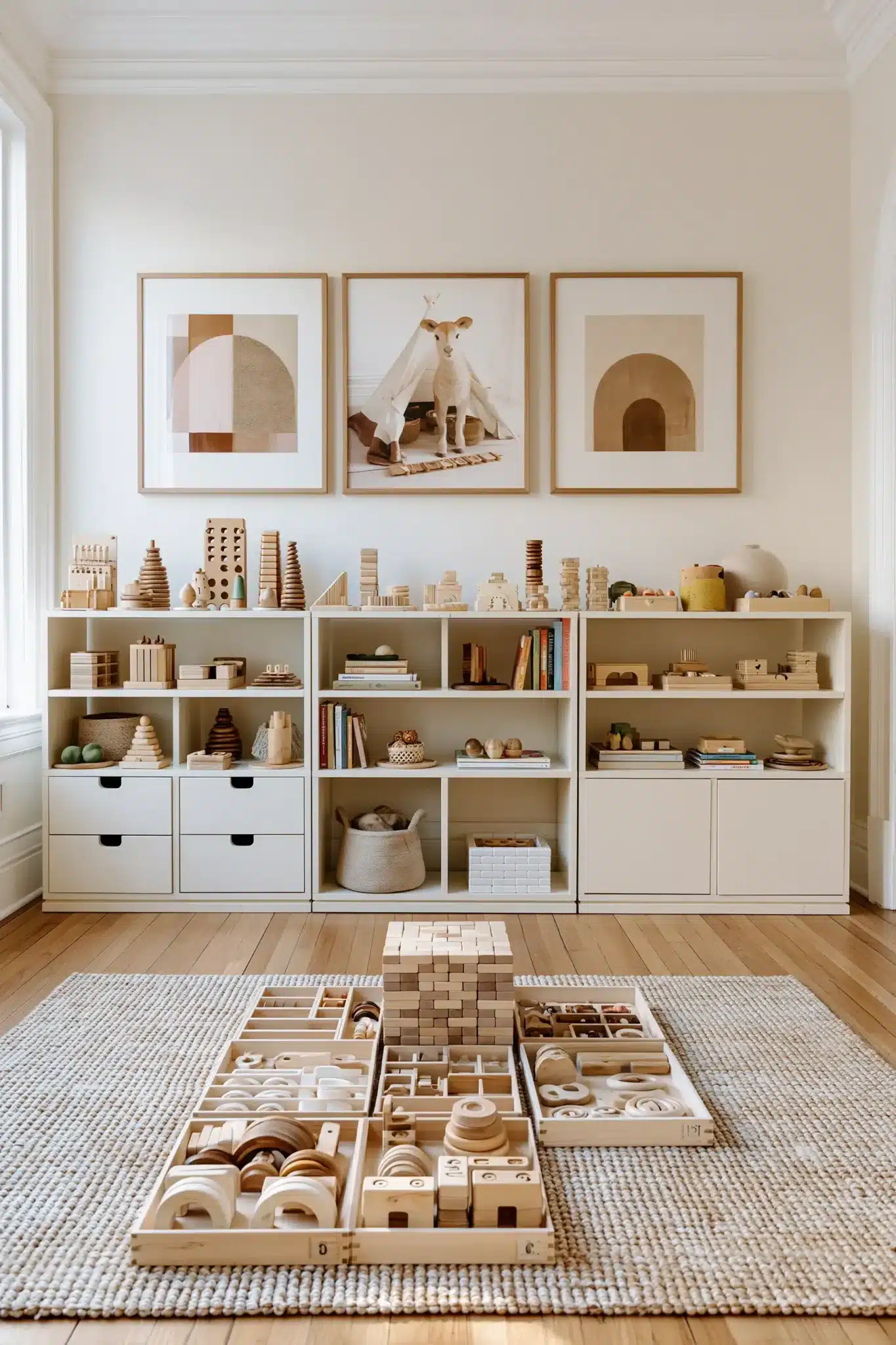
Toy rotation can make familiar materials feel interesting again while keeping clutter from taking over the room. Instead of placing every available toy on display, choose a smaller collection and store the remaining items elsewhere until it’s time for a change. This strategy works especially well in a Montessori playroom because open shelves look more inviting when each activity has enough space around it. Watch which materials children return to frequently and which ones seem to have lost their appeal before deciding what to rotate. A thoughtful mix of familiar favorites and occasional changes can keep the environment engaging without constant buying. Start exploring more toy-rotation ideas and discover an easier way to keep playtime feeling fresh.
What stuck with me is how much calmer the day feels once the room is set up for small hands instead of for show. If you want more setups to borrow, our playroom ideas post has plenty more to look through. Happy setting up.
These were the setups that made the room finally feel like it belonged to the people using it, not a showroom. For more to borrow, our dining room light fixtures post has plenty more. Happy planning.
Save this article
No spam. Unsubscribe anytime.