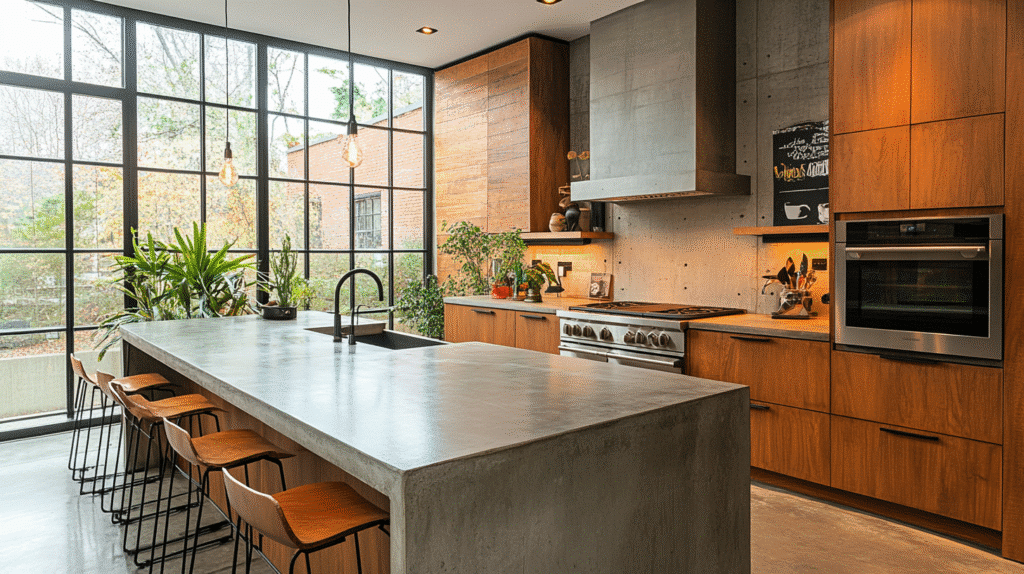
Ever looked at a perfectly imperfect bowl and felt a strange sense of calm? What if your home could evoke that same feeling? Welcome to the world of the Wabi Sabi aesthetic, where beauty is found in the naturally flawed and profoundly simple. This guide to 29 Wabi Sabi Aesthetic Ideas is all about bringing balance and harmony to your living spaces through elements that embrace authenticity over perfection. So, if you’re ready to break free from the immaculate and explore a decor style that celebrates life’s quirks, stick around. Let’s turn those perfectly imperfect visions into reality in every nook of your home!
1. Imperfect Living Room Harmony
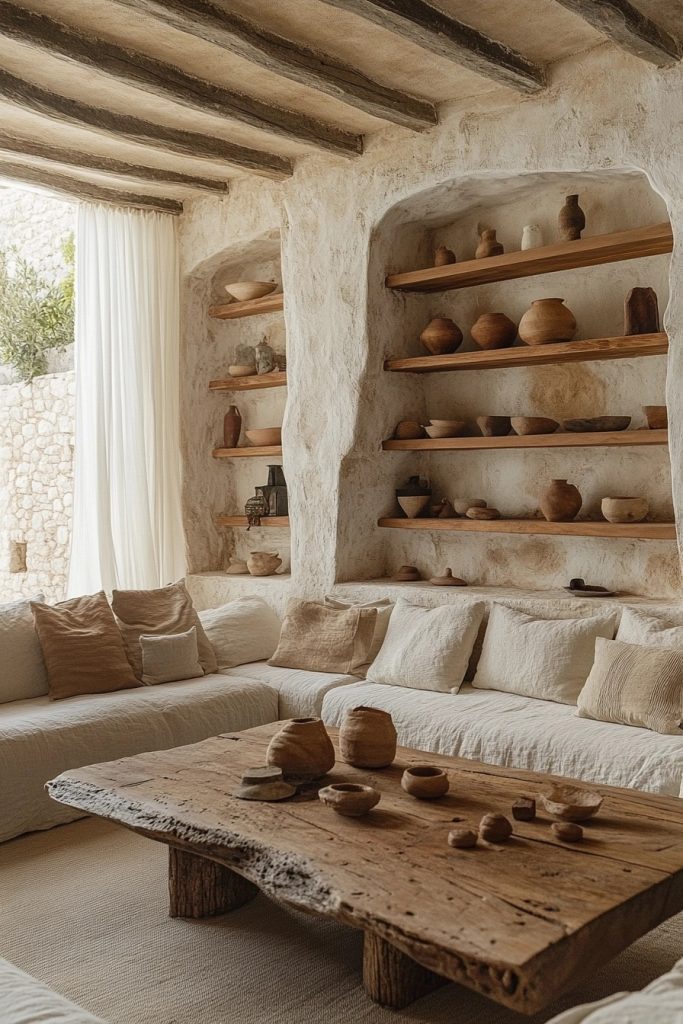
This living room embraces the Wabi Sabi Aesthetic through its celebration of asymmetry and natural materials. Handmade wooden furniture that shows signs of wear, alongside a stone coffee table with irregular edges, create a harmonious setting. Soft, faded linen cushions and throws add comfort and a sense of lived-in warmth. The walls display an imperfect plaster finish, enhancing the room’s organic feel.
🌟 Steal This Look
- Paint Color: Sherwin-Williams Accessible Beige SW 7036
- Furniture: Low-slung wooden sofa frame with visible joinery, live-edge stone coffee table with organic irregular edges, reclaimed wood side tables with worn patina
- Lighting: Paper-and-bamboo pendant with soft diffused glow, floor lamp with linen drum shade on raw wooden tripod base
- Materials: Unbleached linen with natural slubs, raw plaster with trowel marks, aged oak with water stains and dents, rough-hewn stone with chipped edges, hand-thrown ceramics
This room feels like it has been lived in for generations—the stone table’s chipped edge and the sofa’s faded linen tell stories that pristine showroom pieces never could.
2. Tranquil Bedroom Textures
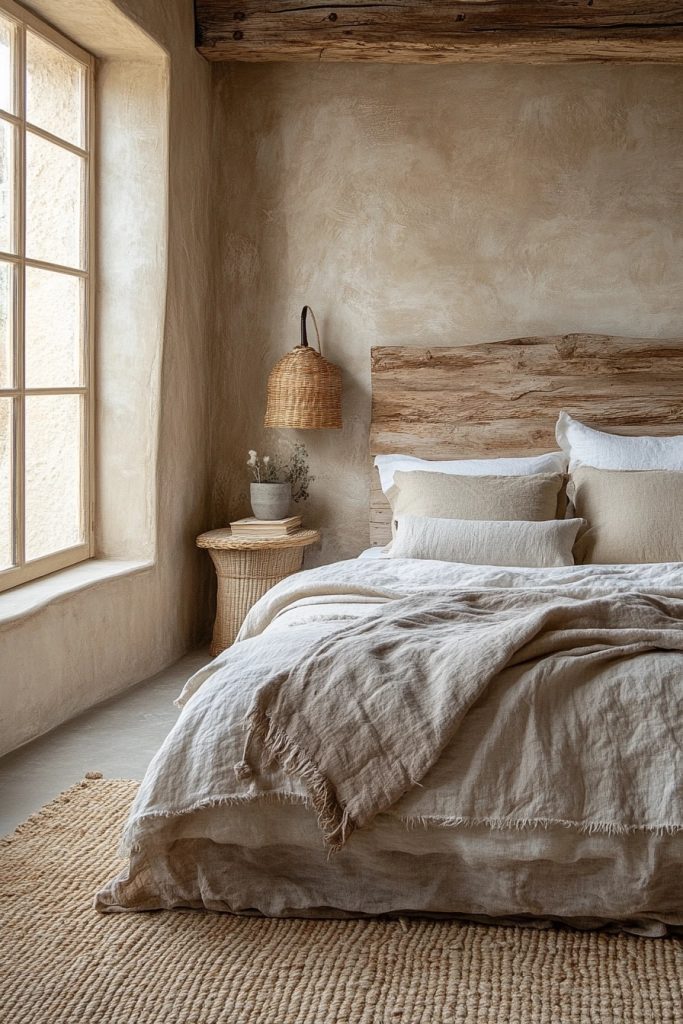
The Tranquil Bedroom Textures design utilizes the Wabi Sabi Aesthetic to foster a restful environment. Rough linen bedding, a woolen rug with natural fading, and curtains that billow softly with the breeze contribute to a serene atmosphere. A hand-carved wooden headboard, each imperfection adding to its beauty, anchors the room. Subdued, earthy colors mirror the natural world outside, reinforcing a sense of tranquility.
★ Steal This Look
- Paint Color: Benjamin Moore Pashmina AF-100
- Furniture: low-profile platform bed with live-edge wooden headboard, raw linen upholstered bench at foot
- Lighting: paper lantern pendant with warm LED bulb, ceramic bedside lamp with unglazed finish
- Materials: slubby Belgian linen, undyed wool, reclaimed teak, hand-thrown pottery, raw cotton
I always tell clients to hunt for their headboard at salvage yards or from small woodworkers—the knot you can’t stop touching becomes the room’s quiet anchor.
3. Organic Kitchen Opulence
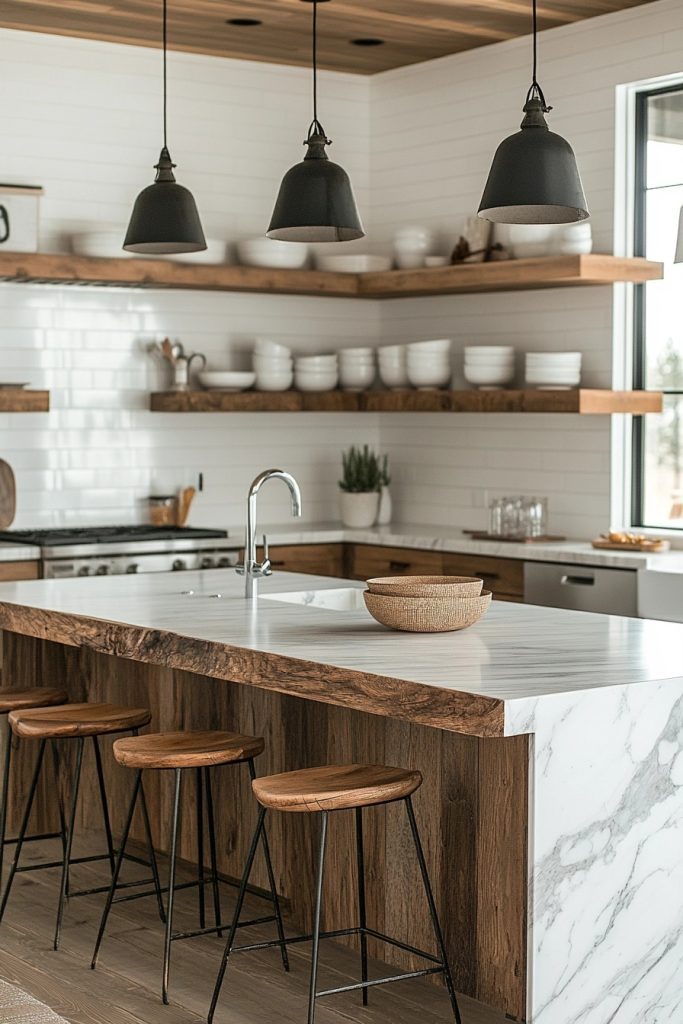
Embodying the Wabi Sabi Aesthetic, this kitchen features rustic wooden cabinets paired with a stone countertop that boasts a naturally irregular vein pattern. Open shelving displays ceramics that are beautifully imperfect, with uneven glazes and forms. A reclaimed wood dining table sets the stage for gatherings, its scars and marks telling stories of past meals. The use of soft, natural lighting highlights the organic opulence of the space.
🎨 Steal This Look
- Paint Color: Farrow & Ball Mouse’s Back 40
- Furniture: reclaimed wood farmhouse dining table with live edge, rustic shaker-style cabinets in weathered oak, open floating shelves in salvaged barn wood
- Lighting: oversized hand-blown glass pendant with visible bubbles and imperfections, warm 2700K Edison bulbs
- Materials: honed soapstone countertops with organic veining, unglazed terracotta ceramics, hand-forged brass hardware, raw linen textiles, aged copper accents
There’s something grounding about running your hand over a countertop that isn’t factory-perfect—the cool stone with its wandering veins reminds you that nature, not machines, shaped this space.
4. Weathered Bathroom Wonders
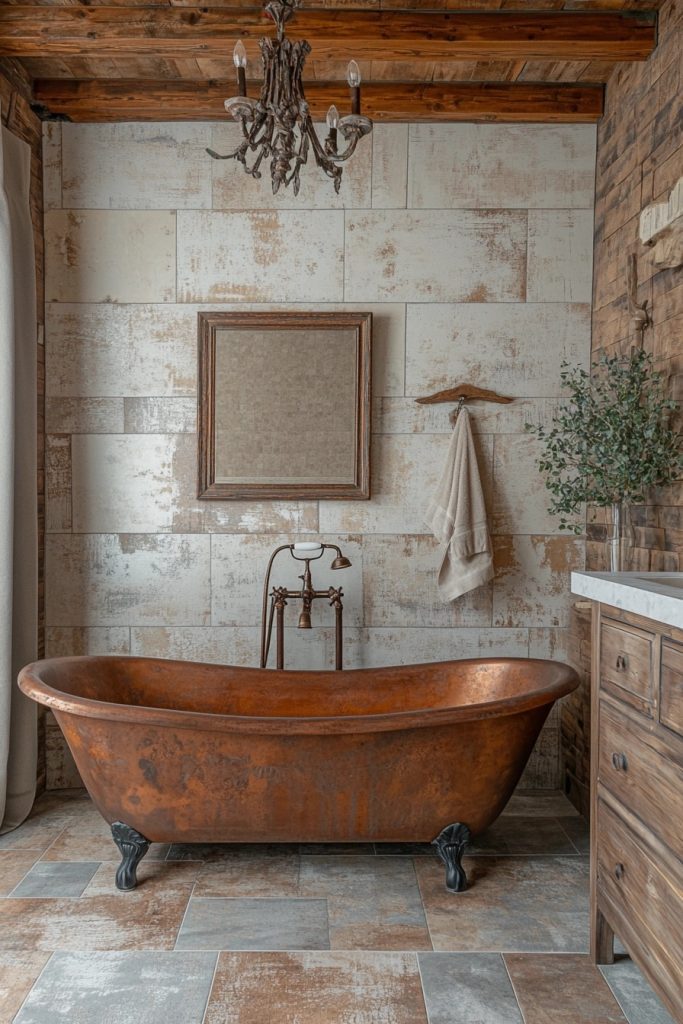
The Weathered Bathroom Wonders theme captures the essence of the Wabi Sabi Aesthetic with its appreciation for the beauty of decay. A copper bathtub with a verdigris finish and a sink fashioned from an aged wood barrel enhance the room’s character. Rough stone tiles underfoot and a mirror framed with reclaimed timber contribute to the weathered look. The soft glow from vintage-style filament bulbs casts warm light over the naturally patinated surfaces.
🏠 Steal This Look
- Paint Color: Behr Weathered Moss PPU10-15
- Furniture: copper clawfoot tub with living verdigris patina, aged oak barrel-vessel sink vanity, reclaimed barn wood shelving
- Lighting: exposed filament Edison bulb pendant with oxidized brass hardware
- Materials: rough-hewn limestone floor tile, unsealed copper, reclaimed timber with visible nail holes and grain, hand-thrown ceramic accessories
There’s something deeply grounding about bathing surrounded by materials that have already lived full lives—the green bloom on copper, the water stains on wood remind us that we, too, are temporary.
5. Serenely Simple Entryway
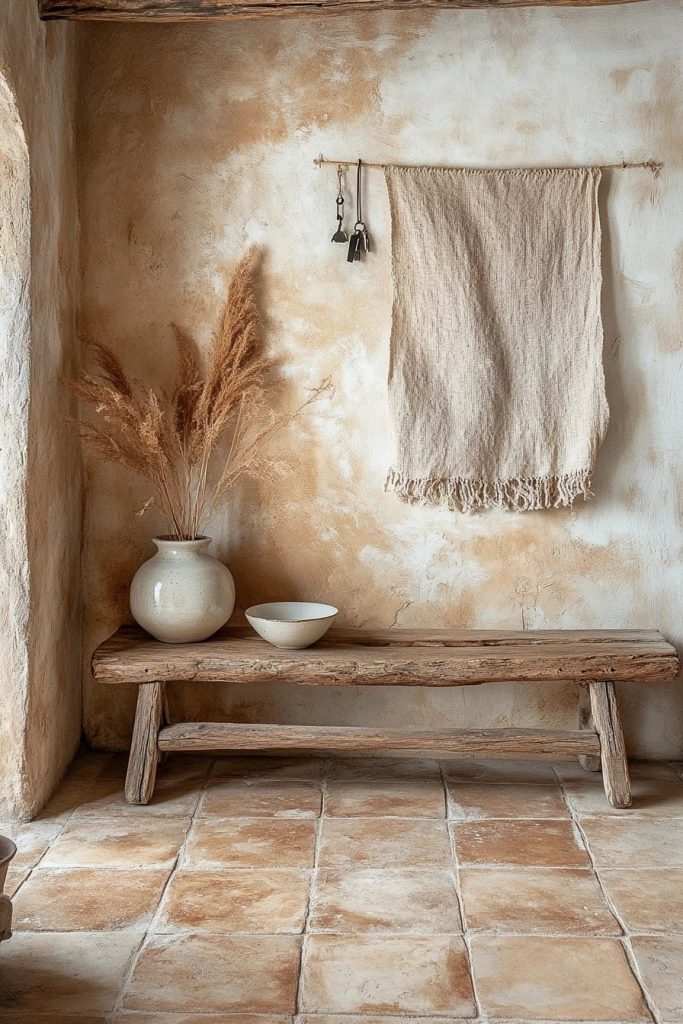
The Serenely Simple Entryway embraces the Wabi Sabi Aesthetic by highlighting minimalism and the beauty of imperfection. A bench crafted from driftwood, paired with a simple, handwoven rug, offers a place to pause. The walls, painted in a soft, imperfect wash, reflect natural light pouring in from a skylight. This space proves that less is more, inviting calmness as one enters the home.
🏠 Steal This Look
- Paint Color: Valspar Wispy White 4004-1A
- Furniture: raw-edge driftwood bench with live edge, low profile
- Lighting: skylight with sheer linen diffusers, no artificial fixture visible
- Materials: unfinished driftwood, handwoven jute or hemp rug, lime-washed plaster walls, raw linen
This entryway taught me that the most welcoming homes don’t try too hard—the scuffs and water marks on that driftwood bench become the story.
6. Rustic Dining Room Refinement
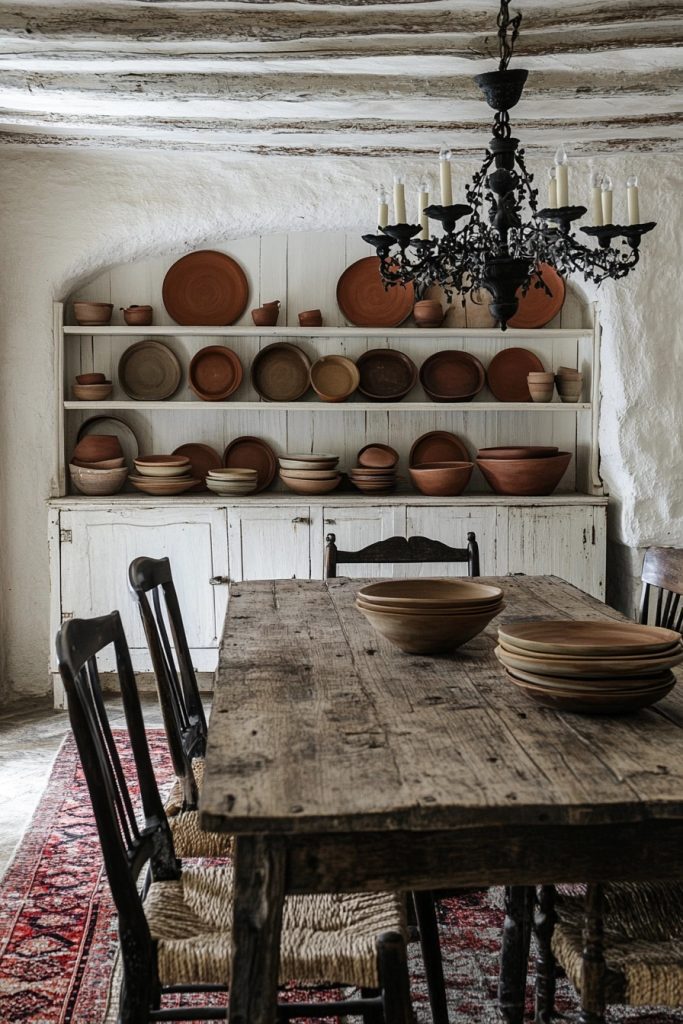
In this dining room, the Wabi Sabi Aesthetic shines through rustic refinement. A large, solid wood table bears the marks and grain patterns of its natural form. Surrounding chairs, each with a slightly different design, celebrate uniqueness. Hand-thrown pottery and naturally dyed table linens complete the look, offering a sense of homemade sophistication.
★ Steal This Look
- Paint Color: PPG Warm Stone PPG1002-3
- Furniture: live-edge solid wood dining table with mismatched vintage spindle-back and ladder-back chairs
- Lighting: oversized woven rattan pendant with exposed Edison bulb
- Materials: raw oak, hand-thrown ceramic, linen, unbleached cotton, aged brass
There’s something grounding about eating at a table that still remembers being a tree—the knots, the cracks, the uneven edges remind us that beauty lives in the unfinished.
7. Time-Worn Home Office Tranquility
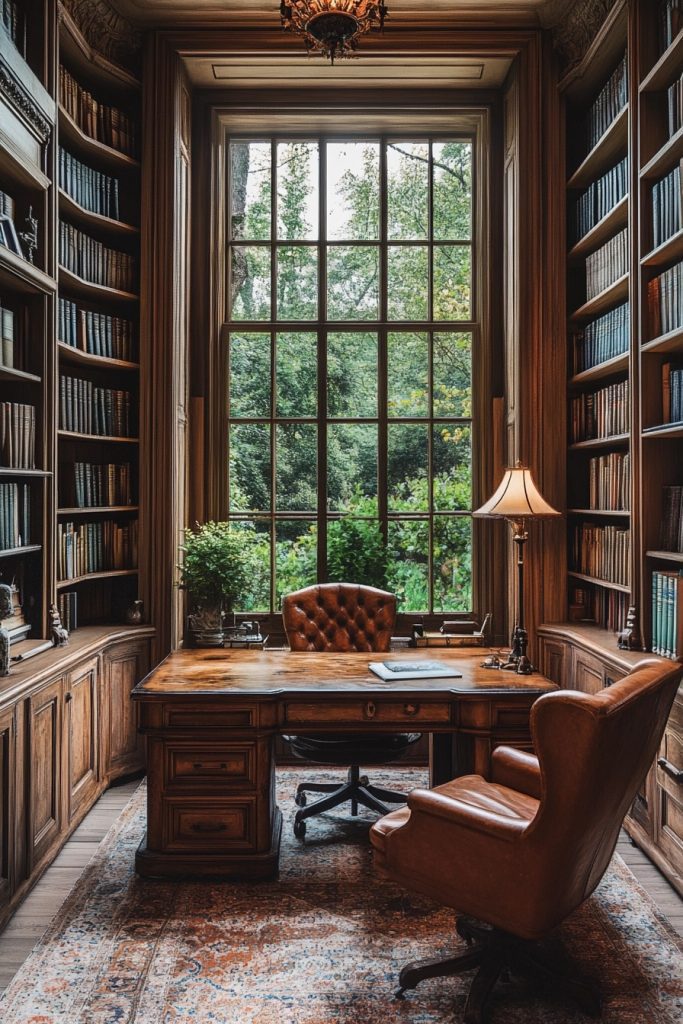
The Time-Worn Home Office Tranquility design incorporates the Wabi Sabi Aesthetic with a focus on materials that carry a sense of history. An antique wooden desk, its surface scratched and ink-stained, stands against a backdrop of bookshelves filled with well-read books. A vintage leather chair, worn to a soft patina, offers a comfortable spot for reflection. The presence of aged paper and tarnished brass desk accessories adds to the room’s tranquil, time-worn charm.
🖼 Steal This Look
- Paint Color: Dunn-Edwards Weathered Stone DE6216
- Furniture: antique oak writing desk with visible wear marks, vintage tufted leather club chair in cognac
- Lighting: brass swing-arm wall sconce with aged patina finish
- Materials: raw linen, unpolished brass, reclaimed wood, vegetable-tanned leather, handmade paper
This is the office of someone who values the thought process over the presentation—every scratch on that desk marks a decision made, a letter written, an idea that mattered.
8. Aged Sunroom Elegance
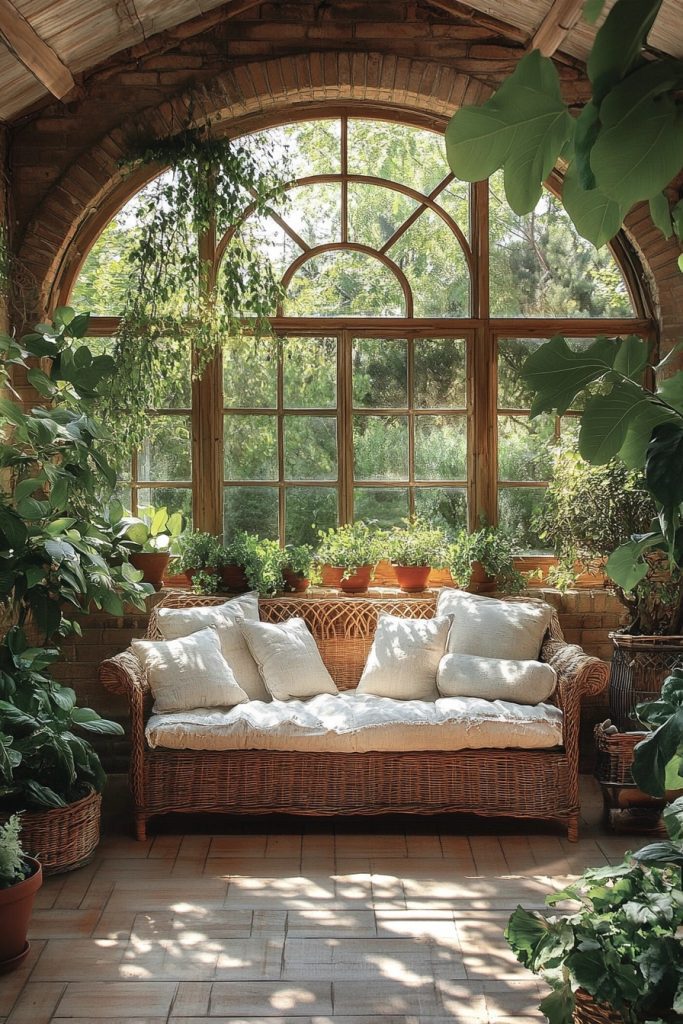
Aged Sunroom Elegance showcases the Wabi Sabi Aesthetic through the use of matured materials and elegant design. Faded wicker furniture, complemented by cushions covered in sun-bleached fabrics, invites relaxation. The room is surrounded by tall, slightly foggy windows that soften the sunlight, creating a warm, glowing ambiance. Plants in aged terracotta pots add a touch of life and further connect the space to the outdoors.
🎨 Steal This Look
- Paint Color: Clare Paint Dirty Chai WARM-04
- Furniture: vintage-style wicker loveseat with curved arms, distressed whitewash finish
- Lighting: antiqued brass floor lamp with linen drum shade
- Materials: weathered rattan, unbleached linen, aged terracotta, fogged glass, raw jute
This is the room where you drink lukewarm tea and watch dust motes dance—perfection in the unfinished.
9. Raw Beauty Guest Room
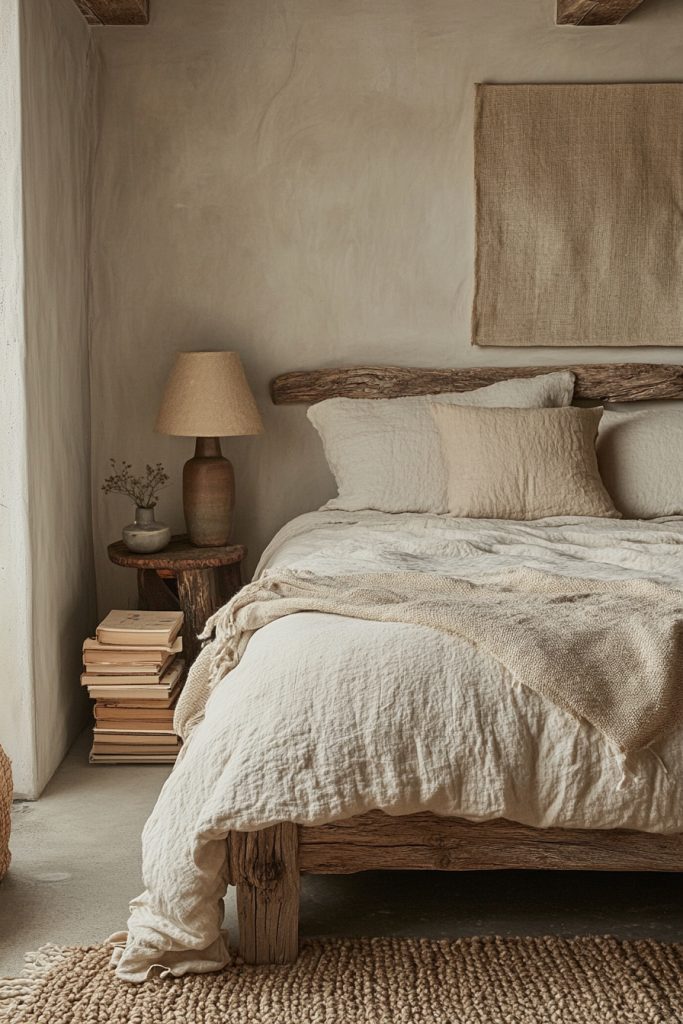
The Raw Beauty Guest Room emphasizes the Wabi Sabi Aesthetic with its straightforward and unrefined décor. The bed is made with undyed linen sheets and a rough-hewn blanket, offering a tactile experience. The walls are adorned with a simple fresco that has chipped over time, revealing layers of past colors. Minimal furniture, including a stool made from a tree stump, underscores the beauty of raw, natural materials.
★ Steal This Look
- Paint Color: Fine Paints of Europe Kalklitir Kalkfarg Chalk Paint 01 (warm off-white with mineral depth)
- Furniture: low platform bed frame in unfinished oak, single tree stump side table with live edge, wall-mounted wooden peg rack
- Lighting: hand-formed ceramic pendant with uneven glaze, exposed bulb
- Materials: undyed Belgian linen, raw wool, unsealed terracotta, reclaimed wood with visible grain, lime plaster with intentional imperfection
There’s something deeply restful about sleeping in a room that doesn’t try too hard—guests often remark they sleep better here than in their own polished bedrooms.
10. Earthen Elegance Mudroom
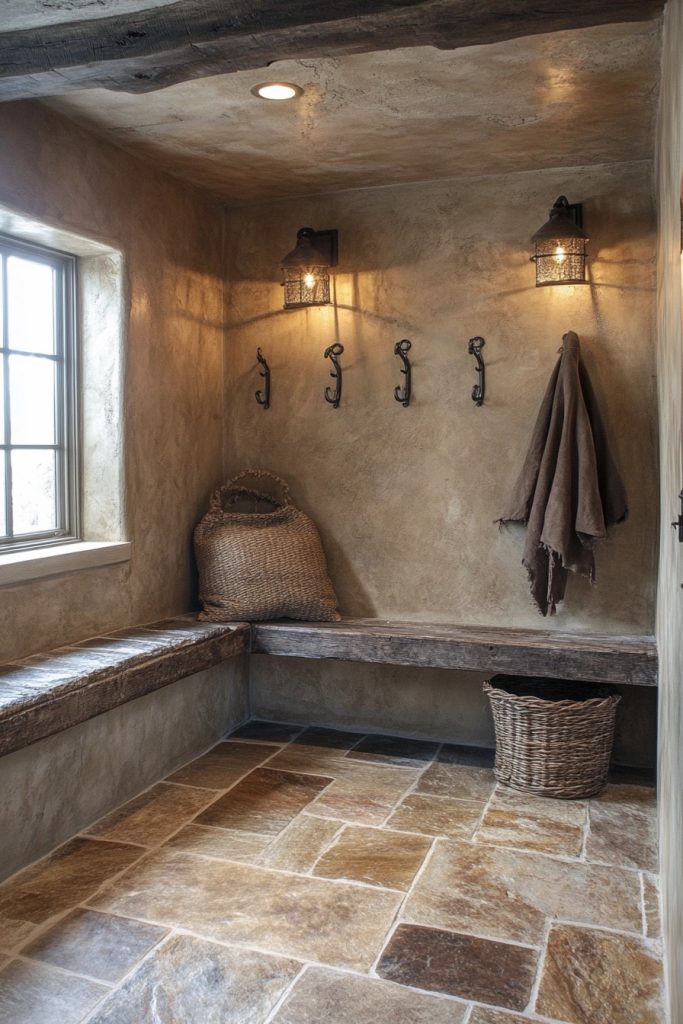
In the Earthen Elegance Mudroom, the Wabi Sabi Aesthetic is reflected in the choice of natural, durable materials designed to handle wear and tear with grace. Slate flooring, a bench made from reclaimed barn wood, and hooks fashioned from twisted iron create a functional yet aesthetically pleasing space. Woven baskets for storage add a touch of rustic charm, and a hand-dyed rug introduces color and texture. This room combines practicality with the understated elegance of natural aging.
💡 Steal This Look
- Paint Color: Backdrop Sandlot BA-35
- Furniture: reclaimed barn wood bench with live edge, twisted iron wall hooks, woven seagrass storage baskets
- Lighting: oxidized brass dome pendant with visible patina
- Materials: slate tile flooring, hand-dyed wool rug with irregular weave, raw linen, weathered oak
There’s something grounding about a mudroom that doesn’t fight the mess of life. This space welcomes muddy boots and wet coats like old friends, finding beauty in function rather than despite it.
11. Natural Nuances Nursery
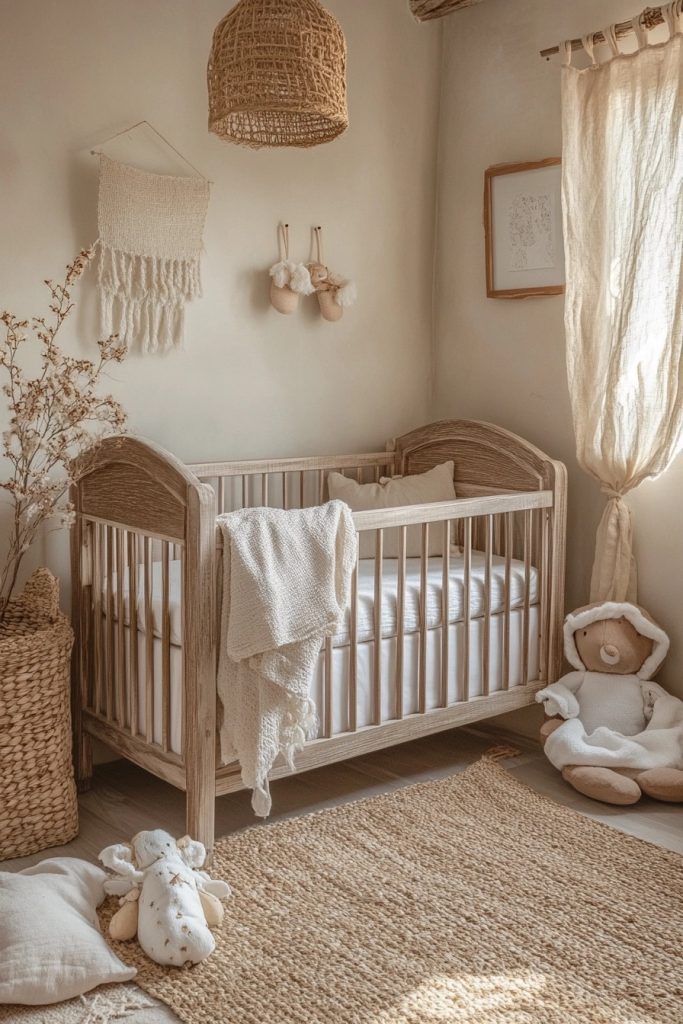
The Natural Nuances Nursery adopts the Wabi Sabi Aesthetic by integrating elements that grow and evolve along with the child. Unfinished wooden cribs and cabinets showcase the natural imperfections and grains of the wood. Soft, hand-knit wool blankets and rugs provide comfort and warmth, while a muted, earth-toned palette creates a calming environment for both parent and child. Simple, handmade mobiles of natural felt hang above, adding a gentle charm.
🌟 Steal This Look
- Paint Color: Sherwin-Williams Accessible Beige SW 7036
- Furniture: unfinished raw wood crib with visible grain knots, low-profile wooden changing cabinet with live edge detail
- Lighting: simple linen drum pendant with warm dimmable LED
- Materials: unfinished oak, hand-felted wool, raw linen, unbleached cotton, visible wood grain, imperfect ceramic
There’s something deeply grounding about a nursery that doesn’t try too hard—those hand-knit wool textures and raw wood grains create a space where both you and baby can actually breathe.
12. Muted Majesty Library
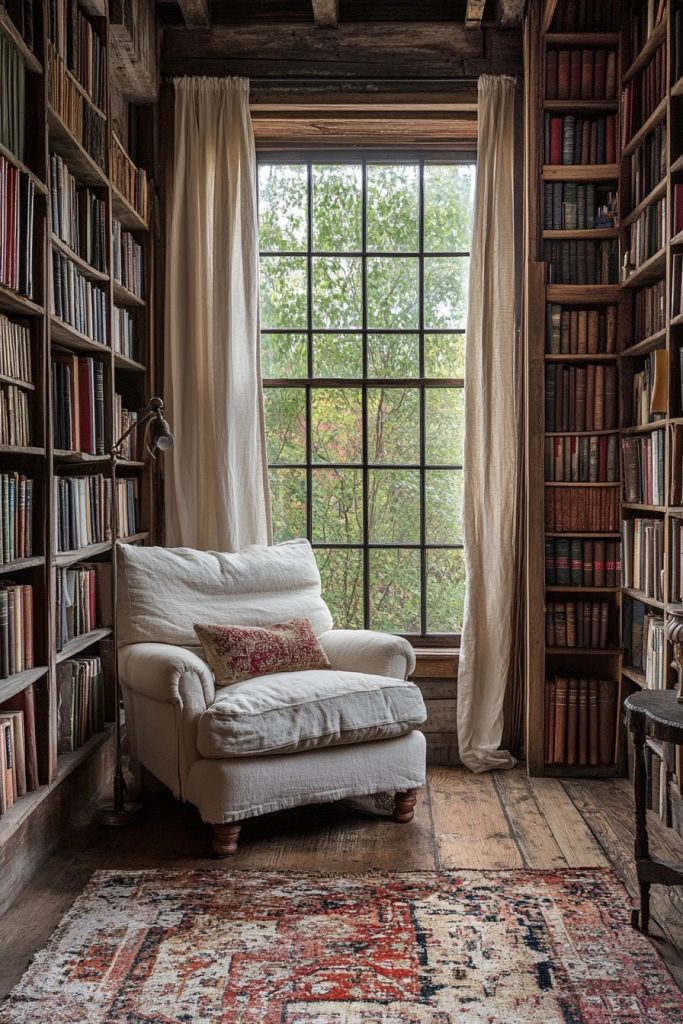
The Muted Majesty Library embodies the Wabi Sabi Aesthetic through its celebration of faded grandeur and intellectual spirit. Wall-to-wall reclaimed wooden shelves are filled with leather-bound books whose spines show the marks of many hands. A large, distressed leather armchair invites long reading sessions under the soft light of a vintage brass lamp. Plush, worn Persian rugs cover the floors, adding layers of texture and history.
🌟 Steal This Look
- Paint Color: Benjamin Moore Stone Hearth 984
- Furniture: distressed leather Chesterfield armchair with visible patina, reclaimed wood ladder bookshelf with hand-hewn beams
- Lighting: vintage brass swing-arm wall sconce with amber glass shade
- Materials: reclaimed barn wood, full-grain leather with natural markings, hand-knotted wool with vegetable dyes, unlacquered brass, linen bookcloth
There’s something deeply comforting about a chair that already knows the shape of other readers—this is a room that rewards slowness and asks nothing of you but presence.
13. Patina Perfection Conservatory
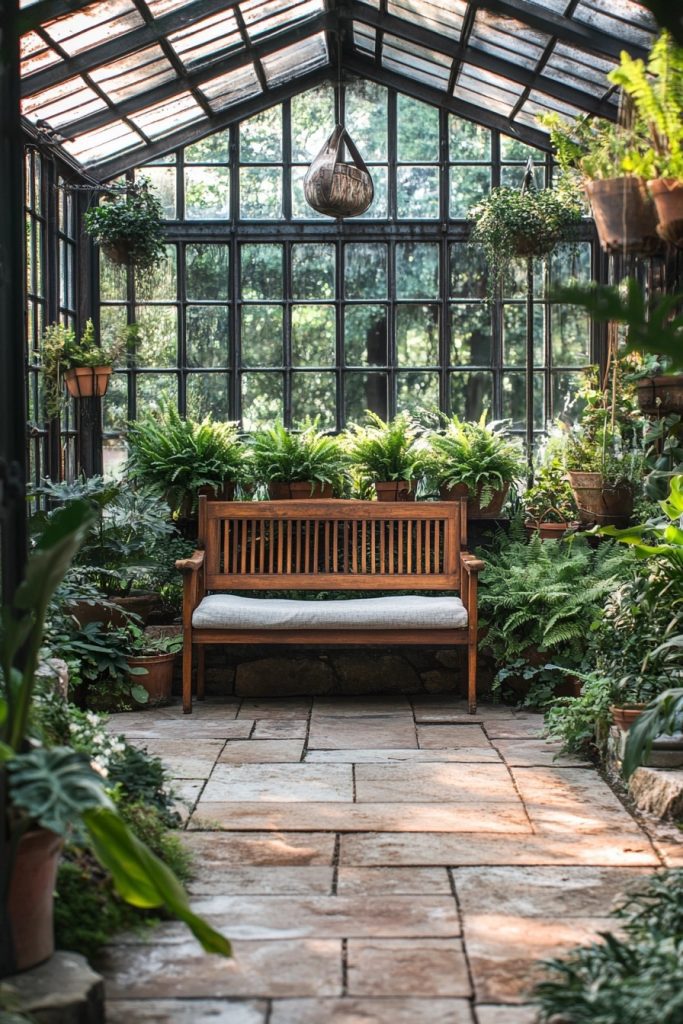
In the Patina Perfection Conservatory, the Wabi Sabi Aesthetic shines through the use of aged metals and weathered wood. Rustic plant stands display a collection of pots with crackling glaze, each holding an array of lush, green plants. The glass panels of the conservatory are tinged with the soft patina of time, filtering the sunlight to create a warm, diffused glow. Vintage gardening tools serve as both functional items and decor, hanging neatly on the walls.
★ Steal This Look
- Paint Color: Farrow & Ball Green Smoke 47
- Furniture: weathered teak potting benches, cast iron plant stands with rusted finish, reclaimed wood shelving with visible grain and knots
- Lighting: vintage brass pendant with aged verdigris patina, or antique industrial skylight fixtures
- Materials: oxidized copper, raw linen, unglazed terracotta, crackled ceramic, reclaimed barn wood, seeded glass
There’s something deeply calming about a room that celebrates rust and wear—this conservatory feels like it holds decades of quiet gardening mornings.
14. Minimalist Musings Studio
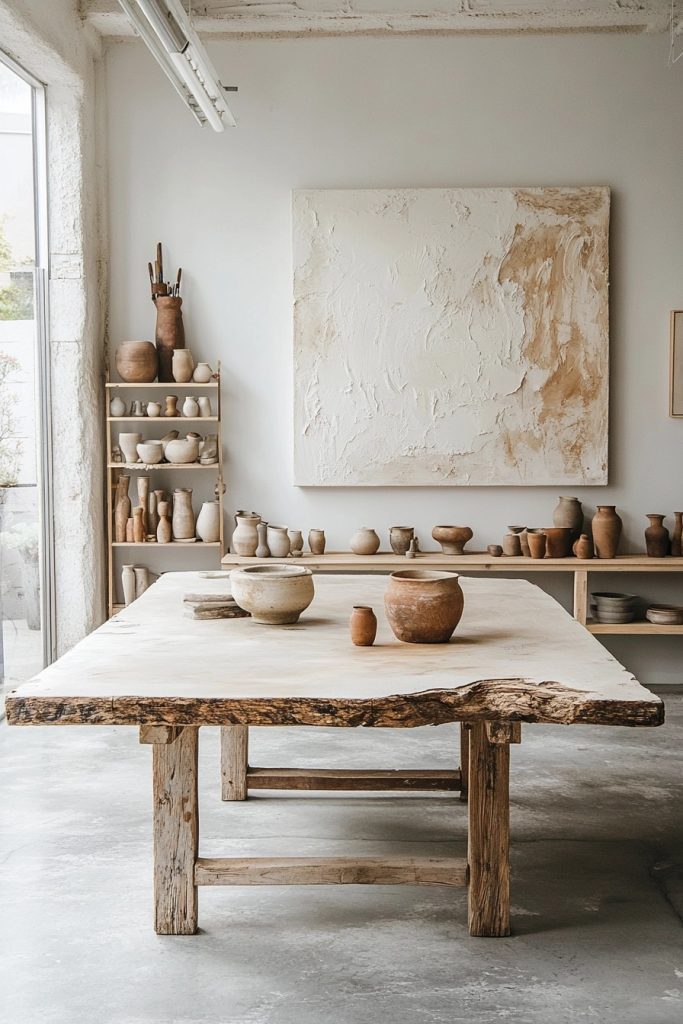
The Minimalist Musings Studio utilizes the Wabi Sabi Aesthetic to create a space that fosters creativity through simplicity. The studio features bare, polished concrete floors and plain, white walls that serve as a canvas for the artist. A single, solid wood table holds only essential tools, each well-used and displaying character. Large, north-facing windows provide consistent natural light, essential for the creative process.
★ Steal This Look
- Paint Color: Behr Polar Bear 75
- Furniture: solid wood work table with visible grain and patina, simple wooden stool
- Lighting: large north-facing windows for soft natural light, simple paper pendant for evening
- Materials: polished concrete flooring, raw unfinished wood, handmade ceramic tool vessels, linen drop cloths
There’s something quietly revolutionary about a studio that refuses to perform for Instagram. This space asks you to show up as you are, mess and all, and make something imperfectly human.
15. Subtle Strength Workout Room
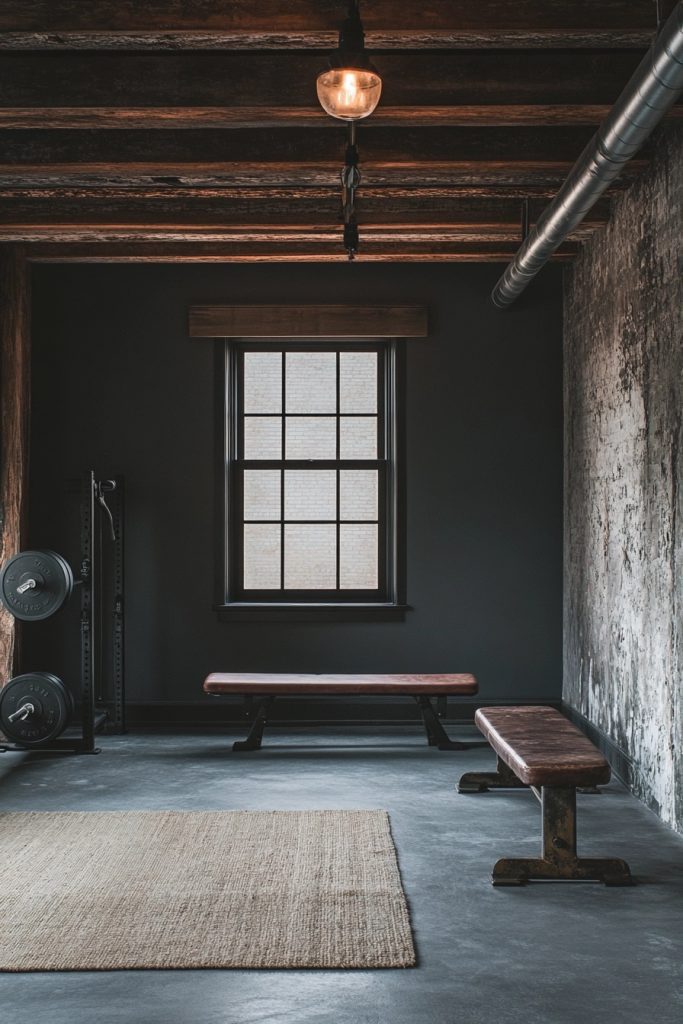
Subtle Strength Workout Room embraces the Wabi Sabi Aesthetic with its focus on durability and raw functionality. Exposed brick walls and recycled rubber flooring absorb the rigor of daily workouts while maintaining an earthy, grounded feel. Hand-forged iron weights and wooden benches, each showing signs of use, reflect the beauty of continual improvement and effort. The space is minimal, devoid of unnecessary elements, highlighting the essentials of physical training.
💡 Steal This Look
- Paint Color: Valspar Brick Dust 1008-4A
- Furniture: hand-forged iron weight rack, reclaimed wood bench with visible grain and wear marks, wall-mounted wooden pegboard for resistance bands
- Lighting: oversized blackened steel pendant with exposed Edison bulb, hung low over workout zone
- Materials: exposed red brick, recycled rubber flooring in charcoal, raw blackened steel, weathered oak, unbleached cotton canvas
There’s something quietly powerful about lifting on scuffed wood and rubber that has absorbed thousands of reps—it reminds you that strength itself is built through accumulated imperfection.
16. Soft Solitude Reading Nook
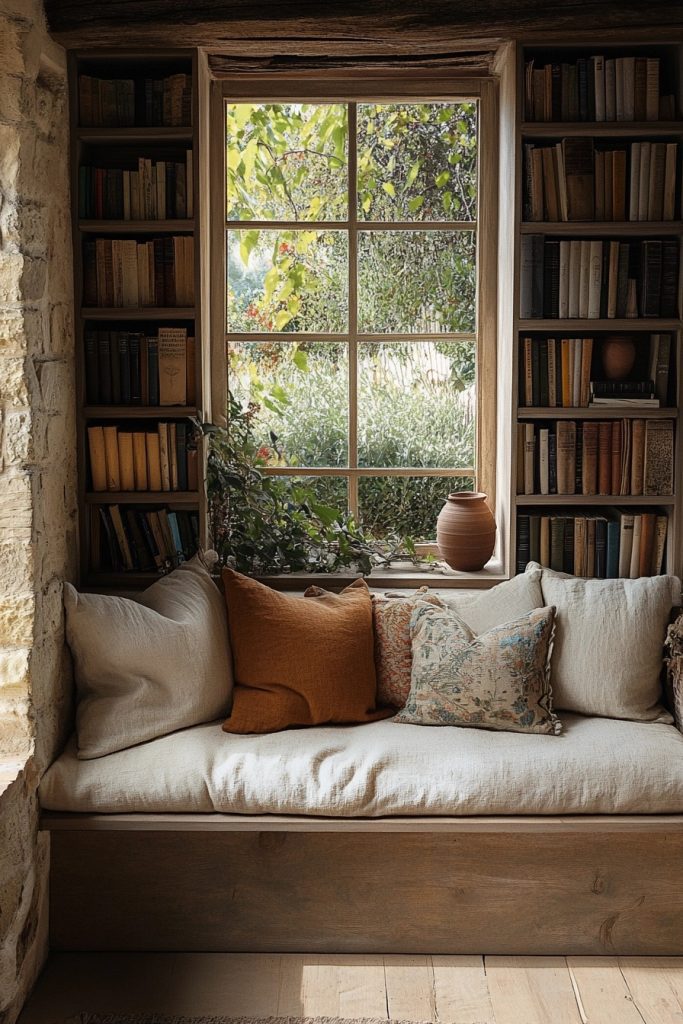
The Soft Solitude Reading Nook captures the Wabi Sabi Aesthetic by providing a quiet corner to retreat and reflect. A deep, cushioned window seat, upholstered with faded linen, overlooks a garden, offering a view filled with the imperfections of nature. Shelving built into the nook holds a selection of well-thumbed books, their tattered covers adding to the charm. Soft, ambient lighting and a nearby tea set encourage relaxation and contemplation.
✎ Steal This Look
- Paint Color: PPG Warm Stone PPG1001-4
- Furniture: built-in window seat with deep cushion, raw-edge floating shelves, vintage wooden stool
- Lighting: paper globe pendant, small ceramic table lamp with linen shade
- Materials: faded Belgian linen, unbleached cotton, reclaimed wood, handmade ceramic, raw wool throw
There’s something deeply human about a corner that doesn’t try too hard—the tea cools, the light shifts, and you finally exhale.
17. Ancient Alchemy Cellar
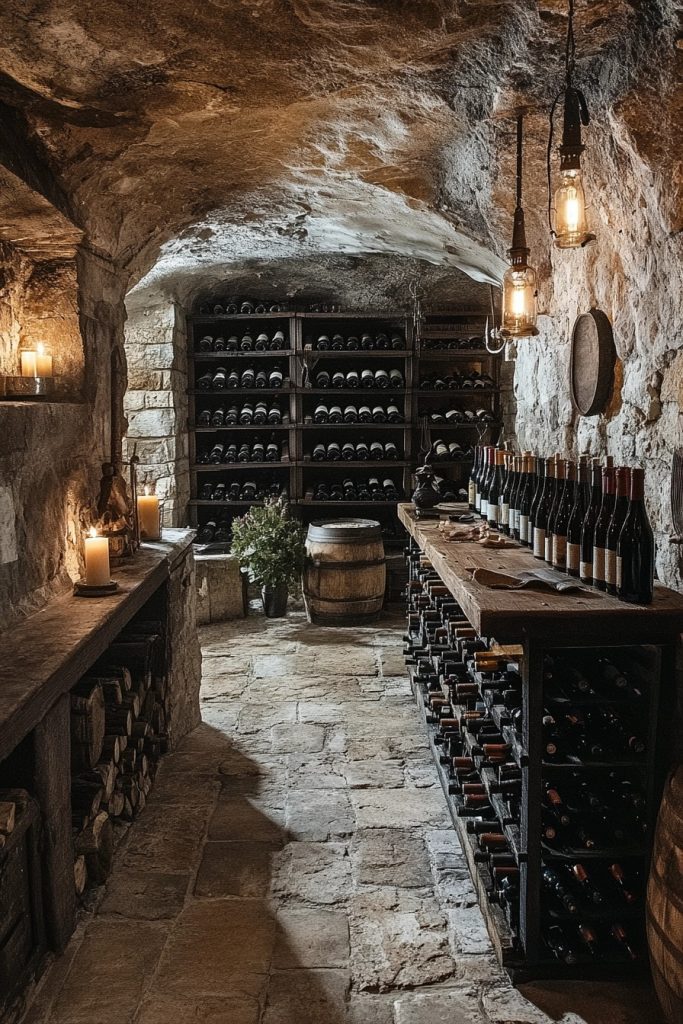
In the Ancient Alchemy Cellar, the Wabi Sabi Aesthetic is celebrated through the mystique of transformation and history. Stone walls, some bearing the marks of old vine growth, and rough wooden wine racks create a backdrop filled with character. The dim lighting enhances the sense of discovering ancient secrets, with old wine barrels serving as both storage and tables. This space is a tribute to the beauty of aging and the alchemy of wine-making.
✎ Steal This Look
- Paint Color: Dunn-Edwards Black Board DET 625
- Furniture: reclaimed wood wine barrel tables, rough-hewn timber wine racks, vintage apothecary cabinets
- Lighting: wrought iron candelabra sconces, Edison bulb pendant clusters in aged brass
- Materials: rough limestone, weathered oak, oxidized copper, hand-forged iron, aged cork
There’s something almost sacred about running your hand over stone walls that have witnessed decades of harvests—these imperfections aren’t flaws, they’re the cellar’s autobiography.
18. Rough Luxe Loft
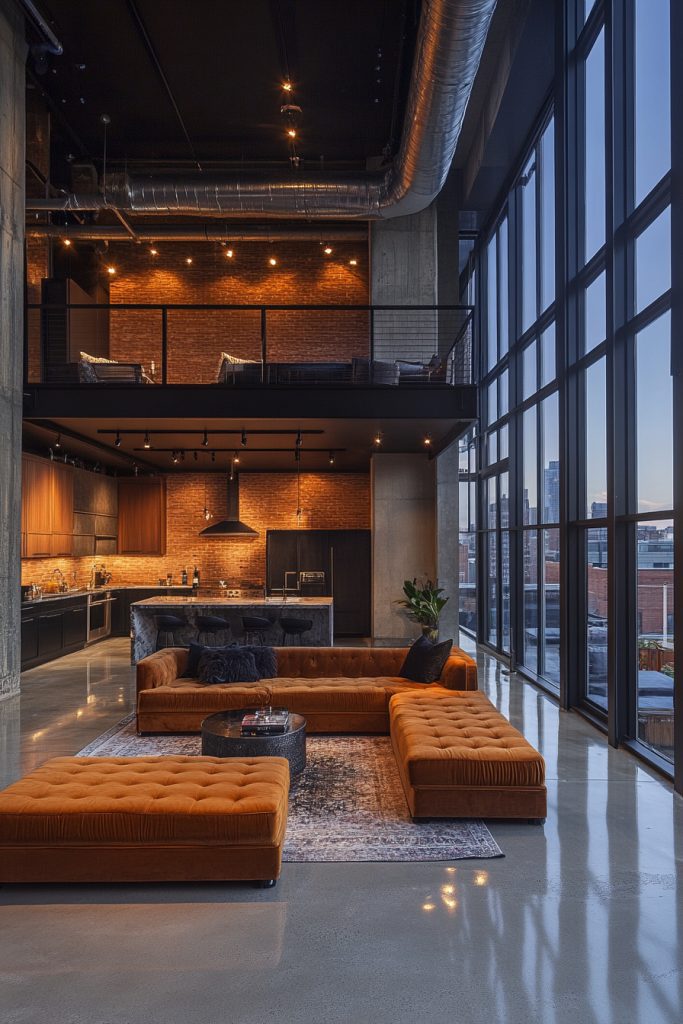
The Rough Luxe Loft combines luxurious living with the raw, unfinished textures typical of the Wabi Sabi Aesthetic. High ceilings with exposed beams and ductwork juxtapose with plush, oversized sofas covered in soft, worn leather. Concrete floors, intermixed with plush rugs, and walls adorned with abstract, textured art evoke a sense of refined grittiness. This loft celebrates the contrast between rough and refined, making it a striking space.
💡 Steal This Look
- Paint Color: Clare Paint Ironclad CL-002
- Furniture: oversized low-profile leather sofa with visible patina and wear, paired with a reclaimed wood coffee table with live edges
- Lighting: oversized industrial pendant with aged brass finish and exposed Edison bulbs
- Materials: raw concrete floors, distressed full-grain leather, unfinished reclaimed timber, oxidized metal, hand-thrown ceramic vessels
There’s something deeply honest about a space that doesn’t hide its bones—this loft feels like it has stories already written into every scuff and seam.
19. Flawed Finery Foyer
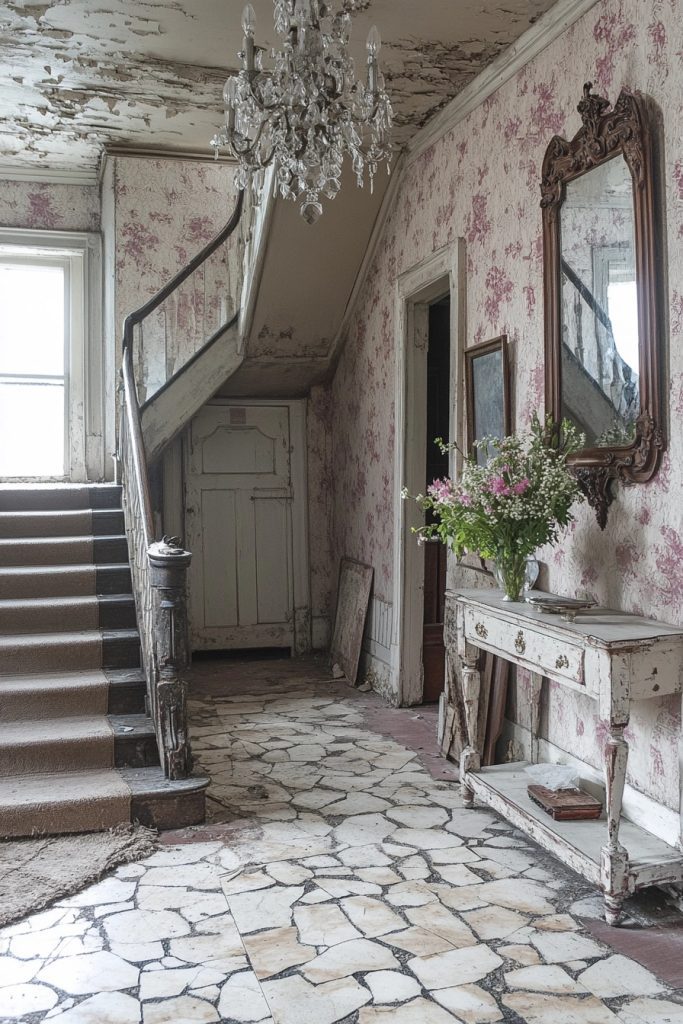
The Flawed Finery Foyer embodies the Wabi Sabi Aesthetic by showcasing entryway decor that welcomes with warmth and history. An antique console table, its paint peeling slightly, holds a collection of mismatched ceramic vases. The mirror above reflects the unique cracks and crevices of the foyer’s plaster walls. A vintage runner with faded patterns underfoot leads guests inward, setting the tone for a home that values beauty in imperfection.
🖼 Steal This Look
- Paint Color: Fine Paints of Europe Kalkverf Warm Ochre KV-14
- Furniture: distressed antique console table with visible wear, mismatched ceramic vases in varying earth tones, vintage faded runner
- Lighting: aged brass wall sconce with patina, exposed filament bulb
- Materials: raw plaster walls with intentional texture, weathered wood, crackled ceramic, faded wool, oxidized metal
This foyer feels like a handshake from someone who’s lived well—every scuff and fade tells a story before guests even remove their shoes.
20. Authentic Artistry Art Room
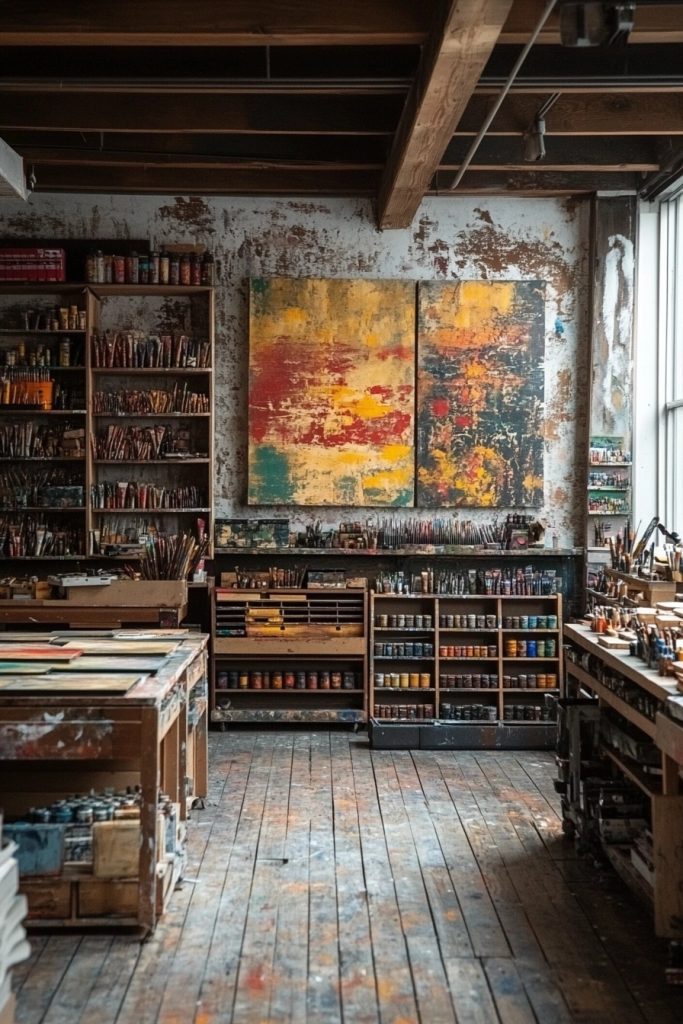
In the Authentic Artistry Art Room, the Wabi Sabi Aesthetic is evident in the celebration of the creative process itself. Stained easels, splattered drop cloths, and shelves laden with worn brushes and handmade pigments speak to the beauty of artistic endeavor. The room’s design is simple, emphasizing utility and inspiration over decoration. Natural light floods the space, casting shadows that highlight the textures and colors of the materials used.
✎ Steal This Look
- Paint Color: Backdrop Plaster PPL01
- Furniture: unfinished wood worktable with visible grain and knots, vintage industrial stool with worn leather seat, open pine shelving with hand-sanded edges
- Lighting: oversized north-facing window with sheer linen scrim, simple brass swing-arm wall sconce with patina finish
- Materials: unbleached canvas drop cloths, raw linen, unglazed terracotta, reclaimed wood, oxidized metal
This is the room where the mess becomes the masterpiece—I’ve always found that the most honest work happens when you’re not performing for an audience, and this space honors that vulnerability.
21. Zen Zest Meditation Space
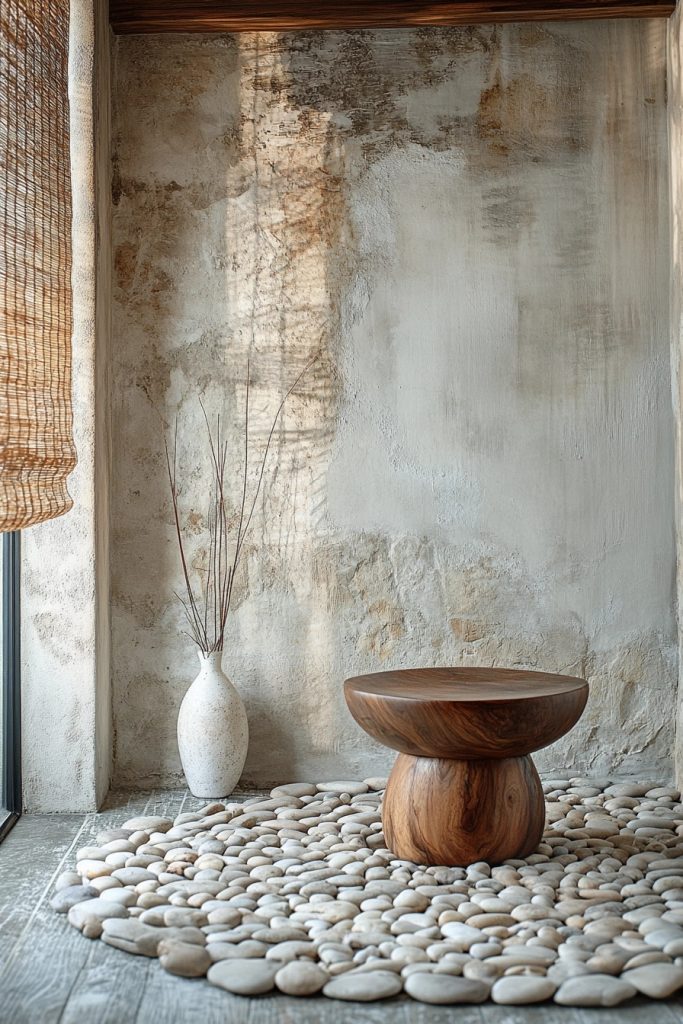
The Zen Zest Meditation Space utilizes the Wabi Sabi Aesthetic to foster a setting of profound peace and simplicity. Sparse furnishings, such as a low wooden bench and a simple tatami mat, provide a place for quiet reflection. Natural elements like a small indoor rock garden and a rough-hewn stone water feature encourage a connection to the earth. The walls are adorned with subtle, natural textures, enhancing the meditative quality of the space.
✎ Steal This Look
- Paint Color: Sherwin-Williams Accessible Beige SW 7036
- Furniture: low-profile wooden meditation bench, tatami floor mat, floor cushion
- Lighting: paper lantern pendant or shoji screen floor lamp with warm dimmable bulb
- Materials: unfinished oak, raw linen, unglazed ceramic, river stone, rice paper
I find these spaces hit different when you actually sit in them—the rough wood against your palms, the faint sound of water. It’s not about looking serene, it’s about feeling grounded.
22. Understated Uniqueness Hallway
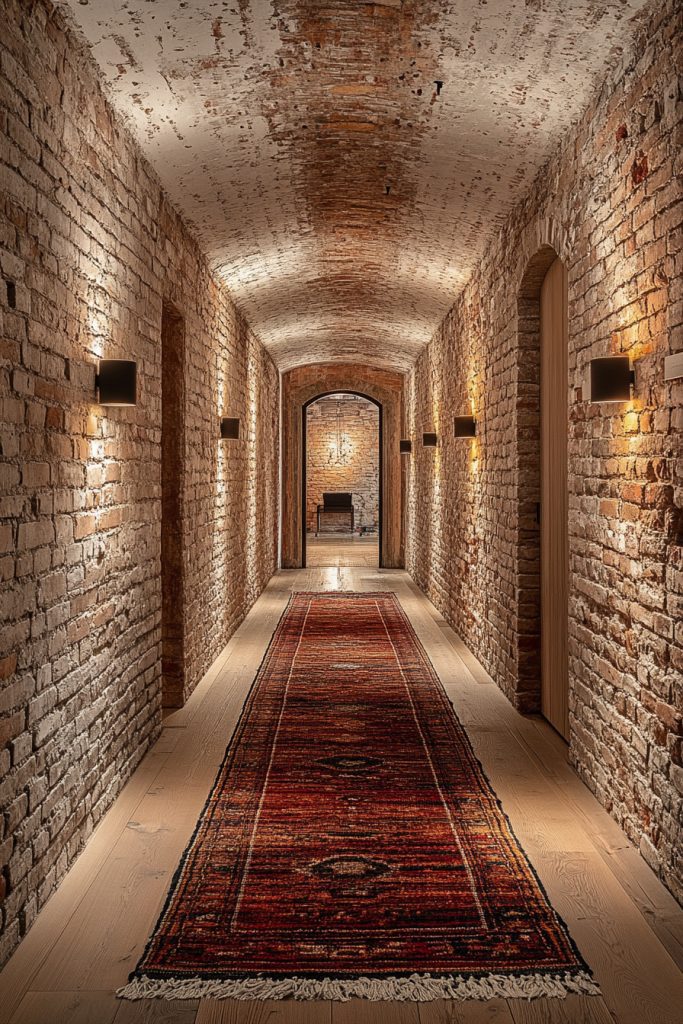
The Understated Uniqueness Hallway showcases the Wabi Sabi Aesthetic through its celebration of unique architectural features and imperfect finishes. Exposed brick walls, slightly uneven plaster, and hand-sculpted light fixtures create a visually interesting passage. A series of small, asymmetrically placed windows let in natural light, casting interesting shadows and highlights. This space proves that even transitional areas can embody beauty and character.
🖼 Steal This Look
- Paint Color: Benjamin Moore White Dove OC-17
- Furniture: narrow console table in reclaimed oak with live edge, single sculptural stool in unfinished teak
- Lighting: hand-formed ceramic pendant with visible finger marks and warm LED Edison bulb
- Materials: exposed clay brick, lime wash plaster, unglazed terracotta, raw linen, oxidized brass
This hallway taught me that transitional spaces deserve as much soul as living rooms—the slight wobble in that hand-sculpted sconce catches my eye every single morning.
23. Calm Curations Tea Room
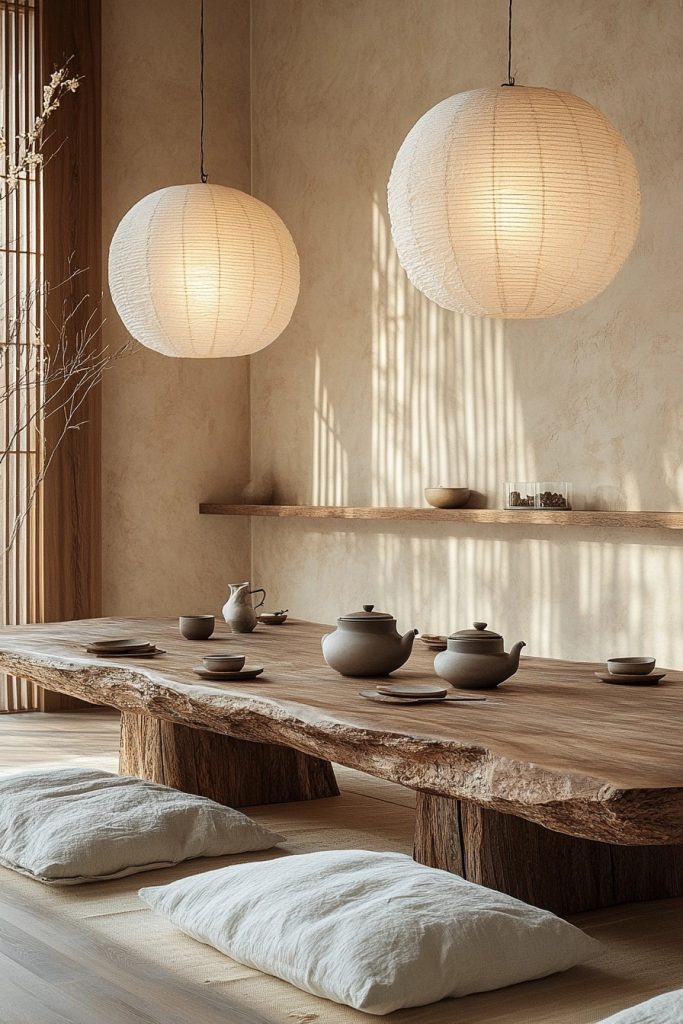
The Calm Curations Tea Room embraces the Wabi Sabi Aesthetic with its carefully selected assortment of antique tea ware and rustic furniture. Each piece, from the weathered tea table to the hand-stitched cushions, tells a story of use and appreciation. Soft, natural lighting and a palette of muted earth tones create a soothing environment ideal for savoring tea. The overall arrangement is deliberately sparse, emphasizing the beauty and impermanence of the curated objects.
🌟 Steal This Look
- Paint Color: Farrow & Ball Mouse’s Back 40
- Furniture: weathered low tea table with visible wood grain and patina, floor cushions with hand-stitched linen covers, antique wooden stool with worn edges
- Lighting: paper rice pendant light with soft diffused glow, small ceramic tea light holders
- Materials: unbleached linen, raw ceramic, aged wood, handwoven rush matting, iron rust accents
This is the room where you slow down enough to notice the crack in a teacup glaze and find it beautiful—that’s the whole point.
24. Handmade Harmony Craft Room
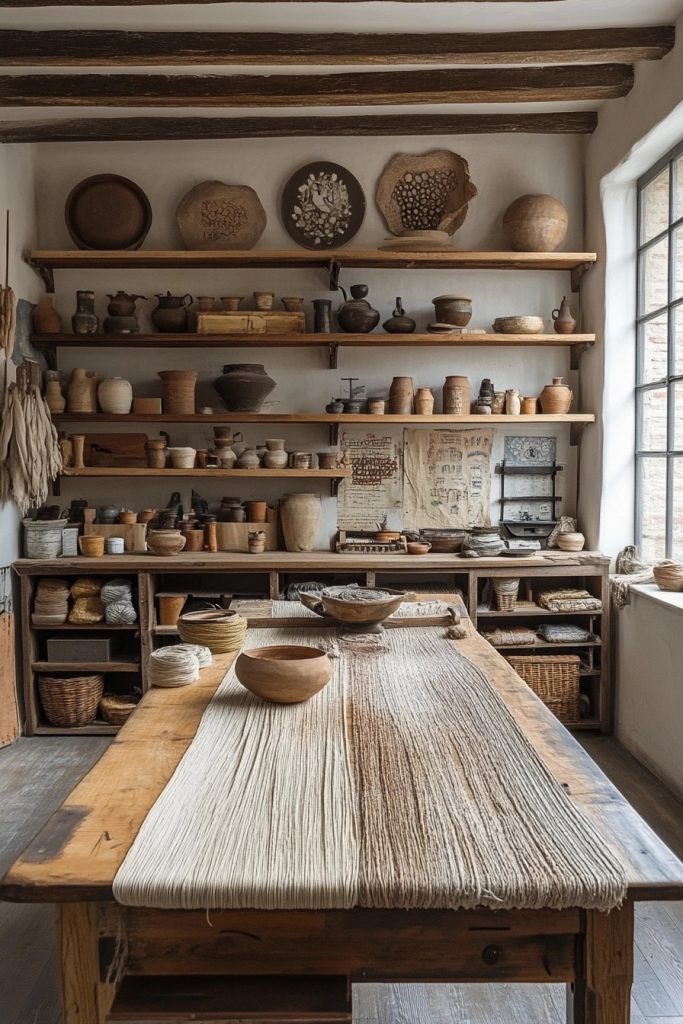
In the Handmade Harmony Craft Room, the Wabi Sabi Aesthetic is celebrated through the use of materials and tools that bear the marks of creativity. A large worktable shows layers of paint and varnish from countless projects, while shelves hold jars of brushes and hand-molded clay tools. The room is designed to inspire with its open, airy feel and large windows that overlook a natural landscape. Imperfect handmade decor adds charm and sparks creativity.
🌟 Steal This Look
- Paint Color: Behr Wheat Bread 720C-3
- Furniture: reclaimed wood worktable with visible wear, open industrial shelving with iron brackets, vintage wooden stool with paint splatters
- Lighting: oversized linen pendant light with visible hand-stitched seams, adjustable brass architect lamp for task work
- Materials: unfinished raw wood, unglazed terracotta, hand-thrown ceramics, natural linen, rusted metal, visible brushstrokes and patina
There’s something deeply grounding about a space that doesn’t demand perfection—this craft room invites you to make mistakes, get messy, and find beauty in the process itself.
25. Cracked Beauty Powder Room
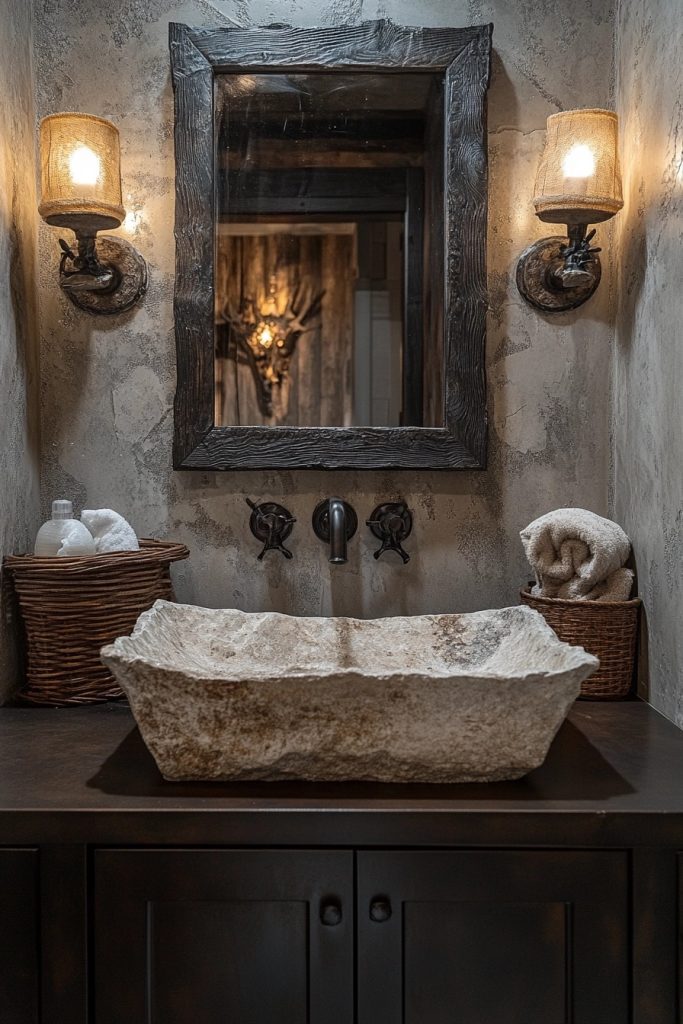
The Cracked Beauty Powder Room embodies the Wabi Sabi Aesthetic by highlighting materials that are beautifully flawed. A sink basin crafted from a single piece of stone with natural cracks and a vintage mirror with desilvering edges are central features. The walls are treated with a special plaster technique that encourages crackling, adding texture and depth. Soft, ambient lighting enhances the intricate details of each imperfection.
★ Steal This Look
- Paint Color: Valspar Cracked Earth 3004-10C
- Furniture: rough-hewn stone pedestal sink with visible fissures, reclaimed wood floating shelf
- Lighting: exposed filament sconce with weathered brass patina
- Materials: hand-troweled lime plaster, raw stone, oxidized metal, unbleached linen
This powder room taught me that the cracks aren’t damage—they’re the story. Guests linger here, tracing the plaster with their eyes, finding comfort in flaw.
26. Artisanal Auras Music Room
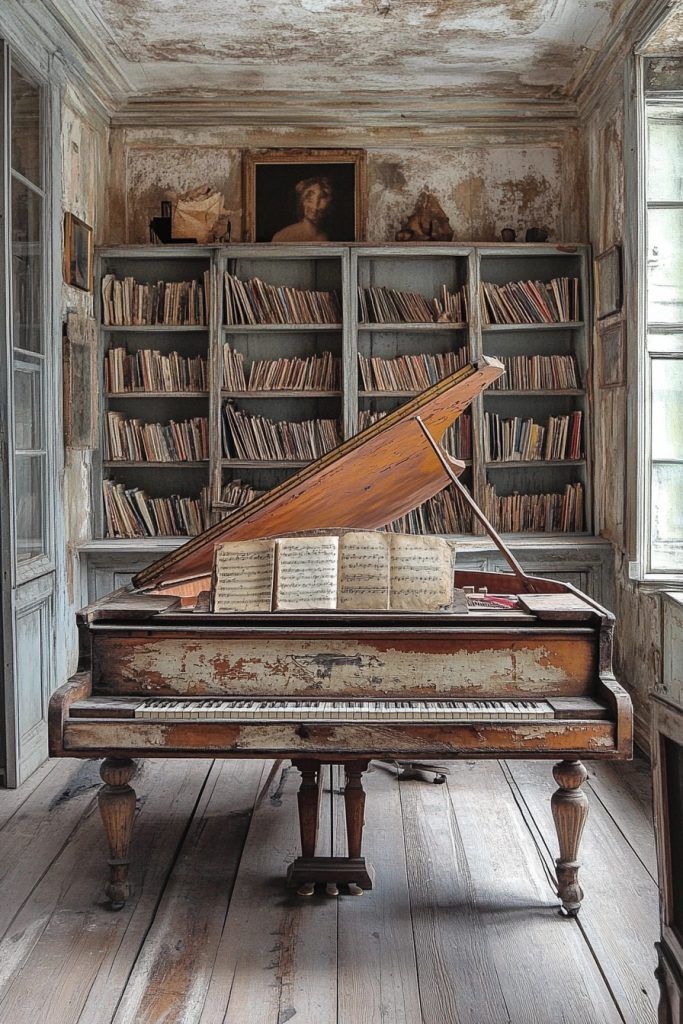
The Artisanal Auras Music Room features the Wabi Sabi Aesthetic through instruments and decor that show wear and handcrafted origins. An aged wood piano, its keys slightly yellowed, and a collection of string instruments with well-worn bows illustrate a history of musical passion. The room’s acoustics are enhanced by uneven wooden paneling, which also adds visual interest. A few simple, hand-thrown pottery pieces serve as decor, celebrating the artisanal spirit.
🌟 Steal This Look
- Paint Color: PPG Stonehenge Greige PPG1001-2
- Furniture: vintage upright piano with patinated wood finish, weathered violin display stand, reclaimed wood instrument storage bench
- Lighting: hand-forged iron wall sconce with exposed Edison bulb
- Materials: raw cedar acoustic panels, unglazed terracotta, hand-loomed linen, oxidized brass instrument hardware
There’s something deeply human about instruments that bear the marks of countless practice sessions—this room honors the beauty of dedication over decades, not the sterile perfection of a showroom.
27. Timeless Textiles Dressing Room
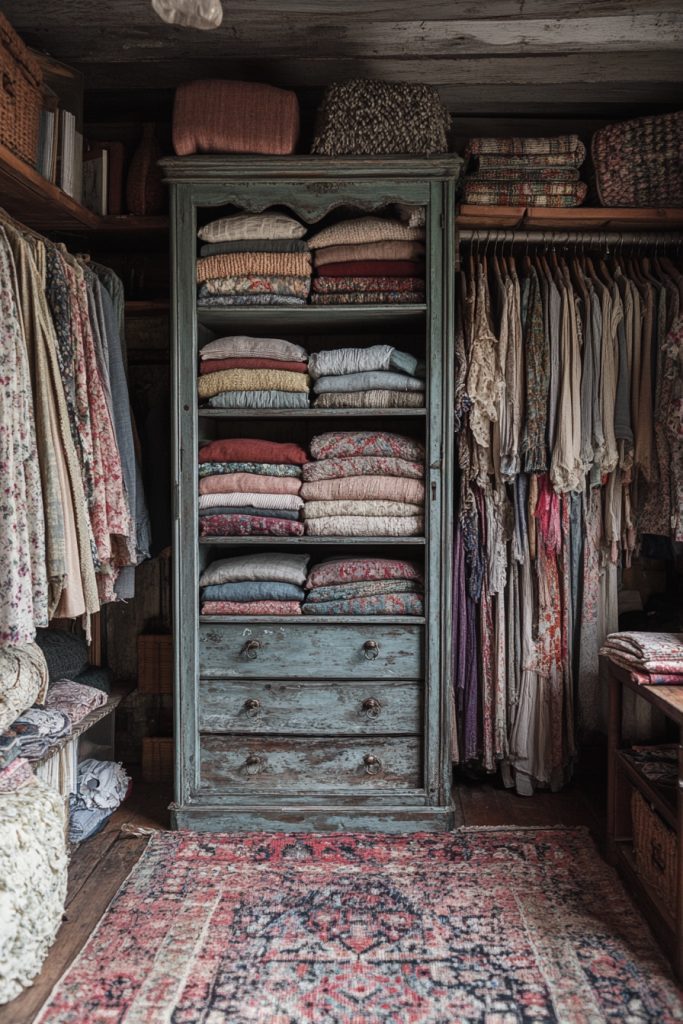
The Timeless Textiles Dressing Room celebrates the Wabi Sabi Aesthetic with a focus on fabrics that have aged gracefully. Vintage dresses and scarves, each with its own pattern of wear and fading, hang alongside contemporary pieces. Open shelving displays folded textiles, each stack showing the variation in color and texture. The use of natural light from a skylight accentuates the textiles’ rich textures and colors.
🎨 Steal This Look
- Paint Color: Dunn-Edwards Warm Hearth DE6142
- Furniture: reclaimed wood open shelving with live edges, vintage brass clothing rack, low linen ottoman for seating
- Lighting: skylight with sheer linen shade diffuser, aged brass sconce with exposed filament bulb
- Materials: raw linen, weathered oak, hand-thrown ceramic bowls, unbleached cotton, vintage silk
This is the dressing room of someone who keeps their grandmother’s faded scarf not despite its wear, but because of it—every thread tells a story.
28. Echoes of the Ethereal Greenhouse
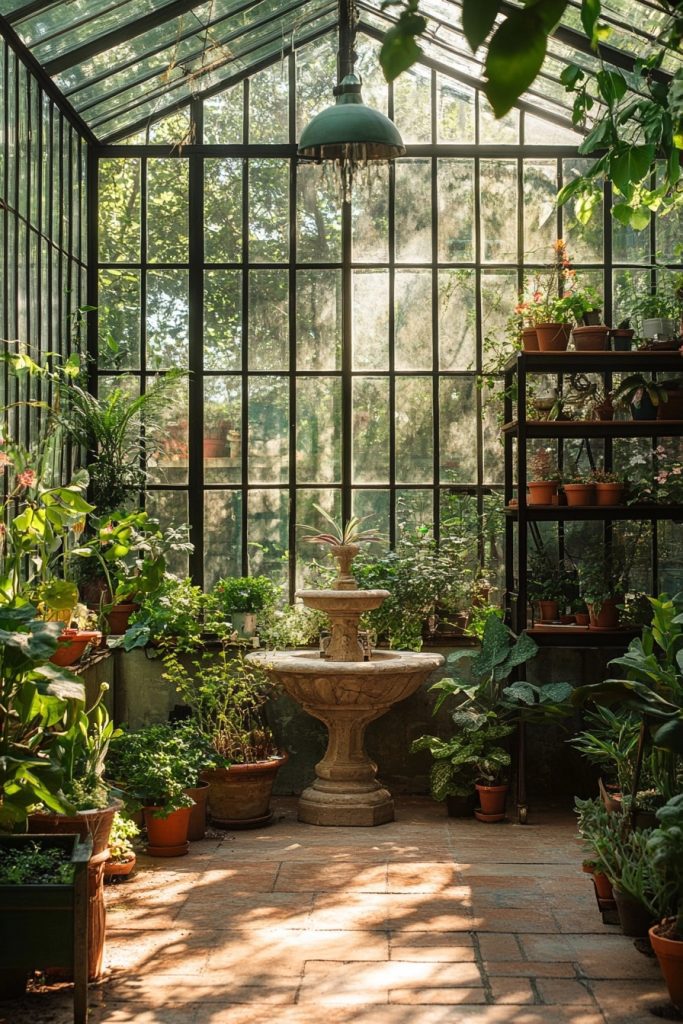
The Echoes of the Ethereal Greenhouse utilizes the Wabi Sabi Aesthetic to create a space where plants thrive among imperfect, aged gardening tools and weathered pots. Translucent glass panels streaked with the patina of time diffuse light, creating a soft, dreamlike quality. The structure’s wooden frame, weathered to a natural gray, blends seamlessly with the organic forms inside. This greenhouse is a sanctuary where the beauty of growth and decay coexist.
🖼 Steal This Look
- Paint Color: Clare Paint Current Mood CW-01
- Furniture: reclaimed wood potting bench with zinc top, vintage metal garden stool, weathered teak propagation table
- Lighting: frosted glass pendant with aged brass chain, solar-powered fairy lights woven through wooden beams
- Materials: oxidized copper planters, hand-thrown terracotta with moss patina, raw linen potting aprons, sea glass mulch, unfinished cedar shelving
There’s something deeply grounding about a greenhouse that refuses to hide its age—those water stains on the glass become your favorite view when morning light hits them.
29. Mystic Minimalism Attic
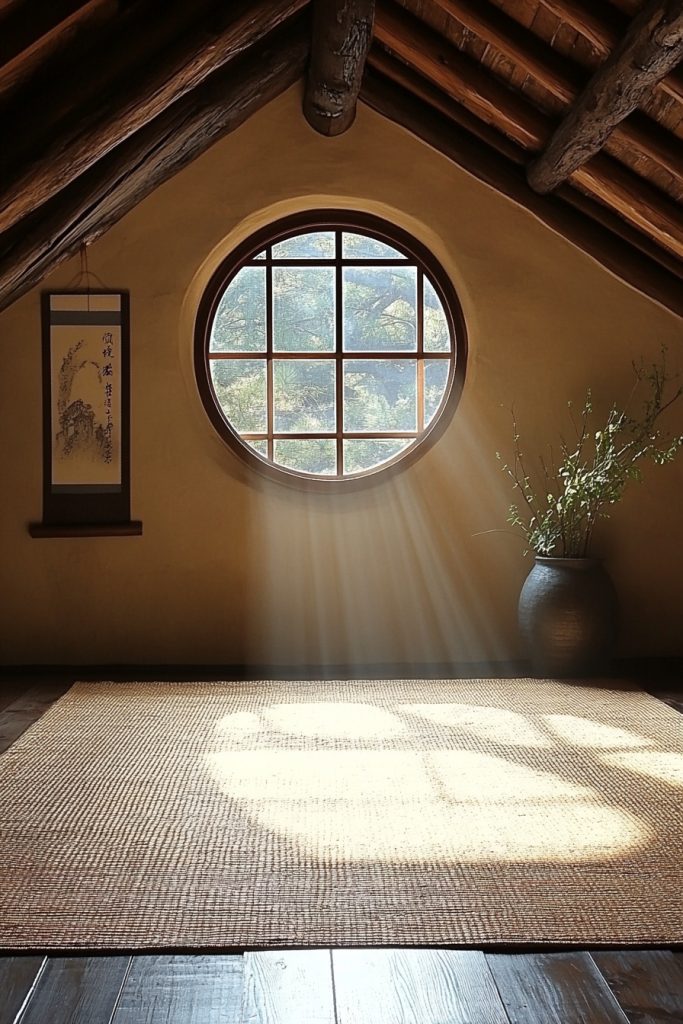
The Mystic Minimalism Attic embodies the Wabi Sabi Aesthetic through its minimal furnishings and mystical ambiance. Sparse, low seating, simple mats, and subdued lighting create a contemplative space under the eaves. The visible beams and rough textures of the attic’s architecture are left exposed, celebrating the beauty of the structure’s bones. A small window offers a view of the sky, connecting the space to the external world in a subtle way.
🏠 Steal This Look
- Paint Color: Fine Paints of Europe Karmijn CODE 1010
- Furniture: Low-profile floor cushions, Japanese-inspired zaisu chairs, simple wooden meditation bench
- Lighting: Paper-and-bamboo shoji floor lamp with warm LED bulb
- Materials: Unfinished cedar beams, raw linen cushions, handwoven rush mats, unbleached cotton throws
There’s something quietly powerful about surrendering to a room that doesn’t try too hard—just you, rough wood, and sky.
Conclusion
As we conclude our exploration of 29 Wabi Sabi Aesthetic Ideas, remember that the journey towards a more balanced and harmonious home is all about embracing imperfections and finding beauty in the unconventional. Each suggestion we’ve shared aims to inspire a sense of peace and authenticity in your decor, reflecting the true essence of the Wabi Sabi aesthetic. Whether you’ve incorporated natural materials, cherished well-worn objects, or simplified your spaces, these changes invite a profound serenity into your daily surroundings. Embrace this beautifully flawed approach and watch as your home transforms into a sanctuary of comfort and tranquility.