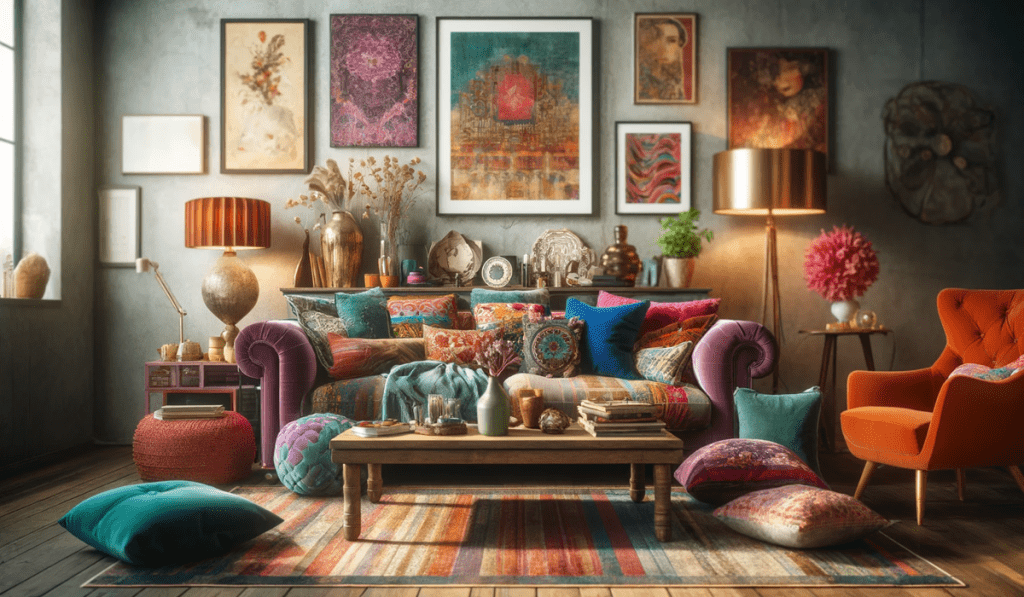
Ever feel like your kitchen is too cluttered and chaotic to really enjoy? Can embracing imperfections and simplicity actually transform your space into something more calming and beautiful? The answer is yes! These wabi sabi kitchen ideas will show you how to create a space that’s not just functional, but also brings harmony and balance into your home. From natural materials to minimalistic designs, we’ve gathered 29 ways to infuse your kitchen with the peaceful charm of wabi sabi. Ready to embrace the beauty of imperfection and find peace in simplicity? Let’s dive in!
1. Naturalist’s Nook
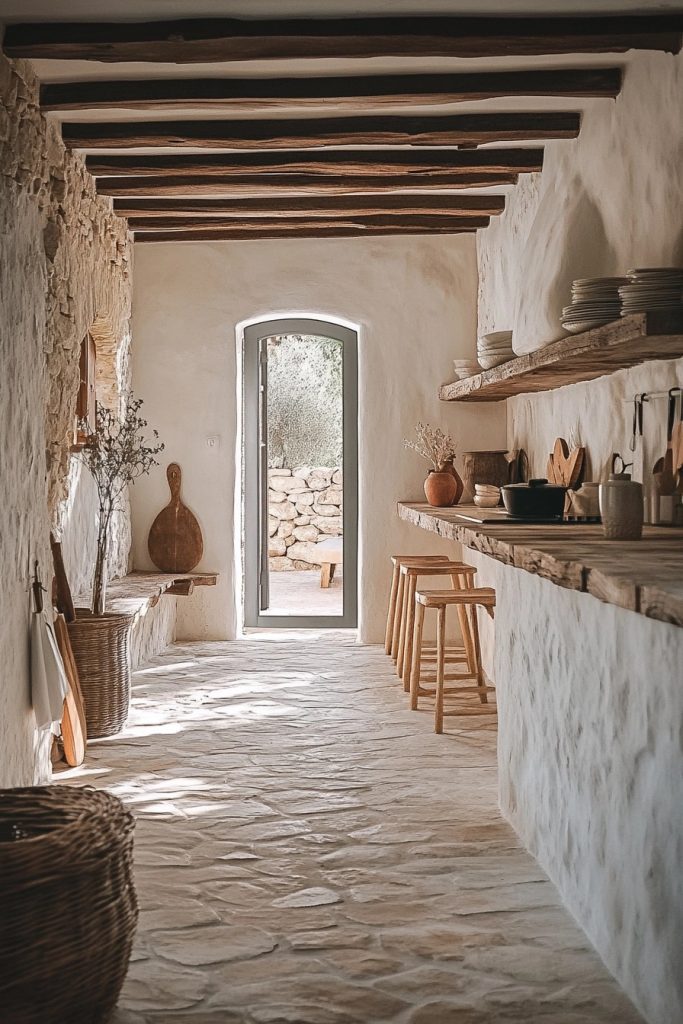
This Wabi Sabi kitchen draws inspiration from the natural world, emphasizing organic forms and materials. The use of stone, wood, and clay in this kitchen invites a grounded, calming atmosphere. Every element feels carefully curated to celebrate imperfection and simplicity. The Naturalist’s Nook embodies the Wabi Sabi principle of finding beauty in the non-traditional.
✎ Steal This Look
- Paint Color: Sherwin-Williams Alabaster SW 7008
- Furniture: live-edge floating wood shelves, backless wooden bar stools with visible joinery, built-in stone bench seating
- Lighting: recessed or hidden lighting that washes textured walls with soft shadow play; no visible fixtures
- Materials: rough-hewn ceiling beams, irregular flagstone flooring, hand-troweled plaster walls, unglazed terracotta vessels, woven wicker baskets, unfinished wood cutting boards
This kitchen feels like it grew here over centuries, not decades. The stone floor’s unevenness underfoot reminds you that utility and beauty can share the same breath.
2. Artisan’s Retreat
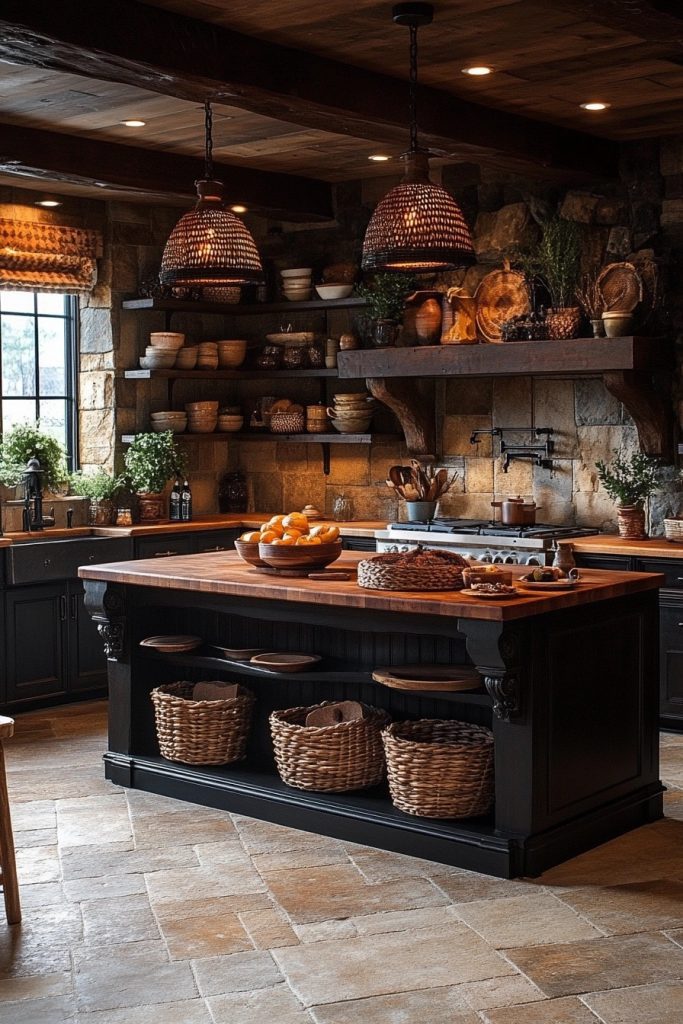
The Artisan’s Retreat Wabi Sabi kitchen highlights handcrafted elements, from pottery to bespoke wooden cabinetry. It celebrates the unique imperfections of handmade items, which are a hallmark of Wabi Sabi aesthetics. This kitchen style fosters a sense of connection to the crafting process and its inherent flaws. Textures are layered and colors are muted, creating a deeply personal space.
💡 Steal This Look
- Paint Color: Benjamin Moore Black Ink 2127-20
- Furniture: Substantial black-painted kitchen island with carved corbels and open shelving below, live-edge wooden floating shelves, rustic stone wall backdrop
- Lighting: Oversized woven rattan dome pendants with warm amber glow
- Materials: Reclaimed wood ceiling beams, hand-thrown pottery, woven baskets, butcher block island top, natural stone walls, terracotta, aged metals
This kitchen feels like it evolved over decades, not months—every bowl and basket carries the quiet story of its maker.
3. Minimalist Sanctuary
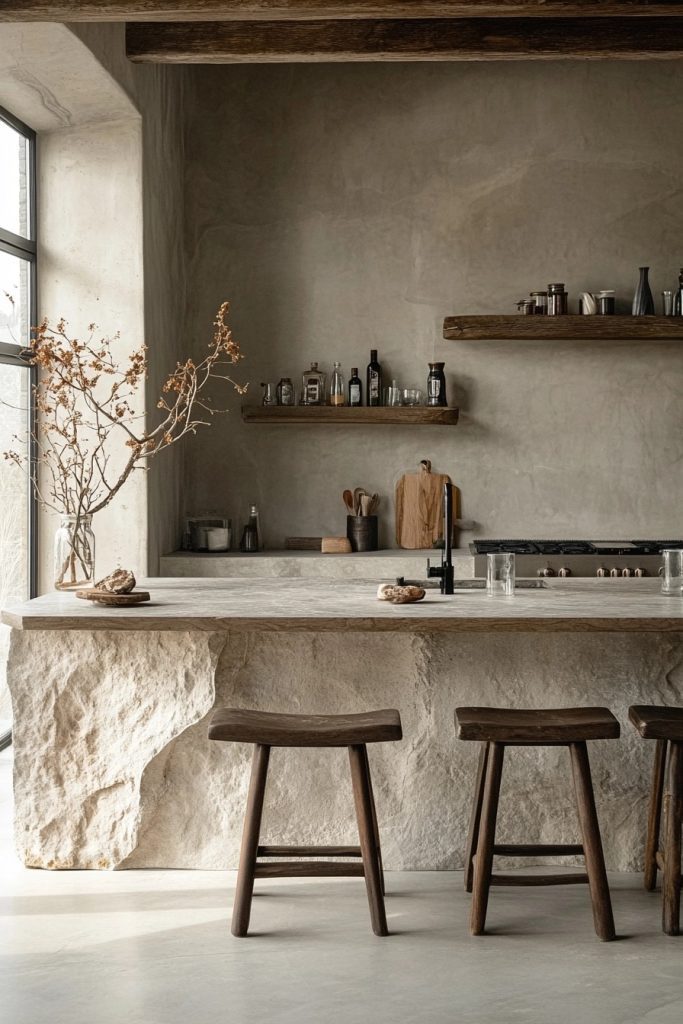
A Minimalist Sanctuary Wabi Sabi kitchen focuses on the beauty of minimalism and functionality. Clutter is minimized, and every object has a purpose, reflecting the Wabi Sabi embrace of simplicity. Natural materials are selected for their texture and inherent imperfections, adding subtle depth to the space. This kitchen design fosters peace and tranquility, making it a perfect retreat from the modern world.
🎨 Steal This Look
- Paint Color: Farrow & Ball Jitney No. 293
- Furniture: Live-edge walnut bar stools with saddle seats, rough-hewn stone waterfall island
- Lighting: Recessed or hidden lighting with exposed reclaimed wood ceiling beams
- Materials: Raw limestone, aged walnut, lime plaster walls, dried foraged branches, matte black metal fixtures
This kitchen feels like a meditation space where morning coffee becomes ritual. The stone island’s raw edge grounds the room in something ancient and permanent.
4. Vintage Vignette
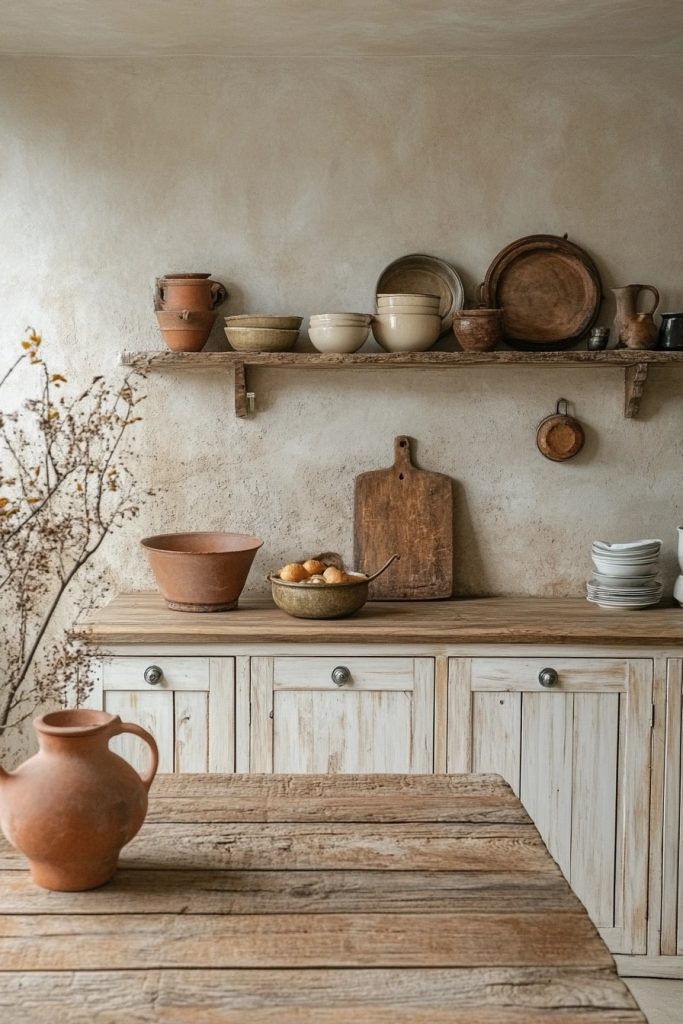
Vintage Vignette in a Wabi Sabi kitchen showcases the charm of aged furniture and antique decorations. These elements highlight the Wabi Sabi philosophy of appreciating things that are weathered and that have stood the test of time. The patina of old metals and the wear on wooden surfaces tell a story of the past. This kitchen style is both nostalgic and deeply beautiful, resonating with those who love history.
★ Steal This Look
- Paint Color: Behr Weathered Moss N350-3
- Furniture: reclaimed wood open shelving with corbel brackets, whitewashed beadboard cabinets with aged metal knobs, rough-hewn farmhouse dining table
- Lighting: soft natural window light, no visible fixtures—keep it unadorned
- Materials: unsealed terracotta, raw linen textures, oxidized wood, handmade ceramic bowls with crackle glazes, dried botanical branches
There’s something grounding about running your hand across a table that’s been scrubbed a thousand times—this kitchen doesn’t ask you to be careful, it invites you to live in it.
5. Earthy Escape
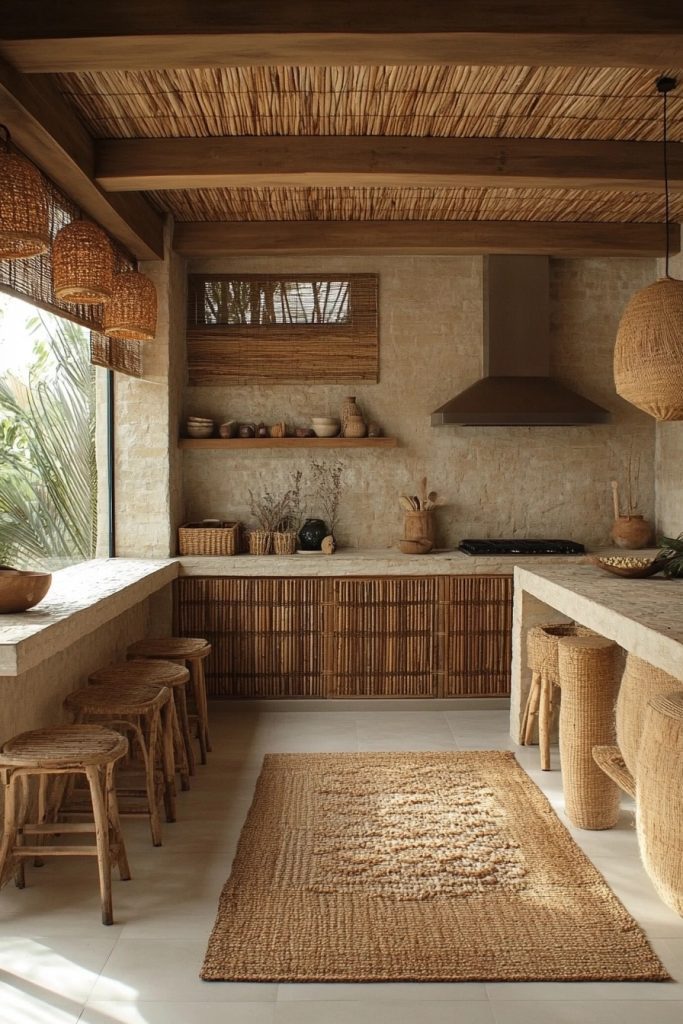
The Earthy Escape Wabi Sabi kitchen uses materials like raw stone and unpolished wood to create a grounding atmosphere. It’s a space where imperfections are not only accepted but celebrated, aligning with the Wabi Sabi philosophy. The earthy tones help to create a serene and soothing kitchen environment, ideal for contemplation and calm. This design reconnects the occupants with the natural world.
🏠 Steal This Look
- Paint Color: Valspar Simply Taupe 2009-10B
- Furniture: raw edge stone countertops, woven rattan cabinet fronts, backless wooden counter stools, sculptural woven pendant clusters
- Lighting: oversized handwoven rattan globe pendants, exposed wooden beam ceiling with woven reed paneling
- Materials: unfinished limestone plaster walls, natural reed ceiling cladding, handwoven jute rugs, raw terracotta vessels, unpolished teak shelving
This kitchen feels like it grew from the earth itself rather than being built—there’s wisdom in choosing materials that will age visibly and beautifully alongside you.
6. Time-Worn Tradition
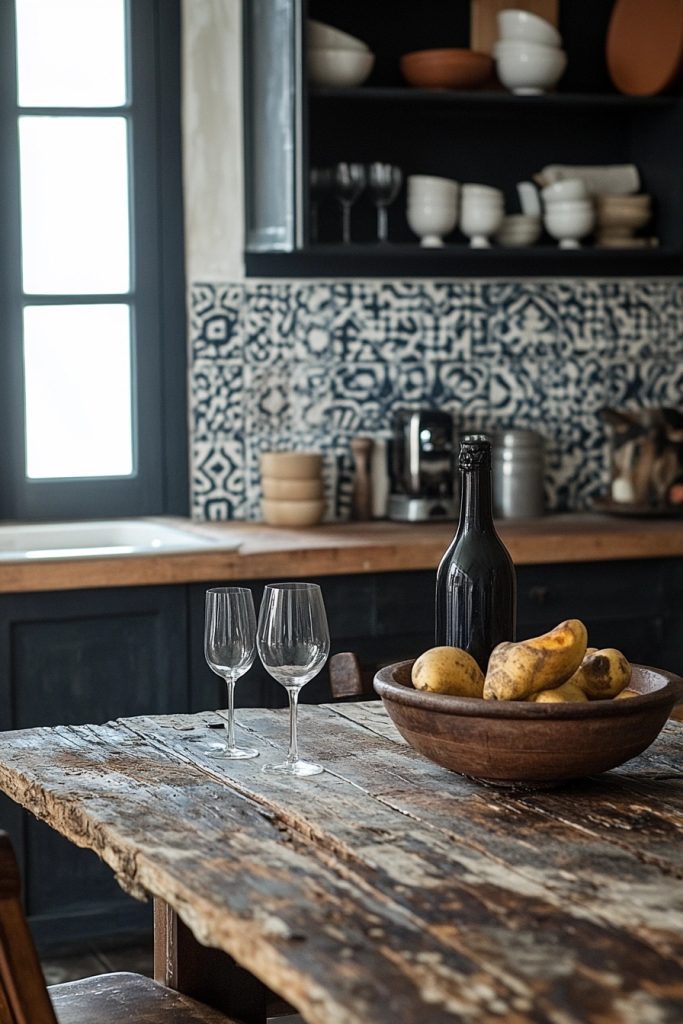
Time-Worn Tradition in a Wabi Sabi kitchen embraces the beauty of wear and tear. This style showcases surfaces that have aged gracefully, with natural distressing and decay becoming focal points. The kitchen feels lived-in and warm, inviting anyone who enters to feel at ease. It’s a testament to the enduring appeal of materials that gain character over time.
💡 Steal This Look
- Paint Color: PPG Black Magic PPG1001-7
- Furniture: reclaimed wood farm table with live edge, vintage wood bowl, open black shelving with handmade ceramics
- Lighting: black window frame with natural daylight, no visible artificial fixture
- Materials: weathered raw wood, hand-thrown terracotta and white ceramics, patterned encaustic tile backsplash, matte black cabinetry, tarnished metal accents
There’s something grounding about running your hand across a table that has already lived another life—this kitchen doesn’t ask you to be careful, it invites you to stay longer.
7. Imperfect Edge
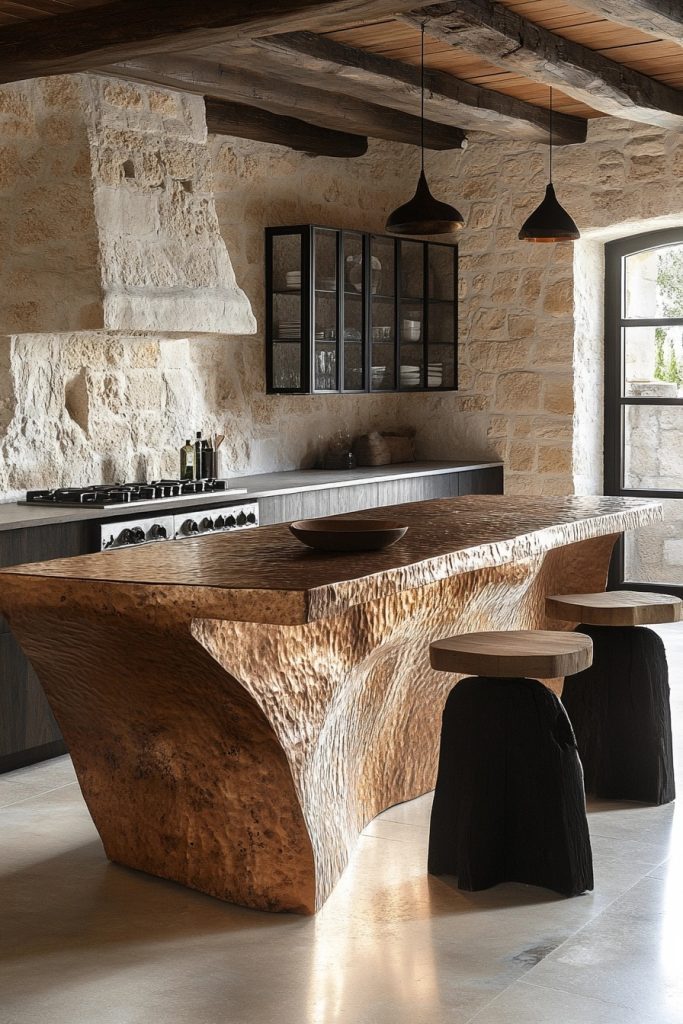
Imperfect Edge Wabi Sabi kitchen celebrates the beauty of asymmetry and unstructured forms. This approach to kitchen design focuses on the imperfect and incomplete, a key aspect of Wabi Sabi. By eschewing traditional lines and forms, the kitchen becomes a unique space that tells its own story. Materials are often left in their raw, natural state to highlight their inherent flaws.
🌟 Steal This Look
- Paint Color: Dunn-Edwards Weathered Stone DE6220
- Furniture: Live-edge carved wood island with organic, asymmetrical form; sculptural wood stools with black-dipped or charred bases
- Lighting: Matte black dome pendant lights with warm interior glow
- Materials: Rough-hewn limestone walls, reclaimed timber ceiling beams, hand-carved solid wood, blackened metal cabinetry frames, polished concrete floors
There’s something grounding about running your hand over that carved wood grain and feeling the maker’s presence—this kitchen asks you to slow down and notice beauty in the unfinished.
Save this article
No spam. Unsubscribe anytime.
8. Zen Zone
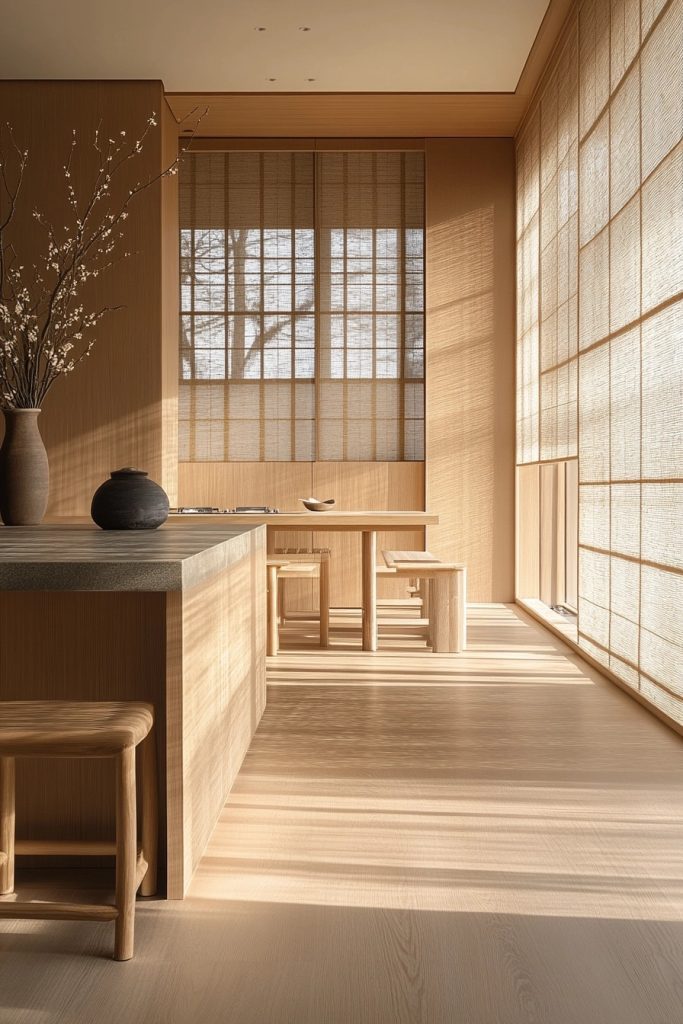
The Zen Zone Wabi Sabi kitchen is designed to be a tranquil space where simplicity and functionality are paramount. This kitchen eliminates unnecessary clutter and focuses on the essentials. Soft, neutral colors and natural materials help to create a peaceful, meditative environment. The Zen Zone is perfect for those seeking a kitchen that aids in relaxation and mindfulness.
★ Steal This Look
- Paint Color: Clare Paint Canvas CL101
- Furniture: light oak kitchen island with concrete waterfall countertop, low-profile wooden dining table with matching stools, built-in banquette seating
- Lighting: recessed ceiling can lights with warm dim, shoji screen window panels that diffuse natural light
- Materials: white oak millwork, hand-troweled concrete, woven grasscloth, unglazed ceramic, flowering branches
This kitchen feels like a deep exhale—every surface invites you to slow down and actually enjoy the ritual of cooking.
9. Homespun Haven
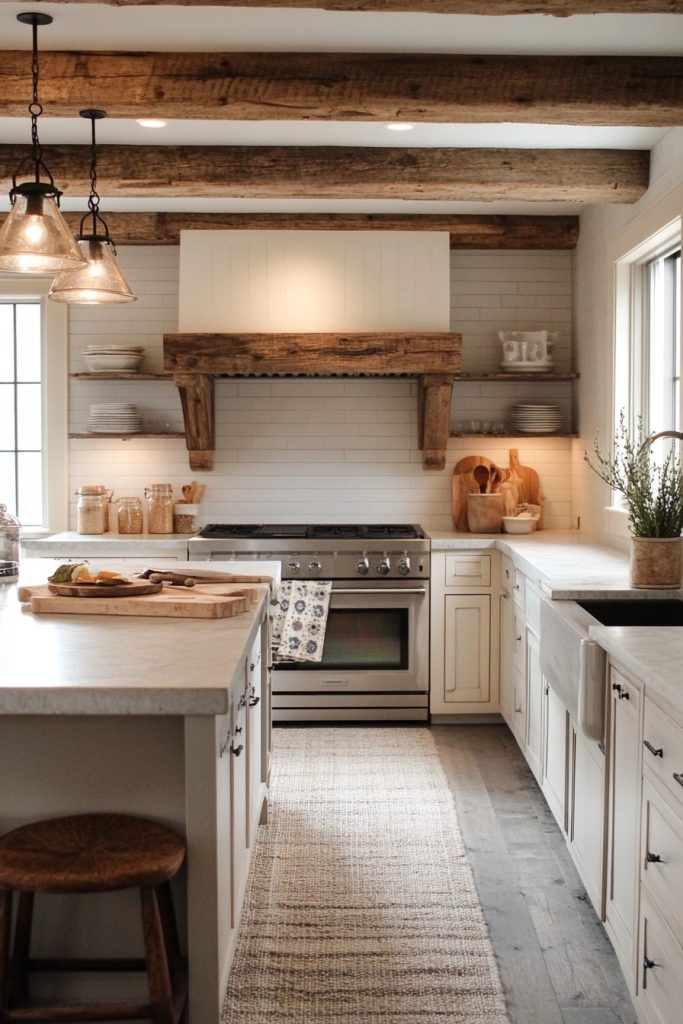
Homespun Haven in a Wabi Sabi kitchen features a mix of rustic elements that feel cozy and welcoming. This kitchen style incorporates handmade textiles, pottery, and woodwork, emphasizing the beauty of handcrafted imperfections. The space is designed to feel like a sanctuary, where every element tells a story of craftsmanship. It’s an ideal kitchen for those who value authenticity and warmth.
🏠 Steal This Look
- Paint Color: Fine Paints of Europe ECO Brilliant White 7001
- Furniture: distressed wood bar stools with worn seats, open floating shelves with live edges, custom range hood with reclaimed wood mantle
- Lighting: vintage-style glass pendant lights with dark metal frames and Edison bulbs
- Materials: rough-hewn ceiling beams, hand-troweled plaster or concrete countertops, woven jute runner, unglazed ceramic pottery, reclaimed wood shelving
This kitchen feels like it grew here over decades, not months—that’s the homespun magic you can’t rush.
10. Rustic Realm
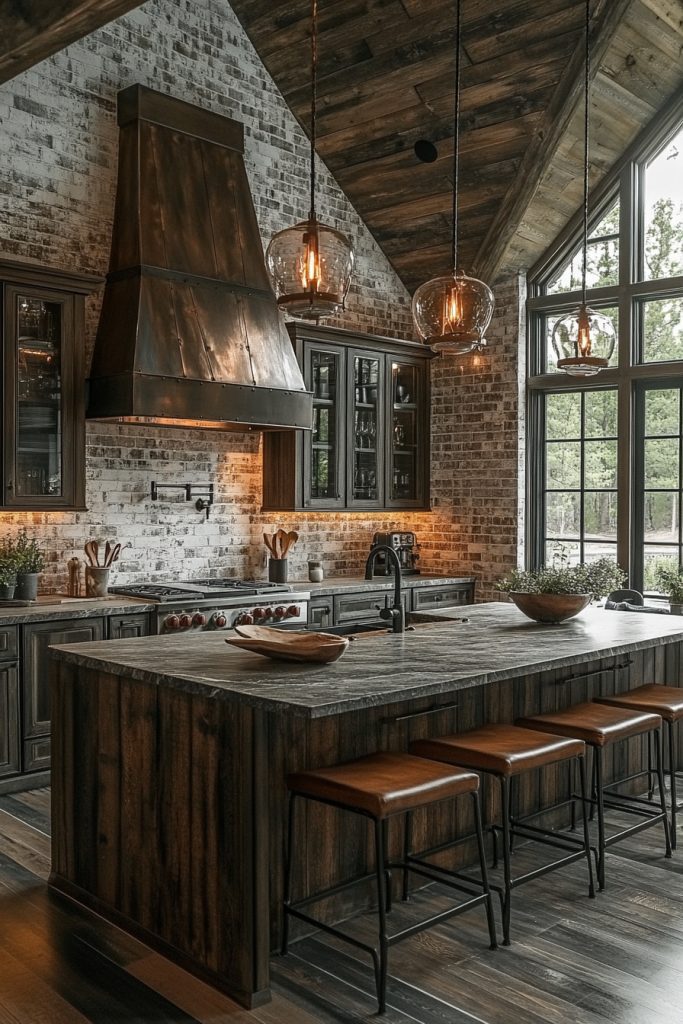
Rustic Realm Wabi Sabi kitchen utilizes rough-hewn beams, distressed wood, and natural stone to create a robust and earthy feel. This kitchen embraces the rugged beauty of natural materials and the history they carry. The emphasis on textures and natural imperfections aligns perfectly with the Wabi Sabi aesthetic. It’s a space that feels both timeless and grounded.
🌟 Steal This Look
- Paint Color: Backdrop Stonehenge 0015
- Furniture: reclaimed wood kitchen island with live edge stone countertop, iron-framed leather bar stools, dark wood cabinets with seeded glass panels
- Lighting: oversized glass globe pendants with visible Edison bulbs, under-cabinet warm LED strip lighting
- Materials: weathered barn wood ceiling planks, aged copper range hood, whitewashed exposed brick backsplash, honed soapstone or slate countertops, hand-forged iron hardware
This kitchen feels like it was built from the bones of an old barn that refused to be forgotten—the copper hood will only grow more beautiful as it tarnishes, and every scratch in that stone countertop tells your family’s story.
11. Organic Oasis
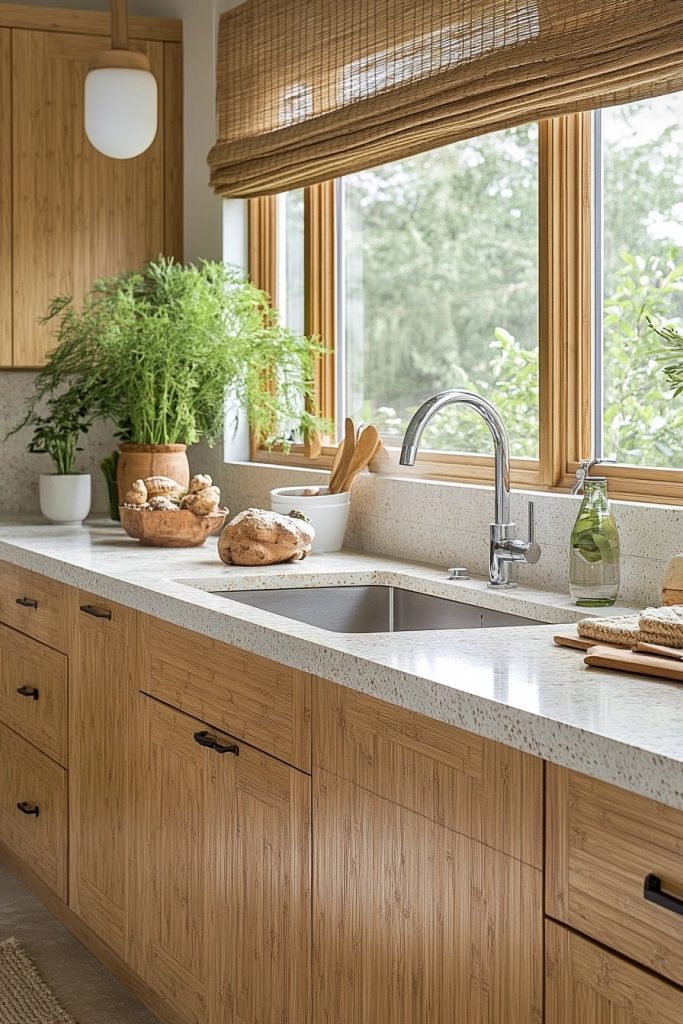
Organic Oasis in a Wabi Sabi kitchen focuses on sustainability and natural beauty. It uses eco-friendly materials that are not only good for the environment but also visually appealing. The design encourages a connection with the natural world, incorporating elements like bamboo, recycled woods, and natural fibers. This kitchen is perfect for those who want to embrace eco-conscious living in style.
🌟 Steal This Look
- Paint Color: Sherwin-Williams Alabaster SW 7008
- Furniture: bamboo slab-front base cabinets with integrated pulls, open shelving with live-edge wood brackets
- Lighting: opalescent glass pendant with natural wood canopy
- Materials: terazzo-style recycled glass countertop, woven bamboo roman shades, unglazed terracotta vessels, raw linen textiles
There’s something grounding about starting your morning here—the way the bamboo catches the eastern light and the terracotta holds the warmth of yesterday’s sourdough proofing.
12. Aged Aesthetic
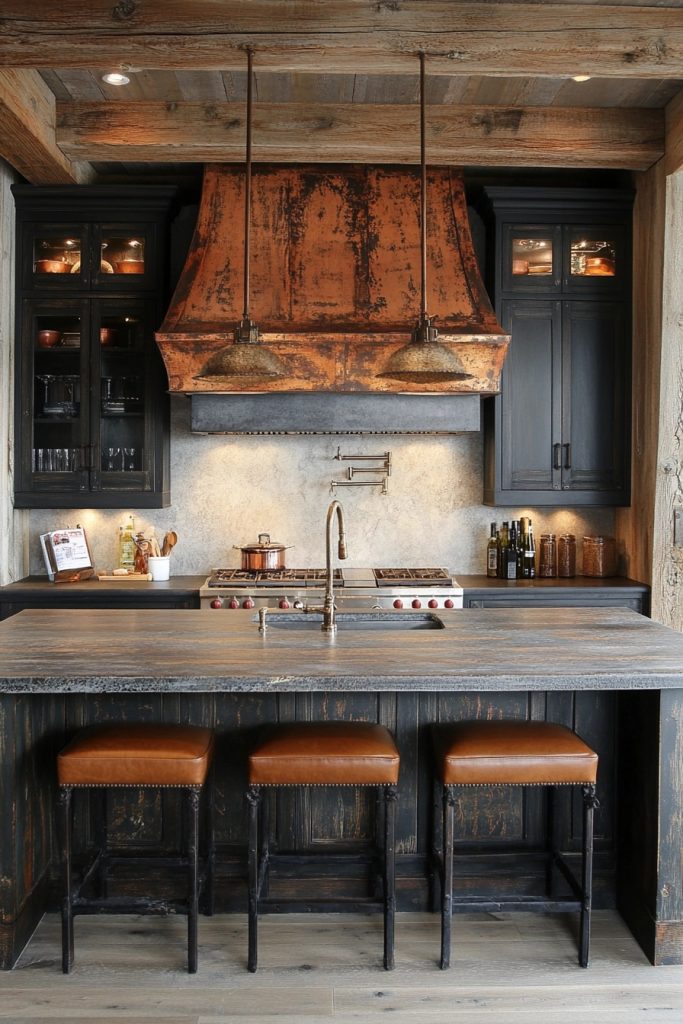
Aged Aesthetic Wabi Sabi kitchen highlights the elegance of time-worn materials. It features surfaces and furnishings that showcase natural aging processes, such as weathering, rusting, or patination. This approach not only embraces imperfection but also tells a story of resilience and time. The kitchen becomes a testament to the beauty of aging gracefully.
🖼 Steal This Look
- Paint Color: Benjamin Moore Kendall Charcoal HC-166
- Furniture: distressed black kitchen island with live-edge wood countertop, leather-upholstered bar stools with nailhead trim, glass-front display cabinets with interior lighting
- Lighting: vintage brass pendant lights with aged patina finish, recessed can lights in reclaimed wood ceiling
- Materials: reclaimed barn wood ceiling beams, oxidized copper range hood with verdigris patina, troweled plaster backsplash, weathered wood flooring, hammered metal accents
This kitchen feels like it was pulled from a centuries-old European farmhouse—every scratch on that copper hood and every knot in the ceiling beams carries the weight of stories you didn’t have to live to inherit.
13. Subdued Space
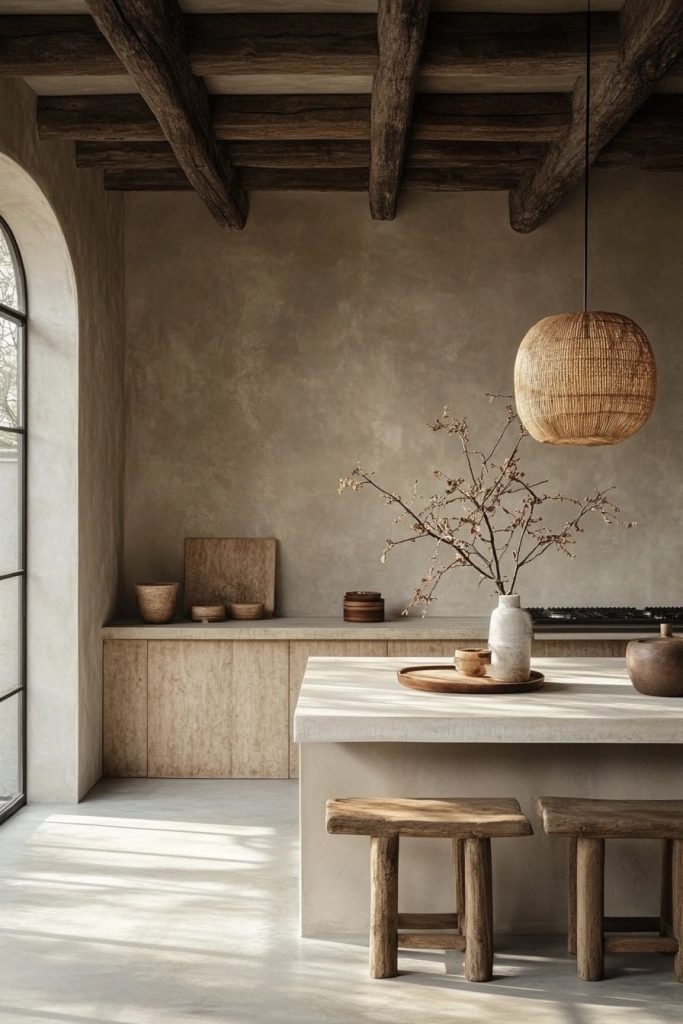
Subdued Space in a Wabi Sabi kitchen utilizes muted colors and soft textures to create a calm and understated environment. This style focuses on minimalism and the subtle beauty of imperfection. It’s perfect for those who seek a peaceful retreat from the bustling world outside. The use of natural materials adds to the organic feel of the space.
✎ Steal This Look
- Paint Color: Farrow & Ball Jitney No.293
- Furniture: rough-hewn wooden stools with visible grain, limed oak cabinetry with integrated handles, poured concrete waterfall island
- Lighting: oversized woven rattan globe pendant with warm amber glow
- Materials: raw plaster walls with tonal variation, reclaimed timber ceiling beams, unglazed ceramic vessels, weathered wood cutting boards, dried foraged branches
This kitchen feels like it has existed for decades, not months—that’s the wabi-sabi magic of letting materials age in place rather than chasing pristine newness.
14. Harmony Hub
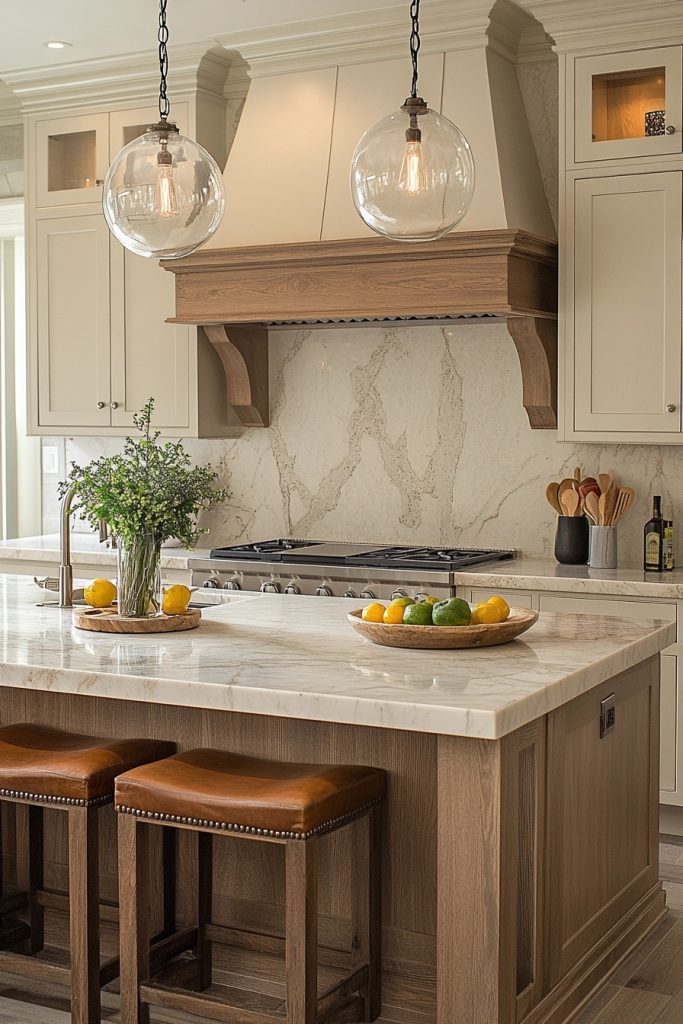
Harmony Hub Wabi Sabi kitchen is all about creating balance and tranquility through thoughtful design. This kitchen style employs symmetrical layouts and harmonious color palettes to foster a sense of well-being. Natural materials are used to enhance the feeling of connection to the earth. It’s an ideal setting for those who value a serene and balanced kitchen environment.
🎨 Steal This Look
- Paint Color: Behr Swiss Coffee 12
- Furniture: leather-topped bar stools with nailhead trim, custom wood range hood with corbels, shaker-style cabinetry
- Lighting: oversized clear glass globe pendants with Edison bulbs
- Materials: white marble-look quartz, cerused oak, aged brass, hand-thrown ceramics, natural leather
There’s something deeply grounding about cooking in a space where every element feels intentional and balanced, like the kitchen itself is exhaling alongside you.
15. Found Flair
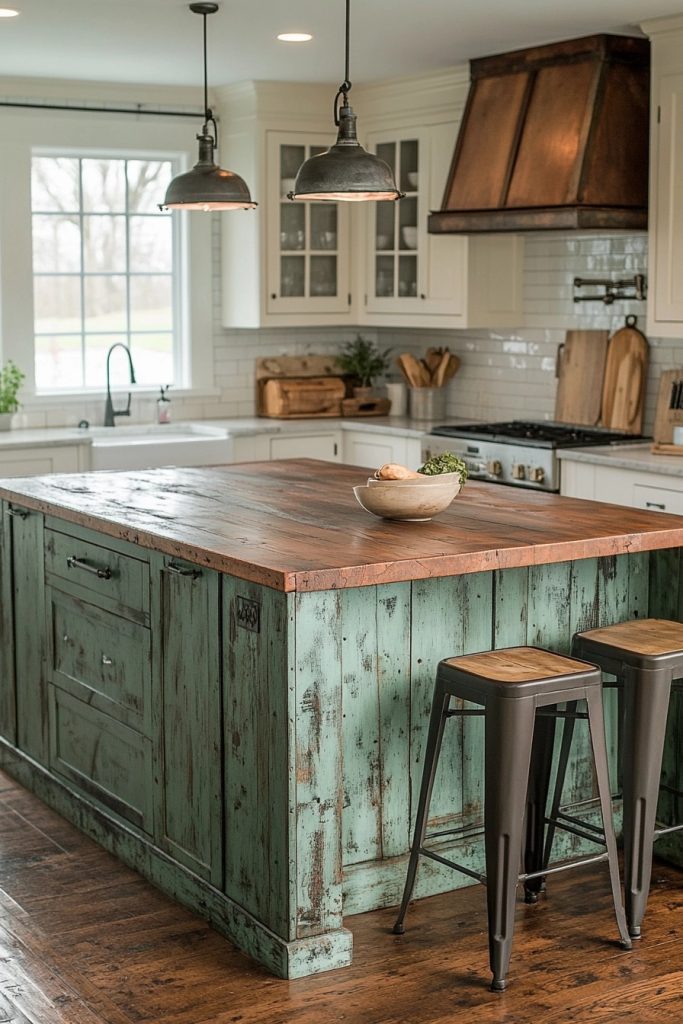
Found Flair in a Wabi Sabi kitchen incorporates salvaged and repurposed items, adding unique character to the space. This design celebrates the story behind each piece, whether it’s an old cabinet turned into a kitchen island or vintage tiles for a backsplash. It’s a creative and eco-friendly approach to kitchen design. This kitchen style is perfect for those who love to give new life to old objects.
🖼 Steal This Look
- Paint Color: Valspar Swiss Coffee 7002-16
- Furniture: Salvaged wood kitchen island with distressed mint-green base, vintage metal bar stools with wood seats
- Lighting: Vintage barn pendant lights in aged bronze finish
- Materials: Reclaimed barn wood, aged copper range hood, subway tile backsplash, wide-plank hardwood floors, hand-thrown ceramic bowls
There’s something deeply satisfying about cooking on a surface that held someone else’s dough fifty years ago—this kitchen whispers stories while you chop onions.
16. Serene Scene
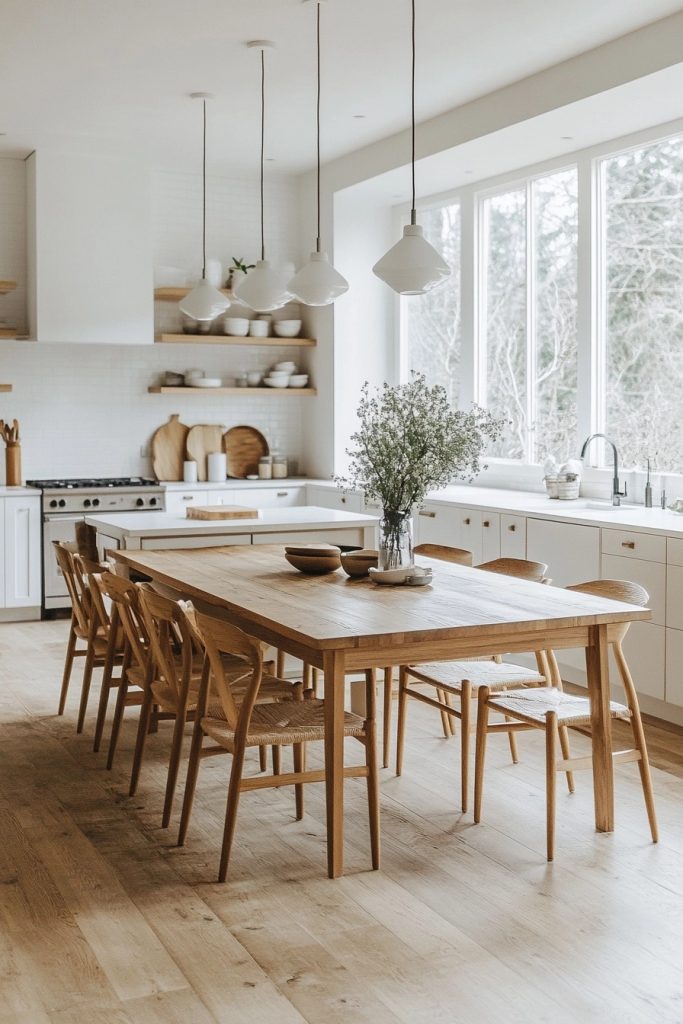
Serene Scene Wabi Sabi kitchen focuses on creating a tranquil space where simplicity and nature converge. This kitchen uses light, airy colors and simple, streamlined designs to promote calmness. The emphasis on natural materials and light enhances the serenity of the environment, making it a perfect place for quiet contemplation. It’s ideal for those who appreciate a minimalist and peaceful kitchen setting.
🌟 Steal This Look
- Paint Color: PPG Delicate White PPG1001-1
- Furniture: light oak dining table with visible grain, wishbone-style dining chairs with woven rush seats, flat-panel white cabinets with minimal hardware, open floating wood shelves
- Lighting: cluster of four white ceramic pendant lights with organic bell shapes, recessed ceiling lights
- Materials: bleached white oak flooring, matte white ceramic, natural linen, raw wood cutting boards, dried organic florals, unglazed pottery
There’s something almost therapeutic about a kitchen that doesn’t demand attention—this space feels like a deep exhale, where the imperfection of hand-thrown bowls and slightly uneven wood grain becomes the whole point.
17. Cultural Connection
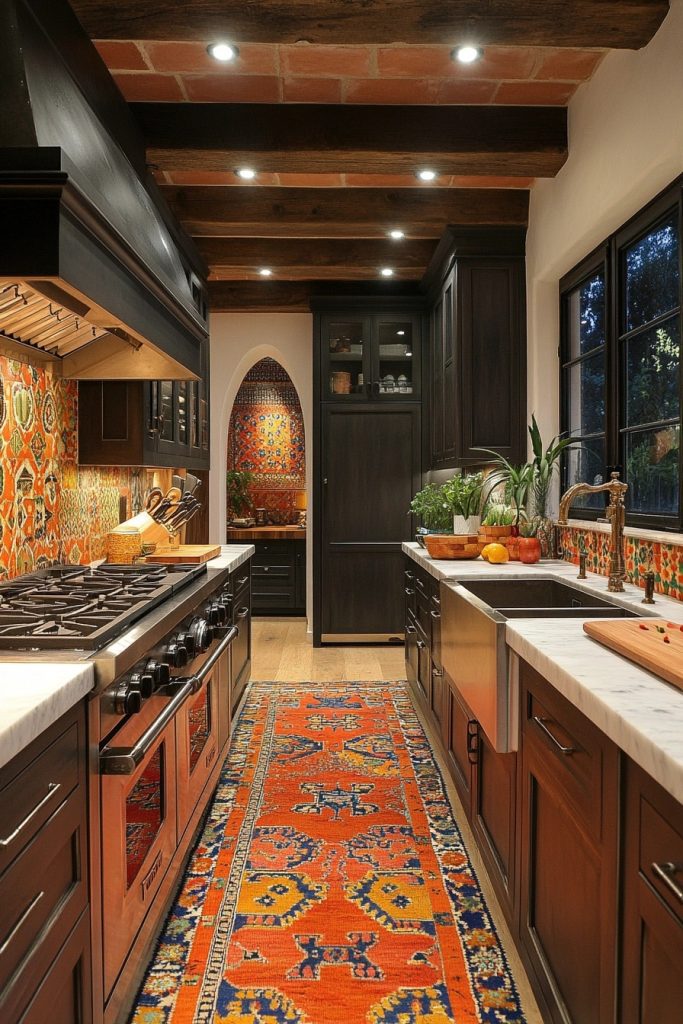
Cultural Connection in a Wabi Sabi kitchen embraces global influences, integrating them into the kitchen design. This approach celebrates the beauty of cultural diversity and the imperfections that come with artisanal crafts from around the world. The kitchen becomes a tapestry of textures and stories, offering a rich, layered experience. This style is perfect for those who love to bring a world of flavors into their cooking space.
★ Steal This Look
- Paint Color: Dunn-Edwards Black DEA187 for cabinets, Dunn-Edwards Swiss Coffee DEC743 for walls
- Furniture: galley layout with dual-toned cabinetry — black uppers and warm wood lowers, marble countertops, vintage Persian runner
- Lighting: exposed terracotta barrel vault ceiling with recessed can lights and rustic wood beams
- Materials: hand-painted Moroccan tile backsplash, aged brass fixtures, reclaimed wood beams, terracotta ceiling tiles, copper pots
This kitchen feels like someone’s grandmother actually cooked here for decades — the patina isn’t staged, it’s earned through real use of global treasures.
18. Functional Form
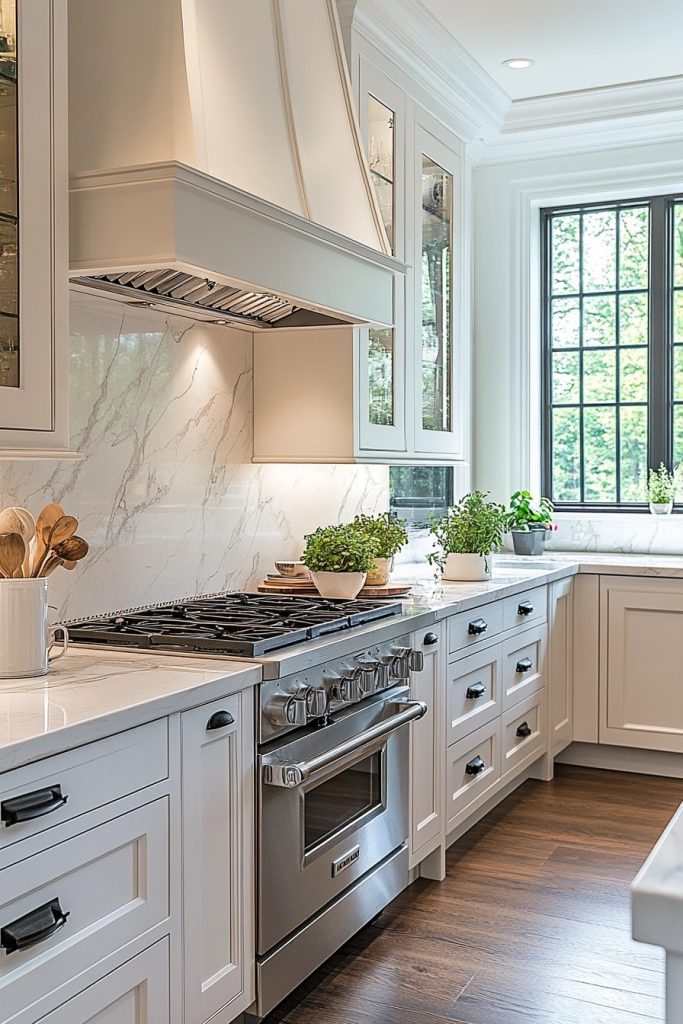
Functional Form Wabi Sabi kitchen combines practicality with aesthetic appeal. This design prioritizes ease of use and efficiency while maintaining a beautiful, unpolished look that embodies Wabi Sabi principles. The kitchen is set up to facilitate smooth workflow, with natural materials that are not only functional but also visually appealing. It’s perfect for those who value a kitchen that looks good and works well.
🖼 Steal This Look
- Paint Color: Clare Paint Fresh Kicks CW-01
- Furniture: shaker-style inset cabinetry with glass uppers, professional-grade stainless steel range with integrated hood surround, marble-topped perimeter counters
- Lighting: recessed can lights plus under-cabinet LED strips for task illumination
- Materials: calacatta-veined marble backsplash and counters, warm white painted millwork, oil-rubbed bronze cabinet hardware, wide-plank hardwood floors, matte ceramic planters
There’s something deeply satisfying about a kitchen where every drawer pull has weight and every surface shows natural variation—this is where cooking becomes ritual rather than routine.
19. Unfinished Look
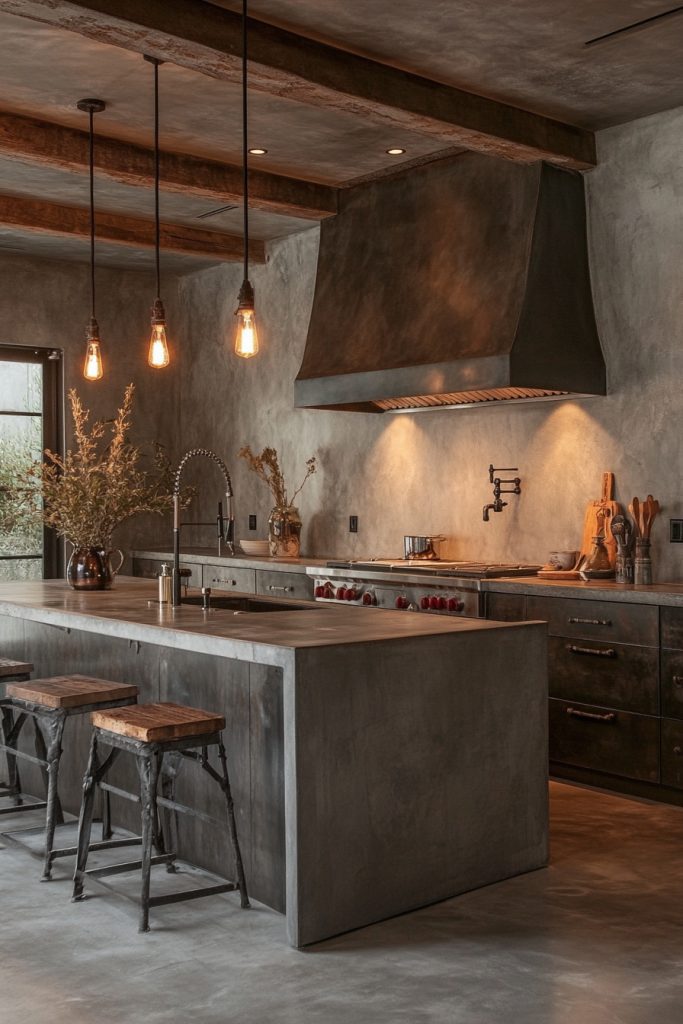
Unfinished Look in a Wabi Sabi kitchen celebrates the raw and the incomplete. This style features unpainted wood, exposed brick, and unfinished metals, all of which highlight the beauty of materials in their natural state. It’s a bold approach that resonates with the Wabi Sabi philosophy of appreciating the imperfect and transient nature of things. This kitchen design is ideal for those who embrace boldness and authenticity in their living space.
💡 Steal This Look
- Paint Color: Fine Paints of Europe Fresco Cera Stone FCE-47
- Furniture: cast concrete waterfall island with live-edge wood bar stools, aged steel base cabinets with forged iron pulls
- Lighting: Edison bulb pendant lights with weathered brass sockets, recessed ceiling spots
- Materials: raw concrete countertops and floors, oxidized metal range hood, rough plaster walls, reclaimed timber ceiling beams, dried botanicals
There’s something deeply honest about walking into a kitchen that doesn’t pretend to be perfect. The rust-streaked hood and pocked concrete here feel like a space that’s been loved hard and lived in fully.
🛒 Get The Look
20. Recycled Refuge
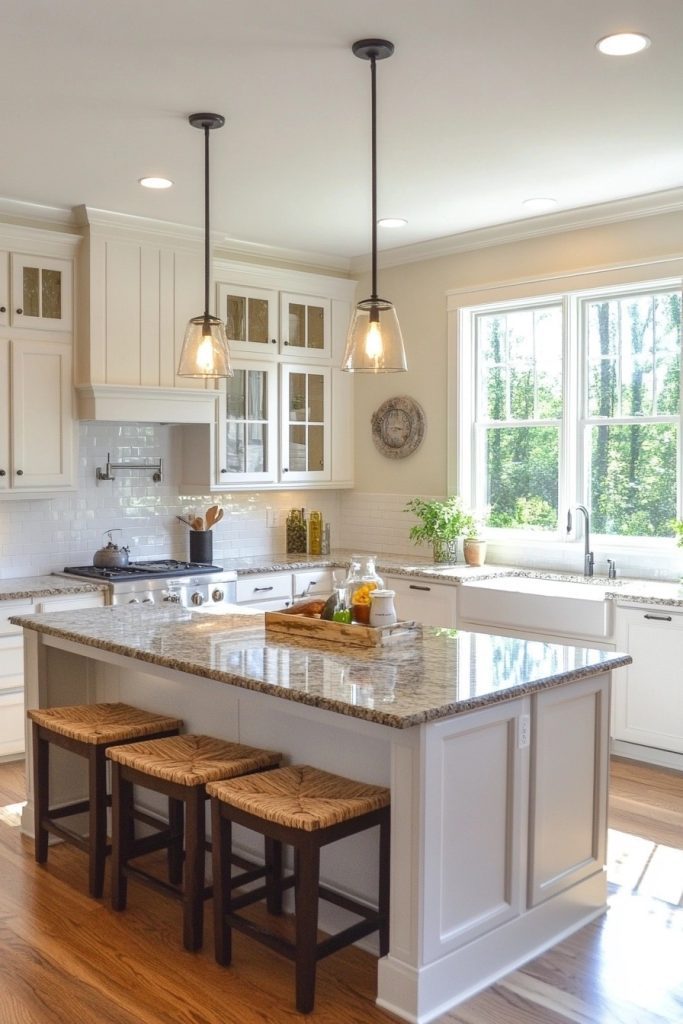
Recycled Refuge Wabi Sabi kitchen focuses on upcycling and recycling materials to create a unique and environmentally friendly space. This kitchen uses repurposed items to reduce waste and add character, from reclaimed wood countertops to recycled glass tile backsplashes. It’s a testament to the creativity and sustainability that Wabi Sabi can bring to kitchen design. This approach is perfect for eco-conscious individuals looking to design a kitchen with a lower environmental impact.
🎨 Steal This Look
- Paint Color: Backdrop Supermoon 01 — matches the warm white cabinetry and walls with subtle cream undertones visible throughout the space
- Furniture: white shaker-style base cabinets with glass-front uppers, granite-topped island with panel detailing, dark wood rush-seat counter stools
- Lighting: clear glass bell pendant lights with exposed Edison bulbs, recessed can lights
- Materials: speckled granite countertops, warm hardwood floors, white subway tile backsplash, woven rush seating, antique brass accents
This kitchen balances polished tradition with lived-in warmth—the rush seats will soften and darken with use, while the granite’s organic veining ensures no two islands ever look identical.
21. Local Lore
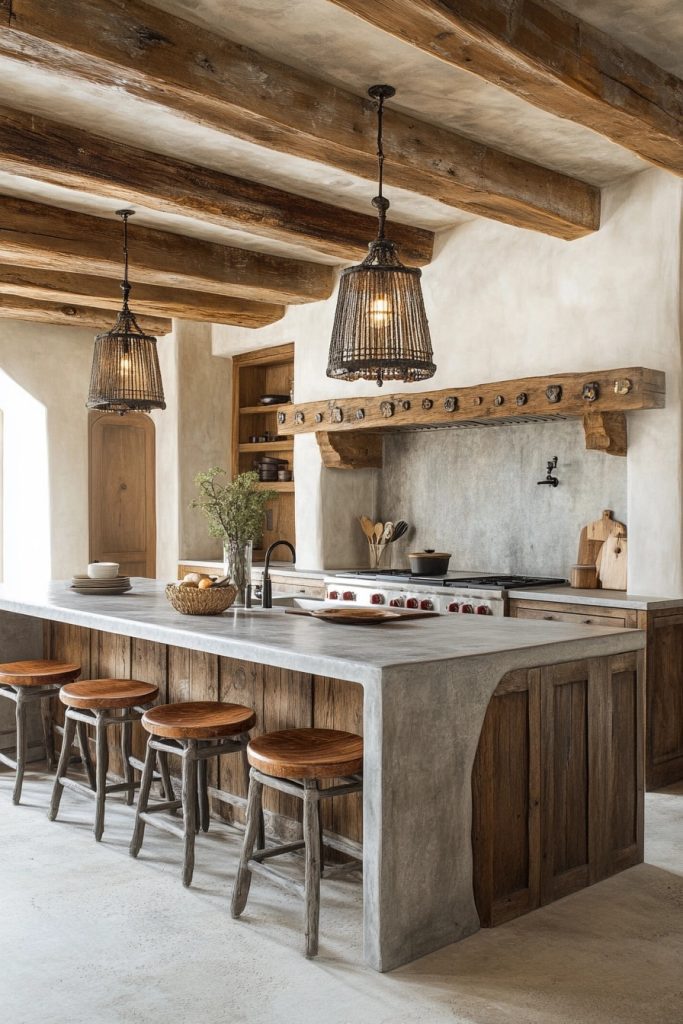
Local Lore Wabi Sabi kitchen draws inspiration from local history and materials, connecting the space with its geographical and cultural roots. This design often incorporates indigenous woods, stones, or traditional craftsmanship techniques. It celebrates the uniqueness of the locale and its artisanal heritage. This kitchen is ideal for those who want to ground their home design in the spirit of their surroundings
★ Steal This Look
- Paint Color: Sherwin-Williams Natural Linen SW 9109
- Furniture: reclaimed wood kitchen island with live-edge detailing, vintage-style round backless bar stools with worn leather seats
- Lighting: oversized woven rattan or wicker bell pendants with Edison bulbs
- Materials: rough-hewn ceiling beams, hand-troweled plaster walls, poured concrete countertops with organic curved edges, weathered oak cabinetry, aged brass pot rack with hand-forged hooks
There’s something grounding about cooking in a space that whispers where you live—those hand-hewn beams and that imperfect plaster make every meal feel like it belongs to this exact spot on earth.
22. Curated Clutter
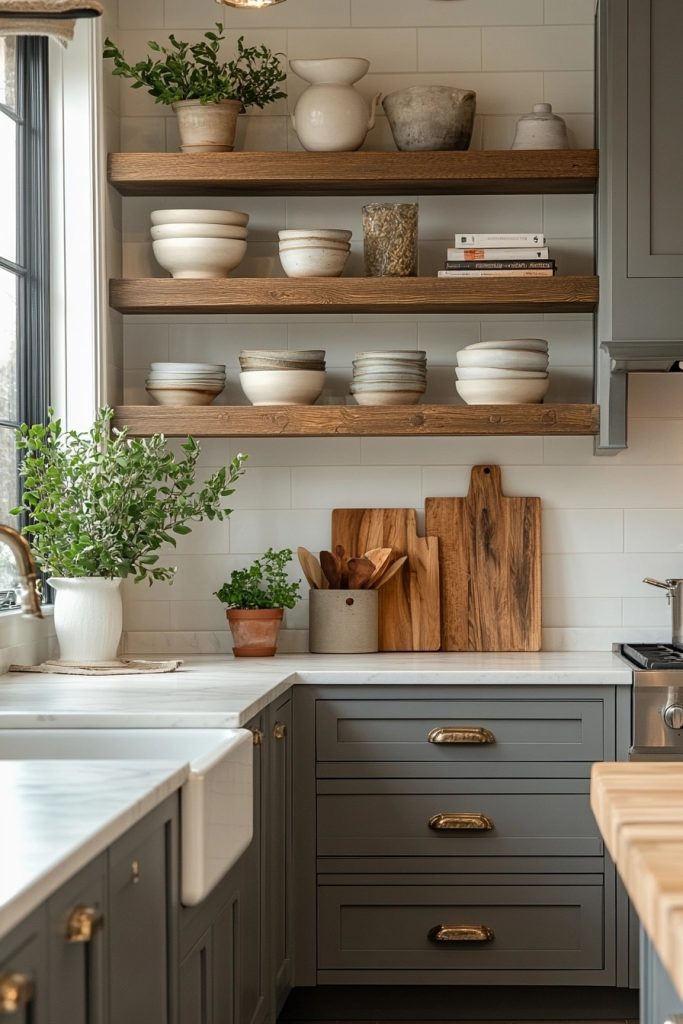
Curated Clutter in a Wabi Sabi kitchen involves artfully arranged collections that add personality and warmth. This style embraces the display of cherished items, whether they are functional utensils or decorative pieces. The arrangement is thoughtful and deliberate, creating a cozy, lived-in look that’s very much in line with the Wabi Sabi philosophy. It’s perfect for those who love a kitchen that tells a story through its details.
🌟 Steal This Look
- Paint Color: Benjamin Moore Chelsea Gray HC-168
- Furniture: Shaker-style base cabinets with inset drawers, thick floating oak shelves, farmhouse apron-front sink
- Lighting: Warm brass or aged bronze pendant with exposed filament bulb
- Materials: Reclaimed oak shelving, unglazed ceramic vessels, live-edge walnut cutting boards, matte subway tile, honed marble countertop, terracotta pots, brass cup pulls
This kitchen feels like it grew organically over years of Sunday market visits—that’s the magic of curated clutter done right. The gray-green cabinets ground the space while the oak shelves let your story unfold.
23. Monochrome Mode
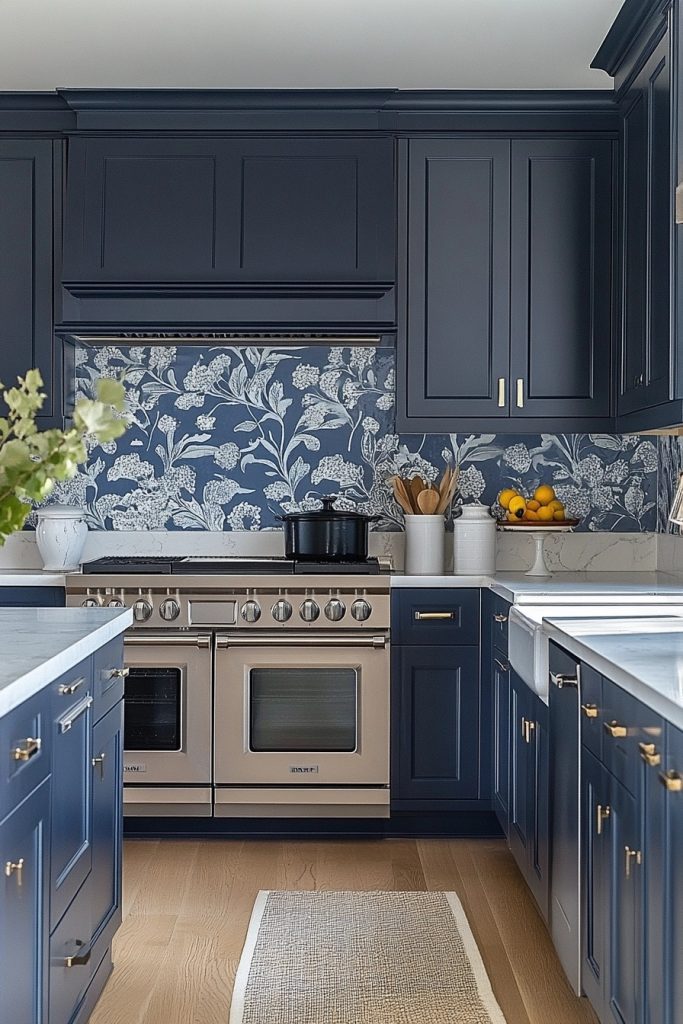
Monochrome Mode Wabi Sabi kitchen uses a single color palette to create a cohesive and serene space. This design approach focuses on shades and tints of one color, adding depth and interest through textures and materials. It’s a stylish way to celebrate simplicity and the nuanced beauty of imperfections. This kitchen is ideal for those who seek a visually calm and collected cooking environment.
🏠 Steal This Look
- Paint Color: Farrow & Ball Hague Blue 30
- Furniture: Shaker-style inset cabinetry with flat panel doors, professional-grade dual fuel range in cream/stainless, white farmhouse apron sink, marble-look quartz countertops
- Lighting: Recessed ceiling lighting with under-cabinet LED strips
- Materials: Matte lacquered wood cabinets, brass bar hardware, botanical wallpaper backsplash, natural woven jute runner, white ceramic canisters, light oak plank flooring
This kitchen feels like wearing a perfectly tailored navy suit—confident, timeless, and somehow both dramatic and calming at once.
24. Bare Basics
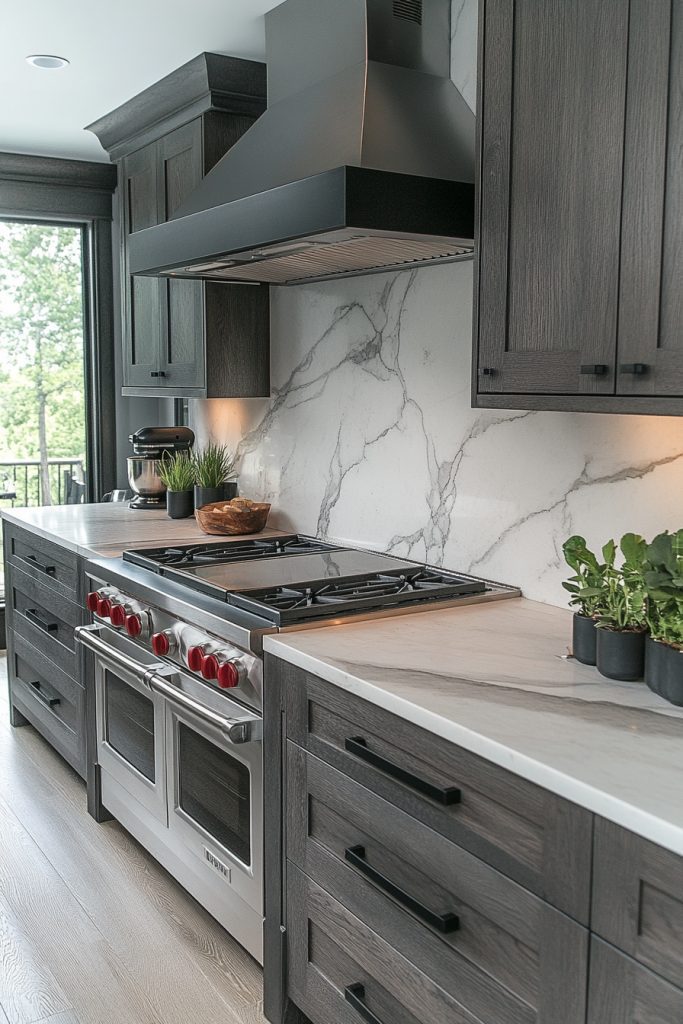
Bare Basics Wabi Sabi kitchen strips the design down to the essentials, focusing on functionality without excess. This style uses minimal decor and simple, straightforward furnishings to create a clean and clear space. It reflects the Wabi Sabi appreciation for minimalism and the beauty found in utility and simplicity. This kitchen is perfect for those who appreciate a no-frills, honest space.
★ Steal This Look
- Paint Color: Behr Black Mocha N140-7
- Furniture: Shaker-style rift-cut oak cabinets with visible grain, professional-grade dual-fuel range with red knobs, minimalist matte black bar pulls
- Lighting: Recessed ceiling can lights with under-cabinet LED strip lighting for task illumination
- Materials: Wire-brushed oak cabinetry, calacatta-style quartz slab backsplash and countertops, brushed stainless steel appliances, matte black metal hardware, light oak plank flooring
There’s something grounding about a kitchen that refuses to perform—this space feels like it belongs to someone who actually cooks, not just stages for photos.
25. Lived-in Layout
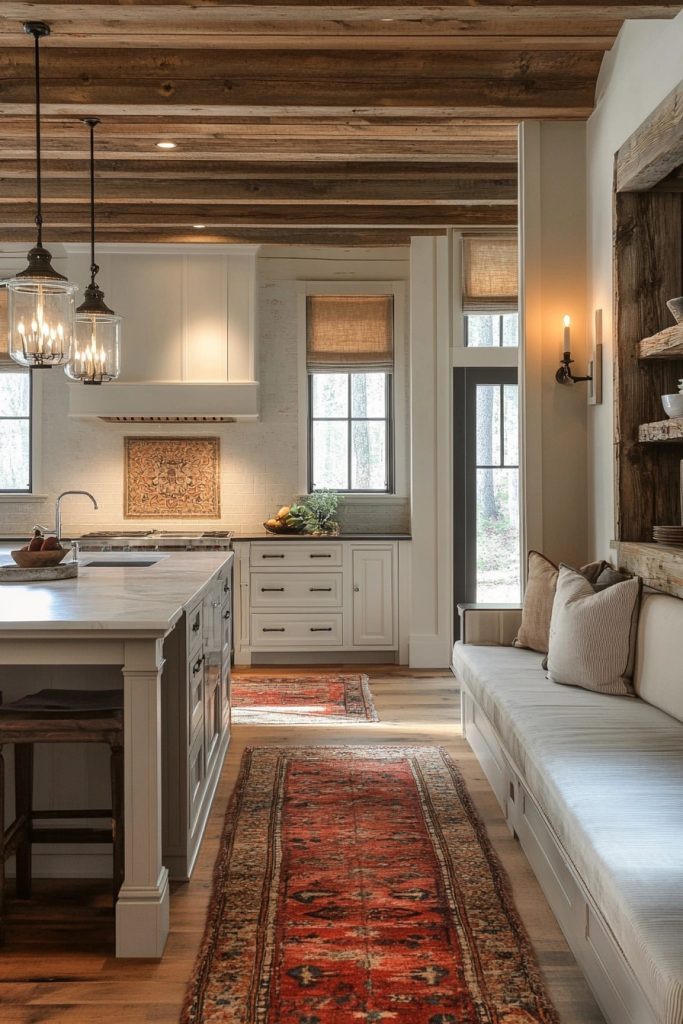
Lived-in Layout in a Wabi Sabi kitchen emphasizes comfort and usability, designed to accommodate daily life naturally and gracefully. This style features furnishings and decor that look better with age and use, embodying the Wabi Sabi ethos of beauty in imperfection. The kitchen is set up to be functional but also warmly inviting, making it a hub of daily activity. It’s ideal for those who want their kitchen to be the heart of the home.
🎨 Steal This Look
- Paint Color: Valspar Swiss Coffee 7002-16
- Furniture: built-in banquette with linen cushion, marble-topped kitchen island with turned legs, vintage-style bar stools
- Lighting: glass bell jar pendant lights with oil-rubbed bronze hardware, candle-style wall sconces
- Materials: reclaimed wood ceiling beams, hand-knotted vintage Persian rugs, unlacquered brass, natural linen, weathered wood shelving
This is the kitchen where flour dust on the marble and water rings on the wood aren’t flaws—they’re the story of meals actually being made. The built-in bench practically begs for someone to linger with coffee while someone else cooks.
26. Fluid Framework
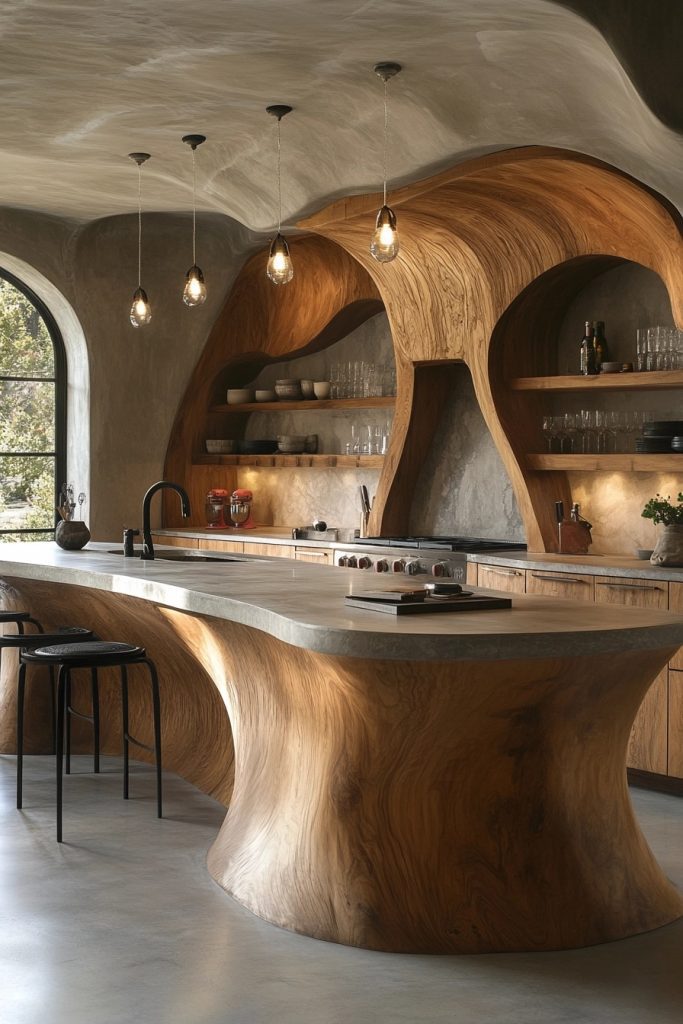
Fluid Framework Wabi Sabi kitchen uses curves and flowing lines to create a soft, organic look. This design eschews harsh angles for gentle curves that mimic natural forms, promoting a sense of ease and fluidity. The use of materials that can naturally wear and age adds an additional layer of Wabi Sabi charm. This kitchen is perfect for those looking for a space that feels both modern and timeless.
💡 Steal This Look
- Paint Color: PPG Stonehenge Greige PPG1020-3
- Furniture: sculptural live-edge wood island base with poured concrete waterfall countertop, black metal bar stools with round seats
- Lighting: teardrop-shaped amber glass pendant lights with exposed Edison bulbs on thin black cords
- Materials: hand-troweled plaster walls and ceiling, reclaimed wood with visible grain, polished concrete floors, matte black metal fixtures
This kitchen feels like it grew rather than was built—there’s something deeply calming about cooking in a space that refuses straight lines.
27. DIY Domain
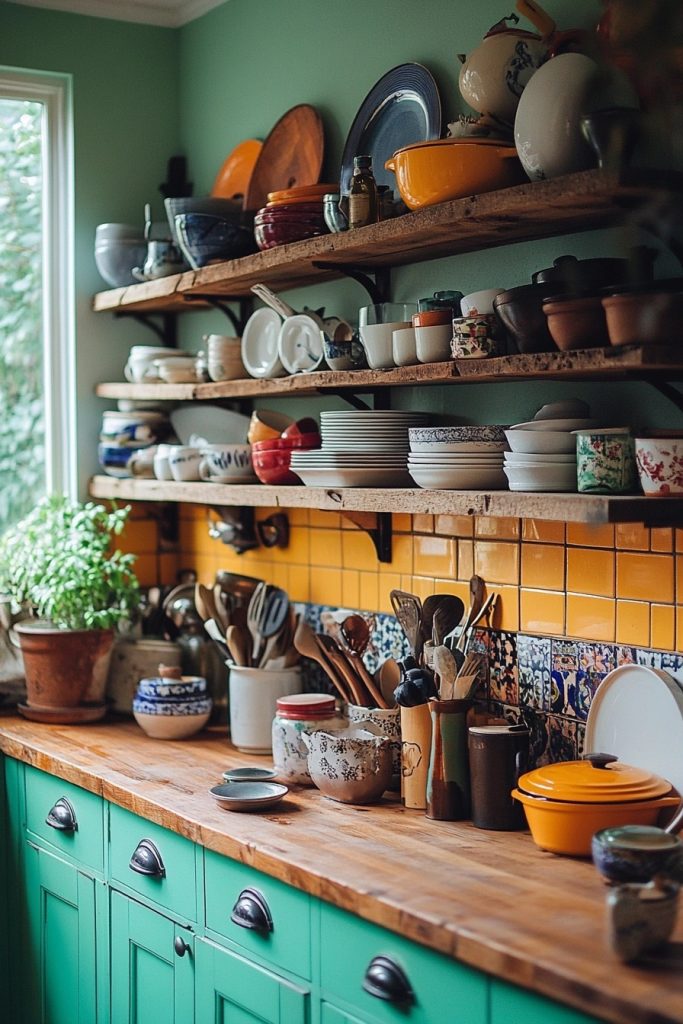
DIY Domain in a Wabi Sabi kitchen encourages personal expression through do-it-yourself projects. This style is all about personal touches that showcase the maker’s hand, from custom shelves to homemade pot racks. It’s a creative and personal approach to kitchen design, celebrating the imperfect results of one’s own effort. This kitchen is ideal for those who love to put their stamp on their space.
🌟 Steal This Look
- Paint Color: Dunn-Edwards Eucalyptus Leaf DE5705
- Furniture: Reclaimed wood open shelving with black iron brackets, vintage ceramic dishware in mismatched patterns
- Lighting: Natural window light with no overhead fixture visible
- Materials: Live-edge wood countertops, hand-painted ceramic tiles, terracotta pots, unglazed stoneware, oxidized metal hardware
This kitchen whispers of Sunday mornings and inherited treasures. The green cabinets feel like they aged into themselves, not a trend chased.
28. Quiet Quarters
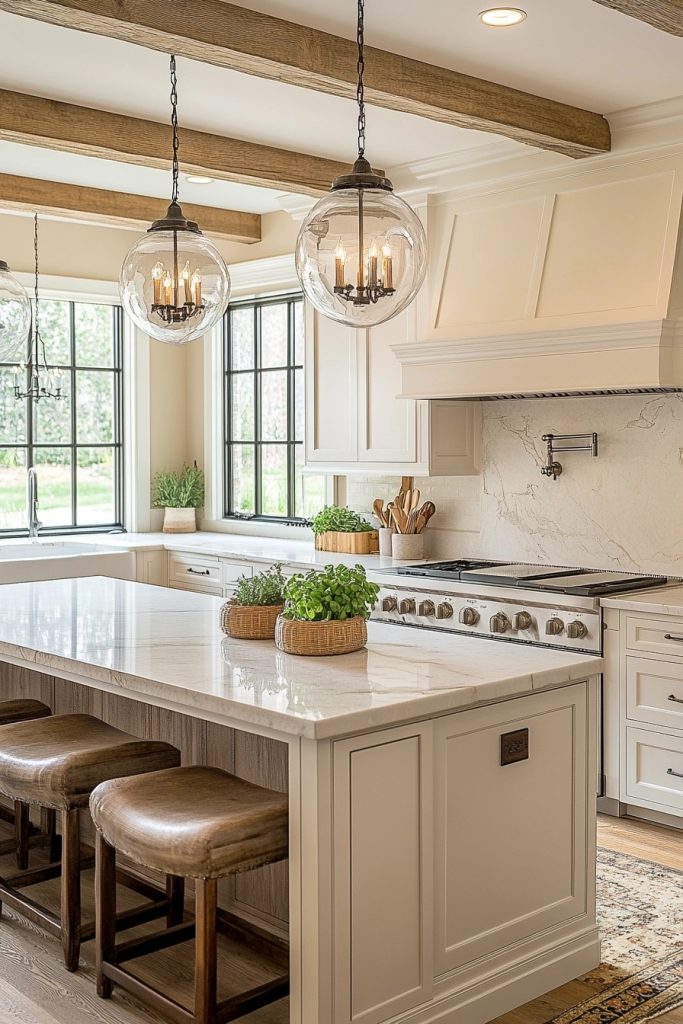
Quiet Quarters Wabi Sabi kitchen is designed as a retreat from the hectic pace of modern life. This style uses soft colors, minimal decor, and tranquil design elements to create a soothing atmosphere. It’s a space where simplicity and calm reign, allowing for quiet reflection and relaxation. This kitchen is perfect for those seeking a zen-like space in their home.
🏠 Steal This Look
- Paint Color: Clare Paint Fresh Kicks 01
- Furniture: distressed leather saddle-seat bar stools with nailhead trim, shaker-style cabinetry with aged brass pulls
- Lighting: oversized seeded glass globe pendants with oil-rubbed bronze fittings and exposed candelabra bulbs
- Materials: reclaimed oak ceiling beams, Calacatta marble countertops and backsplash, woven seagrass planters, vintage-look wool runner
There’s something deeply grounding about cooking beneath those heavy oak beams while morning light filters through black steel windows—this kitchen asks you to slow down and actually enjoy the process.
29. Patchwork Pantry
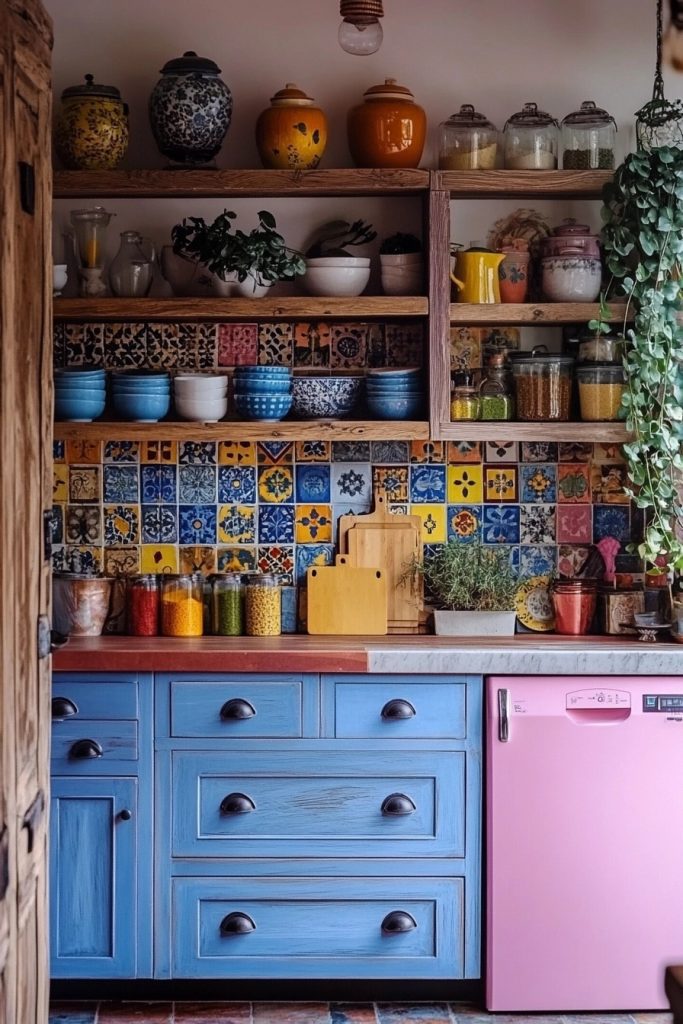
Patchwork Pantry in a Wabi Sabi kitchen embraces a mix of materials and textures, creating a vibrant and eclectic look. This style celebrates the beauty of combining different elements in a cohesive way, whether it’s through mismatched tiles, a variety of wood types, or a spectrum of fabric textures. It’s a playful yet harmonious approach that reflects the Wabi Sabi love for the uniquely beautiful.
💡 Steal This Look
- Paint Color: Fine Paints of Europe Hollandlac Brilliant Cornflower Blue 4003
- Furniture: distressed blue base cabinets with oil-rubbed bronze cup pulls, reclaimed wood open shelving, compact retro-style refrigerator in blush pink
- Lighting: exposed Edison bulb pendant with brass socket and cloth cord
- Materials: hand-painted Mexican Talavera tile backsplash, terracotta and marble countertop surfaces, weathered pine shelving, trailing pothos, ceramic storage urns in amber and indigo glazes
This kitchen feels like someone’s grandmother traveled to Oaxaca and came back with stories pressed into every surface—the pink fridge is the wink that keeps it from feeling like a museum.
Conclusion
And there you have it—29 wabi sabi kitchen ideas to bring harmony and simplicity into your home. By embracing natural materials, imperfect details, and a minimalist mindset, you can create a kitchen that feels both peaceful and functional. Ready to transform your kitchen into a space that celebrates beauty in imperfection? With these ideas, your kitchen will be a calming retreat where simplicity truly shines!
Save this article
No spam. Unsubscribe anytime.