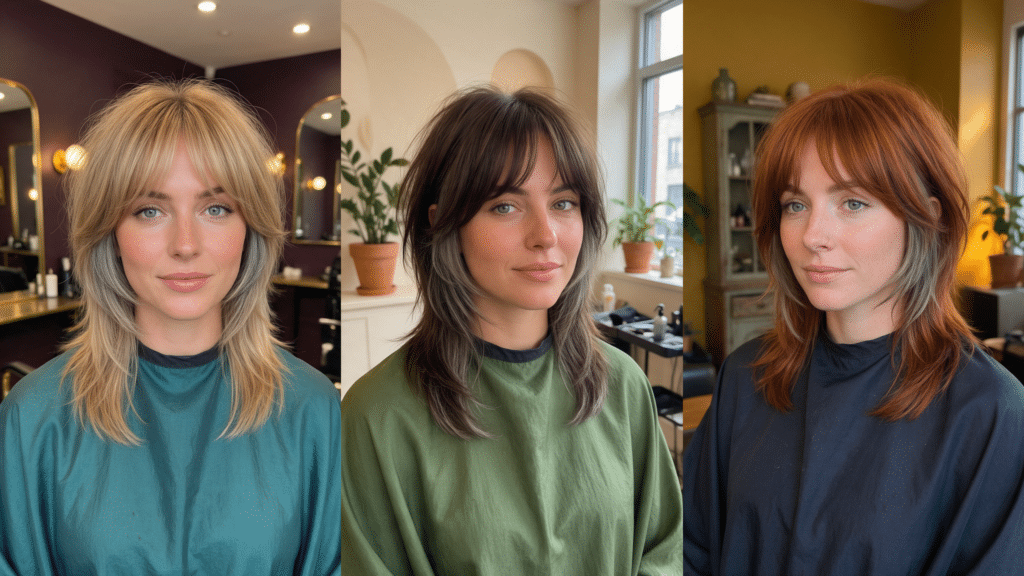
On fine hair, a fringe can look full at 8 a.m. and split into three stringy pieces by lunch, usually because the section was too wide or the ends were left heavy. Good bangs for fine hair start with a narrow triangle, point cut ends, and a small round brush. Plan on a trim every three to six weeks.
1. See-Through Wispy Bangs
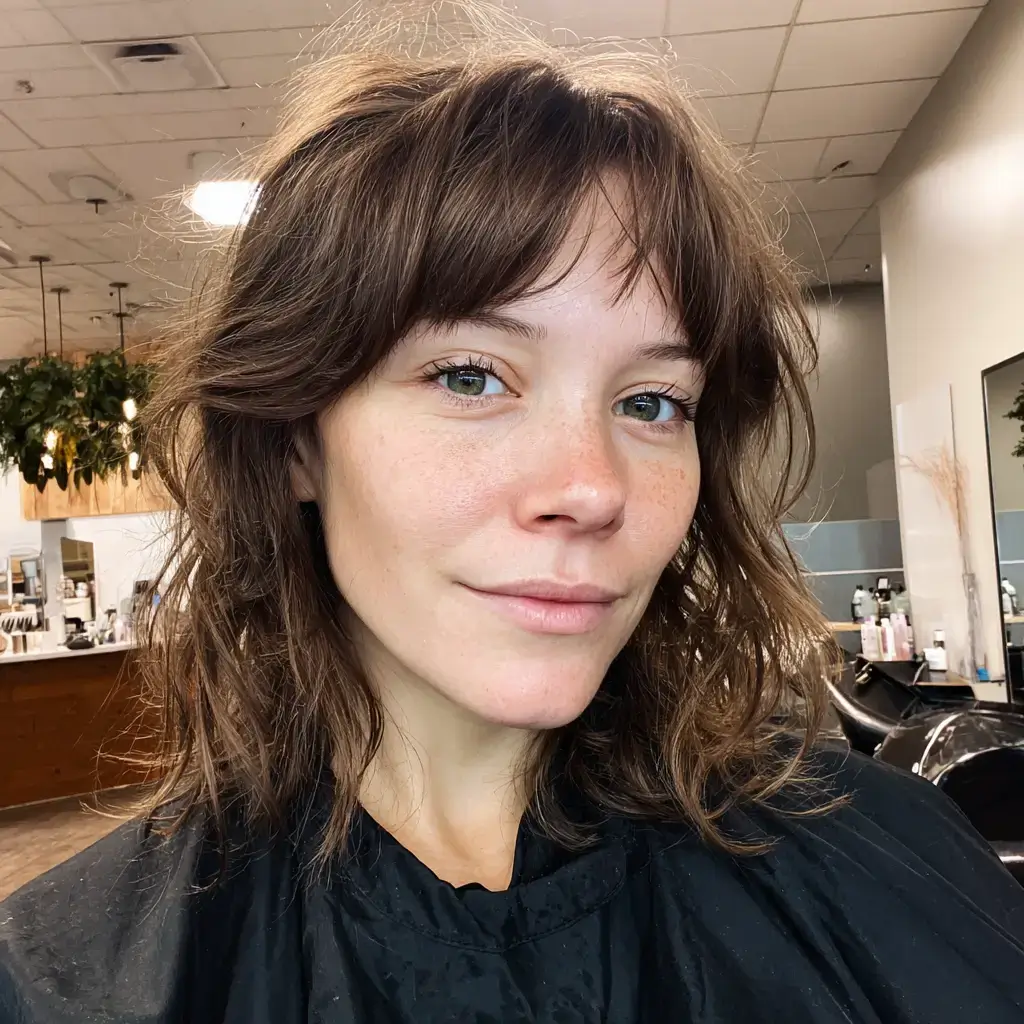
Fine density with an oval or heart face is the best match for wispy bangs, and they are the fine hair bangs I recommend before any other because they use so little hair from the top. My section is a narrow triangle at the front hairline; I cut at the brow, shears straight in, and point cut until it’s see-through. A small round brush dries them, ends left soft. Trim every four weeks.
2. Curtain Bangs to the Cheekbone

Square or round faces with fine density look good in curtain bangs, which part in the middle and sweep toward the cheekbone. From a shallow triangle I cut nose to cheekbone, shears angled away from the center, then point cut the ends. Roll a round brush away from the face as you dry. Trim every five weeks.
3. Fine Hair Blunt Bangs

Oval or long faces with fine density suit blunt bangs, but on fine hair the section has to go deeper than usual for the line to look solid. I take it back to the crown, cut straight at the brow, and add texture to the last quarter inch only. Dry flat with a small paddle brush and smooth on a light serum. Trim every four weeks.
4. Sloped Side Swept Bangs

Round or square faces with fine density suit side swept bangs, which run from the part across the forehead to the cheekbone. Working from the part, I cut brow length on the short side and cheekbone length on the long side, then point cut the ends. Dry across over a flat brush and hold it with a light hairspray. Trim every five weeks.
5. Classic Bottleneck Bangs

On fine density and oval or long faces, bottleneck bangs sit short at the center and open out to the cheekbone. Within a triangle I cut the center at the brow and the sides to the cheekbone, then point cut where they join. Dry the center flat, round-brush the sides out, and finish with a light hairspray. Trim every five weeks.
6. Fine Hair With Bangs After 50

Most face shapes with fine density suit this, and fine hair with bangs over 50 looks best as a soft brow fringe that hides the forehead without weighing it down. I cut a narrow triangle at the brow, point cut the ends, and blend it into two crown layers. A small round brush and root lifting mousse do the drying. Trim every four weeks.
7. Crisp Micro Bangs

Fine density with an oval or long face suits micro bangs: one short line, an inch above the brow. I cut a shallow triangle straight across at that height and texturize only the last quarter inch. A small brush dries them flat, and a drop of serum keeps the line crisp. Trim every three weeks.
Save this article
No spam. Unsubscribe anytime.
8. Layered Curtain Bangs for Fine Hair

Round or square faces with fine density suit bangs for fine hair that run straight into face framing layers at the cheek, which is where they blend best. From a triangle I cut curtain bangs nose to cheekbone, then point cut the front layers downward from the cheekbone. Dry everything out with a round brush. Trim every five weeks.
9. Uneven Choppy Bangs

Oval or heart faces with fine density suit choppy bangs, where point cutting leaves each piece at a different length. I section to the crown, cut at the brow, and point cut deep into the fringe, shears straight in. Rough-dry with texture spray, then use your fingers to push the pieces apart. Trim every four weeks.
10. Fringed Bob for Fine Hair

Fine density with an oval or long face suits bangs on a bob, which gives fine hair two clean lines. Working dry, I cut the bob at the chin with the shears flat, then section a triangle, cut the fringe at the brow, and texturize just the fringe. Dry the bob flat over a paddle brush and the bangs with a small brush. Bangs get trimmed every four weeks.
11. Highlighted Fringe

Most skin tones with fine density suit highlights in the fringe, and fine hair bangs read fuller when each piece catches a different tone. I cut at the brow with point cut ends, then foil fine level nine highlights through the bangs and the top. Small round brush for drying. Trim every four weeks and redo the highlights every twelve.
12. Grown-Out Long Bangs at the Cheekbone

Round or square faces with fine density suit long bangs grown to the cheekbone; they frame the eyes and keep the brow clear. From a triangle I cut at the cheekbone with the shears angled down, then point cut the ends to blend. Round-brush them out, tuck one side behind, and set with a light hairspray. Trim every six weeks.
13. Bangs With Lift at the Crown

Round or square faces with fine density suit this, where lift at the root behind the bangs keeps the top from going flat. I cut the fringe at the brow with point cut ends and point cut two short crown layers behind it. Dry upside down with a root lifting mousse, then a small brush brings the bangs forward. Trim every four weeks.
14. Fine Hair Bangs With a Bright Money Piece

Most skin tones with fine density suit a money piece through the bangs, which lights up the whole face frame. After cutting the fringe at the brow with point cut ends, I lift the bangs and the two front sections to a level nine and tone beige. Dry the bangs on a small round brush. Refresh the money piece every ten weeks; trim every four.
15. Soft Wave Lengths With Straight Bangs

Oval or long faces with fine density suit soft waves behind a straight fringe, which makes fine hair look twice as thick. I cut the fringe at the brow with point cut ends, plus one point cut layer at the collarbone. Use a one inch iron on the length, leave the bangs straight, and shake it out. Trim the bangs every four weeks.
16. Fine Hair With Side Bangs Over 60

Most face shapes with fine density suit this, and fine hair with bangs over 60 holds up best as a soft side swept fringe that never feels heavy. From the part, I cut brow to cheekbone and point cut the ends. A flat brush and a root lifting mousse dry it across. Trim every five weeks and gloss every eight.
17. Barely-There Babylight Bangs

Most skin tones with fine density suit babylights through the bangs, and they’re so fine you never see the grow-out. I cut the fringe at the brow, point cut the ends, then foil level nine babylights through the bangs and all over. Dry the bangs with a small brush and add a light serum. Trim every four weeks; refresh babylights every twelve.
18. Symmetrical Curtain Bangs With a Middle Part
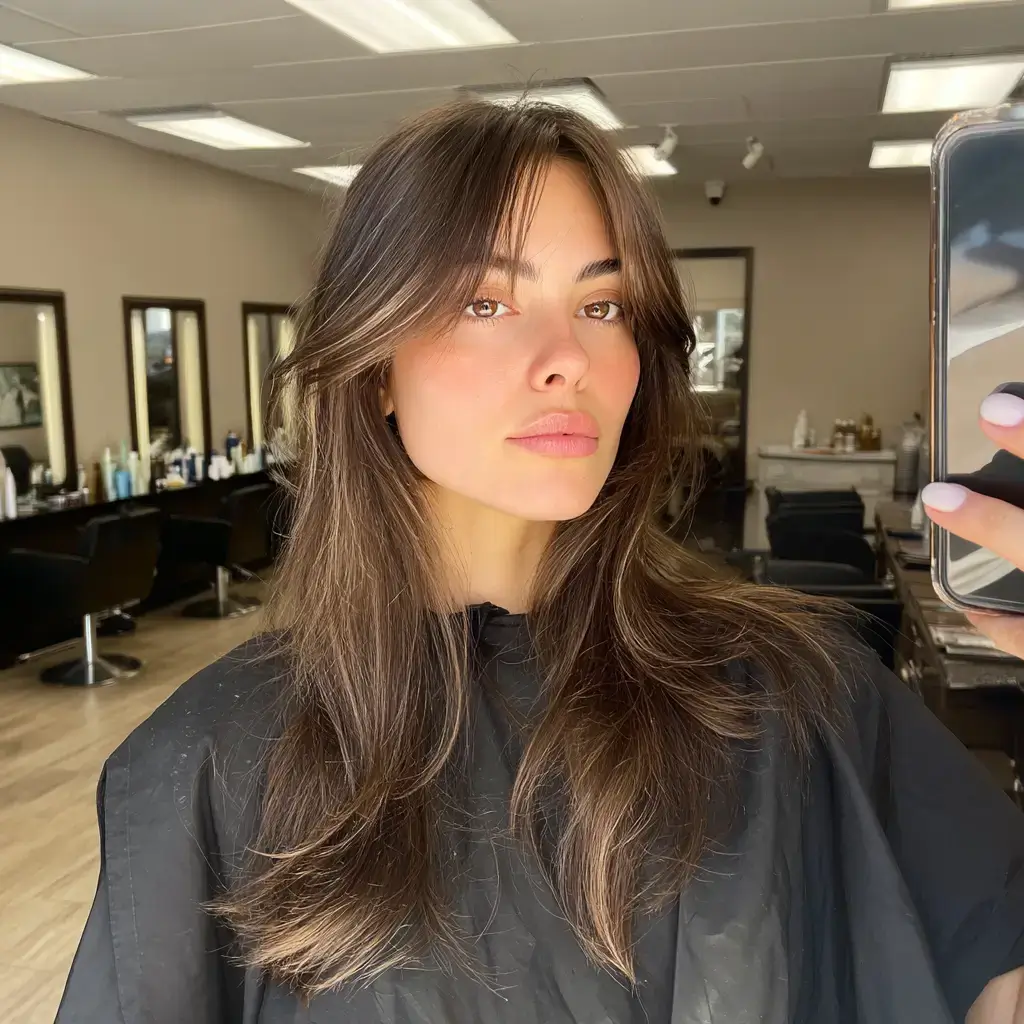
Oval or long faces with fine density suit a center part with curtain bangs, which shows how symmetrical the fringe is. After parting at the center and sectioning a triangle, I cut from the nose to the cheekbone on both sides and point cut the ends. Round-brush each side out, rolling away from the face. Trim every five weeks.
19. Above-the-Frames Bangs for Glasses

Most face shapes with fine density suit this, and with glasses, fine hair bangs should sit just over the frames so the two lines never meet. From a shallow triangle, I cut the fringe to land a quarter inch above the frames, then point cut the ends. Dry the bangs flat with a small brush. Trim every three weeks.
20. Side Swept Bangs for a Round Face

Round faces with fine density suit side swept bangs cut on a diagonal across the forehead, since the angle breaks up the width. From the part, I cut brow to cheekbone and point cut the ends. A flat brush dries it across, and a root lifting mousse lifts the crown. Trim every five weeks.
21. Balayage With Darker Bangs

Neutral skin tones with fine density suit balayage behind the bangs, which keeps the light on the ends and the fringe dark. I cut at the brow with point cut ends, then hand paint level nine through the bottom three inches and tone beige. Dry the bangs with a small brush. Trim every four weeks; refresh the balayage every sixteen.
22. Air-Dry Bangs

Fine density with 1C to 2B texture suits air dried bangs, but the cut has to fall into place by itself. I cut a narrow triangle at the brow with point cut ends and texturize until no piece sits heavier than another. Put a light cream on damp bangs, comb them forward, and leave them be until dry. Trim every four weeks.
23. Shadowed Lowlight Bangs

Most skin tones with fine density suit lowlights behind the bangs, which give fine hair its shadow back. I cut at the brow with point cut ends, weave level six lowlights through the interior behind the fringe, and gloss the ends. A small brush and a root lifting mousse dry the bangs. Trim every four weeks; refresh lowlights every twelve.
24. Fine Hair Bangs With a Collarbone Lob

Oval or heart faces with fine density suit bangs for fine hair with a collarbone lob, because that length balances the fringe. On dry hair I cut the lob at the collarbone with point cut ends, then section a triangle, cut the fringe at the brow, and point cut it. Dry with a round brush, rolling under. Trim the bangs every four weeks.
25. Light-Catching Glossed Bangs

Every skin tone with fine density suits a gloss on the bangs, which makes the fringe the first thing to catch light. I cut at the brow with point cut ends, then mix a clear demi at the bowl and leave it fifteen minutes to close the cuticle. Dry the bangs flat with a small brush; finish with serum. Gloss every six weeks, trim every four.
Worth a look next: short hairstyle women fine hair and long bob hairstyles for fine hair.
Fine hair bangs stay put with a small section and point-cut ends, so they move instead of lying flat by midday, and a clear gloss seals the cuticle so they catch the light. A small round brush is the only tool.