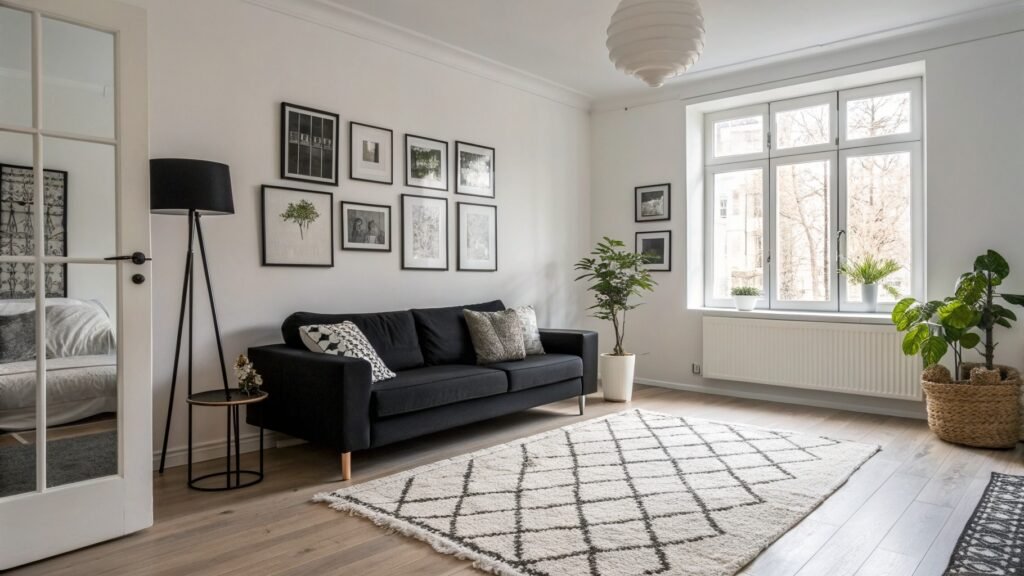
Have you ever noticed how the most beautiful things aren’t always perfect? Can embracing cracks, rough edges, and unique textures actually enhance your home’s decor? If you’ve ever been drawn to the charm of things that aren’t quite flawless, you’ll love the world of wabi sabi ceramics. These pieces celebrate imperfection, natural beauty, and the uniqueness of handmade art. In this article, we’ll explore 29 stunning examples of wabi sabi ceramics that can bring a beautifully imperfect aesthetic to your space. Ready to fall in love with imperfection? Let’s dive in!
1. Ancient Echoes
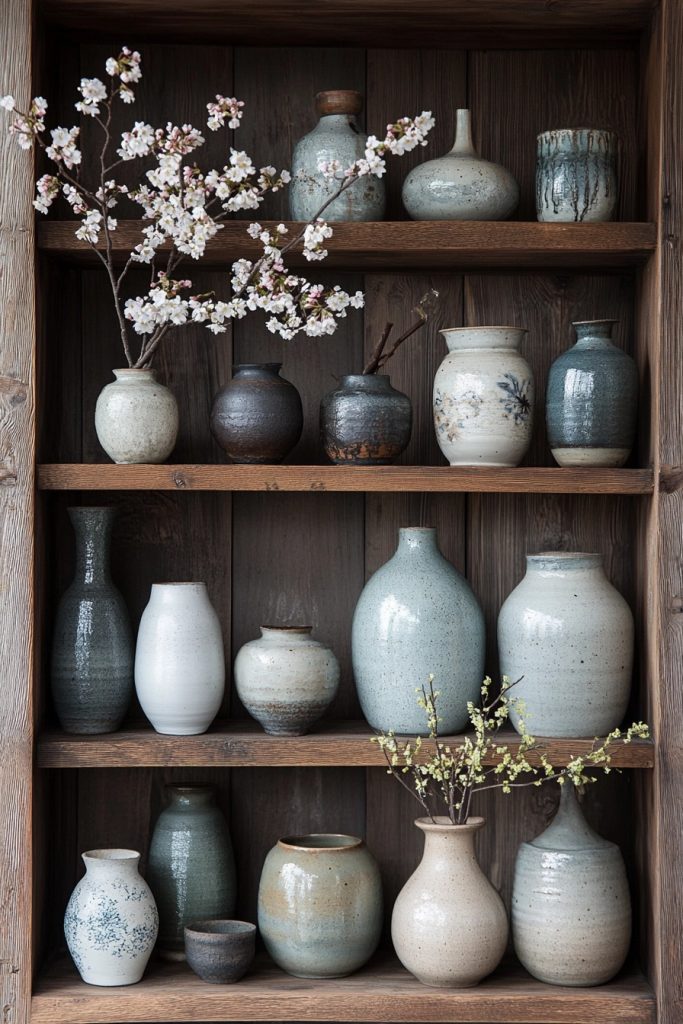
Ancient Echoes in Wabi Sabi ceramics celebrate the deep history of pottery. These pieces often feature traditional techniques and forms that have withstood the test of time. The imperfections, like uneven surfaces and subtle cracks, emphasize the beauty of age and endurance. They bring a sense of timelessness and history to any space, embodying the Wabi Sabi spirit of appreciating the old and weathered.
🎨 Steal This Look
- Paint Color: Sherwin-Williams Urbane Bronze SW 7048
- Furniture: Low-profile wooden display shelves, reclaimed teak console table, hand-thrown ceramic vessels
- Lighting: Warm ceramic pendant lights with visible crackle glaze, paper-and-bamboo table lamps
- Materials: Raw linen, unglazed terracotta, weathered wood, handmade paper, oxidized metal
There’s something grounding about living with objects that carry literal centuries of human hands—your morning coffee in a chipped Yunomi feels like a quiet conversation with history.
2. Imperfect Vessels
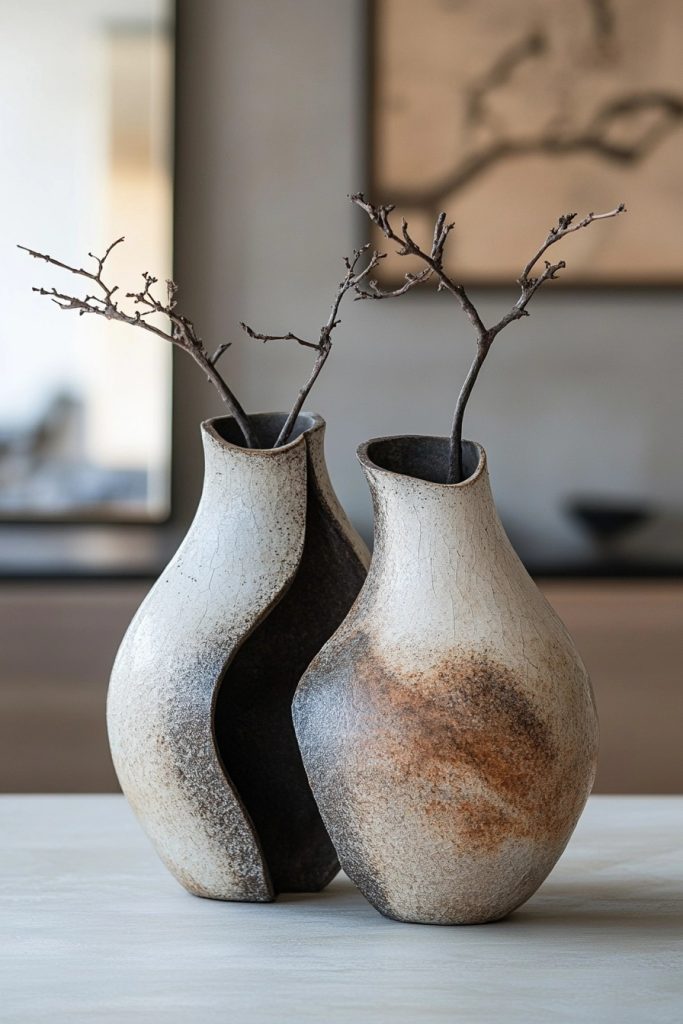
Imperfect Vessels in Wabi Sabi ceramics highlight the beauty of asymmetry and irregular shapes. Each piece is unique, with flaws and anomalies that make it special. This approach resonates with Wabi Sabi principles by valuing the handmade and imperfect over mass-produced perfection. These vessels can transform a space into a testament to human craftsmanship.
🌟 Steal This Look
- Paint Color: Benjamin Moore Pashmina AF-100
- Furniture: low-profile walnut credenza with visible grain and live edge detail
- Lighting: hand-formed ceramic pendant with uneven glaze drips and warm Edison bulb
- Materials: raw linen, unbleached cotton, reclaimed wood, unglazed terracotta, hand-thrown stoneware with crackle glaze
There’s something deeply calming about running your fingers over a thumb-pressed indentation or glaze drip that only its maker could have created—it reminds us that beauty lives in the human hand, not the machine.
3. Earthen Simplicity
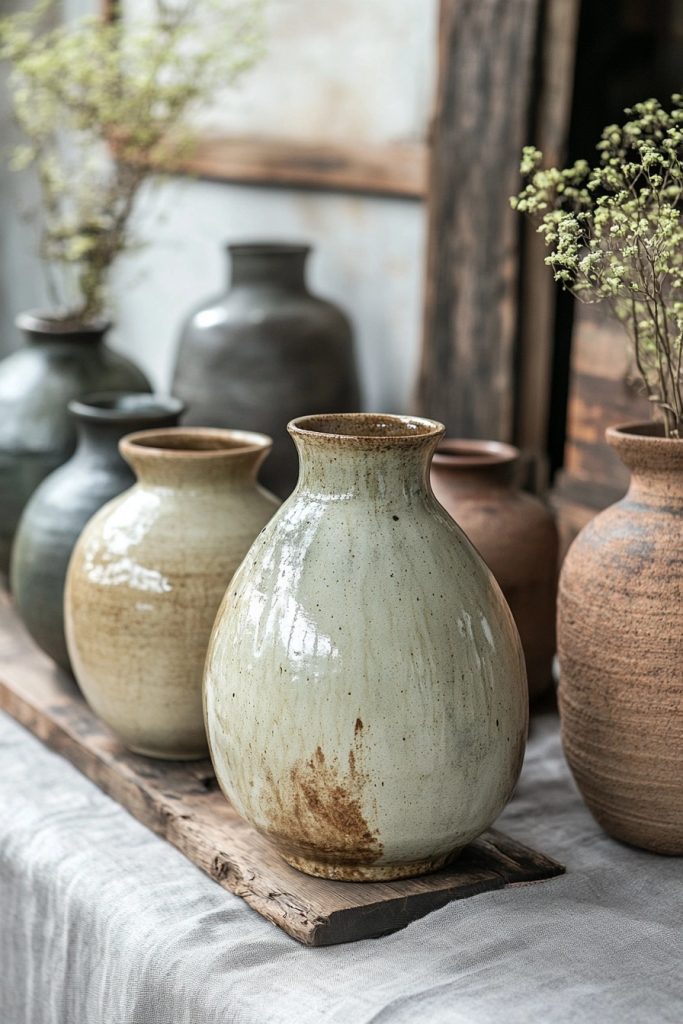
Earthen Simplicity in Wabi Sabi ceramics focuses on the raw, natural qualities of clay. These pieces are often minimally decorated, letting the natural color and texture of the clay speak for itself. This simplicity aligns with Wabi Sabi values of minimalism and tranquility in everyday objects. Such ceramics bring a grounding, calming presence to any interior.
✎ Steal This Look
- Paint Color: Farrow & Ball Stony Ground 211
- Furniture: Low-profile wooden sideboard with visible grain, simple ceramic display stands, unbleached linen curtains
- Lighting: Hand-formed ceramic pendant with warm Edison bulb, paper lantern floor lamp
- Materials: Raw terracotta, unglazed stoneware, rough linen, aged wood, hemp rope
There’s something meditative about running your fingers across unglazed clay—it’s a small daily ritual that grounds the entire room.
4. Patina Pottery
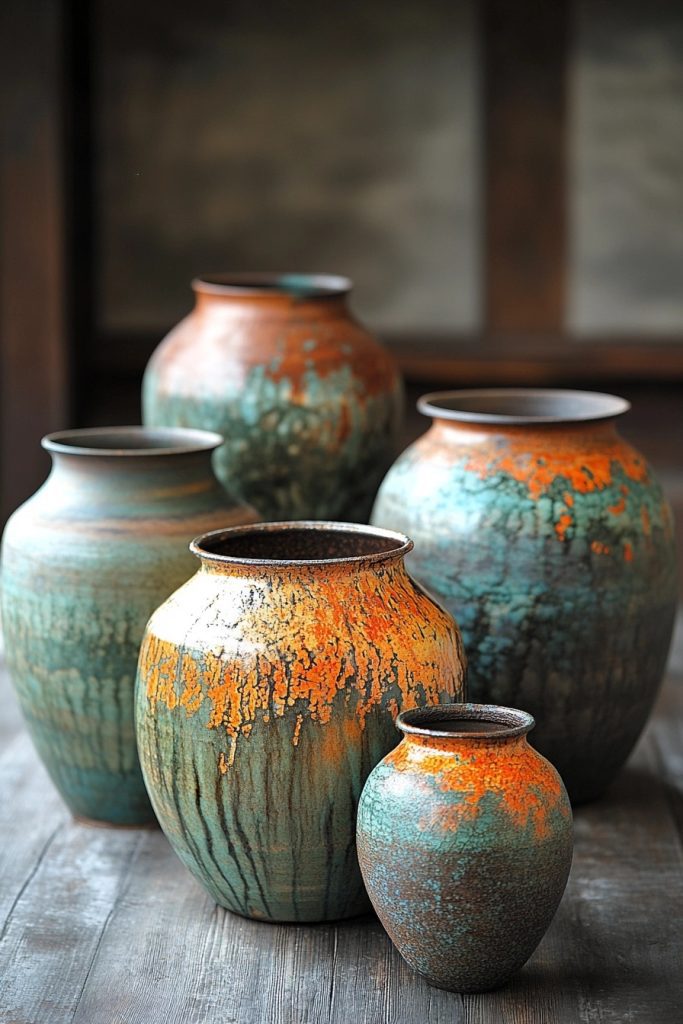
Patina Pottery involves Wabi Sabi ceramics that showcase the beauty of aged surfaces and finishes. The patina that develops over time on these pieces tells a story of use and exposure, valued highly in Wabi Sabi philosophy. These pieces serve as a reminder of the passing of time and the beauty that comes with it. Patina pottery adds a layer of depth and character to any setting.
🖼 Steal This Look
- Paint Color: Behr Burnished Clay PPU2-17
- Furniture: reclaimed wood display shelves, raw linen curtains, low-profile walnut credenza
- Lighting: hand-thrown ceramic pendant with visible crackle glaze
- Materials: unglazed terracotta, oxidized metal, rough-hewn linen, weathered wood
There’s something quietly moving about a vessel that’s been held thousands of times—the finger-worn rim, the water stains inside. Patina pottery doesn’t ask to be pristine; it asks to be lived with.
5. Rustic Raku
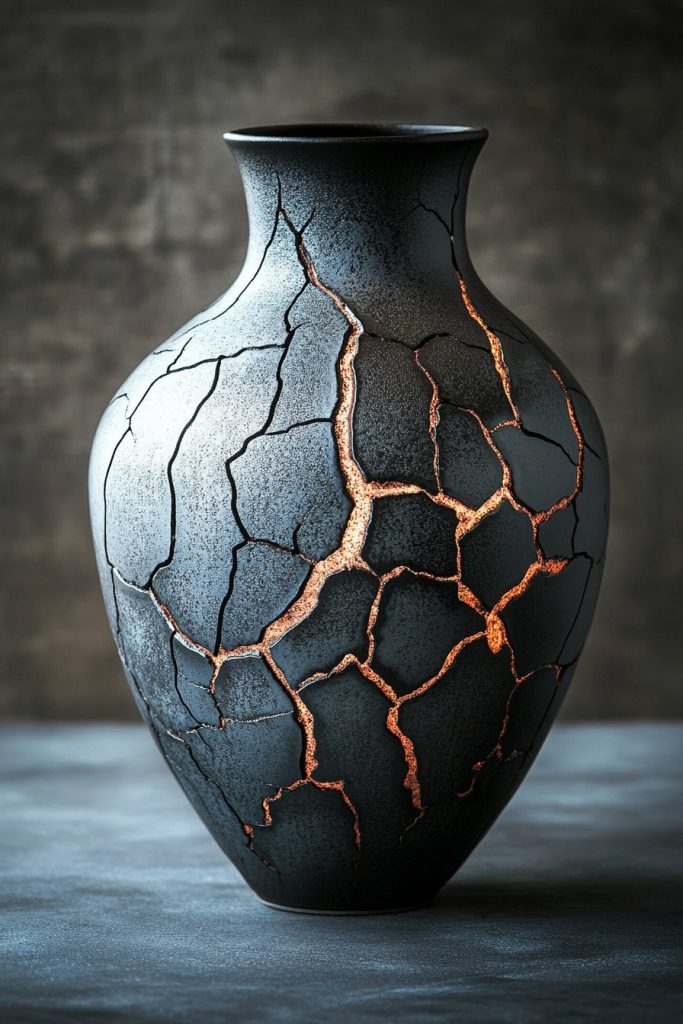
Rustic Raku in Wabi Sabi ceramics features the dramatic effects of raku firing, which creates unpredictable textures and colors. The crackled glazes and smoky patterns are perfect examples of Wabi Sabi’s embrace of the accidental and the imperfect. Raku pieces are one-of-a-kind, ensuring that no two pieces are alike, which is a hallmark of Wabi Sabi decor. These ceramics add a dramatic flair to any environment.
🌟 Steal This Look
- Paint Color: Valspar Smoky Sage 6002-5B
- Furniture: Low-profile walnut credenza with live-edge details, matte black metal display stands for ceramic rotation
- Lighting: Pendant with hand-formed ceramic shade in irregular silhouette, warm 2700K Edison bulb
- Materials: Raw linen, unbleached cotton, reclaimed wood, cast iron, crackle-glaze ceramic
There’s something quietly radical about letting a vase’s accidental smoke scars become its most beautiful feature—this look asks you to stop editing and start accepting.
🛒 Get The Look
6. Crackled Glaze
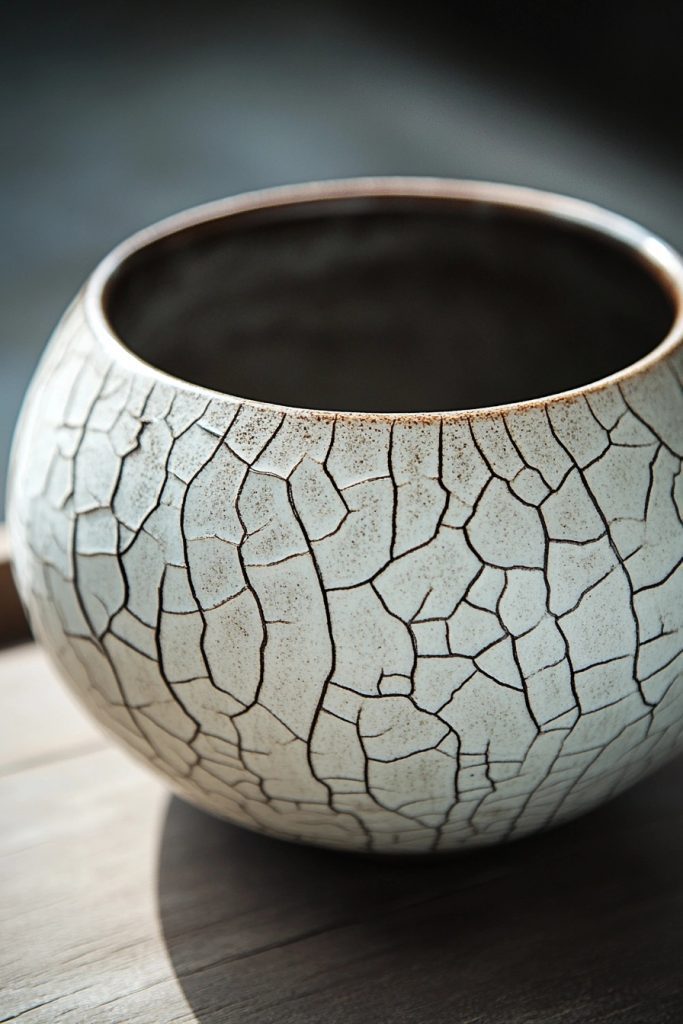
Crackled Glaze in Wabi Sabi ceramics emphasizes the beauty of visible cracks in the glaze, which are often highlighted with contrasting pigments. These cracks represent the acceptance of flaws and the beauty that comes from broken things. This type of ceramics adds texture and interest to any Wabi Sabi setting, celebrating imperfection as a form of art. Each piece tells a story of transformation and survival.
✎ Steal This Look
- Paint Color: PPG Stonehenge Greige PPG1001-3
- Furniture: low-profile walnut credenza with live-edge detail, handwoven rush seat dining chairs, reclaimed elm farmhouse table
- Lighting: oversized hand-formed ceramic pendant with visible throwing rings and organic asymmetry
- Materials: unglazed terracotta, raw linen, weathered oak, hand-thrown stoneware with deliberate crackle patterns
There’s something quietly brave about placing a cracked bowl at the center of your table. It says you live here, really live here, and you don’t need everything perfect to feel at home.
7. Asymmetrical Forms
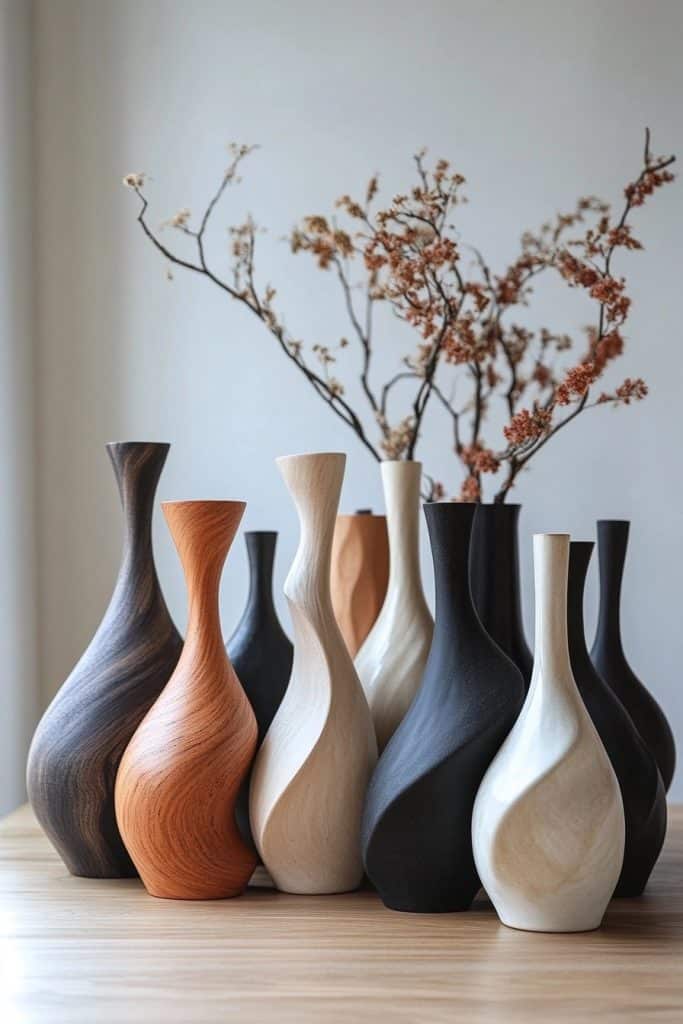
Asymmetrical Forms in Wabi Sabi ceramics break away from conventional symmetry, embracing odd shapes and unbalanced designs. This characteristic aligns with the Wabi Sabi principle that beauty can be found in the unconventional and unexpected. Asymmetrical ceramics can serve as a focal point in any room, drawing attention to their unique forms. They challenge the viewer’s perceptions of beauty, making a bold statement in decor.
💡 Steal This Look
- Paint Color: Dunn-Edwards Droplets DEW383 — a warm, muted off-white with subtle greige undertones that lets asymmetrical ceramics command attention without visual competition
- Furniture: Low-profile walnut credenza with live-edge detail; organic-shaped ceramic side tables; handwoven jute poufs
- Lighting: Sculptural pendant in unglazed terracotta or hand-hammered brass with asymmetrical shade
- Materials: Raw linen, unbleached cotton, reclaimed wood with visible grain, unglazed terracotta, hand-thrown stoneware with deliberate irregularities
There’s something quietly rebellious about a lopsided bowl that refuses to behave—I’ve found guests always gravitate toward the ‘imperfect’ piece first, hungry for something that feels human in a world of machine precision.
Save this article
No spam. Unsubscribe anytime.
8. Time-Touched Terracotta
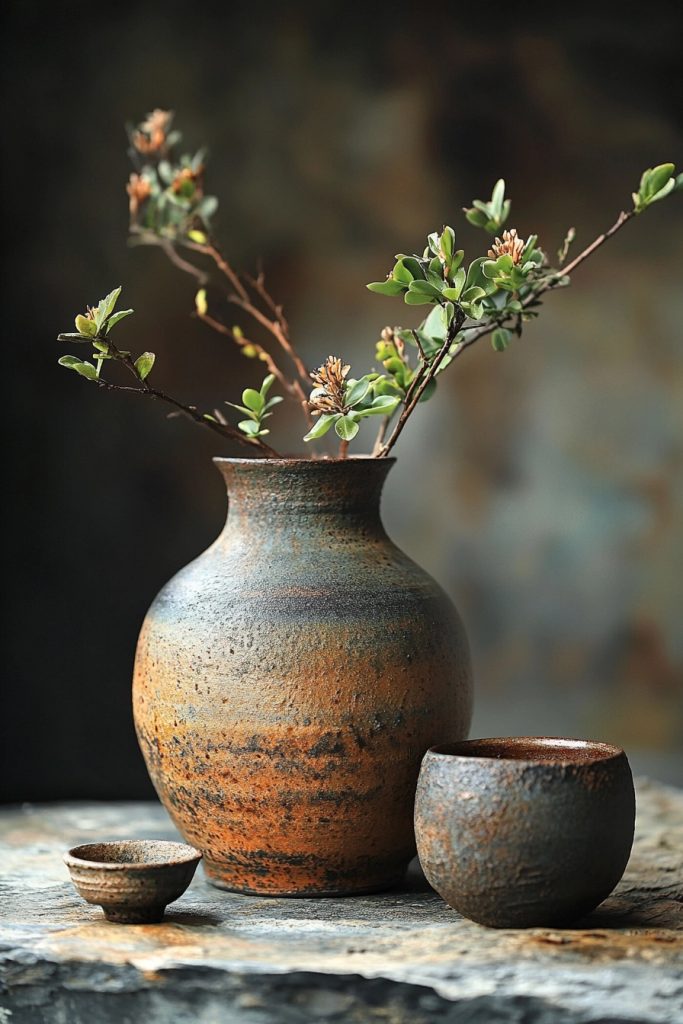
Time-Touched Terracotta in Wabi Sabi ceramics showcases the aging process of terracotta, a material that naturally changes color and texture with time and exposure. These changes are celebrated in Wabi Sabi decor for their natural evolution and the stories they tell. Time-touched terracotta pieces bring warmth and history to interiors, offering a connection to the earth and the past. These pieces are perfect for adding a touch of organic charm to any space.
🎨 Steal This Look
- Paint Color: Clare Paint Terracotta Sand 0021
- Furniture: raw-edge walnut dining table with visible joinery, low-profile linen slipcovered sofa in oatmeal, reclaimed wood open shelving with iron brackets
- Lighting: hand-formed ceramic pendant lights with irregular glazing, warm 2700K Edison bulbs
- Materials: unglazed terracotta, raw linen, aged brass, rough-hewn oak, crackle-glaze ceramics, handwoven jute
There’s something grounding about living with clay that’s still breathing—my own terracotta pot took three years to develop its coppery bloom, and now I can’t imagine it any other way.
9. Natural Hues
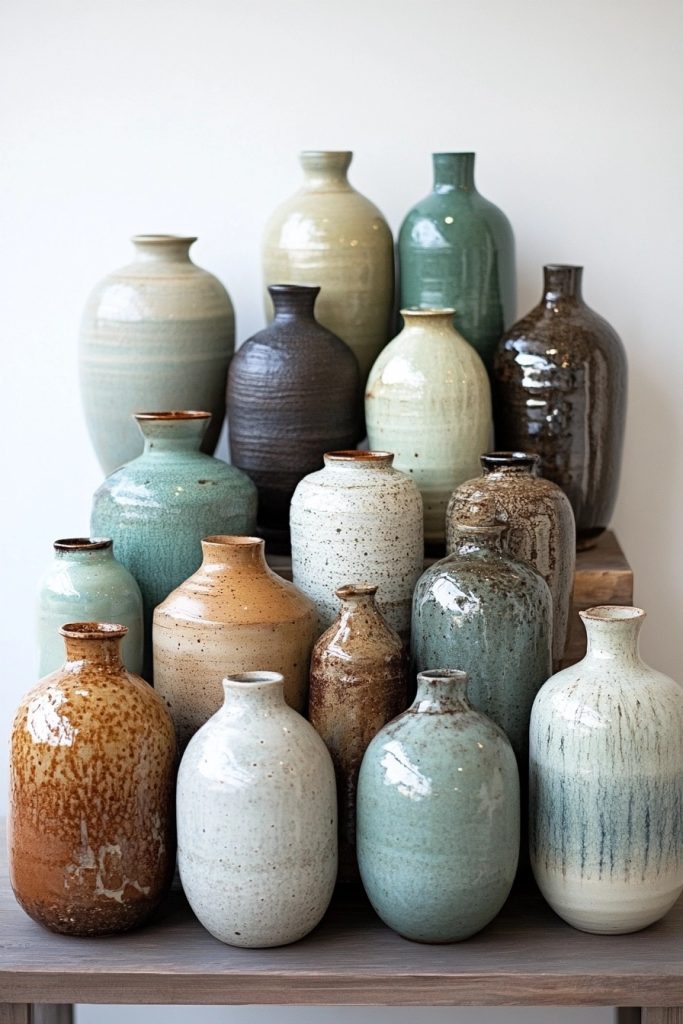
Natural Hues in Wabi Sabi ceramics focus on the palette derived from the earth, including soft browns, greens, and grays. These colors are subtle yet deeply connected to the natural world, reflecting Wabi Sabi’s emphasis on organic beauty. Natural hue ceramics are versatile and calming, easily integrating into any decor while adding a layer of serene beauty. They enhance the feeling of a space being a part of the natural landscape.
💡 Steal This Look
- Paint Color: Fine Paints of Europe Bone Black 1001
- Furniture: Low-slung oak coffee table with live edge, linen slipcovered sofa in undyed oatmeal, hand-thrown ceramic side tables
- Lighting: Woven rattan pendant with warm amber bulb, casting soft dappled shadows
- Materials: Raw terracotta, unbleached linen, weathered oak, hand-formed stoneware, moss-dyed wool
This palette quiets a room like nothing else—I’ve watched tense shoulders drop the moment someone sinks into a space dressed in these tones.
10. Bare Clay Beauty
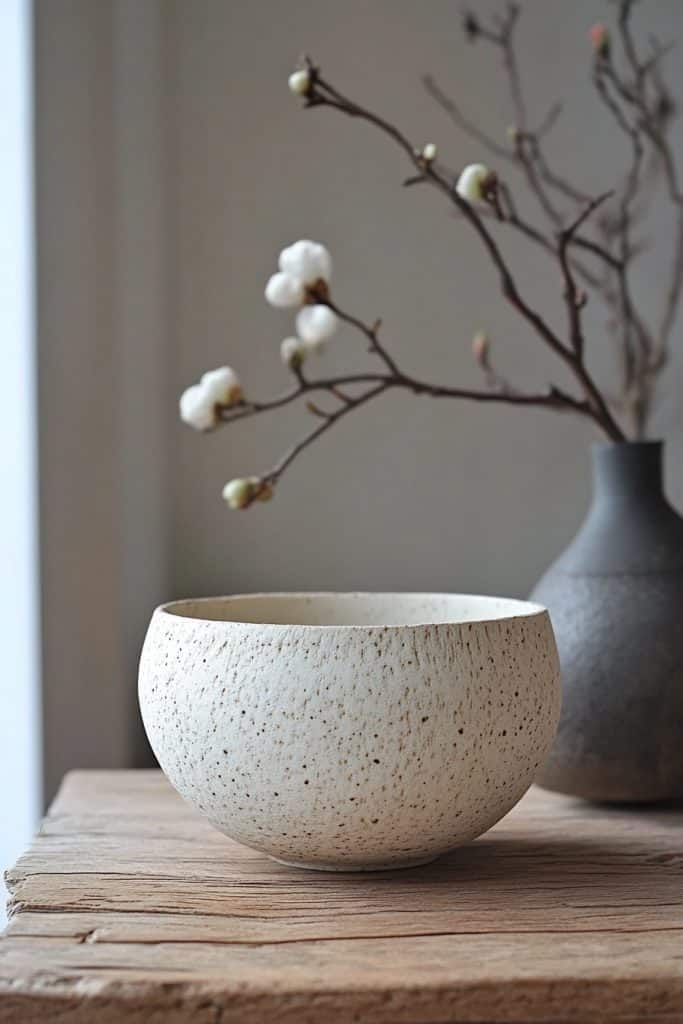
Bare Clay Beauty in Wabi Sabi ceramics highlights the original texture and color of the clay without extensive glazing or painting. This style appreciates the material in its most natural form, celebrating the raw and unrefined. Bare clay pieces are tactile and visually soothing, perfect for a decor that values authenticity and natural materials. They bring an earthy, grounding element to any interior.
✎ Steal This Look
- Paint Color: Backdrop Pashmina 04
- Furniture: Low-profile walnut credenza with live edge detail; round jute pouf; raw linen slipcovered armchair
- Lighting: Hand-formed ceramic pendant with visible firing marks and irregular rim
- Materials: Unglazed terracotta, raw walnut, hand-loomed linen, hand-thrown stoneware, unbleached cotton
There’s something deeply honest about clay left to speak for itself—no hiding behind glaze, no pretending to be anything other than earth and fire. I keep a single unglazed Yunomi on my desk; its thumbprints and ash marks ground me daily.
11. Hand Formed
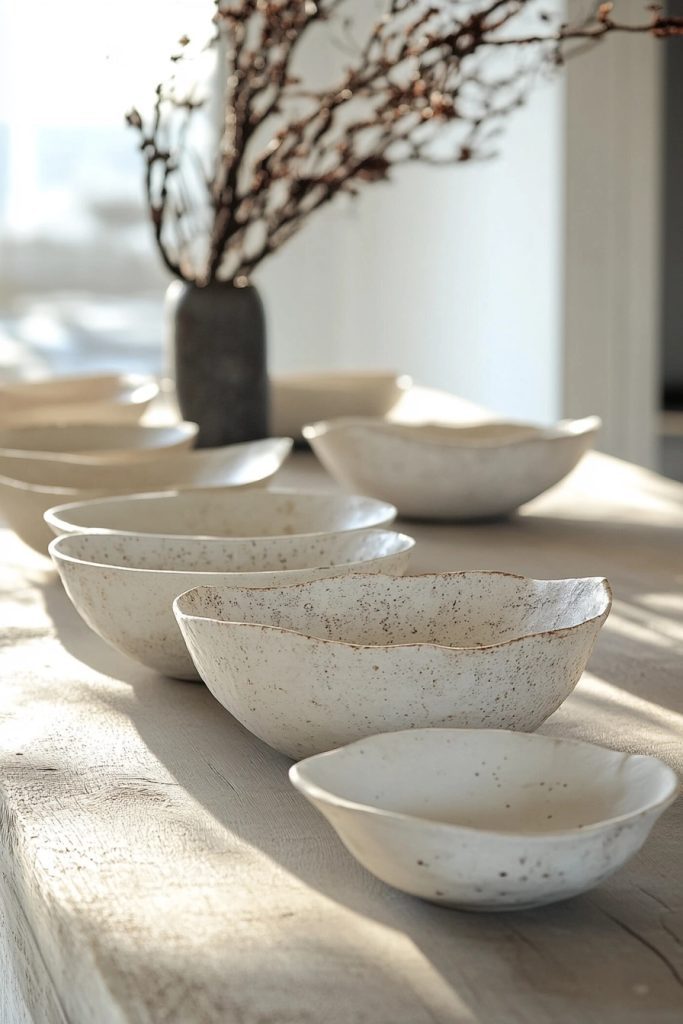
Hand Formed Wabi Sabi ceramics emphasize the personal touch of the ceramist, with each finger imprint and movement captured in the clay. These pieces are a testament to the craft of pottery, reflecting the individuality of the maker. Hand-formed ceramics are ideal for Wabi Sabi decor, as they showcase the imperfect and transient nature of handmade art. They add a deeply personal touch to any setting.
✎ Steal This Look
- Paint Color: Sherwin-Williams Accessible Beige SW 7036
- Furniture: Low-profile oak coffee table with live edge, floor cushions in natural linen, open shelving in raw pine for ceramic display
- Lighting: Pendant light with hand-thrown ceramic shade, warm 2700K Edison bulb
- Materials: Raw terracotta, unglazed stoneware, slubby linen, reclaimed wood, visible finger-textured ceramics
There’s something quietly moving about holding a bowl and finding the maker’s fingerprints still pressed into the clay—it’s a conversation across time that factory pieces simply cannot offer.
12. Weathered Whites
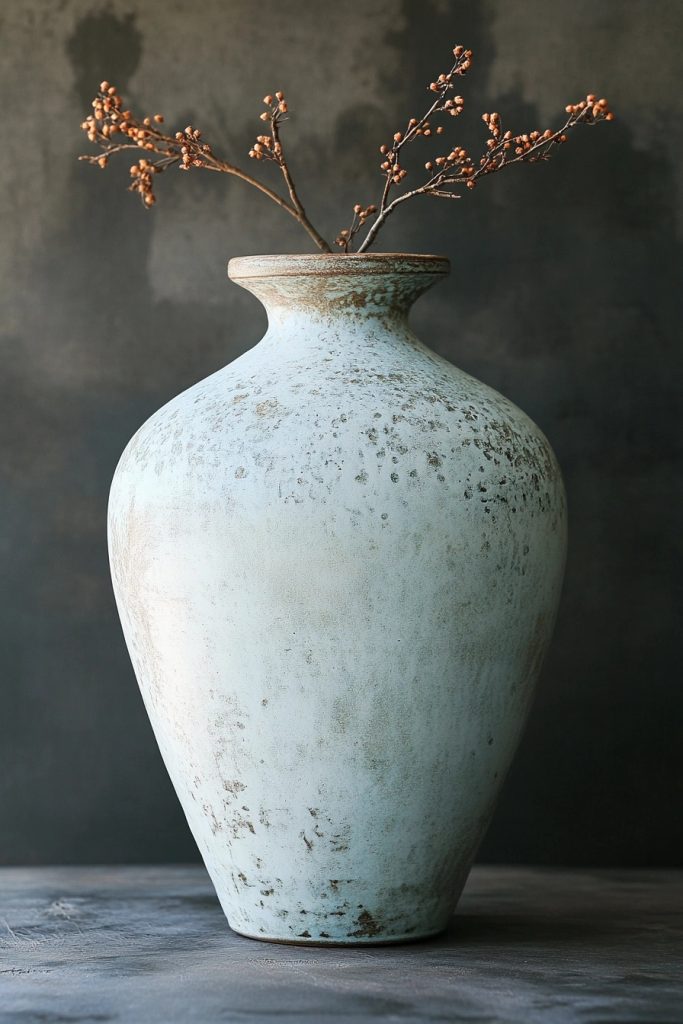
Weathered Whites in Wabi Sabi ceramics feature white or light-colored pieces that have developed a patina or slight discoloration over time. This weathering process adds character and depth, making each piece unique. The subtle imperfections and signs of age are celebrated in Wabi Sabi philosophy as symbols of endurance and natural change. These ceramics can lighten a room while adding a sense of history and lived experience.
💡 Steal This Look
- Paint Color: Benjamin Moore White Dove OC-17
- Furniture: raw oak dining table with visible grain and natural imperfections, linen slipcovered chairs in unbleached ivory
- Lighting: hand-formed ceramic pendant with uneven glaze in warm white
- Materials: unglazed terracotta, raw linen, aged brass, hand-thrown stoneware with crackle glaze
I keep a weathered white sake cup on my desk that yellowed where my thumb rests—every stain is a memory, and that’s exactly the point.
13. Textured Touch
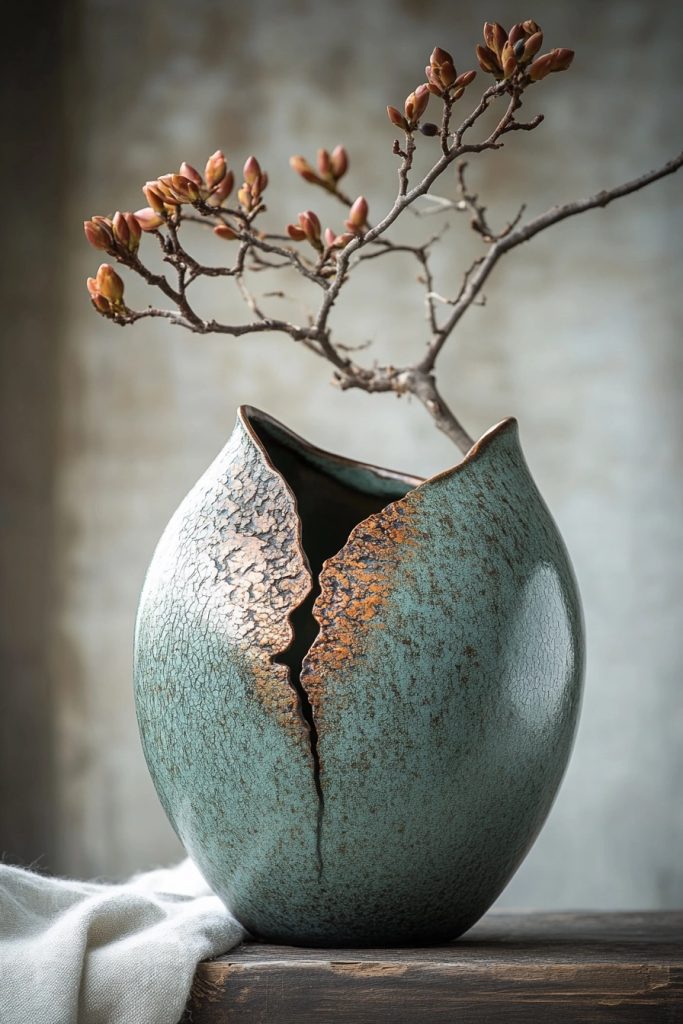
Textured Touch in Wabi Sabi ceramics involves surfaces that are deliberately textured to enhance the tactile experience. These textures—from rough to smooth—invite touch and close examination, aligning with Wabi Sabi’s focus on sensory experiences. Textured ceramics add an interactive element to decor, encouraging engagement and a deeper appreciation for the material. They are perfect for adding a dynamic and engaging element to any space.
✎ Steal This Look
- Paint Color: Farrow & Ball Stiffkey Blue 281
- Furniture: low-profile oak credenza with visible grain and hand-planed surfaces
- Lighting: paper lantern pendant with uneven, handmade texture
- Materials: unglazed stoneware, raw linen, weathered wood, hand-troweled plaster
There’s something quietly radical about a home that invites you to touch—run your fingers across a ridged tea bowl, feel the thumbprints in the clay, and remember that imperfection is where connection lives.
14. Organic Openings
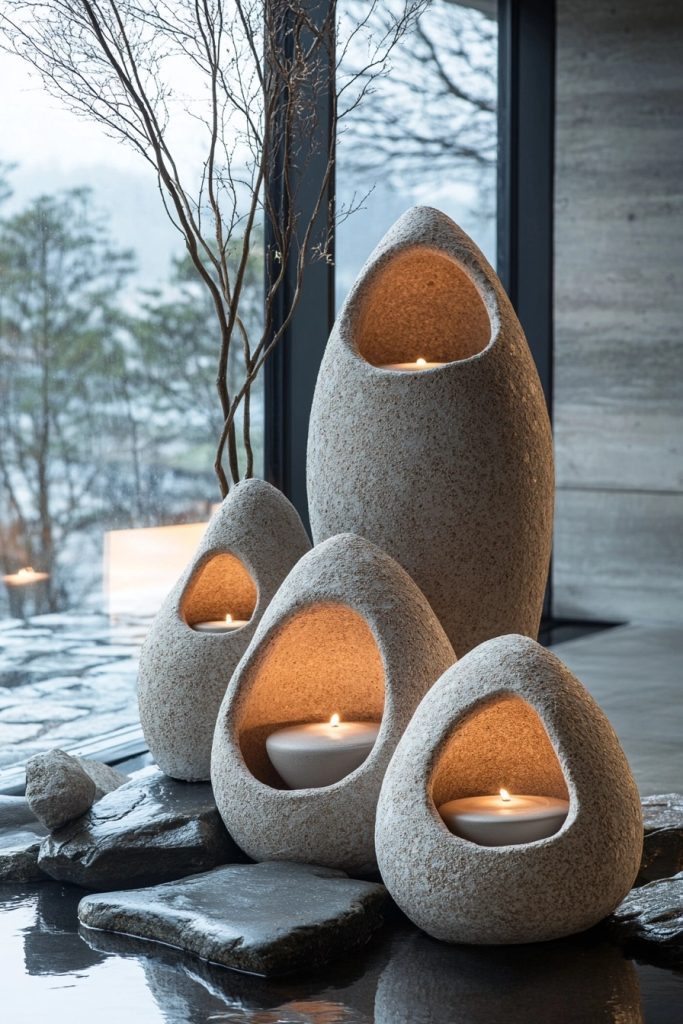
Organic Openings in Wabi Sabi ceramics feature vessels with irregular, naturally flowing openings. These forms mimic natural growth and erosion patterns, embracing the unpredictable beauty of nature. Such pieces challenge traditional notions of form and function in ceramics, making them intriguing and conversation-worthy. They are ideal for adding a sculptural, organic touch to any Wabi Sabi inspired interior.
💡 Steal This Look
- Paint Color: Behr Weathered Moss PPU10-20
- Furniture: low-profile walnut credenza with live-edge details, handwoven jute poufs, raw linen slipcovered armchair
- Lighting: oversized hand-formed ceramic pendant with visible glaze drips and irregular rim
- Materials: unglazed stoneware, raw silk, reclaimed teak, volcanic rock, hand-torn washi paper
There’s something quietly radical about a vessel that refuses to hold water conventionally; it asks you to reconsider what function even means, and I find myself moving these pieces around my space just to catch different shadows through their uneven mouths.
15. Crude Coil Pots
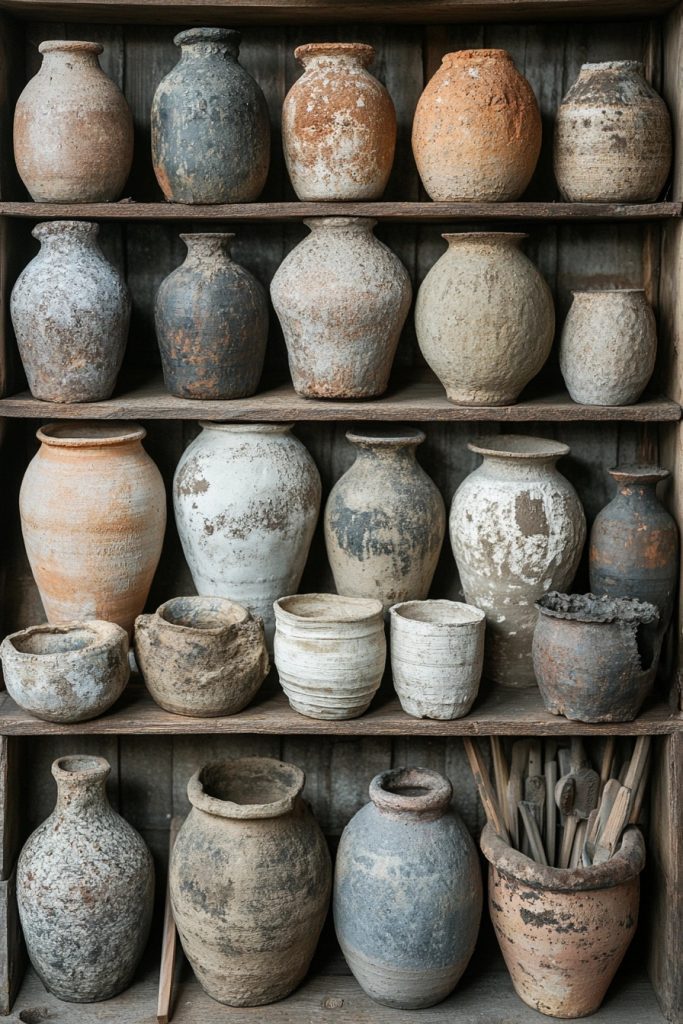
Crude Coil Pots in Wabi Sabi ceramics showcase the primitive technique of coil building, leaving the coils partially visible and the surfaces uneven. This method emphasizes the handcrafted process and the beauty of imperfection. Crude coil pots connect with the ancient history of pottery, making them rich in cultural and aesthetic value. They bring an artisanal, rustic charm to any setting, perfect for a Wabi Sabi decor that values history and craftsmanship.
🖼 Steal This Look
- Paint Color: Valspar Swiss Coffee 7002-16
- Furniture: Low wooden display shelf with raw live-edge finish, reclaimed teak meditation bench
- Lighting: Pendant with hand-formed ceramic shade in unglazed terracotta
- Materials: Unglazed stoneware, raw linen, aged brass, unfinished wood
There’s something grounding about living with objects that carry finger impressions and uneven walls—coil pots remind us that beauty doesn’t require the machine’s precision.
16. Stoneware Stories
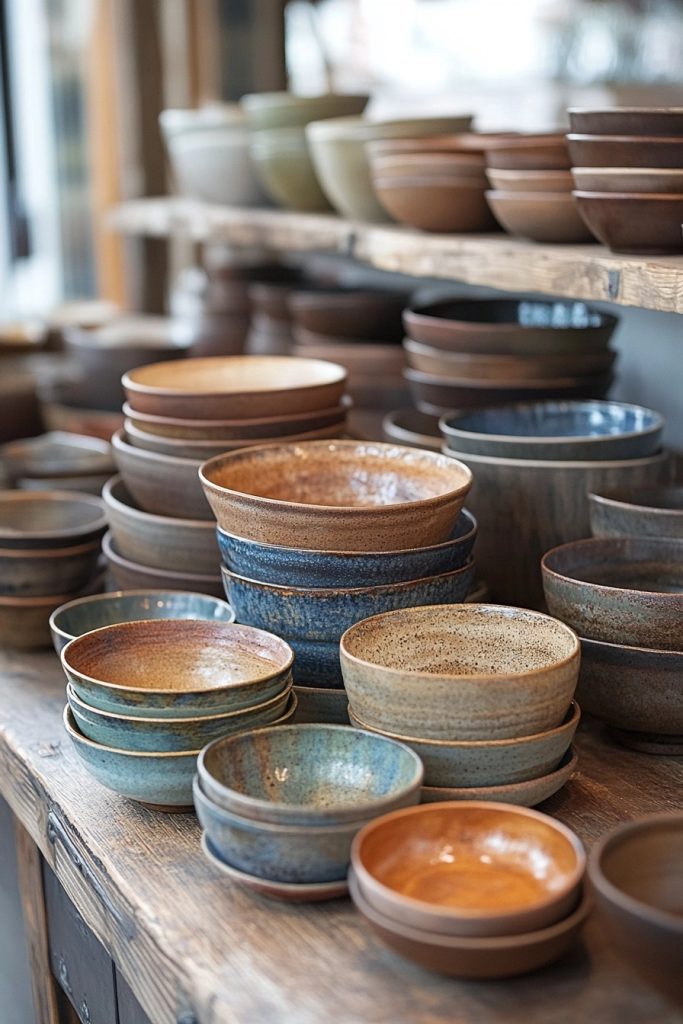
Stoneware Stories in Wabi Sabi ceramics focus on the narratives that stoneware, with its durability and rustic appeal, can tell through its use and wear. These pieces often bear marks of aging and use, such as staining and crazing, which are celebrated for adding depth and character. Stoneware is ideal for everyday use, embodying Wabi Sabi’s appreciation for beauty in daily life. Such pieces can anchor a space with their robust presence and historical depth.
💡 Steal This Look
- Paint Color: PPG Stonehenge Greige PPG1002-3
- Furniture: live-edge oak dining table, hand-carved walnut bench, raw linen slipcovered dining chairs
- Lighting: oversized hand-formed ceramic pendant with visible glaze drips and imperfections
- Materials: unglazed stoneware, raw linen, weathered oak, hand-thrown terracotta, aged brass
There’s something deeply grounding about reaching for the same chipped cereal bowl every morning—the imperfection becomes familiar, almost like a fingerprint you recognize by touch.
17. Unfinished Edges
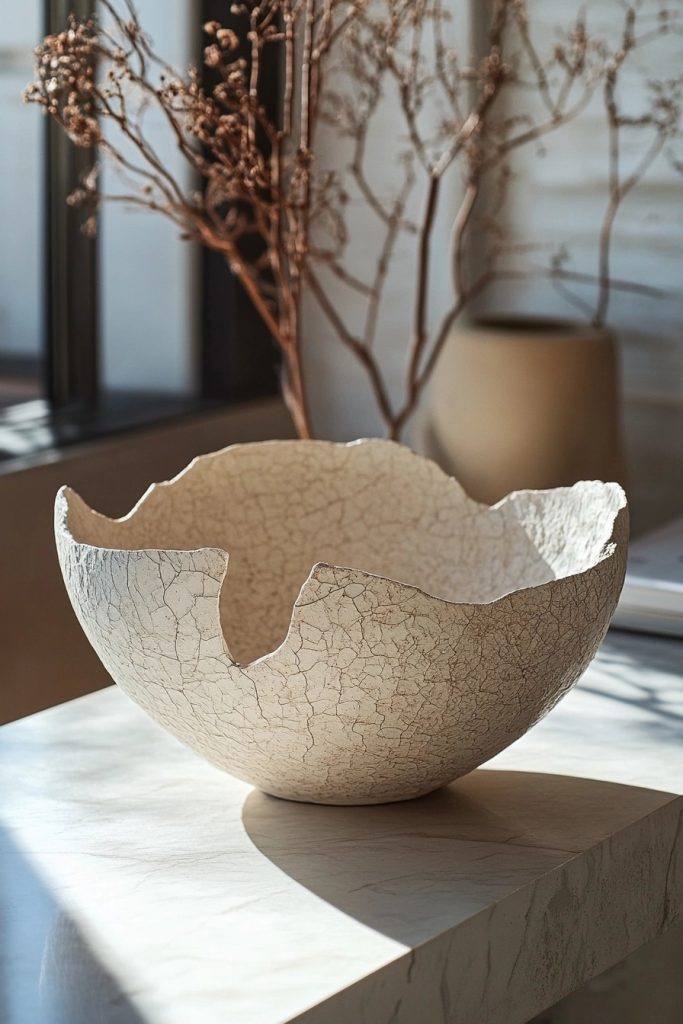
Unfinished Edges in Wabi Sabi ceramics highlight the beauty of pieces left deliberately incomplete or roughly finished. These edges can be jagged, torn, or uneven, challenging conventional ideas of perfection. This feature is celebrated in Wabi Sabi decor as a reminder of the transient and imperfect nature of life. Unfinished edge ceramics can add a raw, striking aesthetic to any interior, inviting contemplation and appreciation for the imperfect.
🎨 Steal This Look
- Paint Color: Dunn-Edwards Porous Stone DET687
- Furniture: Low-profile oak platform bed with live-edge headboard, raw linen bedding in oatmeal and charcoal, hand-thrown ceramic bedside vessels with torn rims
- Lighting: Pendant with hand-formed washi paper shade and visible bronze wiring
- Materials: Unglazed terracotta, rough-hewn walnut, slubby hemp textiles, oxidized metal, handmade paper
There’s something quietly brave about leaving an edge raw—it refuses to apologize, and that confidence transforms a whole room.
18. Glaze Gesture
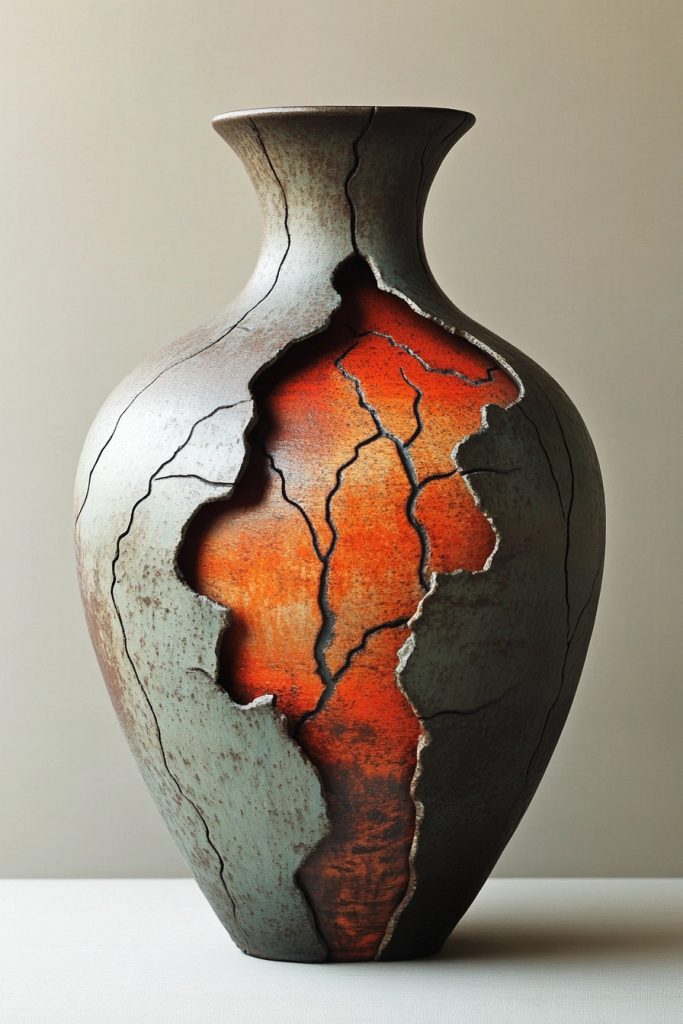
Glaze Gesture in Wabi Sabi ceramics refers to the expressive, often spontaneous application of glaze that can create unpredictable patterns and effects. These gestures add a personal touch and artistic flair, making each piece unique. The imperfections in the glaze application are valued for their beauty and individuality. Glaze gesture ceramics are perfect for adding a vibrant, artistic element to Wabi Sabi decor, celebrating the unplanned and the accidental.
✎ Steal This Look
- Paint Color: Clare Paint Whipped CODE
- Furniture: Low-profile walnut credenza with visible grain knots, live-edge ceramic display shelving, hand-thrown ceramic stool
- Lighting: Pendant with hand-formed ceramic shade in irregular silhouette, warm dimmable Edison bulb
- Materials: Raw stoneware with dripped celadon and iron oxide glazes, unbleached linen, reclaimed wood with natural fissures, handwoven jute
There’s something quietly thrilling about owning a piece where the artist’s hand slipped—those drips and runs become fingerprints of a moment you’ll never replicate.
19. Charred Charm
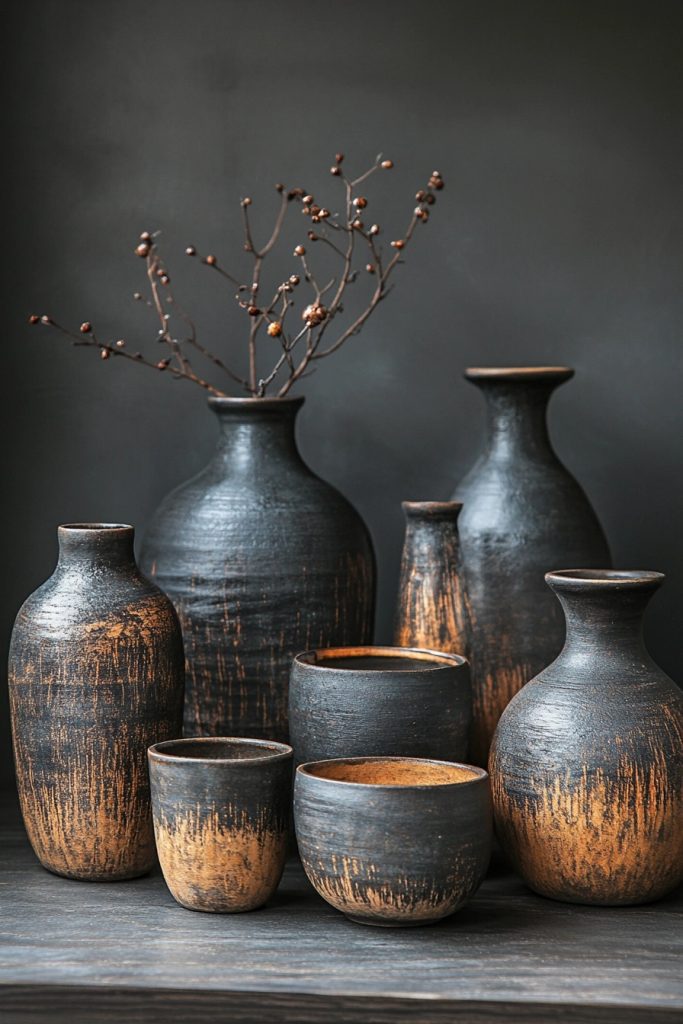
Charred Charm in Wabi Sabi ceramics focuses on the effect of high-temperature firing techniques that produce a charred, sometimes blackened appearance. This finish adds a dramatic, earthy quality to the pieces, emphasizing their endurance and transformation through fire. Charred ceramics are particularly striking, offering a bold contrast in a subdued Wabi Sabi palette. They are ideal for those who appreciate the profound impact of fire on ceramic art.
🌟 Steal This Look
- Paint Color: Fine Paints of Europe Black Bean Soup 4003-2C
- Furniture: Low-profile oak platform bed with live-edge headboard, hand-thrown ceramic bedside vessels in matte black
- Lighting: Woven rattan pendant with exposed Edison bulb, dimmable
- Materials: Rough-hewn oak, unglazed blackened stoneware, raw linen bedding, hand-forged iron accents
There’s something deeply grounding about waking up surrounded by objects that have literally been through fire—these pieces carry a quiet resilience that makes a bedroom feel like a sanctuary, not just a room.
20. Mended Motifs
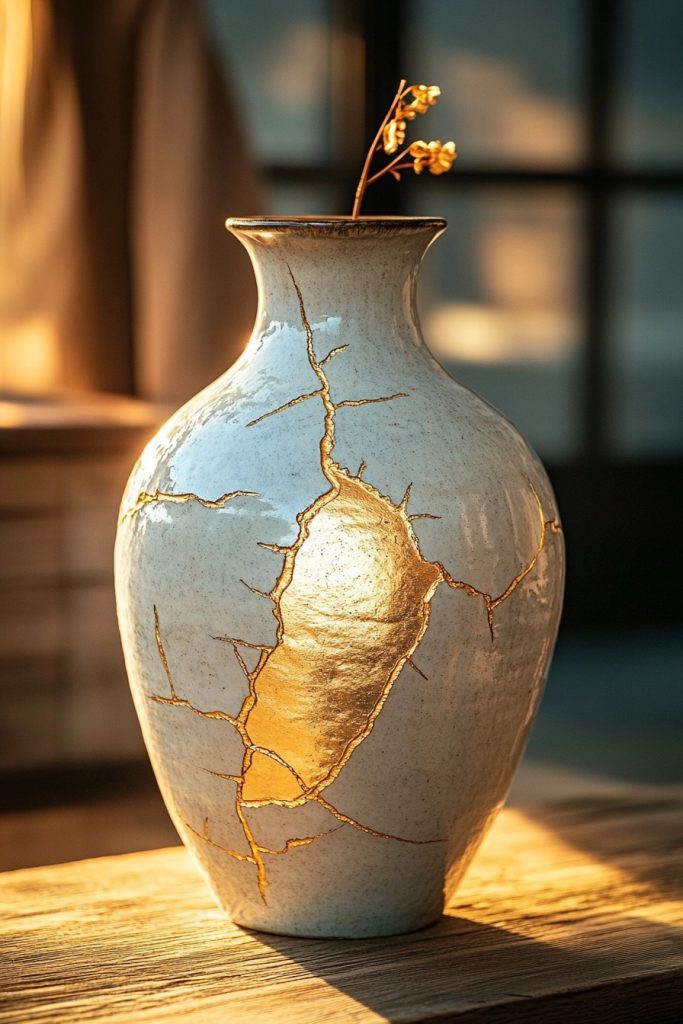
Mended Motifs in Wabi Sabi ceramics involve the art of repairing broken ceramics with gold or other noticeable materials, a practice known as kintsugi. This repair process highlights the cracks and breaks as part of the item’s history, rather than imperfections to hide. Mended motifs celebrate resilience and renewal, core principles of Wabi Sabi philosophy. These pieces can add a profound, reflective element to any decor, emphasizing the beauty in healing and restoration.
💡 Steal This Look
- Paint Color: Backdrop Cardboard Castle 0017
- Furniture: low-profile walnut credenza with raw live-edge details, floor cushions in undyed linen, reclaimed wood display ledges
- Lighting: paper-and-brass pendant with visible filament bulb, warm 2700K
- Materials: unglazed terracotta, crackle-glaze stoneware, raw brass kintsugi repair kits, hand-loomed hemp textiles, weathered oak
There’s something quietly radical about placing a bowl you broke and healed front and center—it turns a private mistake into a daily meditation on resilience.
21. Sculpted by Elements
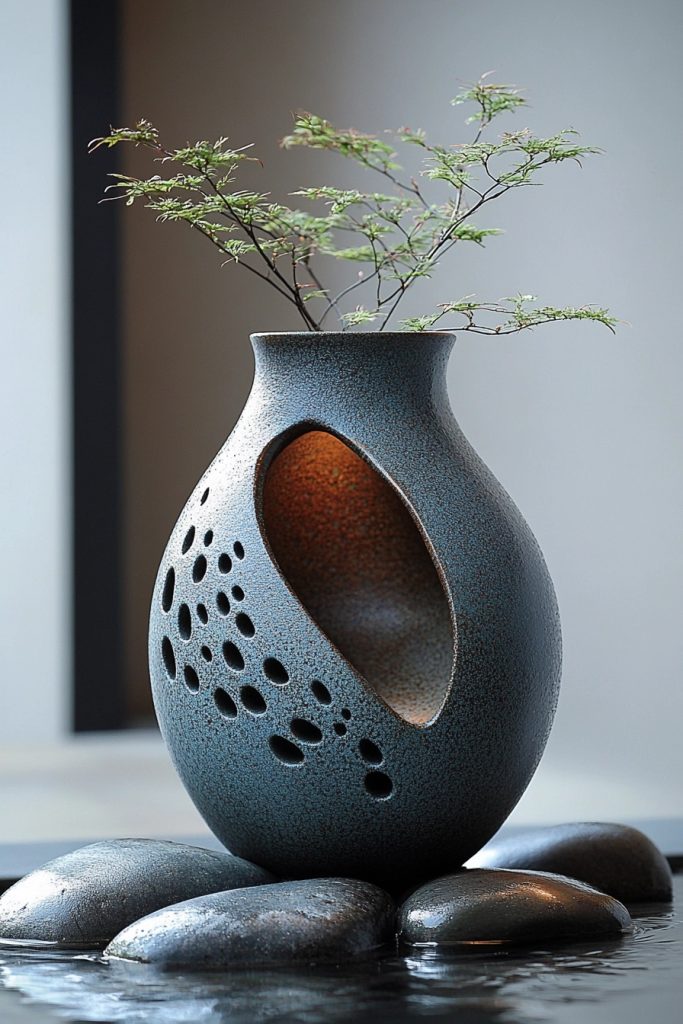
Sculpted by Elements in Wabi Sabi ceramics refers to pieces shaped or influenced by natural forces, such as wind or water erosion imitated in the finishing process. These ceramics echo the forms and textures found in nature, bringing an organic, elemental feel to the decor. They are celebrated in Wabi Sabi for their connection to the natural world and the visible hand of nature in their creation. Such pieces can help create a serene, grounded atmosphere in any space.
🎨 Steal This Look
- Paint Color: Sherwin-Williams Urbane Bronze SW 7048
- Furniture: Low-profile walnut credenza with live-edge details; hand-thrown ceramic vessels displayed on open shelving
- Lighting: Pendant light with irregular, hand-blown glass shade in amber or smoke tones
- Materials: Raw stoneware, unglazed terracotta, weathered wood, handwoven linen, volcanic rock textures
There’s something grounding about living with objects that look like they were shaped by wind and time rather than machines. These ceramics remind us that beauty lives in imperfection.
22. Rough and Tumble
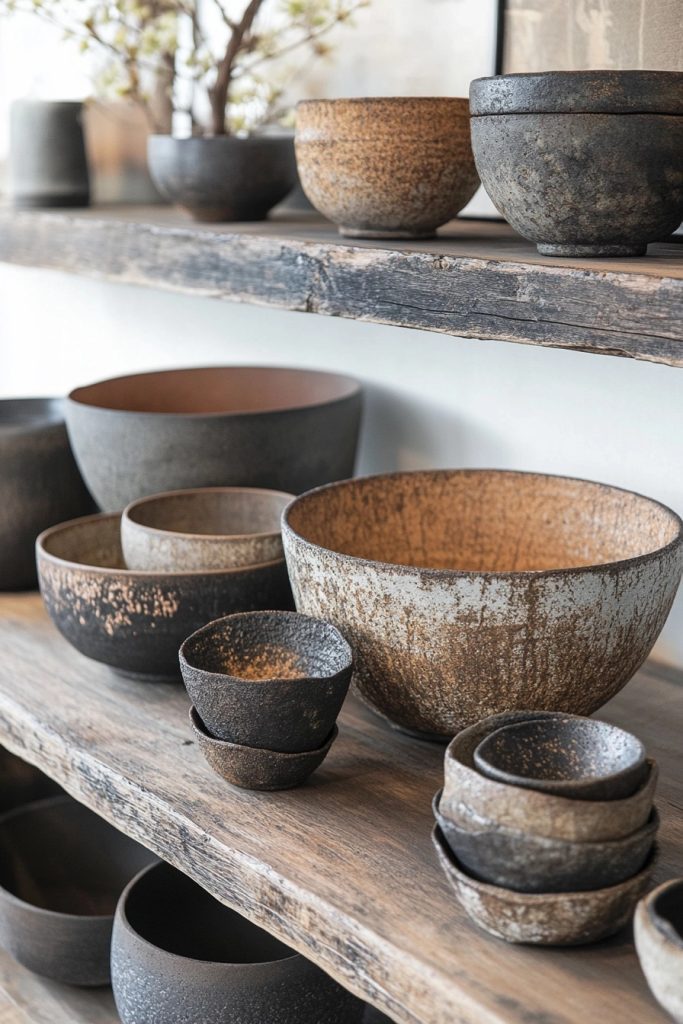
Rough and Tumble in Wabi Sabi ceramics showcases the rugged, unrefined surfaces that can result from experimental or traditional firing processes. These textures are not smoothed or polished, offering a tactile experience that is raw and authentic. The rough surfaces of these ceramics make them visually interesting and rich in character, aligning with Wabi Sabi’s appreciation for the untamed and the unplanned.
✎ Steal This Look
- Paint Color: Benjamin Moore Kendall Charcoal HC-166
- Furniture: reclaimed wood display shelving with live edges, low-slung walnut credenza with hand-forged iron pulls
- Lighting: hand-pinched ceramic pendant lights with visible finger marks and uneven glazes
- Materials: unpolished terracotta, crackle-glaze stoneware, raw linen, weathered oak, hand-thrown ceramics with ash glaze drips
There’s something grounding about running your fingers across a surface that hasn’t been tamed—this corner feels like a quiet rebellion against everything machine-perfect in our homes.
23. Touch of Turquoise
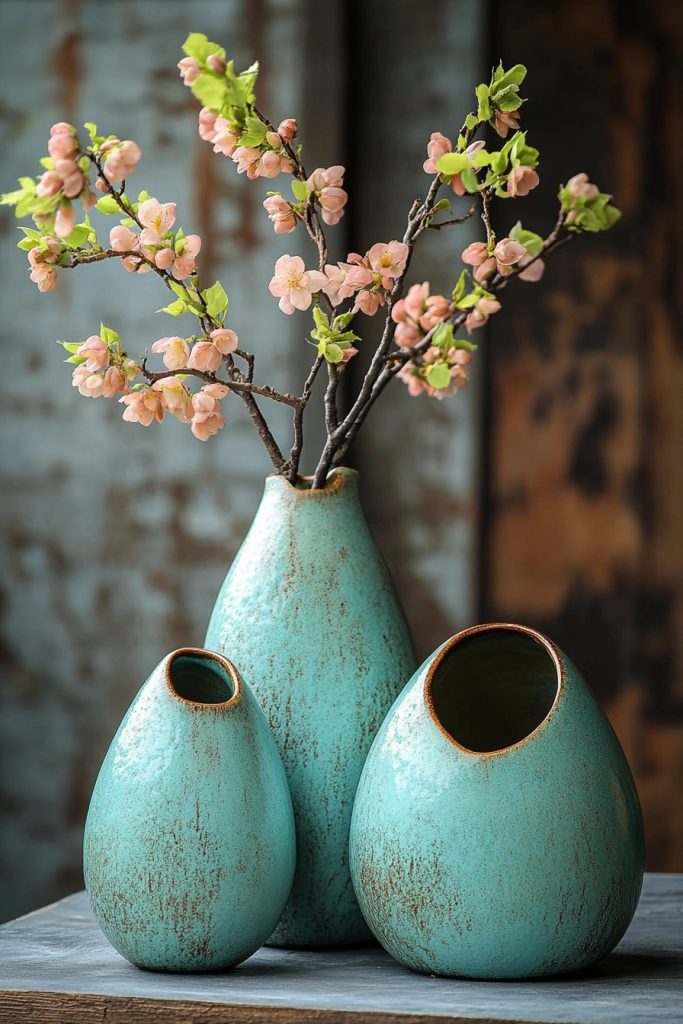
Touch of Turquoise in Wabi Sabi ceramics introduces a splash of color in an otherwise neutral palette, highlighting the unpredictable beauty of turquoise glaze. This color can vary in intensity and coverage, often pooling and cracking in ways that enhance the texture of the ceramic surface. Turquoise elements can bring a lively yet harmonious contrast to Wabi Sabi decor, celebrating the serendipitous and the vibrant.
🌟 Steal This Look
- Paint Color: Farrow & Ball De Nimes No.299
- Furniture: low-profile walnut credenza with visible grain and hand-forged iron legs
- Lighting: hand-thrown ceramic pendant with irregular rim and visible finger marks
- Materials: unglazed terracotta, raw linen, oxidized copper, crackle-glaze stoneware
There’s something quietly rebellious about turquoise in a Wabi Sabi space—it refuses to apologize for its brightness while still honoring imperfection. I always tell clients to hunt for pieces where the glaze has dripped or pooled unexpectedly; that’s where the soul lives.
24. Subtle Speckles
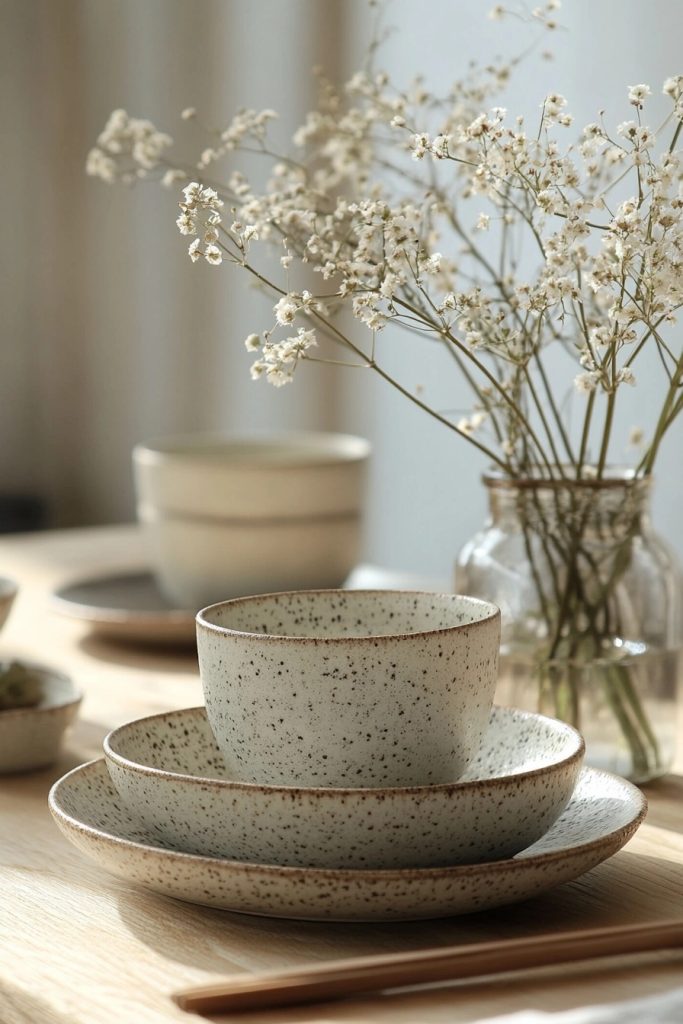
Subtle Speckles in Wabi Sabi ceramics feature lightly speckled glazes that add a delicate texture and visual depth to the pieces. These speckles can result from the natural components in the clay or the glaze, emphasizing the organic origins of the materials. Subtle speckled ceramics are understated yet captivating, perfect for adding a refined touch to a Wabi Sabi-themed space. They enhance the decor with their gentle, unassuming beauty.
🖼 Steal This Look
- Paint Color: Behr Weathered Moss N390-3
- Furniture: low-profile walnut credenza with hand-carved imperfections, live-edge dining table with visible knots and cracks, floor cushions in undyed linen
- Lighting: undefined
- Materials: raw stoneware, unbleached cotton, aged brass, rough-hewn wood, handmade paper
There’s something deeply calming about running your fingers over those tiny flecks—each one a fingerprint of the firing process, never to be repeated.
25. Faded Facades
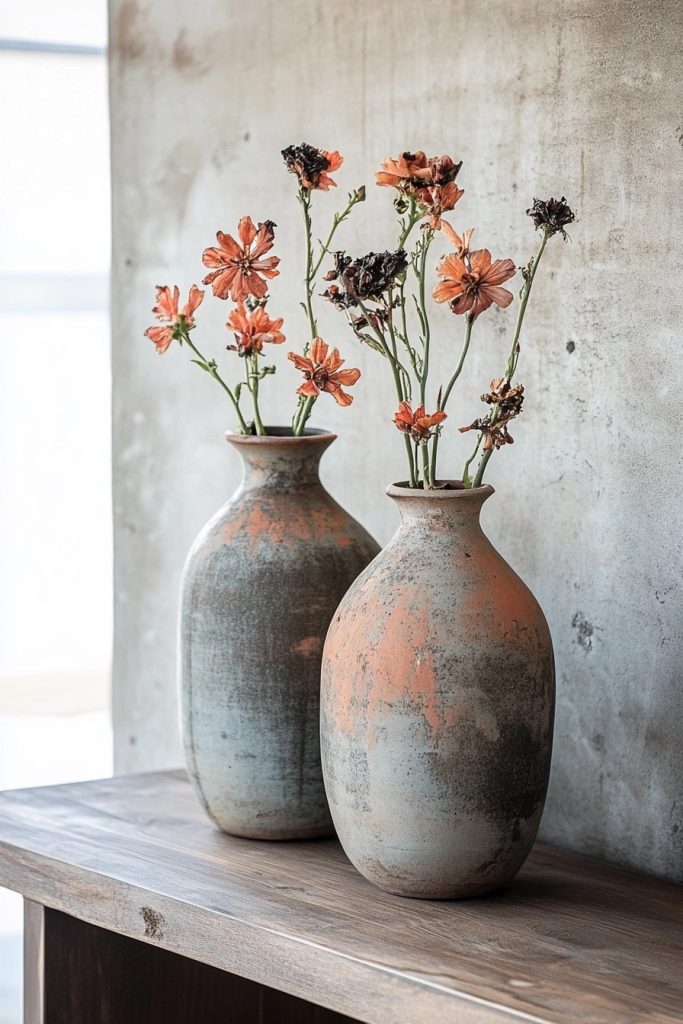
Faded Facades in Wabi Sabi ceramics showcase the gentle fading of colors and patterns that occurs with age and use. This natural progression is celebrated for its ability to tell the story of the object’s life and interactions. Faded facades add a layer of history and subtlety to the pieces, making them poignant additions to any Wabi Sabi decor. They evoke a sense of time passing and the quiet beauty that comes with it.
🖼 Steal This Look
- Paint Color: Valspar Faded Graystone 5005-1C
- Furniture: weathered wood display shelves with raw iron brackets, low-slung reclaimed teak coffee table with visible grain and knots
- Lighting: hand-formed ceramic pendant with uneven glaze drips and warm Edison bulb
- Materials: unbleached linen, raw clay, oxidized metal, timeworn wood, hand-thrown ceramic vessels with visible wear patterns
There’s something deeply moving about a bowl whose pattern has softened over decades of morning meals; these pieces ask us to slow down and honor the quiet marks of daily life.
26. Thrown and Thrived
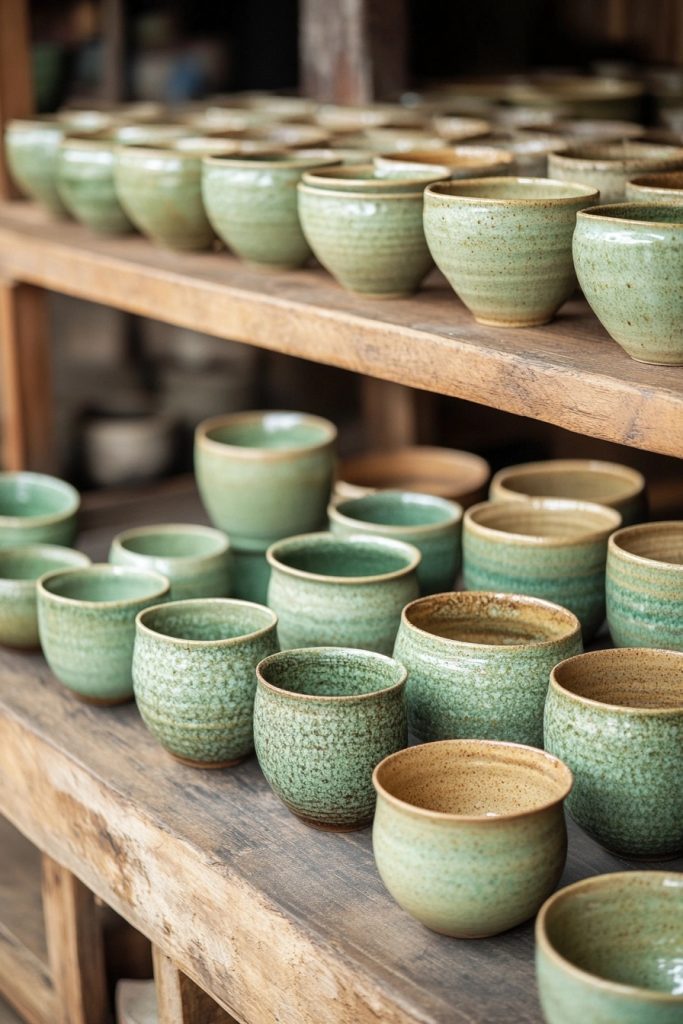
Thrown and Thrived in Wabi Sabi ceramics highlights pieces that have been shaped on a potter’s wheel, featuring slight asymmetries and variations typical of hand-thrown items. These variations are prized in Wabi Sabi decor for their human touch and the slight differences that make each piece unique. Thrown and thrived ceramics bring a lively, organic feel to interiors, celebrating the skill and spontaneity of the potter.
🌟 Steal This Look
- Paint Color: PPG Stonehenge Greige PPG1001-3
- Furniture: low-profile walnut credenza with live-edge details, floor cushions in undyed linen, reclaimed wood display shelving with visible grain and knots
- Lighting: hand-formed ceramic pendant lights with irregular glazes and warm Edison bulbs
- Materials: raw stoneware clay, unglazed terracotta, slubby linen, aged brass, unfinished oak
There’s something quietly moving about holding a bowl and feeling where the potter’s fingers pressed into spinning clay—these slight wobbles remind us that beauty lives in human imperfection, not factory precision.
27. Whisper of Woodfire
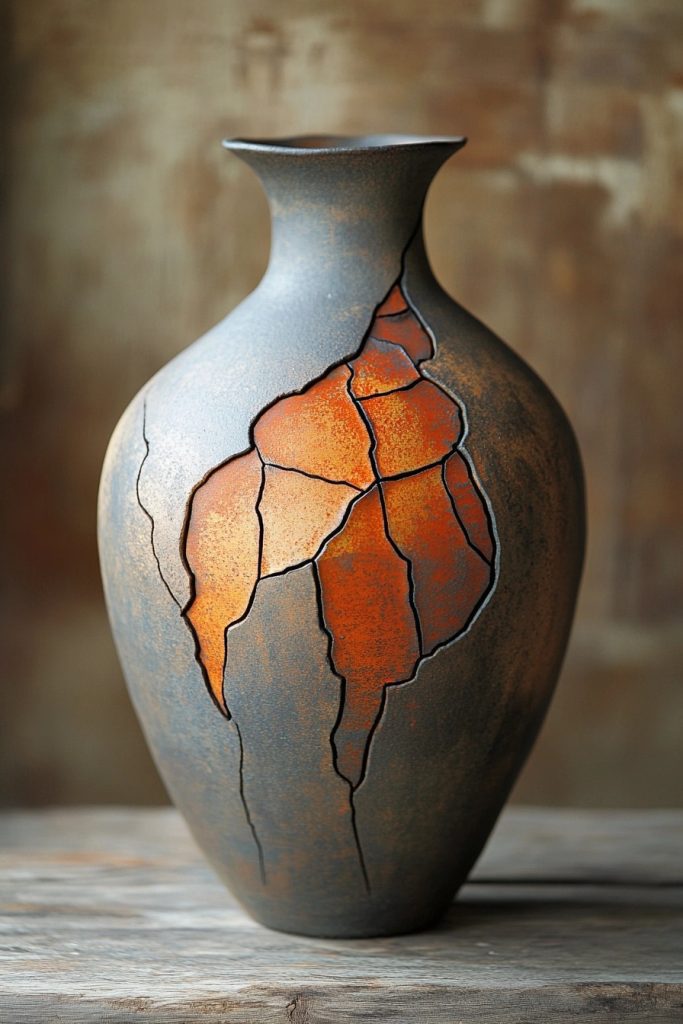
Whisper of Woodfire in Wabi Sabi ceramics refers to the subtle marks and color changes induced by wood firing. The ash and flame paths create unique patterns on each piece, making them one-of-a-kind. These marks are valued in Wabi Sabi for their story of creation and transformation, adding a primal, elemental touch to the decor. Wood-fired ceramics can dramatically alter the ambiance of a space, bringing warmth and a rustic feel.
✎ Steal This Look
- Paint Color: Dunn-Edwards Burnished Clay DET620
- Furniture: Low-profile walnut credenza with visible joinery; live-edge dining table with natural fissures; floor cushions in undyed linen
- Lighting: Woven rattan pendant with visible hand-tied knots; warm 2700K Edison bulb
- Materials: Unsealed terracotta, raw walnut, hand-thrown stoneware, slubby hemp textiles, iron oxide glazes
There’s something almost meditative about tracing the ash trails on a wood-fired bowl—each mark is a record of flame, chance, and patience that factory ceramics can never replicate.
28. Mismatched Masterpieces
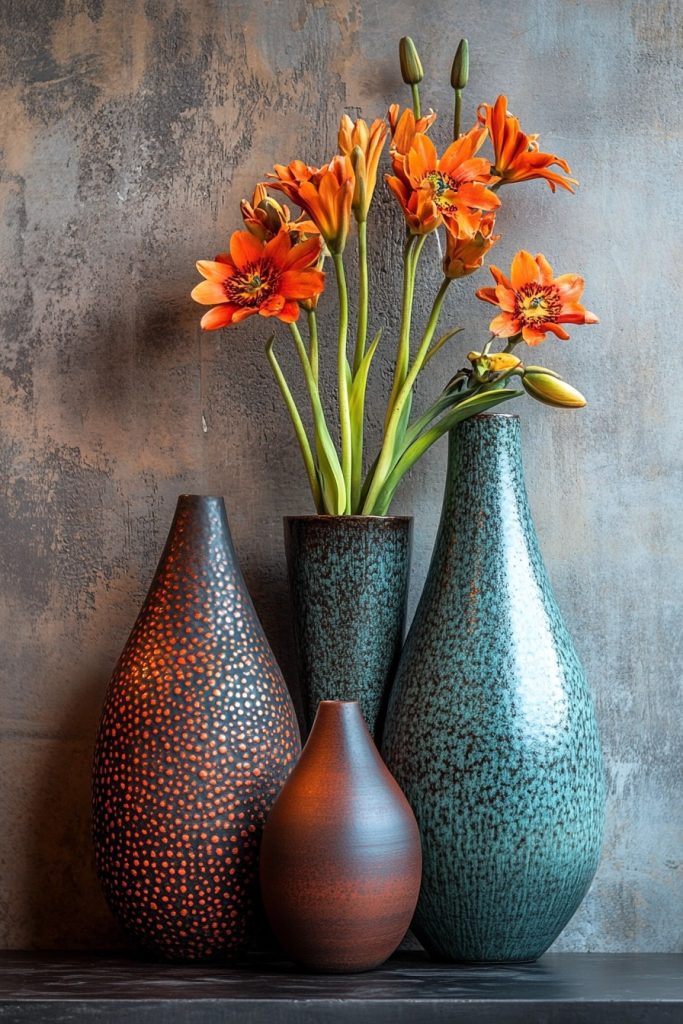
Mismatched Masterpieces in Wabi Sabi ceramics celebrate the beauty of combining pieces that are not part of a uniform set. This mix-and-match approach reflects the Wabi Sabi belief in the beauty of diversity and imperfection. Each piece stands out for its unique qualities, yet together, they create a harmonious ensemble. Mismatched ceramics are perfect for a relaxed, informal setting where the focus is on personal expression and comfort.
🖼 Steal This Look
- Paint Color: Clare Paint Chalkboard 01
- Furniture: reclaimed wood dining table with visible grain and knots, mismatched vintage dining chairs in varying wood tones
- Lighting: oversized hand-formed ceramic pendant with uneven glaze drips
- Materials: unglazed stoneware, crackle-glaze pottery, raw linen napkins, weathered teak serving boards
There’s something deeply comforting about a table that doesn’t try too hard—each chipped rim and uneven rim tells a story of use and care.
29. Vintage Vibes
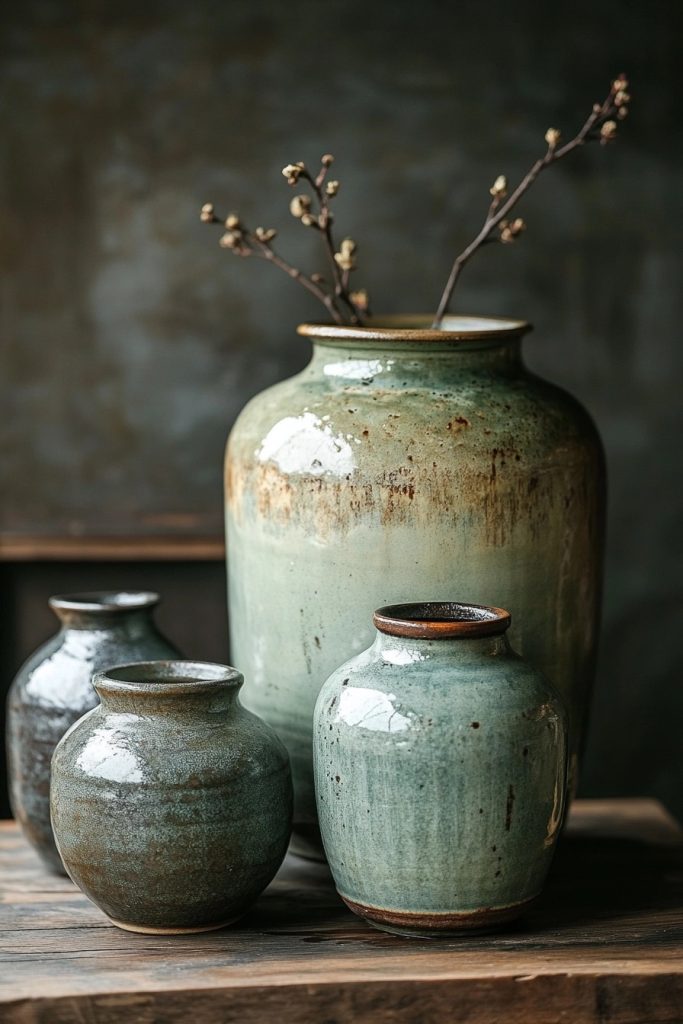
Vintage Vibes in Wabi Sabi ceramics focus on the charm of older pieces that have gained character through decades of use. These ceramics often feature crackle glazes, crazing, and wear patterns that tell the story of past meals and gatherings. The vintage look adds depth and a sense of continuity to Wabi Sabi decor, bridging past and present in a beautiful display. Vintage ceramics are perfect for those who cherish the history and soul of their decor items.
🎨 Steal This Look
- Paint Color: Fine Paints of Europe Hollandlac Brilliant Oyster White W1001
- Furniture: salvaged farmhouse dining table with visible wear, mismatched vintage chairs in varying wood tones, open shelving for ceramic display
- Lighting: antique brass pendant with aged patina, Edison bulb sconces
- Materials: raw linen table runners, unbleached cotton napkins, reclaimed wood surfaces, crackle-glaze ceramics, oxidized metal accents
There’s something quietly moving about serving dinner on plates that held someone else’s Sunday roasts decades ago—the hairline cracks become conversation starters, not flaws.
Conclusion
And there you have it—29 stunning examples of wabi sabi ceramics that showcase the beauty of imperfection. Whether it’s the rough textures, uneven shapes, or organic finishes, these pieces bring a sense of peace and authenticity to any space. Ready to embrace the perfectly imperfect in your home decor? Let these ceramics inspire you to find beauty in the simple and natural!
Save this article
No spam. Unsubscribe anytime.