Have you ever wondered if a garden can be beautiful without being perfectly manicured? What if embracing simplicity and natural imperfection could create a more peaceful outdoor space? That’s the magic of a wabi sabi garden. Instead of chasing perfection, these gardens focus on celebrating nature’s raw beauty, with weathered stones, uneven pathways, and plants growing just as they please. Consider exploring rustic garden decorations to complete this look. In this article, we’ll explore 29 wabi sabi garden ideas that will help you create a serene, simple outdoor space. Ready to trade in perfection for tranquility? Let’s dig in!
1. Rustic Tranquility

The Rustic Tranquility Wabi Sabi garden celebrates the rough, untouched beauty of nature. This garden features unpolished stone paths and wildflower beds that thrive in their natural state. Consider exploring organic garden decor to complete this look. It embodies the Wabi Sabi principle of finding beauty in the impermanent and imperfect. Elements like aged wooden benches and weathered pots integrate seamlessly, enhancing the sense of peace.
🖼 Steal This Look
- Paint Color: Sherwin-Williams Evergreens SW 6447
- Furniture: weathered teak garden bench with slatted back design
- Lighting: soft filtered natural light through tree canopy
- Materials: irregular slate stepping stones, river rock gravel, moss-covered surfaces, weathered wood
This tranquil forest pathway captures the essence of wabi sabi with its weathered bench and moss-kissed stones that have gracefully aged over time. The imperfect stepping stones create a meditative journey through nature’s own design.
2. Moss Enchantment
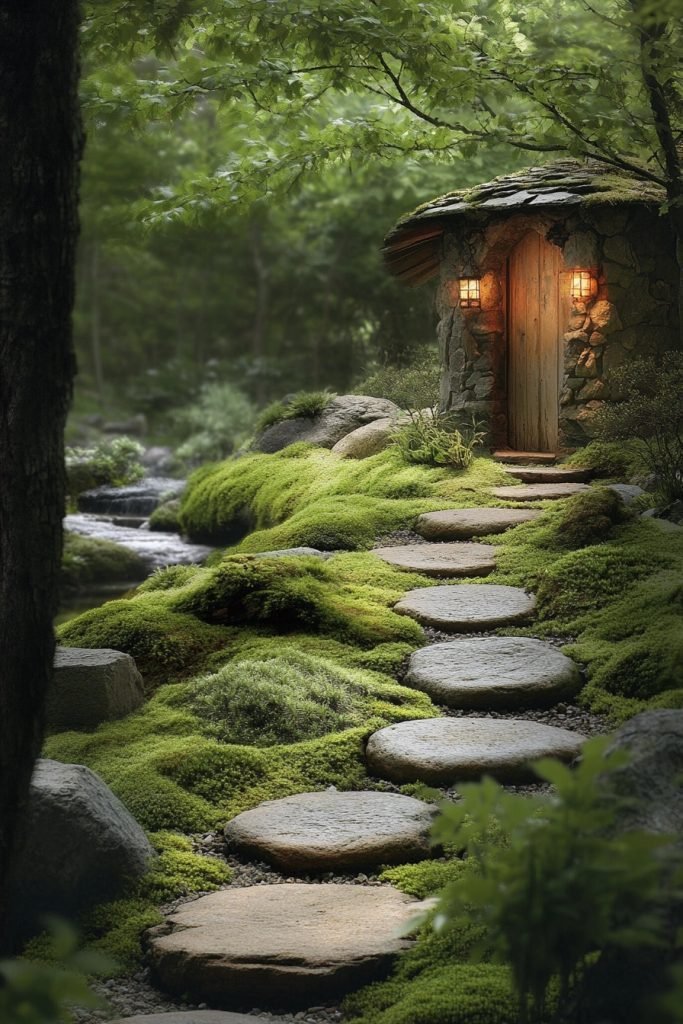
Moss Enchantment in a Wabi Sabi garden highlights lush, green moss as a primary feature, creating a soft, carpet-like appearance. The use of moss emphasizes the beauty of growth and decay, key aspects of Wabi Sabi aesthetics. Consider exploring aged garden ornaments to complete this look. This garden type is perfect for shaded areas where moss can thrive undisturbed, adding a serene, ancient feel. Natural stone elements and minimal human intervention allow the garden to feel both ancient and alive.
🎨 Steal This Look
- Paint Color: Benjamin Moore October Mist 1495 for garden structures to complement the natural moss tones
- Furniture: weathered teak garden bench with natural aging patina
- Lighting: warm LED lantern sconces with bronze finish and seeded glass
- Materials: natural fieldstone stepping stones, moss groundcover, weathered cedar siding
This enchanting moss pathway creates that magical forest feeling we all crave in our own backyards. The interplay of weathered stone and vibrant green moss transforms an ordinary garden walk into a meditative journey.
🎁 Get The Look
3. Imperfect Harmony
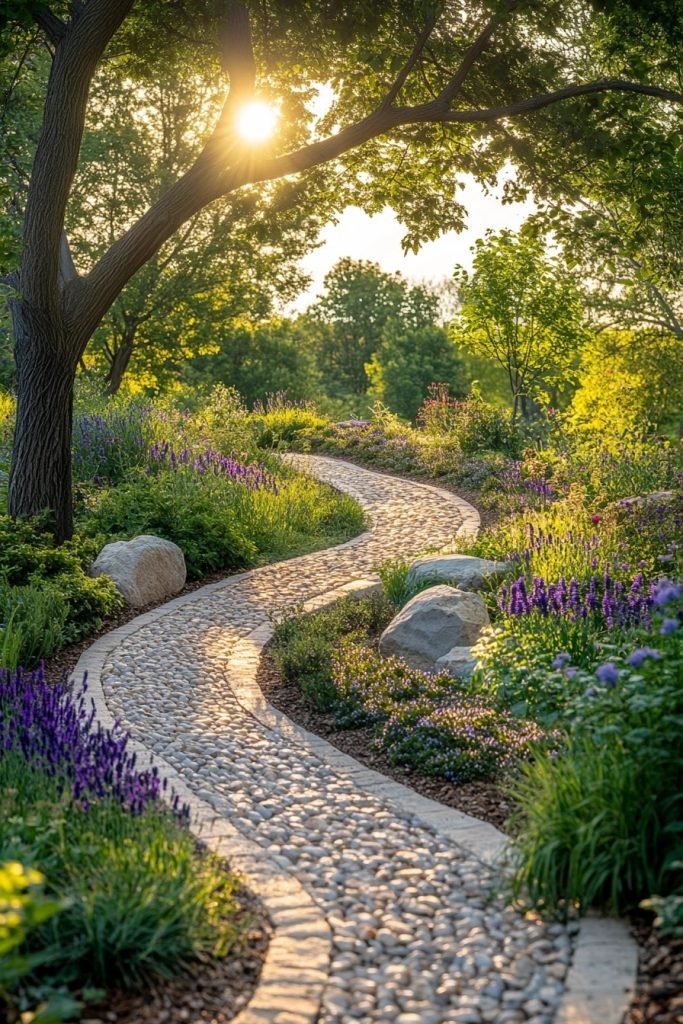
Imperfect Harmony in a Wabi Sabi garden focuses on the deliberate placement of asymmetrical and irregularly shaped elements to create balance. This garden style uses uneven pathways, mismatched stones, and wild, indigenous plants to enhance the natural landscape. Consider exploring wabi sabi zen garden kit to complete this look. It reflects the Wabi Sabi appreciation for beauty in the unconventional and flaw. Each element is chosen to complement the others naturally, without striving for perfection.
✎ Steal This Look
- Paint Color: Farrow & Ball Green Smoke 47
- Furniture: weathered stone garden bench with natural patina
- Lighting: warm LED path lights embedded in cobblestone
- Materials: mixed river stone cobbles, weathered limestone boulders, purple flowering lavender
There’s something deeply satisfying about a path that meanders rather than marches straight to its destination. This cobblestone walkway embraces the wabi sabi principle that the most beautiful journeys are rarely the most direct ones.
4. Natural Whimsy
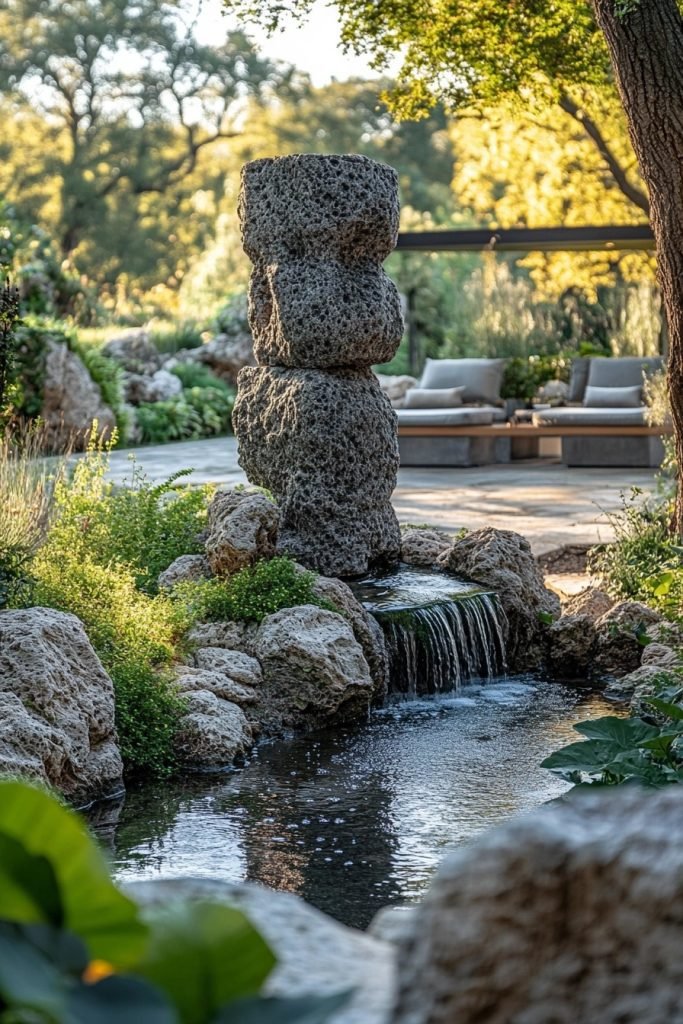
Natural Whimsy in a Wabi Sabi garden brings a playful, light-hearted feel to the space with elements like winding ivy over archways and whimsical sculptures from natural materials. This garden style invites visitors to appreciate the spontaneous and unexpected turns of nature. Consider exploring handmade ceramic garden pots to complete this look. The design incorporates flowing water features and quirky plant placements that seem to sprout naturally. It’s a garden that encourages joy and surprise, true to Wabi Sabi principles.
🏠 Steal This Look
- Paint Color: Behr Aged Beige S210-3
- Furniture: Low-profile concrete outdoor sectional with neutral cushions
- Lighting: Natural dappled sunlight through mature tree canopy
- Materials: Weathered limestone, volcanic stone sculpture, natural moss accents
This garden captures the essence of finding beauty in natural imperfection, where weathered stones and organic water flow create a meditative retreat that celebrates time’s gentle touch.
5. Earthen Aesthetics
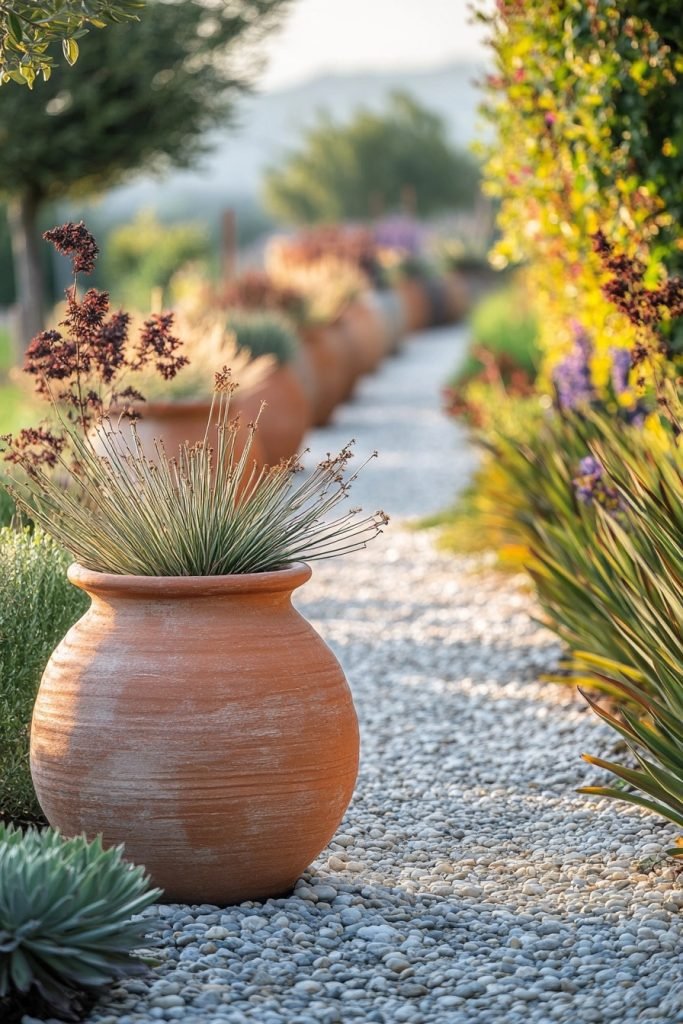
Earthen Aesthetics in a Wabi Sabi garden utilize the colors and textures of the earth to create a grounded, calming environment. Clay pots, gravel paths, and terracotta statues are used to enhance the natural feel. Consider exploring natural garden stone arrangements to complete this look. The garden’s layout is simple and unforced, showcasing the raw beauty of each element. Plants are chosen for their natural forms and ease of growth, requiring minimal upkeep.
🖼 Steal This Look
- Paint Color: Valspar Canyon Dusk 1003-3C
- Furniture: weathered teak garden bench with natural patina
- Lighting: copper pathway lights with warm LED bulbs
- Materials: terracotta clay, river rock gravel, natural stone, weathered wood
There’s something deeply satisfying about the contrast of smooth terracotta against rough gravel – it’s these natural imperfections that make a wabi sabi garden feel authentically lived-in.
6. Weathered Woodlands
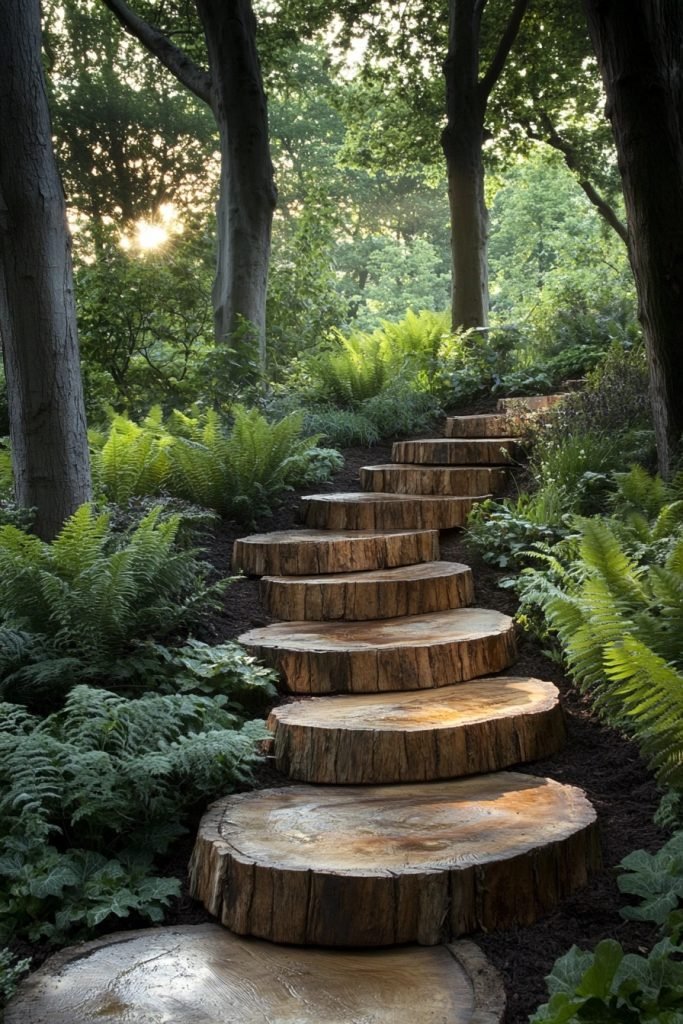
Weathered Woodlands in a Wabi Sabi garden highlight the use of aged wood and natural forest elements. This garden type mimics the feel of a mature forest with fallen logs, shaded clearings, and native flora. Consider exploring weathered outdoor lanterns to complete this look. It’s perfect for fostering biodiversity and creating a habitat for wildlife, aligning with the Wabi Sabi principle of coexisting with nature. The aging wood provides a sense of history and continuity.
🖼 Steal This Look
- Paint Color: PPG Forest Green PPG1132-7
- Furniture: weathered log rounds as natural seating and stepping stones
- Lighting: filtered natural sunlight through canopy with weathered outdoor lanterns
- Materials: aged wood rounds, native ferns, mossy ground cover, bark textures
This woodland pathway perfectly captures wabi sabi’s celebration of natural decay and imperfection. The weathered log rounds tell their own story while creating functional beauty.
🛒 Get The Look
7. Asymmetrical Oasis
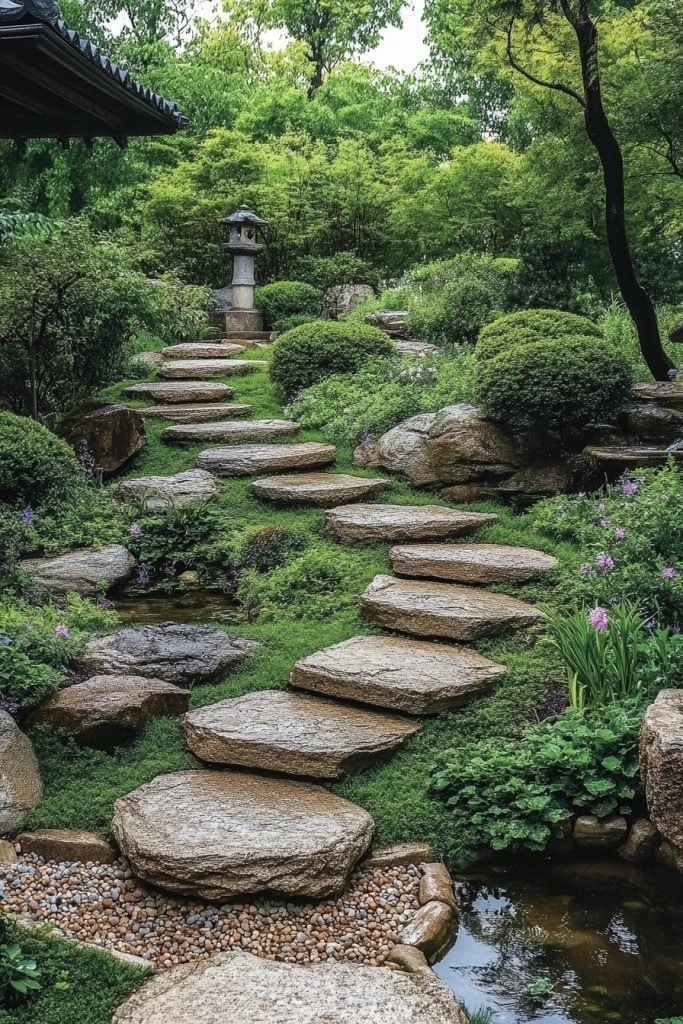
The Asymmetrical Oasis Wabi Sabi garden embraces irregular shapes and layouts to create a visually interesting space. This garden avoids traditional symmetry in favor of a more organic, flowing design. Plants are allowed to grow freely, with paths curving gently around natural features. Rocks, water elements, and garden structures are placed to create a sense of movement and natural beauty.
🖼 Steal This Look
- Paint Color: Dunn-Edwards Sage Creek DE5655
- Furniture: Natural stone garden lantern, curved wooden garden bench, weathered stone water basin
- Lighting: Traditional stone pagoda lantern with soft ambient glow
- Materials: Weathered natural stone, moss-covered surfaces, river pebbles, aged timber
This tranquil Japanese-inspired garden shows how embracing imperfection creates deeper beauty than any manicured landscape ever could. The weathered stones and asymmetrical placement feel like discovering a hidden forest path.
Save this article
No spam. Unsubscribe anytime.
8. Textured Terrains
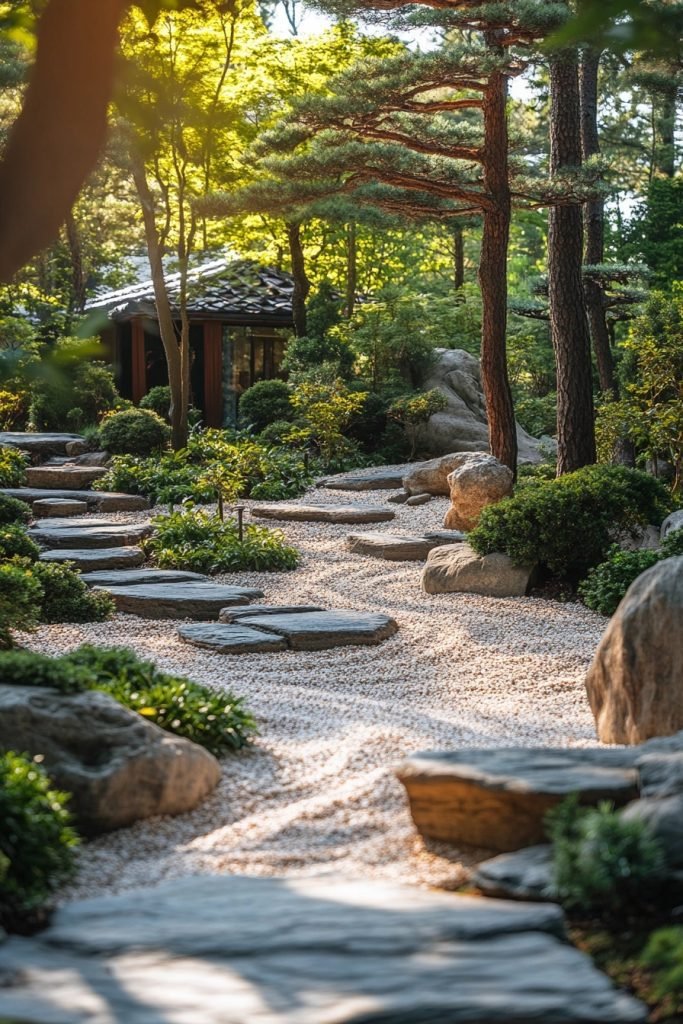
Textured Terrains in a Wabi Sabi garden focus on the rich variety of textures that can be achieved through different plant species and ground materials. This garden type layers coarse sand, pebbles, bark, and varied foliage to create a tactile experience. Each texture adds depth and interest, encouraging visitors to slow down and engage with the environment. The garden’s design reflects the Wabi Sabi philosophy of appreciating every detail.
🖼 Steal This Look
- Paint Color: Clare Paint Current Mood C102 – matches the soft sage-green undertones visible on the traditional garden pavilion structure
- Furniture: Low wooden meditation bench and natural stone seating boulders for contemplative garden moments
- Lighting: Warm LED pathway lights nestled between stones to highlight the textured gravel patterns at dusk
- Materials: Decomposed granite pathways, weathered natural stone stepping stones, and smooth river rock borders
There’s something deeply satisfying about the crunch of gravel underfoot and the way afternoon light catches the varied surfaces. This layered approach to ground textures transforms a simple garden path into a sensory meditation.
9. Stones and Serenity
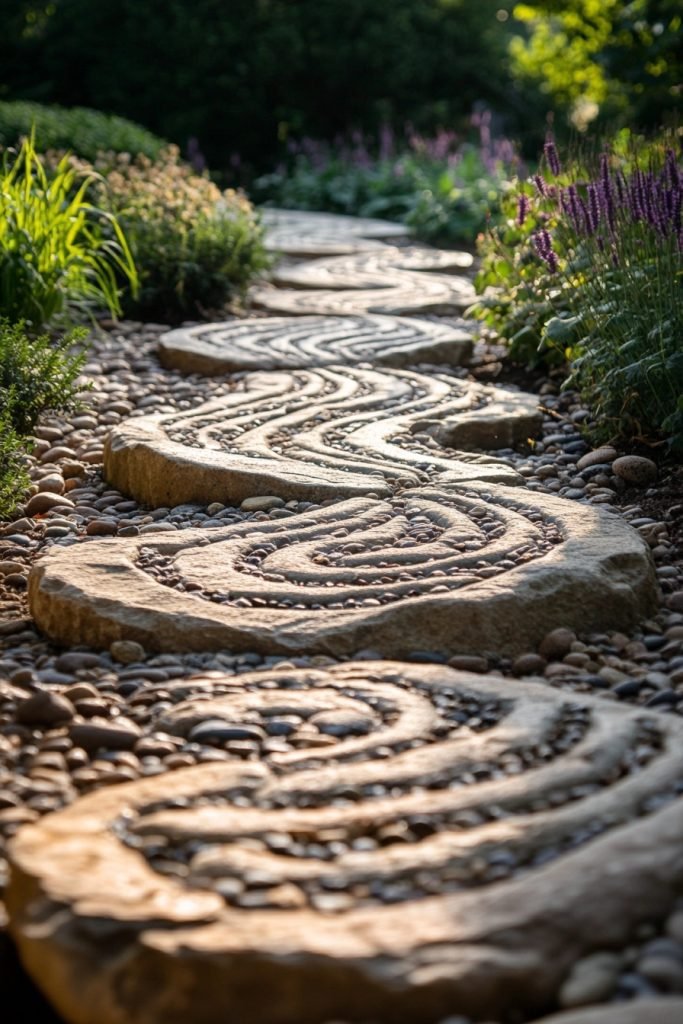
Stones and Serenity in a Wabi Sabi garden showcase the use of natural stone elements to create peaceful, meditative spaces. Large rocks serve as focal points, while smaller stones fill paths and borders. The arrangement of stones follows the natural contours of the land, promoting a serene atmosphere. This garden style is ideal for contemplation and relaxation, embodying the quiet strength of Wabi Sabi aesthetics.
★ Steal This Look
- Paint Color: Fine Paints of Europe Charcoal Grey HC-166
- Furniture: weathered teak meditation bench with natural edge
- Lighting: low-voltage LED pathway lights with warm 2700K temperature
- Materials: river rock pebbles, carved stone stepping stones, weathered timber edging
There’s something deeply grounding about walking a stone path where each step connects you to the earth’s natural rhythm. This carved stone labyrinth creates the perfect meditative journey through your garden sanctuary.
10. Wild Growth Haven
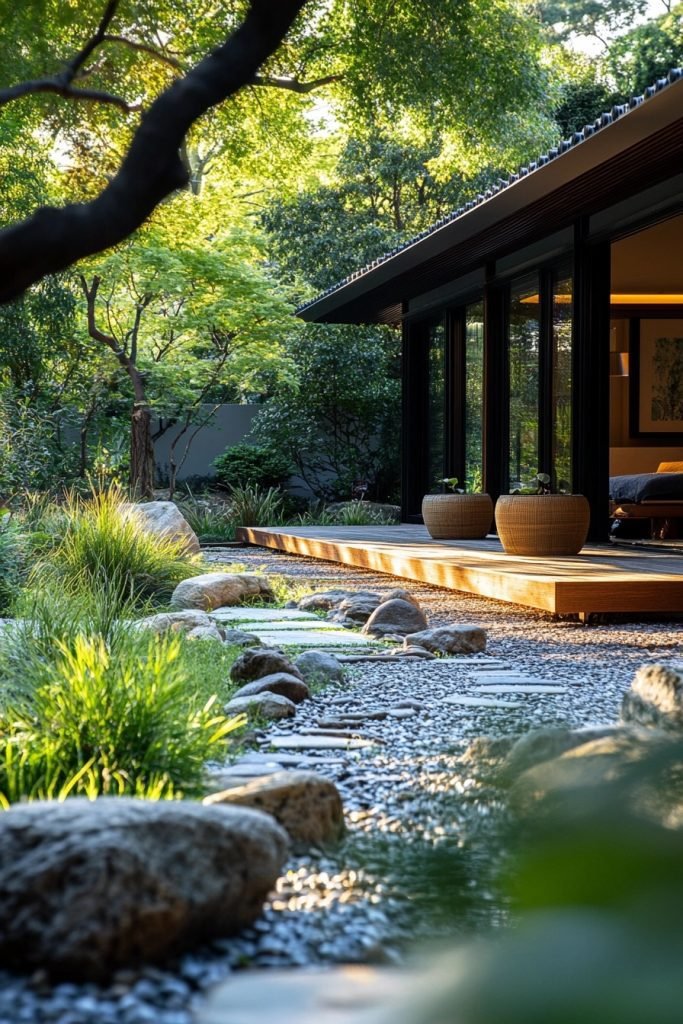
Wild Growth Haven in a Wabi Sabi garden celebrates the beauty of untamed, natural growth. This garden allows plants to grow naturally without strict pruning or shaping. The design includes native species that thrive in the local climate, reducing the need for maintenance. Wildflowers, grasses, and shrubs create a dynamic, ever-changing landscape that embraces the cycle of life and death.
✎ Steal This Look
- Paint Color: Backdrop Sage Green BG-15
- Furniture: natural woven rattan planters and seating
- Lighting: warm ambient outdoor path lighting
- Materials: river rocks, weathered wood decking, natural stone
There’s something deeply peaceful about a garden that’s allowed to find its own rhythm, where moss can gather on stones and grasses can sway naturally in the breeze.
11. Peaceful Patches
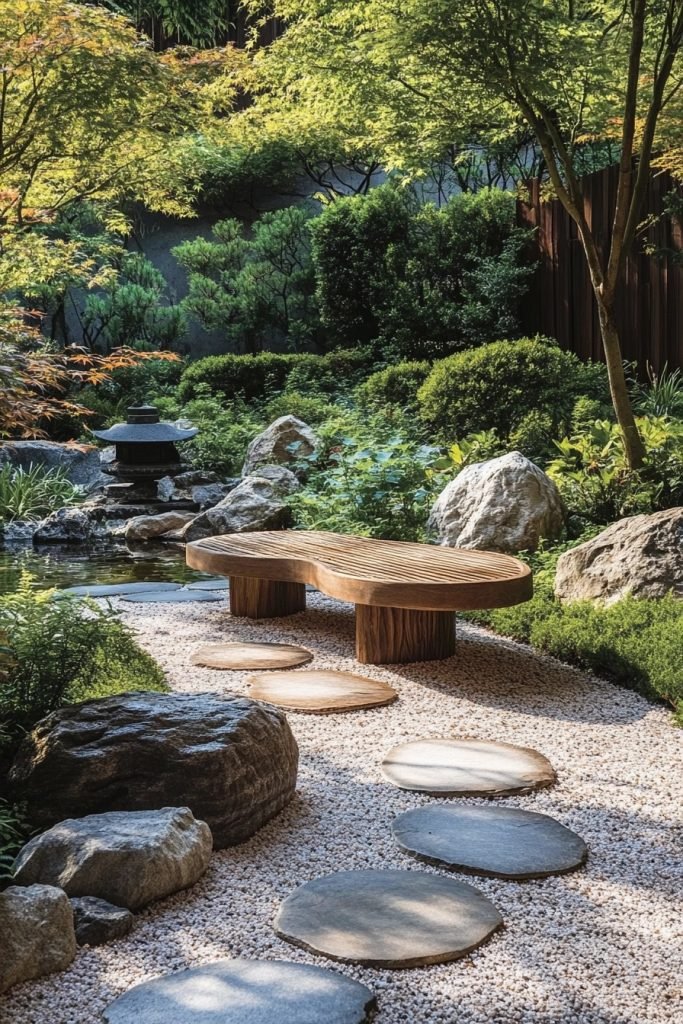
Peaceful Patches in a Wabi Sabi garden are small, intimate areas designed for quiet reflection and solitude. These patches might feature soft moss, a small bench, or a single, beautiful tree. The design encourages pausing and appreciating the smaller, often overlooked aspects of the garden. It’s a perfect place for personal retreat and mindfulness, aligned with Wabi Sabi principles.
💡 Steal This Look
- Paint Color: Sherwin-Williams Accessible Beige SW 7036
- Furniture: natural teak curved garden bench with slatted design
- Lighting: soft filtered natural light through tree canopy
- Materials: weathered teak wood, natural stone stepping stones, fine gravel pathways, moss-covered boulders
This peaceful corner shows how a simple wooden bench becomes a meditation spot when nestled among weathered stones and soft moss, creating the perfect retreat for quiet contemplation.
🔔 Get The Look
12. Organic Curves
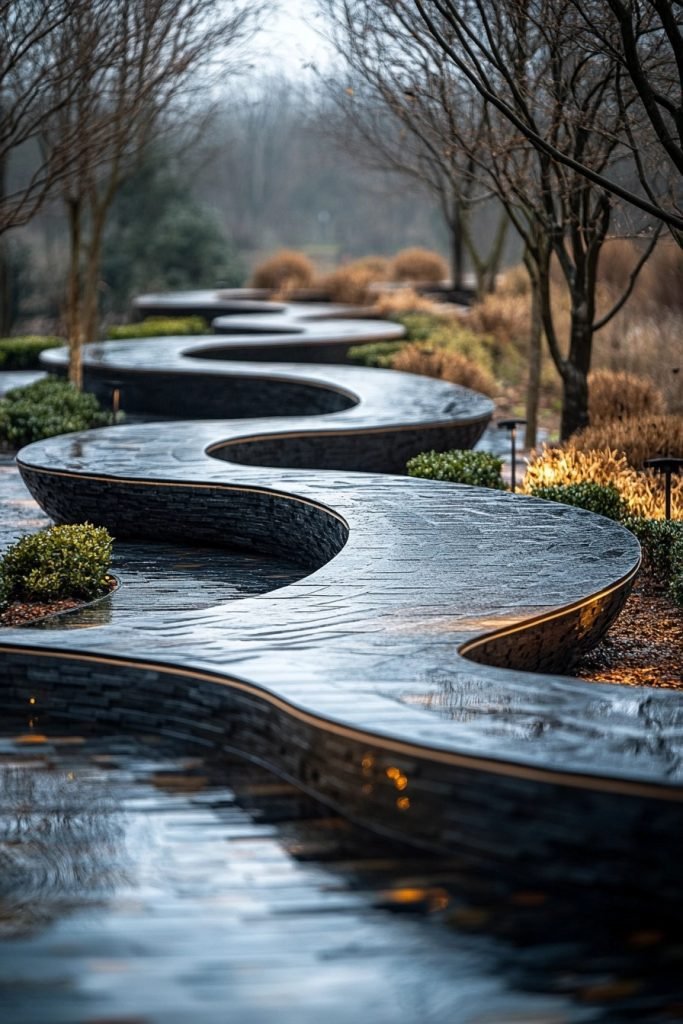
Organic Curves in a Wabi Sabi garden incorporate flowing lines and curved pathways that mimic natural waterways or wind patterns. This design avoids harsh lines and geometric shapes, promoting a soft, natural landscape. Plants are arranged in undulating borders, and paths gently wind through the garden, guiding visitors on a fluid journey through nature. The use of curves helps integrate the garden into the surrounding landscape harmoniously.
🎨 Steal This Look
- Paint Color: Benjamin Moore Wrought Iron 2124-10
- Furniture: curved concrete garden benches with flowing organic forms
- Lighting: recessed LED strip lights embedded in pathway edges
- Materials: polished concrete, weathered stone, moss-covered surfaces
This serpentine water feature shows how organic curves can transform a garden into a meditative journey. The flowing concrete forms feel like they’ve always belonged in this landscape.
13. Zen Pebble Paths
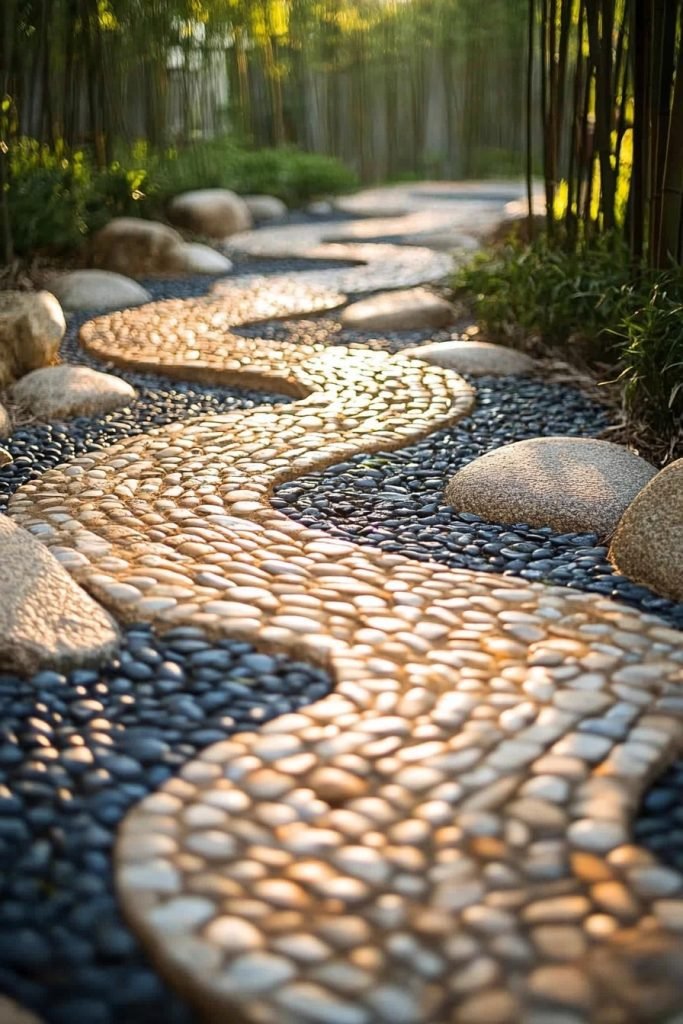
Zen Pebble Paths in a Wabi Sabi garden provide a tactile and visually soothing element. These paths are made from smooth, rounded pebbles that massage the feet and promote a meditative walk. The paths lead through tranquil areas of the garden, past water features or quiet sitting areas. They are designed to encourage slow, contemplative walks, reflecting the Zen aspects of Wabi Sabi.
🎨 Steal This Look
- Paint Color: Farrow & Ball Green Smoke 47
- Furniture: weathered stone garden benches with natural moss patina
- Lighting: subtle ground-level LED strip lights for evening path illumination
- Materials: smooth river pebbles in cream and charcoal, natural weathered stone boulders, dark volcanic pebbles
There’s something deeply grounding about feeling smooth stones beneath your feet as you follow this serpentine path. The contrast between the warm cream pebbles and cool dark stones creates a visual meditation that slows your pace naturally.
14. Raw Beauty Retreat
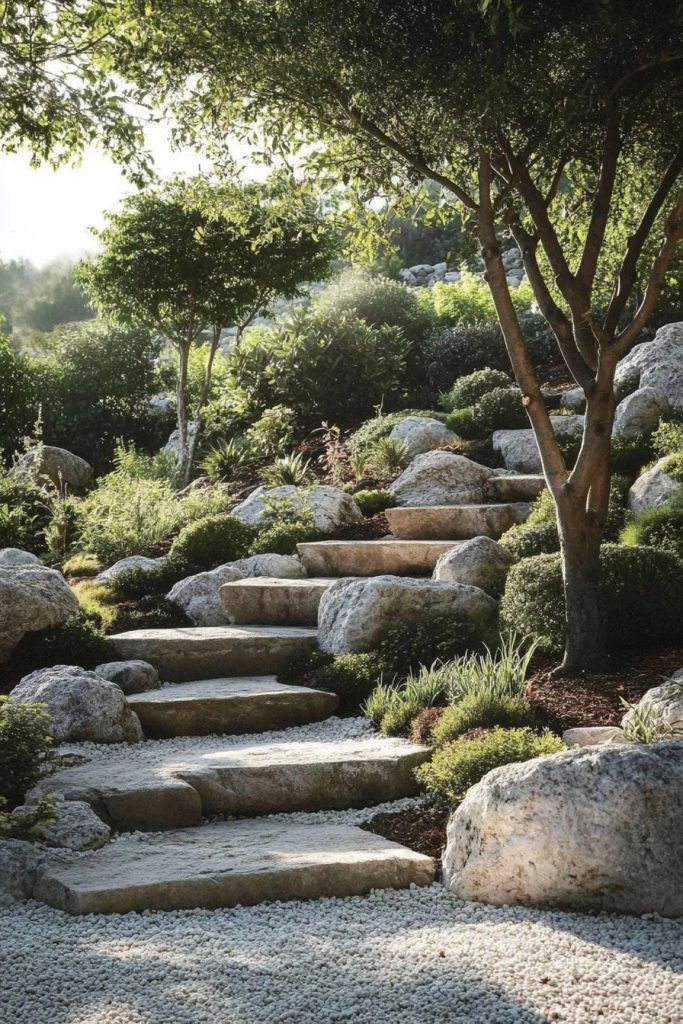
Raw Beauty Retreat in a Wabi Sabi garden focuses on the unrefined, natural state of garden elements. This garden features rugged boulders, untreated wood, and wild native plants. It’s a space that respects and showcases the inherent beauty of each material and plant, just as they are. The garden is a sanctuary for those who appreciate nature in its most authentic forms.
🖼 Steal This Look
- Paint Color: Behr Canyon Dusk S210-4
- Furniture: natural wood outdoor bench with live edge
- Lighting: subtle landscape uplighting among boulders
- Materials: weathered limestone steps, granite boulders, decomposed granite pathways, native ornamental grasses
This garden captures that rare feeling of discovering a hidden mountain path – where every weathered stone tells a story and imperfection becomes the ultimate sophistication.
👑 Get The Look
15. Fluid Forms
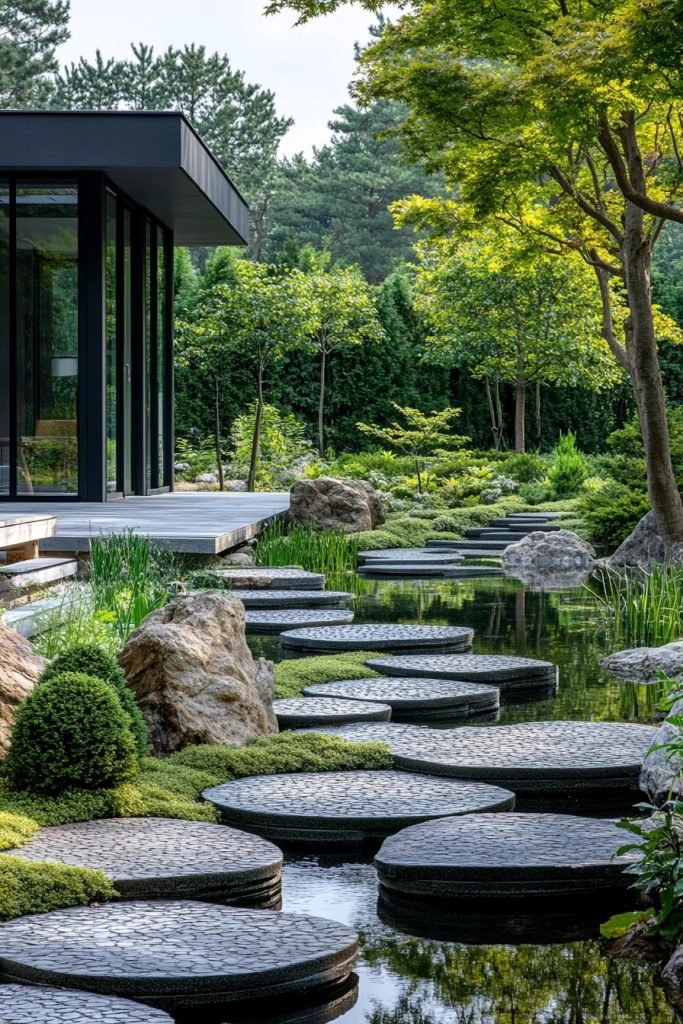
Fluid Forms in a Wabi Sabi garden emphasize soft, flowing shapes in both the hardscaping and planting. This approach uses curvilinear flower beds, rounded stones, and plants with soft, drooping foliage to create a fluid aesthetic. Water features with gentle, babbling brooks or small waterfalls complement the fluid forms, enhancing the overall sense of flow and ease. The design is perfect for creating a tranquil and harmonious outdoor space.
🏠 Steal This Look
- Paint Color: Valspar Iron Ore 6003-1C – matches the dark charcoal modern pavilion structure visible
- Furniture: sleek teak outdoor platform seating with clean lines to complement the modern pavilion
- Lighting: recessed LED strip lighting under pavilion overhang for subtle evening ambiance
- Materials: natural stone, dark concrete, weathered wood decking, and reflective water surfaces
There’s something deeply meditative about watching water flow around these textured stone circles – it’s like having your own private zen moment right in your backyard.
16. Time-Worn Patios
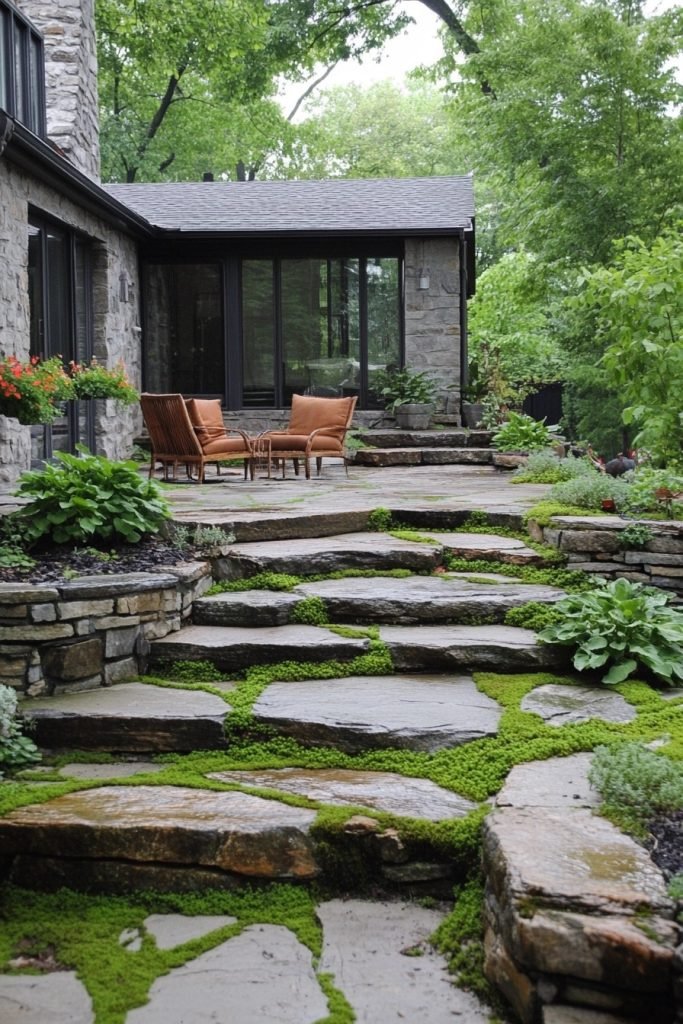
Time-Worn Patios in a Wabi Sabi garden celebrate the beauty of weathered stone and aged brick. These materials are chosen for their ability to improve with age, acquiring a patina that adds character to the garden. The patios serve as a testament to the passage of time, each mark and mossy patch telling a story. They provide a sturdy yet charming foundation for garden furniture and potted plants.
🎨 Steal This Look
- Paint Color: PPG Stone Mason Gray PPG1128-4
- Furniture: Weathered teak outdoor lounge chairs with rust-colored cushions
- Lighting: Subtle ground-level uplights integrated into stone steps
- Materials: Weathered flagstone pavers, moss-filled joints, aged limestone retaining walls
There’s something deeply satisfying about a patio that looks like it’s been part of the landscape for decades, where every weathered edge and moss-filled crack tells the story of seasons passed.
🔔 Get The Look
17. Unpolished Perfection
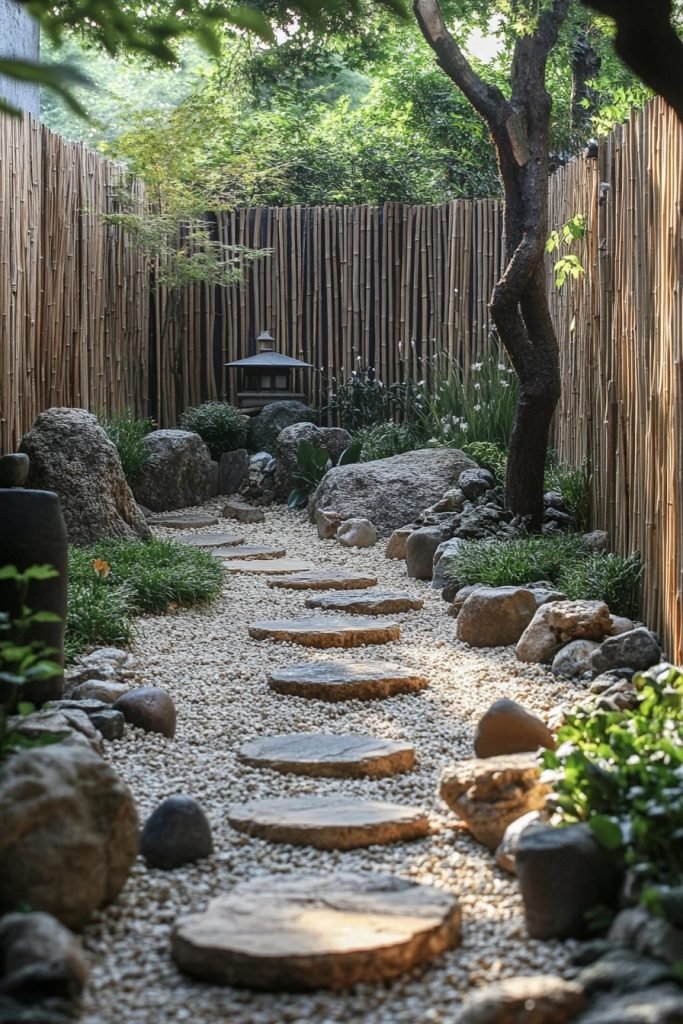
Unpolished Perfection in a Wabi Sabi garden embraces the beauty of rough, natural textures. This garden uses uncut stone, rough bark, and untreated wood to create a rugged aesthetic. Plants are chosen for their natural growth habits, not manicured appearance, contributing to a raw, untamed look. This style celebrates the imperfect, the transient, and the incomplete as forms of beauty.
💡 Steal This Look
- Paint Color: Dunn-Edwards Bamboo Grove DE6194 – matches the warm natural bamboo fence tones visible throughout the space
- Furniture: natural stone benches and weathered wood seating that complement the existing boulder arrangement
- Lighting: traditional Japanese stone lantern with soft ambient glow, matching the existing pagoda-style fixture
- Materials: rough-hewn natural stone stepping stones, weathered bamboo fencing, and raw granite boulders
This path perfectly captures wabi sabi’s celebration of imperfection – each weathered stone tells a story, and the seemingly random boulder placement creates a meditation garden that feels ancient and naturally evolved.
18. Sculpted by Nature
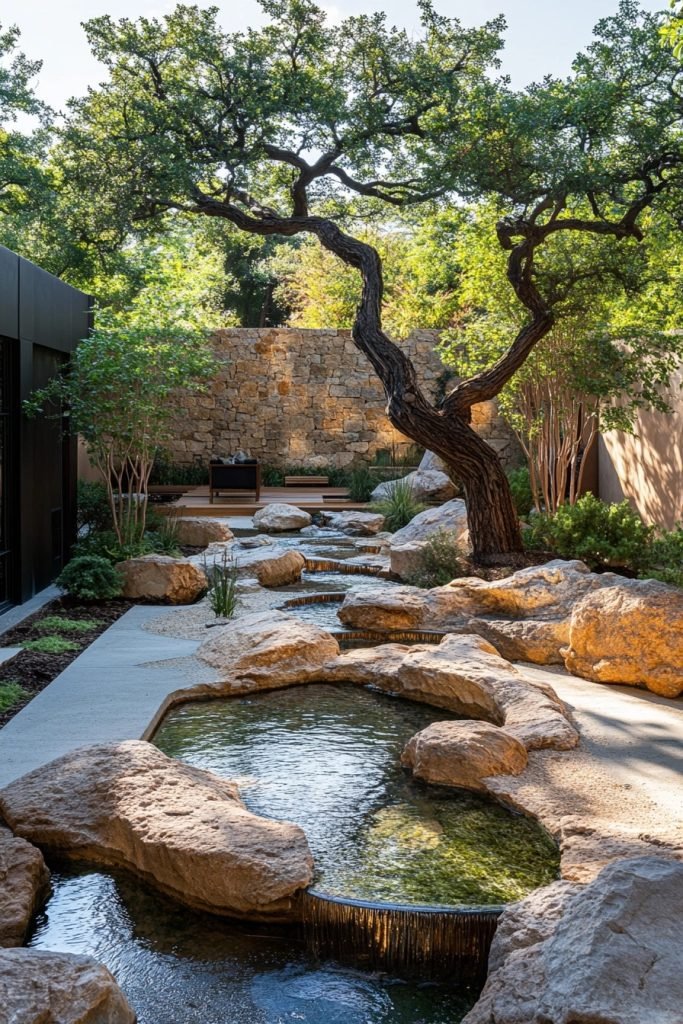
Sculpted by Nature in a Wabi Sabi garden showcases elements shaped by natural forces rather than human hands. This includes naturally eroded rocks, wind-shaped trees, and ground molded by water. The garden is designed to highlight these naturally occurring features, integrating man-made elements subtly and sparingly. It’s a celebration of the artistry of nature itself, inviting contemplation of the forces that shape our world.
✎ Steal This Look
- Paint Color: Clare Paint Penumbra W32 for exterior walls to complement the natural stone textures
- Furniture: Natural teak outdoor seating with weathered finish positioned along stone pathways
- Lighting: Recessed uplighting in stone retaining walls for evening water feature illumination
- Materials: Large weathered limestone boulders, natural stone paving, aged concrete stepping stones
There’s something deeply grounding about gardens where nature has done the heavy lifting of design. This space proves that the most beautiful sculptures are often the ones carved by time, weather, and natural forces.
✅ Get The Look
19. Grass Whispers
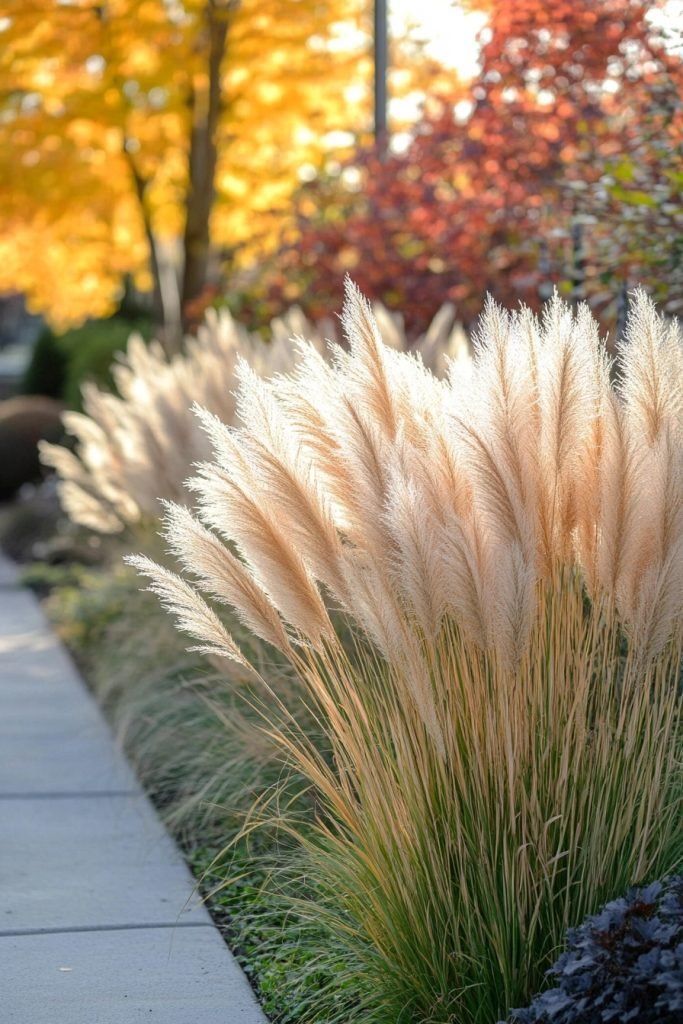
Grass Whispers in a Wabi Sabi garden focus on the use of ornamental and native grasses to create a sense of movement and softness. These grasses are allowed to grow to their full height and natural spread, swaying gracefully with the wind. The design emphasizes the subtle sounds of rustling grass, enhancing the sensory experience of the garden. This approach creates a dynamic yet peaceful atmosphere, perfect for a reflective garden space.
🖼 Steal This Look
- Paint Color: Fine Paints of Europe Weathered Stone EC-109
- Furniture: weathered teak garden bench with natural patina
- Lighting: bronze path lights with warm LED bulbs
- Materials: natural stone pavers, ornamental grasses, aged concrete planters
There’s something magical about catching afternoon light through feathery grass plumes, creating those perfect golden moments that make a wabi-sabi garden feel alive and ever-changing.
20. Echoes of Green
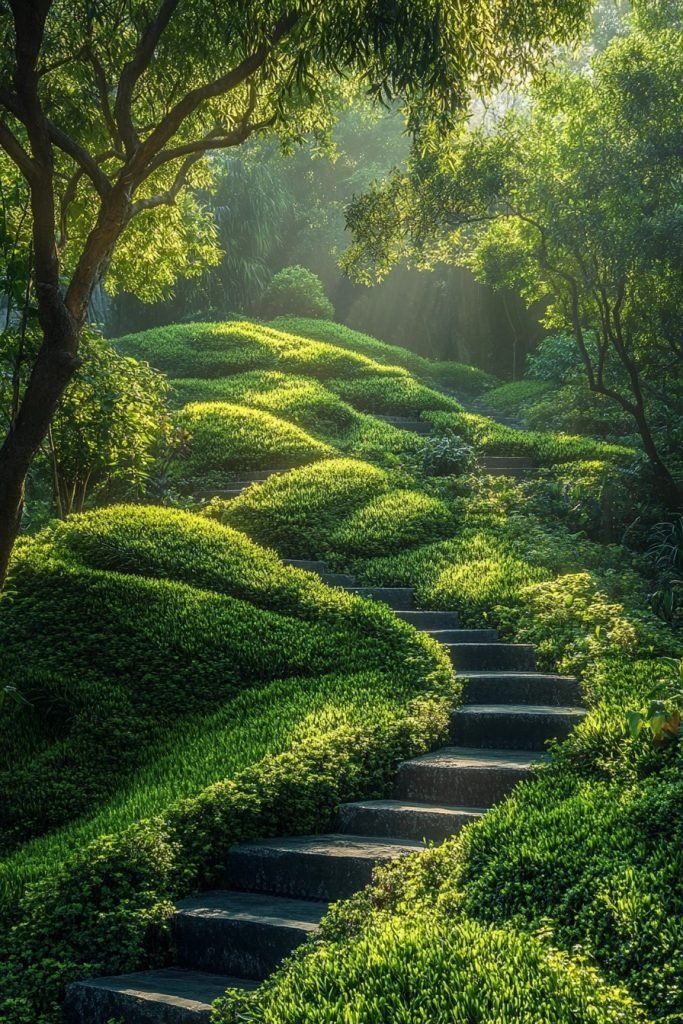
Echoes of Green in a Wabi Sabi garden highlight various shades of green to create a monochromatic yet deeply layered landscape. This garden uses foliage of different textures, shapes, and shades of green to build visual depth and interest. The focus is on the calming effect of green, known for its ability to soothe and relax the mind. Plants are selected for their ability to thrive naturally in the existing garden conditions, requiring minimal intervention.
🏠 Steal This Look
- Paint Color: Backdrop Forest Glen BG-15
- Furniture: weathered stone garden steps and natural carved stone benches
- Lighting: soft filtered natural light through tree canopy
- Materials: aged stone pathways, moss-covered surfaces, layered boxwood hedging
There’s something deeply meditative about a monochromatic green garden where every shade tells a story of natural aging and seasonal change. This layered approach to green creates a sanctuary that feels both intentional and effortlessly wild.
🎁 Get The Look
21. Tangled Greenery
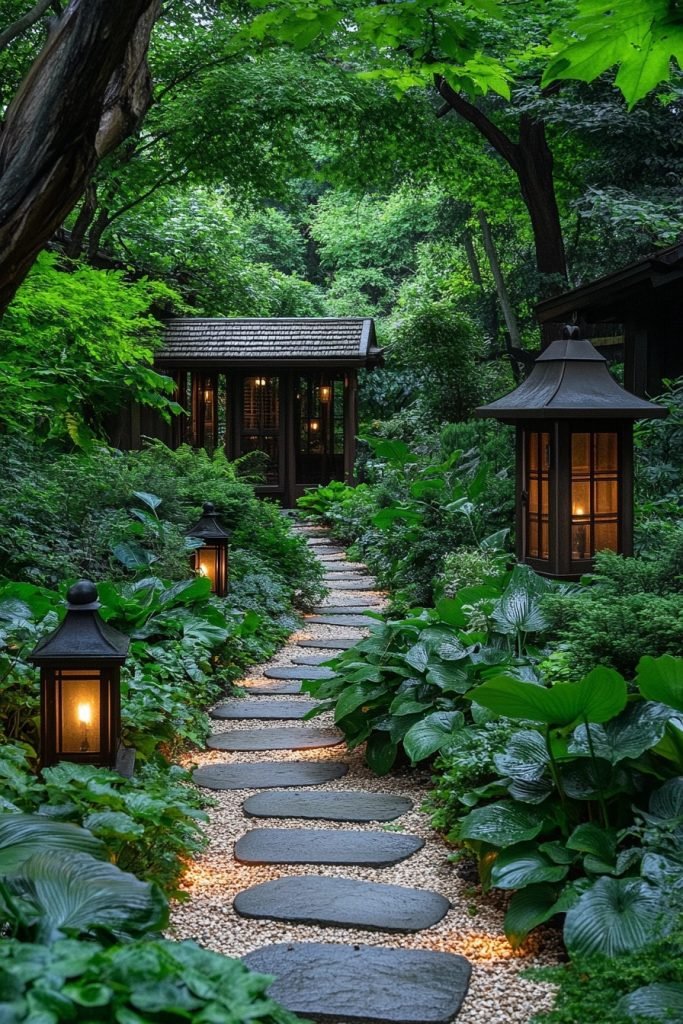
Tangled Greenery in a Wabi Sabi garden embraces the wild, untamed look of overlapping plant species. This garden type allows plants to intertwine and grow freely, mimicking the natural chaos of a wild ecosystem. The design values ecological balance over neatness, encouraging biodiversity and a naturalistic appearance. It’s a celebration of the lush, vibrant life that emerges when nature is allowed to lead the way.
🌟 Steal This Look
- Paint Color: Sherwin-Williams Rosemary SW 9010
- Furniture: weathered teak garden bench with natural aging and moss accents
- Lighting: black metal lanterns with warm LED candles for pathway illumination
- Materials: natural stone stepping stones, pea gravel pathways, weathered wood structures, and aged metal accents
There’s something magical about a garden path that feels like a secret woodland discovery, where every step reveals another layer of tangled, lush greenery. This overgrown aesthetic creates the perfect sanctuary for embracing nature’s beautiful imperfection.
22. Subdued Shades
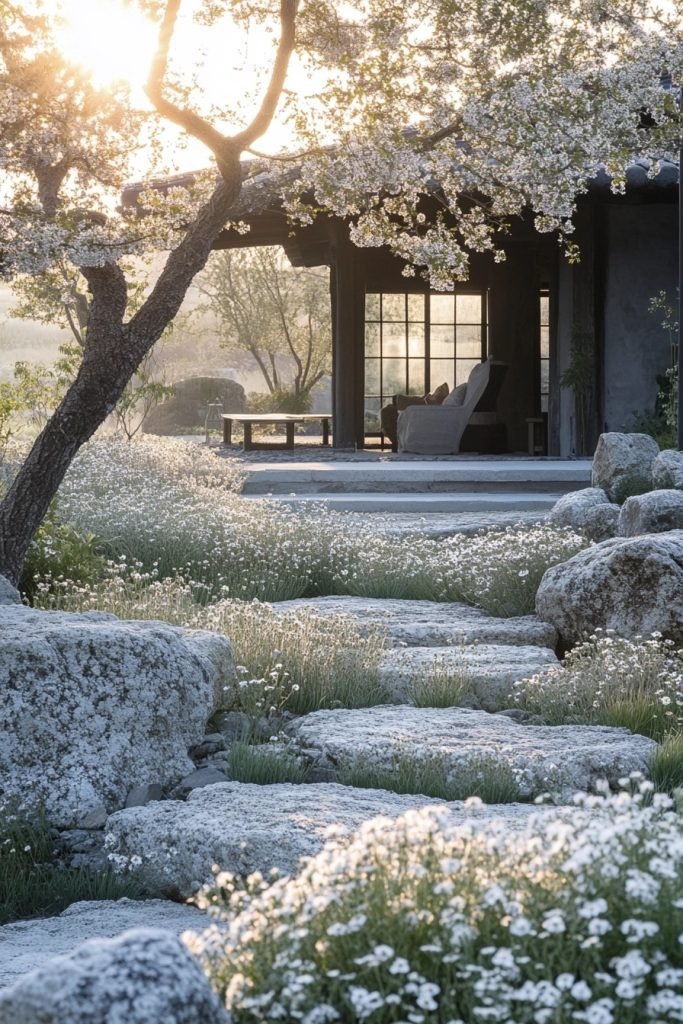
Subdued Shades in a Wabi Sabi garden focus on a palette of muted colors that blend seamlessly with the natural landscape. This garden uses plants with soft-colored blooms and foliage in shades of grey, blue, and soft yellows. The subtle color scheme creates a tranquil setting that soothes the senses and blends with the sky and soil. The use of color is intentionally understated, emphasizing tranquility over vibrancy.
🎨 Steal This Look
- Paint Color: Benjamin Moore Stone Harbor 2111-50
- Furniture: weathered teak outdoor bench with natural aging
- Lighting: warm ambient solar path lights
- Materials: weathered granite boulders, soft ornamental grasses, aged concrete pavers
This garden perfectly captures wabi-sabi’s embrace of natural weathering and impermanence. The way the granite boulders have settled into the landscape over time creates an authentic sense of quiet beauty.
🎁 Get The Look
23. Nature’s Mosaic
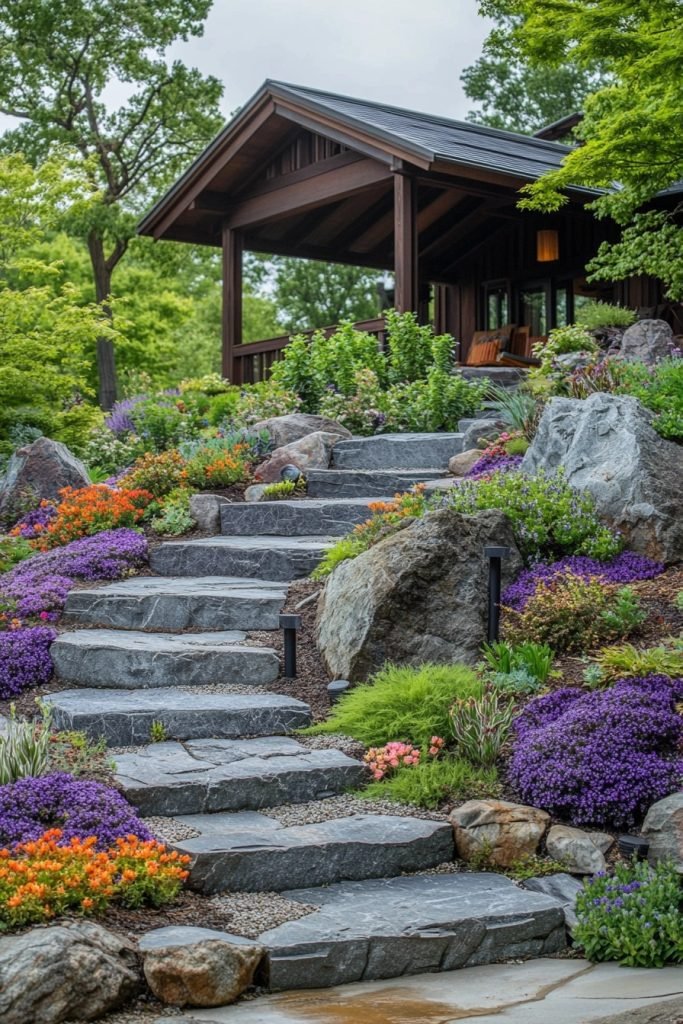
Nature’s Mosaic in a Wabi Sabi garden highlights the use of varied plant species to create a patchwork of textures and colors. This approach mimics the diversity found in natural landscapes, providing a rich tapestry that changes with the seasons. The garden is designed to celebrate the spontaneous arrangement of plants, with each section contributing to a cohesive whole. It’s a dynamic and ever-evolving space that reflects the natural order of growth and decay.
🎨 Steal This Look
- Paint Color: Farrow & Ball Mouse’s Back No.40
- Furniture: natural wood garden bench with weathered teak finish
- Lighting: black metal lantern-style garden lights
- Materials: natural slate stone, weathered granite boulders, purple flowering groundcover
This garden perfectly captures nature’s own design philosophy, where purple creeping phlox spills organically around weathered granite and slate steps create an effortless pathway through the landscape.
24. Barefoot Bliss
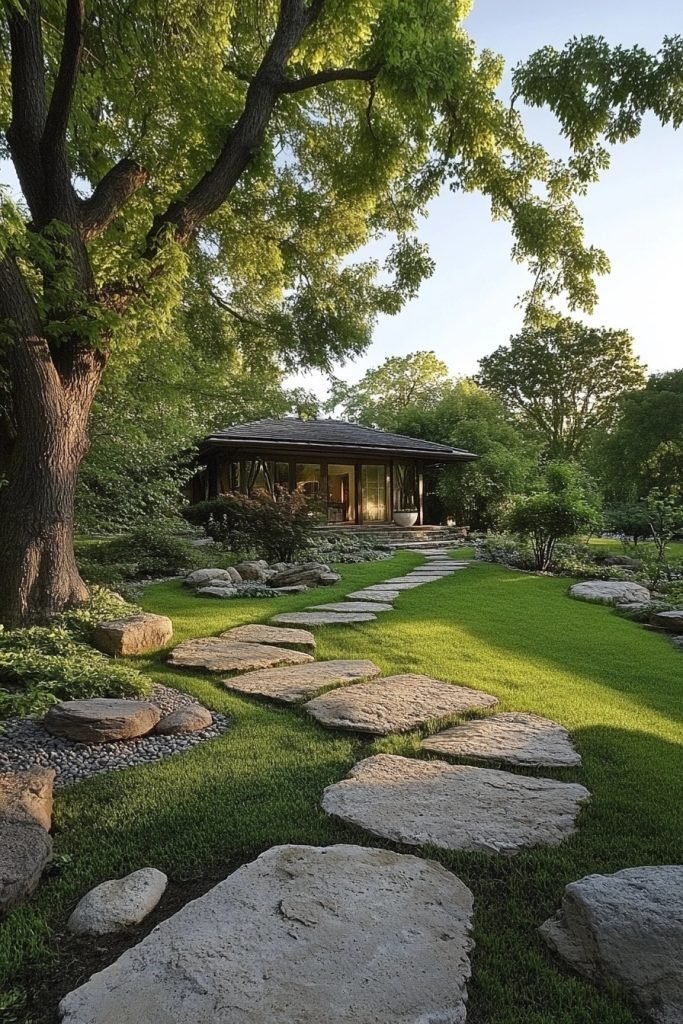
Barefoot Bliss in a Wabi Sabi garden encourages a sensory connection with nature, featuring soft grasses, smooth stones, and pathways that are comfortable to walk on barefoot. This garden invites interaction and personal connection with the landscape, promoting a grounding experience. The design focuses on elements that feel good underfoot and invite you to slow down and connect physically with the earth. It’s a garden that nurtures the soul as well as the senses.
🌟 Steal This Look
- Paint Color: Behr Aged Bark S210-4
- Furniture: Low-profile wooden garden benches with natural teak finish
- Lighting: Recessed landscape LED path lights with warm tone
- Materials: Natural weathered stone slabs, native grass varieties, aged wood textures
There’s something magical about a garden path that invites you to kick off your shoes and feel the cool grass between your toes. This design creates that perfect balance between wild nature and thoughtful intention.
25. Untamed Borders
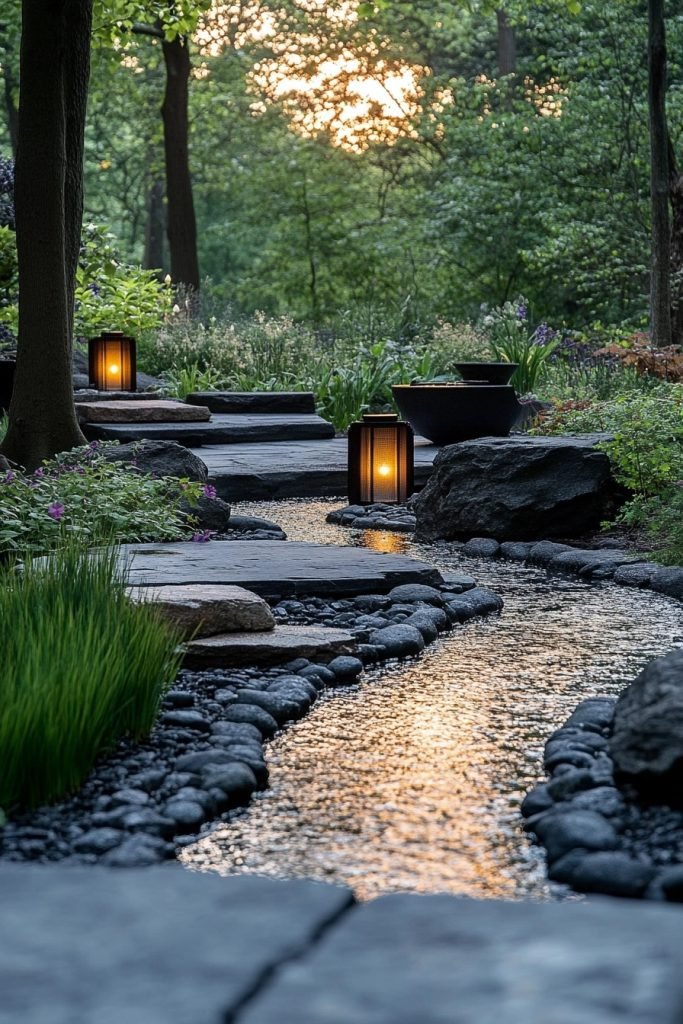
Untamed Borders in a Wabi Sabi garden showcase the beauty of borders that blur into the surrounding landscape. This style uses plants that naturally spill over paths and mingle with their neighbors, creating a soft, seamless transition between garden areas. The design eschews sharp separations in favor of a more organic, flowing boundary. This approach allows the garden to feel larger and more integrated with the natural world.
✎ Steal This Look
- Paint Color: Valspar Forest Shadow 6008-10B
- Furniture: Natural stone slab benches and weathered teak planters
- Lighting: Warm LED lanterns with bronze frames
- Materials: River rock, slate stepping stones, and decomposed granite
There’s something magical about a garden path that feels discovered rather than designed, where plants seem to have found their own way.
26. Whispering Winds
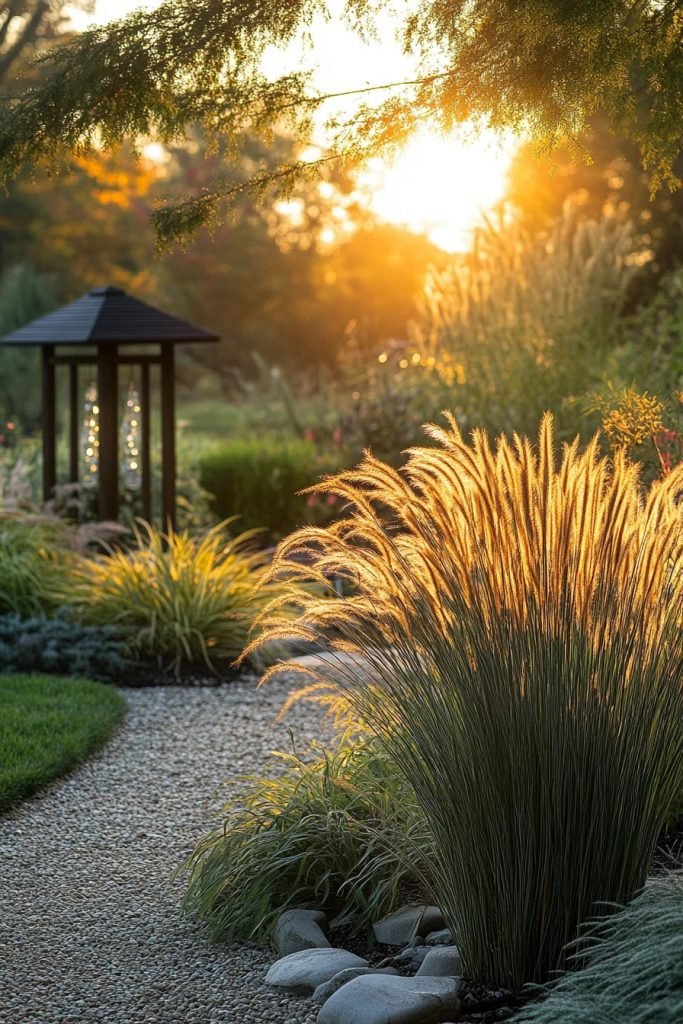
Whispering Winds in a Wabi Sabi garden incorporate elements that respond to the wind, such as tall grasses, delicate chimes, and loose-leaved trees. The movement and sound created by the wind add an auditory layer to the garden’s atmosphere, enhancing the sensory experience. This garden design considers the intangible and transient, celebrating the dance of leaves and the music of the air. It’s a space that feels alive and in constant communication with the elements.
🌟 Steal This Look
- Paint Color: PPG Warm Stone 7032
- Furniture: Black metal frame gazebo with clean geometric lines and glass panels
- Lighting: Warm LED string lights wrapped around gazebo posts for ambient evening illumination
- Materials: Weathered gray river rocks, golden ornamental grasses, natural gravel pathways
There’s something deeply meditative about watching ornamental grasses sway in the evening breeze, their feathery plumes catching the last golden light of day. This garden proves that the most beautiful moments happen when we design with nature’s rhythms in mind.
🌊 Get The Look
27. Simplicity in Shade
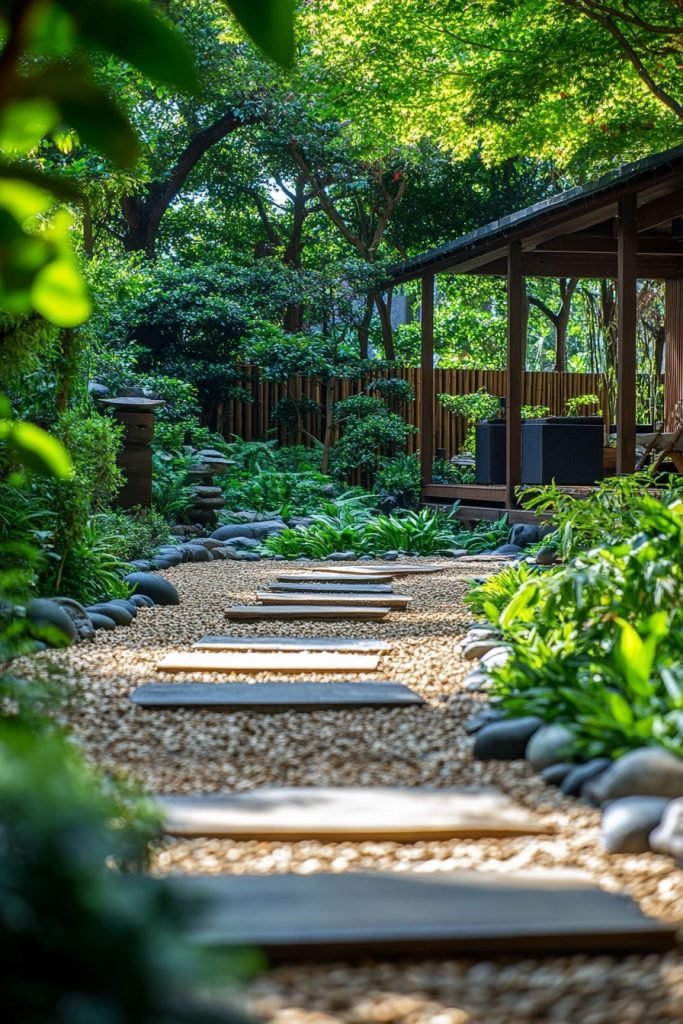
Simplicity in Shade in a Wabi Sabi garden focuses on creating serene, shaded nooks using minimalistic design principles. This garden uses a few well-chosen shade-loving plants and simple, natural materials to create a quiet retreat. The design is sparse, allowing each element—from the texture of the bark to the pattern of the leaves—to stand out. It’s a place for quiet reflection and escape from the sun, perfect for contemplation and rest.
🖼 Steal This Look
- Paint Color: Dunn-Edwards Forest Floor DE6034
- Furniture: natural teak garden bench with clean lines
- Lighting: subtle solar path lights along gravel walkway
- Materials: weathered teak wood, smooth river stones, fine gravel pathways
There’s something deeply restorative about a shaded garden path where every stone seems placed by time itself. This kind of thoughtful simplicity transforms an ordinary backyard into a meditation retreat.
28. Weather’s Mark
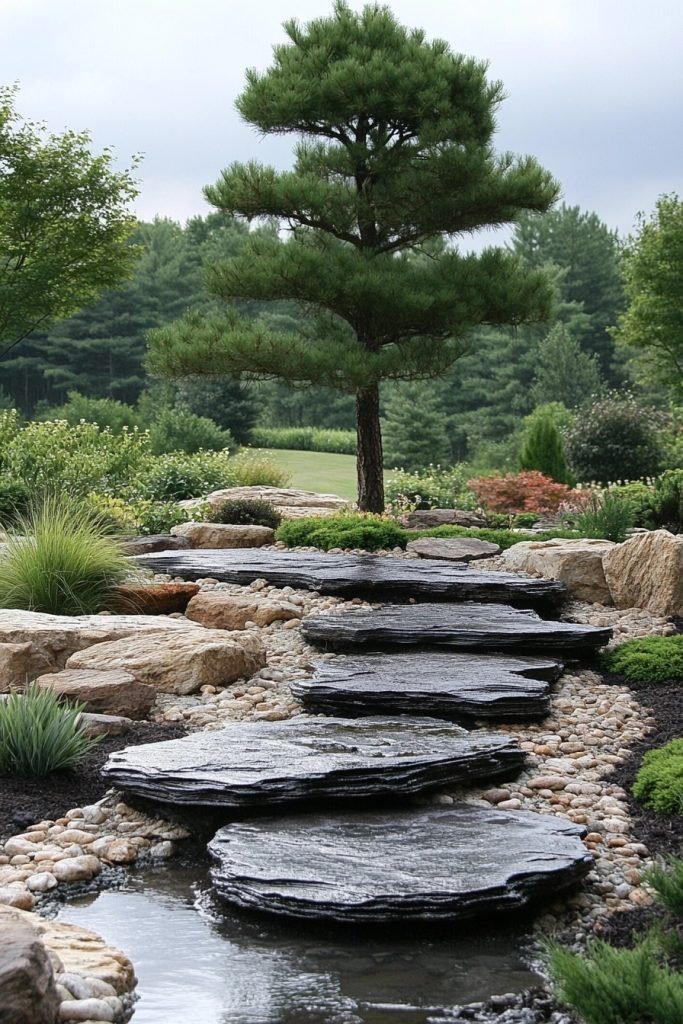
Weather’s Mark in a Wabi Sabi garden celebrates the changes that weather brings to the garden, from the growth patterns influenced by rain to the color changes induced by the sun. This garden type highlights the adaptive, resilient nature of plants and garden materials as they respond to the environment. The design is ever-changing, reflecting the dynamic and impermanent nature of life. It’s a garden that evolves and grows with each passing season, bearing the beautiful scars of its experiences.
🖼 Steal This Look
- Paint Color: Clare Paint Current Mood V36 – matches the natural sage green tones seen in the evergreen foliage
- Furniture: weathered teak garden bench with natural patina, stone garden stools positioned among plantings
- Lighting: low-voltage LED path lights hidden among river rocks, warm white temperature to complement natural stone
- Materials: stacked slate stepping stones, river rock borders, weathered limestone boulders, ornamental grasses
This garden water feature perfectly captures how weather transforms materials, with the dark slate stones showing beautiful stratification and the surrounding rocks developing natural patina. It’s a living example of embracing time’s gentle marks rather than fighting them.
29. Calm Canopy
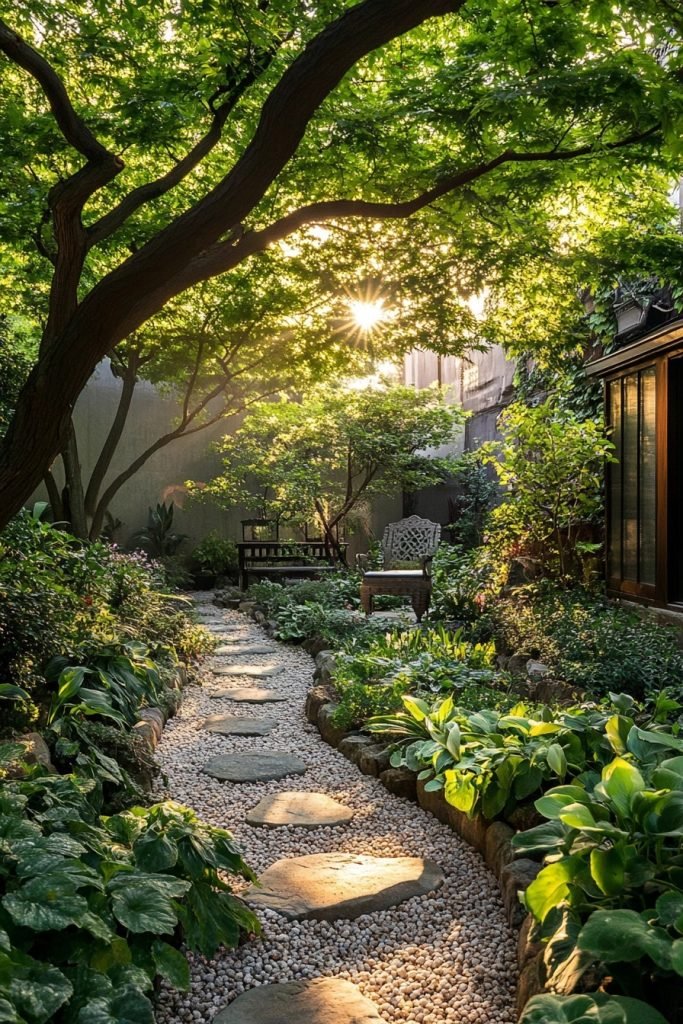
Calm Canopy in a Wabi Sabi garden focuses on creating a peaceful overhead shelter using tree branches and leafy crowns. This garden invites visitors to look up and appreciate the natural canopy that filters sunlight and provides shelter. The design uses trees and tall shrubs to craft a natural roof that embraces imperfections, such as uneven growth and varied leaf shapes. It’s a tranquil space that offers protection and a sense of enclosure, ideal for relaxation and meditation.
✎ Steal This Look
- Paint Color: Fine Paints of Europe Sage Green F-216
- Furniture: weathered teak garden bench with lattice back design
- Lighting: warm LED path lights embedded in natural stone steppers
- Materials: river pebble gravel pathways, natural stone steppers, aged wood structures, lush green plantings
There’s something deeply restorative about sitting beneath a living ceiling of leaves, where every shifting shadow and gentle rustle reminds you that nature’s imperfect beauty is the most calming backdrop of all.
Conclusion
And there you have it—29 wabi sabi garden ideas to help you create a serene and simple outdoor space. By embracing the beauty of natural imperfections, you can design a garden that feels peaceful, grounded, and effortlessly beautiful. Ready to let go of perfection and invite tranquility into your yard? These wabi sabi garden ideas will help you create the perfect, imperfect retreat right at home!
Save this article
No spam. Unsubscribe anytime.