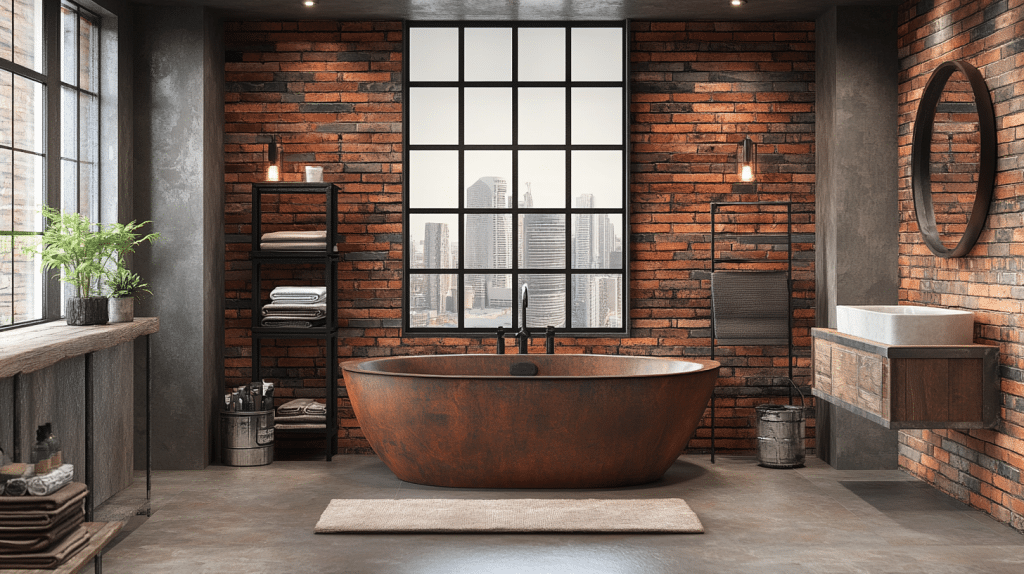
Do you believe that small living rooms are doomed to remain cluttered or cramped? Think again! Our collection of 29 Practical Living Room Designs for Small Spaces will challenge this common misconception and open your eyes to the possibilities of maximizing your minimal space. This article delves into ingenious design solutions that optimize functionality without sacrificing style, turning even the tiniest living room into a chic and comfortable living space. Get ready to transform your living area with practical, innovative ideas that prove size really isn’t everything.
Maximizing Corners
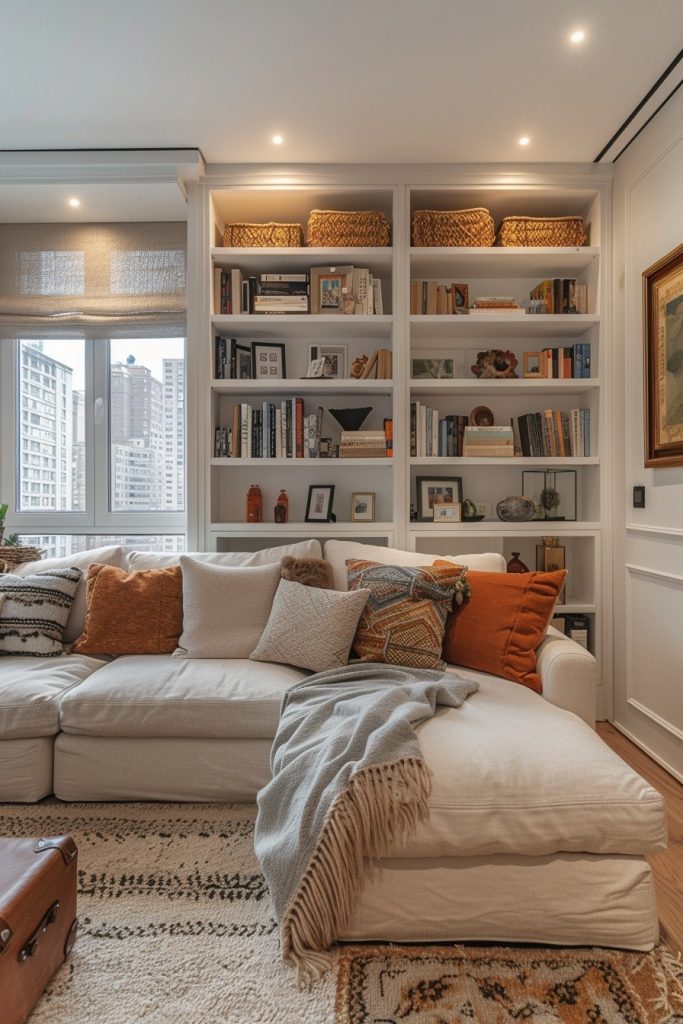
Utilizing corner spaces effectively is crucial in practical living room designs for small spaces. Corner sofas, L-shaped desks, or corner shelves utilize areas that are often overlooked, providing extra seating or storage without cluttering the central area. This layout allows for better flow and movement within the room. By transforming corners into functional areas, small living rooms can feel more spacious and organized.
💡 Steal This Look
- Paint Color: Sherwin-Williams Alabaster SW 7008
- Furniture: L-shaped sectional sofa or corner loveseat with storage ottoman; floating corner shelving unit; corner desk with built-in storage
- Lighting: Corner floor lamp with adjustable arm or recessed corner lighting
- Materials: Light wood shelving, upholstered corner seating in neutral fabric, metal shelf brackets
Corner spaces are hidden real estate in small living rooms—treating them as premium zones for seating or smart storage instantly transforms a cramped layout into an organized, intentional space.
Underfoot Secrets
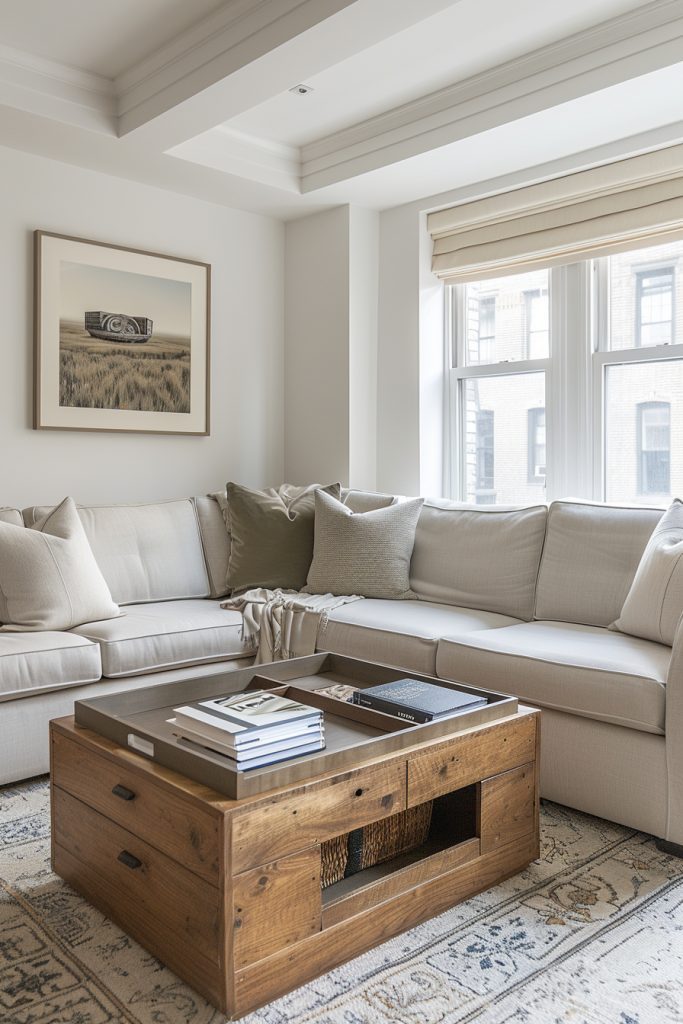
In practical living room designs for small spaces, hidden storage solutions like underfoot compartments can be a game-changer. Installing drawers or lift-up panels on the flooring allows for additional storage without compromising on style or living area. This type of design is particularly effective in minimizing visual clutter while maximizing available space. It’s an innovative way to keep daily essentials out of sight but within easy reach.
✎ Steal This Look
- Paint Color: Benjamin Moore Classic Gray HC-170
- Furniture: Low-profile modular sofa with storage base, minimalist coffee table with hidden compartment, sleek floating shelves
- Lighting: Recessed ceiling lights with dimmer control to maintain clean sightlines
- Materials: Light oak or whitewashed wood flooring with integrated storage panels, neutral upholstery, polished concrete or light stone accents
Hidden underfoot storage is the ultimate small-space hack for people who want that serene, clutter-free living room without sacrificing functionality. It’s like having a secret bonus room built right into your floor.
Floating Decor
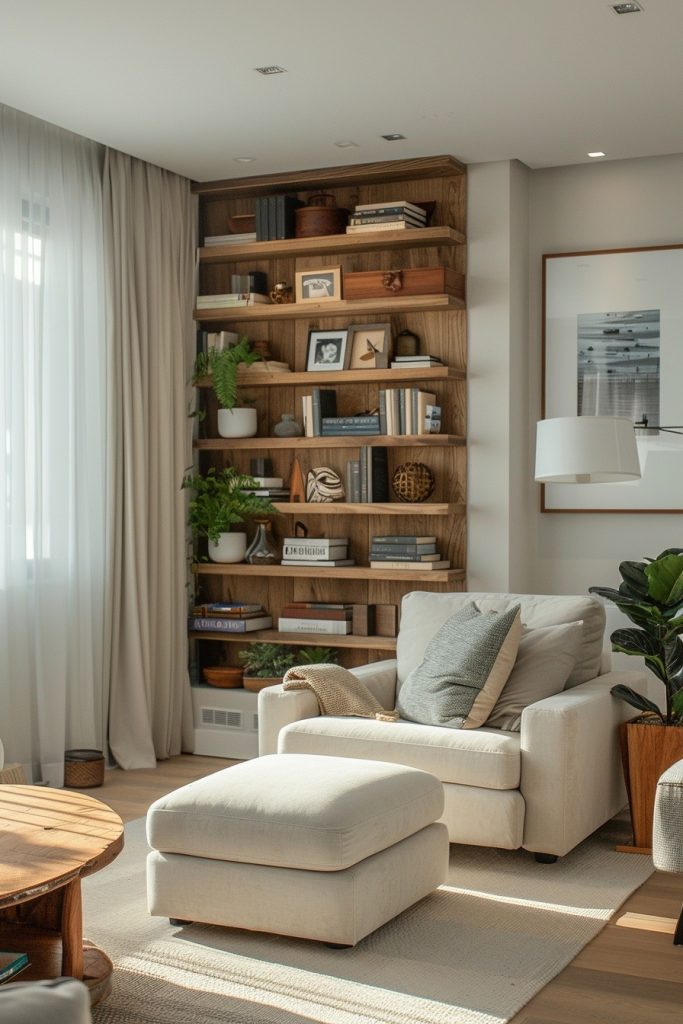
Floating shelves and wall-mounted units in practical living room designs for small spaces serve multiple purposes without sacrificing floor space. These elements can be used for storage, display, and even as media centers, keeping the floor clear and the room looking more open. By elevating decor and storage, the room’s vertical space is maximized, enhancing the overall sense of spaciousness. Floating furniture also contributes to a modern and clean aesthetic, crucial for small spaces.
💡 Steal This Look
- Paint Color: Farrow & Ball Pointing Point 41
- Furniture: Minimalist floating shelves (12-24″ depth), wall-mounted media console, corner floating desk
- Lighting: Recessed LED spotlights or track lighting directed at shelves
- Materials: Light oak or white-painted wood shelving, brushed metal brackets, glass or wood back panels
Floating shelves are the quiet hero of small-space living—they give you storage without the footprint of a traditional bookcase. When done right, they make the room feel intentional and curated rather than cramped.
Convertible Magic
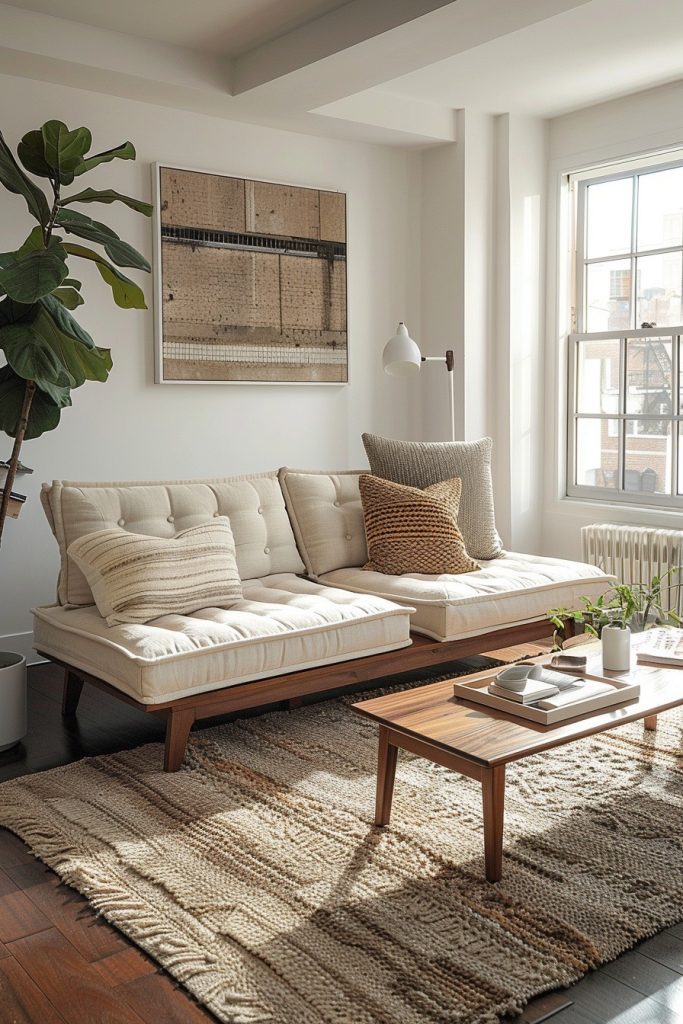
Convertible furniture, such as sofa beds or extendable coffee tables, is essential in practical living room designs for small spaces. These pieces serve dual functions, reducing the need for separate items and saving space. For example, a sofa that converts into a bed can transform a living area into a guest room in moments, offering flexibility in small apartments. The smart use of such furniture allows residents to adapt their space to various needs without clutter.
🏠 Steal This Look
- Paint Color: Behr Polar Bear N520-1
- Furniture: Gray upholstered convertible sofa bed with clean lines and compact footprint; nesting coffee table with hidden storage
- Lighting: Minimalist pendant light or track lighting to maximize vertical space without floor clutter
- Materials: Performance fabric upholstery (stain-resistant), metal frame legs, engineered wood with matte finish
Convertible furniture is the hero of small-space living—it trades visual simplicity for functional intelligence. The right piece transforms your evening hangout into tomorrow’s guest bedroom without sacrificing style or square footage.
Multi-Tasking Coffee Tables
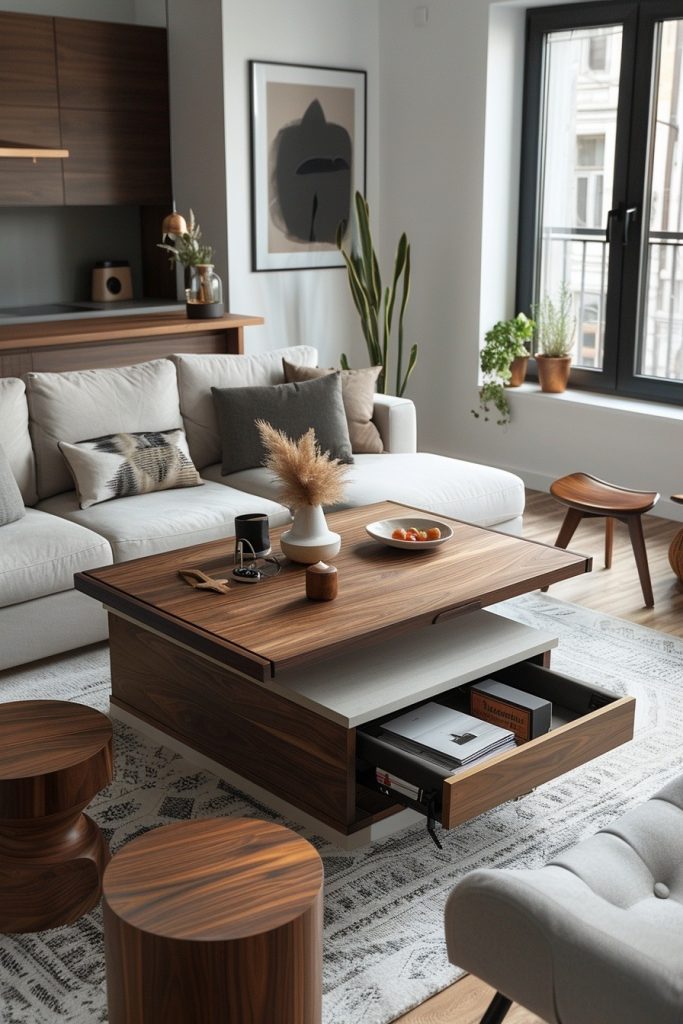
Coffee tables with built-in storage, adjustable heights, or hidden compartments are perfect for practical living room designs for small spaces. These tables can serve as dining areas, work desks, and storage units, all while providing a central piece for the living room. Choosing a multi-tasking coffee table ensures that every piece of furniture adds value and functionality, crucial in limited spaces. Such tables help keep the living area versatile and clutter-free.
🖼 Steal This Look
- Paint Color: Valspar Alabaster White 7008 – a soft, neutral white that maximizes light in small spaces and allows multi-functional furniture to stand out as focal points
- Furniture: Multi-functional coffee table with lift-top storage, adjustable height, and hidden compartments; pair with a compact sectional or apartment-scale sofa in neutral gray or cream
- Lighting: Recessed ceiling lights or a slim track lighting system to keep sightlines open without table lamps consuming surface area
- Materials: Natural wood with metal hardware, glass tops for visual lightness, and soft-close mechanisms for quiet, practical operation
Multi-tasking furniture is the secret weapon of small-space living. A coffee table that lifts, extends, and hides clutter transforms your living room from cramped to cleverly designed.
Slimline Storage
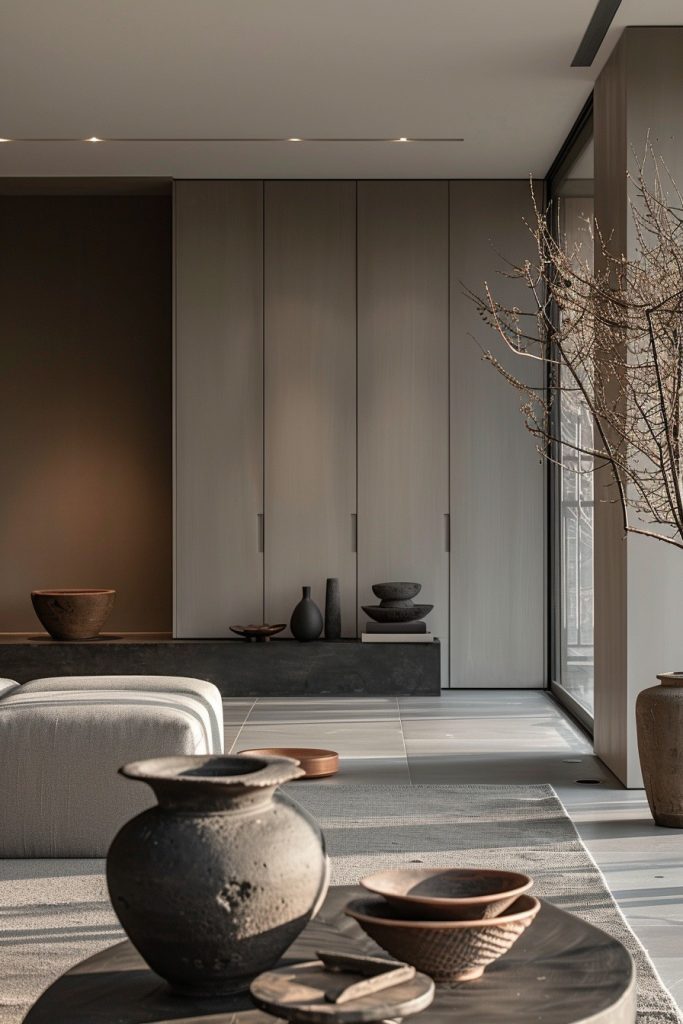
Slimline storage solutions are tailored for practical living room designs for small spaces. Narrow shelving units, slim cabinets, and sleek sideboards can provide ample storage without taking up much room. These pieces are designed to fit into tight spaces or against walls, maximizing living areas without compromising on storage needs. Their sleek design also contributes to a modern and uncluttered look, essential in smaller living rooms.
🖼 Steal This Look
- Paint Color: PPG Mindful Gray PPG1012-3
- Furniture: Narrow wall-mounted floating shelves (24-30″ deep), slim vertical cabinet with closed storage, sleek low-profile sideboard under 18″ depth
- Lighting: Recessed track lighting or under-shelf LED strip lights to avoid floor space
- Materials: Light wood veneer, matte metal frames, glass shelf fronts for visual lightness
Slimline storage is the secret weapon for small living rooms—it gives you breathing room while keeping everything you need within arm’s reach. The key is choosing pieces that feel intentional, not cramped.
Space-Smart Seating
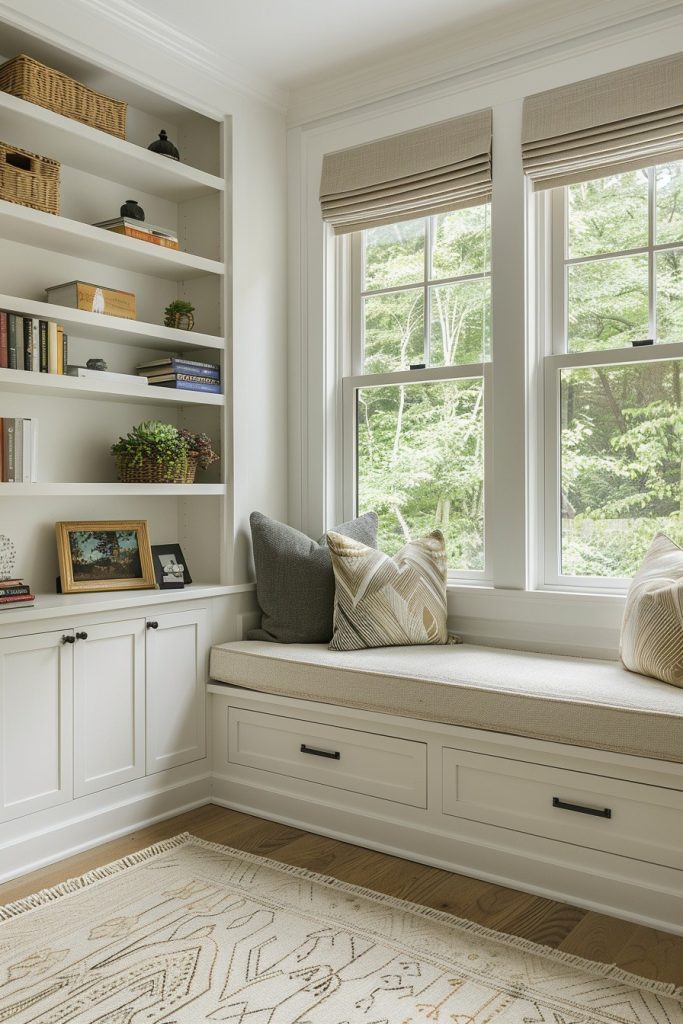
Benches that offer built-in storage provide a dual-purpose solution ideal for practical living room designs for small spaces. These benches not only offer additional seating but also include compartments for storing blankets, books, or electronic accessories, helping keep the living area tidy and organized. Positioned against a wall or under a window, such benches maximize floor space while adding to the room’s functionality. The stylish designs available can complement any decor, making them a practical yet attractive addition to small living rooms.
💡 Steal This Look
- Paint Color: Dunn-Edwards Whisper White DE 6246
- Furniture: Storage bench with lift-top compartment, upholstered seat in neutral linen or performance fabric, 48-60 inches wide for wall placement
- Lighting: Recessed ceiling lights or wall sconces flanking the bench to avoid floor clutter
- Materials: Solid wood frame with upholstered cushion seat, internal partitions for storage organization, durable performance fabric in cream or light gray
A storage bench is the unsung hero of small living rooms: it pulls triple duty as seating, storage, and a visual anchor. Choose one in a light neutral tone to keep the space feeling open and airy.
Save this article
No spam. Unsubscribe anytime.
Efficient Entertainment
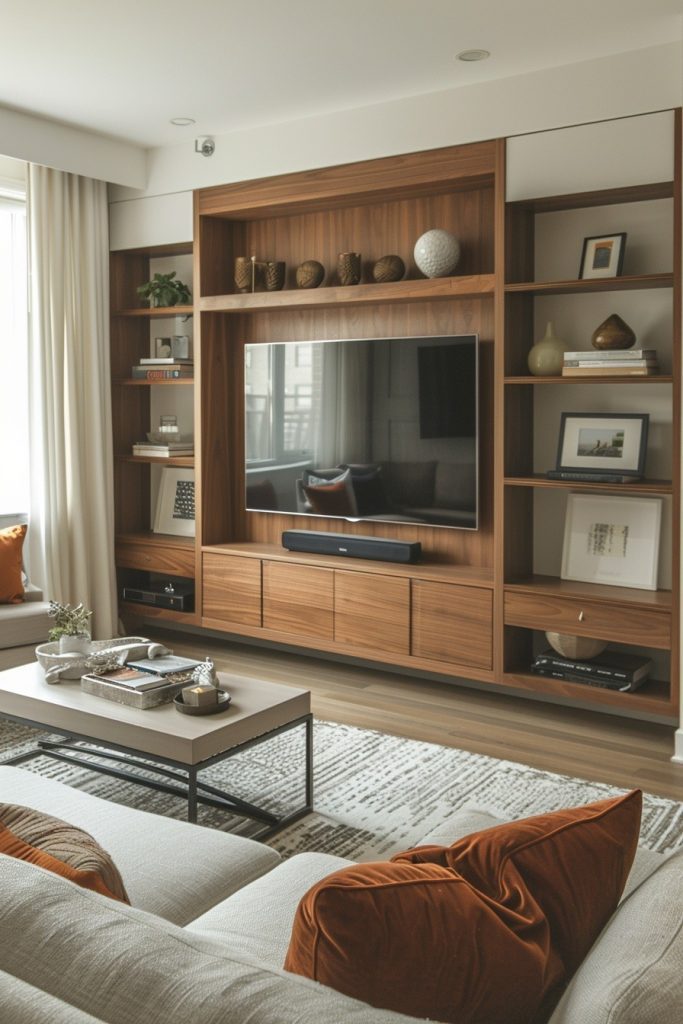
Compact media units that integrate well with other furniture are vital in practical living room designs for small spaces. These units often combine storage with entertainment functions, housing everything from electronics to books in a single, stylish piece. By consolidating these essentials, the room remains organized and spacious. Choosing a unit with a minimalist design can also help maintain a sense of openness in the room.
🏠 Steal This Look
- Paint Color: Clare Paint Bone White OC-17
- Furniture: Low-profile media console with integrated shelving and closed storage compartments, 48-60 inches wide, in light wood or white lacquer finish
- Lighting: Recessed ceiling lights with dimmable LED capability for glare-free screen viewing
- Materials: Light wood veneer, matte white lacquer, open shelving with metal frame accents, cable management systems
A compact media unit is the anchor of small-space living—it’s where technology and storage converge without sacrificing style. The key is choosing one that looks intentional, not squeezed in.
Seating Smarts
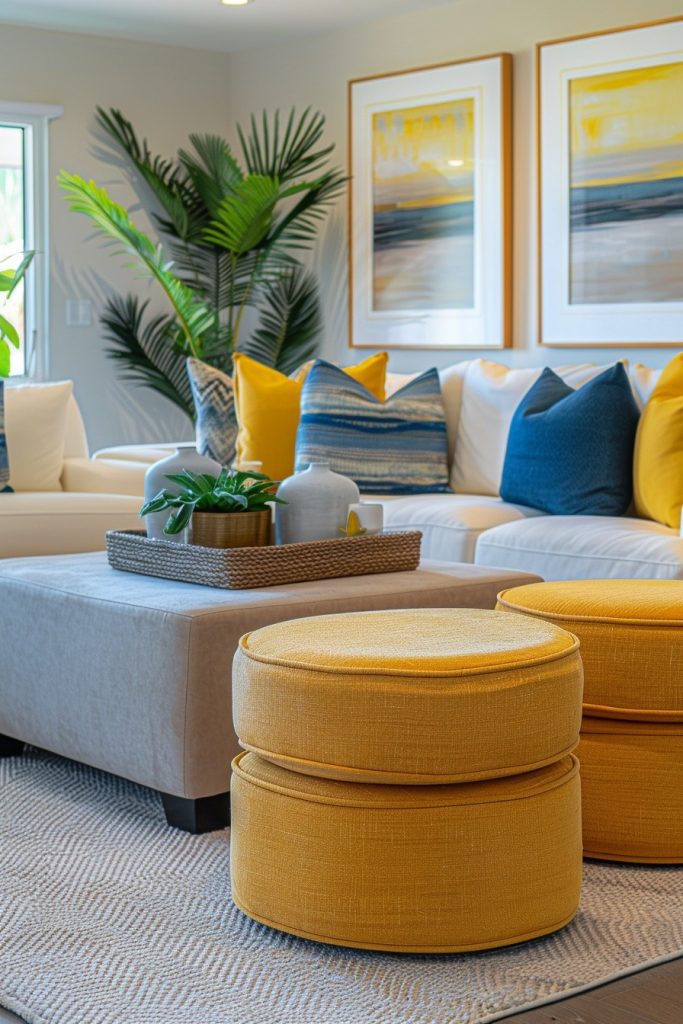
In practical living room designs for small spaces, choosing the right seating can make a big difference. Options like foldable chairs, stackable stools, or benches that can be tucked under tables when not in use save space while providing ample seating. This smart seating strategy ensures that you can host multiple guests without permanently reducing your living room’s free area. The ability to easily store these seating options also keeps the living room versatile and spacious.
🌟 Steal This Look
- Paint Color: Fine Paints of Europe Shades Collection – Linen White 10
- Furniture: Stackable dining chairs with clean lines, foldable accent chairs in neutral tones, upholstered storage benches that tuck under console tables
- Lighting: Recessed ceiling lights or track lighting to maximize floor space and avoid floor lamps that consume valuable square footage
- Materials: Lightweight wood frames, neutral upholstery (linen, cotton blend), metal folding mechanisms, solid wood for storage benches
The smartest small-space living rooms treat seating as flexible, not fixed. When your chairs fold away and benches slide under tables, you’re not just saving space—you’re giving yourself permission to use your room differently depending on the day.
Optical Illusions
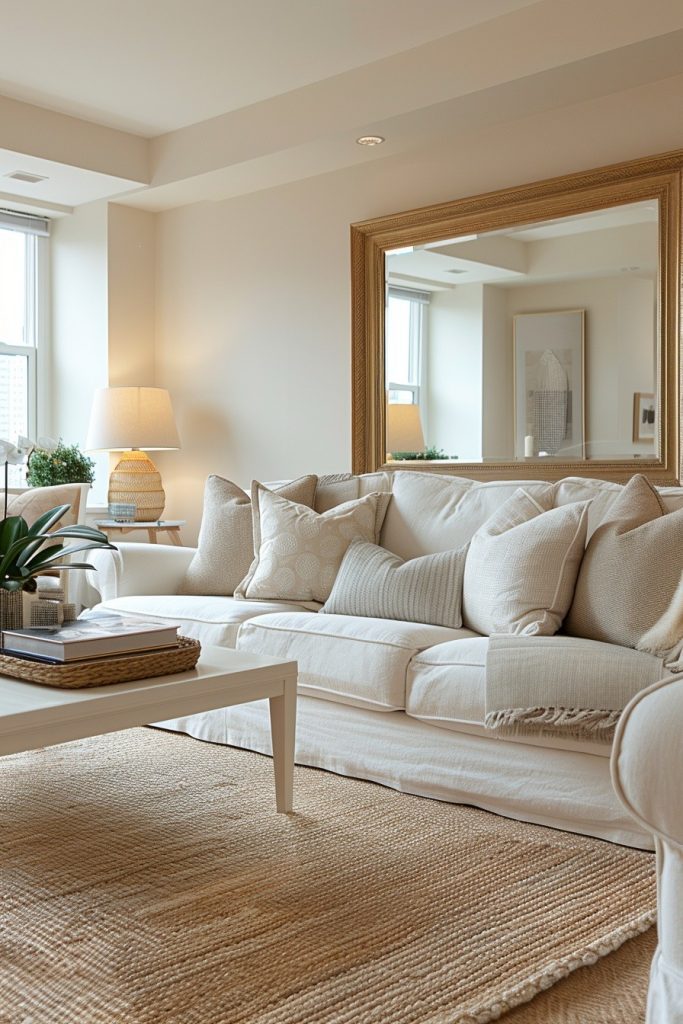
Using optical illusions is a clever tactic in practical living room designs for small spaces. Mirrors strategically placed to reflect light can make rooms appear larger, while the right wall colors and large windows can create a feeling of openness and depth. Light-colored walls and floor coverings can make a small space feel airy and bigger than it is. Employing these visual tricks can transform a cramped space into a welcoming area.
✎ Steal This Look
- Paint Color: Backdrop Cloud White BDL-01
- Furniture: Low-profile sofa with clean lines, glass or lucite coffee table, floating shelves
- Lighting: Recessed ceiling lights with dimmer capability, arc floor lamp with brass finish
- Materials: Light oak or whitewashed wood flooring, sheer white curtains, polished chrome mirror frames
Optical illusions are the secret weapon for small living rooms. They’re cost-effective transformations that require no structural changes—just smart placement of reflective surfaces and thoughtful color choices.
Dual-Purpose Decor
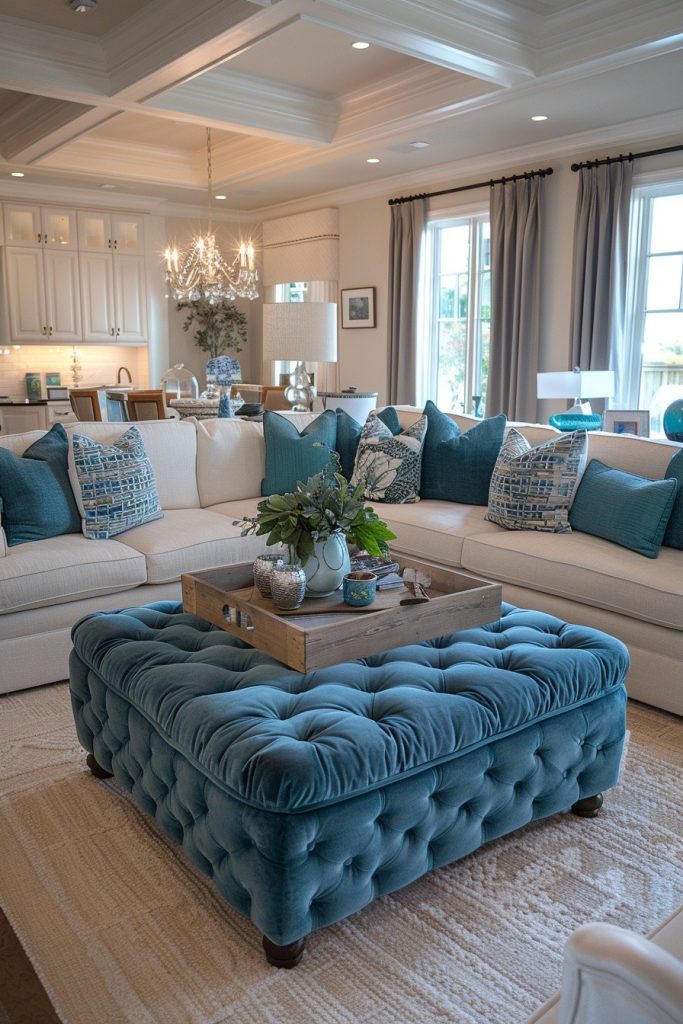
In practical living room designs for small spaces, every decor element should serve more than one purpose. Ottomans with storage, decorative baskets that double as organizers, and couches with built-in shelves help save space while adding aesthetic value. Choosing decor that is both functional and stylish ensures efficient use of space without sacrificing design. This approach allows for a clean, organized living room that meets all functional needs.
★ Steal This Look
- Paint Color: Sherwin-Williams Accessible Beige SW 7036
- Furniture: Low-profile sectional with built-in storage, nesting coffee tables, storage ottoman with lid
- Lighting: Flush-mount or semi-flush ceiling fixture in brushed nickel to maximize headroom
- Materials: Upholstered storage ottoman in neutral linen, woven seagrass baskets, light wood shelving, soft textile blends
In small living rooms, beauty and brains go hand-in-hand. When every pillow pouf, basket, and side table pulls double duty, you get breathing room and style without compromise—the sweet spot for practical living.
Space-Expanding Mirrors
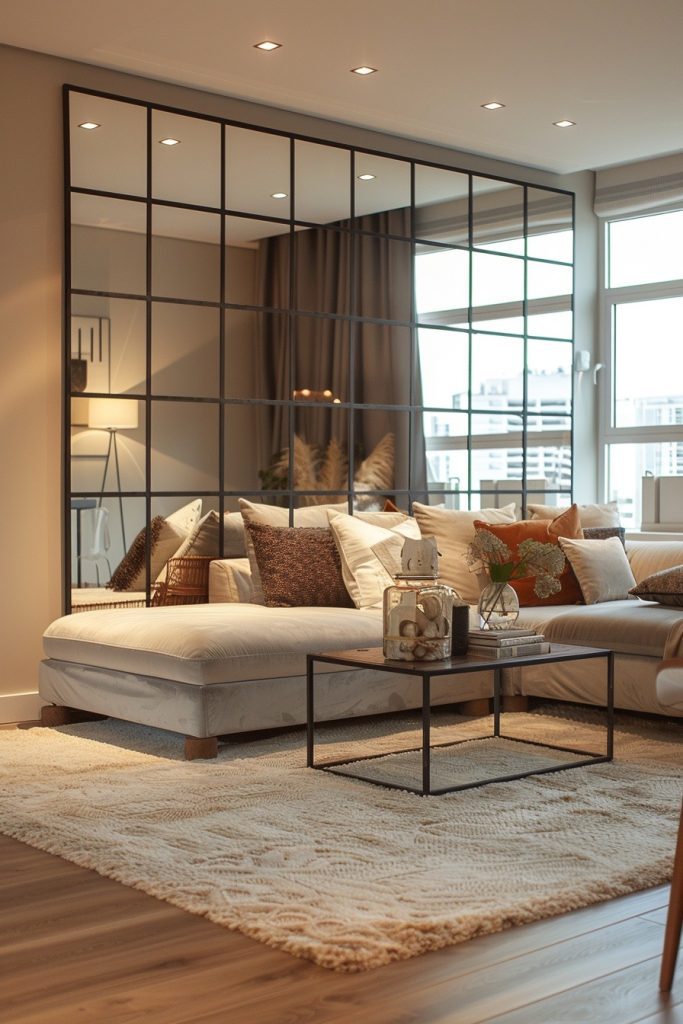
Implementing mirrors in practical living room designs for small spaces can significantly enhance the perception of space. Placing large mirrors opposite windows can amplify natural light and visually double the room’s size. Mirrors also add a decorative element, with stylish frames that complement the room’s decor. This simple addition can make a small living room feel much larger and more open.
🖼 Steal This Look
- Paint Color: Benjamin Moore Cloud White OC-17
- Furniture: Low-profile sectional or apartment-scale sofa in neutral gray or cream to keep sightlines open
- Lighting: Recessed ceiling lights or track lighting to avoid visual clutter and work with mirror placement
- Materials: Light wood flooring or light-colored area rug; metal mirror frames in brushed gold or black for contrast against white walls
Mirrors are a small-space secret weapon—they’re functional, decorative, and instantly make apartments feel airier. Styled frames transform them from practical into purposeful design.
Vertical Solutions
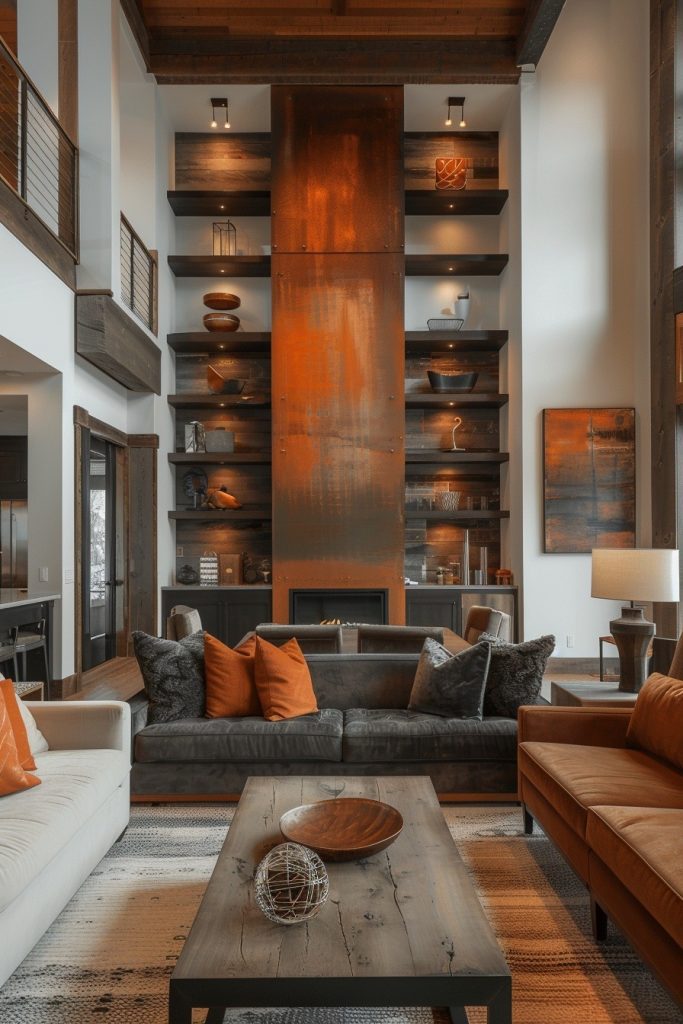
Utilizing vertical space is key in practical living room designs for small spaces. Tall shelving units, hanging plants, and vertical art pieces draw the eye upward, making ceilings appear higher and the room more spacious. This strategy not only saves floor space but also enhances the room’s aesthetic by adding layers and interest at different heights. Vertical storage solutions are both practical and visually appealing, making them perfect for small living rooms.
🌟 Steal This Look
- Paint Color: Farrow & Ball Pointing PF-27
- Furniture: floor-to-ceiling open shelving unit in natural wood or white lacquer; tall, narrow bookcase with adjustable shelves
- Lighting: recessed ceiling lights or track lighting to highlight vertical elements without taking up floor space
- Materials: light wood, metal brackets, floating shelves, natural linen for hanging plants, matte finishes to reduce visual clutter
Vertical solutions are the secret weapon for small living rooms—they transform what could feel cramped into a curated, layered space that rewards your eye every time you look up.
Nested Necessities
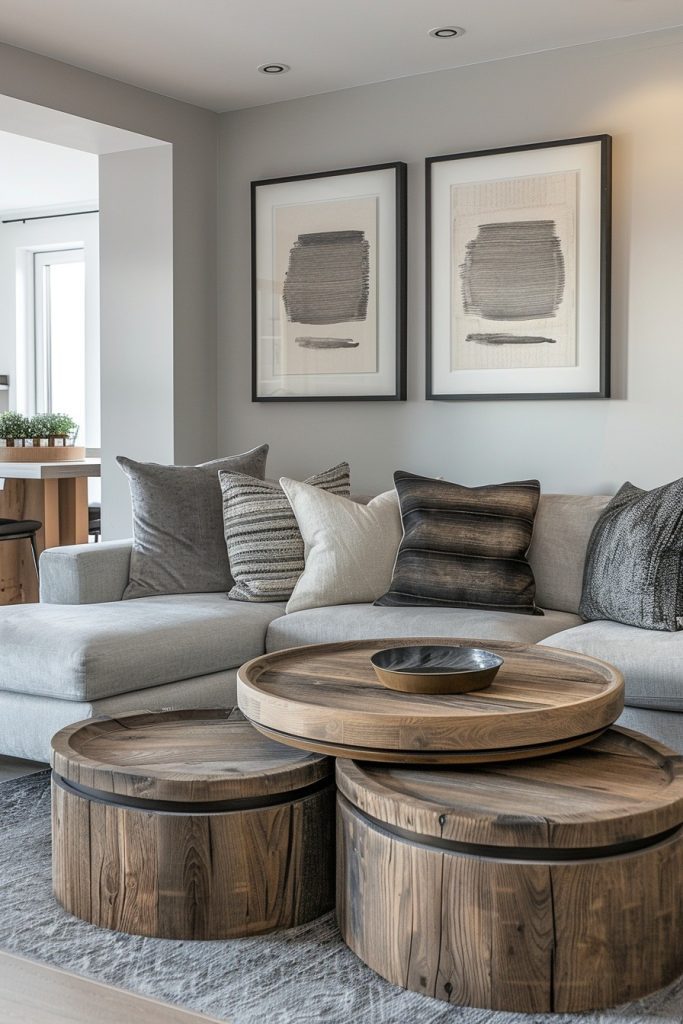
Nested furniture is an excellent choice for practical living room designs for small spaces. Nested tables and chairs can be easily moved and reconfigured as needed, offering flexibility in a compact space. When not in use, these items can be tucked away, freeing up floor space for other activities. This type of furniture is ideal for small living rooms where versatility and space efficiency are essential.
★ Steal This Look
- Paint Color: Behr Ethereal White N520-1
- Furniture: Natural wood nesting tables with clean lines; stackable accent chairs in warm neutrals or light oak finish
- Lighting: Adjustable floor lamp with brass or natural wood base for flexible task lighting
- Materials: Light natural wood, woven rattan or wicker accents, neutral linen or cotton upholstery
Nested furniture is the secret weapon for small living rooms that need to work harder. You get the beauty of layered design with the practical payoff of a room that breathes and adapts to how you actually live.
Zonal Living
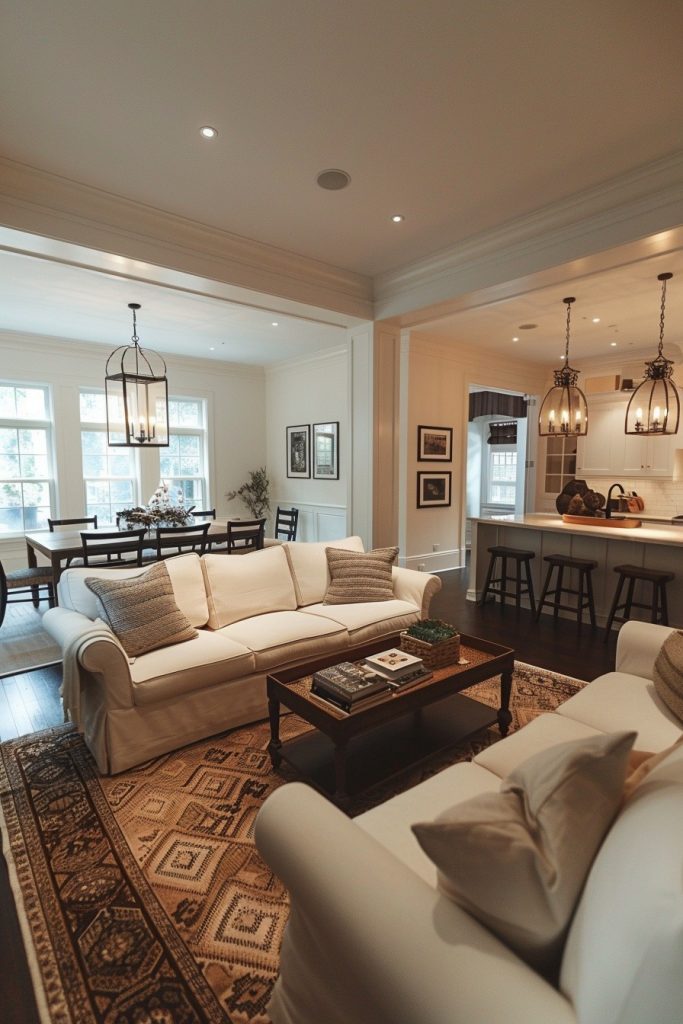
Creating zones in practical living room designs for small spaces can make the area more functional. Using rugs, different paint colors, or unique lighting can define specific areas for dining, lounging, or working within the same room. This organizational strategy helps maintain order and clarity in a small space, making it feel larger and more structured. Zoning is particularly effective in studio apartments or single-room layouts.
★ Steal This Look
- Paint Color: Valspar Creekside Gray 7732-2. A soft, neutral gray that provides visual separation between zones without overwhelming a small space, allowing accent colors in different areas to stand out
- Furniture: Low-profile sectional or modular seating pieces that can be repositioned for different zones; a compact dining table with chairs that tuck underneath; a slim desk or shelving unit that defines a work zone without blocking sightlines
- Lighting: Adjustable track lighting or multiple pendant fixtures on separate dimmer switches to illuminate different zones independently—dining area gets warm task lighting, lounge gets softer ambient light, workspace gets focused brightness
- Materials: Layered area rugs (natural jute or low-pile wool) to anchor each zone visually; natural wood furniture with clean lines for boundary definition; metal-frame dividers or shelving in matte black or brass to section without solid walls
Zoning transforms a small living room from feeling chaotic to purposeful—each area has a job, your eye knows where to rest, and the space actually feels larger because it’s organized. It’s the practical secret to making one room do the work of three.
Decorative Dividers
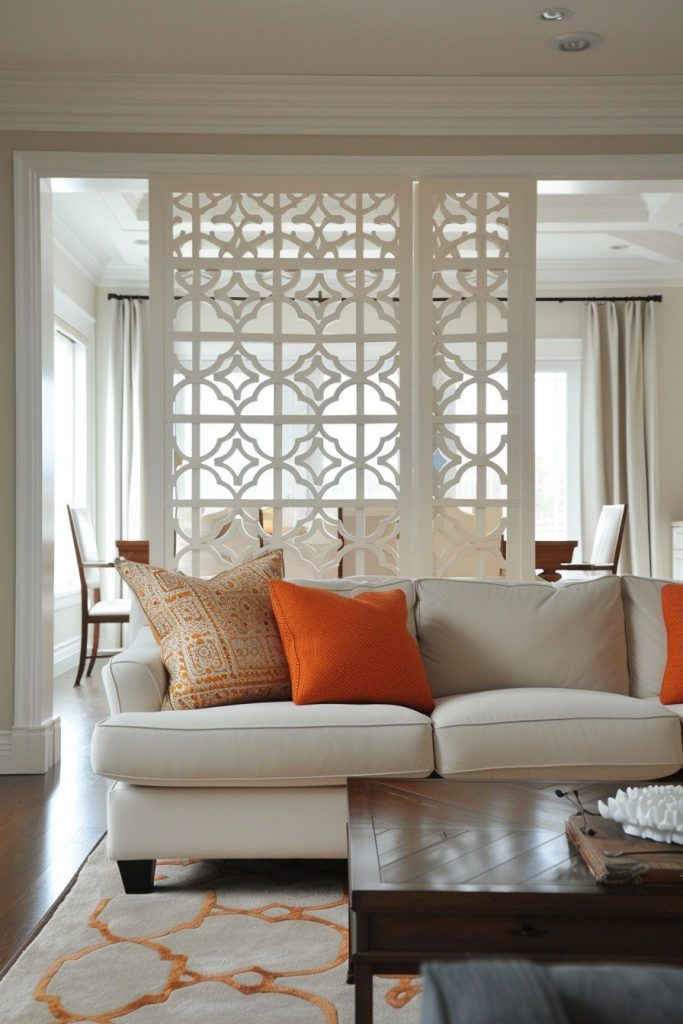
In small living spaces, decorative dividers can help define areas without enclosing them, maintaining an open feel while adding a touch of style. These dividers can be lightweight and movable, offering flexibility to change the layout as needed. They are perfect for separating a dining area from a sitting area or creating a small workspace within a larger room. With various designs from traditional to modern, these dividers not only enhance privacy but also serve as a focal point.
🏠 Steal This Look
- Paint Color: PPG Accessible Beige PPG1088-3 – a warm neutral backdrop that allows decorative dividers to become the focal point without competing for visual attention
- Furniture: Lightweight room divider with geometric or slatted design (wood or metal), positioned to define zones between sitting and dining areas without blocking sightlines
- Lighting: Pendant lights or flush-mount fixtures positioned above distinct zones to reinforce spatial separation created by divider
- Materials: Natural wood slats, matte black metal frames, or woven rattan panels for visual interest; paired with open shelving dividers to maximize light flow in compact spaces
Decorative dividers are the secret weapon for small-space living—they give you the benefits of separate rooms without sacrificing the openness that makes compact spaces feel breathable. A well-chosen divider becomes functional art.
Under-Window Utilization
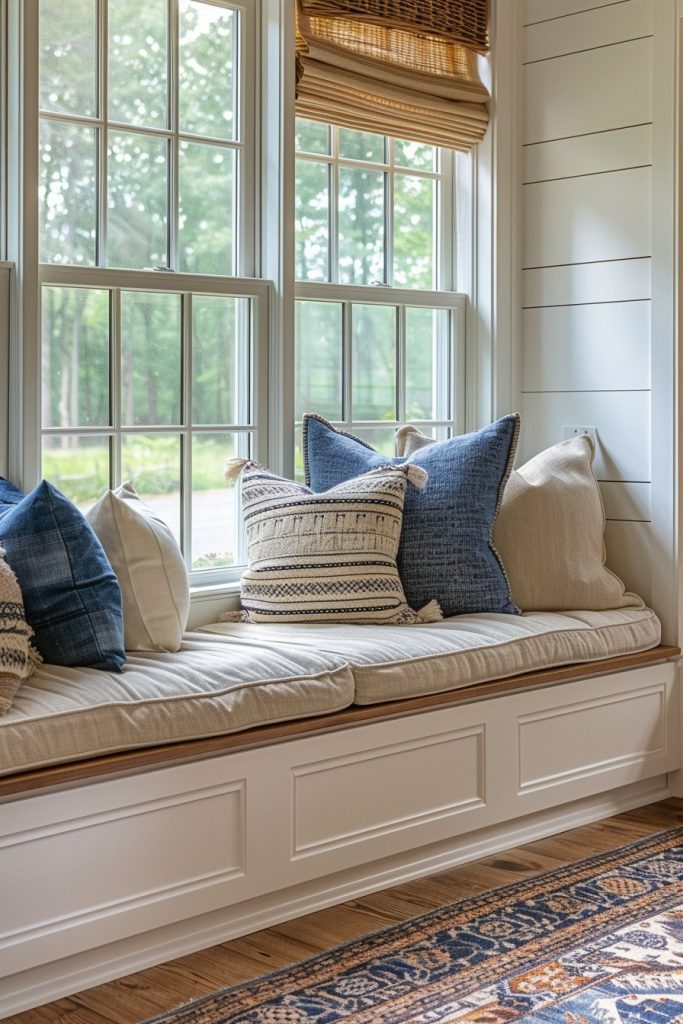
Making use of the space under windows is a smart move in practical living room designs for small spaces. Low storage units or benches under windows not only provide extra seating or storage but also do not block natural light. This utilization of space is particularly effective in small living rooms, where every inch counts. Under-window furniture can also enhance the room’s decor, adding an element of design while being highly functional.
🌟 Steal This Look
- Paint Color: Dunn-Edwards Whisper White DE 6182
- Furniture: Low-profile window bench with built-in storage, light wood frame with neutral cushioning
- Lighting: Recessed ceiling lights or track lighting to preserve wall space and avoid blocking window area
- Materials: Natural wood, light linen or canvas upholstery, soft cushioning for seating comfort
Under-window seating transforms dead space into a dual-purpose zone—a cozy reading nook that doesn’t steal square footage. It’s the kind of smart, invisible design that makes small living rooms actually feel livable.
Low-Profile Luxury
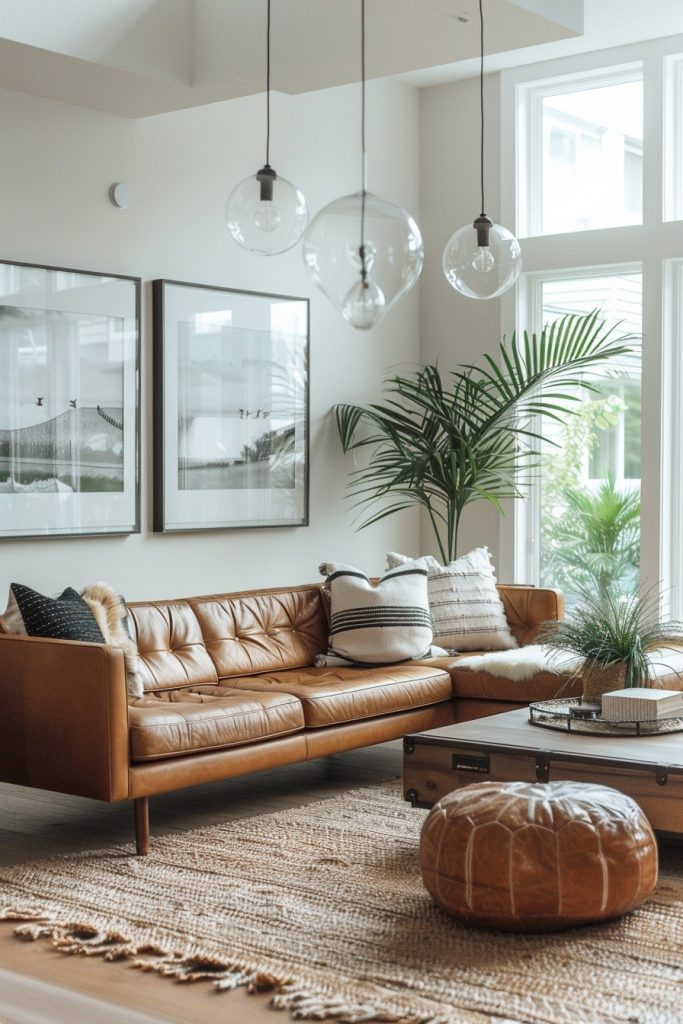
Choosing low-profile furniture can have a big impact on practical living room designs for small spaces. Low sofas, tables, and other pieces keep sight lines open and make the space feel larger. This type of furniture tends to be sleek and modern, fitting well with contemporary decor styles. Low-profile designs are not only stylish but also help create the illusion of more space, which is crucial in small areas.
🎨 Steal This Look
- Paint Color: Clare Paint Pale Oak OC-20
- Furniture: Low-profile sectional sofa with clean lines, low-slung coffee table in walnut or light oak, minimalist TV console under 12 inches tall, floating shelving
- Lighting: Recessed ceiling lights with modern track lighting or slim pendant fixtures to maintain open sightlines
- Materials: Light wood, matte metals, neutral upholstery (cream, greige, soft gray), concrete or polished concrete accents
Low-profile luxury is about making small spaces feel intentional and curated, not cramped. The sleek, modern aesthetic suggests a homeowner who values breathing room and refined simplicity.
Minimalist Methodologies
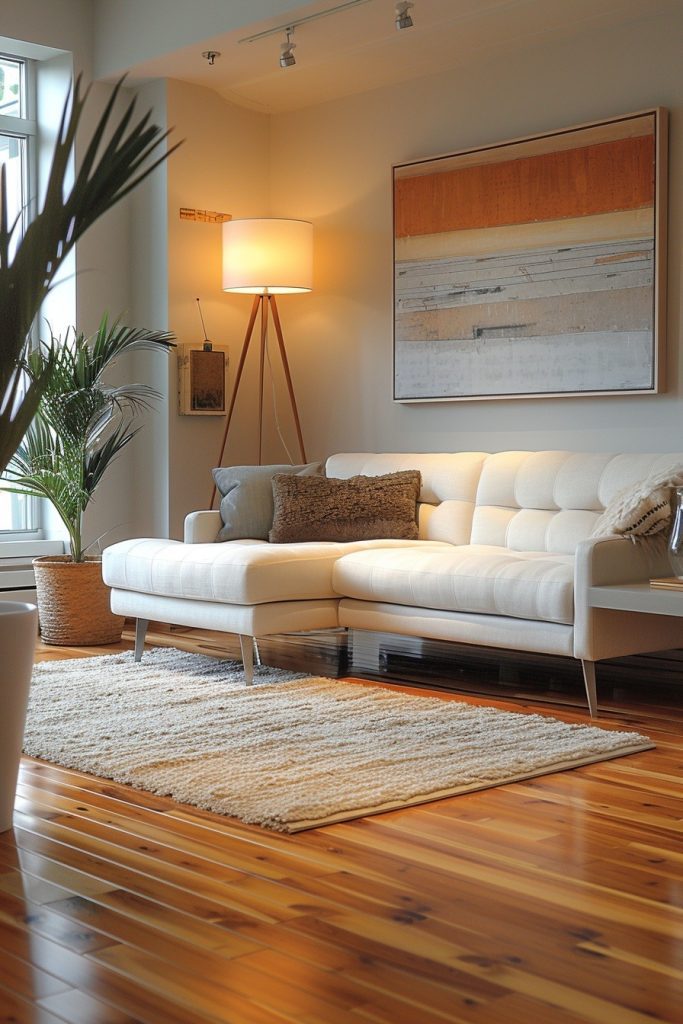
Adopting minimalist methodologies can greatly benefit practical living room designs for small spaces. By reducing clutter and focusing on the essentials, minimalist living rooms appear larger and more open. Simple, clean designs with a limited color palette and streamlined furniture emphasize space over stuff. This approach not only makes small living rooms more functional but also promotes a calm, orderly environment.
💡 Steal This Look
- Paint Color: Fine Paints of Europe Casein White 10
- Furniture: Low-profile sectional sofa in neutral linen, wall-mounted floating shelves, minimalist coffee table with clean lines, storage ottoman that doubles as seating
- Lighting: Recessed ceiling lights with dimmer control, single pendant light or track lighting for focused task illumination
- Materials: Natural wood, linen, concrete, matte metal finishes, light stone
Minimalist living rooms prove that less truly is more—a thoughtfully curated space with breathing room feels more luxurious and livable than one stuffed with furniture. This approach transforms small spaces into intentional sanctuaries rather than cramped quarters.
Invisible Influence
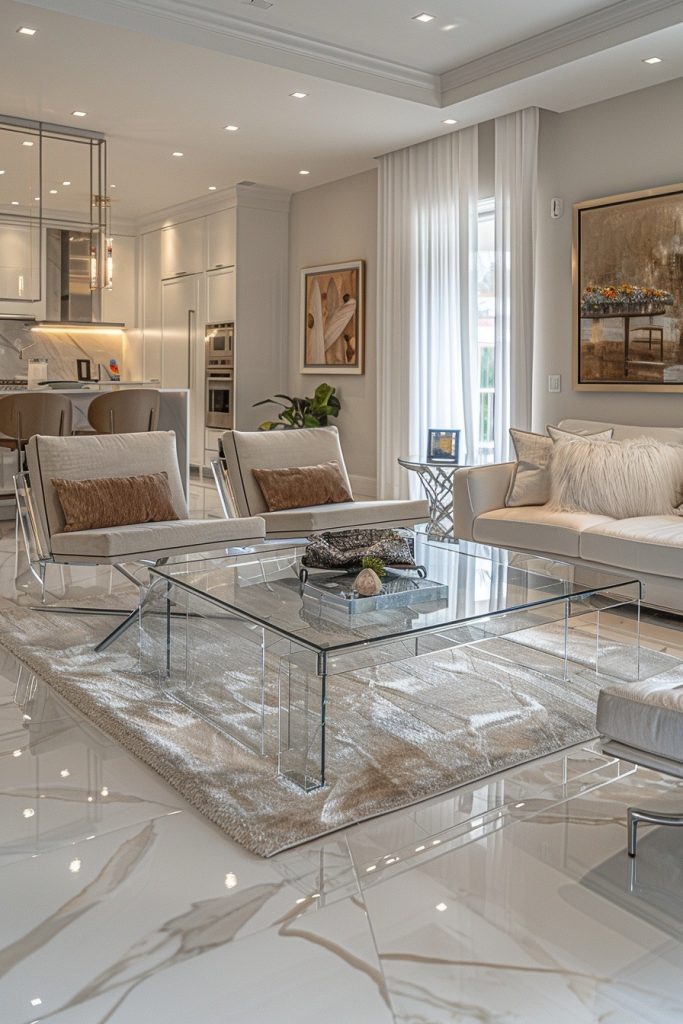
Incorporating clear furniture, like glass tables or acrylic chairs, can visually expand practical living room designs for small spaces. These pieces take up less visual space than traditional furniture, helping the room appear larger and less cluttered. Clear furniture is particularly effective in very small spaces, where every square inch is noticeable. This approach maintains functionality while ensuring the living room feels open and airy.
🌟 Steal This Look
- Paint Color: Backdrop Cloud White BDC-01
- Furniture: Glass coffee table with metal frame, acrylic or clear resin side chairs, transparent acrylic accent table
- Lighting: Sleek pendant light with minimal metal frame and clear glass shade, or recessed ceiling lights to maintain visual openness
- Materials: Glass, acrylic, brushed metal, light wood accents, soft area rug for warmth and texture grounding
Clear furniture is the secret weapon for small living rooms that need to feel bigger without sacrifice. It’s about letting light and sight lines flow through the space while keeping every piece doing real work.
Compact Classics
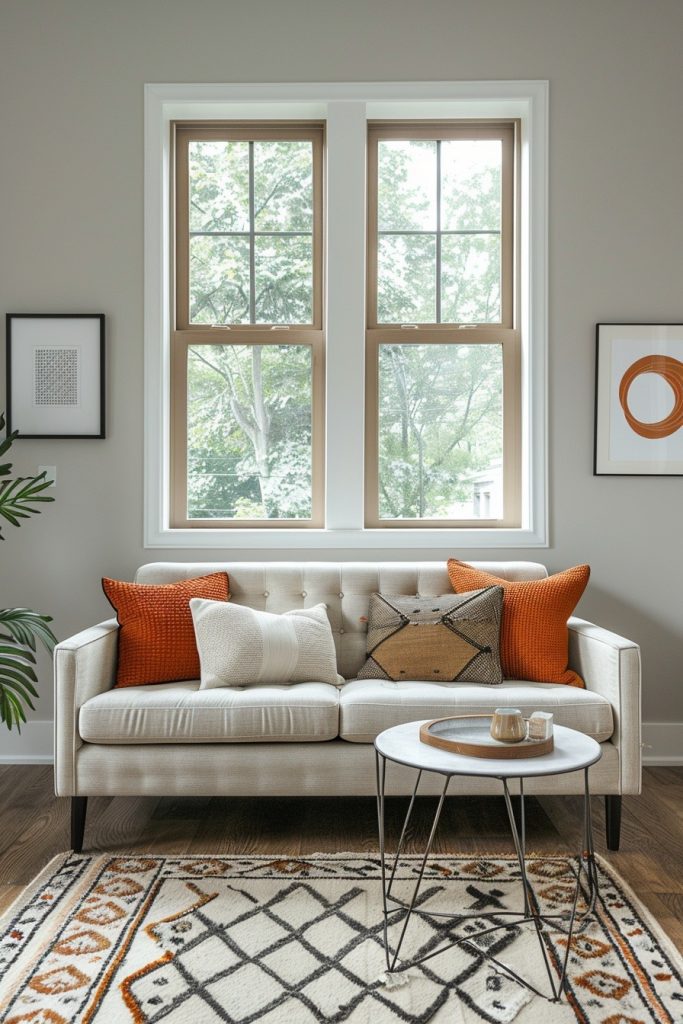
Choosing sofas that are designed to fit small spaces can transform a cramped living room into a comfortable and stylish area. These compact sofas come in various styles, ensuring they don’t overwhelm the space while providing ample seating. With clever design features such as slender arms, low backs, or legs that lift the sofa off the floor, these pieces can make the living area appear more spacious. They allow for flexible arrangement options and can be easily paired with other small-scale furniture.
🌟 Steal This Look
- Paint Color: Sherwin-Williams Alabaster SW 7008
- Furniture: Compact loveseat with slender arms and lifted legs (72-inches or under); low-profile side table; wall-mounted shelving to maximize vertical space
- Lighting: Slim floor lamp with narrow base; recessed ceiling lights or track lighting to avoid floor clutter
- Materials: Light upholstery (linen or performance fabric); natural wood legs; glass or metal side surfaces to maintain visual lightness
Small-space sofas are the MVPs of apartment living—they prove you don’t sacrifice comfort for square footage. The right compact piece becomes the anchor that lets everything else breathe.
Downsize to Upscale
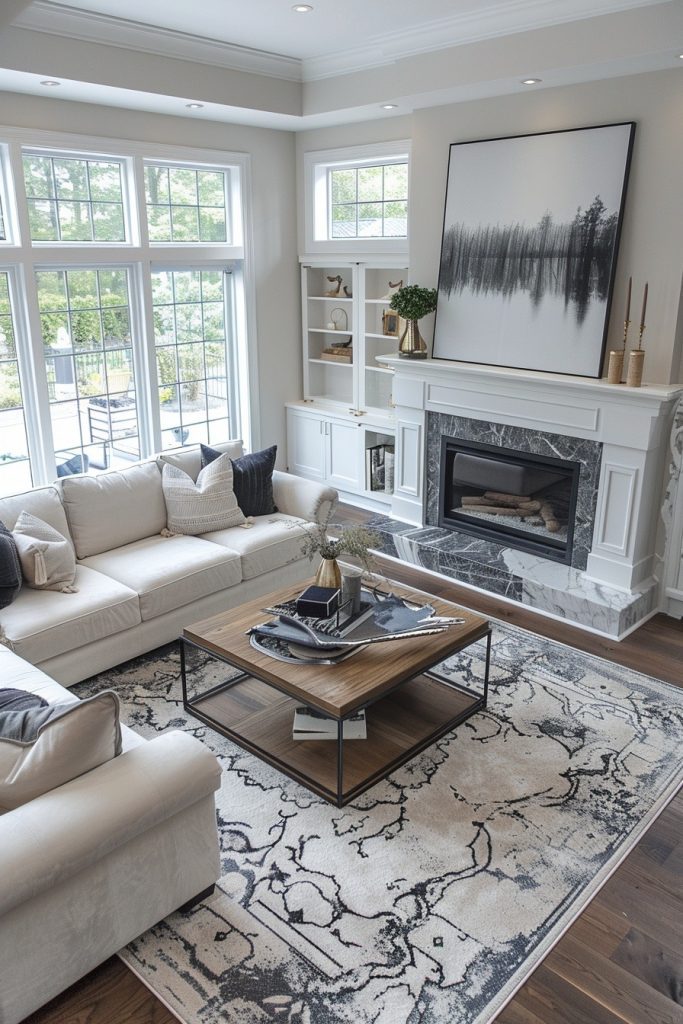
Downsizing furniture and decor can upscale practical living room designs for small spaces. Choosing smaller, more proportionate furniture can make the room feel larger and more luxurious. This strategy involves selecting high-quality pieces that fit the scale of the space, ensuring the living room is comfortable without feeling cramped. Smaller items with upscale designs can significantly enhance the aesthetic of a small living room.
🖼 Steal This Look
- Paint Color: Benjamin Moore Cloud White OC-17
- Furniture: Low-profile modern sectional (72-78 inches), minimalist accent chair with tapered legs, floating shelving unit, slim-profile coffee table
- Lighting: Recessed ceiling lights with modern track fixture or sleek floor lamp with tripod base
- Materials: Light oak or walnut wood, linen upholstery, polished metal accents, natural stone or glass surfaces
Downsizing doesn’t mean sacrificing style. Investing in one or two statement pieces with clean lines and quality finishes creates an intentional, gallery-like feel that actually reads as more luxurious than cramming in multiple items.
Practical Palettes
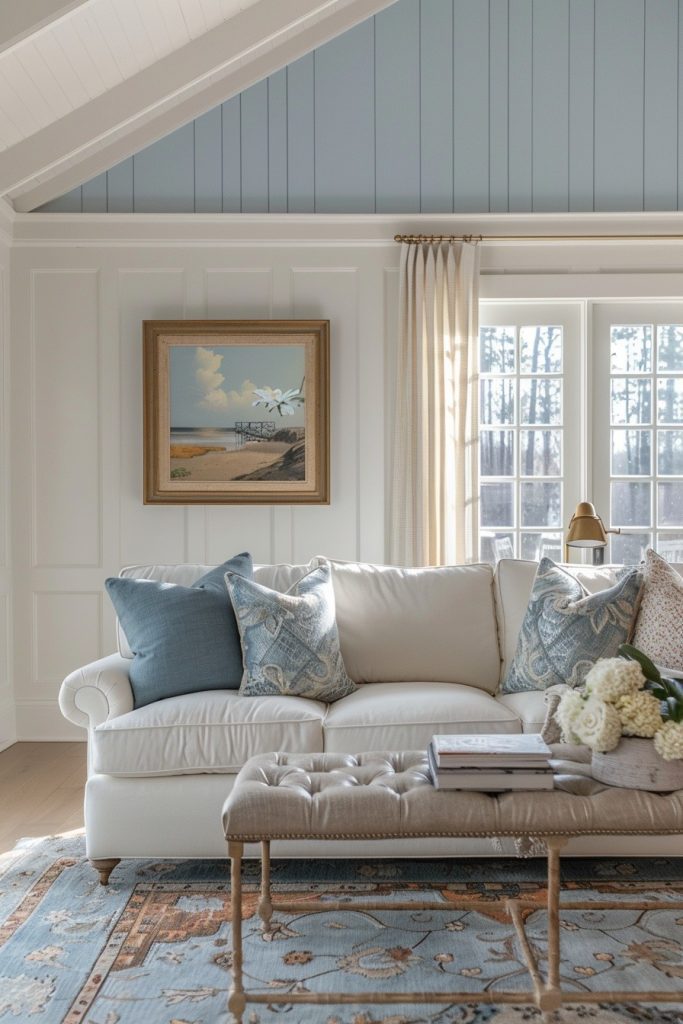
Using practical color palettes is crucial for enhancing practical living room designs for small spaces. Light, neutral colors make small spaces feel bigger and brighter, while cohesive color schemes create a sense of unity and spaciousness. Opting for subtle hues can simplify the space visually, reducing the feeling of clutter and confinement. This approach not only makes the living room appear larger but also offers a timeless elegance.
💡 Steal This Look
- Paint Color: Farrow & Ball Elephant’s Breath 229
- Furniture: Light oak or whitewashed wood frame sofa with neutral linen upholstery; low-profile media console in natural wood; floating shelves in white or pale oak
- Lighting: Recessed ceiling lights with warm 2700K LED bulbs; one sculptural floor lamp with linen shade in corner to avoid visual clutter
- Materials: Soft linen, natural wood, matte finishes; light-colored wool area rug to define seating without visual weight
Neutral doesn’t mean boring. A thoughtfully edited palette in soft taupes, warm creams, and natural wood creates a serene backdrop that lets your best pieces shine while making every square inch count.
Flexible Fixtures
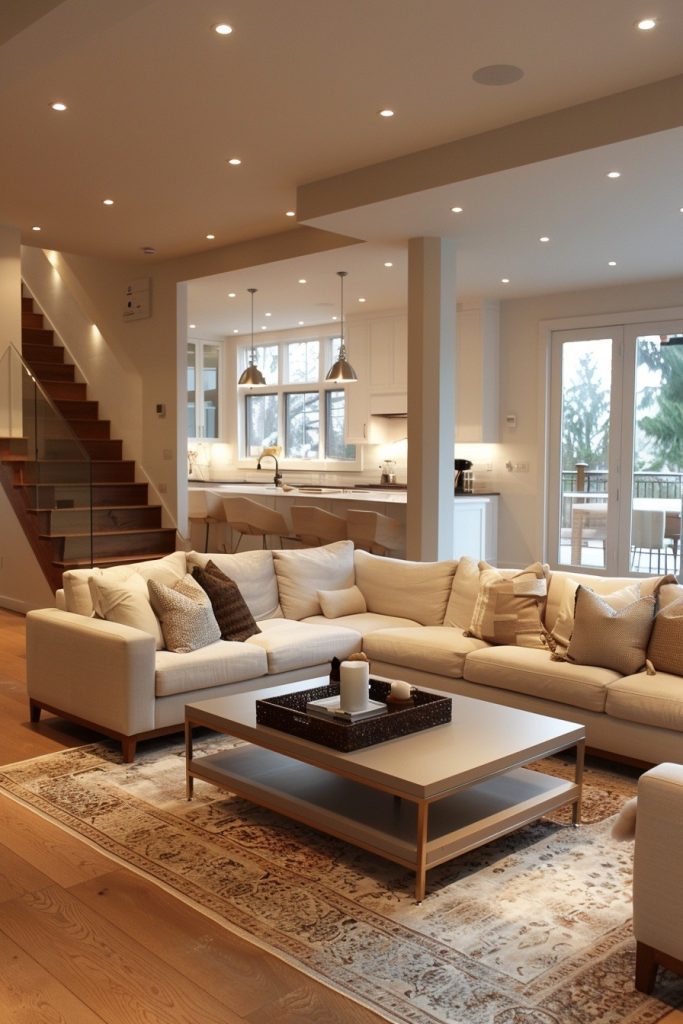
Flexible lighting fixtures are a key element in practical living room designs for small spaces. Adjustable lights, such as track lighting or lamps with movable arms, allow for customization depending on the task at hand. This adaptability is particularly useful in small living rooms, where activities may require different lighting settings. By using versatile lighting, the functionality of the living room can be maximized without using extra space for multiple fixtures.
🎨 Steal This Look
- Paint Color: Behr Swiss Coffee N530-1
- Furniture: Multi-functional sofa with storage arms, nesting side tables, wall-mounted shelving
- Lighting: Black adjustable track lighting system with 3-4 rotating heads or articulating floor lamp with swing arm
- Materials: Matte finishes on walls, brushed metal fixtures, light wood or white laminate for compact storage pieces
Flexible fixtures transform small living rooms from static spaces into dynamic ones. The ability to pivot, dim, or redirect light makes a 200-square-foot room feel intentional and purposeful, no matter what you’re doing.
Smart Separation
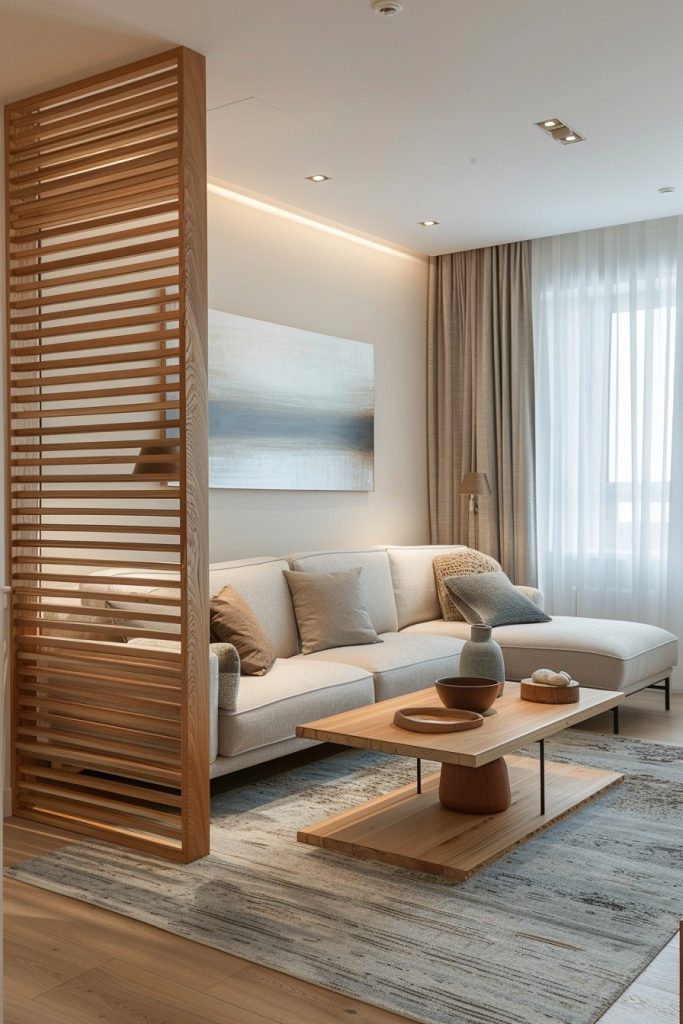
Implementing smart room dividers, such as retractable screens or bookcases, can effectively separate areas within practical living room designs for small spaces. These dividers help define different zones without the permanence or bulk of walls, maintaining flexibility and openness. Using stylish, lightweight dividers can also enhance the decor while improving the functionality of the living area. This strategy is perfect for those who need distinct areas within a small space.
★ Steal This Look
- Paint Color: Valspar Alabaster 7008 – a soft, neutral white that maximizes light reflection and keeps small spaces feeling open while providing a clean backdrop for room dividers
- Furniture: Low-profile sectional or compact sofa paired with a tall, open-frame bookcase room divider in natural wood or black metal to create visual separation without blocking sightlines
- Lighting: Pendant lights or track lighting mounted above to illuminate both zones independently while maintaining overhead clarity in the divided space
- Materials: Natural wood, metal frames, light linen, glass panels—materials that allow sight lines and light to pass through while creating functional separation
Smart dividers are a renter’s secret weapon and a small-space game-changer—they let you have your separation and your openness too. This approach turns a single multipurpose room into distinct living zones without sacrificing the airy feeling that makes small spaces livable.
Window Wonders
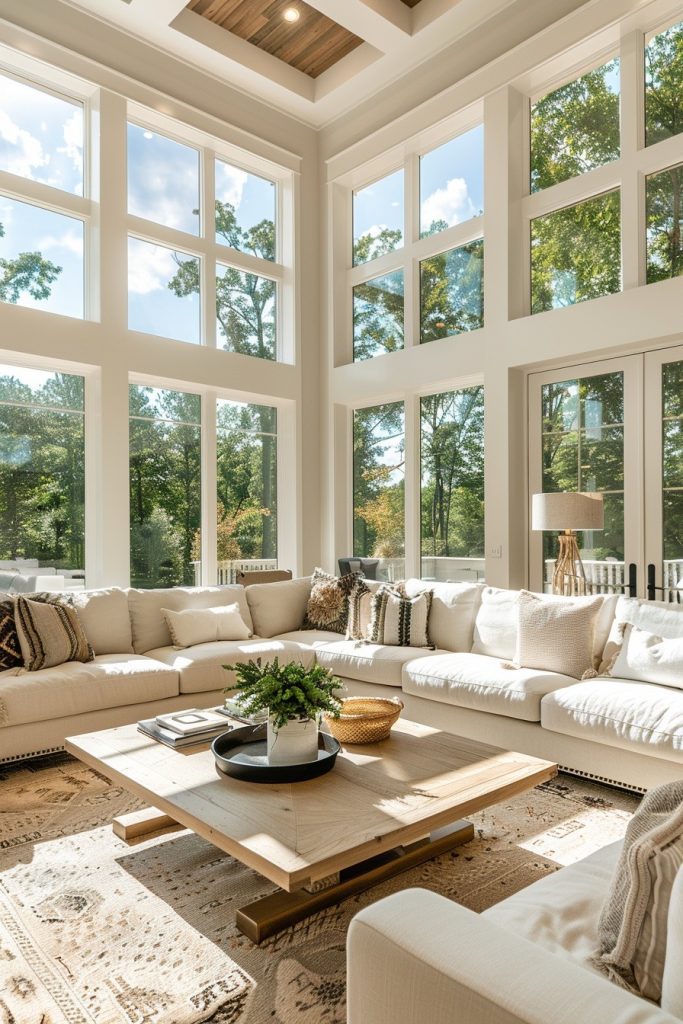
Maximizing the use of windows can transform practical living room designs for small spaces. Ensuring that window areas are unobstructed by heavy curtains or large furniture can flood the room with natural light, making it feel larger and more open. Utilizing the light and view from windows also connects the indoor space with the outdoors, extending the living area visually. Window treatments that enhance privacy without blocking light can greatly improve the usability and appearance of small living rooms.
🌟 Steal This Look
- Paint Color: PPG Accessible Beige PPG1088-1 – a warm neutral that reflects natural light and won’t compete with window views in a small space
- Furniture: Low-profile sofa positioned perpendicular to windows; floating shelving above radiator; narrow console table under window to maximize sill space without blocking light
- Lighting: Recessed ceiling lights on dimmer switches to supplement natural light without adding bulk; avoid floor lamps that obstruct windows
- Materials: Sheer linen curtains or cellular shades for privacy with light filtration; light wood frames and surfaces that don’t visually weigh down the compact room
Windows are the secret weapon in small living rooms—they’re free décor that costs nothing but transforms the entire feel. Treating them thoughtfully means your space breathes light and openness without sacrificing privacy when you need it.
Dynamic Duo
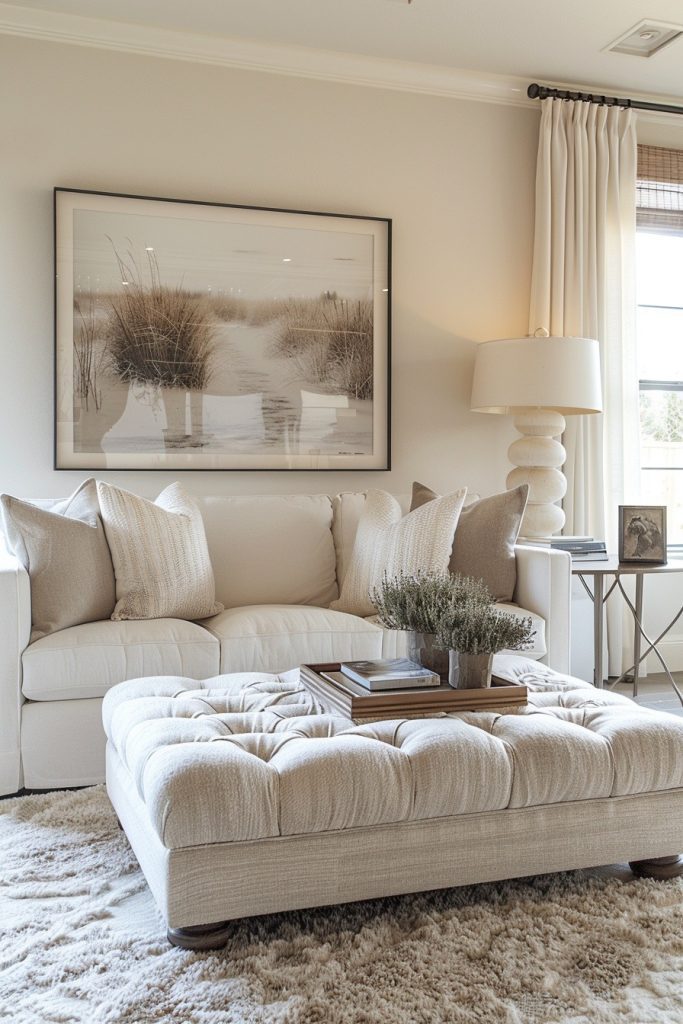
Combining storage with style is essential in practical living room designs for small spaces. Furniture that offers storage space while serving as an attractive part of the room decor maximizes functionality without sacrificing style. For example, stylish ottomans with hidden storage or entertainment units with extra shelving can keep the living room organized and appealing. This approach ensures that every element in the room is both useful and beautiful.
🌟 Steal This Look
- Paint Color: Dunn-Edwards Accessible Beige DE6129
- Furniture: Low-profile storage ottoman with hidden compartment; floating wall-mounted entertainment unit with open shelving
- Lighting: Recessed ceiling lights with track accent lighting for shelf displays
- Materials: Natural wood shelving, upholstered ottoman in neutral linen, metal hardware with warm brass accents
The ‘Dynamic Duo’ approach transforms a small living room from cluttered to curated. By selecting furniture that whispers style while shouting organization, you create a space that feels intentional and uncompromised.
Rug Rules
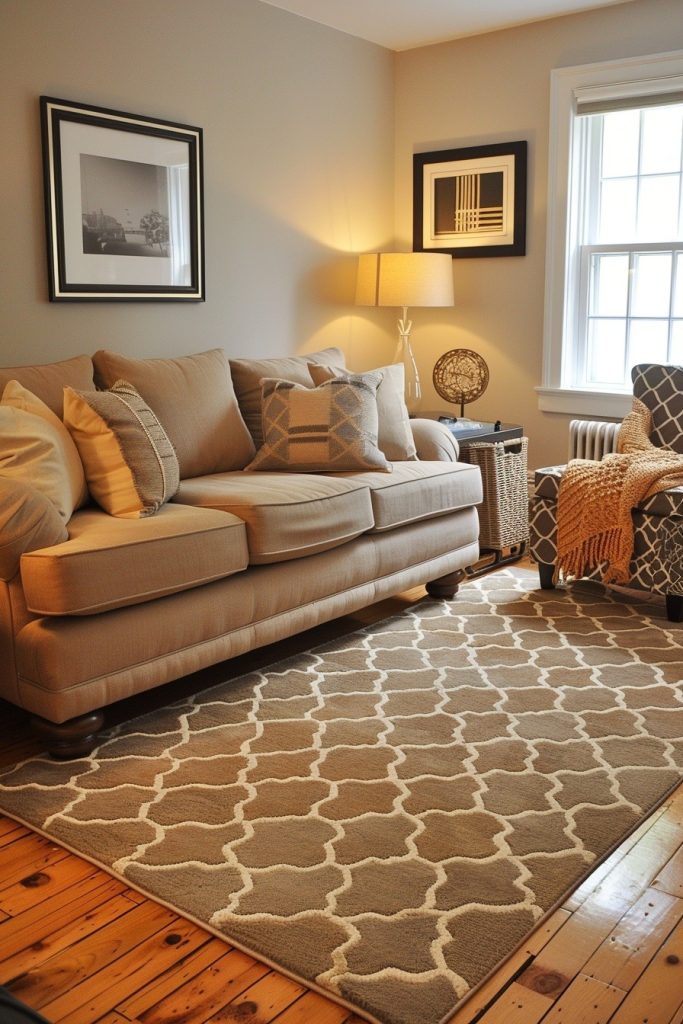
Selecting the right rugs can significantly impact practical living room designs for small spaces. Choosing a rug that is proportionate to the room can define spaces without making them feel smaller. Rugs with light colors or simple patterns can create a sense of more floor space while also adding warmth and texture to the room. The correct placement of rugs can anchor furniture arrangements and enhance the overall design without overwhelming the space.
★ Steal This Look
- Paint Color: Clare Paint Cloud White CWHI
- Furniture: Low-profile sectional or compact sofa paired with a small-scale coffee table
- Lighting: Recessed ceiling lights or track lighting to avoid floor/table clutter
- Materials: Natural jute, sisal, or wool blend rugs; light linens and soft textures
Rugs are the unsung heroes of small-space living—they carve out cozy zones without requiring walls or permanent changes. The right rug is like an invisible hand gently organizing your room.
Livable Layouts
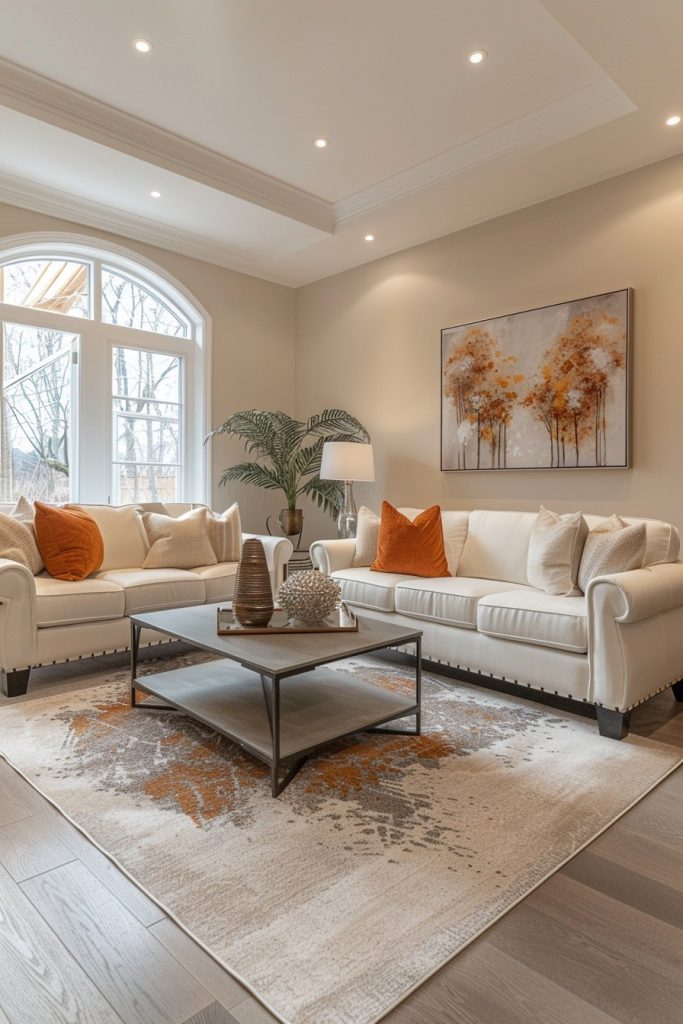
Crafting livable layouts is crucial for practical living room designs for small spaces. Efficient use of space, with attention to traffic patterns and furniture arrangement, can make a small living room more functional and comfortable. Planning layouts that allow for easy movement and accessibility can make the living room feel larger and more welcoming. This process involves considering the scale of furniture and its placement in relation to other room elements.
🖼 Steal This Look
- Paint Color: Fine Paints of Europe Cashmere White 10-1-00
- Furniture: Compact sectional or loveseat (72-84 inches max), low-profile coffee table, wall-mounted shelving instead of floor cabinets, nesting tables for flexibility
- Lighting: Recessed ceiling lights with dimmer switch plus task floor lamp in corner to avoid visual clutter
- Materials: Light oak or ash wood frames, linen upholstery, low-pile area rug to define zones without visual weight
Small living rooms thrive on intention. When you honor how people actually move through the space—not just where they sit—the room stops feeling cramped and starts feeling designed.
Conclusion
These 29 practical living room designs demonstrate that small spaces can be both stylish and functional. By applying clever design strategies and thoughtful space-saving solutions, your living room can become a testament to efficiency and elegance, no matter its size. As you explore ways to incorporate these ideas into your own home, remember that every choice you make—from furniture to storage options—can significantly enhance your living space. Embrace the challenge of a small space and allow these designs to inspire a transformation that maximizes both comfort and style in your cozy living area. Here’s to your journey towards creating a more practical and inviting small living room!
Save this article
No spam. Unsubscribe anytime.