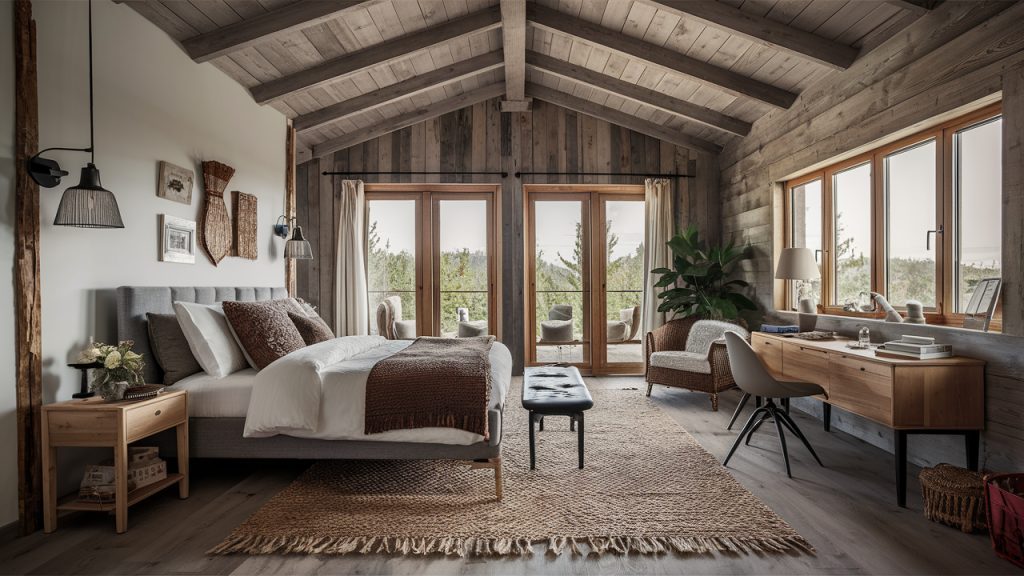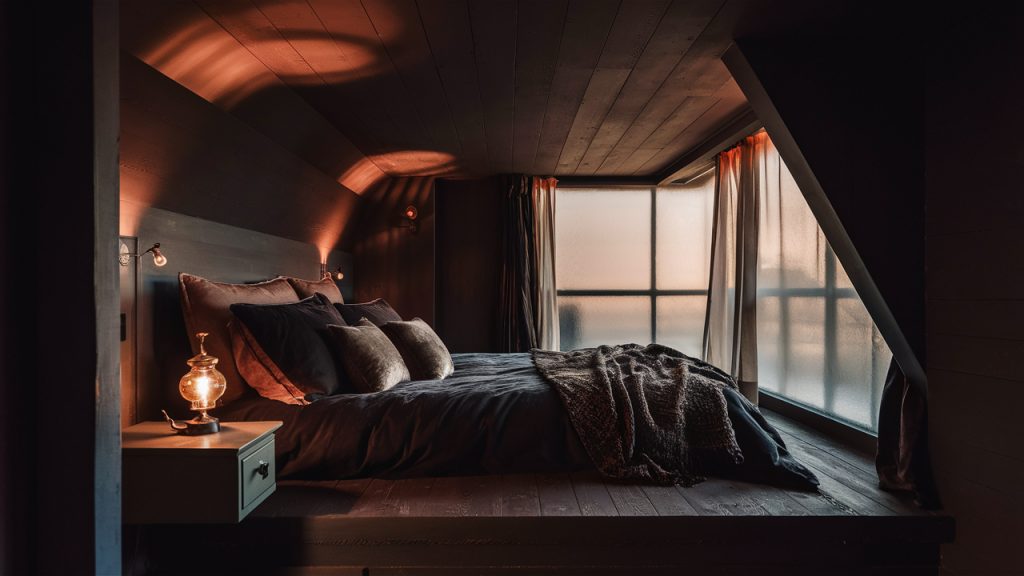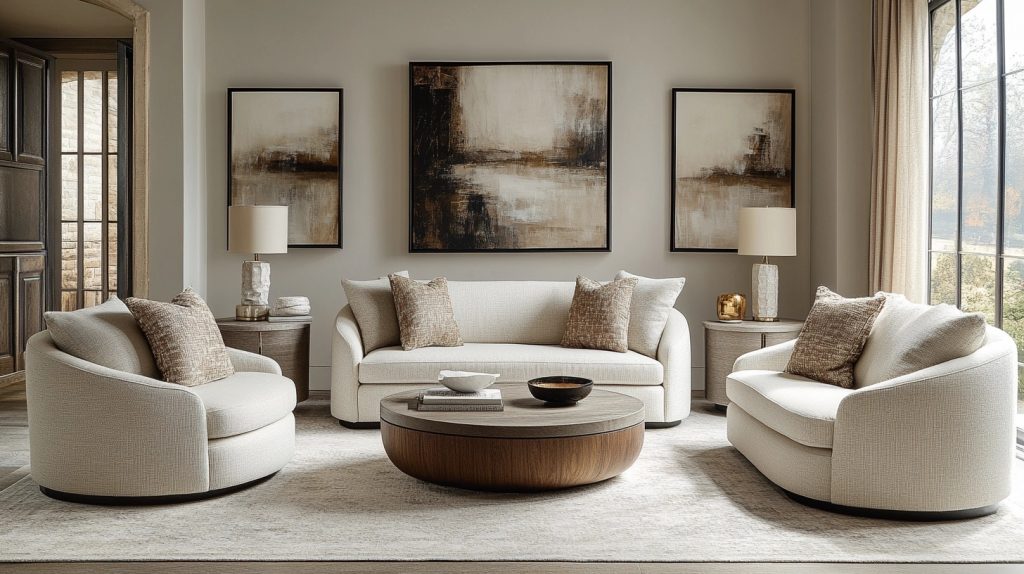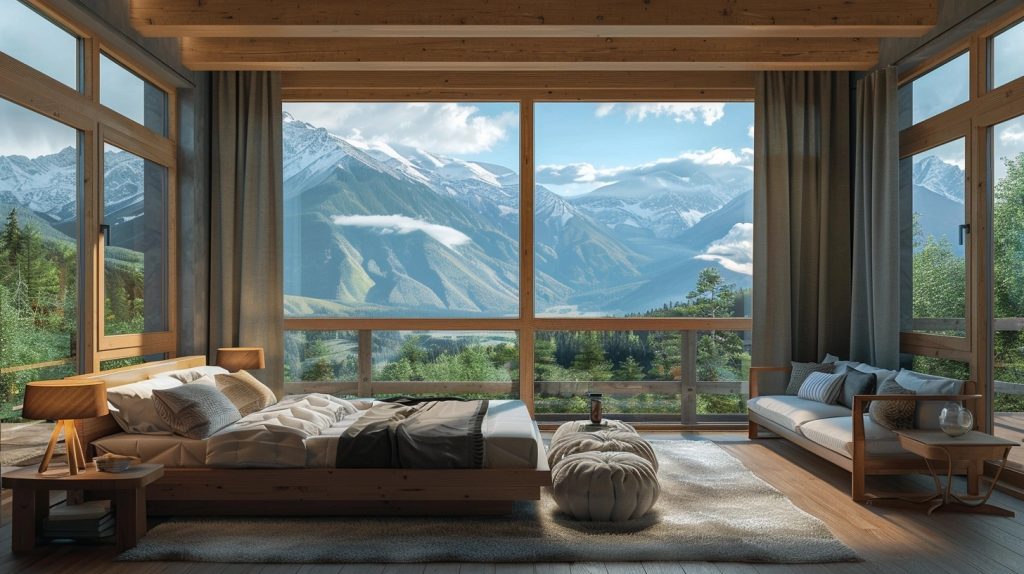
Can a space be hauntingly beautiful without feeling too dark or over-the-top? Absolutely! The Western Gothic aesthetic blends rustic charm with moody elegance, creating a look that’s both bold and captivating. If you’re drawn to the mysterious side of design but still want your space to feel warm and inviting, this style might be perfect for you. In this article, we’ll explore 29 Western Gothic aesthetic ideas that will help you transform your home into a hauntingly beautiful retreat. Ready to dive into this dramatic design style? Let’s get started!
1. Cathedral Shadows

This western gothic aesthetic is epitomized by the grandeur and mystery of cathedral-inspired designs, featuring high arched windows and intricate stone work. These elements create a sense of awe and solemn beauty, typical of gothic architecture, but with a distinctly Western interpretation. Dark, rich colors and dramatic lighting are often used to enhance the moodiness of spaces. Cathedral Shadows incorporate these design elements to evoke spirituality and contemplation in home decor.
★ Steal This Look
- Paint Color: Sherwin-Williams Caviar SW 6990
- Furniture: Tufted velvet chesterfield sofas in deep amethyst, carved ebony coffee tables, wrought iron balcony railings
- Lighting: Ornate wall sconces with amber candlelight glow, iron candelabras, hidden uplighting on exposed ceiling beams
- Materials: Rough-hewn stone walls, dark stained oak ceiling beams, antique Persian rugs with burgundy and purple motifs, stained glass with religious iconography
This room feels like stepping into a secret chapel where outlaw royalty gathers—there’s something almost sacrilegious about how comfortable those velvet sofas look against all that stone solemnity.
2. Midnight Gardens

Midnight Gardens celebrate the western gothic aesthetic by merging the natural with the supernatural. Using dark foliage, winding paths, and hidden nooks, these gardens are designed to feel both enchanting and slightly eerie. They often feature elements like moonlit fountains or gothic statues to enhance the mystical feel. The use of shadow and light plays a crucial role in creating an atmosphere that’s both haunting and beautiful.
★ Steal This Look
- Paint Color: Benjamin Moore Black Forest Green HC-187
- Furniture: weathered stone garden statues, cast iron bench with scrollwork, dark wood arbor with climbing vines
- Lighting: antique bronze post lanterns with amber glass, iron candle lanterns, low-voltage landscape path lights with warm 2700K bulbs
- Materials: irregular flagstone pavers, black lava rock mulch, aged copper, moss-covered stone, wrought iron
There’s something deeply personal about a garden that only reveals its true character after sunset—this is outdoor space designed for introspection, not entertaining.
3. Enchanted Castles
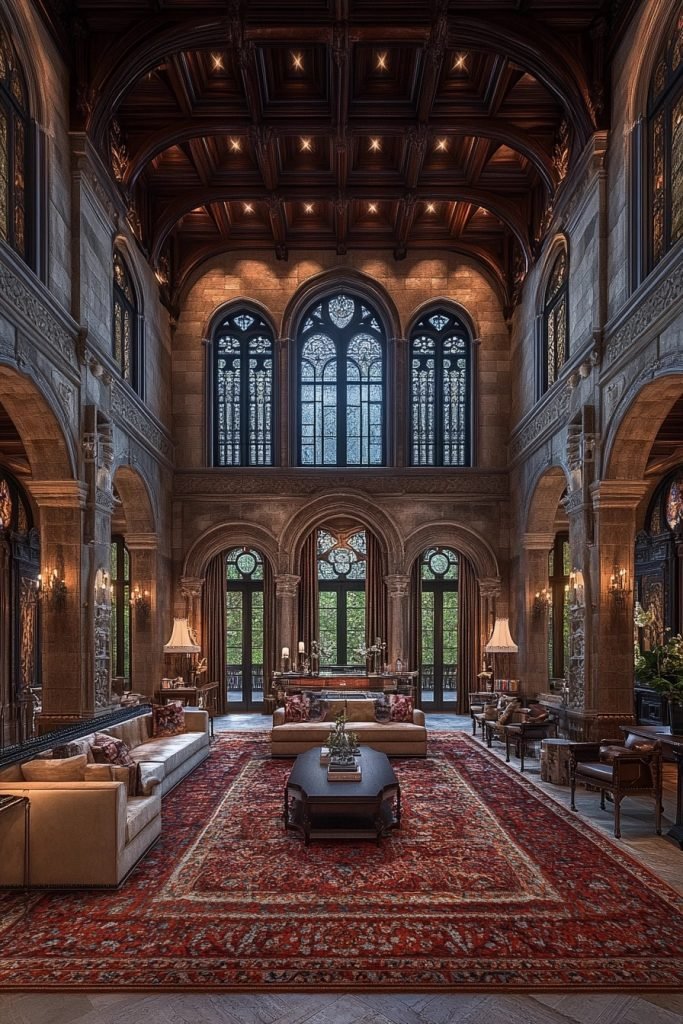
Enchanted Castles draw heavily on the western gothic aesthetic, showcasing features like towering spires, stone battlements, and ornate detailing. These structures often serve as the backdrop for tales of romance and mystery, reflecting the grandiose and dramatic elements of gothic design. Interiors may include heavy draperies, carved woodwork, and tapestries, all of which add to the historic charm. The appeal lies in their ability to transport one to a bygone era of knights and legends.
✎ Steal This Look
- Paint Color: Farrow & Ball Tanner’s Brown DC-8
- Furniture: tufted leather chesterfield sofas in aged camel, carved mahogany accent chairs with worn velvet upholstery, massive dark wood refectory tables
- Lighting: wrought iron torchière floor lamps with aged parchment shades, recessed warm amber ceiling spots in coffered beams, wall-mounted candelabra sconces
- Materials: hand-knotted crimson Persian rugs, rough-hewn limestone, dark stained oak ceiling beams, leaded glass windows, tooled leather, heavy brocade draperies
There’s something almost rebellious about committing this fully to darkness—most people fear it, but here the shadows become architecture themselves, wrapping around you like the castle’s own memory.
4. Velvet Darkness
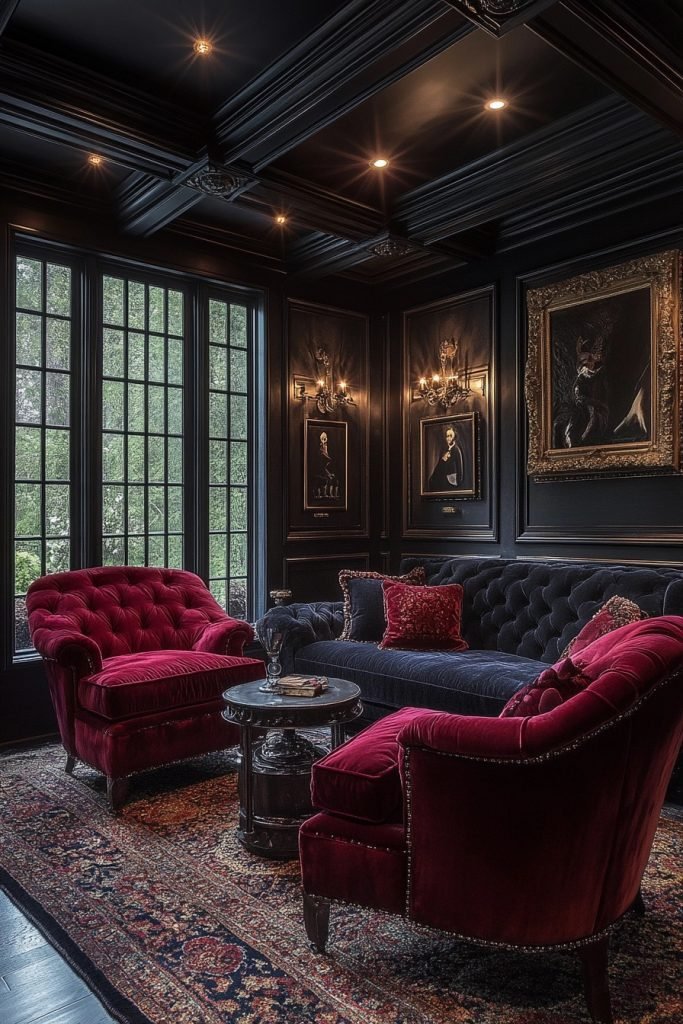
Velvet Darkness takes the western gothic aesthetic to an intimate level, emphasizing luxurious materials like velvet, silk, and brocade. These fabrics contribute to a sensuous atmosphere, perfect for personal spaces like bedrooms and lounges. The deep color palettes combined with ornate furniture pieces create a look that is both opulent and mysterious. This style often incorporates modern touches to keep it fresh and appealing.
🏠 Steal This Look
- Paint Color: Behr Broadway N490-7
- Furniture: tufted velvet Chesterfield sofa in deep navy, matching crimson velvet club chairs with nailhead trim
- Lighting: antique brass wall sconces with candle-style bulbs, recessed warm spotlights in coffered ceiling
- Materials: crushed velvet upholstery, dark mahogany wood paneling, ornate gilded frames, Persian rug with burgundy and navy motifs
This room feels like stepping into a private salon where old whiskey and darker secrets get shared—there’s something deliciously theatrical about velvet that makes everyday lounging feel like an event.
5. Chandeliers and Shadows
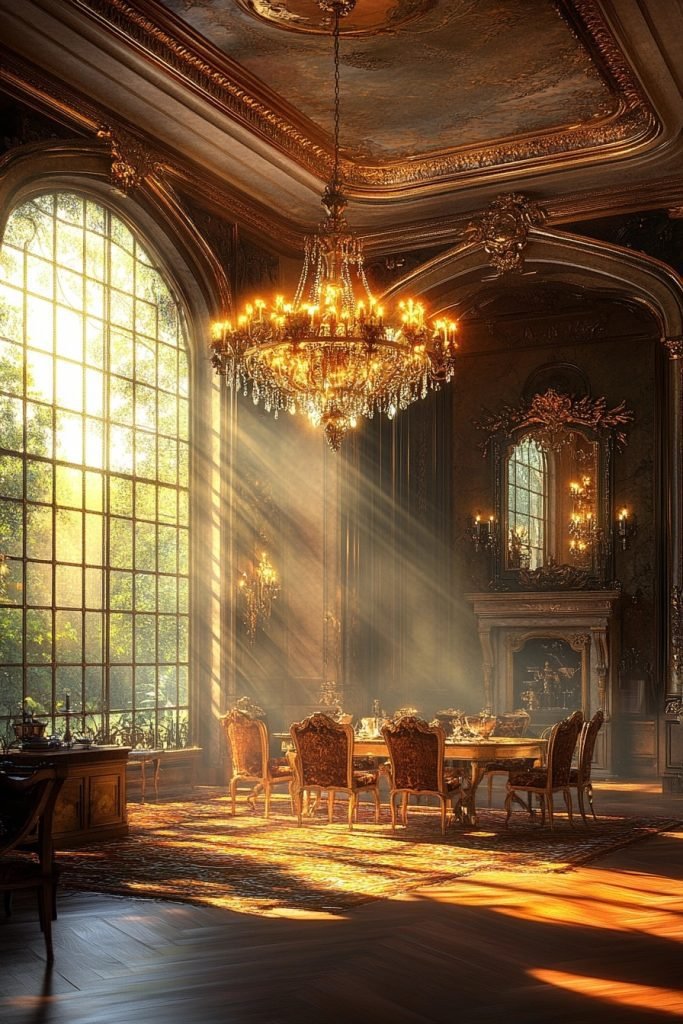
Chandeliers and Shadows capture the essence of the western gothic aesthetic through the interplay of light and darkness. Gothic chandeliers, with their complex designs and dark metals, cast intricate shadows that transform a room’s ambiance. This style utilizes high ceilings and large windows to maximize the dramatic effect of the lighting fixtures. The contrast between the ornate light sources and the shadows they cast adds depth and intrigue to any space.
🖼 Steal This Look
- Paint Color: Valspar Black Chiffon 4009-2
- Furniture: ornate carved wood dining table with velvet-upholstered high-back chairs in deep burgundy or gold damask
- Lighting: massive crystal and wrought iron chandelier with candle-style bulbs
- Materials: dark polished hardwood floors, gilded ceiling moldings, heavy brocade textiles, aged brass and crystal
This room feels like stepping into a vampire’s estate in the American Southwest—decadent, sun-drenched yet mysterious. The way that golden light wars with the dark walls? That’s the tension you’re chasing.
6. Dark Mirrors

Dark Mirrors reflect the western gothic aesthetic by incorporating elements of mystery and reflection into a space. These mirrors often feature elaborate, dark frames that contrast sharply with their reflective surfaces. They are used to add an element of depth and to amplify the natural light in a room, all while maintaining a somber aesthetic. Placing these mirrors strategically can alter the perception of space, making rooms feel larger and more enigmatic.
🌟 Steal This Look
- Paint Color: PPG Black Magic PPG1001-7
- Furniture: ornate carved mahogany fireplace mantel with gilded accents, tufted crimson velvet Victorian armchairs with carved ebonized wood frames
- Lighting: antique brass candelabra chandelier with dripping wax candles, wall sconces with crystal droplets
- Materials: damask wallpaper in deep burgundy, ebonized carved wood moldings, aged Persian rug with crimson medallion, tarnished mercury glass, heavy velvet upholstery
This room whispers of saloon card games and vampire lairs in the best way—those crimson velvet chairs practically demand you sit with a glass of port and contemplate your dark secrets.
7. Secrets of the Spire

Secrets of the Spire explores the architectural brilliance of the western gothic aesthetic, focusing on the towering spires that are iconic to this style. These structures not only enhance the verticality of buildings but also add a sense of aspiration and mystery. Often embellished with intricate carvings and statues, spires draw the eye upward and evoke a feeling of awe. They are a testament to the craftsmanship and artistic vision of the Gothic period, adapted to modern settings.
✎ Steal This Look
- Paint Color: Dunn-Edwards Black EDE513
- Furniture: floor-to-ceiling carved walnut bookcases with Gothic arch detailing, leather-topped reading desk, vintage brass library ladder
- Lighting: wrought iron wall sconces with amber glass shades, banker’s brass desk lamp with green glass shade
- Materials: dark stained oak plank flooring, hand-knotted Persian runner in deep reds and worn golds, aged brass, tooled leather, velvet
This is the library where you’d hide from the world with a leather-bound novel and a glass of something peaty. The darkness isn’t oppressive—it’s a sanctuary.
8. Haunting Melodies

Haunting Melodies embrace the western gothic aesthetic by incorporating music that evokes an emotional response. Whether through the deep tones of a pipe organ or the ethereal sound of a choir, these sounds can transform a space into something otherworldly. This musical element can be used in various ways, from sound installations in art galleries to background music in gothic-themed events. The right melody can deepen the gothic atmosphere, making it feel more immersive.
🌟 Steal This Look
- Paint Color: Clare Paint Blackish BLK01
- Furniture: ornate carved wood paneling, Victorian velvet tufted seating, black lacquered grand piano with filigree music stand
- Lighting: wrought iron chandelier with amber candle-style bulbs, wall sconces with flickering flame effect
- Materials: deep mahogany wood, burgundy velvet, aged brass, hand-knotted Persian rugs with crimson and navy motifs, dark marble fireplace surround
There’s something about a room built around sound that demands you slow down—the carved wood doesn’t just decorate, it absorbs and shapes every note into something haunting.
9. The Darker Side of the Canvas
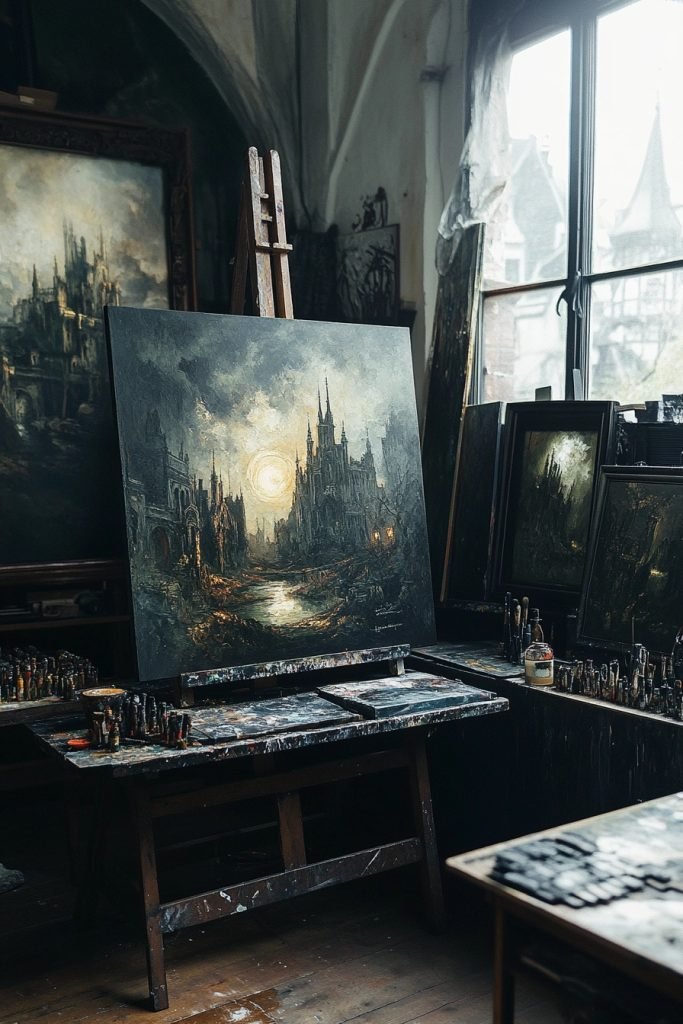
The Darker Side of the Canvas delves into the western gothic aesthetic by exploring themes of darkness and mystery in art. Gothic art often features dramatic scenes, stark contrasts, and a palette that emphasizes deep reds and blacks. Paintings and sculptures in this style can serve as focal points in a room, drawing in the viewer and creating a powerful visual impact. This style challenges the norms and evokes deep, often introspective emotions.
🖼 Steal This Look
- Paint Color: Fine Paints of Europe Black Tie 7022-3
- Furniture: weathered oak artist easel, paint-splattered wooden work table with trestle base, vintage frame stacks
- Lighting: arched gothic window with sheer linen drapery filtering natural light
- Materials: aged wood, oil paint residue, tarnished brass, raw linen, distressed gilded frames
This is the studio of someone who paints cathedrals crumbling at dusk—every surface should feel like it holds decades of creative obsession.
10. From Tombs to Homes
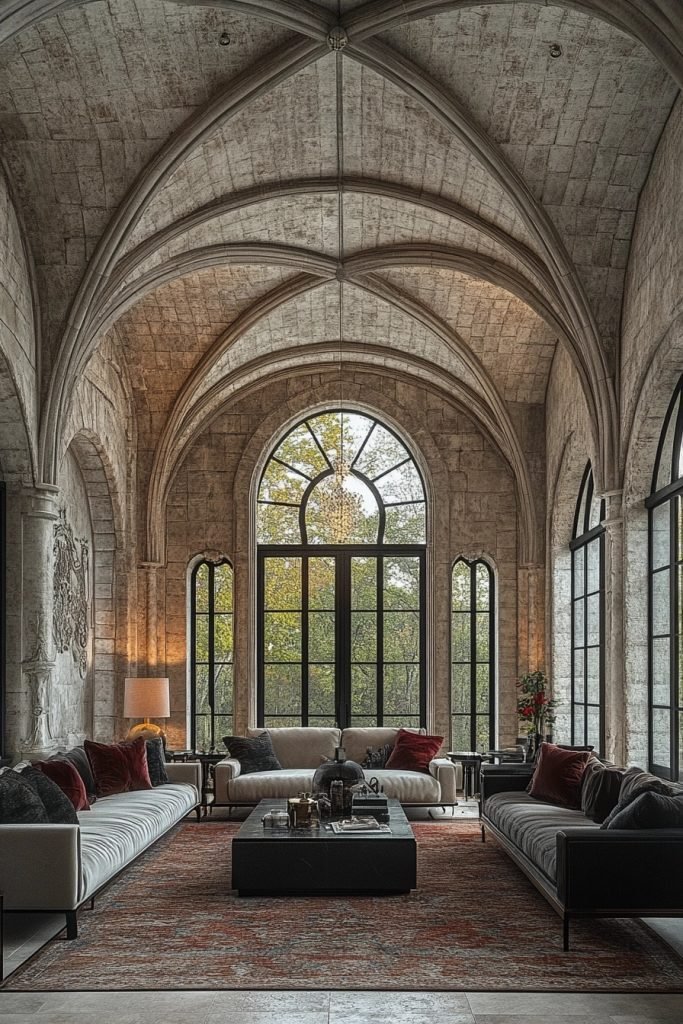
From Tombs to Homes brings the mystique of ancient gothic tombs into the home, blending historical architectural elements with modern comforts. This aspect of the western gothic aesthetic uses arches, crypt-like basements, and stone elements to give living spaces a monumental feel. It’s about embracing the old-world charm while providing a functional living environment. These designs often include modern technologies discreetly integrated to maintain the ancient allure.
🏠 Steal This Look
- Paint Color: Backdrop Cathedral Stone 0033
- Furniture: Low-profile velvet sofas in cream and charcoal, black lacquered coffee table with clean lines, modern minimal frames to contrast stone architecture
- Lighting: Warm amber table lamps with drum shades, hidden LED uplighting to wash stone walls, minimal black metal ceiling spots
- Materials: Rough-hewn limestone, blackened steel window frames, aged Persian rugs in rust and wine tones, velvet and linen upholstery
There’s something quietly rebellious about making a space that feels like a sanctuary from another century completely livable—this is where you host whiskey nights that feel like rituals.
11. Eerie Elegance

Eerie Elegance is a key component of the western gothic aesthetic, combining the beautiful with the macabre in a way that is uniquely captivating. This style often uses contrasts—such as pairing delicate lace with rugged wrought iron—to create a sense of intrigue. It’s perfect for those who appreciate the beauty in the darker aspects of life, using elements like skull motifs or raven prints to add a touch of the eerie. These designs are not only visually striking but also provoke thought and conversation.
🎨 Steal This Look
- Paint Color: Sherwin-Williams Raisin SW 7630
- Furniture: Ornate carved black headboard with baroque silhouette, black lacquered nightstands with antique brass pulls
- Lighting: Black brocade table lamp with brass base, wall-mounted candelabra sconce
- Materials: Deep purple velvet, black lace overlay, brocade textiles, distressed Persian rug in crimson and navy, dried floral arrangements
There’s something deliciously rebellious about sleeping in a room this unapologetically dramatic; it’s where Victorian mourning culture meets desert witch energy.
12. Whispering Woods

Whispering Woods encapsulates the western gothic aesthetic by bringing the mysterious allure of ancient forests into design elements. This theme often includes wood carvings, forest-inspired wallpaper, and dark, earthy tones to simulate the feeling of being in a secluded woodland. The use of natural materials is key, enhancing the connection to the outdoors while retaining a gothic touch. It’s ideal for creating a retreat-like atmosphere in homes or commercial spaces.
🌟 Steal This Look
- Paint Color: Benjamin Moore Saddle Brown 2111-20
- Furniture: built-in banquette seating with integrated storage, floor-to-ceiling bookcases with leaded glass doors, round porthole-style window with aged brass frame
- Lighting: vintage amber glass pendant lights, recessed warm spotlights in wood ceiling beams
- Materials: rough-hewn oak, aged leather, hammered copper accents, stone-look porcelain tile, preserved moss and trailing ivy
This space feels like stumbling upon a hidden library in an old growth forest—there’s something deeply comforting about being surrounded by wood, leather-bound books, and filtered green light. It’s gothic without the gloom, cozy without being cute.
13. Behind the Stained Glass
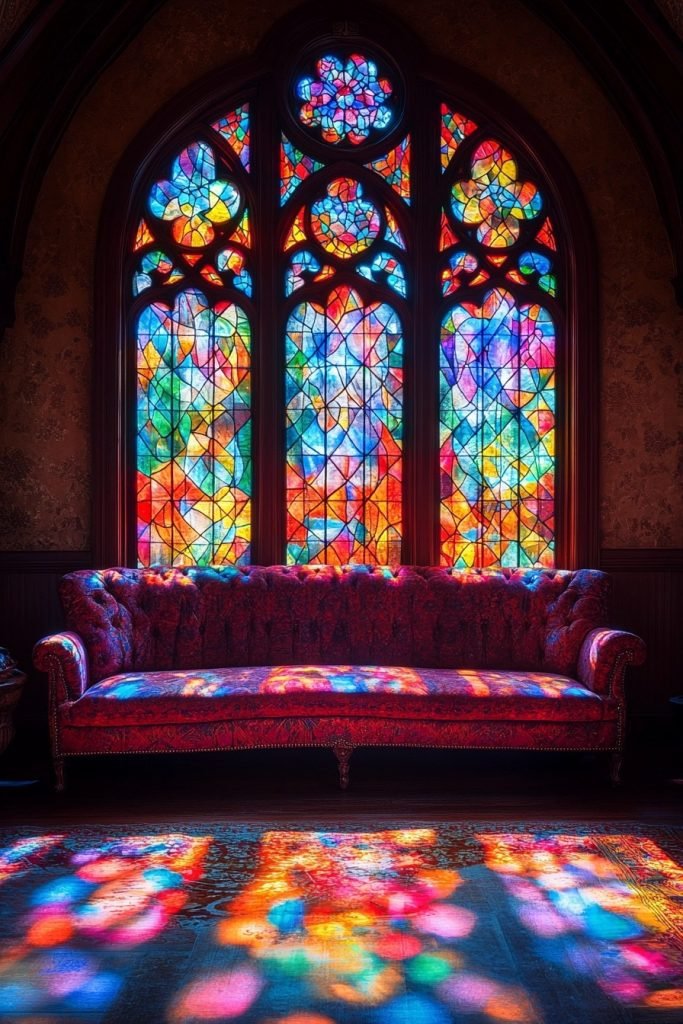
Behind the Stained Glass focuses on the use of colored glass that is central to the western gothic aesthetic, illuminating interiors with vibrant, patterned light. This element is often seen in gothic cathedrals and is adapted into smaller decor items such as lamps and window panels. The intricate designs of stained glass provide both privacy and beauty, serving as artwork and a light filter simultaneously. This style brings a touch of historical artistry into modern spaces.
✎ Steal This Look
- Paint Color: Farrow & Ball Tanner’s Brown 255
- Furniture: deep button-tufted velvet Chesterfield sofa in oxblood or burgundy
- Lighting: arched gothic cathedral window with jewel-toned stained glass panels (ruby, sapphire, emerald, amber)
- Materials: aged plaster walls, dark wood wainscoting, worn Persian or Oriental rug, velvet upholstery, leaded glass
This is sacred drama for your living room—every afternoon feels like stepping into a forgotten chapel where the light itself performs.
14. Iron and Stone
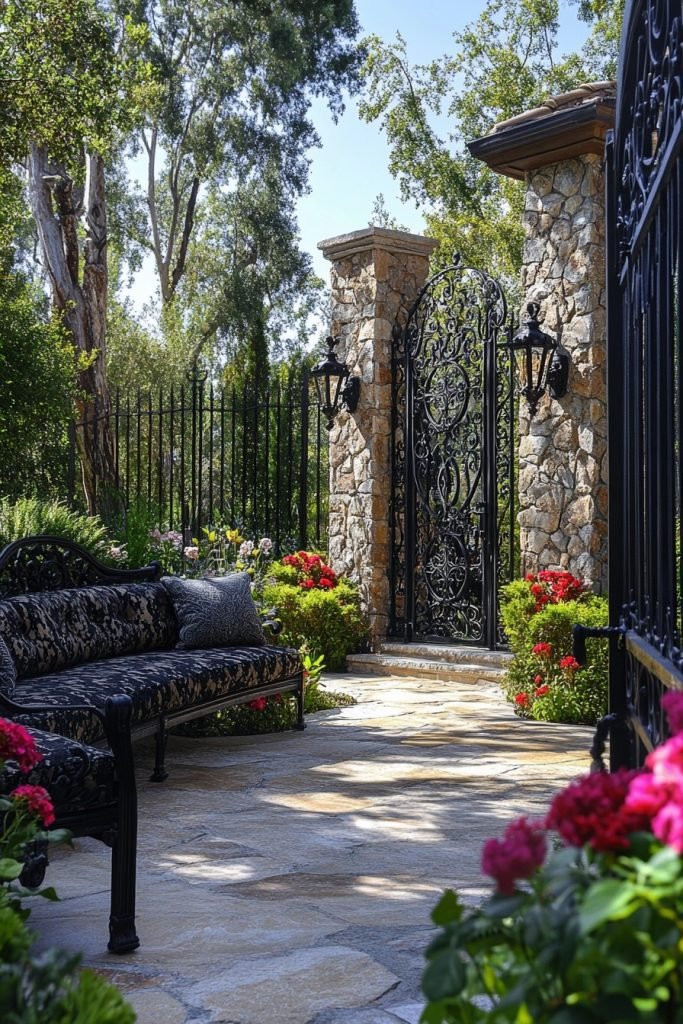
Iron and Stone are foundational elements of the western gothic aesthetic, symbolizing strength and permanence. These materials are often used in everything from furniture to architectural details, providing a robust and dramatic flair. The combination of wrought iron with rough stone creates a rustic yet refined look, perfect for adding character and intensity to any space. This theme is especially popular in landscaping and exterior design, where it harmonizes with natural surroundings.
🎨 Steal This Look
- Paint Color: Behr Black Mocha N230-7
- Furniture: Ornate wrought iron garden bench with curved scrollwork arms and dark floral upholstery
- Lighting: Antique black cast iron wall lantern with seeded glass panels
- Materials: Rough-cut limestone pillars, hand-forged wrought iron scrollwork gates, irregular flagstone pavers, weathered stone coping
This courtyard whispers old Hollywood romance with a darker edge—the kind of entrance that makes you half-expect a raven to land on that gate.
15. The Gothic Revival
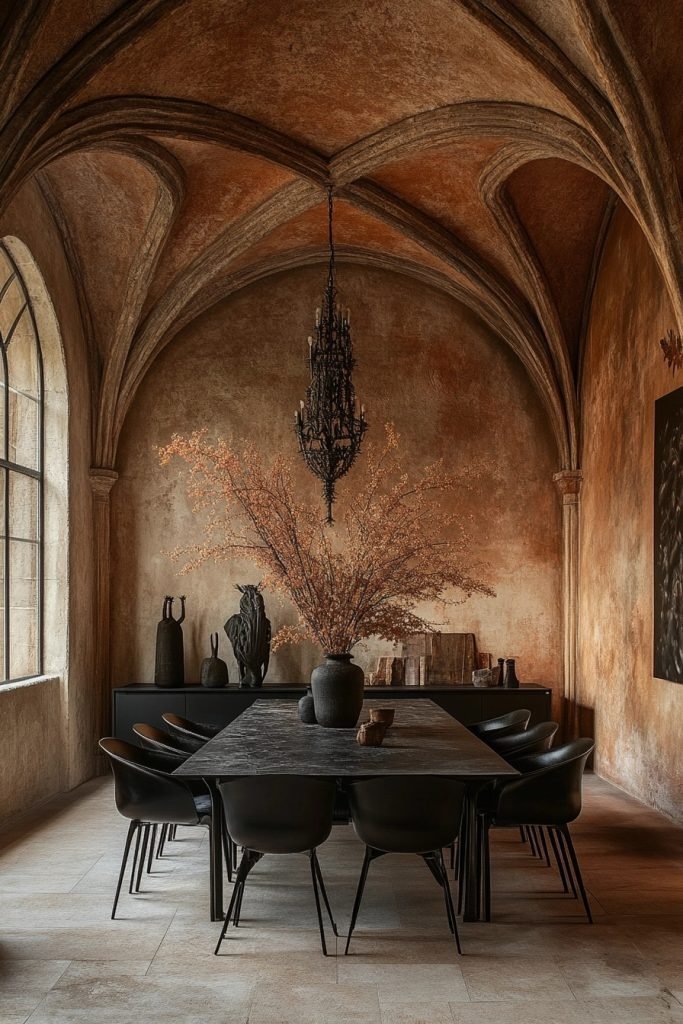
The Gothic Revival is a celebration of the resurgence of western gothic aesthetic in contemporary culture. This style emphasizes the dramatic and romantic aspects of the gothic tradition, bringing them into the 21st century with a new twist. It often includes modern materials and techniques, blending them with gothic motifs to create something that feels both nostalgic and fresh. Gothic Revival is perfect for those looking to add a touch of drama and history to their environments.
🏠 Steal This Look
- Paint Color: Valspar Aged Leather 3005-7C — match the warm, weathered terracotta-plaster walls with aged patina effect
- Furniture: rectangular dark stone or concrete dining table with matte black sculptural dining chairs featuring thin metal legs
- Lighting: oversized wrought iron Gothic chandelier with multiple candle-style lights and intricate metalwork
- Materials: hand-troweled plaster walls, ribbed stone vaulting, aged terracotta, blackened metal, dried botanicals in heavy ceramic vessels
There’s something almost sacred about dining beneath ribbed vaulting that predates you — this room doesn’t ask for permission to be dramatic, it simply is. The Gothic Revival isn’t about recreation; it’s about letting history haunt your present.
16. Black Roses and Wilted Lilies

Black Roses and Wilted Lilies represent the floral embodiment of the western gothic aesthetic, bringing beauty to decay and darkness. These motifs are often used in fabric prints, artwork, and even in actual floral arrangements, providing a stark yet elegant visual element. They symbolize the beauty found in darker themes and are used to add depth and complexity to gothic-inspired designs. This approach is perfect for themed events, fashion, and decor.
🎨 Steal This Look
- Paint Color: PPG Black Magic PPG1001-7
- Furniture: ornate carved wood dining table with turned legs, Victorian balloon-back dining chairs with tufted upholstery
- Lighting: antique brass candelabra with black taper candles, crystal chandelier with dark metal framework
- Materials: worn velvet, aged brass, carved ebony wood, tarnished silver, dried botanicals, cracked leather
There’s something deliciously rebellious about a dinner table that looks like it could host both a séance and a wedding feast. This is where Victorian mourning culture meets desert-bleached romance.
17. Capes and Cloaks
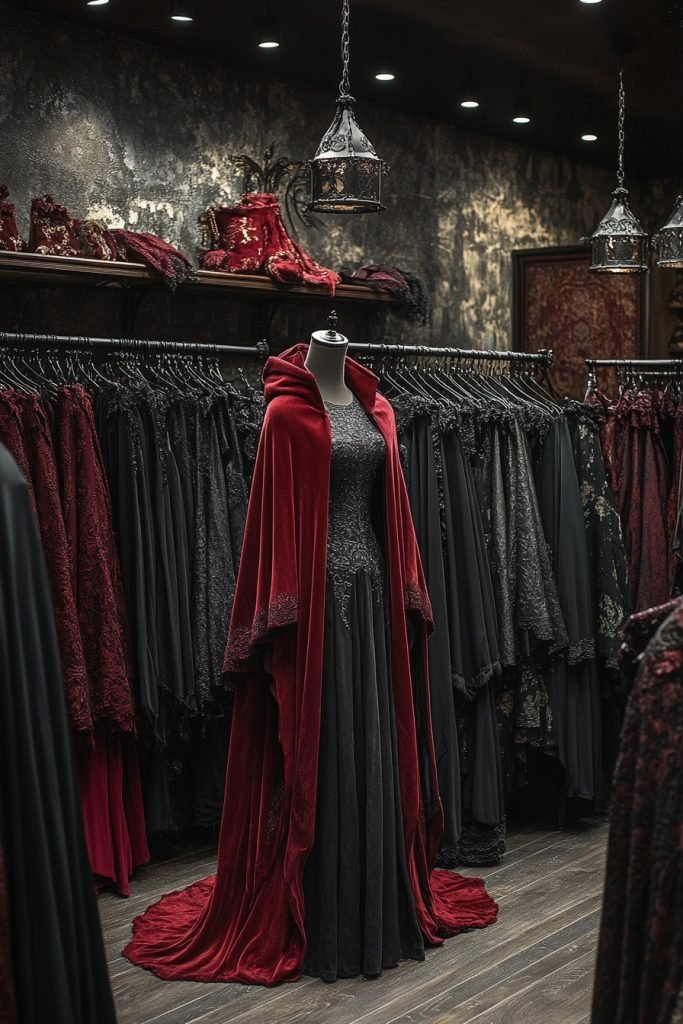
Capes and Cloaks draw on the mystique and drama of the western gothic aesthetic, embodying its sense of mystery and grandeur. This fashion element is not only functional but also serves as a statement piece, often featured in gothic literature and film. They can be designed from luxurious fabrics like velvet or brocade, detailed with intricate embroidery or clasps. Incorporating these into modern fashion brings a touch of gothic romance to everyday wear.
✎ Steal This Look
- Paint Color: Dunn-Edwards Black DEA187 for ceiling and trim, Dunn-Edwards Weathered Wood DET624 for walls to achieve that distressed, aged patina effect
- Furniture: dark wood garment racks with iron finials, floating wood shelves with rough-hewn edges, ornate carved wood door frame
- Lighting: wrought iron cage pendant lanterns with candle-style bulbs, recessed can lights for dramatic spotlighting
- Materials: distressed plaster walls with intentional aging, velvet and brocade textiles, weathered wood flooring, aged metal hardware
There’s something intoxicating about a space that feels like you’ve stepped into a secret—this room whispers of midnight ceremonies and forgotten rituals. The velvet against rough plaster is pure gothic romance made tangible.
18. Gargoyles of the West

Gargoyles of the West explores the incorporation of mythical creatures into western gothic aesthetic architecture. These stone guardians are not only decorative but are steeped in history and lore, often believed to ward off evil spirits. Their grotesque forms and expressions add a layer of intrigue and protectiveness to buildings, blending art with function. Gargoyles can be adapted into smaller decor items, bringing a touch of gothic fantasy to any space.
🖼 Steal This Look
- Paint Color: Clare Paint Blackish 0013
- Furniture: arched-top carved wood entry door with iron strap hinges, stone guardian pedestals
- Lighting: vintage brass lantern sconces with amber glass, chain-hung pendant lantern
- Materials: weathered gray fieldstone, aged copper verdigris, wrought iron, trailing ivy, cobblestone
There’s something deeply satisfying about a threshold that feels watched over—this entrance doesn’t just welcome guests, it dares the unwanted to turn back.
19. Phantom Feasts

Phantom Feasts delve into the culinary world of the western gothic aesthetic, where dining becomes an experience shrouded in mystery and elegance. This theme often includes medieval-inspired dishes served in dramatic settings, using antique tableware and gothic decor to enhance the atmosphere. It’s perfect for themed parties or restaurants wanting to offer a unique dining experience. The key is in the details—dark table linens, candlelight, and perhaps a hint of the theatrical.
💡 Steal This Look
- Paint Color: Fine Paints of Europe Black Suede FPE-1001
- Furniture: massive carved oak refectory table with barley twist legs, high-back Jacobean dining chairs with leather upholstery
- Lighting: wrought iron candelabra chandelier with dripping wax candle sleeves, wall-mounted iron sconces with flickering LED tapers
- Materials: rough-hewn timber ceiling beams, aged stone flooring, hammered iron hardware, leaded glass windows, dark damask textiles
There’s something deliciously theatrical about dining by candlelight in a room this dark—it forces conversation to slow down and every course to feel like a ritual.
20. Nightfall Narratives
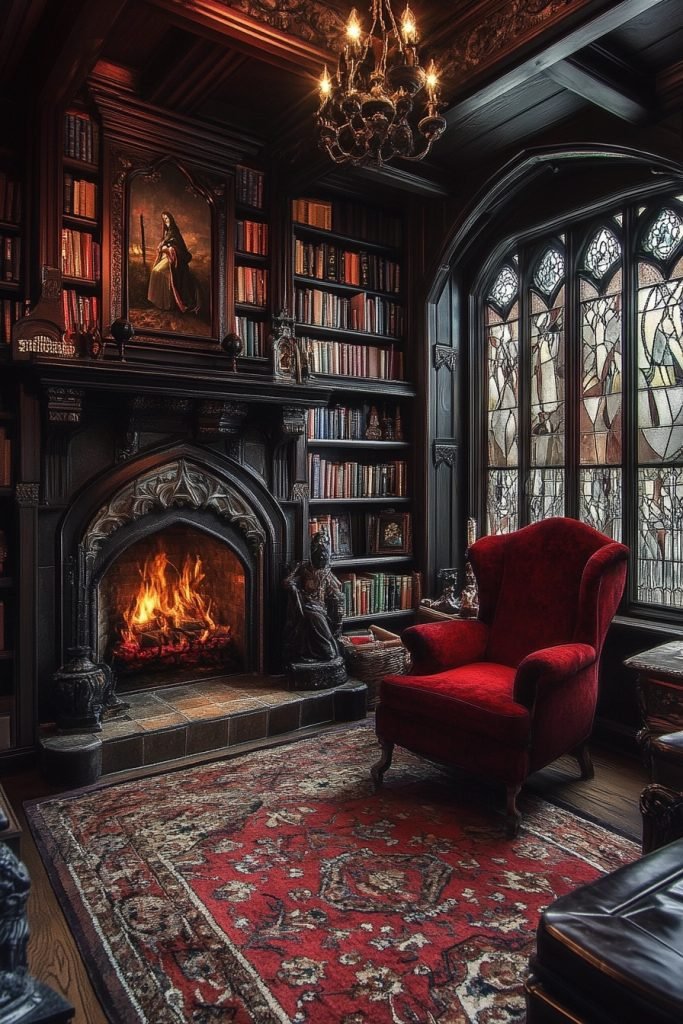
Nightfall Narratives capture the storytelling aspect of the western gothic aesthetic, focusing on tales that unfold under the cover of darkness. These stories often feature elements of mystery, romance, and the supernatural, drawing readers or viewers into a world that is at once thrilling and foreboding. This style can be reflected in book design, film, or even in themed events, where the narrative drives the aesthetic choices. Engaging with Nightfall Narratives can add a deep, immersive element to any creative project.
★ Steal This Look
- Paint Color: Backdrop Dark Arts BA-0001
- Furniture: carved mahogany wingback armchair in crimson velvet, Gothic Revival bookcase with arched crown molding, leather-bound ottoman
- Lighting: antique brass chandelier with candle-style bulbs and crystal droplets
- Materials: stained glass with leaded geometric patterns, hand-carved stone fireplace surround, Persian rug with deep red and charcoal medallion design, patinated bronze statuary
There’s something about a room that refuses to apologize for its darkness—this is where you read the stories that keep you awake, surrounded by the weight of leather and wood and flame.
21. Cobwebs in the Corner
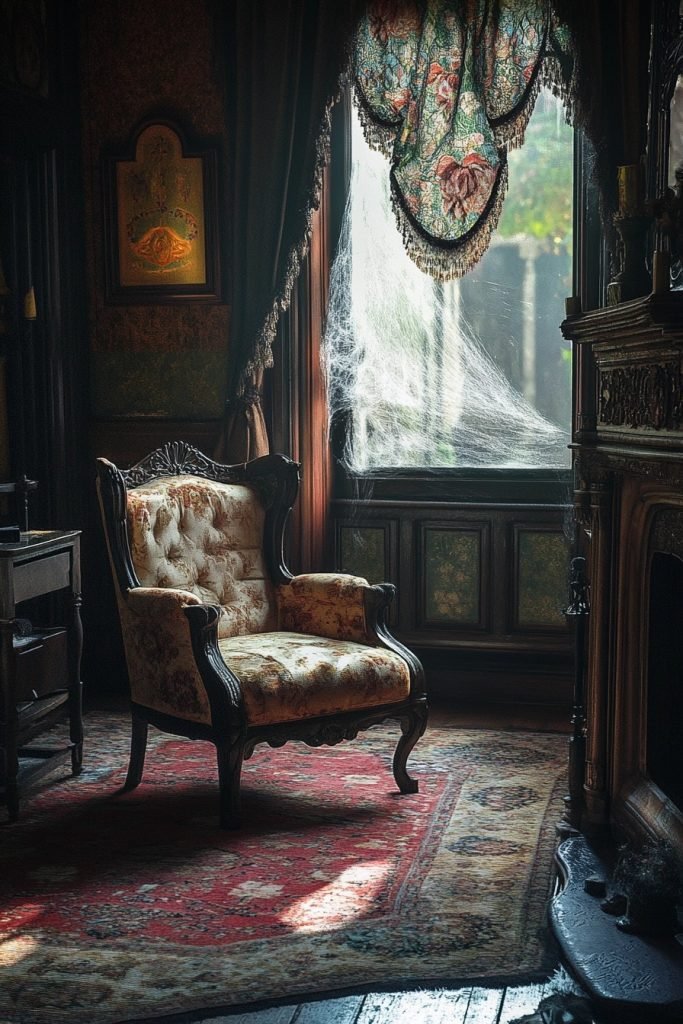
Cobwebs in the Corner play up the eerie and abandoned aspects of the western gothic aesthetic, utilizing elements that suggest age and disuse to create atmosphere. This approach is perfect for setting up spaces that feel like they are steeped in history and mystery, using dusted and draped cobwebs to give a room an untouched, haunted look. It’s a popular choice for Halloween events or horror-themed attractions, but can also be tastefully integrated into home decor for those who enjoy a slightly spooky aesthetic.
🎨 Steal This Look
- Paint Color: Sherwin-Williams Black Magic SW 6991
- Furniture: Victorian carved wood wingback chair with tufted floral upholstery, ornate carved fireplace mantel, dark wood side cabinet
- Lighting: Single warm directional light source creating dramatic shadows, avoid overhead lighting
- Materials: Heavy lace curtains with floral embroidery and fringe, faded Oriental rug in crimson and cream, aged wood paneling, dusty cobweb accents, tarnished brass details
This corner feels like someone just stood up from that chair a century ago and never returned. The cobwebs aren’t decoration here—they’re storytelling, turning neglect into narrative.
22. The Beauty of Decay
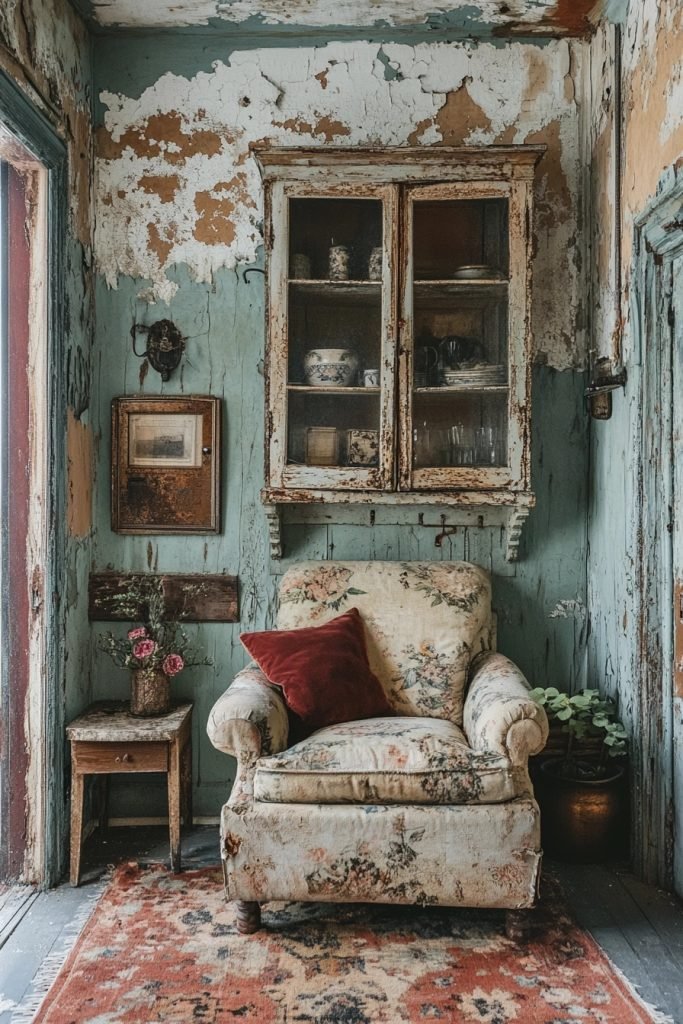
The Beauty of Decay is a concept within the western gothic aesthetic that finds elegance in aging and deterioration. This theme often incorporates peeling paint, rusted metals, and weathered wood, celebrating the textures and colors that come with wear and tear. It’s a reflection on the passage of time and the stories embedded in materials. This style can create deeply emotional spaces that resonate with the beauty found in imperfection.
★ Steal This Look
- Paint Color: Benjamin Moore Palladian Blue HC-144
- Furniture: Distressed glass-front hutch with chipped cream paint, rolled-arm club chair in faded botanical toile, primitive wooden side table
- Lighting: Wrought iron wall sconce with aged patina
- Materials: Peeling plaster walls revealing underlayers, rusted metal accents, weathered wood, oxidized copper planter, vintage wool rug with worn pile
There’s something hauntingly beautiful about a room that refuses to be restored; this corner feels like it could whisper stories from the 1880s if you sat long enough with that burgundy pillow.
23. Silver Screen Screams

Silver Screen Screams explores the intersection of film and the western gothic aesthetic, highlighting movies that embody the dark, dramatic, and often eerie elements of the genre. This can range from classic horror films to modern psychological thrillers that use gothic motifs to enhance their storytelling. The visual style of these films is crucial, using shadowy lighting, ornate sets, and costumes that reflect the depth and complexity of the narratives. Silver Screen Screams inspire both filmmakers and fans of the genre.
💡 Steal This Look
- Paint Color: Farrow & Ball Tanner’s Brown DC8
- Furniture: deep-buttoned velvet theater seating in black and rust, carved wood media console with marble top
- Lighting: Edison bulb pendant with amber glass, recessed ceiling spots, crystal-trimmed sconces
- Materials: burnished velvet, aged brass, dark marble, ornate gilt frames, Persian rug with red ground, beaded swag valances
This is the room where you’d pour something smoky and lose yourself in a Corman Poe adaptation—the velvet practically absorbs sound and time itself.
24. Moonlit Manuscripts
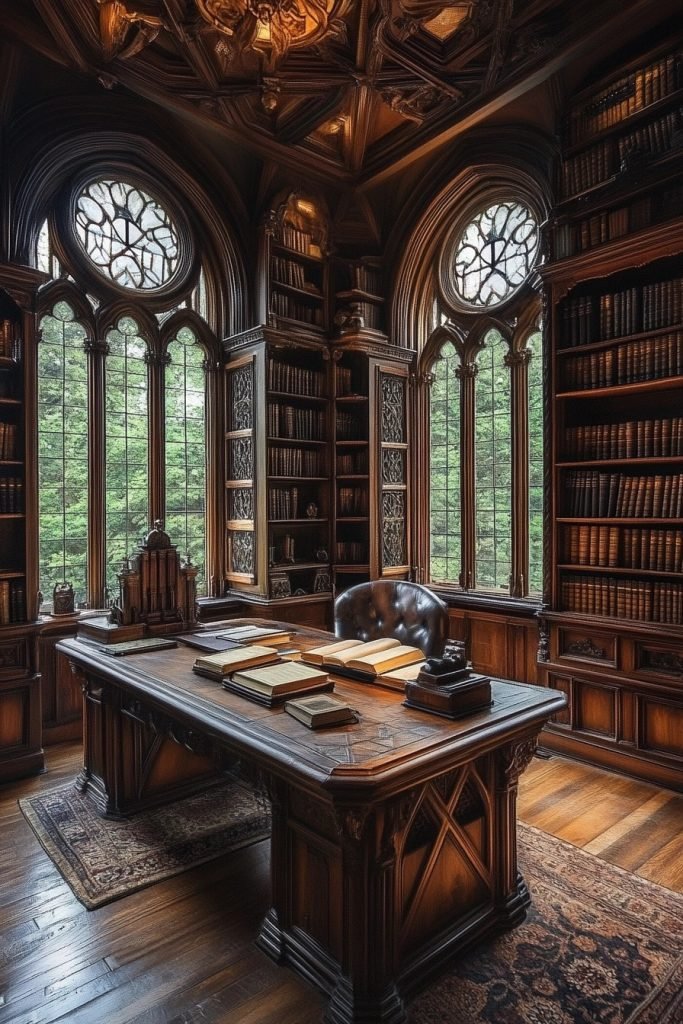
Moonlit Manuscripts delve into the literary world of the western gothic aesthetic, where texts are imbued with mystery, romance, and the supernatural. These works often feature intricate plots, complex characters, and settings that seem to pulse with a life of their own. The style of the manuscripts themselves can be a part of the appeal—think aged paper, elegant typography, and beautifully crafted book covers. This theme is perfect for libraries, reading nooks, or anyone who cherishes the written word.
🌟 Steal This Look
- Paint Color: Behr Black Mocha N140-7
- Furniture: carved mahogany partners desk with X-brace detailing, tufted leather wingback chair, floor-to-ceiling built-in bookcases with Gothic tracery
- Lighting: ornate iron chandelier with amber glass shades, hidden uplighting in coffered ceiling
- Materials: dark stained oak paneling, aged leather, wrought iron window grilles, Persian rugs with worn patina, hand-tooled book spines
This is the room where you’d write letters you’d never send, pressing sealing wax while rain streaks those arched windows—it’s performative solitude at its most seductive.
25. Shadow Play
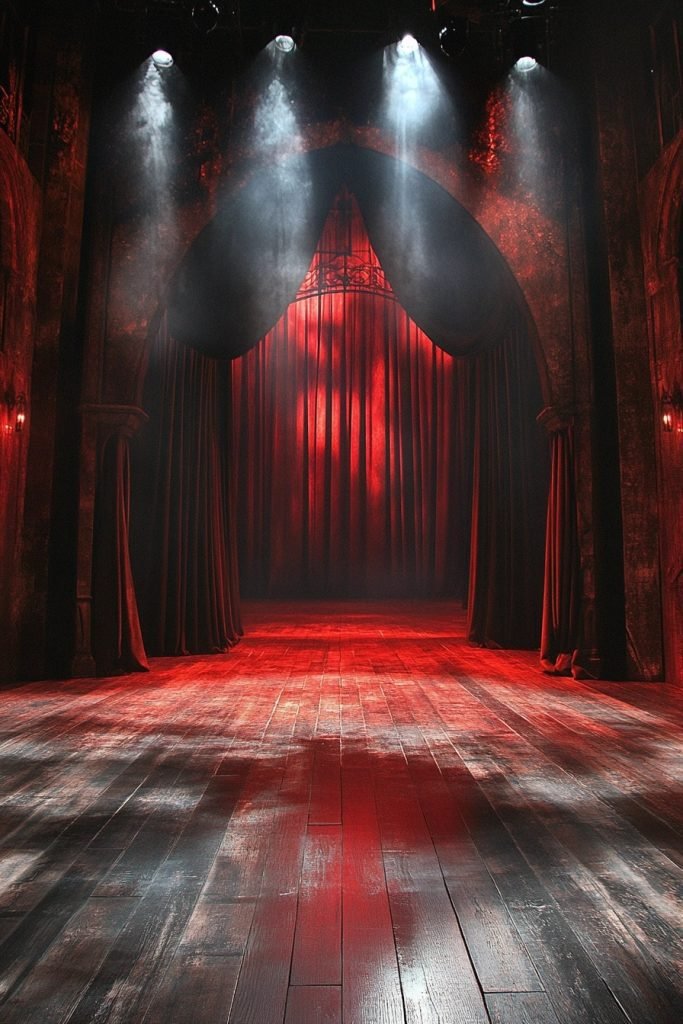
Shadow Play is a theatrical expression of the western gothic aesthetic, focusing on the use of silhouettes and lighting to create dramatic scenes. This can be seen in performances where shadows are as much a part of the narrative as the actors themselves. The interplay of light and dark creates visual intrigue and can convey emotion and story without words. Shadow Play is a powerful tool in both theatre and film, used to heighten the atmospheric tension and draw audiences deeper into the experience.
💡 Steal This Look
- Paint Color: Valspar Dark Truffle 3011-10
- Furniture: ornate Victorian theater seating in worn burgundy velvet, heavy velvet drapery in deep crimson and black
- Lighting: track-mounted theatrical spotlights with gels, wall sconces with flickering amber bulbs
- Materials: distressed wide-plank oak floors with dark stain, heavy velvet, wrought iron, aged plaster walls with intentional patina
This space feels like stepping into a ghost story told by firelight—the kind of room where every shadow seems to hold a secret. The worn floorboards and blood-red drapery create that perfect tension between elegance and unease that western gothic demands.
26. Mystic Inks
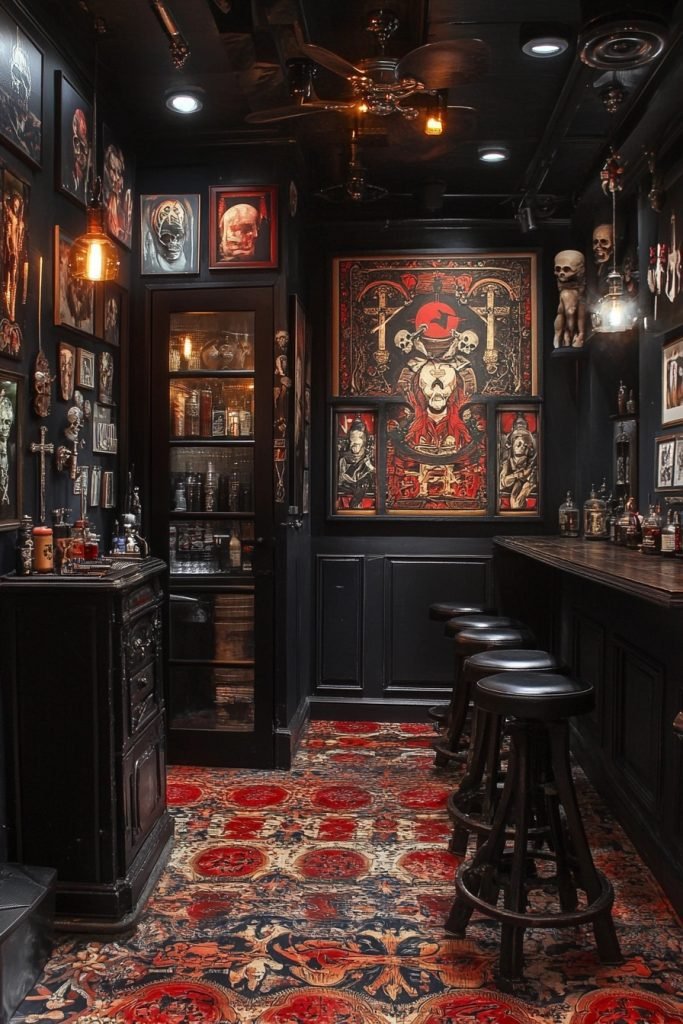
Mystic Inks tap into the western gothic aesthetic by exploring the art of tattooing, where gothic symbols and imagery are inked onto skin. This form of expression combines elements of both art and personal identity, often featuring motifs such as skulls, crosses, and medieval script. The stark, often monochrome appearance of these tattoos adds to their mysterious allure, making them a popular choice for those drawn to the gothic style. Mystic Inks are not just decorations; they are personal talismans.
🖼 Steal This Look
- Paint Color: PPG Black Magic PPG1001-7
- Furniture: carved dark wood bar cabinet with glass doors, backless leather bar stools, ornate carved sideboard
- Lighting: Edison bulb pendant lights with amber glass, oil-rubbed bronze ceiling fan with integrated lighting, recessed can lights
- Materials: dark stained walnut, aged brass, tooled leather, distressed Persian rug in crimson and black, antique glass apothecary bottles
This room feels like stepping into a tattoo parlor crossed with a Victorian occultist’s private study—it’s unapologetically dark, deeply personal, and built for slow whiskey nights.
27. The Lore of the Land
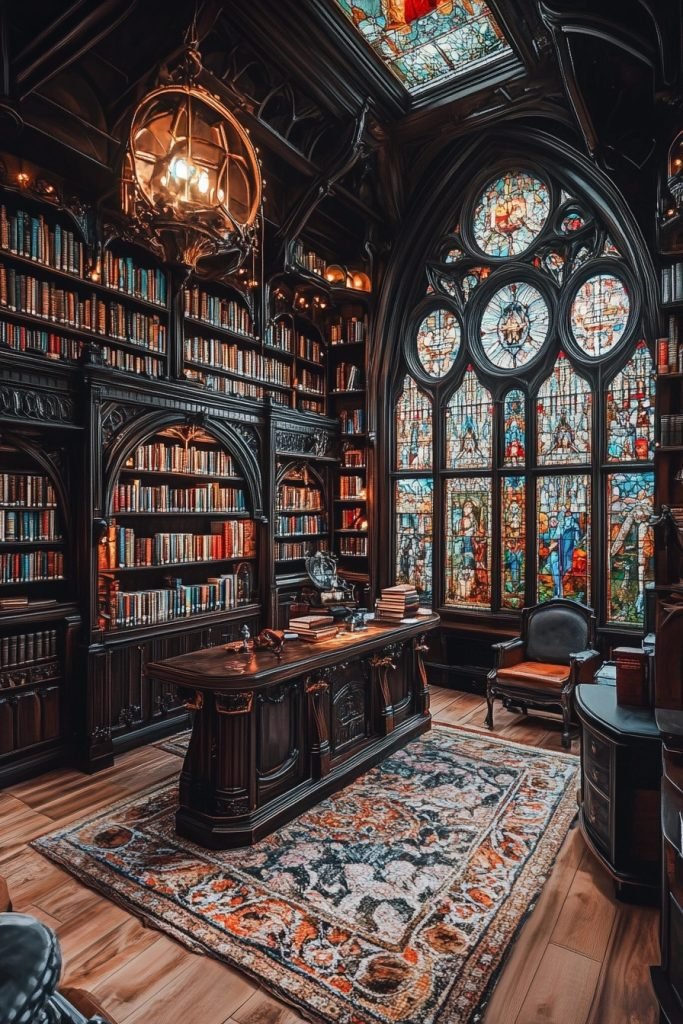
The Lore of the Land brings together the rich mythology and history associated with the western gothic aesthetic, exploring legends and tales that have shaped cultures. This theme often includes elements of folklore, ghost stories, and ancestral narratives, all of which are steeped in the mysterious and the supernatural. These stories can be reflected in everything from landscape design to narrative art, bringing a deeper, cultural dimension to the aesthetic. The Lore of the Land is a celebration of the stories that ground and inspire us.
🖼 Steal This Look
- Paint Color: Dunn-Edwards Black Onyx DET684
- Furniture: carved mahogany library desk with turned legs, floor-to-ceiling Gothic Revival bookcases with arched crown molding, leather-upholstered Victorian armchair with nailhead trim
- Lighting: oversized brass globe pendant with candle-style bulbs, stained glass skylight panel
- Materials: dark stained oak paneling, aged leather, patinated brass, hand-knotted Persian rug with rust and navy motifs, leaded stained glass
This is the room where you’d write your memoirs by candlelight or finally read that cursed grimoire. The stained glass alone turns every afternoon into a séance with color.
28. Ghostly Galleries
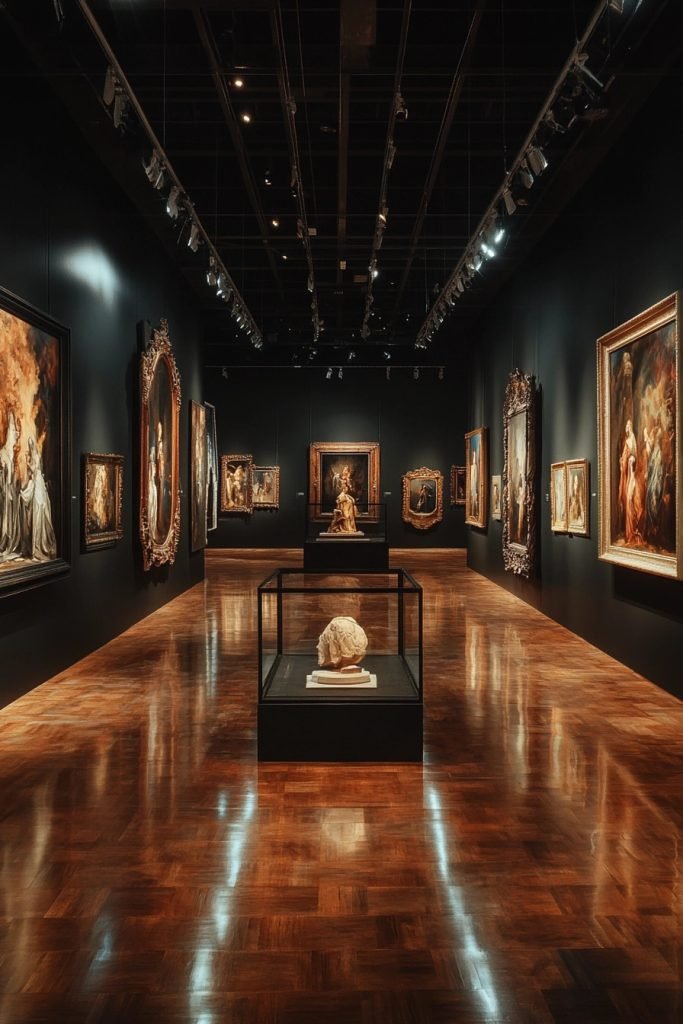
Ghostly Galleries showcase the art of the western gothic aesthetic, focusing on works that evoke feelings of eeriness and fascination. These galleries might feature anything from haunting portraits to sculptures that seem to whisper secrets of the past. The setting is crucial, often dimly lit and decorated with elements that enhance the spooky atmosphere. This theme is perfect for art exhibitions, haunted house attractions, or any space aiming to create a chilling yet captivating experience.
🎨 Steal This Look
- Paint Color: Clare Paint Blackish 0013
- Furniture: Ornate gilded frames, glass display cases with black bases, sculptural plinths
- Lighting: Track-mounted adjustable spotlights with warm 2700K bulbs, dramatic uplighting
- Materials: High-gloss herringbone wood floors, aged bronze, velvet ropes, antique gold leaf
There’s something almost sacred about standing before a centuries-old portrait in near-darkness; you’re not just viewing art, you’re trespassing into someone else’s haunting memory.
29. Wrought Iron Whispers

Wrought Iron Whispers highlight the craftsmanship of ironwork within the western gothic aesthetic, featuring intricate designs that are both functional and ornamental. This metalwork can be seen in everything from gateways to interior accents, often incorporating floral or geometric patterns that are rich in detail. The durability and malleability of iron make it ideal for creating pieces that can stand the test of time while adding a touch of gothic elegance to any setting. Wrought Iron Whispers are a nod to the skilled artisans who bring beauty and strength to metal.
★ Steal This Look
- Paint Color: Fine Paints of Europe Black Satin CODE 9005-N
- Furniture: ornate cast iron balcony railing with scrollwork and cherub motifs, decorative iron corbels with floral cutouts
- Lighting: antique bronze wall-mounted carriage lanterns with seeded glass panes
- Materials: wrought iron with matte black finish, terracotta roof tiles, stucco exterior, warm amber window glow, red geranium accents
There’s something almost alive about ironwork this detailed—the way light filters through those scrolls at dusk transforms a simple balcony into shadow theater.
Conclusion
Creating a space that’s both hauntingly beautiful and full of character is what the Western Gothic aesthetic is all about. With these 29 Western Gothic aesthetic ideas, you now have the tools to design a home that blends rustic charm with moody elegance. Whether you’re adding dark tones, vintage accents, or a touch of mystery, this style will help you craft a space that’s truly unique. So go ahead, embrace the Western Gothic aesthetic, and turn your home into a dramatic and inviting sanctuary!