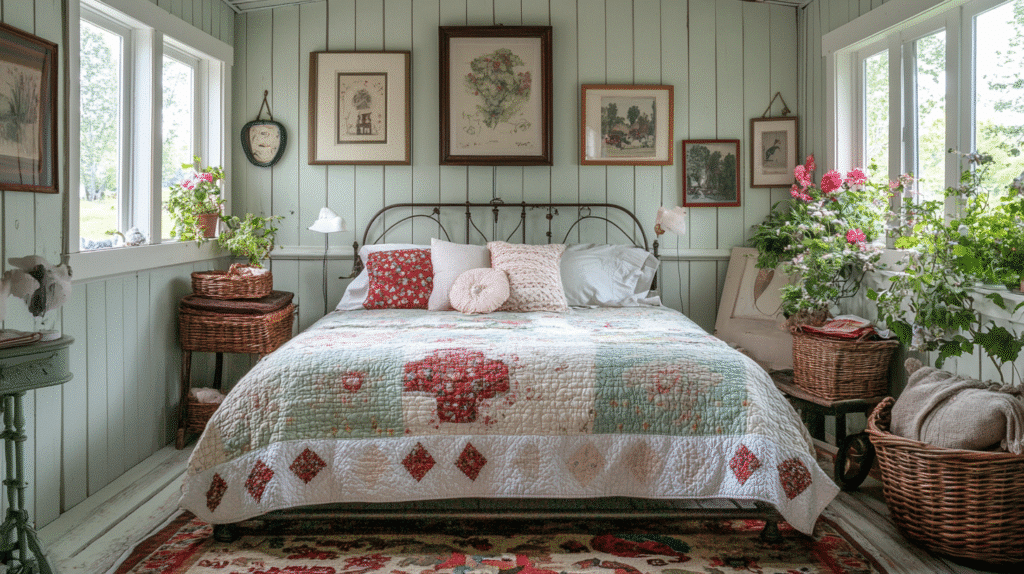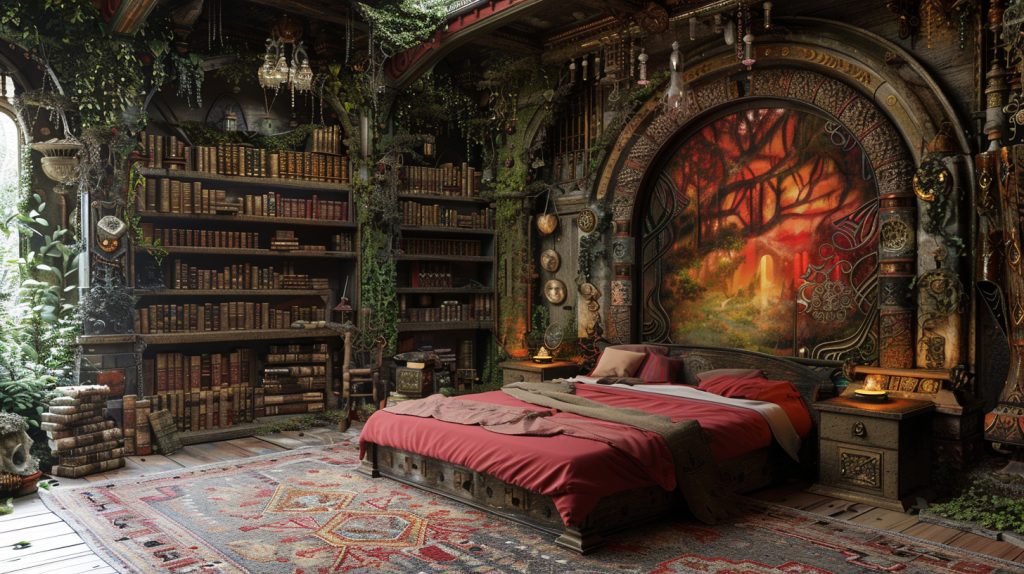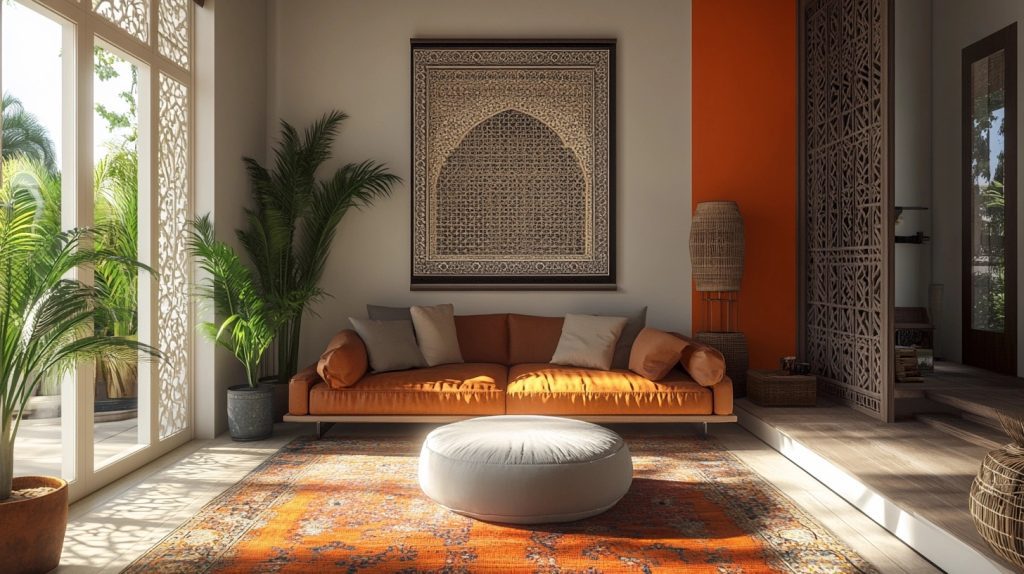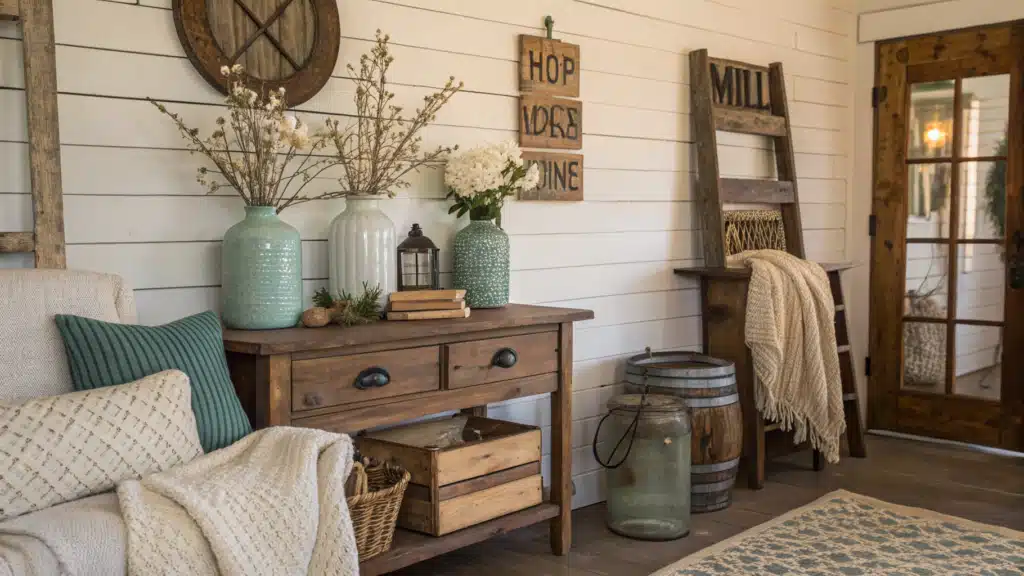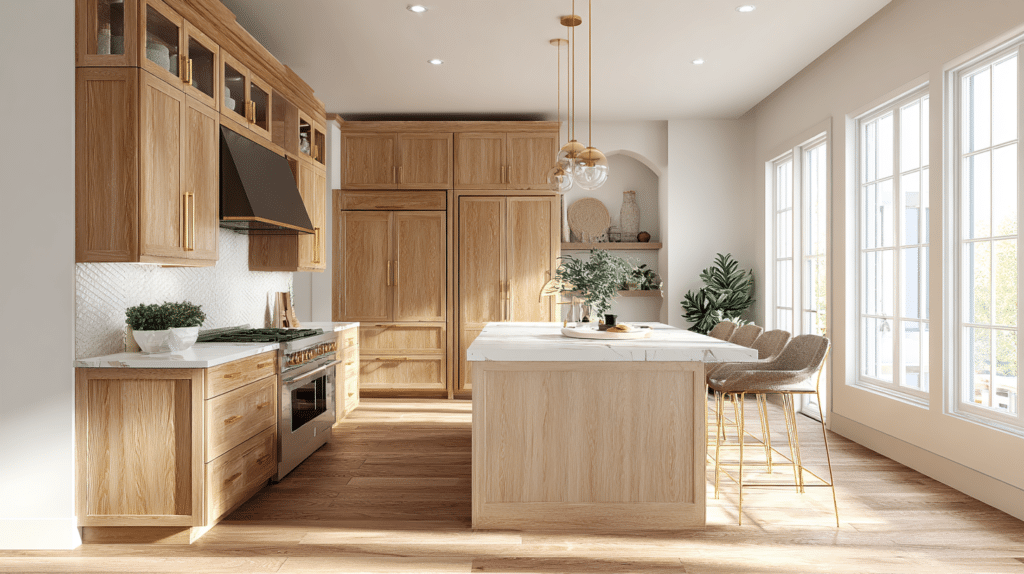
Have you ever wondered if there’s a hidden beauty in the imperfections of your living space? What if embracing these quirks could transform your apartment into a haven of tranquility and charm? Welcome to the enchanting world of Wabi-Sabi with our collection of 29 Wabi Sabi apartment ideas that celebrate the perfectly imperfect. From minimalist decor to organic materials, each idea invites you to appreciate the beauty in the wear and tear of everyday life, turning your apartment into a sanctuary where every flaw tells a story. Let’s explore how this ancient philosophy can infuse peace and authenticity into your urban dwelling.
Embracing Imperfect Textures

Incorporate materials with natural, imperfect textures such as unpolished wood or coarse linen. These elements celebrate the authentic beauty and unique character that wabi-sabi embodies.
🖼 Steal This Look
- Paint Color: Sherwin-Williams Accessible Beige SW 7036
- Furniture: cream linen slipcovered sofa with loose-fit covers and reclaimed wood coffee table
- Lighting: warm ambient lighting with natural table lamps
- Materials: weathered wood, raw linen, jute textures, ceramic pottery
This living room perfectly captures wabi-sabi’s essence with its distressed accent wall and mix of rough-hewn wood against soft, rumpled linen.
Natural Wood Furniture
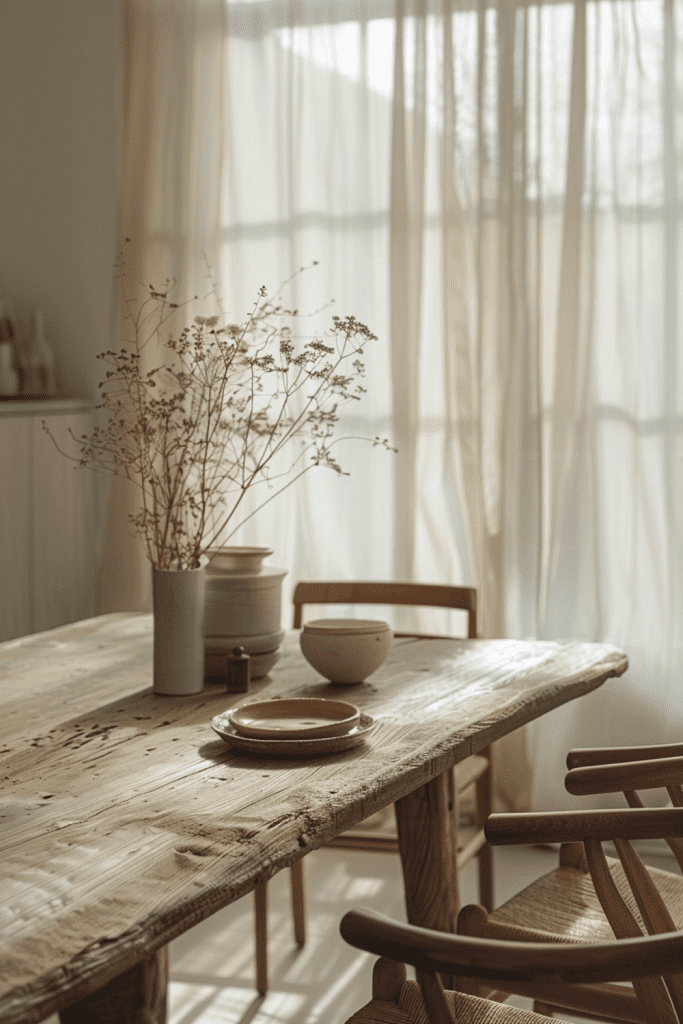
Use furniture made from natural wood that shows off knots, grain, and the inherent imperfections of the material. This furniture brings warmth and a grounding element to any space, aligning perfectly with wabi-sabi principles.
★ Steal This Look
- Paint Color: Benjamin Moore White Dove OC-17
- Furniture: reclaimed wood dining table with visible grain and natural edge, woven rush seat dining chairs
- Lighting: soft natural light through sheer linen curtains
- Materials: raw wood with natural imperfections, ceramic pottery, woven natural fibers
There’s something deeply satisfying about running your fingers along a weathered wood table that tells its own story through every knot and grain line.
Handcrafted Ceramic Accents
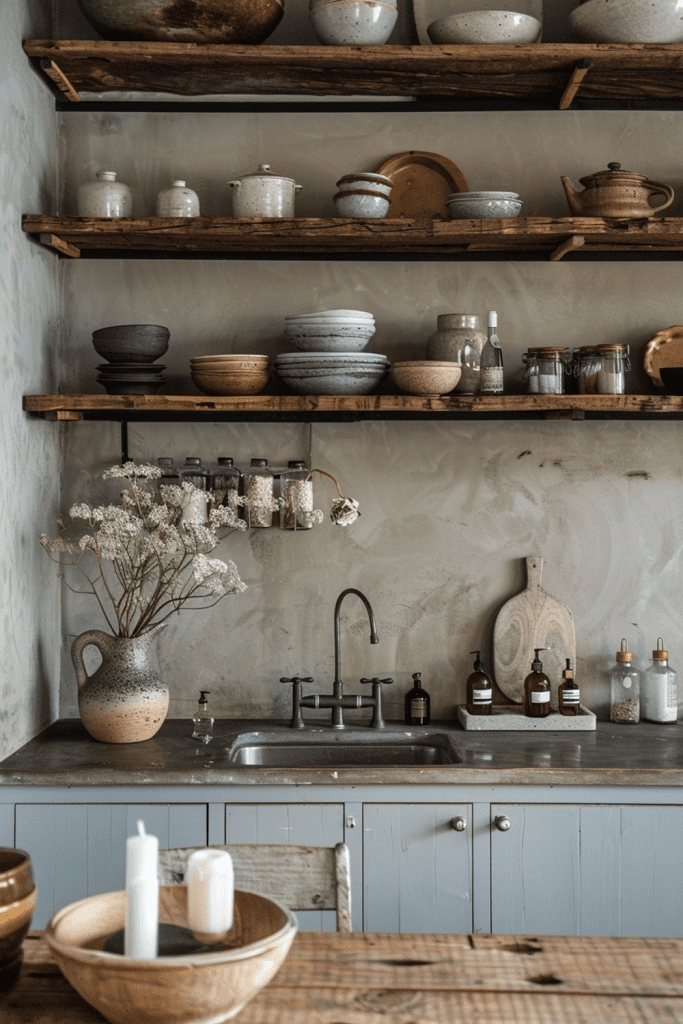
Include ceramic accents that are visibly handcrafted, featuring irregular shapes and textures. These pieces add a personal touch and celebrate the beauty of human imperfection.
💡 Steal This Look
- Paint Color: Farrow & Ball Elephant’s Breath No. 229
- Furniture: Dusty blue Shaker-style base cabinets with brushed brass knobs
- Lighting: Natural light with minimal task lighting under floating shelves
- Materials: Raw reclaimed wood floating shelves, concrete countertops, handmade ceramic vessels
This kitchen beautifully showcases how handcrafted ceramics become living art when displayed openly, each piece telling its own story of maker’s hands and natural clay variations.
Muted, Earthy Color Palettes
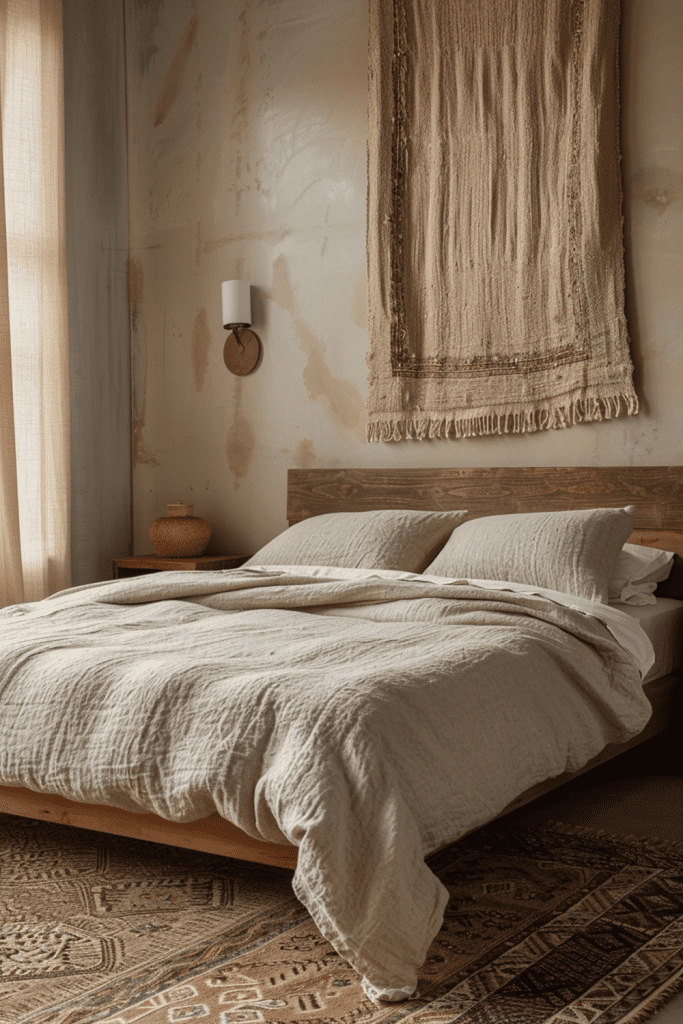
Opt for wall colors and decor in muted, earthy tones that evoke a sense of calm and are rooted in the natural world, reflecting wabi-sabi’s connection to earth and simplicity.
🌟 Steal This Look
- Paint Color: Behr Sculptor Clay S210-3
- Furniture: platform bed frame with walnut wood headboard and natural linen bedding
- Lighting: brass disc wall sconce with white fabric shade
- Materials: natural linen bedding, handwoven jute wall hanging, geometric patterned area rug, raw walnut wood
This bedroom perfectly captures wabi-sabi’s essence with its muted beige walls that show subtle weathering and imperfection. The monochromatic palette feels incredibly grounding and peaceful.
✅ Get The Look
Organic Linen Fabrics
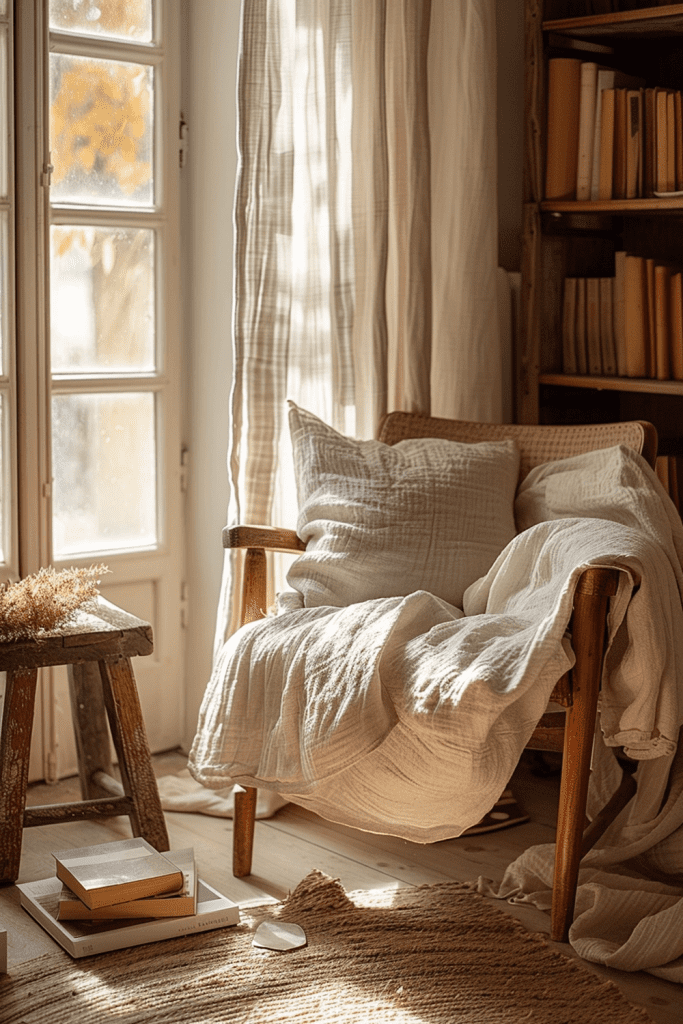
Decorate with organic linen fabrics that show natural creases and textures, emphasizing comfort and simplicity over precision and neatness.
💡 Steal This Look
- Paint Color: Valspar Bistro White 7006-16
- Furniture: natural wood rocking chair with linen cushions and throw blankets
- Lighting: warm natural window light filtered through linen curtains
- Materials: natural linen textiles, raw wood, woven jute rug, unfinished wood shelving
There’s something deeply comforting about settling into a space where every fabric tells a story of daily use and gentle aging. This linen-wrapped reading nook captures that perfect imperfection that makes a house feel like a true home.
Minimalist Layouts with Character
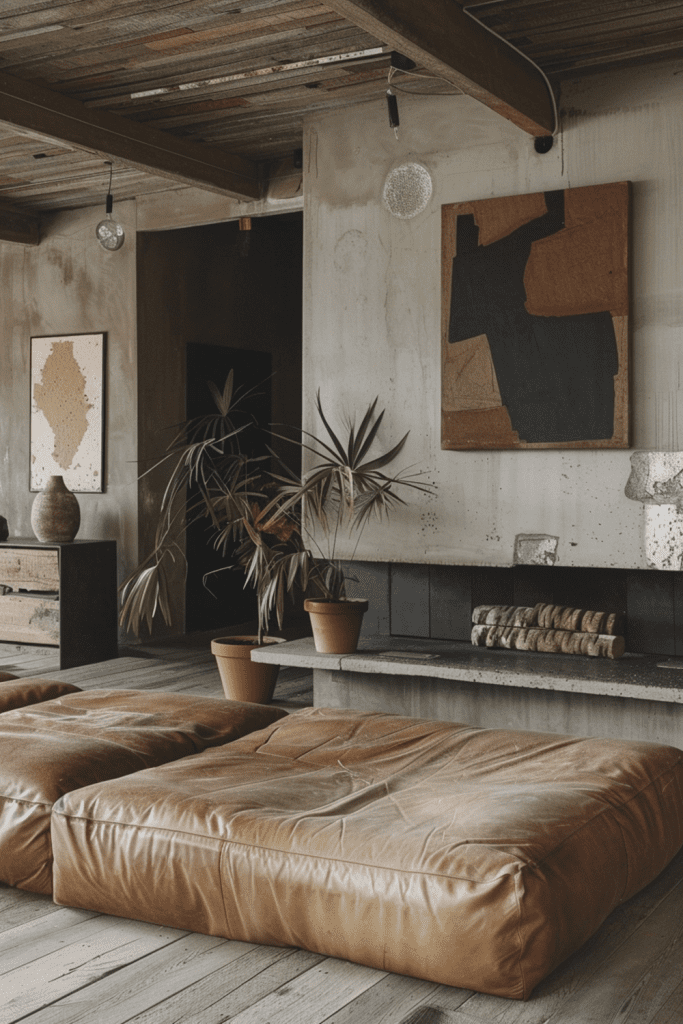
Design spaces that are minimalist but filled with objects that have character and history, such as an old wooden bench or a vintage lamp.
★ Steal This Look
- Paint Color: PPG Agreeable Gray HDC-AC-23
- Furniture: oversized cognac leather floor cushions and reclaimed wood beam coffee table
- Lighting: pendant globe light fixtures on black cords
- Materials: weathered reclaimed wood beams, raw concrete, aged terracotta planters
This space perfectly captures how minimalism doesn’t have to feel cold or sterile. The worn leather cushions and weathered beams bring soul and history to clean lines.
Asymmetrical Wall Art
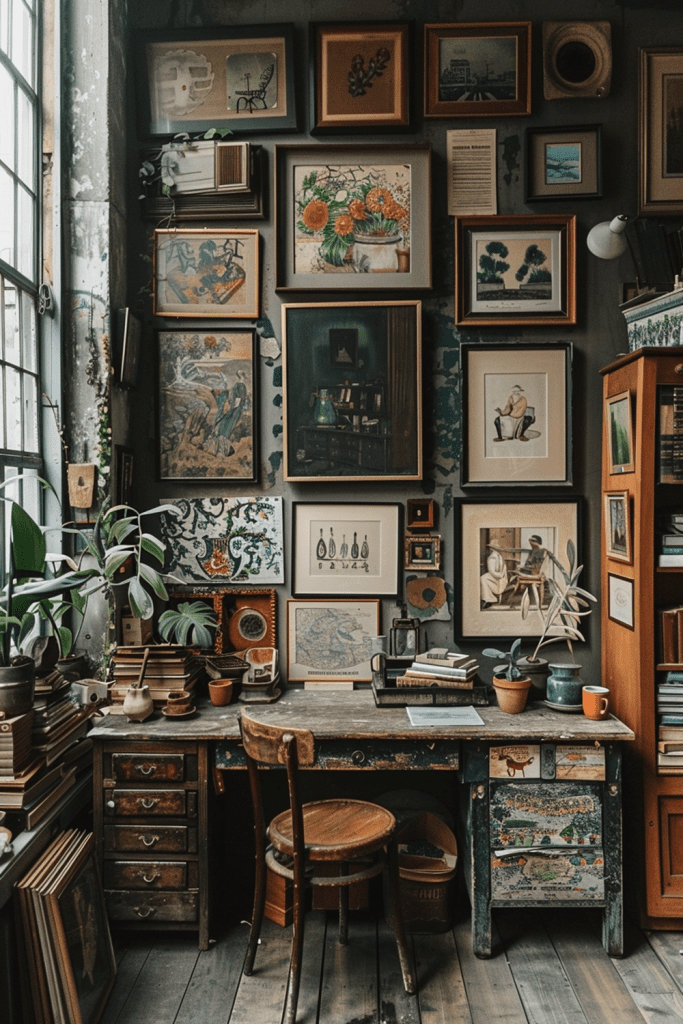
Hang wall art that is asymmetrical or abstract, celebrating the beauty of imperfection and non-conformity, key aspects of wabi-sabi decor.
✎ Steal This Look
- Paint Color: Dunn-Edwards Deep Forest DE6308
- Furniture: vintage weathered wood desk with mismatched drawers and worn patina
- Lighting: small adjustable task lamp with white shade
- Materials: aged wood, vintage brass frames, weathered metal, ceramic pottery
This eclectic gallery wall perfectly captures wabi-sabi’s embrace of imperfection, where each piece has found its own organic place rather than following rigid design rules. The layered, collected-over-time feeling makes the space feel deeply personal and lived-in.
Vintage Finds and Antiques
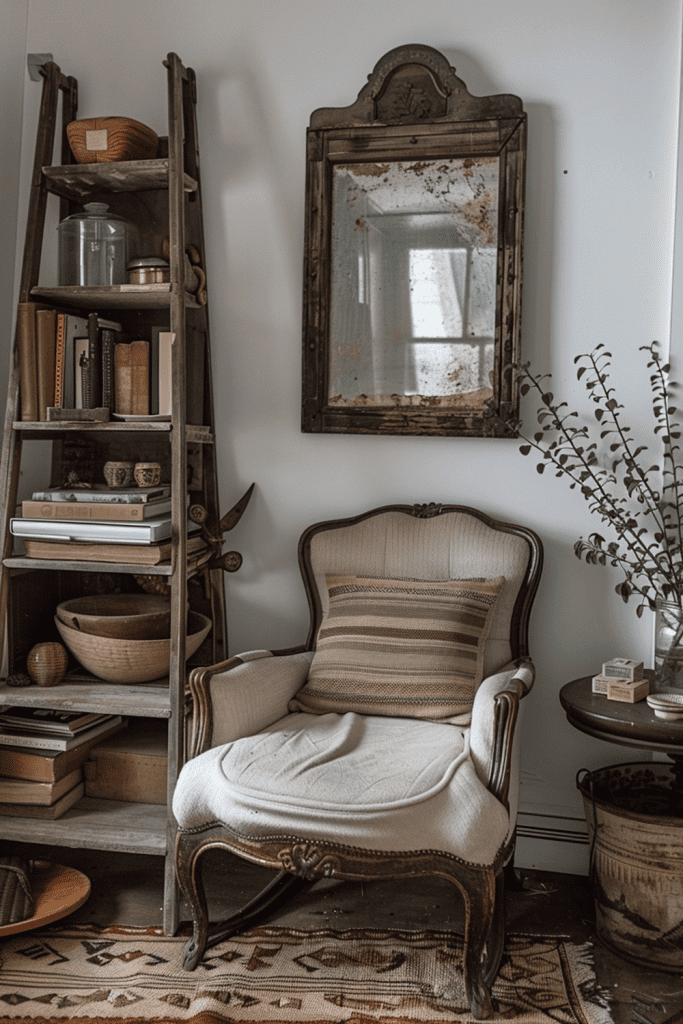
Incorporate vintage finds and antiques that show wear and patina, which tell a story and add depth to your home’s aesthetic.
🌟 Steal This Look
- Paint Color: Clare Paint Current Mood CC-20W
- Furniture: French bergère chair with carved wooden frame and neutral linen upholstery
- Lighting: Natural light from windows with aged patina mirrors to reflect illumination
- Materials: Weathered wood, aged mirror glass, natural linen, woven textiles, and ceramic pottery
There’s something deeply satisfying about surrounding yourself with pieces that have lived full lives before finding their way to you. Each scratch and fade mark tells a story that no new furniture ever could.
Rough-Hewn Stone Elements
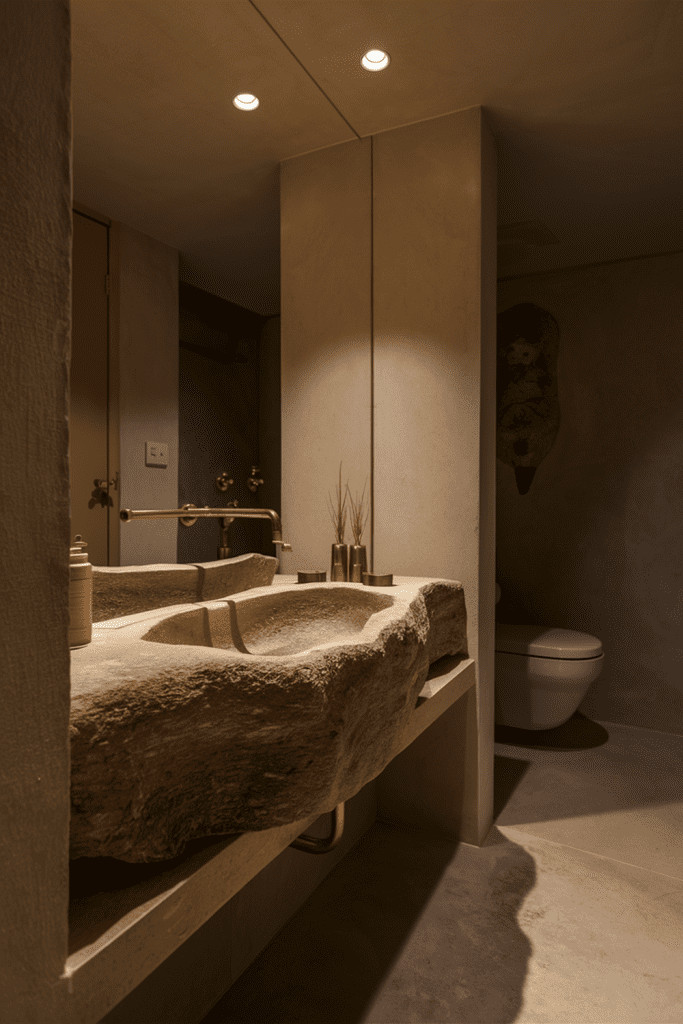
Use rough-hewn stone in decor or architectural elements to bring an unrefined, earthy quality to your space, resonating with the wabi-sabi philosophy.
🎨 Steal This Look
- Paint Color: Fine Paints of Europe Umbra Natural UMB 25 – matches the warm taupe-brown walls visible throughout this bathroom space
- Furniture: Floating wooden vanity shelf supporting the rough stone basin, wall-mounted toilet with concealed tank
- Lighting: Recessed ceiling spotlights with warm LED bulbs creating ambient downlighting
- Materials: Raw carved stone basin, natural wood floating shelf, polished concrete floors, brushed brass fixtures
There’s something deeply grounding about washing your hands in a basin carved from raw stone – it connects you to natural materials in the most intimate daily moments. This bathroom proves that wabi-sabi luxury isn’t about perfection, but about embracing the beautiful irregularities that only nature can create.
Simple, Functional Kitchenware
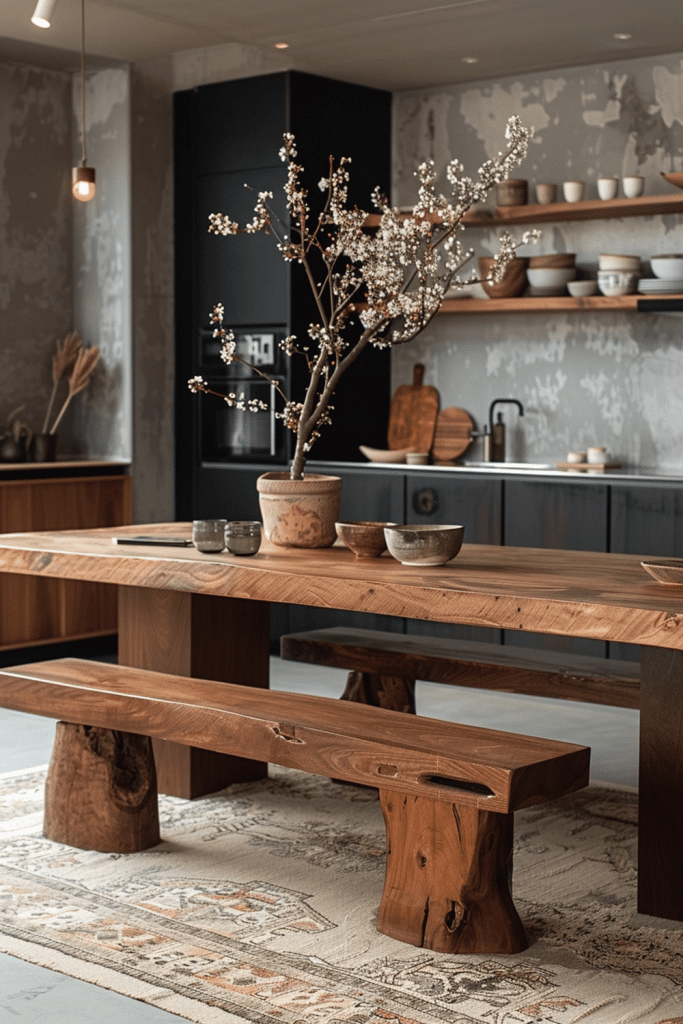
Choose kitchenware that is simple and functional but shows the marks of craftsmanship or natural wear.
★ Steal This Look
- Paint Color: Backdrop Iron Ore 2124-10 for the dark charcoal accent wall, balanced with warm putty-toned walls
- Furniture: Live-edge wooden dining table with raw wood benches and dark charcoal lower kitchen cabinets
- Lighting: Warm pendant lights with exposed bulbs and recessed ceiling spots
- Materials: Raw wood grain, matte charcoal cabinetry, concrete countertops, handwoven textural rugs
There’s something deeply satisfying about eating from a bowl that bears the subtle thumb marks of the potter who made it. These imperfections aren’t flaws—they’re stories.
Low, Unstructured Seating
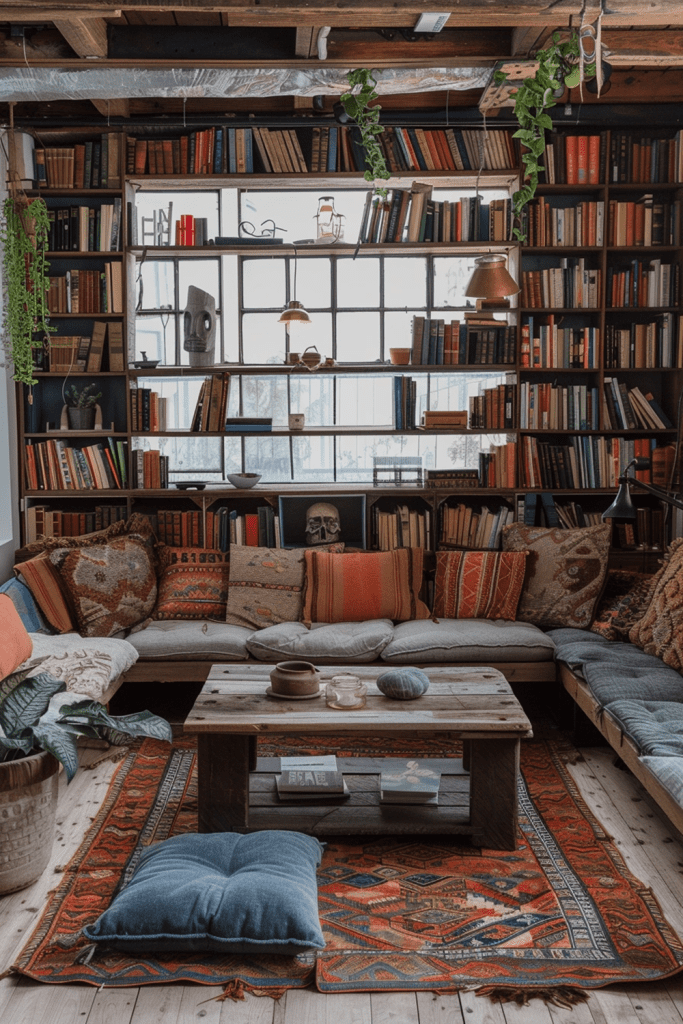
Opt for low, unstructured seating options like floor cushions or low sofas that invite relaxation and informal use, suitable for a wabi-sabi living environment.
🖼 Steal This Look
- Paint Color: Sherwin-Williams Natural Linen SW 9109
- Furniture: low wooden platform seating with linen cushions and reclaimed wood coffee table
- Lighting: copper pendant lights and brass table lamps
- Materials: weathered wood, linen cushioning, vintage rugs, raw copper
This deeply lived-in library corner shows how low seating transforms a space into an intimate retreat. The mix of floor cushions and built-in bench creates that perfect wabi-sabi balance of structure and softness.
✅ Get The Look
Exposed Brick and Natural Plaster
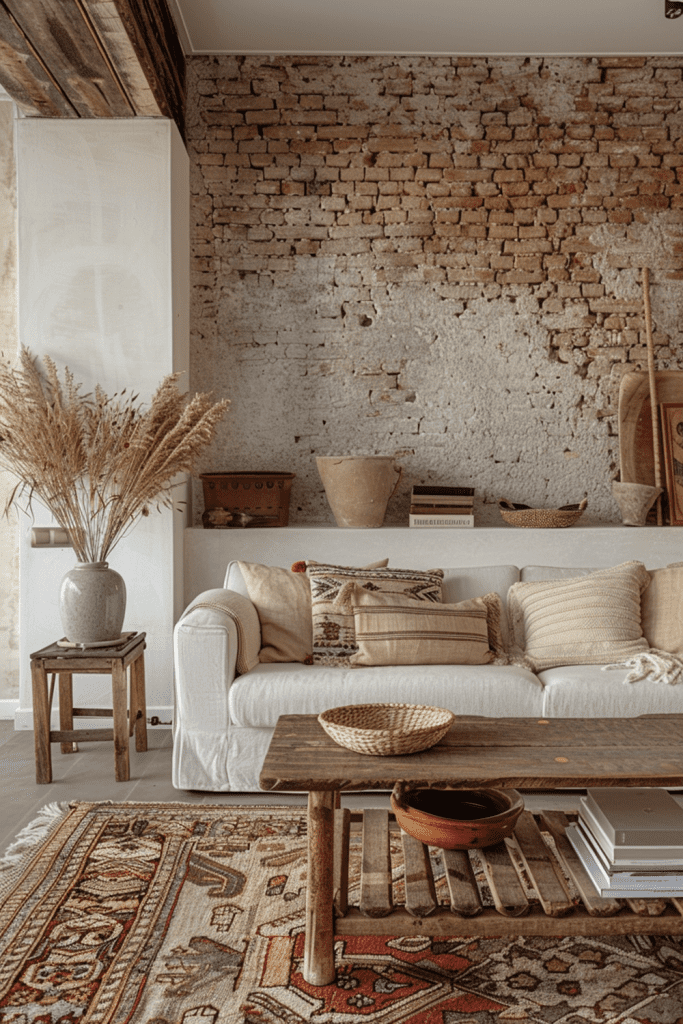
Feature walls of exposed brick or natural plaster to highlight natural textures and the imperfection of materials, embracing the aesthetic of decay and repair.
🎨 Steal This Look
- Paint Color: Benjamin Moore White Dove OC-17
- Furniture: cream linen slipcovered sofa with natural wood coffee table and reclaimed wood side table
- Lighting: natural daylight from windows with exposed wooden ceiling beams
- Materials: exposed weathered brick wall, natural plaster patches, woven baskets, pampas grass, vintage kilim rugs
This living room perfectly captures wabi-sabi’s celebration of imperfection through its beautifully weathered brick wall where old plaster peels away naturally. The layered textures create a serene backdrop that feels both ancient and timeless.
Handwoven Baskets and Rugs
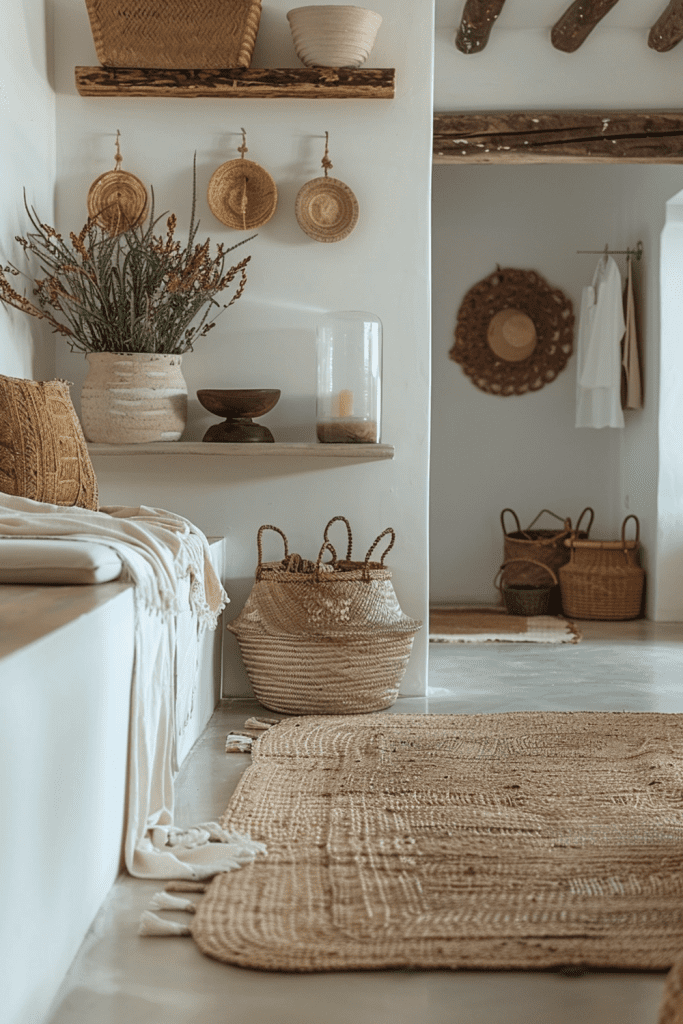
Include handwoven baskets and rugs that display irregular patterns and natural variations, adding texture and artisanal quality to your decor.
💡 Steal This Look
- Paint Color: Farrow & Ball Pointing No.2003
- Furniture: low-profile white platform bed with natural wood floating shelves
- Lighting: natural daylight from window opening
- Materials: woven jute rugs, seagrass baskets, raw wood beams, ceramic vessels
This bedroom perfectly captures how handwoven textiles can transform a space from sterile to soulful. The layered jute rugs and collection of varying basket weaves create that lived-in, collected-over-time feeling that makes wabi sabi so inviting.
Rustic Metal Fixtures
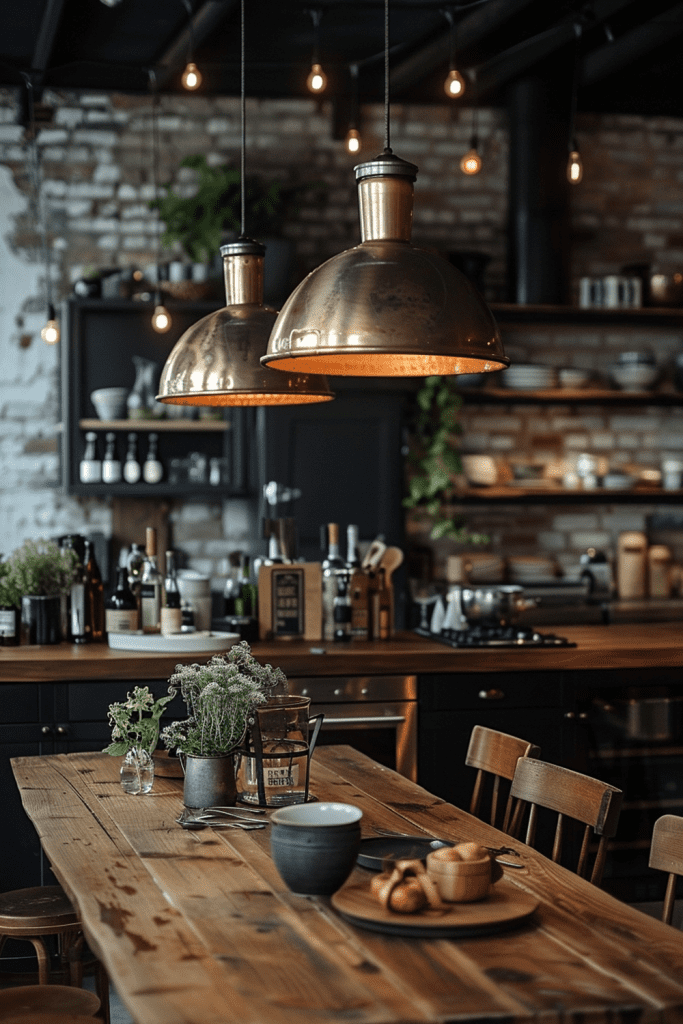
Incorporate rustic metal fixtures such as wrought iron candle holders or aged brass handles that show natural aging, enhancing the wabi-sabi charm.
🖼 Steal This Look
- Paint Color: Behr Intellectual T18-04
- Furniture: reclaimed wood dining table with live edge details
- Lighting: aged copper pendant lights with industrial dome shades
- Materials: weathered copper, reclaimed wood, exposed brick
There’s something deeply satisfying about a kitchen where every metal fixture tells its own story through natural wear and patina. This weathered copper and iron combination creates that perfect lived-in feel that makes a space feel like home.
Live-Edge Wooden Tables
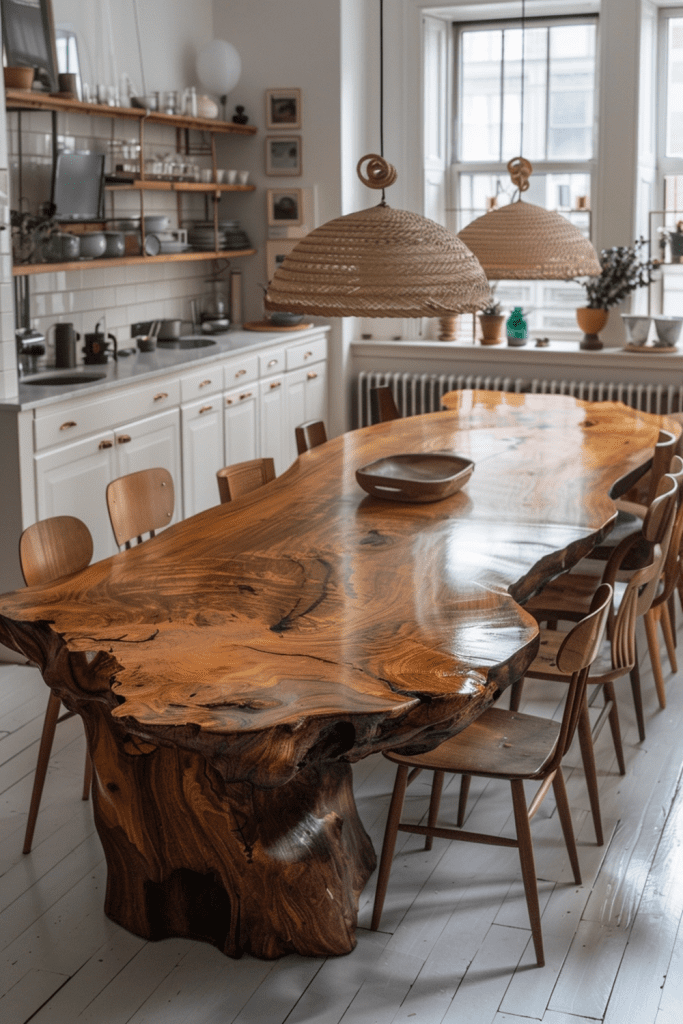
Use a live-edge wooden table as a centerpiece in your dining or living area, showcasing the natural, imperfect edge of the wood.
💡 Steal This Look
- Paint Color: Valspar Ultra White 7006-16
- Furniture: live-edge walnut dining table with natural wood grain and bentwood dining chairs
- Lighting: woven rattan pendant lights with natural rope cord suspension
- Materials: raw wood grain, woven natural fibers, white painted wood cabinetry, weathered plank flooring
There’s something deeply satisfying about gathering around a table that celebrates nature’s imperfections – every meal becomes a connection to the tree’s original story.
Aged Leather Upholstery
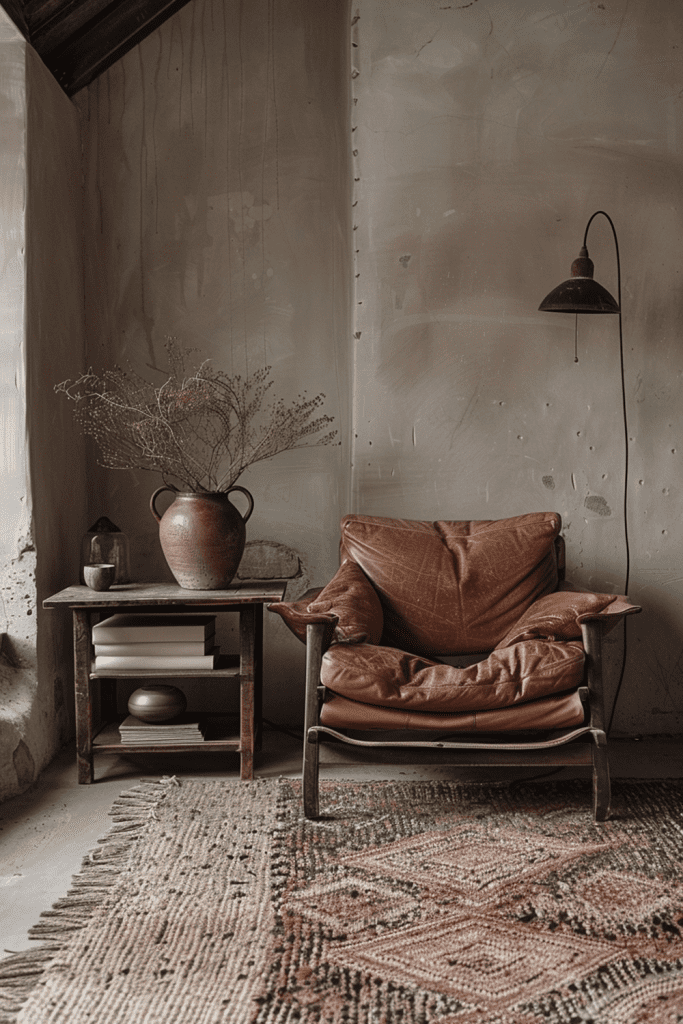
Choose leather upholstery that wears over time, developing a patina that adds character and beauty to the furniture, embodying the wabi-sabi spirit.
💡 Steal This Look
- Paint Color: PPG Greige Cloud PPG1005-3
- Furniture: cognac leather lounge chair with wood frame and weathered wood side table
- Lighting: black metal floor lamp with dome shade
- Materials: aged leather upholstery, raw wood, woven jute rug, ceramic pottery
There’s something deeply satisfying about leather that tells your story through gentle scuffs and softened edges. This cognac leather chair shows how beautiful imperfection can be when it comes naturally with time.
Soft, Uneven Lighting
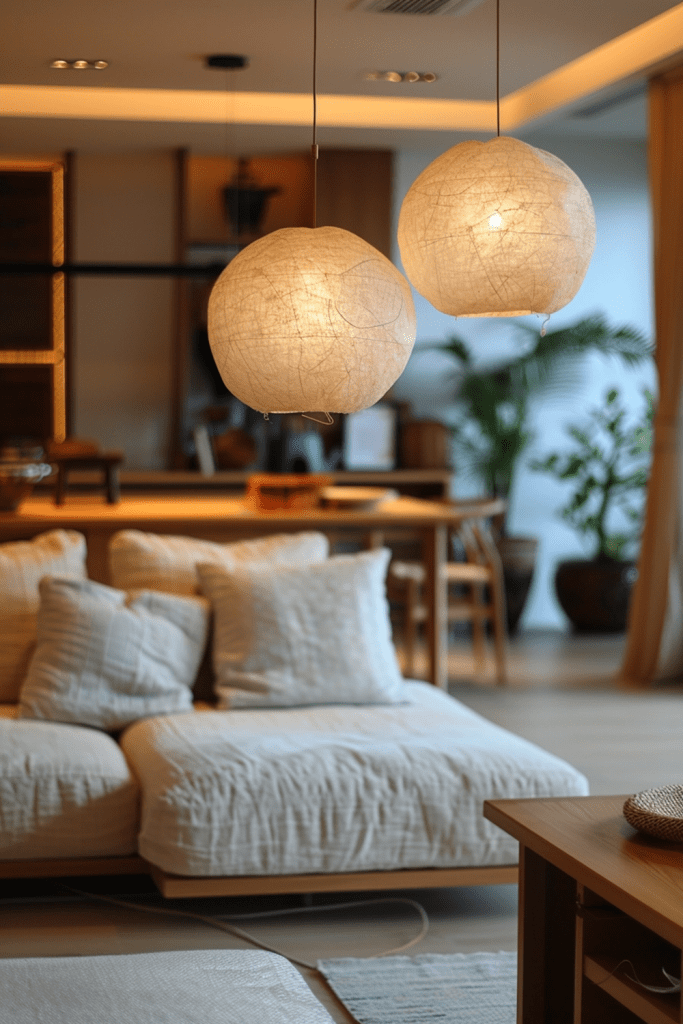
Install lighting that gives off a soft, uneven glow, using lampshades made from natural materials that create diffuse, shadowy effects.
💡 Steal This Look
- Paint Color: Dunn-Edwards Whisper DE6134 – matches the soft warm white walls visible in this living space
- Furniture: low-profile cream linen sectional sofa with oversized floor cushions and natural wood coffee table
- Lighting: woven rattan sphere pendant lights creating organic shadows and warm ambient glow
- Materials: natural linen upholstery, raw wood furniture, woven natural fiber lampshades, and textured area rugs
There’s something deeply calming about how these oversized rattan spheres cast their gentle, uneven shadows across the room. The imperfect weave creates a living light show that changes with every breeze.
Bonsai and Succulent Gardens
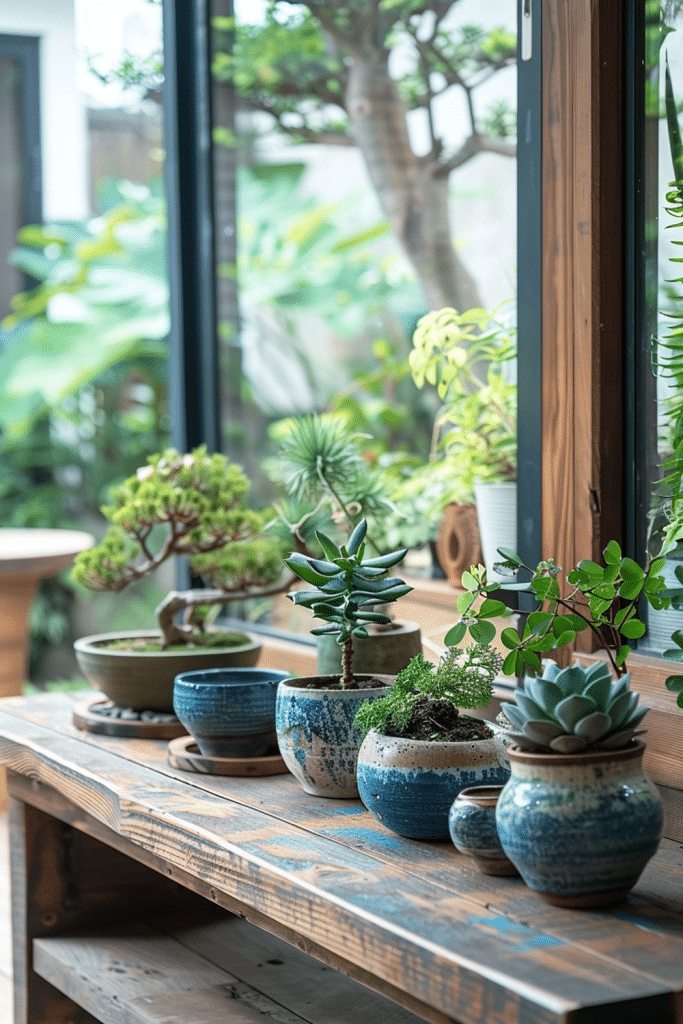
Create small indoor gardens with bonsai or succulents, which reflect the wabi-sabi themes of nature, simplicity, and quiet growth.
★ Steal This Look
- Paint Color: Clare Paint Current Mood W25 – matches the soft white walls visible in this bright, plant-filled space
- Furniture: weathered reclaimed wood bench with natural aging and patina for displaying plant collections
- Lighting: abundant natural light from large windows with black frames
- Materials: handmade ceramic planters in blue and earth tones, raw wood surfaces with visible wear patterns
This sun-drenched plant sanctuary perfectly captures wabi-sabi’s celebration of natural imperfection through its collection of weathered ceramics and thriving greenery. The aged wood surface tells its own story while providing the perfect stage for this living art.
Reclaimed Wood Shelving
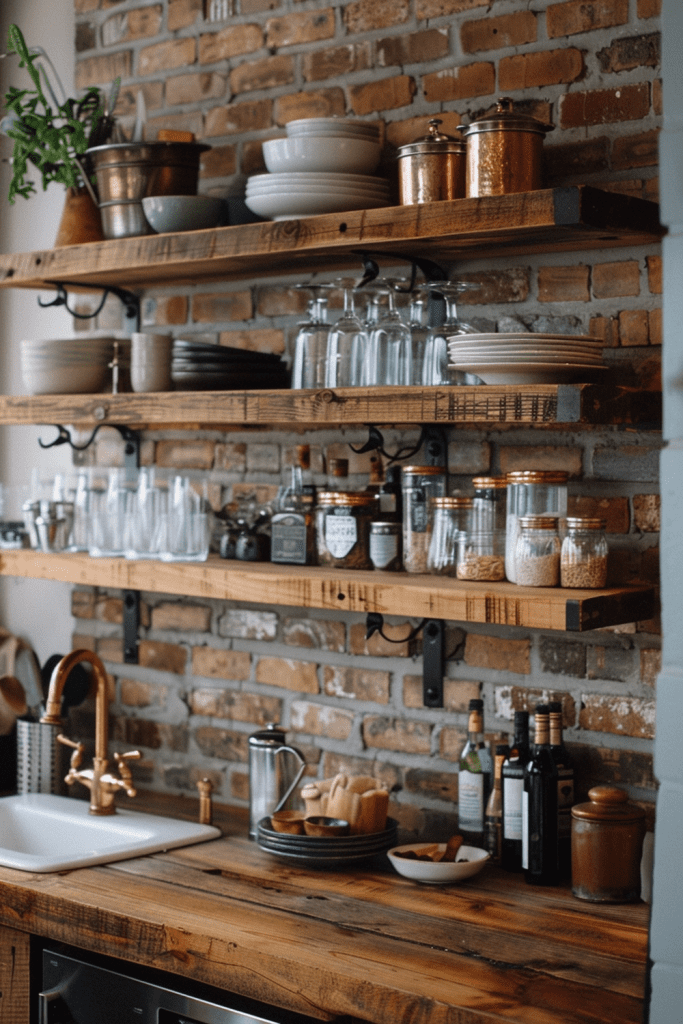
Utilize shelving made from reclaimed wood, showing signs of previous use and age, which adds a story and visual interest to your storage solutions.
🎨 Steal This Look
- Paint Color: Fine Paints of Europe Brick Red 86
- Furniture: Reclaimed wood floating shelves with black metal brackets
- Lighting: Natural ambient lighting complementing exposed brick texture
- Materials: Weathered reclaimed wood planks, aged red brick, raw black metal brackets
There’s something deeply satisfying about shelving that carries history in every scratch and grain line. These reclaimed wood shelves against exposed brick create the perfect backdrop for displaying everyday kitchen essentials as functional art.
Zen-Inspired Spaces
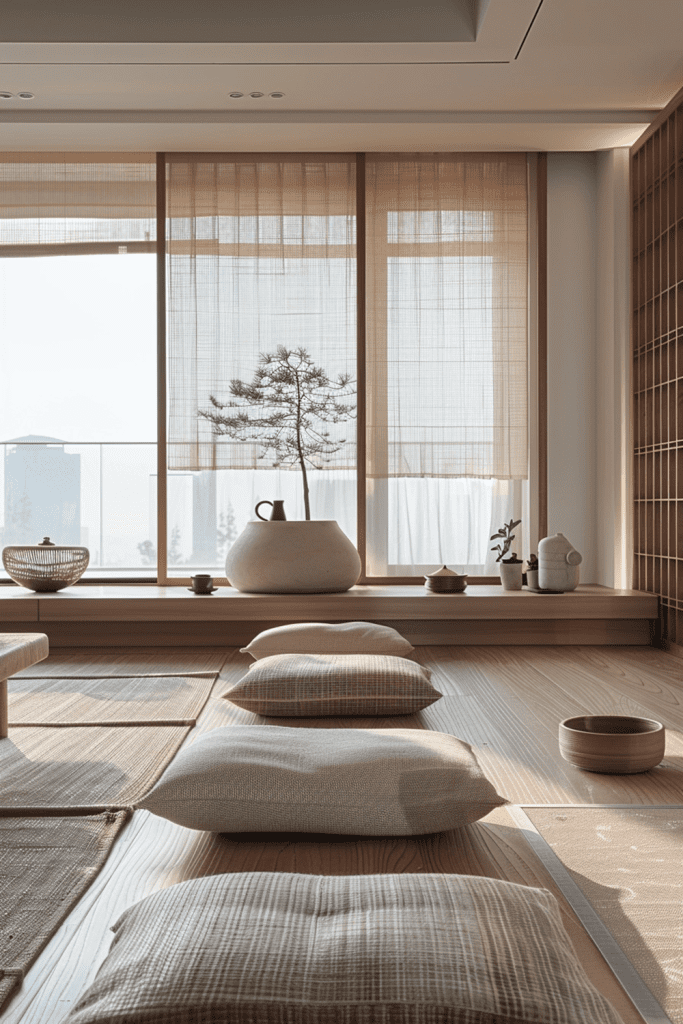
Design zen-inspired spaces that focus on balance, flow, and the beauty of minimalism, using elements like pebbles, bamboo, and water features.
💡 Steal This Look
- Paint Color: Backdrop Linen White W-01 for the soft cream walls that create this serene, warm neutral foundation
- Furniture: Low-profile floor cushions and meditation pillows in natural linen and hemp fabrics arranged around a wooden window ledge altar
- Lighting: Recessed ceiling spotlights with warm LED bulbs to create the gentle, diffused illumination without harsh shadows
- Materials: Natural bamboo window blinds, woven jute area rugs, unglazed ceramic vessels, and light oak wood flooring
There’s something deeply calming about this approach to living where every element serves both function and soul. This space invites you to slow down and find beauty in the essential.
Imperfect Pottery Displays
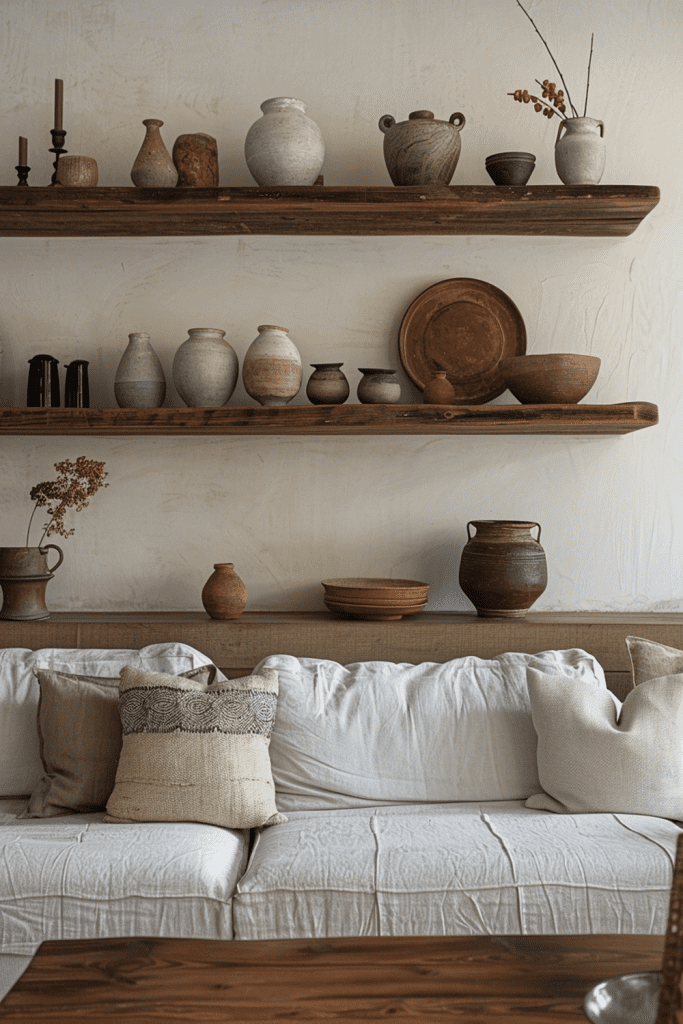
Display collections of pottery that are imperfect or slightly flawed, celebrating the wabi-sabi appreciation for beauty in imperfection.
★ Steal This Look
- Paint Color: Sherwin-Williams Natural Linen SW 9109
- Furniture: linen slipcovered sectional sofa with loose, relaxed cushions
- Lighting: warm ambient lighting to highlight pottery textures
- Materials: reclaimed wood floating shelves, handmade ceramics, natural linen textiles
There’s something deeply satisfying about curating a collection where each piece tells a story through its imperfections. This relaxed approach to display feels like a gentle rebellion against perfectionist decorating.
Earth-Toned Bedding
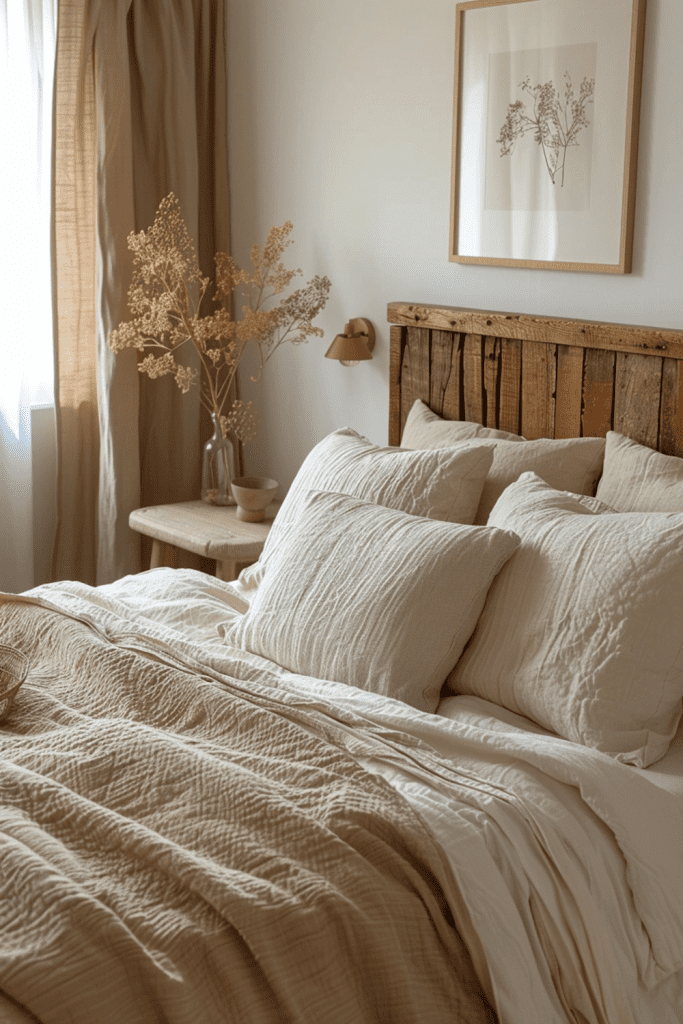
Choose bedding in earth tones that offer a soft, lived-in look, promoting relaxation and a connection to the natural world.
✎ Steal This Look
- Paint Color: Benjamin Moore White Dove OC-17
- Furniture: reclaimed wood plank headboard with natural weathered finish
- Lighting: warm brass wall-mounted sconce with exposed bulb
- Materials: crinkled linen bedding, raw wood planks, dried botanicals, brass hardware
This bedroom perfectly captures wabi sabi’s embrace of natural imperfection through its gloriously rumpled linen bedding and weathered wood textures. The warm earth tones create an instantly calming retreat that feels authentically lived-in rather than styled.
Mismatched Wooden Chairs
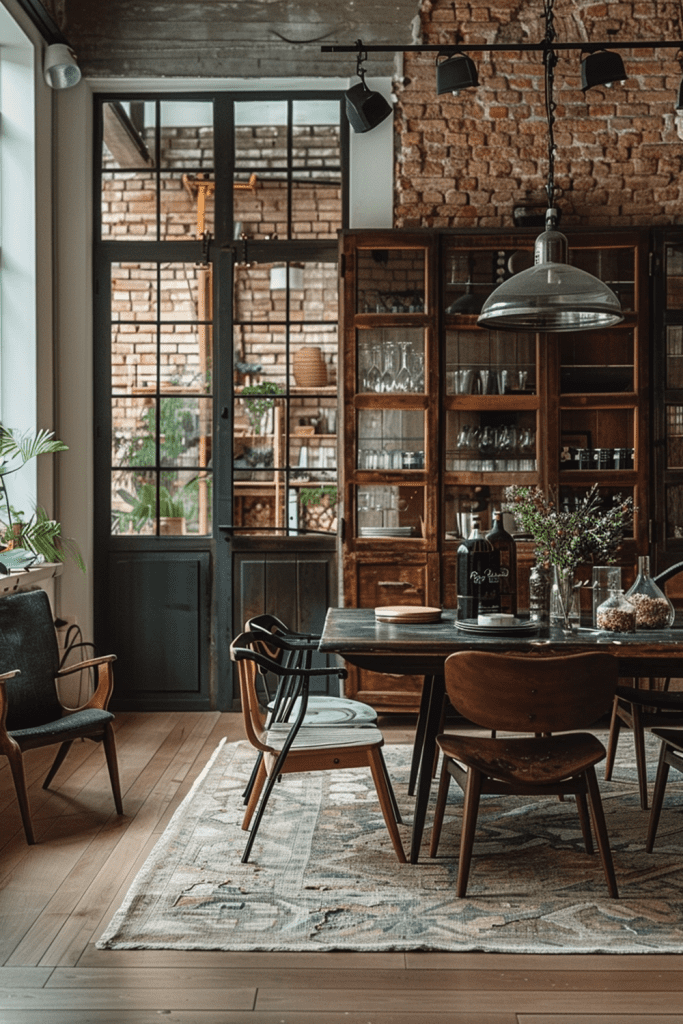
Gather a collection of mismatched wooden chairs around your dining table, each with its unique history and character, perfectly imperfect.
🖼 Steal This Look
- Paint Color: Farrow & Ball Red Earth 64
- Furniture: mismatched vintage wooden dining chairs with Windsor-style spindle backs and curved bentwood seats
- Lighting: industrial brass pendant light with dome shade over dining table
- Materials: exposed red brick walls, weathered oak dining table, distressed Persian-style area rug, glass-front wooden display cabinets
There’s something deeply satisfying about a dining space where every chair has lived a different life, creating conversations before anyone even sits down. This perfectly imperfect approach to seating makes every meal feel like a gathering of old friends.
Handmade Paper Lampshades
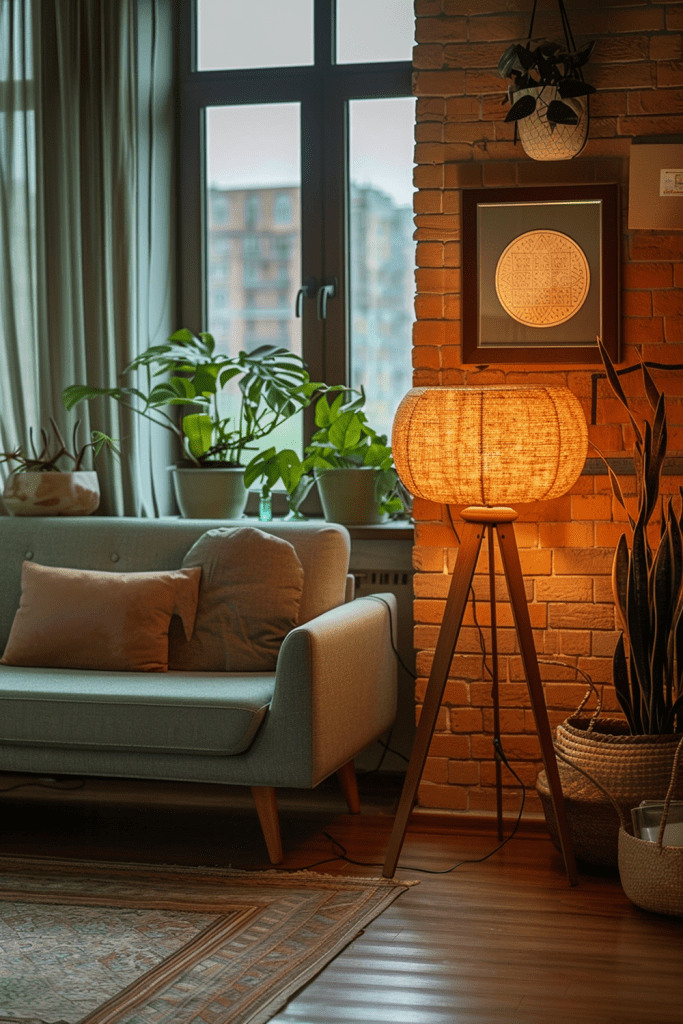
Use lampshades made from handmade paper, which show texture, fiber, and imperfections, adding a soft, diffused light to your rooms.
🎨 Steal This Look
- Paint Color: Behr Canyon Dusk S210-4
- Furniture: mid-century modern sage green loveseat with wooden legs
- Lighting: woven rattan pendant lamp with tripod floor lamp featuring spherical paper shade
- Materials: exposed brick walls, natural fiber baskets, handwoven textiles
There’s something deeply satisfying about the gentle glow filtering through handmade paper – it transforms harsh overhead lighting into something that feels like a warm embrace.
Bare Concrete Floors
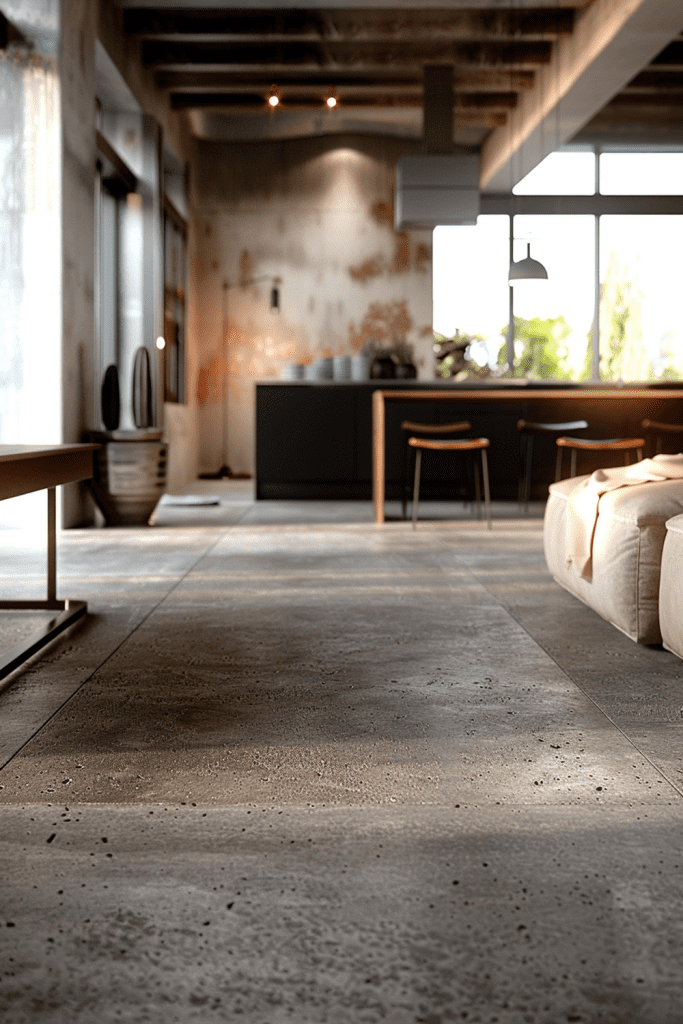
Embrace the raw, unfinished look of bare concrete floors, which are ideal for a wabi-sabi aesthetic due to their simple, industrial feel.
🎨 Steal This Look
- Paint Color: Valspar Lincoln Cottage Black 6001-2C for kitchen cabinetry to match the visible dark lower cabinets
- Furniture: Natural wood bar stools with clean lines and leather upholstery to complement the visible kitchen island seating
- Lighting: Black dome pendant light fixture to match the visible hanging pendant over the kitchen island
- Materials: Polished concrete flooring with natural aggregate texture and exposed wooden ceiling beams
There’s something deeply grounding about walking barefoot on cool concrete – it connects you to the raw honesty of materials. This open-plan space shows how concrete floors can anchor a room while letting natural light and wooden elements soften the industrial edge.
Salvaged Doors and Windows
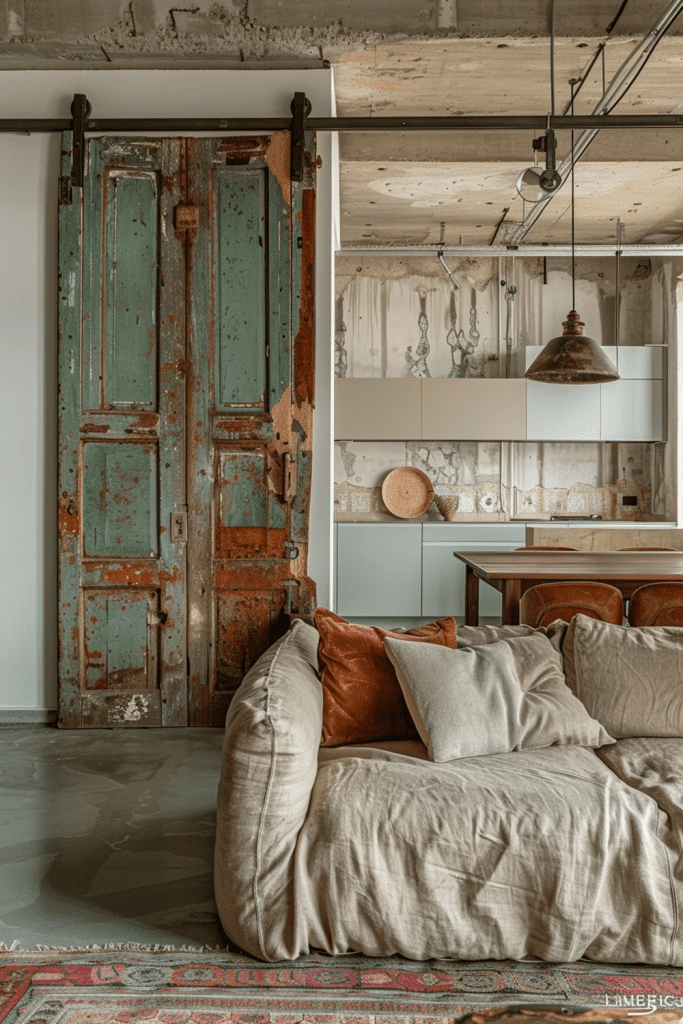
Install salvaged doors and windows that show wear and tell a story, adding a sense of history and imperfect beauty to your space.
🖼 Steal This Look
- Paint Color: PPG Dover White PPG1057-1
- Furniture: oversized linen sectional sofa with loose covers
- Lighting: industrial pendant light with weathered metal shade
- Materials: weathered patina on metal, raw concrete floors, natural linen textures
There’s something magical about salvaged doors that have weathered decades of use – each scratch and rust mark tells a story. This weathered turquoise door creates a stunning focal point while honoring the wabi sabi principle of finding beauty in imperfection.
✓ Get The Look
Freestanding Bathtubs
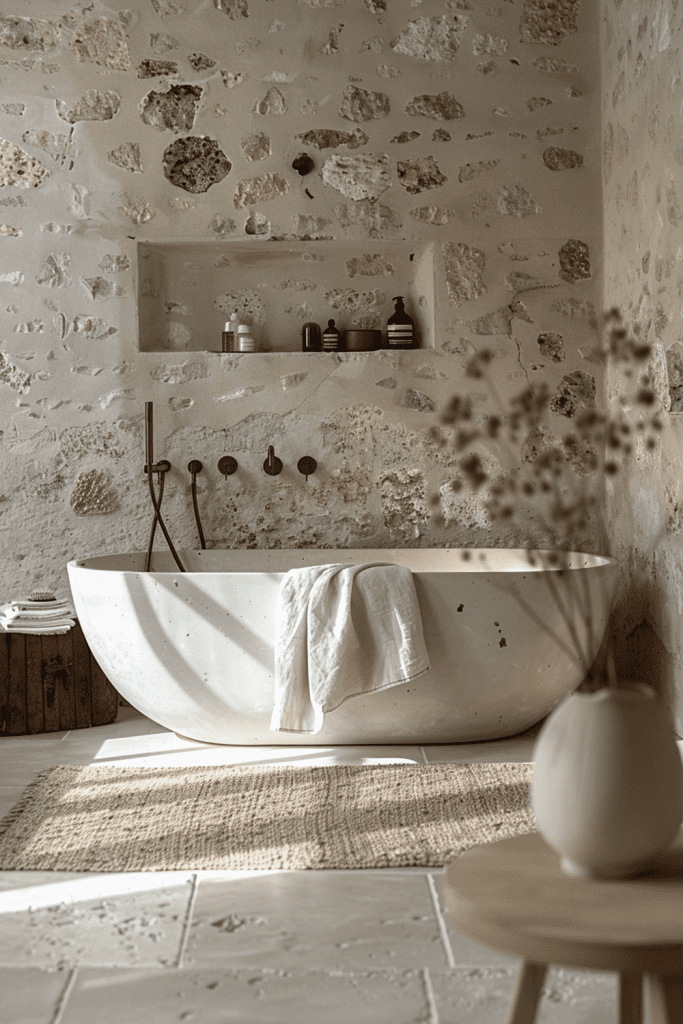
Include a freestanding bathtub that serves as a statement piece, often featuring organic shapes and natural materials that align with wabi-sabi decor.
🎨 Steal This Look
- Paint Color: Dunn-Edwards Bone DE6198 – matches the warm, weathered stone walls with natural patina and textural imperfections
- Furniture: organic curved freestanding bathtub in matte white ceramic with raw wood stool for minimal bathroom storage
- Lighting: soft natural lighting filtering through space to highlight textural stone walls and create gentle shadows
- Materials: weathered limestone walls, natural linen textiles, raw wood accents, matte ceramic finishes
This bathroom perfectly captures wabi-sabi’s celebration of natural aging and imperfection, where every weathered stone tells a story. The contrast between the smooth tub and textured walls creates a serene sanctuary that feels both ancient and timeless.
✅ Get The Look
Repurposed Industrial Elements
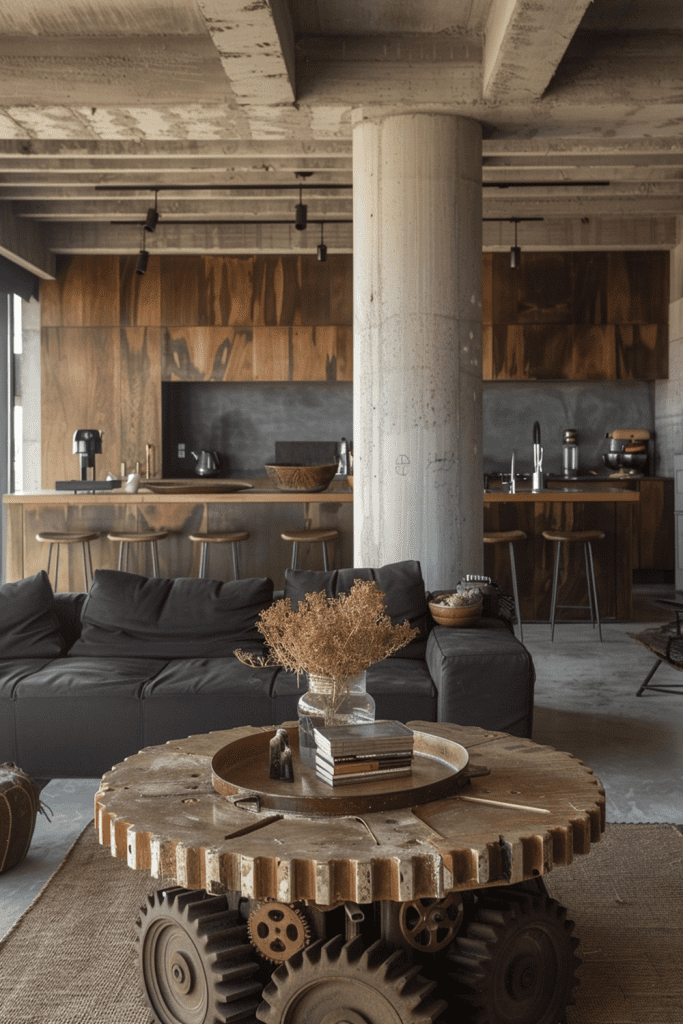
Incorporate repurposed industrial elements like old gears, pipes, or metal frames as decor, which reflect the wabi-sabi themes of reuse and the beauty of aging materials.
🏠 Steal This Look
- Paint Color: Clare Paint Penumbra PEN
- Furniture: charcoal linen sectional sofa with loose cushions and reclaimed wood coffee table with industrial gear base
- Lighting: black track lighting system with adjustable spotlights
- Materials: weathered concrete columns, raw wood kitchen cabinetry, polished concrete floors, and aged metal industrial elements
There’s something deeply satisfying about giving discarded industrial elements a second life as functional art. Each gear and weathered surface tells a story of its working past.
Cracked and Crazed Glazes
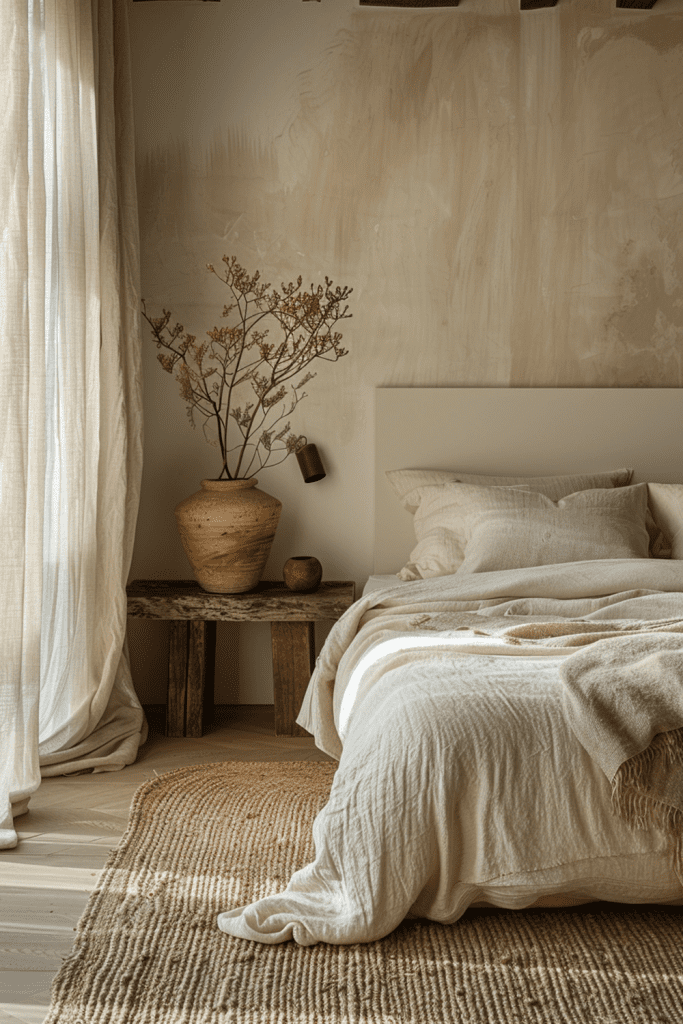
Display ceramics with cracked or crazed glazes, which celebrate the beauty in their flaws and the natural process of aging and wear.
✎ Steal This Look
- Paint Color: Fine Paints of Europe Jute FB30
- Furniture: low-profile wooden platform bed with natural wood nightstand
- Lighting: natural light through sheer linen curtains with wall-mounted reading sconce
- Materials: woven jute rug, raw linen bedding, weathered ceramic vessels, dried botanical branches
There’s something deeply moving about ceramics that bear the marks of time – those hairline cracks and weathered surfaces become maps of their journey. This bedroom shows how beautifully imperfect pottery can anchor a space with authentic, lived-in character.
Conclusion
Incorporating Wabi-Sabi into your apartment doesn’t just transform your living space; it changes your perspective. By embracing the beauty of imperfection, each of these 29 ideas invites calmness, appreciation, and a deeper connection to the environment around us. Whether you choose to introduce rustic textures, natural elements, or serene asymmetry, Wabi-Sabi decor reminds us that true beauty lies in the authentic and the transient. Start your journey towards a more mindful and aesthetically fulfilling home environment by integrating these Wabi-Sabi principles into your apartment, creating a sanctuary that celebrates imperfection as not just acceptable but as an art form.