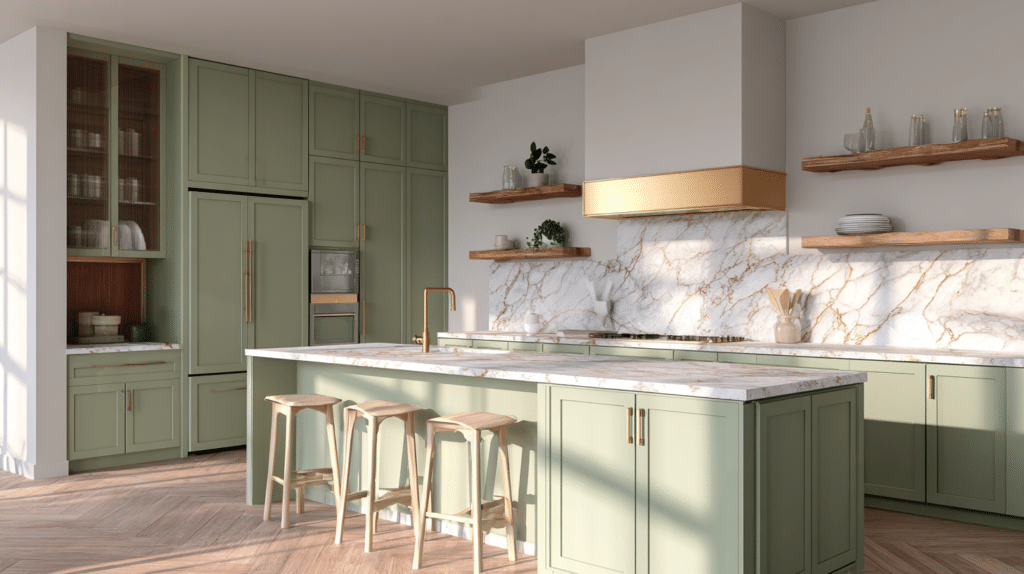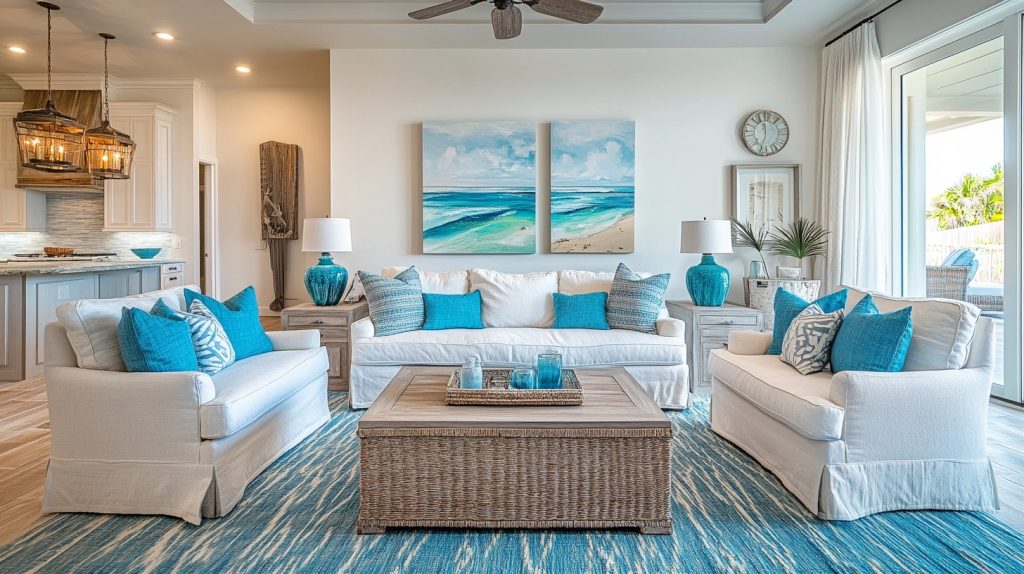
Post modern interior design is a vibrant, innovative approach that challenges traditional design conventions and embraces creativity, complexity, and personal expression. This comprehensive guide explores 29 cutting-edge design styles that redefine how we perceive and interact with living spaces. From geometric elegance and bold color blocks to surreal concepts and technological integrations, these design approaches offer a diverse range of aesthetic possibilities that transform interiors into dynamic, personalized environments. Whether you’re an design enthusiast, homeowner, or professional seeking inspiration, this collection provides an in-depth look at the most exciting trends in contemporary interior design.
1. Geometric Elegance Design
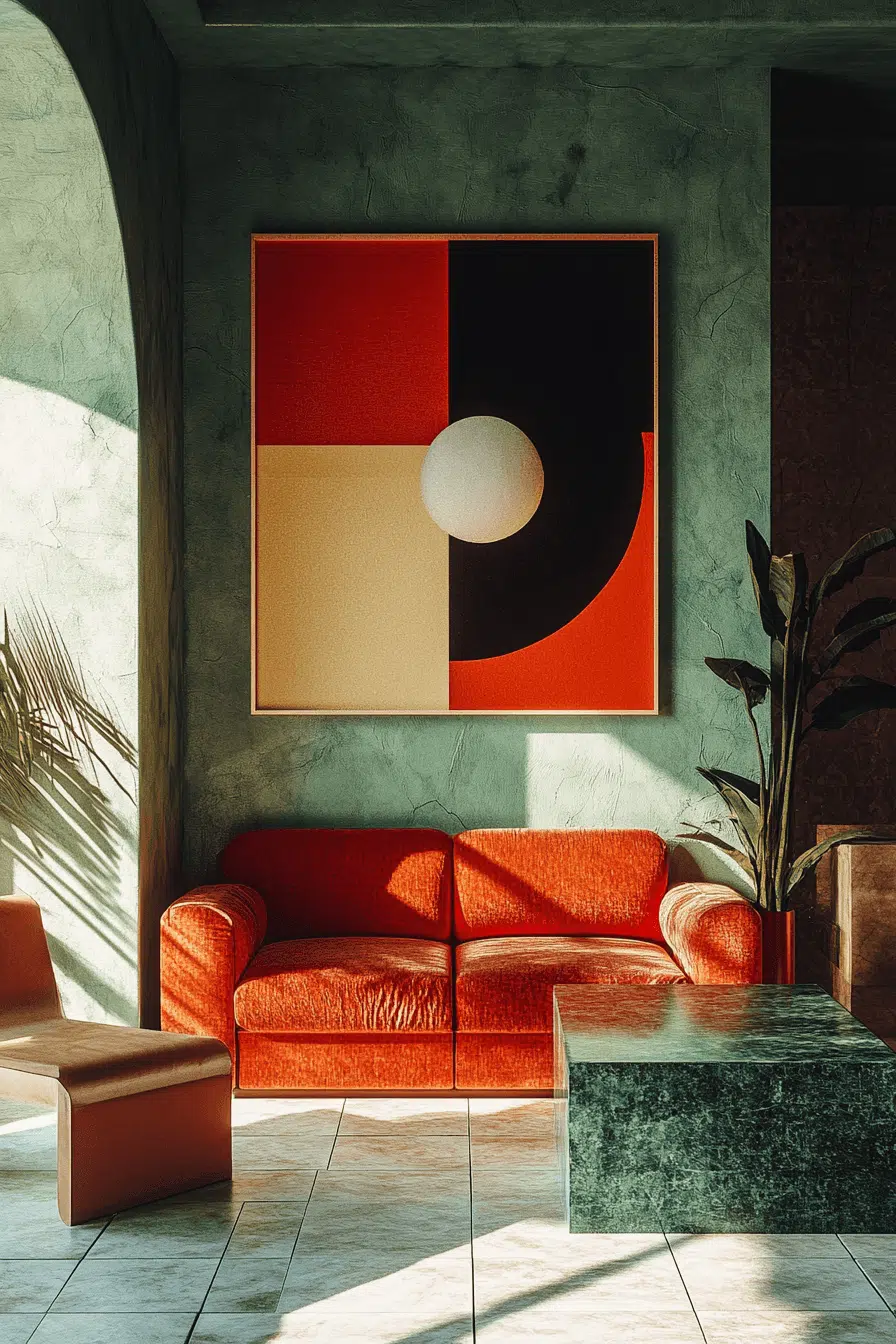
Geometric Elegance Design in postmodern interior design utilizes sharp angles and clean lines to create a visually striking space. This approach leverages geometric patterns and shapes to add a sense of order and precision, playing with perceptions and dimensions. It often incorporates bold color contrasts to highlight its unique architectural elements, making the room appear both structured and dynamic. This style is perfect for those who appreciate the beauty of simplicity combined with modern sophistication.
💡 Steal This Look
- Paint Color: Sherwin-Williams Halcyon Green SW 6213
- Furniture: burnt orange velvet loveseat with rounded arms, low-profile brown leather sling chair, solid green marble block coffee table
- Lighting: natural light from large arched window with no window treatments
- Materials: textured lime-washed plaster walls, velvet upholstery, polished marble, smooth leather, matte wood frame
This room feels like a confident collector’s retreat—someone who isn’t afraid of color but knows restraint keeps it sophisticated, not chaotic.
2. Bold Color Blocks Interior

Bold Color Blocks Interior uses vibrant and contrasting hues to define spaces within a postmodern interior design setting. This style emphasizes playful and expressive use of colors that can define moods and separate areas without physical partitions. It’s ideal for creating lively, energetic environments that stimulate creativity and interaction. The bold use of colors can also reflect the personality of the inhabitants, making each space truly unique.
🎨 Steal This Look
- Paint Color: Benjamin Moore Newburyport Blue HC-155
- Furniture: orange velvet three-seat sofa with track arms and tapered legs
- Lighting: brass wall sconce with cylindrical navy fabric shade
- Materials: velvet upholstery, wood panel molding, woven area rug, matte black planter
This room dares you to commit fully—there’s no toe-dipping in postmodern color blocking, and that orange sofa against navy walls proves fearless choices pay off.
🛒 Get The Look
3. Asymmetrical Harmony Home
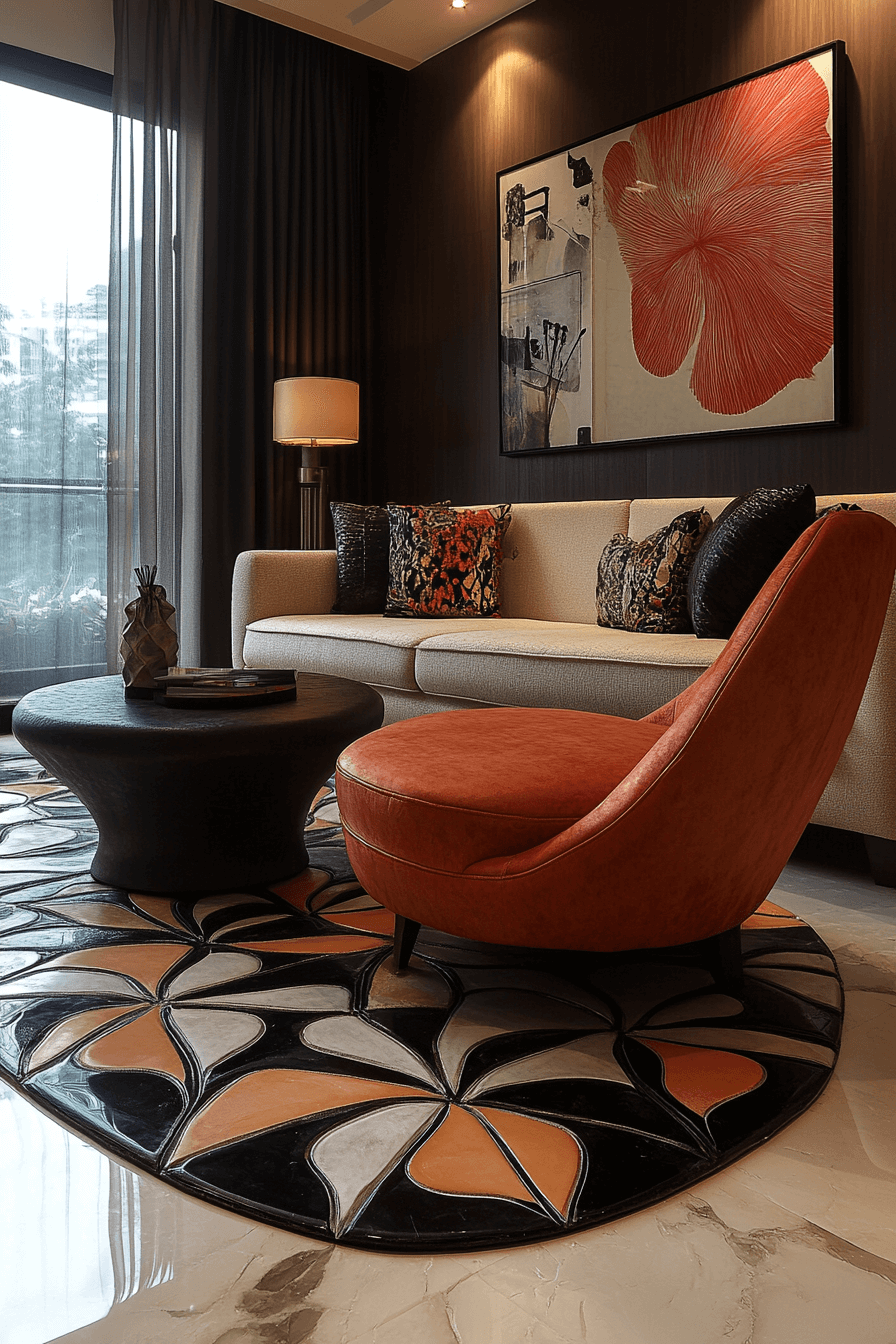
Asymmetrical Harmony Home in postmodern interior design embraces imbalance to create visual interest and movement within a room. This approach uses irregular patterns and unconventional layouts to challenge traditional design norms, creating a dynamic and engaging environment. Furniture placement and decor that defy the expected create a unique aesthetic that captures the essence of postmodernism—unpredictable yet harmonious.
🌟 Steal This Look
- Paint Color: Farrow & Ball London Clay 244
- Furniture: low-profile beige sofa with clean lines, sculptural burnt orange swivel lounge chair
- Lighting: tall brass floor lamp with drum linen shade
- Materials: polished marble flooring, textured wool-blend upholstery, burnished leather, dark wood paneling
This room feels like a confident conversation starter—dark and moody yet warm, with that sculptural orange chair inviting you to claim your own corner rather than follow the crowd to the sofa.
4. Neo-Baroque Chic Decor

Neo-Baroque Chic Decor brings the grandeur and elaborate detailing of Baroque style into the realm of postmodern interior design. This style combines ornate furniture and rich textures with modern materials and techniques to create a luxurious yet contemporary space. The use of dramatic, often theatrical elements makes it ideal for creating a bold statement in any room.
🌟 Steal This Look
- Paint Color: Behr Starless Night PPU14-20
- Furniture: deep blue velvet Chesterfield sofa with button tufting and nailhead trim
- Lighting: crystal chandelier with gold finish and candle-style bulbs
- Materials: matte painted ornate wall moldings, velvet upholstery, crystal, gold metal accents, distressed black wood
This room feels like stepping into a modern gothic novel—opulent yet livable, dramatic yet surprisingly cozy once the chandelier dims.
5. Eclectic Minimalism Style

Eclectic Minimalism Style in postmodern interior design combines the clean, uncluttered lines of minimalism with eclectic art and texture use. This design philosophy focuses on simplicity and functionality while allowing room for personal expression through unique, carefully chosen decor items. It’s perfect for those who want a space that feels both spacious and deeply personal.
🖼 Steal This Look
- Paint Color: Valspar Swiss Coffee 7002-16
- Furniture: low-profile platform sofa with white linen cushions and raw wood base
- Lighting: exposed concrete ceiling beams with natural window light as primary source
- Materials: unfinished oak, hand-thrown ceramics, raw linen, jute, dried botanicals
This room feels like a exhale—proof that postmodern spaces can be edited and warm simultaneously, where every object earns its place through material honesty.
6. High-Tech Contrast Design

High-Tech Contrast Design emphasizes the integration of the latest technology within a postmodern interior design framework. This style often features futuristic furniture, innovative lighting solutions, and smart home systems, contrasted against simple color schemes to highlight the tech features. It appeals to those who value functionality and state-of-the-art design in their living spaces.
✎ Steal This Look
- Paint Color: PPG Black Magic PPG1001-7
- Furniture: curved sculptural kitchen island with integrated cooktop and waterfall edges
- Lighting: integrated LED strip lighting under island and within overhead range hood structure
- Materials: high-gloss lacquered surfaces, polished porcelain tile, reflective glass backsplash, warm wood underglow accents
This kitchen feels like stepping into a luxury vehicle showroom—every surface invites touch and every curve directs your eye through the space.
7. Neo-Futurism Aesthetic
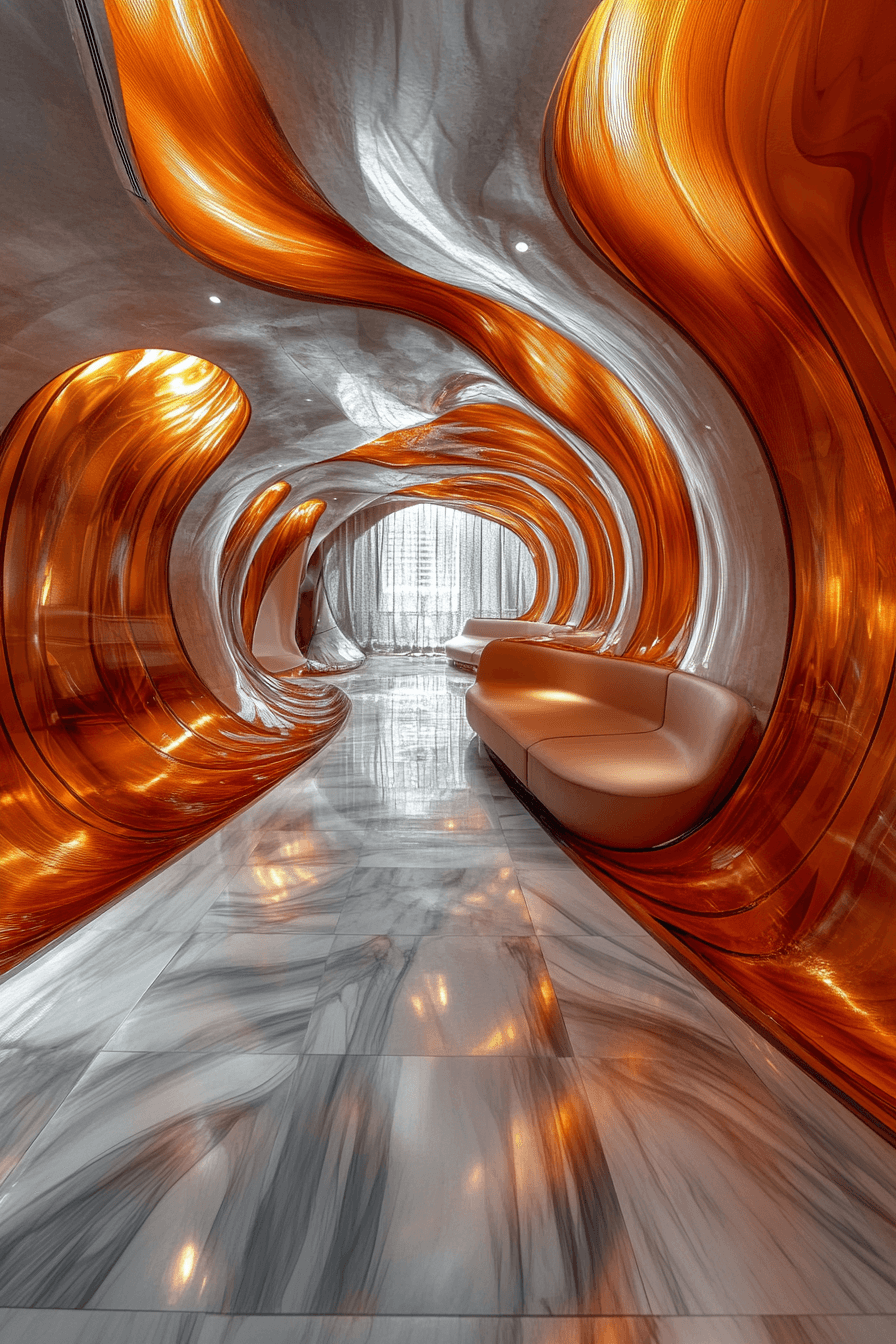
Neo-Futurism Aesthetic in postmodern interior design showcases sleek, forward-thinking designs that blur the lines between art, technology, and architecture. This style often features dynamic shapes, fluid lines, and advanced materials to create a sense of motion and progressiveness. It’s perfect for spaces that aim to reflect the possibilities of tomorrow.
🎨 Steal This Look
- Paint Color: Dunn-Edwards Molten Lava DET436
- Furniture: curved low-profile leather sofa in cognac or camel tone with no visible legs
- Lighting: recessed micro spotlights integrated into ceiling coves
- Materials: high-gloss liquid metal wall panels, bookmatched gray marble flooring, seamless leather upholstery
This space feels like stepping inside a sculpture rather than walking into a room—it’s bold, slightly unsettling in the best way, and absolutely unforgettable for anyone who enters.
Save this article
No spam. Unsubscribe anytime.
8. Pop Art Inspired Interiors
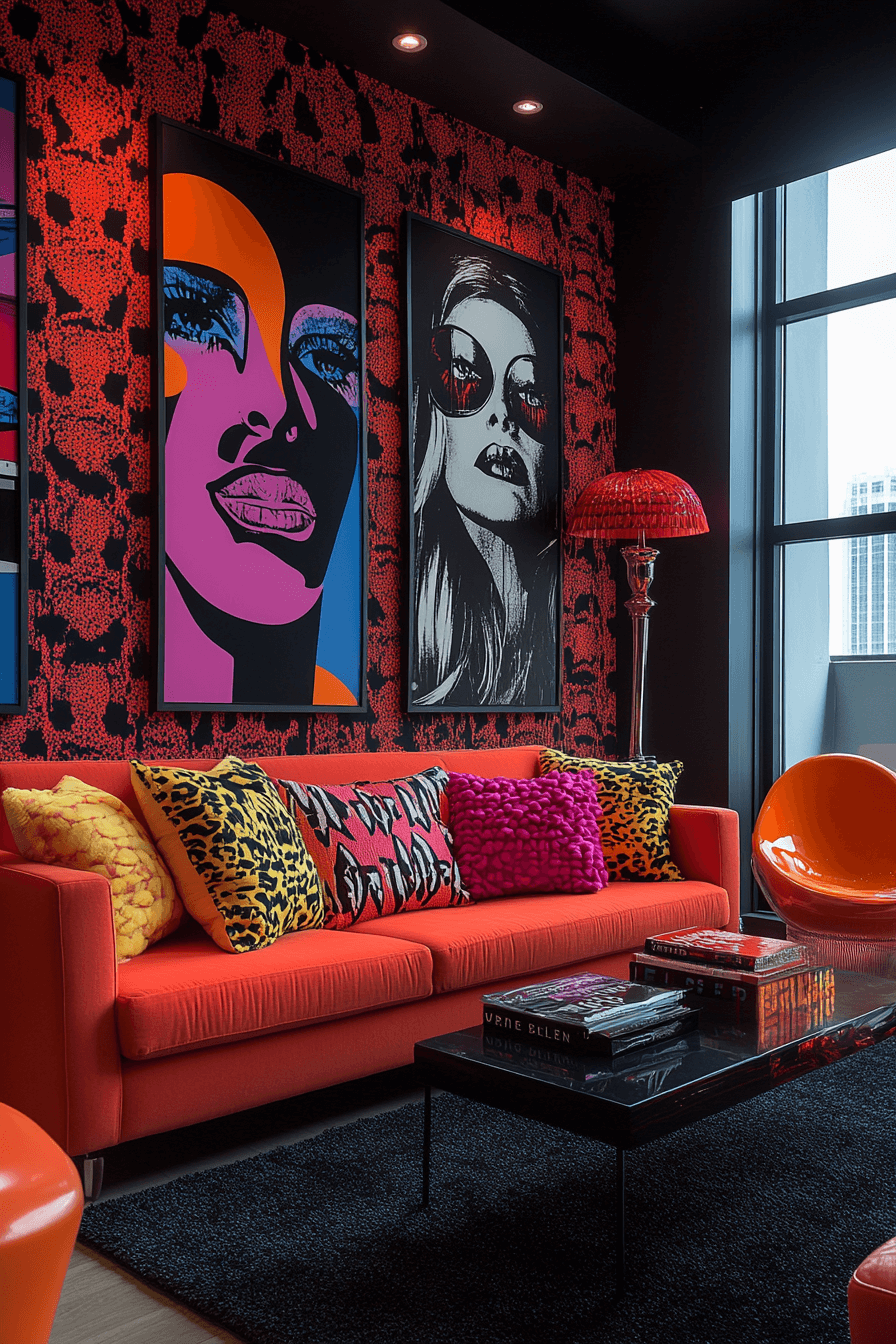
Pop Art Inspired Interiors utilize bold imagery, bright colors, and iconic graphics characteristic of the Pop Art movement, making them a perfect match for postmodern interior design. This style is all about making a bold visual statement, using art to create fun, high-impact rooms that are full of energy and youthfulness. It’s ideal for those who enjoy interiors that reflect cultural trends and artistic expression.
🖼 Steal This Look
- Paint Color: Clare Paint No Filter CL02
- Furniture: low-profile orange velvet sofa with clean lines, glossy fiberglass egg chair in tangerine
- Lighting: vintage Murano-style red glass table lamp with ruffled shade on chrome stem
- Materials: high-pile black wool rug, lacquered black coffee table, textured glass, chrome accents, leopard print velvet
This room doesn’t whisper—it shouts, and that’s exactly the point. It’s for someone who treats their walls like a canvas and their evenings like a happening.
9. Surreal Space Concepts

Surreal Space Concepts in postmodern interior design challenge reality by incorporating elements that are fantastical and imaginative. This style might include unconventional sculptures, dream-like color palettes, and furniture that defies conventional forms. It’s designed for those who see their living spaces as a canvas for creativity and personal expression.
🏠 Steal This Look
- Paint Color: Fine Paints of Europe Sand Dollar S-02-03
- Furniture: low-profile platform bed with integrated curved base in warm oak or lime-washed wood
- Lighting: recessed LED strip lighting in undulating wall niches plus single woven rattan pendant
- Materials: textured clay plaster walls, hand-troweled microcement, natural linen bedding, warm wood tones
This room feels like sleeping inside a seashell—it’s the ultimate retreat for anyone who craves disconnection from the rectangular world outside.
10. Abstract Expressionist Decor

Abstract Expressionist Decor leverages bold strokes and spontaneous design elements characteristic of the Abstract Expressionist art movement within postmodern interior design. This style focuses on conveying emotion through non-traditional forms and vibrant colors, making each space feel like a piece of livable art. It’s perfect for those who appreciate rooms that evoke feelings and provoke thought.
🏠 Steal This Look
- Paint Color: Backdrop Black 01
- Furniture: pair of curved barrel-back armchairs in rust velvet with contrasting charcoal fabric on outer shell
- Lighting: brushed brass box sconce with white linen shade
- Materials: dark walnut millwork, oxidized brass, velvet upholstery, vintage-look wool rug with faded medallion pattern
This is the kind of room that stops you mid-conversation—the kind of bold, collected moment that feels like it belongs in a private club or a well-traveled friend’s downtown loft.
11. Chromatic Vibrancy Rooms
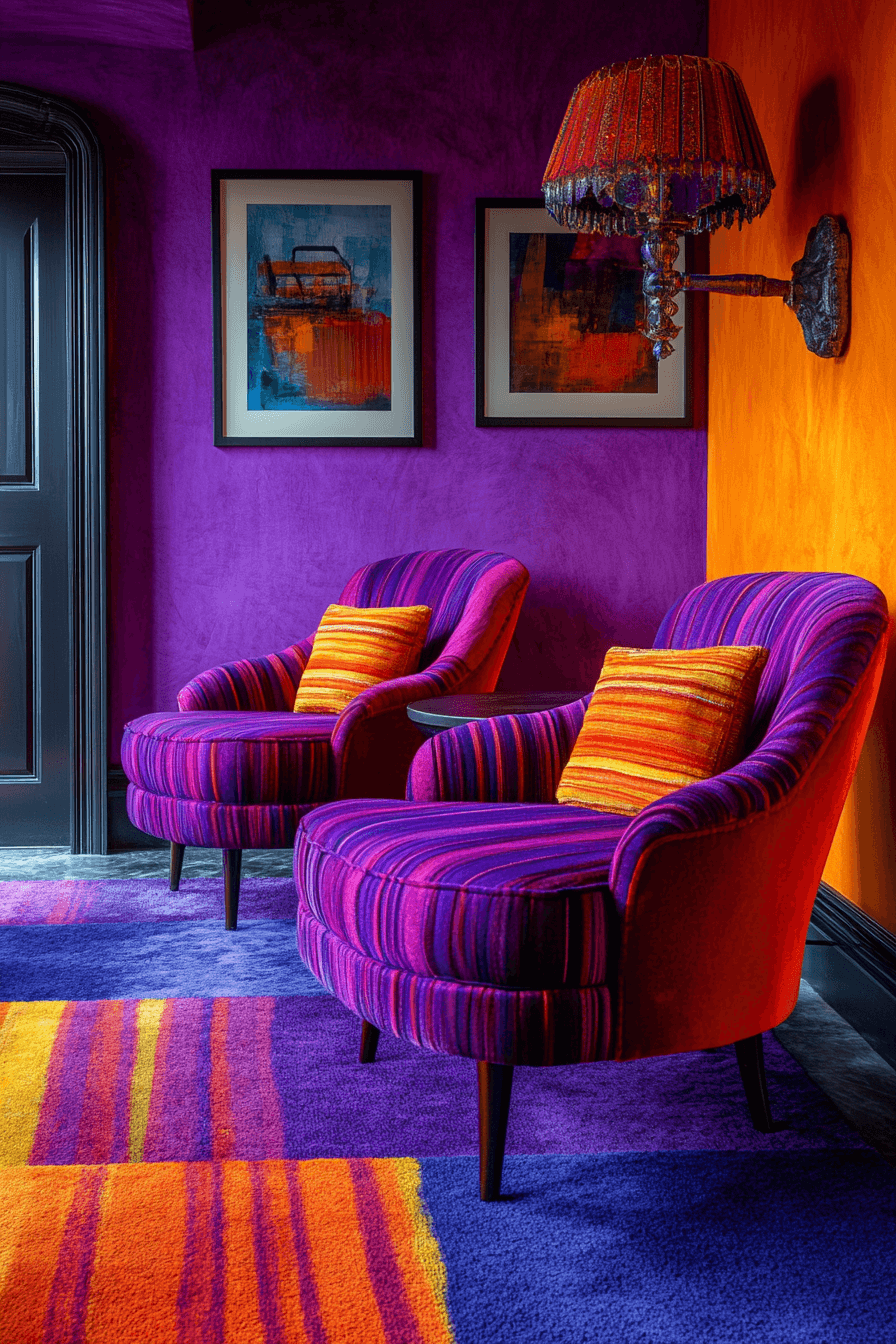
Chromatic Vibrancy Rooms in postmodern interior design use saturated colors to create spaces that are visually stimulating and emotionally engaging. This style combines hues in ways that defy traditional matching, creating unexpected and vivid juxtapositions. It’s ideal for those looking to make a cheerful and bold statement in their living environments.
🌟 Steal This Look
- Paint Color: Sherwin-Williams Exclusive Plum SW 6263
- Furniture: pair of curved-back barrel armchairs in magenta-purple striped velvet with tapered walnut legs
- Lighting: vintage crystal wall sconce with beaded fringe lampshade in crimson and amber tones
- Materials: plush velvet upholstery, hand-tufted wool carpet with bold geometric stripes, crystal and glass lighting accents
This room demands a certain fearlessness—it’s for the person who treats their home as wearable art, not a backdrop.
12. Sculptural Furniture Design

Sculptural Furniture Design focuses on using pieces that are as much a work of art as they are functional elements within postmodern interior design. This style incorporates innovative, often handcrafted furniture that stands out for its aesthetic and form. It’s perfect for those who value unique, conversation-starting pieces in their home.
🏠 Steal This Look
- Paint Color: Benjamin Moore White Dove OC-17
- Furniture: Zaha Hadid-inspired liquid-form desk in high-gloss black lacquer or fiberglass, paired with a vintage-style fiberglass pod chair on chrome star base
- Lighting: Articulating matte black architect’s desk lamp with weighted base and LED bulb
- Materials: High-gloss lacquered fiberglass, polished chrome, polished stone flooring, matte plaster
This is the workspace of someone who refuses to separate ambition from artistry; it demands you sit up straighter and think bolder.
13. Deconstructivist Details Interior
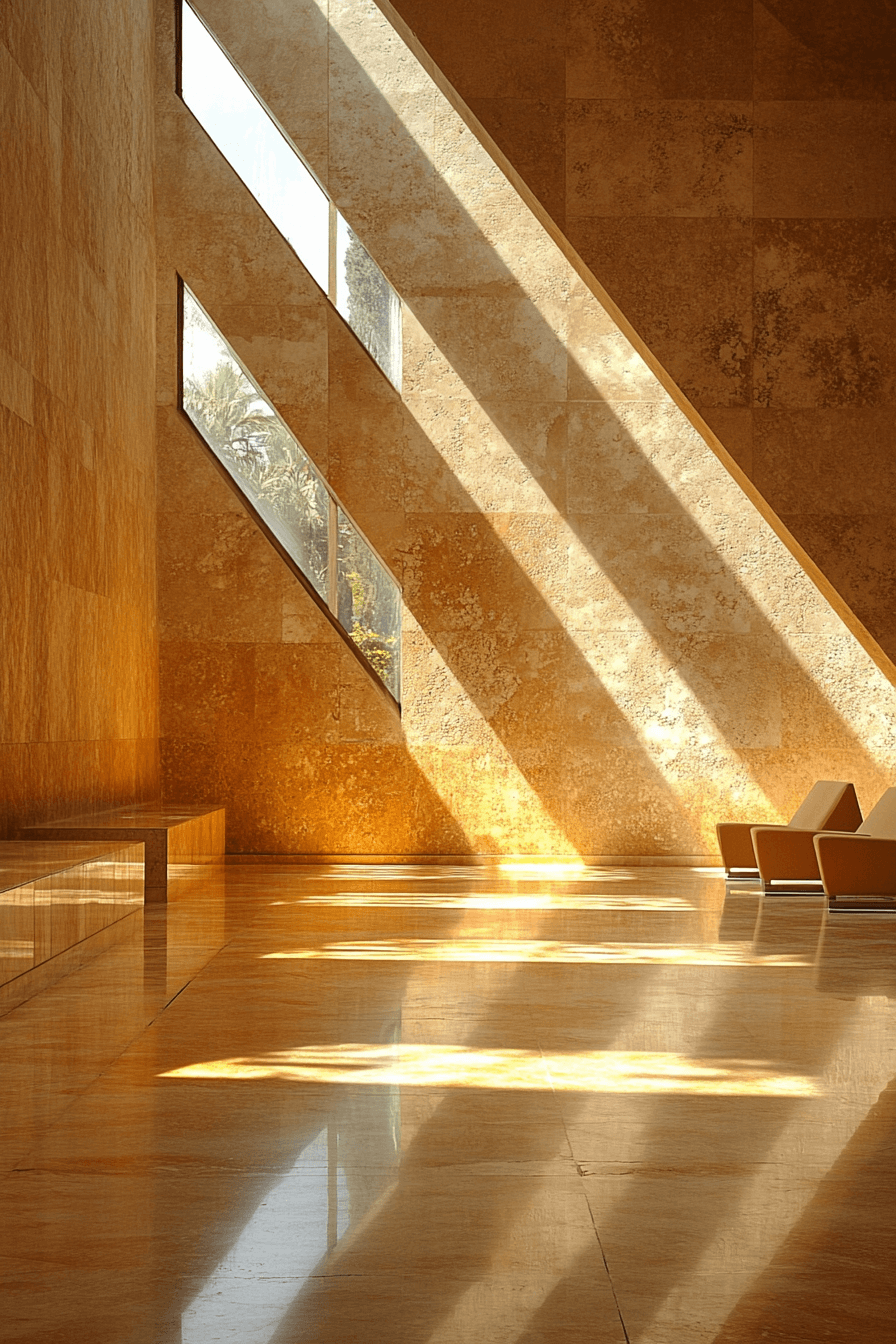
Deconstructivist Details Interior in postmodern interior design embraces architectural elements that appear fragmented or chaotically assembled. This style challenges traditional aesthetics by celebrating non-linear, unpredictable forms. It’s ideal for those who enjoy a sense of architectural rebellion and complexity in their living spaces.
🏠 Steal This Look
- Paint Color: Farrow & Ball India Yellow 66
- Furniture: low-profile tan leather lounge chairs with chrome sled bases
- Lighting: recessed linear cove lighting along ceiling edges to mimic natural light bands
- Materials: honed travertine wall cladding, polished limestone flooring, brushed oak millwork
This room feels like a private gallery where sunlight does the curating. It’s bold in its restraint—perfect if you find peace in monumental, almost sacred spaces.
👑 Get The Look
14. Kinetic Art Design
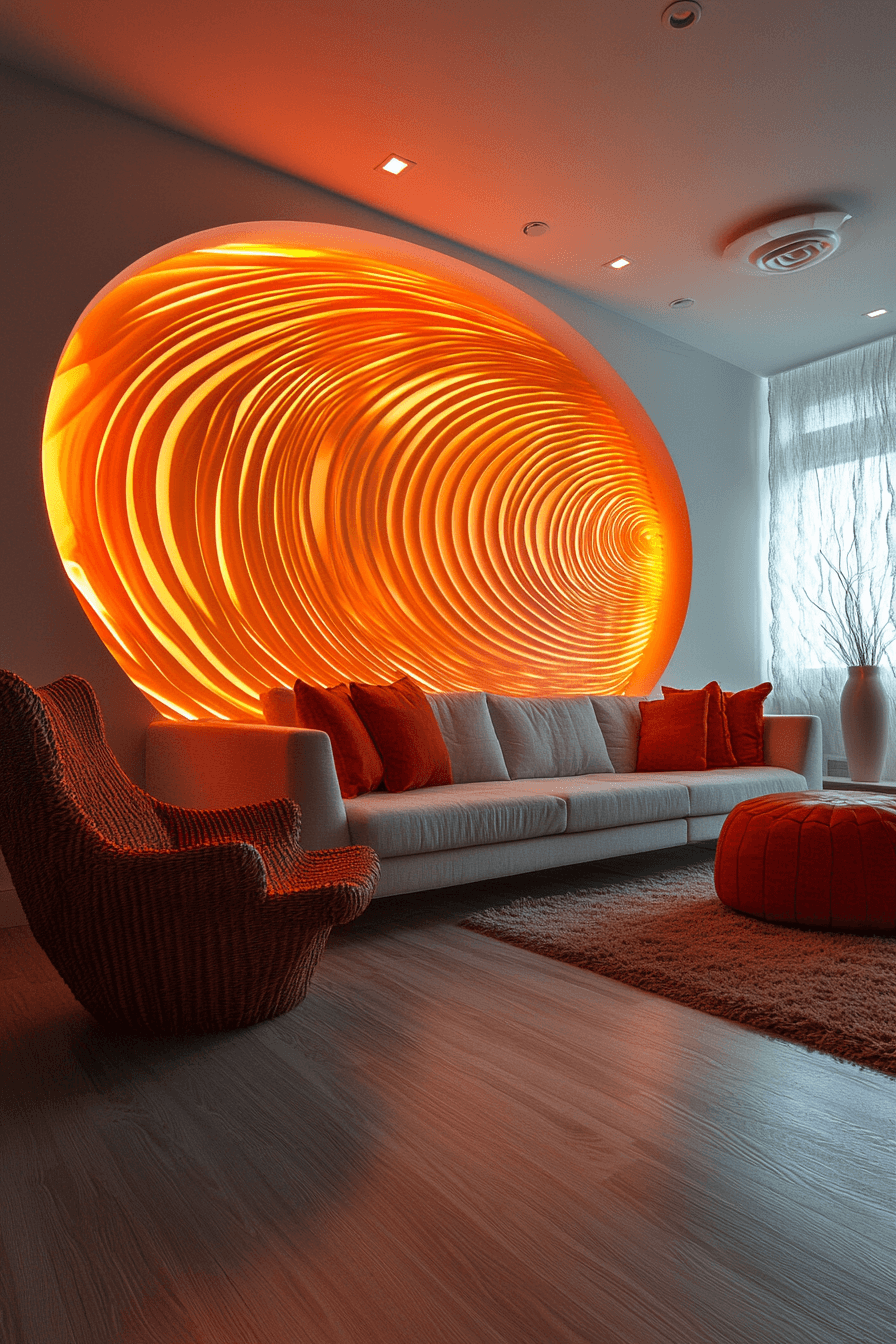
Kinetic Art Design in postmodern interior design incorporates elements that move or give the illusion of movement, adding an interactive dimension to the space. This style uses mobile sculptures, light installations, and other dynamic artworks to animate the environment, making it feel alive and ever-changing. It’s perfect for those who appreciate art that evolves and engages with the viewer.
★ Steal This Look
- Paint Color: use Behr brand. Match the ACTUAL wall color in the image. Format: Behr ColorName CODE
- Furniture: low-profile white modular sofa with clean lines, paired with a sculptural woven rattan armchair
- Lighting: recessed square LED ceiling lights plus integrated LED backlighting for wall art
- Materials: light oak wood flooring, textured woven rattan, plush shag rug in burnt orange, matte white upholstery
This living room feels like stepping into a sunset, where the glowing wall becomes a living, breathing artwork that shifts the entire mood of your evening.
15. Multifunctional Space Concepts
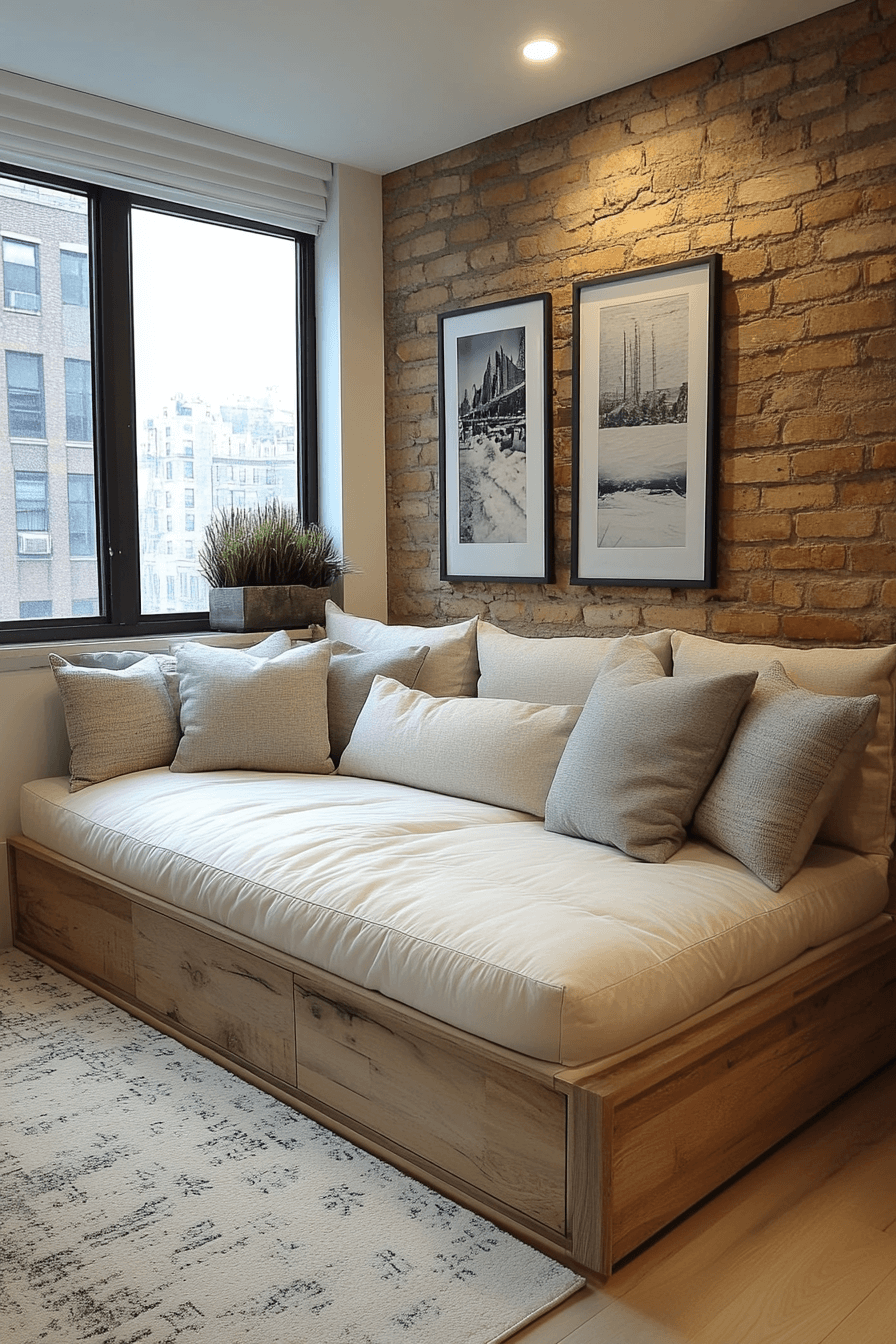
Multifunctional Space Concepts in postmodern interior design focus on versatile, adaptive living areas that can change based on the needs of the moment. This style maximizes efficiency through convertible furniture and smart layouts that allow a single space to serve multiple purposes. It’s ideal for urban dwellers or those with limited space who still want a stylish, functional home.
★ Steal This Look
- Paint Color: Valspar Natural Linen 6001-1C
- Furniture: light wood storage daybed with under-bed drawers
- Lighting: recessed ceiling spotlights with warm 2700K output
- Materials: exposed light brown brick, bleached oak, linen-weave textiles, distressed wool
This is the kind of space that actually works harder than you do—morning coffee spot, afternoon reading nook, guest bed when your sister visits. The brick makes it feel rooted, the drawers hide your life.
16. Non-linear Layout Design
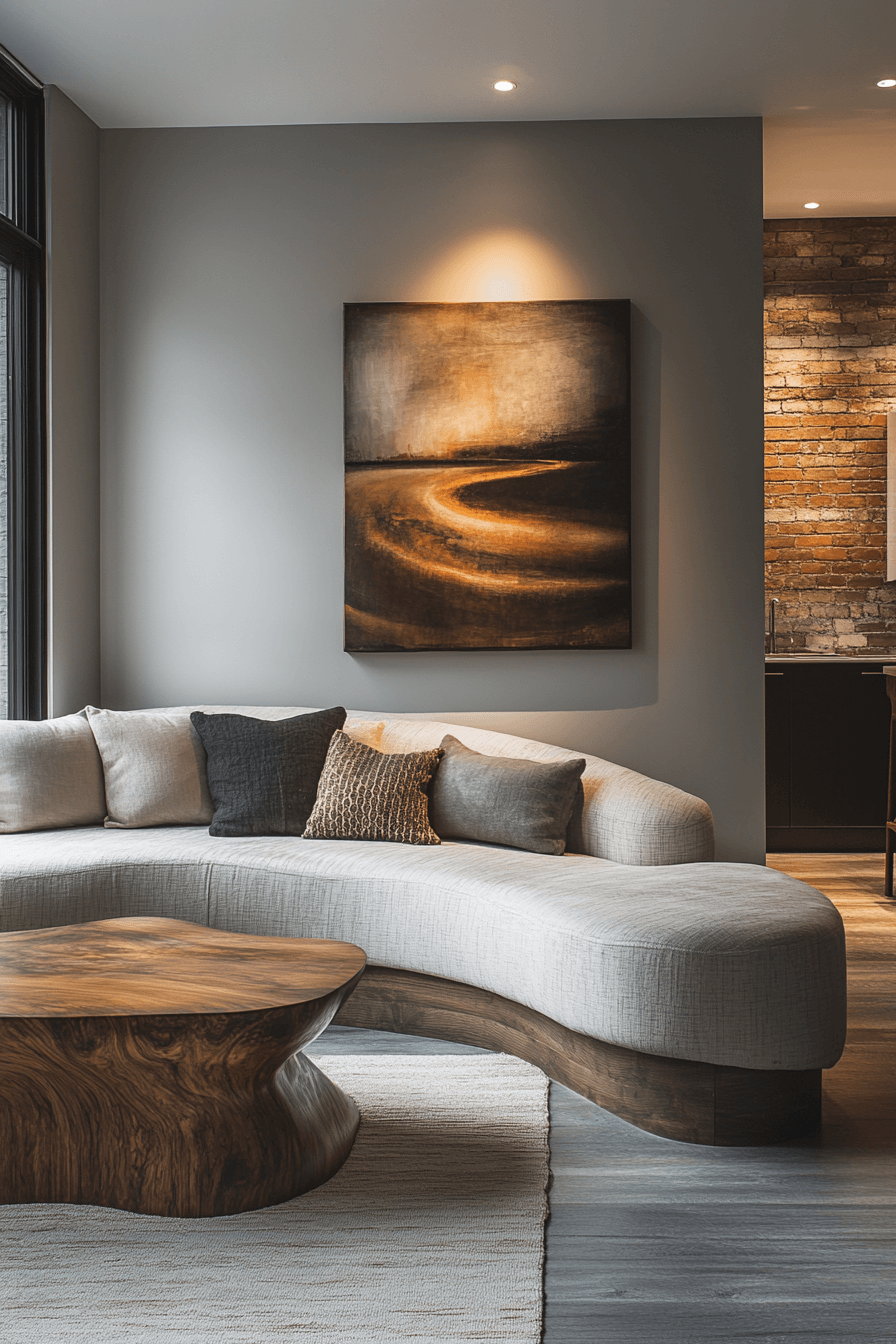
Non-linear Layout Design breaks away from traditional grid patterns and symmetrical arrangements in postmodern interior design, opting instead for layouts that encourage exploration and surprise. This style utilizes curves, angles, and varied elevations to create a dynamic and engaging space. It’s perfect for those looking for an interior that challenges conventional design rules and encourages creativity.
🎨 Steal This Look
- Paint Color: PPG Gray Screen PPG1002-2
- Furniture: curved sectional sofa with rounded chaise extension
- Lighting: recessed ceiling spotlight with warm beam for artwork
- Materials: live-edge walnut, textured bouclé fabric, hand-woven wool, exposed brick
This room feels like a deliberate exhale, where the curved sofa invites you to sink in and the sculptural coffee table becomes a conversation piece rather than just a surface.
🔔 Get The Look
17. Playful Pastels Interior

Playful Pastels Interior combines soft, soothing colors with whimsical design elements typical of postmodern interior design. This style softens the boldness often associated with postmodernism, offering a gentler, more approachable aesthetic. It’s ideal for creating spaces that feel light-hearted and welcoming, while still incorporating unexpected, playful touches.
✎ Steal This Look
- Paint Color: Dunn-Edwards Pink Ground DE5055
- Furniture: scalloped velvet accent chairs in contrasting turquoise and blush pink with gold tapered legs
- Lighting: ribbed spherical gold pendant lights in graduated sizes
- Materials: matte painted wall paneling, velvet upholstery, brushed gold metal, marble tabletop, floral wool rug
This room feels like a grown-up candy store—it’s the kind of space that makes you smile the second you walk in, proving pastels can feel sophisticated, not childish.
18. Saturated Color Schemes
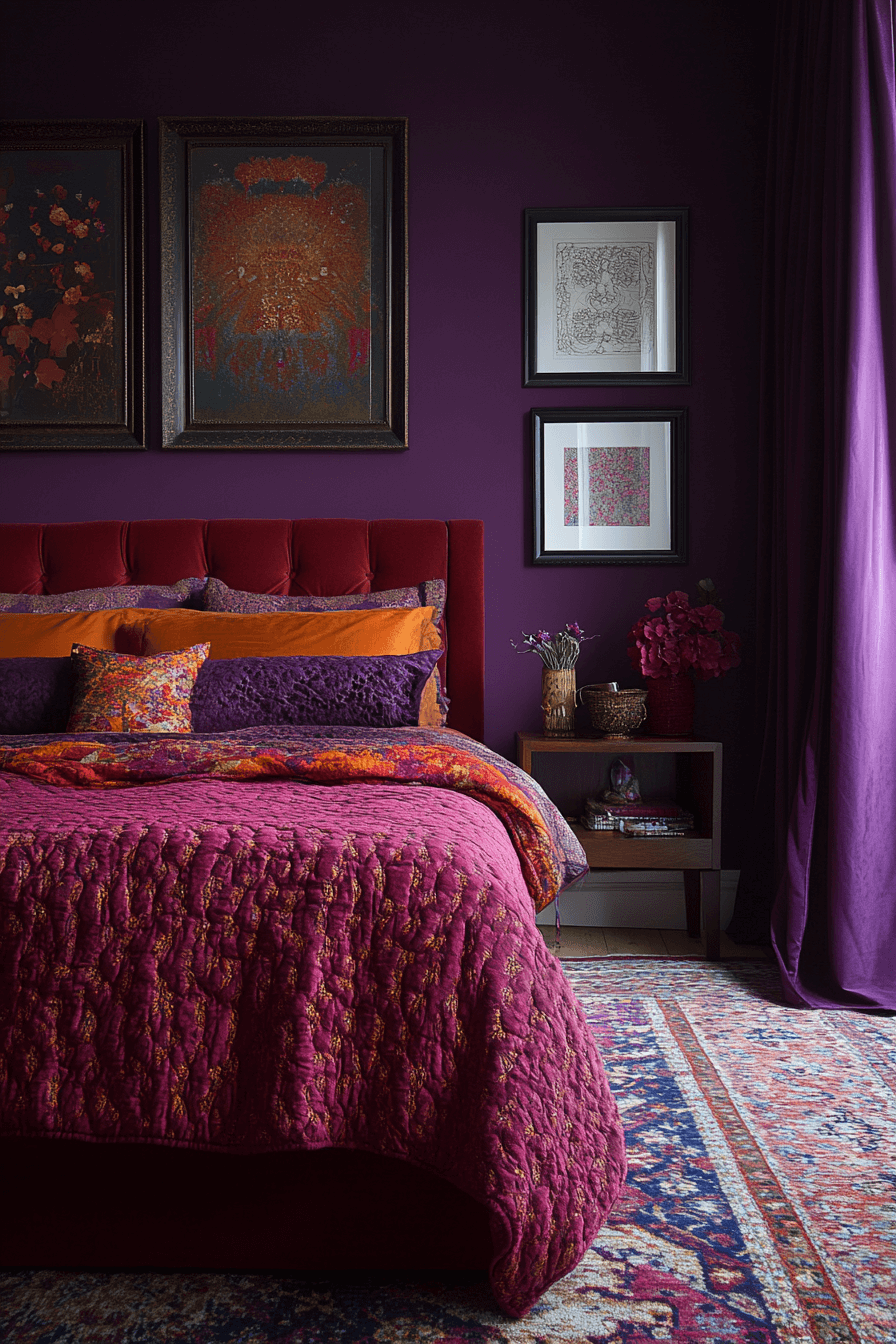
Saturated Color Schemes in postmodern interior design use deeply intense colors to create rooms that are rich in visual and emotional impact. This approach embraces boldness in color choices, creating spaces that are vibrant and full of life. It’s perfect for those who want their interiors to make a strong statement and evoke strong responses from all who enter.
✎ Steal This Look
- Paint Color: Clare Paint Purple Rain 05
- Furniture: red velvet tufted channel headboard in king size
- Lighting: recessed wall wash uplighting to graze the purple walls
- Materials: crushed velvet, hand-quilted cotton, aged brass, worn Persian wool
This bedroom feels like a sanctuary for someone who refuses to whisper—every choice here says you trust your own taste more than resale value, and that confidence is contagious.
19. Hyperreal Haven Interiors

Hyperreal Haven Interiors combine ultra-realistic details and high-definition finishes to create spaces that are visually stunning and nearly surreal in their clarity. This style often incorporates advanced materials and technology to achieve a look that is cutting-edge and luxurious. It’s ideal for those who appreciate precision and perfection in their living environments.
🖼 Steal This Look
- Paint Color: Fine Paints of Europe Hollandlac Brilliant Oyster White W1002
- Furniture: Moroso Gogan modular sofa in white bouclé or leather
- Lighting: recessed LED spotlights in organic ceiling cutouts with Lutron dimming
- Materials: high-gloss polished concrete or epoxy flooring, seamless white plaster walls, tempered frameless glass, natural travertine accent wall
This room feels like waking up inside a cloud—there’s something almost meditative about surrendering to such total, seamless calm.
20. Fragmented Forms Design

Fragmented Forms Design in postmodern interior design plays with broken or jagged shapes to create a visually compelling space. This style often uses fractured mirrors, angular furniture, and irregular patterns to challenge the viewer’s perceptions and add an artistic edge. It’s perfect for those who appreciate interiors that serve as a canvas for avant-garde expression and artistic exploration.
★ Steal This Look
- Paint Color: Backdrop Concrete Jungle 04
- Furniture: Hans Wegner-style high-back wing chair in caramel leather
- Lighting: bare bulb pendant with black cloth cord, hung off-center
- Materials: antiqued mirror fragments, raw concrete, honed limestone tile, aged teak
This room feels like a quiet rebellion against polished interiors—it’s bold enough to stop you in your tracks, yet the worn leather chair invites you to actually stay.
21. Optical Illusion Decor

Optical Illusion Decor leverages tricks of perspective and visual manipulation to create intriguing and playful spaces within postmodern interior design. This style uses patterned wallpapers, clever lighting, and unique architectural elements to fool the eye and engage the mind. It’s ideal for those who enjoy a sense of whimsy and surprise in their living spaces.
🎨 Steal This Look
- Paint Color: Sherwin-Williams Rookwood Dark Red SW 2802
- Furniture: narrow floating console table in high-gloss black lacquer
- Lighting: textured glass globe pendant lights with warm amber glow
- Materials: high-gloss lacquered surfaces, metallic bronze accents, graphic vinyl wall coverings
This hallway feels like stepping into a 1970s dream sequence—it’s bold, unapologetic, and proves that hallways deserve just as much design love as any living room.
22. Organic Flow Interiors

Organic Flow Interiors in postmodern interior design emphasize smooth, flowing lines that mimic natural forms. This style often incorporates wave-like patterns, rounded furniture, and fluid layouts to create a sense of movement and continuity. It’s perfect for those who want their spaces to feel harmonious and connected, with a soft yet modern aesthetic.
★ Steal This Look
- Paint Color: Benjamin Moore Edgecomb Gray HC-173
- Furniture: curved modular sectional with organic cloud-like cushions and integrated wooden plinth base
- Lighting: recessed oval amber glass wall sconce with warm LED glow
- Materials: textured lime plaster walls, hand-troweled concrete floors, raw oak wood, camel suede upholstery
This room feels like stepping into a sun-warmed cave someone actually designed to live in—there’s something deeply calming about surrendering to curves instead of fighting them.
23. Polychromatic Patterns Design

Polychromatic Patterns Design uses multiple colors in intricate patterns to add depth and texture to postmodern interior design. This style often includes complex mosaic tiles, vibrant rugs, and multi-colored furnishings that bring energy and vibrancy to any room. It’s ideal for those who love color and are not afraid to use it boldly and artistically.
🌟 Steal This Look
- Paint Color: Farrow & Ball Hague Blue 30
- Furniture: low-profile floor sofa with patchwork kilim upholstery
- Lighting: woven rattan globe pendant with open-weave pattern
- Materials: hand-knotted wool textiles, natural rattan, trailing ivy, ceramic planters
This room feels like a conversation starter—every cushion and textile tells a story, and the moody blue wall keeps all that wild color from overwhelming the space.
🔔 Get The Look
24. Meta-modern Mix Design

Meta-modern Mix Design in postmodern interior design combines elements of both modern and postmodern aesthetics to create a nuanced, reflective space. This style plays with contrasts—blending past and future, simplicity and complexity—to reflect a contemporary understanding of beauty and function. It’s perfect for those looking for a sophisticated, intellectually engaging living environment.
🖼 Steal This Look
- Paint Color: Behr Silver Drop 790C-2
- Furniture: low-profile off-white boucle sofa with clean track arms
- Lighting: brass chandelier with crackled glass globe shades and black metal wall sconce with linen drum shade
- Materials: raw edge walnut burl, blackened steel, textured boucle, crackled glass, tonal flatweave wool
This room feels like someone who reads design theory for fun—there’s confidence in the restraint, and that burnt orange warmth keeps it from feeling like a showroom.
25. Retrofuturism Redux Interior

Retrofuturism Redux Interior combines nostalgic elements from the past with speculative designs from the future, creating a unique fusion in postmodern interior design. This style features retro-inspired shapes and futuristic materials, creating a time-traversing dialogue within the space. It’s ideal for those who appreciate a thematic blend that speaks to both where we’ve been and where we might go.
★ Steal This Look
- Paint Color: Valspar Coral Reef 2002-4A
- Furniture: sculptural pod lounge chair in teal bouclé fabric with curved organic silhouette
- Lighting: circular backlit LED mirror with warm amber halo and recessed round wall sconce with frosted glass
- Materials: textured lime-wash plaster walls, polished aqua terrazzo flooring, nubby bouclé upholstery, and glossy lacquered accents
This room feels like stepping into a 1970s sci-fi daydream where comfort wasn’t sacrificed for style—it’s the kind of space that makes you want to sink in with a vintage cocktail and imagine what the year 2000 was supposed to look like.
26. Curvilinear Configurations
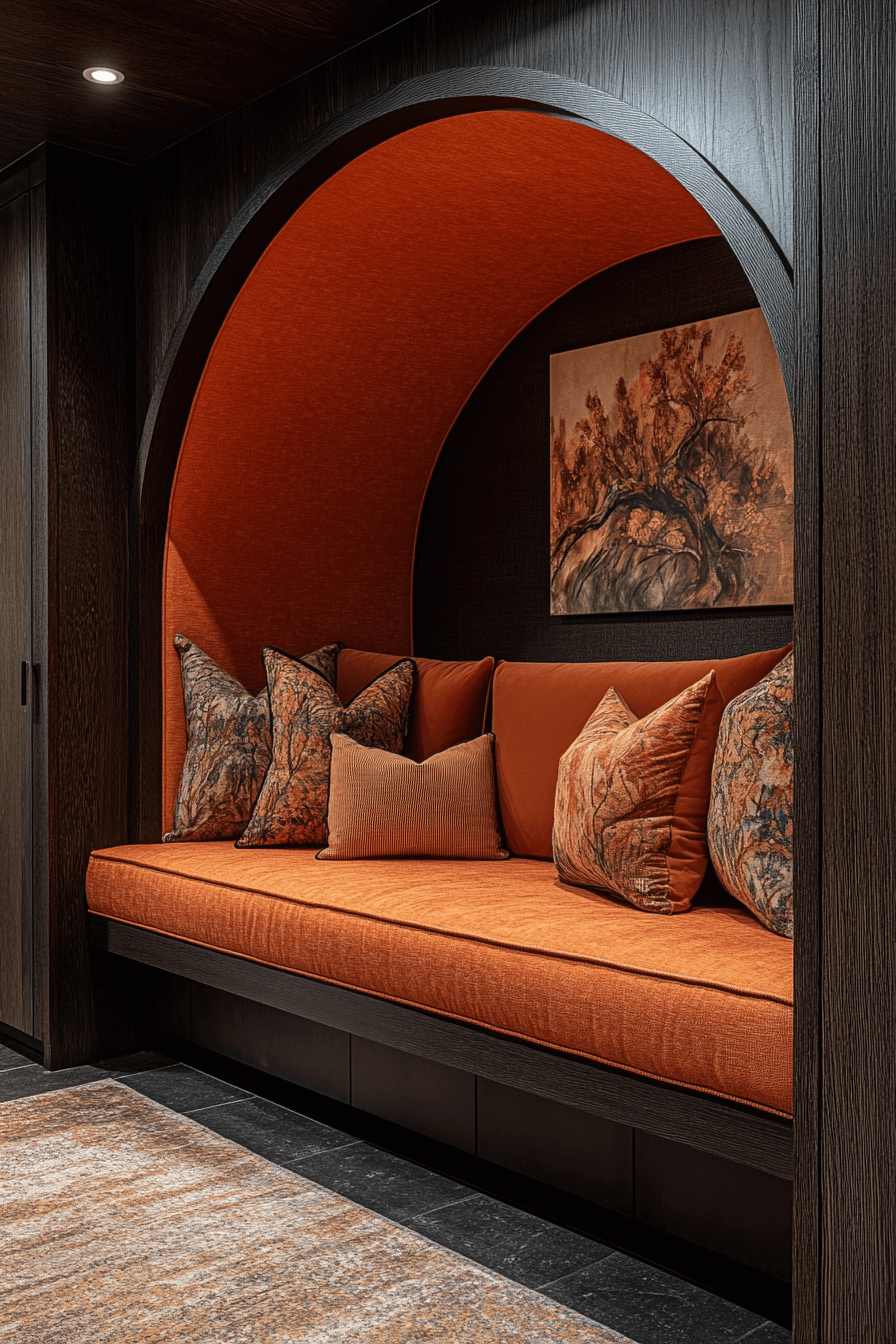
Curvilinear Configurations in postmodern interior design focus on curved lines and smooth edges to soften the often harsh geometries of modern design. This style emphasizes flow and continuity, making spaces feel more organic and less constructed. It’s perfect for those seeking a gentle yet impactful design approach that prioritizes comfort and fluidity.
★ Steal This Look
- Paint Color: PPG Burnt Orange PPG1196-7
- Furniture: built-in arched alcove bench with storage base
- Lighting: recessed mini downlight in dark ceiling
- Materials: textured velvet upholstery, dark wire-brushed oak, rust-toned abstract landscape art
This alcove feels like a secret hideaway you’d actually use—somewhere to escape with coffee and a novel, wrapped in warmth that doesn’t try too hard.
27. Light Dynamics Design
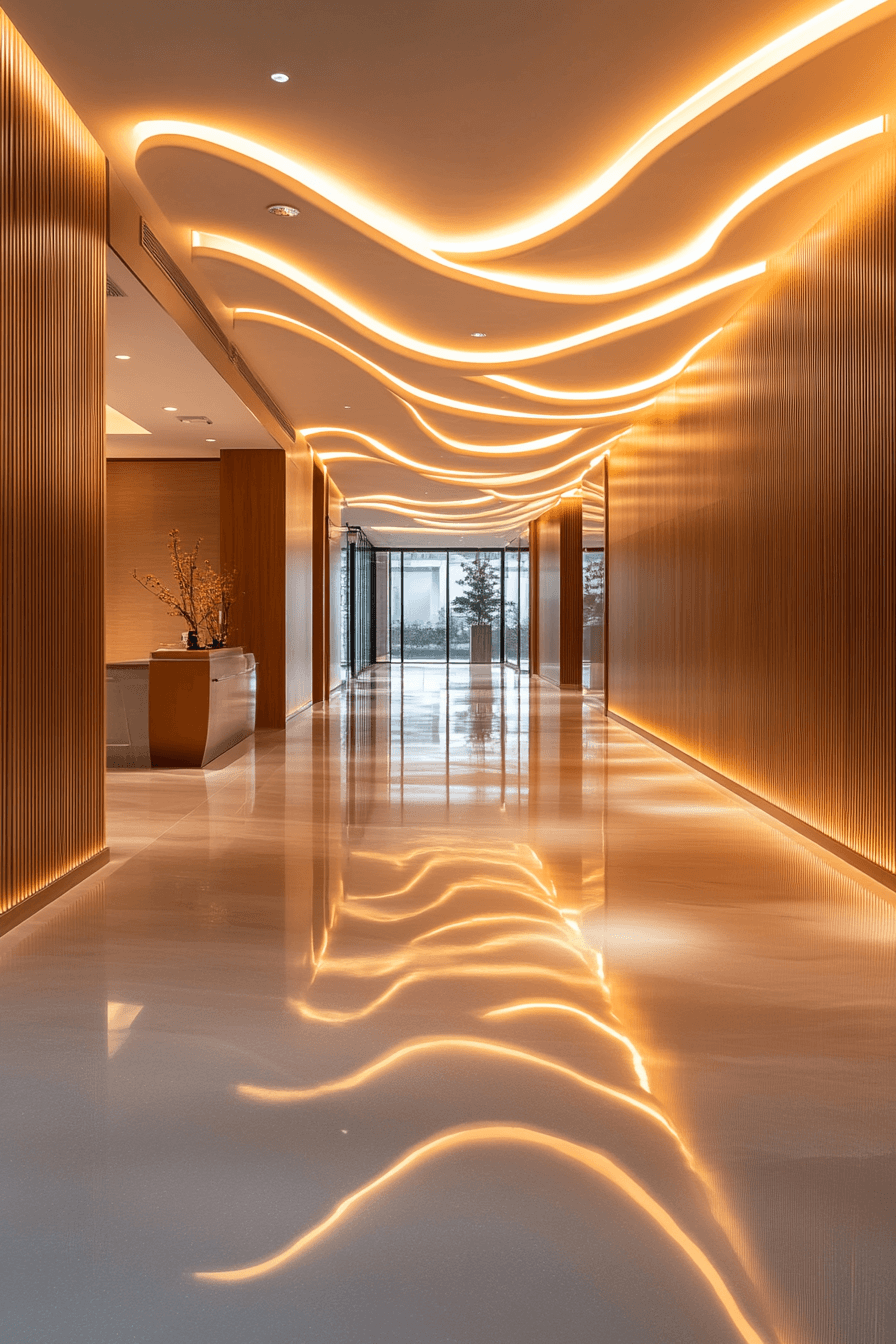
Light Dynamics Design in postmodern interior design explores the use of light as a primary element to shape and define spaces. This style incorporates innovative lighting solutions that alter perceptions, highlight architectural features, and change the mood of the room. It’s ideal for those who see light not just as a necessity but as an integral part of the space’s aesthetic and function.
🏠 Steal This Look
- Paint Color: Dunn-Edwards Amber Glow DE5232
- Furniture: curved minimalist reception desk in high-gloss light oak with waterfall edge
- Lighting: recessed undulating linear LED cove lighting with warm 2700K temperature
- Materials: vertical fluted oak wall paneling, polished white porcelain tile flooring, brushed metal accents
This hallway feels like stepping into a sunset—it’s the kind of entrance that makes you slow down and actually notice your surroundings, something rare in transitional spaces.
28. Conceptual Contrast Interiors

Conceptual Contrast Interiors in postmodern interior design play with opposing elements to create a visually engaging and thought-provoking space. This style juxtaposes rough with smooth, dark with light, and minimal with complex, challenging traditional design norms. It’s perfect for those who appreciate a space that stimulates both the eye and the mind.
★ Steal This Look
- Paint Color: Clare Paint Beigeing 03
- Furniture: low-profile white boucle sectional with rounded arms, chunky live-edge walnut coffee table with cylindrical pedestal base
- Lighting: 4-inch matte black recessed can lights with warm 2700K bulbs
- Materials: textured boucle upholstery, raw walnut wood grain, rust velvet, matte black ceramic, chunky wool knit
This room feels like Sunday morning light doing all the heavy lifting—there’s something quietly rebellious about letting a space breathe this deeply while still feeling completely intentional.
29. Collage Aesthetic Design

Collage Aesthetic Design combines various materials, textures, and elements in a seemingly haphazard way that actually holds deeper meaning and intention. This style reflects the postmodern penchant for eclecticism and the rejection of uniform style, making each space uniquely expressive and richly layered. It’s ideal for those who view their interiors as a personal gallery of experiences and tastes.
In conclusion, these 29 post modern interior design ideas offer a dynamic way to incorporate contemporary art into your home, creating a space that is both artistic and functional. By embracing bold shapes, innovative materials, and unique color palettes, you can design a home that reflects modern trends while maintaining a sense of individuality. Whether you’re drawn to minimalist elegance or vibrant statements, post modern interior design allows you to express your personal style and creativity. Let these ideas inspire you to craft a space that is truly a work of art, blending design and functionality seamlessly.
★ Steal This Look
- Paint Color: Fine Paints of Europe Ecco Velvet Warm White EV-01
- Furniture: oversized round velvet papasan-style lounge chair in burnt orange
- Lighting: black matte industrial swing-arm wall sconce with exposed bulb
- Materials: reclaimed wood ceiling beams, hand-knotted wool rug with faded geometric pattern, woven jute pouf, dried natural grasses
This corner feels like a deliberate exhale—proof that postmodern collage doesn’t need chaos to feel collected, just pieces that tell your story.
Save this article
No spam. Unsubscribe anytime.